Aylin Sezer: How breathing can help your creativity
21:31

Aylin Sezer: How breathing can help your creativity

CreativeMornings HQ 19.04.2026 48 просмотров 2 лайков

Machine-readable: Markdown · JSON API · Site index

Поделиться Telegram VK Бот
Транскрипт Скачать .md
Анализ с AI
Описание видео
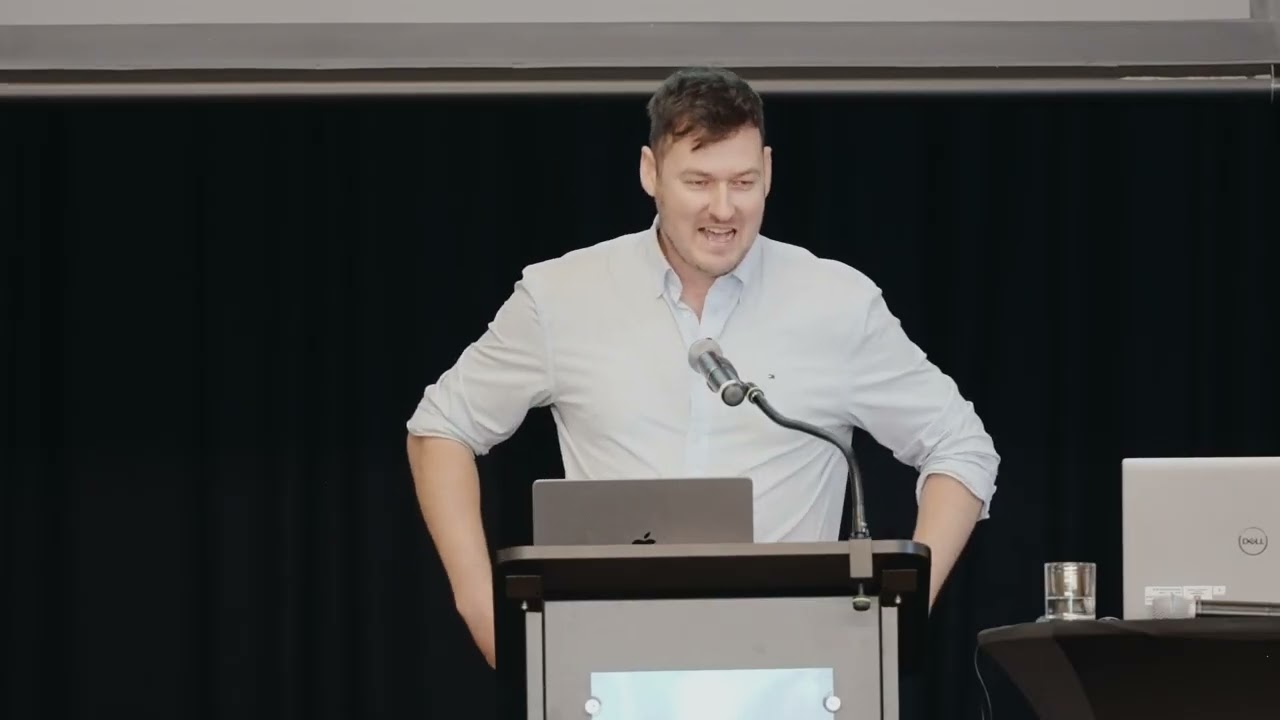
Aylin Sezer explains the importance focusing and breathing to hone your craft Aylin Sezer at the The Hague chapter of CreativeMornings on Apr 10, 2026. Free talks like this one are hosted every month in cities around the world. Subscribe to our YouTube channel for more inspiring videos: https://bit.ly/1jeJwut Want more CreativeMornings goodness? Sign up for our newsletter: https://www.creativemornings.com/newsletter
Оглавление (5 сегментов)

Segment 1 (00:00 - 05:00)

Good morning everyone. Thank you for being here. Thank you for sharing your time, energy, your curiosity and your openness with all of us. And thank you of course creative mornings behen Cesar and I am a classically trained singer. Uh I'm a soprano for those of you who are acquainted with the terminology of classical singing. So I sing the highest part of the female voice. Um yeah, I wanted to talk about Ember what it is because I am not a native speaker and maybe you're not either and I had to go like which one was an A, E? There was one with an A that was a kind of a gemstone from the trees. And there was one with the E that was So it's the as you saw. And is that piece of material that has burnt and is still glowing. So there we go. I would like to start with a little inquiry. Who considers uh themselves to be a creative? Yay. Creative mornings. Duh. Exactly. who would consider themselves to um have a craft be who says I'm a craftsman. Yeah. Many of us. Yeah. Because what do I define with craft is something that you concentrate on for a longer period of time that you make your own. You put energy in it. You put concentration and devotion into it and you make it your own. and be a being a craftsman or a crafts person. I'm not quite sure if there's um the right word in that sense means that you can produce a certain standard, a certain minimum of standard no matter what. You're having a good day or a bad day, but you know you can deliver. you know, you can deliver a certain standard that you feel comfortable with and even maybe proud of even, you know, the magic wasn't there. Because that's my next question. Who knows that feeling when you're in the zone? It's all going and there's magic. Yay. You know, you're like, I just pushed it. It went like all over. And sometimes you have this feeling that it's just, you know, you're working on it. You're working on you're putting all this energy. I woke up early for this and it's not working. You know, I think you know that feeling as well. Yeah. Exactly. So, I came to the Netherlands in 2003 to study at the conservatory of the Hague. Uh I was born and raised in Turkey. My father is Turkish and my mother is Dutch. So, the Netherlands was a very uh logical uh choice for me. I came to the conservatory and I came from a rather academically challenging you know strict high school and I was really good in opening books and learning and delivering you know I learn I learn and then I go bum bum and I deliver I'm like yeah good then you come to the conservatory and I really wanted to learn how to sing because that's why you go to the conservatory right so I'm like okay give it to me I want to learn how to sing and then we start and then I'm trying and trying and this is understanding it but this just won't do it and like I know what I'm supposed to do it's just not working and then I realized learning is different than training duh but well for me it was an eye openener and I think it could have been this could be a entire creative mornings talk in itself to talk about the difference between learning and training anyway so I was really doing my best. But then I realized the more I was doing my best to understand and learn and try to deliver, it was getting worse until a teacher of mine, Maria Aka, whom I think is who I think is the reason why I'm still singing, she said to me, I didn't stop. You're really doing your best and it's going really well and I can see that you're really working on this, but you're not really going where you want to go. So, you know, the reason why we accepted you to the conservatory is because we saw some magic in you. And this magic is your storytelling. You're a storyteller. So, why don't you just forget about the technique for a while about how to sing because, you know, classical singing requires quite a bit of technique. Um, forget about the technique for a while and just concentrate on this storytelling. I'm like, but she said just do it. Okay. So I started doing this and things started

Segment 2 (05:00 - 10:00)

to flow again. You know, I was coming to the zone again. Did my technique improve in one day that I was like, "Ah, yeah, that was what I was looking for. " No, it didn't. But I I got some space and I started, you know, tackling things back uh again and I started improving. So later, a few years later, I was watching a registration of D Brah's Deutsches Reikam on TV because that's what we used to do then. There was no YouTube was just a baby. No Instagram, Tik Tok. You just put on a DVD and you watched it. So this is what I'm doing uh with my then boyfriend, now husband. And um the choir is singing, the orchestra is playing. It's all beautiful. Then uh Bin Turfel who um sang the Baritone solo stood up to sing and we're waiting for it and he breathes in. He breathes in and I've got goosebumps. I'm like wait what? He did not sing a single word yet. He did not make a sound and I'm almost crying. So I look at my boyfriend and I'm like he's like, "Yeah, I felt it too. that was magic. So that was when a seed got planted. So I kept, you know, living my life, doing my thing, trying to become a good singer and everything. And um um fast forward to 2024 and I go to this master class of Joyce Sidonato who is a very good uh messoprano. I think one of the best mezzopranos of our era um teaching uh at the Dutch National Opera Academy to a very good measor soprano and this uh student she's singing beautifully she's singing um Despress Regina of Cladio Monte Verde's opera um link dea and she's singing Otavia's area just a bit of information Otavia is the wife of Neon from the Roman Empire. Nerona uh but Nerona fell in love with Poea. So he's like, "Yeah, well this wife is kind of excessive now. So what do I do? I send her into exile. Otavia is devastated. " So this is her character. Uh this metro soprano is singing beautifully. Her declamation is beautiful. Her energy is beautiful. She's really using her voice beautiful and it is touching. But then every time Joyce Donado shows something, you go like, "Wow. " And then you're like, "Okay, so master class. That's why somebody is a master. " Um, and I realize what and I started I start to think why is it different what she's doing? And then I realize she's breathing in a certain way and she's breathing out a certain way. So she's playing with the timing of her breathing in. She's playing with high how high she breathes or how low she breathes. And then she's communicating in a certain way. Okay. Then I realize wait a second I have followed a workshop given by uh a Dutch drama coach who teaches singers to act or helps them and she talked about the album method. I don't know if there are any actors here who are acquainted with the album method. Well there are very many acting methods and very many theories. Do you take it from the outside? Do you put it in? Do you take it from the inside and do you put it out? I won't go into details. It's not my uh specialtity. But the Alba method says there are certain amount of emotions and these each have a certain body posture mimics well body language I think we are all acquainted with body language more or less but there is also a breathing pattern that coincides with these emotions. So for instance um when you cry now I have to think you breathe in irregular high and little soft and then people recognize at some point this is as crying. your body recognizes it's crying and you can stimulate this like and then I was thinking you know sometimes I call my partner on the phone or somebody that I really know very well and we're on the phone and I'm like okay I'm going to say something and I'm not quite sure where it's going to land but well I'll rattle and I'll see where it

Segment 3 (10:00 - 15:00)

goes and I'm like blah blah blah blah and then it's silent they don't say anything but from the way they are breathing you know like hm no Okay, that didn't land well. Or you're like, oh, okay, that landed well. It's fine. And only because they're not making any sounds, but only from the way they're breathing. If they go like or they like, you know, you know what's happening. Okay. So then I started realizing so that means when I'm singing Naria a piece there and I can say one thing. For instance, I'm saying I love you and then I could go like I love you. Or I could go I love you. And these are three totally different things what I'm saying, right? Would you agree? — Yeah. But I'm saying the exact same thing. But the emotion behind it, I think we all would say there is a different story. So, but the wait a second. The subject matter was amber and I'm Ember I think nine. Yeah, thank you. Um and I'm talking about breath. So why? Because I realized ember is consist consists of two three things. There's the material and there is the heat. And when they have come together combusted you know with air breath right getting the gist okay then the ember is there so you could see this as your craft the material the wood the charcoil whatever the material that you're working with if you see that as um your craft and then there is the energy heat for me that will be the urgency the why we are doing the creative thing that we're doing the necessity of it and we want to bring these together you know they can stay apart from each other but they're not art yet when they're apart from each other you want to bring them together so what is it for you the thing that brings these two things together and creates amber For me it's my breath because when I sing I have to so to deliver that bare minimum standard I have to be able to breathe in a certain way that it will support my voice because there are 80man orchestra playing and I have no amplification and I have to go right through that 2,500 people And the person the last row also paid so they want to hear as well you know. So I really have to be able to deliver. So I have to use my voice. So thus my breath in a certain way. So that is my craft. That is why I work and study every day trying to have my lowest register my highest register my reg mid register go seamlessly through. I have to be able to do a crescendo. So going from very soft to very loud, from very loud to very soft, a decendo on every single note. I have to think, okay, do I want this sound to be really very sharp or do I want it to be very round for the character? What is necessary? And to be able to do all these things, I have to put in the hours every day so that I know also on a bad day I will be able to deliver. So I need my breath for that. But then to be able to sing, I need my breath. sing and communicate, I need my breath. I need to be able to breathe in such a way that we all know what I'm talking about. Even if we don't understand the language, we feel the human connection, the human emotion in it. So for me that third part of the triangle is my breath. So I'm asking you what is the third part of the triangle for you to bring the material and the necessity to create amber to create art. Thank you very much. — Thank you. Thank you so much, Eileen. Wow, that was such a powerful message. Uh guys, we

Segment 4 (15:00 - 20:00)

have some time for Q& A. Uh does anyone have questions for Eileen? Please raise your hand and we'll give you some time. — So, we hear you say something. — Oh. Oh, jeez. I'll take um so I would have to uh think about I didn't warm up this morning but um Okay. — Thank you. Okay, I'm trying to recompose after anyone has another question. — Maybe — just a question, but maybe I tried to relate it to to your speech, which was wonderful by the way. — Thank you. Uh do you have any uh singing, warming up um exercises that could help maybe you know get the breath working together with the ember and the craft? — Well, um thank you. That's a very good question and I'll have to think about it. So this is me buying time but um I think the most important thing is to wake up the body and to connect the breath with the body. So anything that you would do to really send the body uh send the breath right into the body — would help. What I sometimes do is I breathe in and I breathe out until I'm totally empty. And I wait for the breath to come by itself so that I go I'm not sucking it in. So that when I because the body is conditioned to breathe in. So if you make sure that you're totally empty but you're open. You're open and you feel the body wanting to breathe. and then it comes and that is actually the most natural breath uh to me the connected the essence of the breath um that might help to reconnect with the body. — It's a good one. I I know that feeling what you're talking about. So it's a it's a meditation technique as well. — Yeah. Yes. — So it's a really good one. — Definitely. — Yeah. — There you go. — I think that is triggering my next question. — Sure. Please. — I don't know. Somehow also we were having a talk earlier — and somewhere in my I don't know the spirituality was coming back. I don't know why today — but what you are telling me about and the awareness of the breath is also very spiritual practice — of course you are right awaken the energy and — discovering your breath and using it this way does it bring any spiritual experiences like being with all or I don't know like being on the stage should be a very different I guess — yeah I think the zone phone that I had talked about earlier is a spiritual experience in itself. I see many hands going. Yeah. I think because I think spirituality or um living the spirituality is actually the only thing we need to do and it's the most the hardest thing ever is get yourself out of the way because you know we are spirit in this form and we want to connect. So but sometimes we just have to get this all out of the way and yeah breathing in that sense helps and I feel when I am on stage and everything is flowing you know and I'm connected with the orchestra the conductor the audience with the person that I am singing with and you're just like hallelujah it's all working today. Yeah. That's a very spiritual because you know you all breathe together at some point. The audience breathes with you. Your colleague breathes with you. The orchestra is breathing with you. And they say the heart rates also come together when you're listening to music. So I think it's very spiritual. Yeah. — Thank you.

Segment 5 (20:00 - 21:00)

— We have time for one more question if there's any. All right. — I was wondering how and when did you find out you had this urgency for singing? — Um, funnily enough, I think I found the urgency to be on stage before I found um that I would do it by singing cuz um yeah, I loved being the center of attention. Um, no. I loved to, you know, kindle people in and together and then create something together. And, um, then I started singing and my singing teacher was like, "Yeah, well, you know, I think you really have a very good voice for opera and I was like, opera, you know, that's for old fat ladies with Viking uh thingies. Where's my spear? Who? " But then I realized once I started singing lessons, once you sing a high note, full body, it's so um addictive. It's and I was like, I want to do this for my life. Yay. So that's how it went. — Beautiful. Another round of applause to Eileen. — Thank you very much. And thank you, Anna, Mark.

Другие видео автора — CreativeMornings HQ

Ctrl+V

Экстракт Знаний в Telegram

Экстракты и дистилляты из лучших YouTube-каналов — сразу после публикации.

Подписаться

Дайджест Экстрактов

Лучшие методички за неделю — каждый понедельник