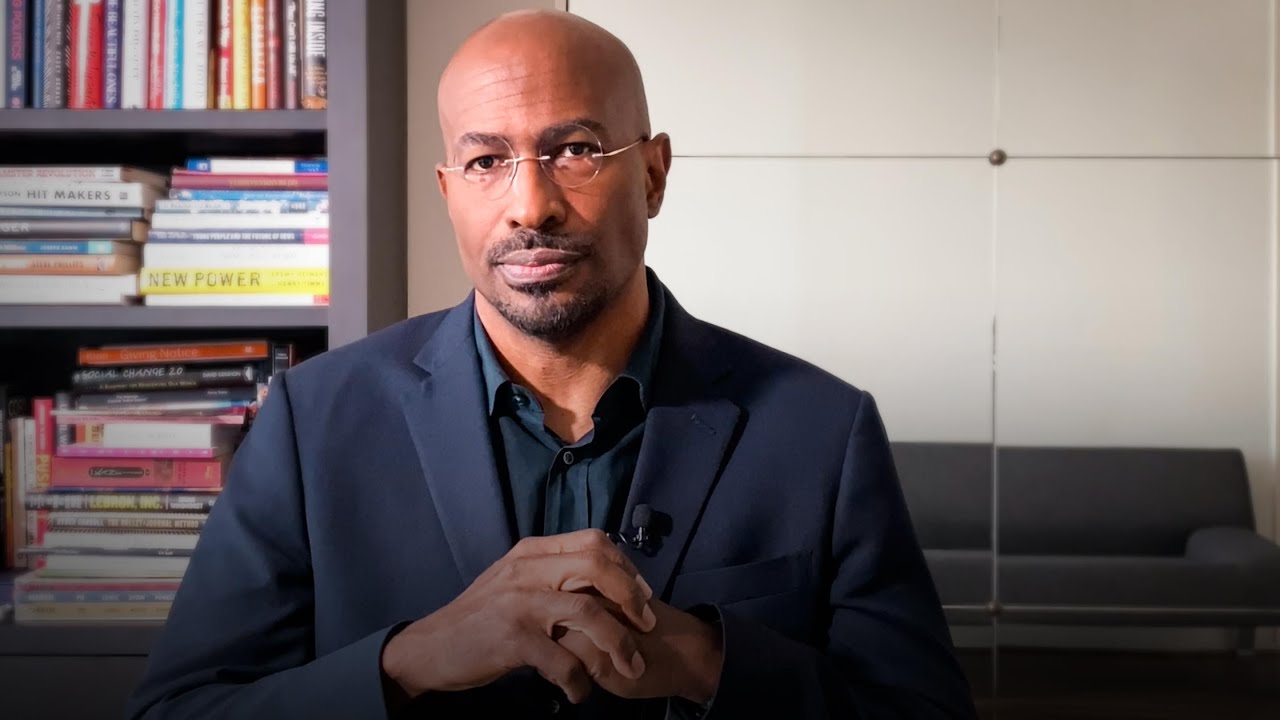
How to Make Sure Materials Get Reused — Again and Again | Garry Cooper | TED
12:48

How to Make Sure Materials Get Reused — Again and Again | Garry Cooper | TED

TED 26.07.2023 43 415 просмотров 957 лайков обн. 18.02.2026
Поделиться Telegram VK Бот
Транскрипт Скачать .md
Анализ с AI
Описание видео
What if we could harness the power and value of all that we discard? Circular economy builder Garry Cooper presents a compelling vision for transforming cities into sustainable, circular economies, citing real-world examples of how repurposing materials from buildings to office furniture can significantly reduce greenhouse gas emissions, create jobs and foster economic growth. A hopeful reminder of the profound impact individual actions can have on our shared future. If you love watching TED Talks like this one, become a TED Member to support our mission of spreading ideas: https://ted.com/membership Follow TED! Twitter: https://twitter.com/TEDTalks Instagram: https://www.instagram.com/ted Facebook: https://facebook.com/TED LinkedIn: https://www.linkedin.com/company/ted-conferences TikTok: https://www.tiktok.com/@tedtoks The TED Talks channel features talks, performances and original series from the world's leading thinkers and doers. Subscribe to our channel for videos on Technology, Entertainment and Design — plus science, business, global issues, the arts and more. Visit https://TED.com to get our entire library of TED Talks, transcripts, translations, personalized talk recommendations and more. Watch more: https://go.ted.com/garrycooper https://youtu.be/vvIP7vabO4c TED's videos may be used for non-commercial purposes under a Creative Commons License, Attribution–Non Commercial–No Derivatives (or the CC BY – NC – ND 4.0 International) and in accordance with our TED Talks Usage Policy: https://www.ted.com/about/our-organization/our-policies-terms/ted-talks-usage-policy. For more information on using TED for commercial purposes (e.g. employee learning, in a film or online course), please submit a Media Request at https://media-requests.ted.com #TED #TEDTalks #circularcity
Оглавление (3 сегментов)

  1. 0:00 Segment 1 (00:00 - 05:00) 665 сл.
  2. 5:00 Segment 2 (05:00 - 10:00) 674 сл.
  3. 10:00 Segment 3 (10:00 - 12:00) 338 сл.
0:00

Segment 1 (00:00 - 05:00)

A few days ago, I flew in from Chicago. I love it there. Chicago has it all. Oh, thank you. Chicago has it all. Great food, incredible skyline and architecture and the kindest Midwestern folks you'll ever meet. Diversity of people and culture, second to none. Millions of people move to cities like Chicago each year to pursue their life's dreams and passions. I know I did. And that's because cities are booming marketplaces of people and companies, of products and materials and something not so great: waste and greenhouse gas emissions. According to a 2022 World Bank report, our beloved communities could be responsible for 25 gigatons of carbon emissions and a ton and ton of waste. But what does this mean for your community? Think about that building being torn down, maybe on the corner next to your office or your home and all the wood and concrete and steel or the office equipment or computers or furniture being tossed out, dumped in a landfill, often near the homes of our low-income neighbors. In the United States, 40 percent of landfill contain materials from the construction and demolition of buildings. This is our linear economy. It's bad for our climate, it's bad for our health, and it's a missed economic opportunity. But we can turn this line into a circle. Many connected circles, in fact, where every a physical resource finds another use and another life, driving down greenhouse gas emissions from new manufacturing, shrinking harmful landfill and creating a lot of jobs. This disconnected linear economy becomes a circular one when we transform our concept of ownership into a system where every person and every business has access to the things others no longer find useful. Wood from that building being torn down could be a dining room table. Bricks could be concrete again and furniture can be rehabbed and resold to an up-and-coming start-up. Now my circular economy journey started on a pretty small scale. I was a neuroscientist in a lab at Northwestern University. At that time, in my lab, there were hundreds if not thousands of biological tools and things like microscopes, that were going completely unused. In fact, research budgets were tight then and actually now, but still, these things sat around collecting dust. No one even knew they existed. So I loaded up a push cart, rolled it around my floor with these items, visited my colleagues, shared what we no longer needed and they might be able to. Rheaply, the company I founded and run, helps organizations identify and catalog the things they own, reuse them internally when they can and distribute them to other organizations when they cannot. It's like a high-tech, scaled-up version of me with the push cart at Northwestern, but with hundreds of organizations, from technology to manufacturing leaders, and millions of items available for ale and donation -- all cataloged on a digital platform, stretching across partners in a local area, a city or state, creating connected networks of reuse. Rheaply helps organizations reuse things like building materials and IT and industrial equipment and furniture. But companies like Goodr or Olio help reduce food waste by connecting surplus food to people who are hungry. And companies like Queen of Raw and Trove and Recurate create circular loops for textiles, apparel and other branded goods. Let's take a look at how it works for furniture. An investment bank in New York City had about 2,000 premium office chairs that they no longer could use. When they hired us, we sent in a team to inventory that furniture on that floor. We photographed it, we tagged it and we uploaded it to the system. When it was determined that these items could no longer be useful internally, a notification was sent out through our platform to all of our partners, hundreds of them. I'm happy to report that all of these chairs found new homes in a local university, a community housing organization
5:00

Segment 2 (05:00 - 10:00)

and a local refurbishment company. Thank you. (Applause) In total, about 68,000 pounds of potential waste was diverted from landfill, and about 100,000 dollars of value was recaptured and shared with these organizations. Not to mention the carbon savings. Making one of these office chairs, which weighs about 55 pounds, releases 245 pounds of carbon emissions into the atmosphere. Now, this is just a small set of furniture on one floor in one building of one bank in New York City. Think of all the other office equipment and IT infrastructure that we could be reusing. In this specific case, the bank paid us as a part of meeting their sustainability goals, but the chairs were mostly donated. Sometimes furniture or equipment or materials can be resold even for a 50-plus percent discount. Sometimes refurbished and sometimes split into parts and used by industrial recycler. OK. So we know how to create a circular economy with a microscope on a pushcart like me at Northwestern. And we know how to do so inside and outside of a building with either its building materials or things like IT infrastructure on a digital platform like Rheaply. But how do we get to the scale of a city? And why? Well, cities occupy about three percent of global land mass but house over 50 percent of the global population, which commands over 75 percent of all global resources. Cities are perfect, tractable fronts for us to drive down greenhouse gas emissions and create a lot of jobs by building local circular economies. Now to transition any city's linear economy to a circular one, we're going to, at the very least, have to do three things. First, we have to build a digital infrastructure to connect every citizen and every company to everything in their city. Next, we're going to have to build the operational infrastructure to make reuse and recycling and remanufacturing easy and universally acceptable. Next, we're going to have to incentivize every person and business to participate in their local circular economy. As you might expect from a person like me, technology is at the heart of any circular city. So at the very first step, we have to provide universal access to the internet. But then very quickly after, we have to create local marketplaces, collections of digital platforms where anything from toys to building materials can be posted, found, collected and exchanged. Now, this is already happening on platforms like Craigslist and Facebook and the Buy Nothing Project, but we have to go much bigger and expand into many more product categories. In fact, we’re going to have to like, Google Map all the industrial equipment to office furniture in our cities. Because in a circular city, we actually have to know where things are. But if we can do this, we create a second and third life for every physical resource, increasing its lifetime value and delaying its journey to the landfill. But it's not just about reusing things. If we're going to sustain this connected flow of circular products and materials, we're going to have to build the operational capacity in recycling, remanufacturing and reuse. And we're going to need things like repair shops and training programs like Arne Duncan’s Chicago CRED, where they're upskilling at-risk youth on the South Side of Chicago. Or the circular construction laboratory at Cornell University, where they're training the next generation of eco-conscious architects. With greater capacity, we can reduce the green premium or cost associated with reuse and recycling. And we're going to need more local hubs like the Lifecycle Building Center in Atlanta, where building materials can be donated and reused in the community. And we’re going to need more refurbishment companies like The Furniture X-Change in New Jersey or Envirotech in Ontario, where they take old furniture and make something modern and appealing. And of course, we're going to need more local shipping and delivery companies. Last but very importantly, we're going to have to match these digital and operational infrastructure investments
10:00

Segment 3 (10:00 - 12:00)

with smart public policy that incentivizes participation in a circular economic model. In San Francisco, the Department of Environment has adopted ordinances and solutions that drive local circularity and reuse. Last November, Massachusetts made it illegal to throw out textiles, becoming the very first state to do so. They've even launched a website that maps out all the recycling outlets where these materials can be discarded. And in San Antonio, one of my personal favorites, you don't pay property taxes for five years if you rehab a building in a local historic district. Now, here's where it's exciting for public policymakers. A circular city could be a thriving economy. Businesses in these city-based circular economies are going to need large local workforces to update internet infrastructure, to repair or remanufacture goods or just to resell and drive things across town. Now these ideas are getting a lot of traction. Last year, Rheaply, with many other organizations, formed the Circular City Coalition led by Pyxera Global. The Coalition's purpose is to help any city transition from linear to circular, while making sure it benefits everyone in the community equally. And here's where I get excited, and I think you all should, too. If we can summon the focus and energy to build just 1,000 of these circular cities by 2040, we'll drive down global greenhouse gas emissions by more than 60 percent and get back on track to meeting the targets set out in the Paris Accords. Yes. (Applause) We've got to do it. I'm a city boy from Chicago. And I know you love your city, too. Cities are ground zero in the fight against global climate change. And in that fight, we're all neighbors, not competitors, not strangers. We need each other in whatever city or town we reside in. And if we can all just participate in making our cities circular, sharing resources locally when we no longer need them, a concept that simple, then a net-zero future is possible. Thank you. Thank you, TED. (Applause)

Ещё от TED

Ctrl+V

Экстракт Знаний в Telegram

Транскрипты, идеи, методички — всё самое полезное из лучших YouTube-каналов.

Подписаться