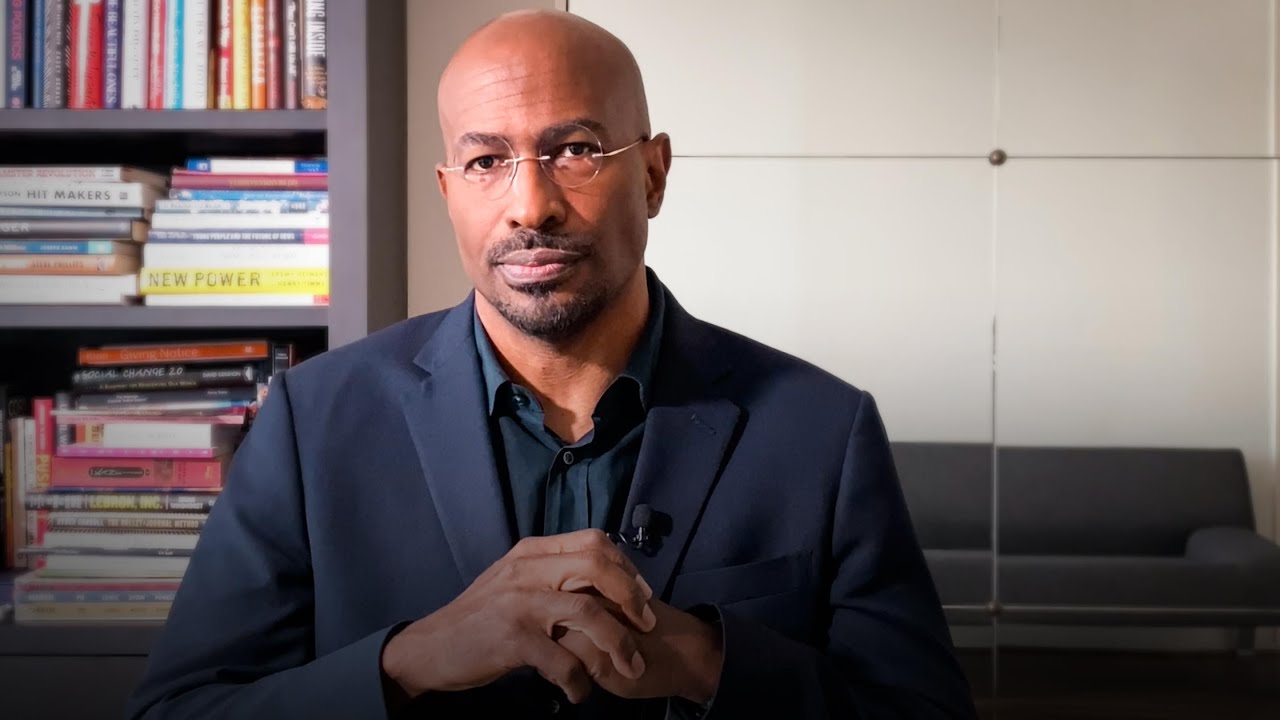
Detroit's Climate Crisis — and How to Build a Resilient Future Everywhere | Anika Goss | TED
9:56

Detroit's Climate Crisis — and How to Build a Resilient Future Everywhere | Anika Goss | TED

TED 14.07.2023 39 911 просмотров 674 лайков обн. 18.02.2026
Поделиться Telegram VK Бот
Транскрипт Скачать .md
Анализ с AI
Описание видео
How can cities become resilient to the shocks of climate change? As a leading force behind Detroit's ongoing revitalization, Anika Goss spends a lot of time thinking about this question. Connecting the city's industrial past to its sustainable future, she explores the link between climate vulnerability and economic inequity, offering a vision for responding to both challenges at once. Countdown is TED's global initiative to accelerate solutions to the climate crisis. The goal: to build a better future by cutting greenhouse gas emissions in half by 2030, in the race to a zero-carbon world. Get involved at https://countdown.ted.com/sign-up Learn more about #TEDCountdown: Twitter: https://twitter.com/TEDCountdown Instagram: https://www.instagram.com/tedcountdown Facebook: https://www.facebook.com/TED Website: https://countdown.ted.com If you love watching TED Talks like this one, become a TED Member to support our mission of spreading ideas: https://ted.com/membership Follow TED! Twitter: https://twitter.com/TEDTalks Instagram: https://www.instagram.com/ted Facebook: https://facebook.com/TED LinkedIn: https://www.linkedin.com/company/ted-conferences TikTok: https://www.tiktok.com/@tedtoks The TED Talks channel features talks, performances and original series from the world's leading thinkers and doers. Subscribe to our channel for videos on Technology, Entertainment and Design — plus science, business, global issues, the arts and more. Visit https://TED.com to get our entire library of TED Talks, transcripts, translations, personalized talk recommendations and more. Watch more: https://go.ted.com/anikagoss https://youtu.be/T8qVFOK_rK8 TED's videos may be used for non-commercial purposes under a Creative Commons License, Attribution–Non Commercial–No Derivatives (or the CC BY – NC – ND 4.0 International) and in accordance with our TED Talks Usage Policy: https://www.ted.com/about/our-organization/our-policies-terms/ted-talks-usage-policy. For more information on using TED for commercial purposes (e.g. employee learning, in a film or online course), please submit a Media Request at https://media-requests.ted.com #TED #TEDTalks #Detroit

Оглавление (2 сегментов)

  1. 0:00 Segment 1 (00:00 - 05:00) 548 сл.
  2. 5:00 Segment 2 (05:00 - 09:00) 529 сл.
0:00

Segment 1 (00:00 - 05:00)

I’m a third-generation Detroiter. My grandmother moved to Detroit in 1936 during the Great Migration and brought all of her Southern ways with her. She had an abundant garden with flowers for butterflies and honeybees and birds. She preferred to take the bus to Eastern Market to purchase all of her meat just to make sure that it was fresh. She owned a home on Mendota Street and knew that home ownership would create wealth and opportunity for her growing family. My family's story is not an unusual Detroit story, and up until the late 1950s, Detroit was a haven for middle-class families living in neighborhoods where there was green space and community connectivity and opportunity. But my grandmother's Detroit is not the Detroit that I live in today. The Detroit today is not sustainable. 84 percent of Detroiters identify as Black or Latino, and five percent are foreign-born. That makes this not just a climate and economic issue but an equity issue. And I know this because I have spent my entire career focused on the intersection between race and poverty. More recently, the work I do with my colleagues focuses on how climate impacts neighborhoods and communities that are isolated from economic prosperity. Being financially secure and climate resilient should be the most important priority for communities across the country. That is what I want to talk with you about today. Detroit is not generally thought of as a city that is at risk for climate impact, but in fact it is. We define resilience as places where residents can have their needs met and are free from long-term chronic stress, giving them the ability to withstand and recover from acute shocks. If you are financially stable, then you are much more likely to withstand and recover from the acute shock of climate change. Detroit's economic inequity and climate vulnerability began over 100 years ago under the guise of innovation. Detroit not only led the way for automobiles but manufacturing. Manufacturing was a part of our community fabric. Industrial sites were nestled in neighborhoods throughout the city so that workers could walk to their factory jobs. Our economy was booming. And although Detroit was not necessarily equal across racial lines, it was still a city of stable, middle-class neighborhoods. In 75 years, our city went from a peak population of 1.8 million down to a population of 620,000 in 2022. All of those sites where there was manufacturing and industrial sites that led to our economic boom, many of those industrial sites stand vacant and abandoned. We now have about 19 square miles of vacant land in Detroit. These industrial sites have led to dangerous contamination, both to our land and our water and our air. About two years ago, eight inches of rain fell over Detroit over a period of three days. And not just Detroit, but southeast Michigan. Scientists describe this as a more-than-500-year rain event. Now, eight inches of rain doesn't seem like a lot of rain, but this one rain event flooded our streets. Basements became filled with storm water and sewage. The repair costs were insurmountable for many families, and with nearly half of Detroiters renting, it often led to homelessness. Climate change exacerbates and compounds economic inequity in our city.
5:00

Segment 2 (05:00 - 09:00)

But I believe there are three things that we can do to begin to change the resilient future for Detroit. First, we have to begin to create an economic environment in which all Detroiters can grow wealth. Advanced technology and tech-based businesses are the fastest-growing industries in Detroit, but also the nation. It's these businesses that will contribute to solving our climate dilemma and make millions, even billions, doing it. But unless we include Black and brown Detroiters, both as workers and investing in founders, we will leave our largest demographic out of our future. Second, we have to stop only responding when there’s a crisis situation, like flooding and air quality control, and begin to think about green stormwater infrastructure and solar and renewable energy proactively. I was having this conversation with my sister because that's what sisters do, talk about manufacturing and infrastructure investment. This is my sister, I have two of them. So she lives in Washington, DC. Eight inches of rain, in her opinion, was just not enough rain to create that much flooding. And she kind of didn't believe me that Detroit was at risk for climate impacts. And I explained to her that Detroit is not different from other cities in its process for making municipal investment decisions. Municipal investment decisions are made for primarily two ways: new development and crisis repair. Detroit is not unique. What makes Detroit unique is it has 100-year-old gray infrastructure supporting 139 square miles of Detroit. We can no longer only make decisions for crisis. We don't have that luxury. We have to make decisions differently to improve the quality of life for Detroiters and improve the quality of the neighborhoods that we're all living in for the future. Finally, we have to begin to invest in neighborhoods so that they are free from blight and deterioration. As an urbanist and a futurist, I want to help Detroiters imagine the city they deserve to live in. You shouldn't have to live in a suburb to be surrounded by beautiful gardens, parks and trees. We can plant urban forests here. (Applause) So that we can reduce urban heat-island impacts and improve air quality. We can plant sustainable gardens and food gardens just like the ones you are seeing on the screen, that my team and community partners have planted all over Detroit. We can do this. We have to do this. And we need to do this because investing in neighborhoods, not just as a social program, but we must do this because climate equity and climate economics require investment in order to see the actual results. This is true, not only in this nation's largest Black city, but in every city where inequality is on the rise and climate equity will surely follow. My grandmother's house still stands on Mendota long after she passed away. Her expectation of me and of you is that a Black family just like mine that migrated north 90 years ago will be able to prosper 90 years from now because they are economically thriving. Their neighborhood has parks, gardens, trees and community spaces. And they are still Black. Thank you. (Applause)

Ещё от TED

Ctrl+V

Экстракт Знаний в Telegram

Транскрипты, идеи, методички — всё самое полезное из лучших YouTube-каналов.

Подписаться