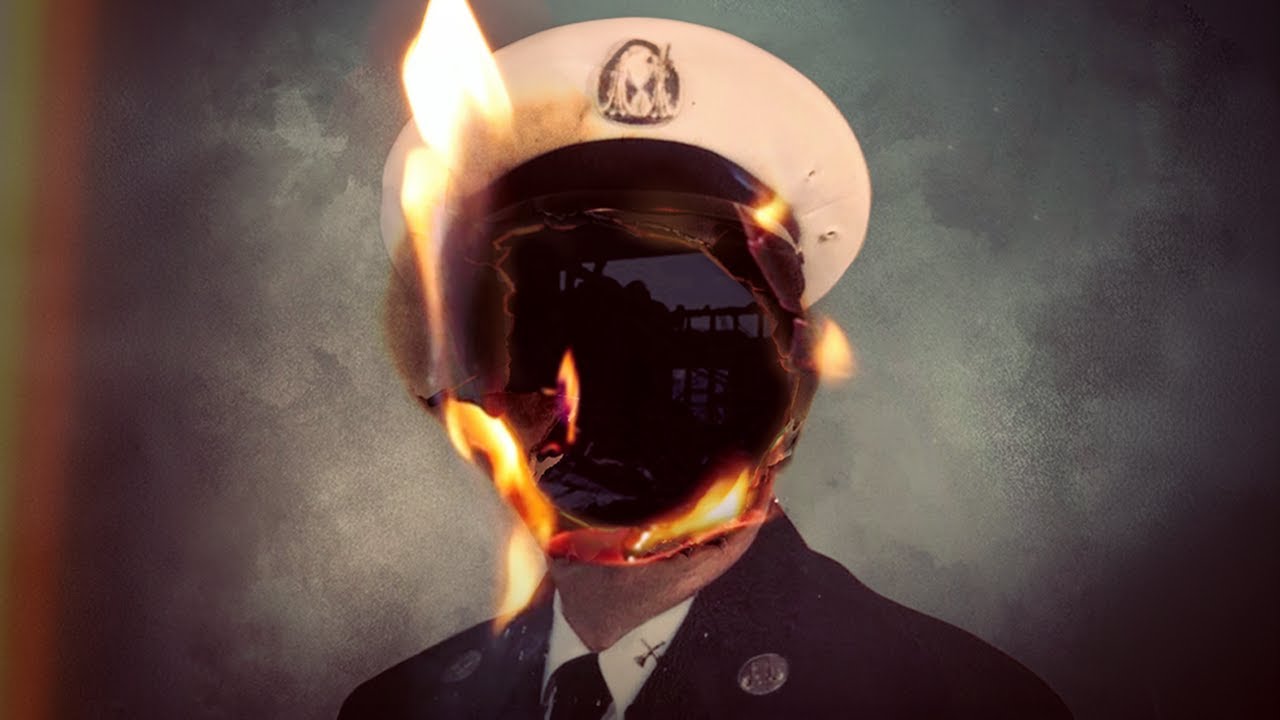
though. Because, uh, they... they're out there. He is watching for you. They are not going let the speeders get by and obviously if you get caught... [NARRATOR] The year is 1980. And Los is now the second largest city in the United States. And in 1981 the city would celebrate its 200th year with the slogan: "LA's The Place". "Los Angeles," the Economist declared, "has at last become a place to take seriously". Patronizing British journalism aside the growth was hard to ignore: a new skyline had emerged, new freeways, new tourist attractions, cultural institutions and, of course, a film industry that was still in the halcyon days of the 'Hollywood Blockbuster era'. Oh yeah, LA was *it* - and by the time the city came to host the 1984 Summer Olympic Games its reputation was cemented. [NEWS REPORTER]... Los Angeles has definitively left its imprint on the world... [NARRATOR] And the rest of us could only watch its frenetic, dreamlike, palm-tree-lined growth through a small TV screen. For many, LA really was the place. But while Los Angeles might have felt like the center of the world to some, to others it felt more like a city on the edge This rapid urbanization had come at a cost: record levels of pollution; smog so bad you could cut it with a knife; increasing poverty; overcrowding; racial hostility; and almost unfathomable levels of police brutality and corruption had all coalesced to make Los Angeles the second most dangerous city in America and a city with a reputation is the serial killer capital. No doubt Los Angeles was a city donning a glorious Ozymandian facade. A mask. On the outside she was a decadent, world-class city. But underneath she was both seething and chaotic. The perfect place for a monster on the verge of frenzy. It was 1984, and for the past few years one such monster had been terrorizing the quiet neighbourhoods of the Los Angeles metropolitan area from the shadows. A serial arsonist using the rising levels of crime and general unrest as a kind of camouflage. You see, arson was a problem that he had been growing in Los Angeles since the late 1970s where fires by arsonists had increased by more than 400%. By the mid 1980s the level of fires being deliberately set in the Los Angeles metropolitan area was understandably starting to worry its residents and was regularly making headlines. It was a North that seemed to be getting hit the hardest though: West Hollywood, Pasadena, Glendale and more. They were all seeing an unusual number of fires. While nobody had really made the link between some of those fires and a single serial arsonist, things had become so bad that by the early ' 80s some cities had put together their own specialist arson teams. And for a while at least - that worked. Until it didn't. The arsonist had simply been biding his time, and now he was about to strike again. Only this time things would escalate. so far as anybody knows up until 1984 this mysterious lone arsonist's actions - though devastating - hadn't yet led to any loss of life. But that was sadly about to change in one of the most horrific ways imaginable. Because the game he was playing, the game all serial arsonists play, was an incredibly dangerous one. And it was only a matter of time before things would get out of control. And it could have been any night, during any of the fires he'd already set. But it just so happened to be the night of October 10th 1984 in a city called Pasadena [TV VOICE] …is a thriving community of over 130,000… [NARRATOR] Pasadena is located in the Northeast area of Los Angeles County just 11 mi from LA's downtown area. Back in the 80s, it was home to a 42,000 ft strip mall which housed a number of shops and restaurants, the biggest by far being a hardware store called ‘Ole’s’. [FEMALE VOICE FROM TV ADVERT] …whatever you need, Ole’s has it! In fact… [NARRATOR] From furniture to frying pans, Ole’s Hardware Store sold everything you could possibly want for your home and then some. Plus, once you were done shopping you could grab something to eat at one of the nearby food outlets. For many of Pasadena's well-to-do residents Ole’s was actually kind of a fun day out. But on this night in particular, Billy and Ada deal were on a mission. They had some specific items they needed to pick up and they needed to make it quick because they’d brought along their 2 and a half-year-old grandson Matthew who they were babysitting. As soon as they pulled into the parking lot at around 7:30 p. m. Matthew did what any 2 and a half year-old does when they detect an ice cream shop in the nearby vicinity and he started begging for his usual a scoop of mint chocolate chip ice cream. It was late, so rather than risk a tantrum Billy and Ada promise him one just as soon as they're done. And just like magic, Matthew is now significantly more agreeable to the task of sourcing lumber and paint, the two items on Billy and Ada's list. And with that - into the store they go. At some point just before 8:00 p. m. Billy and Ada split up. Billy went to size up some wood in the west side of the store and Ada took Matthew to the Northeast section of the store to look at tins of paint. See, Ole’s was at one point two separate stores so it was separated by a large internal wall. A sprinkler system operated on the west side but not on the east: the side that Matthew and Ada were on. At the time this was technically up to regulation because of the installation of several large fire doors in between the two sections. A design that would end up being fatal. It was just a few minutes later when a loud noise was heard across the store. An indistinguishable announcement blaring over the store speakers. Over in the lumber section, Billy heard it and remembered thinking that perhaps it was closing time. It was then that he heard the screaming and saw a number of very panicked looking workers running through the central fire doors. They were saying that there was a fire and they were yelling at him to leave, but he knew that Ada and Matthew were in that section so he opened one of those central fire doors. And when he did… all he saw was thick black smoke. So he ran to try the other door but it was the same, and then he ran back towards the entrance thinking that maybe Ada and Matthew were there waiting for him. Meanwhile, inside the building Jim Obdam, a young store attendant, was desperately telling people to leave. The fire was spreading fast and the lights had started going out in that east section but he knew there were people still inside, so he stayed. At some point he ran into Ada and Matthew and he screamed at them that they needed to leave, and together the three made their way to the front of the store through the thick black smoke. Minutes later when Jim turned around to check that they were still following he realized that they'd become separated. But now the lights were completely out and the fire was spreading rapidly. So he did the only thing that he could: he crawled on his hands and knees in the dark, feeling his way along a wall to an exit. Before long he was back outside breathing in the night air. He didn't realize at the time because of the adrenaline but he was covered head to toe in burns. Sitting outside he watched on as the flames overtook the building and people scrambled out of its exits some making it out by the skin of their teeth. The speed at which this fire had taken over this football pitch sized warehouse was almost unbelievable. It was a matter of minutes. Some employees remembered being literally swept off their feet and blown out of the fire exits. One described it as a ‘tsunami of fire’. The technical term is a flashover. It's when the entire contents of a room erupt in flame due to an intense heat of more than 1,000°F. At this point the fire was burning so hot that the heat caused the fusible links in the building's many fire doors to melt which meant that they had now rolled down. This is by design, it's meant to help compartmentalize the fire, limiting its oxygen. But in this case it also trapped people inside. And those outside could only listen on helplessly. According to later reports those doors could have been opened manually but at the time for whatever reason (possibly inadequate health and safety training) no one was able to. Firefighters were on the scene in minutes but this was a disaster. A huge building full of highly flammable materials and a sprinkler system that only covered half of it. By this point Billy was beside himself and he begged the firefighters to help him find his wife and grandson. They told him that they would get them out and they really tried. They charged the line of fire with a fog nozzle only to be blasted backwards within minutes. Then they tried the doors and Billy tried with them but they weren't budging. In the end, Billy and those with loved ones inside could only watch on helplessly as their entire worlds were destroyed. Ada Deal. Matthew Troidl. Jimmy Cetina. Carolyn Kraus. Not just statistics or names in a newspaper, but real people who were loved deeply. Unknown to you or I but they shared with us the most important yet fleeting of things: a life. And in minutes… that was snatched away. Back on the ground, the local fire department was now in desperate need of help and units from nine different surrounding areas had been dispatched. But as the unit's fire captain listened into the radio he was confused. Because it looked like units were being dispatched in the wrong direction. And that's because two other fires had broken out: one at a grocery store about 3 miles south from Ole’s, and then another arson attack in a larger supermarket about 6 miles east. The firefighters didn't know it then but somebody was trying to create a distraction. In the end, it would take hours to bring the fire under control. By morning all that was left was part of a crumbling external wall and a pile of smoldering ruins. It wouldn't take them long to find the fire’s victims. All four were found together in the northeast section of the store. According to the firefighters that found them it appeared that Jimmy Cetina and Carolyn Kraus had re-entered the store to help others. All were found just 2 miles from the emergency exit door. Now the extent of the disaster was clear everybody wanted answers, including the arson investigators that would arrive on the scene. Jim Allen - a California State Fire Marshal and arson investigator - remembered the scene being complete chaos. He'd arrived a little after Glendale Fire arson investigator John Orr who had been assigned as the arson explosive supervisor. The two men were highly experienced and though they covered two different areas they knew each other well. They both went straight to work trying to figure out what had happened. They spent hours working their way through the rubble looking for evidence of a ‘point of origin’: the place where the fire could have started. But their investigation had to pause. This was now a crime scene and the LASD (the Los Angeles Sheriff's Department) would be taking over. And it was mere hours later when a sergeant called everyone on the scene for a meeting to declare the findings: an electrical problem in the attic. Both Jim Allen and John Orr were furious. They made this abundantly clear. This investigation had happened far too quickly, but law enforcement and fire department relations were… tenuous. Long story short the LASD outranked them. And they were publicly reminded of that fact. There was a full-blown argument but eventually the arson investigators gave in and spent the night drinking beers and cursing the sergeant. John in particular was livid. Jim specifically remembered feeling overwhelming guilt but they both knew better than to try and go up against the entire Los Angeles Sheriff's Department, so for now at least… they let it go. For John though, the circumstances surrounding the fire were far beyond the realms of coincidence. You see, that night John was called out to those two supermarket fires. They were both determined to be arson. Two fires set in potato chip display stands. It was the perfect crime. Potato chips are extremely oily and therefore extremely flammable. This wasn't the first time this had happened, though. In fact, this person was so notorious for doing this they'd earn themselves a nickname: the Frito Bandito. John explained to Jim Allen that he thought the potato chip fires were supposed to be distractions from the bandito's real fire: Ole’s. Arson investigators in the LA metropolitan area had been compiling information about the so-called ‘Frito Bandito’ for a while now. It was called (rather appropriately): the potato chip file. They theorized that this Frito Bandito character was also responsible for a number of other fires which had started in similar ways. They seemed to be strikingly similar each time, the fires always set in highly combustible materials, always in a retail store, and always during opening hours. And in one of those fires they'd collected what appeared to be a delayed incendiary device. A cigarette, burning down to three matches, wrapped in a rubber band. By the time arson investigator John Orr got the news of the suspicious potato chip fires that happened alongside Ole’s to the investigator who'd been pulling together this potato chip file… it was too late. The wreckage had been cleared and with it any evidence of arson. If this was the Frito Bandito - investigators were out of luck. They'd just have to wait for him to strike again. And well, wouldn't you know it? A few days later another hardware store - the Builder's Emporium of North Hollywood - went up in flames. And then a few months later another, smaller Ole’s (again in Pasadena) nearly suffered the same fate. Luckily the fire was put out almost immediately but it could have been a disaster. Because thousands were gathered along the nearby street for an annual parade. These two hardware store fires should have set a larger investigation in motion, but they didn't. Back then the systems just weren't in place. You see, John wasn't part of the Pasadena arson unit, he was part of the Glendale unit. He'd just been dispatched to Pasadena the night of the Ole’s fire because he was in the area. As for the LASD investigator and his potato chip file, well, his responsibility was the city of Los Angeles. Not Pasadena. All this to say Los Angeles city is huge and Los Angeles county is even bigger. And communication wasn't great. It could (and arguably should) have all ended there. Because the arson team on the scene of that second Ole’s fire found something strange at the fire's point of origin. A delayed incendiary device made up of, you guessed it: a cigarette, burning down to three matches, wrapped in a rubber band. This was absolutely the same guy. And later on it would become clear that this was more than just a piece of evidence to be bagged and entered into a system. It was a message from the arsonist and that message was loud and clear: I'm still here and not a single one of you are smart enough to catch me. [MALE VOICE FROM TV]
…the coming of fall in California heralds the arrival of strong winds in the North, Santa Ana in the south. Sometimes bitingly cold but more often hot and always dry. The problem is usually less acute in the north because the intensity of the wind is less. However in the south the variety of heavy vegetation covering the hillsides and mountain slopes dehydrates, preheats and becomes an open tinder box… [NARRATOR] Ah, California! The American dream writ large. Why you can ‘reach out anywhere and pick an orange,’ Steinbeck once sardonically mused. ‘And it never gets cold! ’ Well, actually it does. And it also gets very hot. In fact, it's a state that sees more wildfires than any other. According to one bioclimatologist: “in pretty much every single way a perfect recipe for fire is just written in to California”. It's hot, it's dry, and at certain points in the year it's windy, too. The Santa Ana and the Diablo winds (as they’re known) are part of the state's natural weather cycle but they massively increase the wildfire risk. They make it a lot easier for fires to spread. And whoever was responsible for the alarming increase of fires on the foothills of Northern California in the years after the Ole’s fire absolutely knew this. With Ole’s now bulldozed and the report conclusively stating that it was an accidental fire that had started in the electrical system of the attic, arson and Ole’s were not to be talked about publicly or privately or even acknowledged - let alone in the context of a serial arsonist. And in the years that followed, residents in the towns of the northern LA metropolitan area began to get hammered once again by a string of arson fires. Glendale, Burbank, Pasadena, Crescenta Valley. Like clockwork, fires would break out (usually on a foothill somewhere, usually after 4. 00 p. m. ) and other fires, too - set in alleyways or carports or trash cans filled with debris, often within blocks of one another. Fires and then distraction fires. It was Glendale - the fourth largest city in LA, located about 10 miles north of downtown - that seem to be getting hit the hardest though. Reported arsons were up 78% in 1985. This was John Orr's territory and the problem was so bad that he was now part of a specialist arson investigation unit. Of course, it didn't take long before that unit began to attribute some of these fires to the work of a single arsonist. Likely the same arsonist that had set the potato chip fires because the arsonist's calling card - that delayed incendiary device consisting of a single cigarette - was being found seemingly everywhere. ‘Was this,’ the unit began to ask, ‘the Frito Bandito? ’ Quote: “it appears his operations have stepped up quite a bit lately fortunately nobody has been hurt but every time he lights a fire there's a greater chance somebody is going to get hurt,” commented Dennis Wilson, one half of the Glendale arson unit. And he's not kidding, people were barely escaping with their lives. In one particularly terrifying instance a basement garage fire blocked a family's only exit from their burning two-story apartment building. Even the firefighters were surprised that they managed to survive. In spite of all the evidence, that lone arsonist theory was far from a widely held view. Quote: “we're not attributing it to the same person, but we're not ruling the possibility out,” commented the captain of the nearby Burbank fire department. The fact that the arsonist would take month-long breaks only to come back with slight tweaks to his previous MO certainly didn't help matters. But he'd always come back. And when he did, things would always escalate. By 1986 it was Doug Staub's turn on the Glendale arson unit. In the year and a half he worked within the unit he saw more fires than he did for the rest of his career combined. It was bad. Hundreds of acres were being set alight. Entire homes burned to the ground. But something had changed now. Working together, the two began to find the same cigarette and three match incendiary devices… but this time they had coins attached to them. It didn't take them long to realize that the arsonist had done this to give weight to their devices. These devices were being found so often that the arsonist had earn themselves a brand new nickname: the Coin Tosser. And, oh how relevant that second part of the name will eventually become. It was also around this time that the arson investigation teams (particularly those in Glendale) started getting the first witness descriptions: a white man, with dark hair. Normal height. Average build. In his 20s, maybe early 30s. Driving a van or maybe a truck. Not exactly specific but it did at least narrow it down. Still, as the summer of ' 86 drew to a close the Glendale arson units were no closer to catching the elusive Coin Tosser, and so a series of bizarre mind games began. At one point - after his trademark device was found on a particularly bad hillside fire that had destroyed several homes - investigators began theorizing that the arsonist was disguising himself as a photographer and then returning to the scene to watch (perhaps taunt) investigators. Then, of course, there was the time he showed up at a gift and home accessories store in Burbank. When the inevitable fire started the owner of that store wasn't able to get through to emergency services. When she escaped the store she luckily ran into a deputy sheriff just hanging out in the alleyway. Panicking, she told him she was really worried about the old man living next door. And then this mysterious deputy sheriff quickly sprang into action: jumping the fence to warn the man. When the firefighters finally arrived the elusive sheriff was nowhere to be seen. Of course, the sheriff was the coin tosser playing yet more mind games. Though he had just made himself extremely recognizable to the shop owner which, uh, feels like one of those decisions that will have consequences somewhere down the line… That's the weird thing about the coin tosser. He makes some pretty risky and brazen choices, yet somehow, he always has this uncanny ability to disguise himself. To blend into a crowd. Every time Doug and John thought they had something (a suspect, a clear van description for example) they’d chase the lead all around town it would always come to nothing. Still, there could be no doubt that things were now escalating and with that escalation came the risk of making a mistake. But if investigators were going to catch this guy that mistake would need to be a big one. Something undeniable that would be impossible to explain away. Something like a Fingerprint. [MALE VOICE FROM TV] …it's always time to make the
there could be no better place than the conference that was due to take place on the 13th of January 1987. It was 3 years after the fire at Ole's Hardware Store and the California Conference of arson investigators was gearing up for its annual two-day seminar in the city of Fresno, California (about 4 hours drive north from LA). It's a conference that's about as exciting as it sounds, and its 242 attendees were expecting the usual. No one could have predicted the chaos that was about to unfold. Starting on the first day of the conference a string of fires would break out along a 100 mile stretch of California's Highway 99 over a period of 3 days. Starting at the conference in Fresno running all the way back down to a city called Bakersfield. At first the fires were small. In Fresno a sleeping bag display was set on fire in a drugstore. Within an hour, another fire was set in a bin of foam pillows in a fabric store. And then less than 48 hours later (on Thursday the 15th of January), another fabric store went up in Fresno. And this time, the fire was big. It caused $300,000 worth of damage and created a blast that blew out all of the store's windows. Once again it was a miracle that nobody was hurt or worse. Scott Baker - an arson investigator with the Californian State Fire Marshal - arrived on the scene that day, oh, he knew it was arson all right. But this many arsons in a city that was holding an arson investigators conference? Some things are just beyond coincidence, and alarm bells were going off. The very next morning (Friday the 16th of January) 40 miles from Fresno, another fire erupted in a surplus store in a city called Tulare. Again, in a sleeping bag display, and then 45 minutes later on the other side of the city there was another fire! This time in a bin full of foam pillows at a discount store. But the arsonist wasn't done yet. A few hours later an hour south down the highway from Tulare, two more fires broke out in a city called Bakersfield. The first in a craft store and the second in a fabric store both in, you guessed it, a display bin full of synthetic materials. Only this time the arsonist messed up. Because called to the scene of the first fire in Bakersfield (the one at the craft store) was an arson investigator called Marvin Casey. And no prizes for guessing what he was about to find. Now, the fire in the craft store hadn't been that bad the manager had noticed it right away and put it out with a fire extinguisher. This left a white powdery residue at the fire's point of origin which Marvin noticed straight away. It was a wooden bin that was at one point full of decorative synthetic flowers. Marvin poked his head inside, and right there at the bottom he saw something. A delayed incendiary device. The delayed incendiary device. And right next to it, a small piece of yellow lined note paper. He carefully picked both up and put them in an evidence bag. Later that day Marvin received a call from Scott Baker (the arson investigator up in Fresno) and it was here finally that the dots started to connect. The same incendiary device - right down to the brand of cigarette and the number of matches - was found in one of Scott's Fresno fires. And the witness descriptions (though fairly vague) were all similar: a dark-haired man of average height and average build acting suspiciously just before the fires had broken out. If this arsonist wanted attention he was about to get it. Now, if you're an arsonist and you're going to mess up Marvin Casey (or Marv as he's called by those who know him) is probably one of the worst people to mess up around. Don't let his thick southern accent and congenial Texan charm fool you. Marv is as incisive as they come. In one book, he's described as a man with the ‘squint of a frontier lawman in his eye’, which may be a little theatrical… but Marv is a pretty theatrical guy. Because the morning after his call with Scott, Marv got into work. And he sat at his desk. And he got to thinking. And then he invited Scott to his office. 20 years of experience as an arson investigator leading him up to this point. And when Scott finally arrived, Marv broke it down to him like this: the fires in Fresno took place the day before the arson conference and shortly after it had finished. Then the guy travels back from Fresno down Highway 99 back to his home, probably somewhere in LA, setting fires as he goes. And the devices, the methods used: this guy knew what he was doing! He knew which materials to choose, he knew how to set up the device just so. ‘What if,’ Marv said to Scott, ‘this was one of the arson investigators? ’ Nowm Scott didn't immediately shoot him down, but if they were in the realm of ‘what ifs’ then wasn't it worth asking the obvious: ‘what if this was all just a weird coincidence? ’ Maybe. But at this point Marv was hooked. He couldn't stop thinking about it. So he sent the evidence (the small piece of paper) to a lab hoping for a fingerprint. And while he was waiting for the results he got the conference roster: 242 attendees. And he narrowed down that list by looking at who would have been driving south down Highway 99 (back to LA); whether or not they had left on their own; what time they checked out. He made a lot of calls, pissed a lot of people off. But in the end, he had his list: 55 arson investigators. 55 suspects. Then he got the call. On that small scrap of yellow paper they'd found a fingerprint… and it wasn't a match to anyone in the criminal database. Whoever left that print didn't have a criminal record. Now, this was in line with Marv's theory so he immediately called the higher ups - the ATF, the Bureau of Alcohol Tobacco Firearms and Explosives - but to describe the special agent on the other end of the phone as skeptical would be an understatement. Pulling the prints of 55 arson investigators would mean going to each of their respective fire units and pulling their physical fingerprint cards. ‘And anyway,’ he said ‘the evidence just doesn't warrant that, so thanks for the theory but no thanks… and good luck with it all’. ‘I couldn't get anyone to believe me,’ Marv remembered, ‘because they didn't want to believe me’. Needless to say, Marv was bitterly disappointed. The whole thing had made him an outcast. Many of his fellow investigators shunned him. He knew that he couldn't take it further, at least not right now. Not without losing his job. He would just have to wait until the arsonist struck again. That wait would be a long one. Two years, to be precise. But eventually, as you now know: our lone arsonist is not a very good decision maker. And he just can't help himself. This time, the arson investigator’s conference was in Pacific Grove (a city on the coast) about 5 hours’ drive north of Los Angeles. It was the same pattern: fires along the highway leading south from the conference, all in foam padding or pillows, many of them with the trademark device. Just like the Fresno-Bakersfield fires, just like the coin tosser. And those devices were wrapped in the same yellow notebook paper as the ones found at the first Arson Investigators’ Conference. Of course, it didn't take long for Marv to hear about this and by the end of March 1989 he'd cross reference that conference list with the old one using the same criteria. And now he didn't have 55 names. He had 10. Perhaps unsurprisingly the higher ups the ATF were now much more willing to pull the prints from the arson investigator's various fire units. This was it. Marv had him. It was over… or at least it should have been. There was just one small problem. [ATF MALE VOICE OVER PHONE] …anyway, I'm sorry Marv… it's not a match for anyone on the list… [NARRATOR] This just didn't make sense to Marv! He was so sure that he was right. But if the fingerprints weren't a match to any of the arson investigators on the list then that was that. And when you really thought about it did kind of sound like some ridiculous HBO films starring Ray Liotta. Now you're probably thinking: ‘what about the other ATF agent? ’ and ‘what about all the other devices that were found? ’ and they're good questions. But you see, at the time Marv hadn't known about the devices found by any of the other arson investigators. The Frito Bandito, the coin tosser. Like I said before, departmental communication just wasn't happening in the way that it should. If it had, things may have been different. But here's the thing you need to know about Marv: he's stubborn. And deep down, he knew he was right. There were just too many coincidences. But what was he going to do? Start accusing a fingerprint expert of getting it all wrong? They’d just laugh him out the door. A small city arson investigator. A country bumpkin with his crazy conspiracy theories, that didn't even have evidence. He knew what they were saying about him behind closed doors. He was a joke to them. But he knew something else, too: this guy - whoever he was - wasn't going to stop. Marv knew arsonists. And he knew arson investigators. This guy had messed up before, and he would mess up again. And once more, Marv was just going to have to wait. And he wouldn't have to wait very long. Because this arsonist's fires were messages, and once again that message was loud and clear: clearly none of you are smart enough to stop me, so I guess I'll just burn it all.
knew that time wasn't on their side. So the task force came up with a plan. They'd seen the pattern in those LA fires. They had to start connecting the dots… and fast. They began spreading the word and in March 1991 a ‘pillow pyro bulletin’ was presented by an LAFD investigator at a fire investigators ‘Regional Strike Team Meeting’. This was a group formed by the small foothill cities of the northern LA metropolitan area, mostly attended by any city that didn't have its own big arson investigation unit. That day the investigator presented the pillow pyro’s MO, outlined examples of fires, advised on what to do and what to be on the lookout for and then handed out a flyer detailing the signature device to a room full of arson investigators. Now, most attendees sat there and listened dutifully: another day, another meeting. But as soon as those flyers were handed out one of those attendees felt his blood run cold. It was Scott Baker, arson investigator for the California State Fire Marshal. He'd seen that device before… 4 years ago, in Fresno. He and Marv had discussed it to death. And now here it was on a piece of paper right in front of him. He wanted to speak up there and then but he had to stop himself. There hadn't exactly been the most well-received theory back then and if Marv was right Scott may be sitting in a room with the arsonist right now! So he waited. And then when the meeting was done he had a quiet word with the LAFD investigator. He told him that he needed to tell him something, something really important. ‘Not here, thoug,’ he said ‘meet me outside in the middle of the parking lot’. This spooked to the investigator who probably thought it was all a bit dramatic, but he obliged. And there, in the middle of the parking lot, Scott shared the theory. He told them everything. And then he dropped a bomb: we didn't just find the same devices that you did. We found something even better: a fingerprint. I'm sure you can imagine the look on Marv's face when the Three Amigos from the pillow pyro task force came strolling through his office door. He pulled out all of his intel. One of the Amigos, Glen Lucero, remembered listening politely as Marv began regaling his theory in careful and elaborate detail. At the time, Glen remembered thinking that quote: “it was interesting but that Marv had already worked it to death”. True, and perhaps more importantly, as they would find out, when it came to that all- important fingerprint, there wasn't actually a match. In contrast to Marv, The Amigos were decidedly unexcited about this theory. Still, they took the evidence back with them and half-heartedly trotted out the theory to Mike Matassa. They explained that yes, there was a fingerprint, but there were no matches. And Matassa - cautiously optimistic - just said: “so, let's run it again”. And just like that, the fingerprint was being run through a much more enhanced process using newer techniques that were more reliable. They now had access to a computer, for example, that scanned the print and gave it a score. And that computer could scan not only Arson investigator fingerprints but all the fingerprints of all the country's law enforcement officers, and anyone who'd ever applied for a law enforcement job such as a fire investigator who had applied and failed to get into the LAPD 20 years earlier, for example. And I'm sure you can probably guess what happened next. The computer found a match. There it was, clear as day. April remembers having to sit down as she was told the results [MALE VOICE OVER THE PHONE] …here for the 1987 Bakersfield fire, uh… listen we, we… have a really weird result here… you oughtta tell your arson investigators to keep their mitts off the evidence! It was touched by John Leonard Orr, left ring finger. Isn't he an arson investigator up in Glendale? So what’s the hell’s he doing up Bakersfield? [NARRATOR] John Leonard Orr. The well-respected arson investigator from Glendale that he'd met at the beginning the man who had first come up with the theory of the lone arsonist. The man who had convinced his police partners to chase the arsonist all over town. The man who had been so insistent that the fire at Ole’s was arson. Nobody could believe what they were hearing. There had to be some kind of explanation… John Orr, of all people! He was a leader in his field. Everyone knew about his success rate in finding the point of origin. At the time they were all thinking that there had to be a mistake. Maybe the computer got it wrong. So they spoke to Marv and they asked him: “is there any way that anyone other than you could have touched that paper in a professional capacity? ” to which Marv answered, unequivocally: “no! ” It was exactly as they had expected. Why would John be an investigator at a Bakersfield fire two hours from his jurisdiction in Glendale? Right there and then, all doubt went out the window. Of course, on the other end of the line, Marv suspected that they'd found something. They told him that they had but they couldn't tell him. And he was pretty mad about this, he felt that he had the right to know. Eventually The Amigos caved and told him. Shivers went down his spine. John had trained him. Glen Lucero - one third of the Amigos - felt the same way. At one point, Glenn had been neighbors with John and had been invited to his Christmas parties. As a fellow firefighter he'd also gone to many of his arson talks. He'd read the papers that John had written. They were really good. Now, you might imagine that this would be a smoking gun. There would be no way that John would be able to explain this, and so he would immediately be arrested and charged. But that isn't quite how it worked. Remember, the pillow pyro task force only knew about the most recent LA fires and now the string of fires of the 1987 arson conference. They didn't know about anything else. But of course they knew there would be more. They now had to start looking at every other suspicious fire which meant that they had to start digging through other departments’ files, only alerting those who absolutely had to know, certainly not John. They didn't know it then but they were looking down the barrel of more fires than they could have ever possibly anticipated. This case was about to go deep. Because the coin tosser fires, the frito bandito fires, Ole’s hardware store… were all John. With the depth and complexity of this case, they needed time. Better still with the notorious difficulty in compiling solid evidence in cases of arson (arson is a prosecuting attorney's nightmare) they ideally needed to catch him in the act. So more people would have to be brought onto the task force. And on top of that they needed to start tracking him. So they applied for a court order to stick an electronic tracking device to the bottom of his car and when they were granted one a few weeks later they began planning for a stake out. And their timing couldn't have been better, because in a few days John would be attending another arson investigators conference. And I'm sure not a single one of them had any clue as to the very strange game they were about to play. starting on Saturday the 27th of April 1991 The Amigos, Matassa, and a newly expanded task
It was exactly as they suspected. The Frito Bandito, the coin tosser, the pillowcase pyro… they were all Aaron. And Aaron was clearly John. And while this book obviously showed that John knew things about both the arson fires and their subsequent investigation that he simply should not have known there was more to it than that. The other main character in this book, Phil Langtry, the hero of the story - the arson investigator that would eventually solve the puzzle and catch Aaron, the arsonist - also seemed to be John. To really understand this, though, we need to look at John's background. So let's go over what the task force would have known about John while they were reading Points of Origin. John was born in ‘49 into an ordinary middle-class family. There was no real evidence that Jon had any real issues until he joined the workforce. He started in the Air Force but was honorably discharged by the time he was 22. This was when John had decided that more than anything he wanted to be a cop. In 1971 he began applying to the LAPD and the LASD and he passed everything but the psychological exam, where the assessing psychiatrist would deem him unsuitable due to his emotionally unstable, overly passive personality which showed serious signs of problems with authority. Not accepting this assessment John went and hired his own psychiatrist who said he was, quote, “just fine”, but funnily enough this wasn't accepted by the LAPD. And a few years later in 1973 he applied for the Los Angeles Fire Department, a highly competitive position. He failed both the physical and written exams. Finally, in 1974, he managed to get a job at the Glendale Fire Department, mostly because there were hardly any applicants and the job was the worst paid of its kind in the country. But John found this job to be unexciting, so he began working as a security guard at a 7-Eleven and then at a SEARS department store where he caught 30 people in the first month, telling everyone who would listen that he had a, quote: “cop’s sixth sense”. John, of course, was not a cop. Something he was painfully reminded of in his pursuit of department store shoplifters who hardly listened to him when he attempted to chase them down. On more than one occasion a real cop would have to get involved which irritated John to no end. It was at this time that he got a concealed weapon permit and began hanging out at cop bars where he earned himself a reputation as a ‘wannabe’. The firefighters liked him just fine but the cops - they thought he was a joke. He was constantly cruising around trying to catch the ‘bad guys’, and once, he even ended up in a local paper for catching a burglar. It was his first taste of being a real hero. For a man who had thus far failed at the majority of his most important life goals and was now actively being mocked by those in a position he so desperately wanted to be in, this feeling was pretty damn intoxicating. Even if behind closed doors he was reprimanded for illegally carrying a firearm in his capacity as a firefighter. It was at this point - the late '70s - that the arson fires started becoming a problem. So much of a problem that the Glendale Fire Department needed their very own arson investigator. Someone to hunt down the evil serial arsonist. A role that John was more than happy to oblige. However John couldn't carry out his role appropriately without a cop by his side who could actually make arrests, which as I'm sure you can imagine was humiliating for John and you can really see this strange - often contradictory - relationship that John has with police and authority more generally in his novel Points of Origin. Just listen to how Phil Langtry (the main protagonist) talks about his cop partner, Ash (no, your ears are not deceiving you. That's actually his name. ) [POINTS OF ORIGIN] “At about 8:15 p. m. his partner showed up, justifying his tardiness by saying he went to see the fire scene on his way to work. ‘Just a poor dumb cop,’ thought Phil. [NARRATOR] And then listen to this bit where his ex-wife - Marta - who he's still seeing (just like in real life) admits that she's been seeing a cop. [POINTS OF ORIGIN] ‘I've been seeing someone,’ Marta confessed. Phil didn't respond. ‘He's a cop. ’ Phil lay silently fuming. He hated cops. [NARRATOR] There are many examples of these anti-cop diatribes throughout the book, but it's also interesting to note that this fixation with authority and power is also played out in the character of Aaron who is referred to on multiple occasions referred to a as ‘weak’ and ‘pathetic’, quote, ‘only a firefighter and not an arson investigator. ’ In the end, just like in real life, it's clear that all Phil Langtry wants is for the cops to listen to him. To see him for the hero that he really is. In the last few chapters of the book, having convinced law enforcement of his Superior Intellect™, Phil is quote ‘fully in charge of the hunt for the serial arsonist’ with everyone (including highly experienced special agents) putting aside their quote ‘professional jealousies’ of the arson investigator, and allowing him to literally lead entire SWAT teams on high speed chases and to kick down doors and wave his gun around. And, just like in real life, civilians want to see some ID because (and I CANNOT emphasize this enough) John is not a cop. And then Jo- I mean, Phil - starts shouting expletives at these poor people, and waving his gun around asking them if that qualifies as ID. Of course, it didn't, on the grounds of either common sense or the law. But those things never stopped book John or real life John who was frequently issued warnings - not for impersonating a cop (which he did but that wouldn't be found out until much later) but let's say - LARP-ing as a cop. Taking things way too far. Overstepping his boundaries. On one occasion, he was seen leaving the office in tears after one of these warnings before self-exiling into the forest for several days, only to return to the office when his fire chief dangled a promotion in front of him that would allow John - a clear beacon of mental stability and emotional control - peace officer status. Which meant he could now carry a gun on the job. This was a crowning moment for him. Guns meant power, something John was desperately covetous of, but far too weak to actually wield responsibly. Later, he would say of this cannon event and I quote: “an arson investigator wasn't totally a firefighter or totally a cop. We were bastard children. Especially to real cops. But I had news for them: I wasn't a wannabe. I was a cop! Whether they wanted to believe it or accept it. Full-time arson investigators in the state of California are defined in penal code section 830 as law enforcement officers. ” Not sure who he's trying to convince here. Though I really don't want to, it would also be remiss of me not to mention the fact that Points of Origin contains many sexually explicit scenes which are so graphic that I can't read them out to you without violating both YouTube guidelines and probably a few social boundaries. Truth is: fires, for John, were at least in part sexually motivated. This pathology is something that John would offhandedly bring up to his colleagues on more than one occasion and also in professional interviews where he once stated, quote: “fire is an arsonist's friend, his lover. It's his fire. Sexually motivated fire setters treat their fires like that. Their friends, their lovers. They instill confidence in them. ” Not to be recursive, but I cannot overstate just how congruent this book is with John's experiences. I say this because at a cursory glance if you didn't know the finer details, you might assert that John - an arson investigator - is just writing what he knows. But the devil really is in the details. John can't help but slip up in this book. It almost feels deliberate at some points. Of course, it was pretty obvious to the task force that this book was a window into John's mind. It may not have been well written, even really made sense at points, but it nonetheless allowed the task force to really understand the true nature of what they were dealing with. It was just like in real life: both characters - the arsonist and the arson investigator - were John. Now having this more in-depth understanding of his psyche, they knew it wouldn't be long before he had to set another fire. So they prepared their case and they waited. The process was painstakingly slow but John was being followed 24/7. He just had to set one fire. And then, in November 1991, just as they predicted, John did just that. The tracking device placed him at an arson fire at Warner Brother Studios. His wife had been working there at the time and he was seen using her key card to enter just moments before a fire broke out. On December 4th 1991 The Amigos and the rest of the task force made their way over to John Orr's house and placed him under arrest. There was no worming his way out of this. Given all that they now knew it was hardly surprising when they found a mountain of evidence stashed in his house and car: camcorder footage, incendiary devices, a pack of cigarettes, rubber bands, a badge which would allow him to impersonate a police officer, even the yellow lined notebook paper. There were also additional chapters and drafts of his novel as well as letters to editors which revealed much more specific details about his fires. You can only imagine the sheer look of Joy on Marv's face. He wasn't allowed to take part in the arrest (he'd asked), but he knew all about it. He'd been right. The whole time, he'd been right. In the face of such overwhelming evidence - evidence that Matassa and the Amigos carefully displayed all over the interview room during John's first and only interrogation - everybody had expected a confession. But John didn't just deny any wrongdoing. He played completely dumb, telling his interviewers that they were crazy and that this was all a complete fantasy. And honestly, if you didn't know about the sheer weight of evidence that was about to be brought against him, you might be inclined to believe John. John certainly believed John. Just listen to this statement he gave to a journalist while he was out on bail and awaiting trial, quote: “I won't say it's ruined my career, because after the trials are over with I fully intend to go back to work. I'm not going to give up a $70,000 a year job a career that I've developed. It'll set me back a little bit, yeah, credibility wise, but I fully expect to be exonerated. And to hell with it, I'm going back to work. ” Of course, when trial time arrived it would become quickly apparent that there was only one place that John would be going, and it wasn't back to work. In July of ‘92 John was found guilty for the majority of the Fresno arson conference fires. Not all, but enough to earn him 30 years in prison. The defense tried to argue that it could all reasonably be a coincidence but it was hard to argue much of anything, what with the fingerprint, the testimonies (including Marv’s) and the evidence found at John's home, including this ridiculous letter that he'd sent out to a literary agency as a pitch for his book on June 3rd 1991: “my work is a fact-based novel of an ongoing investigation. A serial arsonist is setting fires throughout the west and is quite possibly a firefighter. The series has been going on for over 5 years and I was even considered a suspect at one point. In early May of this year I found a radio tracking device attached to my car while I attended a training conference. Ironically my protagonist experiences the same situation. I'd already written the chapter dealing with the protagonist being tailed before I found that I was being followed. By the way, I'm not the arsonist and the investigation here continues. My work is fictional. ” So John had known that he was being followed the whole time. He knew that the task force suspected him, yet he chose not to say anything. Not to even attempt to provide evidence of his innocence. I'm not really sure how he thought that one was going to play out but safe to say no one screws John harder than John screws himself. Now there is of course a glaringly obvious piece of the story missing here, because that first trial had been about financial damage. Risk to life and property. But not about the thing that mattered the most. The fact that John's actions had taken four lives. And there was a reason for that. Because the district attorney - in a masterful move that showed an extremely sophisticated understanding of John's psychological profile - had set up a trap. And John walked straight into it. On the 24th of March 1993, looking down the barrel of another trial for the pillow pyro of fires plus the second round of arson conference fires, John took a plea deal and pleaded guilty to three more counts of arson in Los Angeles on the proviso that he be allowed to serve all of his sentences concurrently, and be paroled in 2002 when he'd be 53 years old. Oh, but make no mistake John was doing the calculations in his mind. He could Whittle down those years with good behavior or perhaps get rid of it all together with multiple appeals. His thinking was exactly what the prosecution had banked on. They could have gone for all of his crimes at once but by doing things in this order they had used Jon's arrogance against him. Specifically his deeply held belief that no one was really smart enough to recognize the full extent of what he'd done. The prosecution knew it would be fairly easy to get John to admit to these quote unquote “lesser crimes” in exchange for less time behind bars, something he never would have done if all those charges were lumped together. But now that he had admitted that yes he was an arsonist and also a pathological liar he had unwittingly established a baseline level of guilt that would be impossible to walk back (though he would almost immediately try). Now going into further trials, no reasonable person would entertain any notions of a conspiracy, and it would be significantly less difficult to convince the world that John was so much more than by his own admission an arsonist and a pathological liar. It was time for the mask to come off, and the world was about to find out what was underneath it. Not just a man who had set a few fires, but a cold-blooded
killer. [QUOTE FROM POINTS OF ORIGIN] The hardware business prospered in the small community south of Pasadena. Hardware stores such as Cal's did well. Madeleine went to the cluster of stores at least twice a week to shop. Tonight, she was babysitting her 3-year-old grandson, Terrence. She took him to the Baskin-Robbin's ice cream store, and while standing in the parking lot sharing a chocolate mint cone, she decided to entertain Terrence further by walking through Cals. In less than 6 minutes, Madeleine and Terrence would be dead. As she rounded the corner, she almost ran into a man with his hands in his pockets. She heard his breath suck in, and he mumbled his apologies as he continued on and she continued to the back of the store with Terrence. Aaron glanced back over his shoulder and breathed a sigh of relief as he saw the woman and the kid were walking away. He pulled out his wallet and looked into it while he walked through an empty checkout line. His ploy worked. No one paid him any attention. Minutes later, Madeline heard a shrill whistling noise. Realizing now it was a smoke detector, her heart raced, and as she rounded the corner, she saw the smoke was now swirling around the ceiling. She held Terrence close to her, she stared at the fire fascinated, yet terrified. The emergency lights flashed on but a huge amount of smoke blocked them completely, leaving them in complete darkness. Madeline's body was found with Terrence’s clinging to her ankles. He rationalized the deaths as he did everything: it wasn't his fault. The people, to him, just acted stupidly. And their deaths had nothing to do with the fact that he set the fire. They just reacted too slowly. It was too bad about the baby, but [ __ ], it wasn't my fault”. [NARRATOR] While he'd swapped a few names around, the fire he'd set at Ole’s had been one of the first chapters in his book. In May of 1998, it was read out in full to the courtroom in the presence of those that had lost their loved ones in the fire. There are some really graphic parts of this book that I've omitted but it's important that you know as the rest of the court did that day, that John chose to describe their final moments in an unusually horrifying amount of detail. As a result, John was now standing trial for murder, as well as 25 other fires for which the death penalty was on the table. Even though all of the evidence in the trial was circumstantial, the case brought against John was damning. John's words as they appear in the original copy of Points of Origin line up almost perfectly with the events that took the lives of four people on the 10th of October 1984. Billy, husband to Ada and Granddad to Matthew was brought to the stand, where he would confirm that Matthew had desperately wanted a Baskin Robbins ice cream that day. Not just any flavour, though. Specifically, mint chocolate chip. His favorite flavor. A small detail but unforgettable to a courtroom who had then listened to the same story with that same detail again told in Points of Origin. The implications were crystal clear. There was only one way John could have known that detail. In spite of all of this, the fact that the fire was determined to be an electrical problem in the attic was still hanging over the prosecution's head. After all, it was an LASD Sergeant who had come to that conclusion. So the prosecution brought to the stand an electrician who had wired Ole’s store when it was built. And he told the courtroom, in no uncertain terms, that the wiring ran through the floor, not the attic. A blueprint pulled out by the prosecution would corroborate this. The LASD sergeant had been incorrect In his assessment. ‘And wasn't it strange,’ asked the prosecution, ‘that Jon was the only one who had insisted it was arson that night? Why was John so confident about the link between Ole’s and the potato chip fires, when nobody else was? ’ Further to this, the court also heard from many of his colleagues how John had stonewalled investigations by, for example, claiming that he'd interviewed people who'd seen the serial arsonist when in reality he'd undertaken no such interviews. They also heard how John was notorious for being on the scene before firefighters had arrived, and when he was on the scene they heard how he was unhelpful, preferring to give media interviews which gave away vital and confidential information about the so-called serial arsonists. Or he'd take photographs rather than actually help put out the fires while they were still active. John was also correctly identified by a number of witnesses as the dark-haired, average looking white man that had plagued investigators for years by a number of people, including the owner of the gift store in Burbank, who would testify that the deputy sheriff she'd seen in the alleyway (the one that had helped the old man but was nowhere to be seen when firefighters arrived) was without a doubt John Orr. And of course, the prosecution was quick to remind the courtroom that a badge that would have allowed John to undertake such an impersonation was found in his home. They then showed the court footage that John had taken on his camcorder of beautiful homes on the hillside and then footage taken weeks or months later of those same homes on fire. Then the psychological evaluation that had gotten John a rejection from the LAPD all those years ago was read out loud: “unacceptable applicant. Reason for rejection based upon his past history and results. Currently having marital problems with separation, recently walked off job, gave no notice. Supervisors gave him poor evaluation, described him as a goof off, know it all, irresponsible and immature. Testing reemphasized this, Rorscach showed him passive and indecisive, with problems with women and sex. The MMPI confirmed this and showed a schizoid person who is withdrawn from people and may have sexual confusion. Very non-objective. Diagnosis: personality trait disturbance, emotionally unstable personality. ” It's also interesting to note that same psychiatrist would describe him as a bizarre profile, wanting of recognition yet hostile towards authority. Passive, yet also resentful. The dots weren't particularly hard to connect: John had wanted Ole’s to be arson because he wanted to be the one to solve the case. He hated that he'd been steamrollered by a cop. He wanted to be the hero. He wanted to be right so badly, that weeks later he would make contact with one of the victim's family members who happened to be a police officer themselves to tell them that he didn't think the Ole’s fire was accidental, and to ask if they'd be able to provide a copy of one of the victim's autopsies. He then made a comment about the inside of the victim's throats, which mirrored the more graphic elements written in the book that I've omitted. And when that didn't work he would set fire to another Ole’s department store a few months later, an event which also featured in the book. The defence did their best to demonstrate reasonable doubts but the fact that John had pleaded guilty before was crippling, and on the 25th of June 1998 John Leonard Orr was found guilty of all four murder charges and all but one of the arson counts. The decision on the death penalty was decided in a separate phase of the trial. Here, the jury would listen to survivors and families of those who had lost loved ones. Eventually, John's daughter would take the stand. She was well spoken and thoughtful. And heartbroken. She'd loved and respected her dad, looked up to him. At the time she believed he was innocent. So she asked that they show mercy. A few days later, John sat upright as the judge explained that the jury could not reach a decision and that the panel had deadlocked 8:4r in favor of the death penalty. John had avoided a death sentence, but he would spend every minute of his life in a cell with no possibility for parole. It may not have been the outcome that many wanted, but the mask was finally off. It was over. Most experts agree that John is likely guilty of far more fires and potentially deaths
than we can ever possibly know about. All said and done, Matassa believes that John or nearly 2,000 fires between 1984 and 1991 and according to Glen Lucero there was a significant drop in all types of fires that John was known to set, with one source stating that drop is as much as 90% for brush fires in the nearby foothill areas after John's arrest. That would most likely make John the most prolific American arsonist of the 20th century. The use of the word arsonist rather than pyromaniac is a deliberate one. Arson is the criminal act of setting fires, and pyromania is pathological. An illness. For a very simple yet extremely important reason you see, for pyromaniacs setting fires is an overwhelming impulse which is followed by a sense of relief or pleasure after the act. It's a quote, “uncontrollable impulse to set fires in which the gratification results from the fire itself and not from any other motive,” like revenge or money. And this point is a very important one to make. You see, the defence tried to portray John as someone who had no control. Who suffered from an illness. But as has been emphasized by both prosecution and numerous psychiatrists, John actually isn't a great fit for the diagnostic criteria of a pyromaniac. Nothing emphasizes this point more than a story told later by John's ex-wife. Because after a few years of marriage, John just upped and left her one day for seemingly no reason. Eventually, he tried to win her back but she was having none of it, so she changed the locks. She didn't make the connection until much later, but fires started happening in nearby parks and mountains, some of them got really close to her home and when they did, John would be back at her house checking in on her. John did this a lot. She didn't altogether mind at the time because she'd had problems with the stalker since John had left, someone knocking on the doors in the middle of the night, standing out in the shadows, watching her. It terrified her. Of course, the man in the shadows, she now knows, was John. John knew what he was doing. He knew that he was hurting people, taking things too far, ruining lives. But he continued to do it anyway. To this day, decades after John has set his last fire, he wholeheartedly maintains his innocence. He's even written a book about it, not ‘Points of Origin’ but ‘Points of Truth’ which can be summarized as: you're all wrong, it's all circumstantial, and I'm at the center of a conspiracy. Over the years, many journalists have seemingly been stumped by John's behavior. Unable to make sense of the story they've just told. Does John really believe he's innocent? In those quiet moments inside of his prison cell, does he really believe that he is still the hero? Some have pondered if perhaps this vehement denial is the only thing that allows his fragile psyche to live with what he's done. I don't know if those are the right questions to ask, but you do have to wonder: why did John write Points of Origin? Why write about crimes that you committed? Was there a part of John Orr that was trying to make sense of a deep internal struggle? As many have suggested, was this John's way of actually helping to catch the bad guy, which was, in the end, himself? Or was it just his way of bragging? Was he just so arrogant that he really thought everybody else would be too stupid to notice if he confessed to it all and swapped a few names around? While these are certainly interesting discussions to have, it's worth remembering, I think, that when it comes to any question that tries to get at the heart of why John has done what he's done and why he continues to deny it in spite of all the evidence, that John provided us with the most important clue a long time ago. After his arrest (still putting on the pretence) of innocence, John was asked about why arsonists do what they do and this is how he answered, quote: “a murderer is an aggressive individual that confronts their victim and kills them, physically facing that person. An arsonist is a weak, non-aggressive and insecure type of personality. ” In other words: arsonists are cowards. Even if he can admit what he did to himself, he's far too weak to say it out loud to the people that needed to hear it the most. John's thought process is deranged but I don't think it's particularly complicated. And anyway, if you ask me, I don't think it really matters what John thinks. John's brand of heroism was always an act, whether he thought it or not. A mask to hide the monster underneath. And all masks eventually slip. If you've made it this far into the video I just wanted to say thank you so much for watching and I do apologize for the gap between uploads by the way. At the moment it's still just me making these videos and upload time is still a bit slower than I'd like, also I've been working on another project in the background so there's that, too. If you'd like to support the channel beyond just watching all the way through this video (which, thank you by the way you've already done more than enough) but if you want to give extra support the best way to do that is through my Patreon, which should be linked somewhere here on the screen. Okay, I've spent a very long time in this dark room so I'm going to go outside and touch some grass. Okay. I hope things are good wherever you are stay safe and I will see you in the next one.