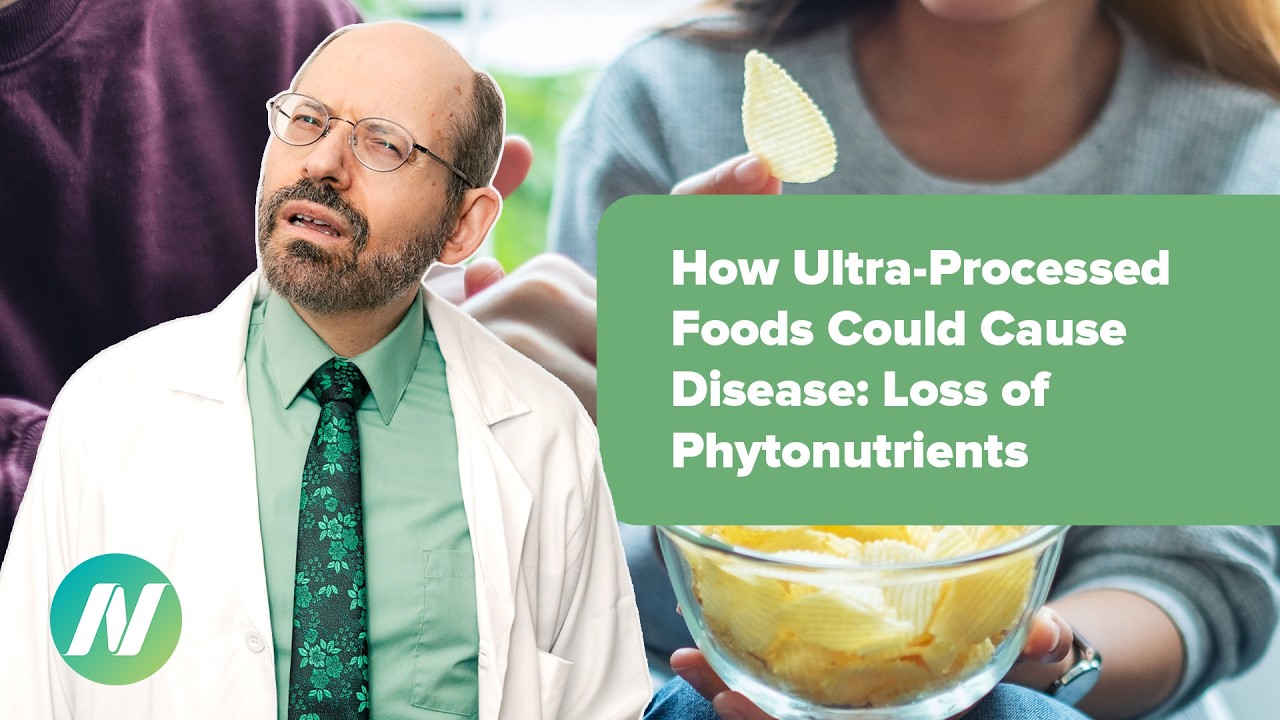
How Ultra-Processed Foods Could Cause Disease: Loss of Phytonutrients
4:56

How Ultra-Processed Foods Could Cause Disease: Loss of Phytonutrients

NutritionFacts.org 29.04.2026 7 730 просмотров 387 лайков

Machine-readable: Markdown · JSON API · Site index

Поделиться Telegram VK Бот
Транскрипт Скачать .md
Анализ с AI
Описание видео
The 150 key nutritional components that are tracked in nutritional databases are only a tiny fraction of the more than 26,000 compounds present in our food. If you missed the previous videos in this series, check out: • What Are Ultra-Processed Foods? (https://nutritionfacts.org/video/what-are-ultra-processed-foods) • How Bad Are Ultra-Processed Foods? (https://nutritionfacts.org/video/how-bad-are-ultra-processed-foods) • Which Ultra-Processed Foods Are the Worst in Driving the Association with Death and Disease? (https://nutritionfacts.org/video/which-ultra-processed-foods-are-the-worst-in-driving-the-association-with-death-and-disease) • Do the Health Impacts of Ultra-Processed Foods Apply to Plant-Based Meat Alternatives? (https://nutritionfacts.org/video/do-the-health-impacts-of-ultra-processed-foods-apply-to-plant-based-meat-alternatives) • How Ultra-Processed Foods Could Cause Disease: Food Additives (https://nutritionfacts.org/video/how-ultra-processed-foods-could-cause-disease-food-additives) • How Ultra-Processed Foods Could Cause Disease: Industrial Contaminants (https://nutritionfacts.org/video/how-ultra-processed-foods-could-cause-disease-industrial-contaminants) • How Ultra-Processed Foods Could Cause Disease: Packaging Chemicals (https://nutritionfacts.org/video/how-ultra-processed-foods-could-cause-disease-packaging-chemicals) Stay tuned for the rest of this extended video series on ultra-processed foods, coming out over the next several months. If you don’t want to wait for each video to be released, we’ve compiled all the information into a brand-new book, Ultra-Processed Foods: Concerns, Controversies, and Exceptions (https://nutritionfacts.org/book/ultra-processed/). New subscribers to our e-newsletter always receive a free gift. Get yours here: https://nutritionfacts.org/subscribe/. Have a question about this video? Leave it in the comment section at http://nutritionfacts.org/video/how-ultra-processed-foods-could-cause-disease-loss-of-phytonutrients and someone on the NutritionFacts.org team will try to answer it. Want to get a list of links to all the scientific sources used in this video? Click on Sources Cited at https://nutritionfacts.org/video/how-ultra-processed-foods-could-cause-disease-loss-of-phytonutrients. You’ll also find a transcript and acknowledgements for the video, my blog and speaking tour schedule, and an easy way to search (by translated language even) through our videos spanning more than 2,000 health topics. Thanks for watching. I hope you’ll join in the evidence-based nutrition revolution! -Michael Greger, MD FACLM Captions for this video are available in several languages; you can find yours in the video settings. View important information about our translated resources: https://nutritionfacts.org/translations-info/ https://NutritionFacts.org • Subscribe: https://nutritionfacts.org/subscribe • Donate: https://nutritionfacts.org/donate • Podcast : https://nutritionfacts.org/audio • Books: https://nutritionfacts.org/books • Shop: https://drgreger.org • Facebook: https://www.facebook.com/NutritionFacts.org • Twitter: https://twitter.com/nutrition_facts • Instagram: https://www.instagram.com/nutrition_facts_org
Оглавление (1 сегментов)

Segment 1 (00:00 - 04:00)

Ultrarocessed foods don't only negatively impact nutritional status through a relative lack of micronutrients like essential vitamins and minerals, but also by lacking phytonutrients, the thousands of plant nutrients that aren't listed on the ingredients labels that may benefit our health. For instance, polyphenols. They aren't technically essential and that they aren't necessary for life, but they may be necessary for a long life. So, they're considered lifespan essentials. Our primary understanding of how diet affects health is limited to the 150 key nutritional components that are tracked and cataloged in nutritional databases. But these represent only a tiny fraction of the more than 26,000 distinct definable compounds present in our food. Many of which have documented effects on health, but remain unquantified in a systemic fashion across different individual foods. There are 8,000 kinds of polyphenols alone. When brown rice started to be polished into white rice, people started to die in mass from a nutrient deficiency disease. Berry became one of the most common diseases in Asia because the German brand that got removed from the rice were where the B vitamin thamin was. So Miller started fortifying the polished white rice by adding back the thamin that had been removed. But what about all the other phytonutrients that are lost? And that's just going from brown rice to white, which is considered a moderate level of processing. Think how much is lost when rice is turned into an ultrarocessed product like brown rice syrup or if you take a whole soybean and end up with just soy leithinine for that matter. The outdated view of nutrition and public health is we just have to tick off all the basic boxes to prevent deficiencies that allows food manufacturers to boast that their marshmallows aren't just brighter but fortified with not one, not two, but nine essential vitamins and minerals. So eat up, kids. Oh, and now 33% healthier. Up to 12 vitamins and minerals. Hey, we are told to eat the rainbow. But I'm afraid these berries are not going to provide the antioxidant, anti-inflammatory prebiotic, and self-protecting effects of polyphenols in actual berries. Compared to whole foods, industrialized foods lack the complex millu of phytonutrients. One of the things that sets whole foods apart from processed foods. Now, those with ties to candy bar companies may argue that ultrarocessed foods have essential nutrients. But the essential nutrients are just the tip of the iceberg as it relates to the number and variety of compounds in whole foods. Consider garlic. Look in nutrient databases and has like manganese, vitamin B6, selenium. However, a clove of garlic contains more than 2,000 distinct components which are presumably responsible for the cancer protection associated with eating garlic family vegetables and beneficial cardioabolic effects when garlic is actually put to the test. But when the amount of garlic in the food we eat is less than the amount of MSG, we're probably going to miss out on the benefits. The studies come out exactly as you would expect. Take flavonoids for example. a subset of polyphenols found in fruits, vegetables, whole grains, herbs, and tea. That may help explain why these foods may have protective effects against some of our leading killers like cancer and Alzheimer's. And of course, those who eat the most ultrarocessed foods get significantly fewer flavonoids in their diet. Might that help explain the association between ultrarocessed foods and several chronic diseases? Flavonoids are part of the so-called dark matter of nutrition. Ultrarocessed foods may be fortified with specific nutrients in a vain attempt to make up for all the nutrition that's been stripped from whole foods, but those few nutrients are just drops in a bucket. If we're tracking only 150 components and there are more than 26,000 different compounds in foods, then that means more than 99% of the compounds stripped from whole foods to make ultrarocessed products may be gone for good. And who knows what impact that has on our health. What we do know is that these products are evolutionarily novel. And just like our bodies are not used to all the new stuff added to our foods, our bodies may also not be used to all the old stuff like fiber subtracted from our foods. Just like it's difficult to tease out the long-term consequences of the cocktails of new food additives. We don't know what critical combination of phytonutrients we may be missing. Until Big Food figures it out and we can add a lucky 13, maybe it would be best to try to stick to Whole Foods.

Другие видео автора — NutritionFacts.org

Ctrl+V

Экстракт Знаний в Telegram

Экстракты и дистилляты из лучших YouTube-каналов — сразу после публикации.

Подписаться

Дайджест Экстрактов

Лучшие методички за неделю — каждый понедельник