ATSC 3.0 Update: NAB News and My Updated Predictions!
14:17

ATSC 3.0 Update: NAB News and My Updated Predictions!

Lon.TV 25.04.2026 34 058 просмотров 2 124 лайков

Machine-readable: Markdown · JSON API · Site index

Поделиться Telegram VK Бот
Транскрипт Скачать .md
Анализ с AI
Описание видео
See more in this series: https://www.youtube.com/playlist?list=PLCZHp4d1HnItSSUpA-DskfKKKrQ_LQYwP - In my latest ATSC 3.0 update I take a look at new developments at the NAB show and revise my predictions on the future of over the air television. Subscribe to my email newsletter: http://lon.tv/email and the channel! http://lon.tv/s VIDEO INDEX: 00:00 - Intro 01:10 - NAB Show News 01:48 - 5G TV Announcements 03:48 - "Low Cost" ATSC 3.0 Tuners? 05:10 - FCC Commissioners Silent on ATSC 3 at NAB 06:57 - Predictions 11:16 - Petition to Reallocate Broadcast Spectrum 12:28 - Broadcast Contradictions on Market Driven Transition Visit my Blog! https://blog.lon.tv Subscribe to my email lists! Weekly Breakdown of Posted Videos: - https://lon.tv/email Daily Email From My Blog Posts! https://lon.tv/digest See my second channel for supplementary content : http://lon.tv/extras Follow me on Amazon too! http://lon.tv/amazonshop Join the Facebook group to connect with me and other viewers! http://lon.tv/facebookgroup Visit the Lon.TV store to purchase some of my previously reviewed items! http://lon.tv/store Read more about my transparency and disclaimers: http://lon.tv/disclosures Want to chat with other fans of the channel? Visit our Facebook Group! http://lon.tv/facebookgroup, our Discord: http://lon.tv/discord and our Telegram channel at http://lon.tv/telegram ! Want to help the channel? Start a Member subscription or give a one time tip! http://lon.tv/support or contribute via Venmo! lon@lon.tv Follow me on Facebook! http://facebook.com/lonreviewstech Follow me on Twitter! http://twitter.com/lonseidman Catch my longer interviews and wrap-ups in audio form on my podcast! http://lon.tv/itunes http://lon.tv/stitcher or the feed at http://lon.tv/podcast/feed.xml We are a participant in the Amazon Services LLC Associates Program, an affiliate advertising program designed to provide a means for us to earn fees by linking to Amazon.com and affiliated sites.
Оглавление (8 сегментов)

Intro

Hey everybody, it's Lon Simon. It's time for another update on the future of overtheair television. We're going to take a look at some things that happened at NAB, some very interesting announcements, and also I will tell you about my predictions as to where I think the FCC is going to go in a few weeks when it makes its next ATSC 3. 0 ruling. Let's get to it. Now, today's video is being brought to you by all of you. That includes everyone who watches and subscribes to the channel on a regular basis along with those of you who contribute to the channel either through my donor box page at l. tv/support. The best way to help the channel out along with the YouTube membership program and Patreon and float plane and of course the super thanks down below. All of it helps keep the lights on around here and keeping me focused on issues like the future of overtheair television which has become quite an interesting topic over the last couple of years. Now, of course, we have been focused here on the channel on the encryption of the public airwaves. This has been something the major broadcasters here in the United States want to do through the new ATSC 3. 0 TV standard, otherwise known as NextG TV. And I thought we would hear more about

NAB Show News

it from the big NAB show, which is sponsored by the nation's largest broadcasters. It's a big trade show in Las Vegas. Not quite as big as CES, but certainly a big one for broadcasting. It just wrapped up and there were some really interesting announcements there but not much about this transition and that was surprising given that we are in the middle of a very important round of deliberations at the FCC. The public comment period is over. The commissioners are likely thinking about what to do next with this TV standard and the encryption and there really wasn't much about ATSC 3. 0 at this show.

5G TV Announcements

But there were a couple of things. The big one that I saw was this announcement from a company called Castanet, which allows TV stations to embed 5G broadcasts inside of an ATSC 3. 0 signal. So, if you're a networking person, you can think of this as like tunneling a 5G signal inside of ATSC 3. 0. And what this allows a TV station to do is be compliant with what the FCC allows for a TV station to do while also offering something that could be picked up by a supported mobile phone. Now, there are not many mobile phones that support 5G broadcast at the moment, but because the frequencies on some TV stations are so close to what cell phones operate on, it's not a stretch to think that at some point in the future, it might be feasible to have a phone kind of act as a TV, basically receiving a broadcasted data cast that could be video and other things that would work a lot like a TV station would. And that was what this company announced at the show. I thought that was quite a big announcement because it does allow stations to be compliant with the current standard but also look to something that might be more viable for the future. Along those lines, there was a Boston TV station that announced that they are doing the first 5G broadcast in the US. Uh, of course there are not many ways to receive that broadcast, but the Low Power TV Association, and I'm going to try to get somebody on from them to talk a little bit more about how these stations differ than the big ones you might be associated with, uh, they are very interested in 5G TV. They think it might be more viable than ATSC 3. 0. And this experimental transition to a 5G broadcast in the Boston area cost very little compared to what it would be to move the station over to the new standard and it is something that might be in the future be able to pick be picked up by many more viewers and so there's definitely some momentum on 5G coming out of the show. Now also at the

"Low Cost" ATSC 3.0 Tuners?

show of course the nation's broadcasters through Pearl TV. We're talking about their lowcost nextG TV converter boxes. We talked about this at CES. Their plan is to come up with boxes that are very limited that can pick up the new encrypted signals for about $60 or less. Now, of course, right now on the current standard, you can get a TV tuner for about$25 or $30 that can actually do more, including recording and other things, but they are coming up with a very limited box that will just tune into TV stations on an existing television and decrypt them. But of course, the encryption is driving the cost up so much. And what really concerns me about this announcement is that Pearl TV, which is a conglomeration of broadcasters, is once again picking winners and losers here. Now, they state that they're doing this to kind of develop a standard, but really they are the ones pushing all the hardware at the moment as opposed to this industry working independently, which it has done for, of course, the last century or so. And there was a PC Mag article also about this uh new development here. And I was expecting to see fully assembled lowcost tuners, but they were just showing off prototypes that were basically circuit boards at the show. And this comes from Rob Pegaro, who is the reporter at PC Mag. Now, in the PC

FCC Commissioners Silent on ATSC 3 at NAB

Mag article, the reporter expressed some frustration that there were three highlevel officials from the FCC at the show, and they weren't talking much about this ATSC 3. 0 transition. So he does quote uh Evan Morris who is the media bureau chief. He's somebody that the antenna man and I met with in DC back in August. His only statement was we share in the excitement of ATSC 3. 0 but didn't say much more than that. There are also two commissioners of the FCC at the show, people that would vote on whatever proposals come out of the media bureau. One of them was Olivia Trusty and she spoke at a panel that had the title of NextGen TV and TV3. 0, a global conversation on the future of broadcasting. And she spoke very little about the actual transition, spoke more generally about finding the angel of the public interest. She did talk a little bit about the transition, but just kind of referring to it and how the commission needs to be careful about striking the right balance of regulation and free market competition. And she also mentioned that uh emergency alerting might be something that ATSC 3. 0 can improve upon, but that was it. And the other FCC commissioner at the show was Anna Gomez. She is the lone Democrat on the three member panel. So Olivia Trusty and the chairman Brendan Carr are Republicans. There is room for two more commissioners, but Congress hasn't filled those seats yet. So there are three two Republicans and a Democrat. And Gomez in her remarks focused almost entirely on First Amendment issues and nothing about the ATSC 3. 0 transition. So, it was interesting to hear so little about this given the fact that the FCC is actively deliberating what to do next about this

Predictions

big transition. So, what's going to happen? Well, I did talk about this a few months ago where I said I think there's going to be kind of a frozen conflict put into place on this and I still think that's going to happen and certainly this show reinforced a lot of what I was thinking about that. So, I do think we're going to see the end of the Simo cast mandate. So currently for stations that opted into broadcasting in the new ATSC 3. 0 standard, they also had to do a 1. 0 simo cast, basically offering the same thing on the new and the old standard. I think that is going to go away. I don't think there's going to be any immediate fallout from that because ATSC 3. 0 adoption is so bad that no station is going to turn off its 1. 0 0 broadcast right now because they lose all their overthe-air viewers almost immediately and no cable systems are really equipped to take in the new 3. 0 signal and I don't think the FCC is going to go so far as to mandate cable systems to take those 3. 0 signals. So I think we're going to see the end of the mandate but stations likely simoc casting into the near future. Nonetheless, I do think we're going to see more permissive uses of alternative technologies. So, one of those, of course, would be allowing different types of broadcast encoding on the existing 1. 0 standard. So, we'll see likely MEG 4 be allowed on the main broadcast and maybe HEVC, which is of course a much more efficient and modern uh standard. Right now in ATSC 1. 0, O the FCC requires only MEG 2, a very old compression technology on the main channel. So if stations could have the option to switch from two to four, that would of course make things a lot more efficient under the current standard and improve things for broadcasters at the same time. And this was something that the FCC did ask about in its most recent ruling about whether or not it would make sense to allow that to happen given that so many devices now can decode MEG 4 and presumably could pick up these broadcast signals without interrupting the public all that much. Of course, going to ATSC 3. 0 would be really wiping out most of overtheair TV viewers in the country, but a switch to Meg 4 likely won't be as difficult to implement. And I also think we're going to see a move on 5G TV, especially on low power TV stations like the one in Boston. Right now, that Boston station is being allowed to transmit 5G kind of in a experimental license mode. But I do see the FCC likely opening this up more and testing the market to see, hey, what would work the best into the future? 5G, ATSC3, ATSC1 with a different encoding technology. And this entire ATSC3 transition was supposed to be about the free market and allowing the market to decide and trying different things out. And I think this FCC is likely going to allow more, not less, when it comes to what can be broadcast. And certainly over the last seven or eight years, we've had both ATSC 3 and 1. 0 working together on TV frequencies, and the world didn't end. So I do think we're going to see again much more permissive experimentation to find something that can be adopted and certainly if it can be easily uh accepted on mobile phones that would be a big deal and I think would accomplish a lot of the uh public interest obligations that broadcasters have and certainly the public interest is what this FCC is very interested about in all of their statements. I don't think we're going to see any movement on DRM, especially as I don't think they're going to mandate a hard cut over to this new standard anytime soon. I think that gives the FCC the ability to not make a statement on it or impose anything and basically just allow the market to take its own direction here. And certainly the encryption and all the standards that broadcast receivers have to meet to decrypt that encrypted content has made consumer adoption very low and the tuners very expensive and complicated for users. And I think they may just try to let DRM kill itself on its own as opposed to having to mandate anything.

Petition to Reallocate Broadcast Spectrum

And speaking of DRM killing off the industry here, there is going to be growing pressure on the FCC to claw back some of that spectrum that TV stations are using and turn it over to other use cases that might make better use of it. And there already is a petition that launched just last week uh to the FCC asking the commission to take some of that broadcast spectrum and reallocate it to 6G wireless internet. I don't think anything's going to happen with this particular petition. But if consumer adoption fails to take hold on this new broadcast standard and viewership continues to decline, I don't think it's out of the realm of possibility that the FCC might consider this, take some of that spectrum away, repack these TV stations into smaller and smaller slivers of bandwidth, and just continually chip away at it until it perhaps it doesn't exist any longer. And that's why I think removing the DRM right now is so important because it is preventing consumer adoption both through the fact that consumers are getting less than what they have now, but also because these tuning devices are too expensive and too limited to meet what consumers are really looking

Broadcast Contradictions on Market Driven Transition

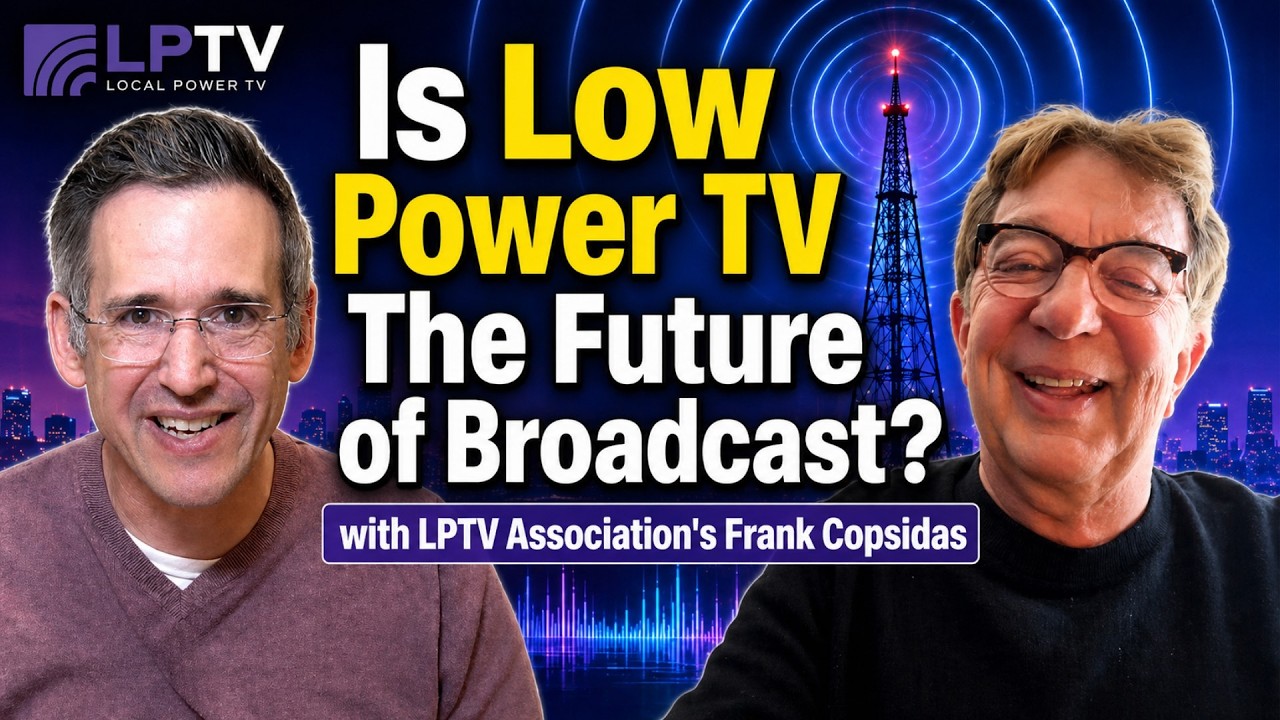
for. And ultimately, I think the FCC wants to let the market decide. And in fact, up until recently, this is what the broadcasters wanted to do as well. If you go back to the April 2016 petition to begin this permissive ATSC 3. 0 experiment, they were talking over and over again how they don't want mandates. They don't want the FCC getting involved in how this is going to work. Just let the market do its thing and we will make a successful transition here. And now fast forward 10 years later and the broadcaster spokesperson is saying that none of this is going to happen unless there's a policy change. It's never going to happen organically, but organically is what they actually wanted in the first place. And I think if you look at what the low power TV stations are looking for, perhaps finding a different standard that might work better for them. I think allowing every possible thing in an experimental mode here to see if overthe-air broadcasting is still even viable is what we need right now. And I think that is where the FCC will land when this is over. They will continue to permit ATSC3. They will make ATSC1 a little easier to manage perhaps with better video encoding technology. And I think we're going to see 5G experiments continue and perhaps have a permissive layer very similar to how ATSC 3. 0 is working currently. We're going to try to get in uh somebody here on the channel to talk about low power TV stations and what they're looking to do. And who knows, the low power TV stations, which are the little guys and gals in this battle, might end up being the future of broadcast. We'll get them on and talk more about this in the near future. So stay tuned for that. Let me know what you think down in the comments below, what your predictions might be. And until next time, this is Lon Cyman.

Другие видео автора — Lon.TV

Ctrl+V

Экстракт Знаний в Telegram

Экстракты и дистилляты из лучших YouTube-каналов — сразу после публикации.

Подписаться

Дайджест Экстрактов

Лучшие методички за неделю — каждый понедельник