I have a phd (pretty huge doctorate). Patreon: https://www.patreon.com/ExplosionsandFire
Subreddit: https://www.reddit.com/r/ExplosionsAndFire/
Discord: https://discord.gg/VR6Fz9g
Second Channel: @ExtractionsAndIre
Twitter: https://twitter.com/Explosions_Fire
Thanks again to Indigo for spending many hours of his life editing my yapping down. Appreciate it!!
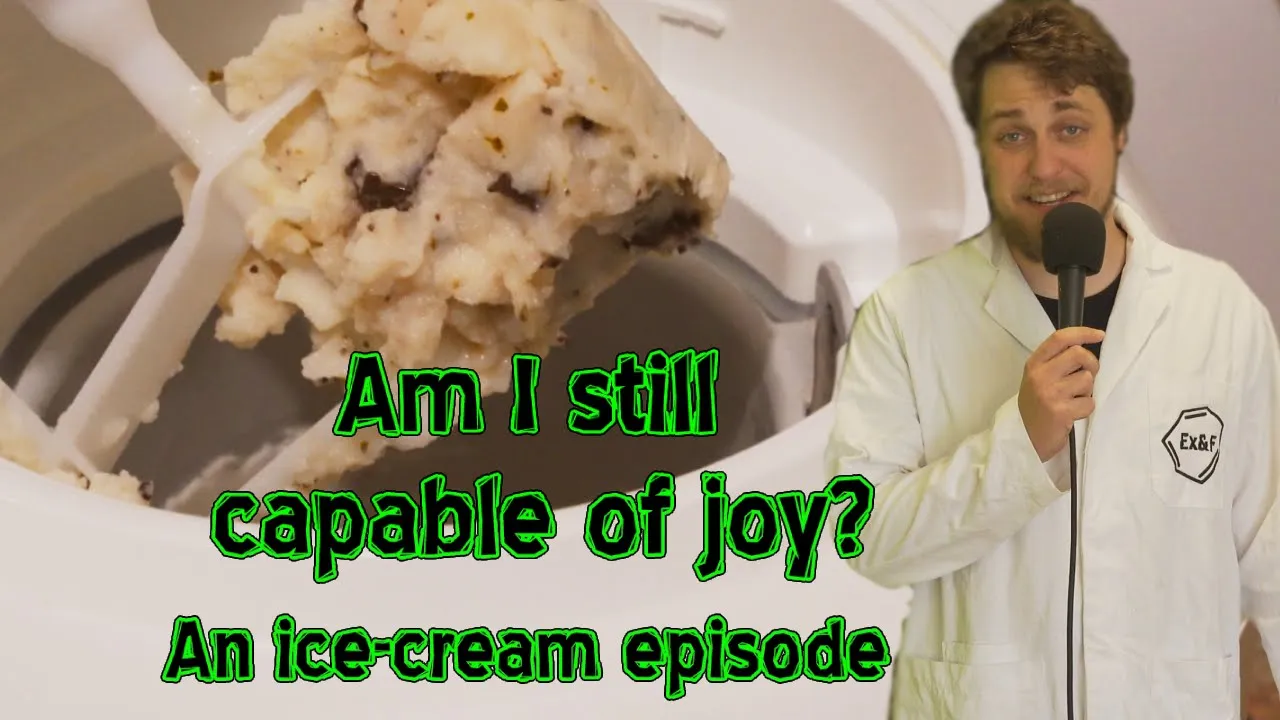
academia. Today, uh, we're talking about academia. It's a bit of a weird system, and I'd like to get into my experiences with academia, the bizarre nature of it all, and also, I guess, maybe some advice from me. Sort of very biased advice. I made a video about 3 years ago where I was making ice cream and I was at the end of writing up my thesis. Well, I was not quite at the end, but it felt like the end. At that time, I wanted to do anything but talk about my thesis and my PhD experience. It's been a couple of years. I think it's time to talk about it. People ask me questions. They send me questions or send me really positive messages all the time. And I kind of never really address my PhD. And it is really nice actually getting all these nice positive messages. I got to say, here's one. It says, uh, I've just been accepted into a PhD program. We'll be growing single crystals of photosw switchable explosives. That's really cool. That's a cool message to get. Dear Dr. Tom, I have made a terrible decision. I have just started a PhD program in laser spectroscopy. May the academia lizard gods have mercy upon my unfortunate soul. That's a somewhat positive message. Um, AO, my first child has been conceived during one of your videos and it's got no relevance to this video. I just really wanted to read out that message. There's precedent now. So, you know, if you get really bored during this video, people do ask how they can get to where I am. like how do you get here? What where is this? Where am I? Before we take a deep dive, I think I need to start with two reasonably large disclaimers. All right? And the first one might come across as somewhat controversial. I somewhat enjoyed my PhD and I still work as a posttock and I really enjoy my job. Despite all my rage, they still let me be a rat in the cage. It's where all my little rat friends are. It's like it's great. You got a little paper mill in the corner. It's fantastic. There's this notion that you kind of have to hate your PhD. You got to suffer. I think that comes from a place where it's so self-motivated that if you're having fun or enjoying yourself, it means you're not grinding hard enough. So, everyone always talks about, oh, I hate my PhD. It sucks. It definitely sucked at points, but in retrospect, it was pretty cool to, you know, be paid to turn up to do science, do novel science every day. There's plenty of things to hate on. Don't get me wrong. I will be hating in this video. The second disclaimer is I'm giving my opinions obviously from my experience, but academia is so varied. It varies from country to country obviously, but it varies even between labs in the same building. You do your PhD and you kind of have one person in charge of you and that's it. And so how that person decides to run the group and your experiences is so varied. I obviously did my PhD in Australia. I don't know if that comes through. Um, this is obviously Australia. Just wanted to get that out the way in case you are looking to do a PhD in songwriting in Norway and none of this makes sense. I'm just here to talk about science. So, god damn, we're talking about science. Let's get into it. Hello. Welcome to a kitchen. Um, yes. So, I did a Bachelor of Science undergrad. So, that's a three-year program with a major in chemistry. Actually, technically, I did a double major in chemistry. Every single subject in the last year was chemistry because biology doesn't make sense to me and scares me. This three-year degree costs about oh, I'd say about $30,000 somewhere in that ballpark. If you're a domestic student, you can put that on hex, which is sort of a mostly interest free loan from the government, but when you earn above a certain threshold, you have to start paying that hex debt back. So you do go into debt quite significantly for this degree. If you're an international student, not only do you not have access to hex, it costs substantially more. It can cost a lot more, potentially even double and you have to sometimes for these subjects pay up front. So that's something to be warned of. It is quite expensive to do these um degrees. No lab experience really. I mean, you do practicals, but you're not doing your own guided project for research in labs during that three-year degree. And that's pretty standard in Australia. After the three-year degree, I did a one-year honors year, which is sort of an extra research orientated year. So, you do a little bit more coursework, but you also complete a rather long research project, and you have to pick a lab to do that research project in. For me, I did my honors year in a group looking at metal organic frameworks, which are big super molecular structures. It was great because I got to do some inorganic chemistry. You got to do a little bit of organic chemistry to make the lians for these, but also I got to do quite a bit of analytical techniques, which was good cuz it taught me a lot about microscopy and powder X-ray defraction and a few other things that have been very useful throughout the rest of academia for me. That was good. That was my uh honors year. I chose that subject because I did
Segment 2 (05:00 - 10:00)
a small research summer scholarship. It was really only 6 weeks or something like that. But uh if those things come up at your university, sometimes they're not very well advertised. But I would recommend that because you get to do a very small lab placement and see if you like both the research area but also the groups sort of way of working and if the people there are friendly and if you like the professor and that can be a very good work environment. Whereas if you choose an area where everyone is mean to the new person and the professor just talks and riddles at you, then even if the subject area is of interest, then maybe it's not the best place to do work in. So I would recommend these very shortterm lab placements if you can get them in undergrad anyway. So after honors, what can you do? A lot of people would do a master's degree and actually that's kind of the way Australia is going is actually kind of phasing out this honors year and replacing it just with a masters of research which is an 18-month program. After you finish a bach of science honors, you technically can go straight into a PhD. So that's what I did. It was a little bit unexpected. I was applying for jobs. a job at a fertilizer place, a job interview at a, you know, paint factory. But I got accepted into a PhD program. My particular PhD project was using this big laser system, these lasers called optical parametric oscillators. So they're tunable lasers and we were trying to detect fluoresence from naturally occurring uh items. So stuff for mining and there was a bit of stuff for defense. So sort of explosive sensing. Most of my PhD was spent fixing and repairing and maintaining these lasers cuz we were using these lasers kind of cutting edge new lasers, very expensive. Getting them to work in a reliable way for what we wanted for these particular measurements was quite difficult. So we had this sort of big control system that would try and take scans that were tens of hours long. And at one point we had 14 USB ports getting used and three Ethernet cables and trying to get that to run for 20 hours straight to collect data every sort of 40 seconds was uh generally it would work well as long as you were sitting there watching it. But as soon as you left the completely dark basement to I don't know look at the sky or uh go home and sleep it would like crash. So um I have to say it did take me 6 years to do the PhD. Now I did the PhD over CO which was a little difficult. I could luckily still go into the lab so I could keep doing experimental work but it did have a lot of other challenges in terms of getting parts for repair or getting technicians out. Um I did pick up a researcher position that was sort of a little different than my PhD in the last year and a half. So I was kind of not actively working on the PhD too much in that last year. I had another job. So I was working on that job and so it meant that I really turned a sort of a 5-year PhD into a six-year degree by kind of just floundering around for last year which is uh it felt was very relieving to have it finally submitted. So I've got the bachelor of science, the honors degree. I've got the PhD. I've done one year of research work building sort of optical device prototypes. And then I changed positions to do my current posttock which is in semiconductor fabrication in a different group. So once again physics department but all I do is chemistry basically. I do acid etchings, metal contacts, all this kind of stuff on uh mostly gallium arsenide wafers. I love arsenic now. I really love arsenic. This is all within the same university. That is my journey. So, there's a lot to take in there. First of all, I've kind of speeded run getting to the PhD. I'm not some sort of mad genius or anything, but it's just sort of the fastest way to do things. I did very fast entry to the PhD, kind of slow exit to the PhD. A point that does come up quite a bit is if I'm doing cool science things at the university and I have a science YouTube channel, why don't I film more science things at the university? And I guess one way of putting it is it's like sleeping with your coworker, right? It seems like a good idea at the time, but then the next day you go to work and everyone wants to tell you that they watched it, which is it's nice if they told you that they enjoyed watching it. Half the time people are just saying they watched it as if they felt obliged to watch it. You just assume that they hate watched you for 45 minutes straight. Then if you do it more than once, work makes you start filling out forms and that really kills the sexiness of the whole thing. So what if I talk about my posttock work at the uni and everyone tells me it sucks and is pointless? Like bro, that's my job. I need that. Let's jump around a little bit because I kind of already sick of talking about PhDs. I'm just getting flashbacks. Let's talk about journals. As a researcher at the university whether a PhD student, masters or a posttock your main output is papers and these papers are published by journals. So I think before we talk specifically about scientific papers we need to talk
Segment 3 (10:00 - 15:00)
about journals. Journals are a thing that made sense a lot more I think 150 years ago and have kind of been butchered into the modern age where they make a lot less sense and a lot more money. If you imagine science in the 1800s, right? It's just a bunch of rich dudes and they want to communicate their science. So the way they do it is they send in letters or small bits about their science to a journal which is like another rich guy who reviews them, looks at it and says, "Oh, is this correct or not? " Does this peerreview system? And if they're happy to publish it, then they will print that off and send it out to other scientists in the area. If you're a scientist in the area, you would subscribe to that journal. you would buy the print publication and read it, right? Okay, this all makes sense. In the modern era, it's kind of the same thing except the journal doesn't really print anything and it's just PDFs on the internet. Sure, this overall system of like submitting it to an editor at the journal, the journal then sends it off to peer review and if it gets past peer review, it then gets published in the journal where other people can read it. that system, that framework still exists in the modern era. But I think what makes it weird is the money. All right? You as a researcher, you sit, you know, you're at the start of the chain and you get your money really most often from the government or other grants. So you do your research, you know, it's often quite expensive in the sciences, but you do that research and then you send your article to the journal. The journal will then send that paper for peer review. Now, peer review is a volunteer process because the journals say if they're paid, then it will influence them badly. So, it's a volunteer position. If it passes peer review, you get the pleasure of paying the journal money for them to publish it and then the journal will put it on the website. Other people can then pay to read. People ask sometimes they're like, "Oh, but some of that goes to the researchers. " No. If you pay for a paper on a website, 100% of that goes to the journal. money all flows towards the journal. And really, the journal's only cost in this entire circumstance, even though it's expensive research. They've got reviewers, experts in their field. Really, the only cost is hiring an editor and like hosting a single PDF on their website. And like you think, oh yeah, okay, sure, but you know, you get a lot of grant money, so how much can this possibly cost? You surely don't care about the costs for these things. Well, the cost to publish an article in some of the good journals like high reputation journals can exceed $10,000. If you're at a institution, you can read often most of these journal articles for free, right? You have access to them, but you only have access to that because your university likely pays in excess of $10 million a year to be able to access these journals. So, um, people often ask the question, "How do I know if the journal is a scam or not? " And that's a bit of a trick question because all journals are scams, right? If you don't feel like you're getting scammed at least a little bit somewhere in this process, it's not a real journal. It's a crazy system. They have like some of the highest profit margins of any company in the world. And Elsa made like $3 billion last year. It's just ridiculous. and you do all the work for them for free even though they make $3 billion. You can't not publish a paper. That's the thing. You can't be like, "Oh, I'm too good for the system. " Because like your job's metric is based on publishing papers and paying these companies, right? And often these really high fees come with this thing called open access, which is like this thing that the journals have invented because like they need you to pay more for them hosting a single PDF, right? And open access is like, "Oh, well then people don't have to pay to view it. So you pay them $10,000 and then people can access it for free. " And according to the journals, the journals are like, "They get more citations and help advance your career if you pay this. " But like, of course they're going to say that because they want $10,000 from you. And I suppose if I describe it as a predatory system, you and your conspiracy theories would probably be like, "I bet it was invented by someone connected to the Epstein files. " What a conspiracy theorist. What? Oh, no. It was Golain Maxwell's dad. Okay. I will say it's a bit of an art form picking a journal for your science because you do a little bit of science and say you discover a new species of squirrel. Let's go. You're a squirrel researcher and you've discovered squirrel too, right? Okay. I don't know what colors are squirrels. I know nothing about squirrels. You can try and get your research in a really high reputation kind of high esteem journal. And the metric that the journals use to value themselves is a thing called impact factor. A really good impact factor really changes between uh disciplines but over 10 is a really generally a very good impact factor. So it means that on average a paper there has been cited 10 times in
Segment 4 (15:00 - 20:00)
the past. Of course you can be lower than one and those are generally very bad journals because on average a paper there will not be cited. No one really thinks it's a good scheme, but at least it's one metric that all the journals will kind of give you to kind of benchmark between it. So you've got your squirrel 2 paper. You can try and go to one of these big multi-disipline journals which have very high impact factors. So we're talking about nature or science or something like that. Really, you have to make a case for why, you know, squirrel 2 research is interesting to all researchers from all disciplines. Very hard to get a paper into those kind of journals. But the problem is you can also go the other way too much. You can go to like Australian Journal of Squirrel B and no one reads the Journal of Squirrel Bees. Once again, it's kind of lost all its meaning these journals because they're all just PDFs on the internet. But there is sort of still a level of I guess reputation. The idea of this high reputation is kind of like the bar of peer review. So it's easier to get the paper published in a kind of a lower tier journal. So it's kind of assumed that you have lower tier research and that's not correct but that's just kind of the way of thinking. So once again you kind of have to work out where your research sits best and you're trying to get it into the best journal you can but also like in a reasonable time frame because sometimes journals can take like over a year to decide how to publish your research especially if they can't find peer reviewers or you can't find peer reviewers. Did I mention that part yet? Cuz like the one thing the journal does apart from posting your PDFs online is like finding other peer reviewers. But these days when you submit a paper, the journal also asks you to find your own peer reviewers and submit suggested reviewers. Then the journal just emails the people that you suggested. Um it's fine. Also another thing a journal did to one of my papers that was like very recently. It was like maybe only 4 years ago. There was a color printing charge 50 bucks or something like that for color printing charge. and you're like, "Oh, I didn't realize things still got printed. " And it's like, "No, it was never going to get printed. " But if you don't pay the $50 or $80, then they just make your PDF black and white. And then it's your paper's just online in black and white forever. So, yeah, you kind of just have to find a journal that's like appropriate for your squirrel research. Not too niche, but not too broad, but also a good reputation. And every year, they just keep inventing new journals because it's just the modern world. So every company is just trying to see how much reputation they can burn in the name of profits. Who cares about the future kind of thing. Even a really good sort of like high prestige journal such as nature then makes kind of lower tier nature journals because it still has the word nature in it. Nature squirrels too. And you know be like well I publish my squirrel research in a nature journal. And to be like well that's pretty good. Nature squirrels 2 with an impact factor of 0. 3. And it cost me $25,000. What are we doing here? You know, I just want to look at squirrels. I get so excited when I see a squirrel overseas. I'm such a goddamn tourist. Anyway, that's journal. What's a paper? The easiest part I find of writing a scientific paper is doing the science. Do the experiments, make the graphs, make cool figures. You do that and then you're like, "Okay, we have to write a paper. " And then it all gets very difficult I think. Sure the writing of the text is quite difficult because you want it to be information dense but still readable. Well at least I care about readability. I read a lot of papers where they obviously have not cared to make it readable. But also it's kind of a big group project a lot of the time. that has no deadlines and you have to also work with professors and sometimes several professors who change each other's drafting things. So you go through like draft final version 4, draft final, and then the professors start correcting their own corrections and you have to be like this is fine. We're going to submit it. it by Friday and then in four weeks time you finally get round to submitting it. Of course, you also have to choose a journal. So you journal which you kind of hate the least. But also I think one of the hardest parts about writing a paper is trying to round it off well or like come up with a good story. You can just keep going forever and you keep thinking, "Oh, this is going to be the greatest paper. most impactful paper of all time. So you want to do more and more experiments, but then you check the journal guidelines and they say, well, you can only have six graphs in this paper anyway. So you end up cutting down the work, but you also don't want to cut down the work too much so that you only do this one tiny experiment and then publish it because then journals going to think, well, this is nonsense. You've hardly done any novel work. Having that knowledge of when is a section of work a good paper is very difficult. And that's true for experimental work. It's true for theoretical work because theoretical work you can just keep going on and you've got this idea but how do you prove it? Oh, maybe we need computer simulations and you can spend two years sort of trying to expand the scope and
Segment 5 (20:00 - 25:00)
then you bring it right back. But then sometimes you get disappointed if you submit it too early and it's just a little bit and it goes in a sort of a lower tier journal. It's quite a difficult balance to walk. If you're new to postgrad or you're thinking about postgrad, papers are one of those things where it's so hard to think like what am I going to do a paper on? you think that you have to start this PhD and have an idea for a paper. That's generally not how I think you should go about it. Ideally, you join a group that has a research direction and they know where they're going and they know what the novel research they're working towards is. So, it generally comes very naturally. But I think also it's nice to be able to do experiments, do interesting things, things you're interested in, things that you think might be novel, and then reflect on them and think like, ah, yes, this will make a good paper if I just complete this little section and, you know, do one little extra bit. I think if you have an idea of what a paper is before starting the experiments, that's not the correct way to do science. You just let the papers come naturally, which is so easy to say in hindsight. I've worked on papers for years. I have drafts of papers that potentially will never be submitted that I did the experiments four or five years ago and I've spent countless hours generally on these papers and I don't think they'll ever be submitted for various reasons which is very disappointing because you pour a lot of time into it. It's a difficult journey but it's a fantastic feeling when you finally submit a paper. Well, potentially more fantastic when the paper is finally accepted because you have to go through this reviewer process, right? So, you choose a journal, you do their shitty online web portal that looks like it was made in the 1990s, and you upload your PDF, and you've got a supplementary info, which is all the shitty graphs that you couldn't put in the original manuscript. And then you submit a sort of cover letter, which says, "Oh, my paper is so good. Such a weird thing to do in the modern age. " Then it goes to the editor first, and the editor decides very quickly often, is this right for the journal or is it right for maybe another journal within the same sort of journal family? or they can sort of do this what's called this desk rejection where they just kind of say this is totally not good enough for our journal. That desk rejection can happen very quickly the same day sometimes if you aim at a really high tier journal for a work that you're kind of like a could be cool maybe they'll accept it and then the editor just like rejects it the same day. You try and take that not too personally. I remember we submitted a PABA and we're really excited of course you've been working on this paper for ages. So, we sent someone to go get cake and um it got desk rejected like within half an hour. So, actually it got rejected before the person came back with the cake to the lab. So, they and we're like, "No, paper's already rejected. " But if it does get accepted by the editor, it goes to these two reviewers. It's generally two. Sometimes it's one if they really cheap out. Sometimes it's three if they're like psycho. It can take, you know, a couple months. Sometimes, sometimes it's only a couple weeks for the reviewers to write their comments and bring it back to you. A lot of people get very scared by this. I sort of enjoy it in a sort of uh sadistic way. Kind of one of the few times in your life that you're so objectively judged for your work because they're anonymous and they don't know you well or at all except by your last name and they will write a review of your paper and say whether it's good or not. Sometimes they're mean which is a bit ridiculous. I mean, I've reviewed a couple of papers. I've actually rejected every single paper I've reviewed, which is harsh, but harsh but fair. They're all very bad papers. I'm still not mean about it. You don't have to be mean about it. So often, um, people will reject without being too mean. They'll say it's out of scope or say it's not quite adequate for the journal. But sometimes they'll say this is fantastic work, which is great because they have no reason to say that apart from them thinking that is fantastic work. Actually, my favorite reviewer comments aren't like the really aggressively positive ones. It's the ones that are like somewhat negative reviews but then don't want to be mean. So they'll say this is poor writing. It's not of interest to the journal. It has no impact. Recommendation publish. So the reviewers will come back with their comments and because there's two of them then the editor kind of gets a say between them and the classic thing is that reviewer one will be like great paper and then reviewer two will be like this made my life worse by reading it. The editor will be like well we'll reject your paper. Assuming that they kind of like it, they can accept without revisions, which is a myth has never happened. Minor revisions, the odd experiment, minor spelling things or like formatting, which is completely fine. Like that's the one you want. It shows that they've actually read it. Major revisions, that's a bit of a rarer one because generally the editor will not accept big errors with your science. Or they can reject it and say, "Oh, this will be good in a different journal, you know, that's more targeted. " So generally like lower tier, less reputation, but at least it can still be published. I had a paper on up conversion in glass. Tried to send it to a fancy laser journal cuz we were using lasers and the laser journal said it's not really for us. It should really go to a glass chemistry journal or like a glass material journal which is kind of more specific and so it's got less impact factor, less reputation, but it's
Segment 6 (25:00 - 30:00)
still probably the appropriate decision and I think that's where we ended up publishing that work. So not every paper needs to be like revolutionizing the field. You can just do small increments. So you publish this paper. It's a great feeling and it's also a great feeling when you get a citation because that means someone else has published a paper and they've referenced you. It's often background citations where it's like oh other people have done this work reference 2 to 7 and your reference for which is still great because you know it shows that you're in the field and people are reading your paper and taking sort of inspiration. But occasionally you'll get a citation that's like as shown by you your last name Ed whatever and it's like that's me and I've even had one which was very interesting work or like fantastic I can't remember the reading but they were like this is really good work and then cited in a academic journal which is like it's a fantastic feeling you know I've never had one that's cited me that's like as incorrectly stated by I mean it still counts as a citation so does the good feeling of getting a citation justify all the work that you had to put in to get this paper over line. I mean, you just have to say yes because you know that's life, right? Sometimes you publish a paper and it gets no citations and that's bit of a weird feeling. You do novel things and it's interesting and it excites you because it's like that's your job. it if only 50 other people read it. I mean, you don't do it for the citations, but um it certainly helps. The other reason you submit papers as a PhD student is so that you can graduate. And I will say in a lot of countries, a lot of universities there is a minimum requirement for papers at least one. Sometimes it's two to three. Of course, if you get a paper in a very high impact journal during your PhD, that can count a lot more than two or three papers in a lower tier. In Australia, all the universities I know don't have publication metric for the PhD. As long as you submit your thesis and the thesis is good, you don't actually have to have any published papers to graduate from your PhD. It certainly helps because your thesis also goes to reviewers and the reviewers are quite thorough generally and hopefully not mean. So the same thing happens with your thesis as does a paper except the thesis doesn't go to a journal. It just goes in the university's repository or something like that. If you publish like four or five sometimes you can just do thesis by publication which is you saying like I made a good enough contribution. You write a little introduction and then they give you your PhD because you've already made enough contribution to science. And so for my thesis, I did not a thesis by publication and not a conventional thesis which is just like, you know, 150 200 pages of written word. I did a combination thesis. So I had some publications and then the rest of it was written. So good reason to publish papers. If you're in your PhD and you could publish four papers, you don't have to write a thesis generally. That's pretty good. That's pretty good motivation. But you know, sometimes it's easier to write a thesis than submit four papers. And I'm sure there's lots of Germans watching this and they're like, "Ah, the university won't let us graduate until we've published seven papers, redefined an entire field. " And it's like, there should be a minimum, I think, you know, maybe one paper, but if they say, "Oh, you've got to submit at least three. " It kind of drives this big problem with papers at the moment, which is people just care about publishing and they don't care about the quality of the work. There's all these things about paper mills and a lot of stuff, you know, gets published, it's just not interesting. or they'll do this concept called slicing where you kind of instead of publishing one kind of good paper you divide the work into three and then you publish three nearly identical papers in different journals. So say you want to look at upcon conversion in glass a good paper might be making four different types of glass and comparing the response. If all you cared about was I need three papers this year, then you could do maybe a paper just on the experimental setup and put that in some sort of weird methods journal and then do this glass as one paper and then I'm going to do a different glass and site the other paper and then you get three or four papers out of one kind of good paper. It's just not a great way to do science. It's silly. If you've already done the work, you shouldn't just be like dividing it up into as many papers as you possibly can. But if the university is saying like, "Well, no, you can't graduate until you've had three papers. " Of course, you're going to be motivated to Yeah, that's it. The papers. It's great. It's a lot of work. That's what you're there for. You're there to write papers and it's so rewarding. I mean, that's the word really. It feels good. It's rewarding. That's it. Publishing papers. How hard could it be? Answer reasonably hard. There are two more things we need to cover before we can answer the question of should you do a PhD and they're both related to money. In a second, I'm going to be talking about your pay. So, you know, prepare yourself for that bit. Now, I want to talk about the group's money and funding. Funding is the thing that drives research. You do research to get funding and then once you have funding, it demands you do certain research. So, you do that research and then try and get more funding. You need money to do things. And this funding comes really primarily if you're a university group through government grants. That doesn't mean all the money comes from the government. In fact, a lot of government grants require you to have an industry partner. So someone else in industry who is going to be giving you money and then the government uses that grant mechanism to uh allow
Segment 7 (30:00 - 35:00)
them to give you money at the university. But there are still a lot of government grants that are just from the government. Now you do want to do a PhD in a group that has significant funding. I I'm not going to say excessive funding. The group doesn't have to be trillionaires. But you do want funding in your group when you do your PhD. If the group has some money, it pays for your travel. It can buy you equipment that you need for your PhD. Equipment breaks down, you need repairs. If the group has no funding, then as you do your PhD, you just sort of sit around with broken equipment waiting for grants to come through. If they're getting grants, it means that they're doing a research direction that someone cares enough about to fund or, you know, they've convinced the government that it's worth doing enough to have money to do. Not saying that groups without significant funding aren't doing interesting research, but often the better experience comes from groups that have more funding and that sucks because funding is hard to get and funding primarily goes to people who already have money. But that's the modern world. The money just goes to the rich people. What can you do? A trap that you can fall into when you are looking to do a PhD is you've got an exciting project or you've heard about an exciting project and they want you to start the PhD and then they'll say yes and once you've started we can apply for funding that'll let you continue to do all the things that you need to in your PhD. It's a bit of a trap because you're never guaranteed to get funding. You're never guaranteed. It's always an element of lottery in these grant rounds and every grant round and also the time scales on getting funding can be really long. In the group that I was in, we've had grants that we've won. They've said, "Congrats, you've won the grant. We are going to give you this money. All it needs is a certain minister to sign off on it, and then we will transfer you the money. " And it takes like 8 months for that minister to do a signature on a bit of paper that allows them to transfer that money. I've submitted big money grants that have taken a year to review. 14 months later, they're like, "Oh, we didn't really like your submission. " And it's like, "Bro, I don't even remember what I wrote. " If a group has a little bit of money, equipment, happy to spend some stuff on travel, your experience as a PhD student, I think, is a lot better. Of course, as always, there's levels of complexity to that. So, the group I was in really focused on commercialization, which I'll get to. If you can have a lot of industry partners, you can sometimes generate a lot of funding if there's significant interest in your research. But the catch of that is often the industry partners won't want you publishing as much. If you publish it, then it can't be patented. it can't be used as easily by the company to make money. The other thing is, and I don't know if this is the case in other countries as much as it is in Australia, but it's definitely the case in Australia, a lot of PhD groups and PhD scholarships themselves, which we'll talk about soon, a lot of those are funded through defense. And there's a problem with Australia, and that is no one cares about R& D. research and development, not industry, and especially not the government. I know this might come across as a little bit controversial, but you can quote me on this. Australian government does not give a rat's ass about R& D. I'll be honest. The industries, you know, like mining, R& D might as well stand for rat dick cuz they don't give a rat dick about R& D. This might seem out of pocket cuz you're like, well, there's heaps of government grants. There's all this money all the time. And it's like, no, they don't care about R& D. They care about commercialization. The government only wants to take good ideas that have some promise and like accelerate them into where they can be taken up by industry and industry don't want to sponsor R& D. I mean the D in R& D stands for development. But I'm really talking about like fundamental research. Like no one wants to fund fundamental research. It's all just like oh what is the economic impact of this? What is this economic impact going to be of this research? And it's like, with all due respect, Grant Portal, what is the economic impact of me spitting in your mouth? Like, let's be honest. If I knew this idea was going to make so much godamn money, I could just take out a payday loan and do it myself. No, we should be funding risky, novel research at the base level. That's what universities should be doing. You should be doing low-level research. I'm sick of industries partners coming to a university group and being like hey we'll give you funding for a year but at the end of the year we want a prototype we wanted to take it to clinical trials you know it's like off you're going to get three graphs at best and it shits me in case that is not obviously clear because universities are so bad at doing commercialization because they're a research group and they've got hardly any industry stakeholders that actually care and want to work with them because the university wants to publish stuff and industry doesn't want them to publish. So any good ideas industry doesn't give to academia and there's like a fundamental mistrust between the two of them and the university doesn't get that. So the university is going for all the commercialization
Segment 8 (35:00 - 40:00)
economic accelerator funding means that like the actual bodies who are meant to sit in between academia and industry like the CSRO. They're meant to be like the commercialization accelerator things, but instead they're doing like random and the government keeps cunning their funding because like they're doing random instead of commercializing university research and being the translation partner. Instead, it's like every research grant is like we want you to take it from TRL 3 to TRL 7, you know, in two years. All right, this is starting to get too niche and too obscure. I'm sorry, but even if you're applying for an arts grant in Australia now, they're probably asking you like, "Hey, what is the economic impact of this artwork? " It's like, off. Just let them make cool art and Like, not everything. Like, you're the government. You just not everything has to I'm not saying every grant has to be like for blue sky research, but you have to acknowledge that some blue sky things do have good economic impact. And if you just gauge all ideas by short-term economic impact, then you're never going to develop like low-level technology that we need. Anyway, this whole rant to say the only people that give a rat dick about R& D in this country is defense. The Australian government has spent, you know, whatever, you know, like huge sums of money on submarines. These submarines are not going to be put in service until 2040. They're going to be running until at least 2070, right? If we did no technological development, these submarines that are designed now in the water in 2070, that's just ridiculous. They're just going to get blown up if we do nothing about it. And none of the economic modeling that anyone does for these large assets like submarines or the goddamn frigots acknowledges that if we don't keep up technological wise, they're just going to get blown up. That is bad for the economy. Politicians don't get that. Defense get it. They understand that we need research now that will potentially maybe help a submarine in the 2070s. The government won't fund that blue sky research, but they will dump truckloads of cash into defense. So then defense become that vehicle for funding. You'll find in Australia that heaps and heaps of research is funded by defense. Even if the link is reasonably tenuous, it sucks. It's not the good way of doing it of, you know, running a world. That's how it is. So yeah. Anyway, let's um let's move to something positive. Let's talk about how much you get paid during a PhD. Why don't we do that? Why don't we talk about how much I got paid? Um, studying a PhD is a paid position, right? The university pays you money to study a PhD. Sure, you're a student, but you're also a staff member. There are examples of people doing scholarship free or stipen free PhDs. So, they're not getting paid at all. And if you take nothing else away from this video, please take this. Never do an unpaid PhD. It is a paid position. They should be paying you. You might say, "Oh, well, you know, it's a great opportunity. They'll wave my tuition if I do this scholarship free PhD. " And don't do it. Because even if you're financially set up enough to study a PhD for 3 to 7 years without pay, you got to ask yourself, who am I working for that will willingly employ me without paying me? A person that wants you working in that lab without paying you is not someone you want to work for. And then if you're an international student, your visa can be tied to the university. It shouldn't be a thing, right? If you want to work on science or arts for free, you can do that. It's called your free time. Like, you don't need to work unpaid at a university. Now that we've made that point clear, the pay is awful. Once again, it varies depending on the country you're in and where you're doing it and even between universities, but universally, it is less than minimum wage. A PhD in general is a minimum of three years. You can technically sometimes finish it quicker than three years, but that's very rare and often the universities won't let you submit earlier than 3 years. It can drag out a lot longer. Once again, remember I took about 6 years or so. I know people who have entered their ninth year. Um, don't try not to do that. I know it's very easy to say that, but it's hard to execute it. And I feel for you if you're in that position. In Australia, most of your money, so what's called the stipend, most of your money as a PhD student comes from the government to the university and the university then gives you that, you know, with the regular payroll and you get $32,000 a year, which is more than I got. I got $27,000 a year cuz they raised it a couple of years ago. It's not a livable wage. It's not a liveable wage. It is higher elsewhere, but it's important to note that there are a lot of sort of intricacies with it. On the positive side, the Australian PhD stipen, it is not taxed. So, it's taxfree, but also it doesn't count towards like your taxable
Segment 9 (40:00 - 45:00)
income at all. So, if you have a secondary job or you work a little bit of a job on the side, you can earn still up to the tax-free threshold, which is, I don't know, $18,000 or something a year before you pay tax. I will note also that not many people are doing PhDs these days. So, there's a lot more scholarships around. There's heaps of scholarships. I would say at least half of people that I know are studying PhDs have an additional scholarship. So you can get another couple of thousand on top of your stipend and usually that is also taxfree. So that's what I did as well. I got an extra $8,000 from defense. They were interested in looking at explosives detection for anti-improvised explosive devices. And so as part of the project there was budgeted $8,000 a year as an additional topup scholarship it was called. Plus I could work up to 8 hours a week. They were reasonably restrictive about it but I think that's fair enough. The PhD should be your main interest. You know, you don't want to try and work 20, 30 hours elsewhere. If you compare that to the American system, it is taxed. However, you often get discounted housing or meals or something like that. They can discount student life that way a little bit. In Australia, you don't get any housing support. So, um I'll complain about rent in a sec. Don't worry, it's coming. So yeah, if you are looking to do a PhD, those little details make a huge difference to how much disposable income you have to live on and that really changes your PhD experience. And um I'm going to talk about mine now. Okay, I was about to hit the 3-ear mark. Everyone's getting extensions. The university were being extremely lenient with extensions, which is very nice of them, and they're offering co extensions and stuff like that. But when I emailed the uni and said, "I put in this extension form. " They eventually got back to me and they said, "Well, no, actually none of your money comes through the RTP, the government scholarship. It actually all comes from defense. " Now, I had no idea about this. Like, I hadn't read the fine prints of the documents, you know, like I never seen that. My professor was surprised to hear this as well. We hadn't realized it was set up this way. So, the university said, "Extensions are only for people getting the government money. You have to go to your funding body for extensions. " And we were like, well, no, they're not going to extend the the grant. Like the funding rounds are different for defense and it's a different financial year and blah blah. So I was like, well, can I not just get the co extension everyone else has? And the university were like, no, what am I going to get paid then? And the university were like, tough So on the exactly to the date and the 3ear mark, they cut all payments to me. I worked for like 2 3 months for free for nothing going in every day. And that was obviously a bit unsustainable. I ended up picking up this part-time researcher position so I could eat and I was at the university Monday to Friday. I was there every day working either the odd researcher position or on my PhD. And across that financial year, I made $14,000. Like this is it's less than a third of the minimum wage. That's how much I earned that financial year. Um I was living out of home with my girlfriend. So, my share of the rent in a tiny unit comes out to be $12,000. So, after rent, I get um less than $40 a week. That's a that was that the entire financial year. Like, it's my fault for allowing myself to be put in that position. But the university gets away with it because like you're contract based and you know you're a PhD student, so it's like completely fine. But it's not completely fine. The only reason I was able to survive at all or like not have to move back home or drop out. The fact that I had YouTube income is the only reason I finished my PhD cuz I I wasn't making any money. I mean, it took 6 years. So, for half of my PhD, I was getting paid nothing. A lot of people say, "Oh, well, he gets away with his YouTube channel because he has a PhD. " But no, I have a PhD because I have a YouTube channel. Anyway, you should definitely check what the rules are for extensions. I mean, people are going to call me insane, but it's like this is just how it works. It's the problem with a PhD and why people reluctant to do it I think a bit more nowadays is it is a long-term commitment. When you're 3 years into the PhD and you think like I only have one or two years left it is very difficult to quit. You know if you're in a job and the job says oh we're not going to pay you anymore. You can just quit and get a different job. But um the professor I worked under very nice guy extremely nice guy and he did set me up with this sort of posttock role before I'd submitted my PhD thesis so that I was working basically full-time while writing my PhD thesis which again extended my submission timeline but allowed me to actually work a job where I got paid. So a posttock I'll briefly talk about posttos because kind of alluded to posttock. Posttock is what I'm doing now right? It's a researcher position you do after you finish your doctorate. So you finish your PhD and then you get hired as a researcher. Academia loves to do this insane thing where after you've spent like 5 years specializing in a niche doing your PhD, your postto, you're meant to just fly to another country and start working on something completely different. It's kind of an insane thing to demand because you're often extremely poor at the end of your PhD and you have all this knowledge and set up this network and then well the best academics just uproot their entire life and go to
Segment 10 (45:00 - 50:00)
Sweden. I didn't do that. I mean a lot of Australians aren't doing that especially kind of postco all the good academics probably went overseas. That's not me. I stayed at the same university. I've changed groups and done a few different things and then that's been really great and it's fantastic. I I've really enjoyed the posttock role and you're ready for the punchline. Is the money worth it? No. Just straight up like I can't even set that up. So a posttock in Australia you get paid pretty much bang on $100,000 which sounds like a lot. Um $100,000 Australian dollars. Um sure. you know, I'm only working88 because on Fridays I like to film YouTube videos and um 60% of my income goes to rent from the posttock role. 60% of that goes to rent and that's something you know if you're coming to work in Australia you have to budget half of your money for rent. Like you just have to do that like it's best way of course is to just buy a house. It's cheaper to buy a house. And my life pro tip if you're thinking about coming to work in Australia is have $200,000 before you arrive done their PhD and then a posttock and then become a professor and you might think oh well I could do that and it's like no it's like playing tennis and then thinking I'm going to play Wimbledon and win a million dollars like no one becomes a professor anymore like it's not a thing at the university I have seen one person in the university be promoted internally from a researcher to assistant professor in 8 years and if you're in Australia and you're doing a PhD in Australia, it's just not a career that's open to you anymore. Even if a new position opens up, the university in Australia will get someone from overseas to fill that position cuz they want international talent. Academia as a career, it's just it's not a viable option. Forget about that. You shouldn't be doing a PhD to pursue academia. And if anyone tells you that's an option, it might have been an option when they did it when you know the professors did it in the 80s or ' 90s or whatever, it's just not an option anymore. So, financially, I wish I had something better to say, but financially I will probably never recover from having done a PhD. I've had friends out of high school who instead of going to university have worked a job. Crazy, right? I know. Instead of doing what I did, which was go $35,000 in debt, even if I earned $200,000 a year from now, it's going to take me years to catch up to where someone would be if they were earning $80,000 consistently. And that's ignoring things like entering the housing market in 2019. You know, like an inanimate house earned more money in inflation than I did during my PhD each year. All right, this is that's the financial section. I should say thank you to all the Patreons and um people who have um clicked on the ads over the years. I was wasn't too concerned about failing financially as much as I potentially should have been. There's a lot of people who move to a foreign country, don't speak the language very well, get priced out of the housing market, and stuck in their PhD. And those people I have a lot of sympathy for because you know your paper gets rejected, you can barely afford the beer to commiserate, you know. Yeah. We finally get to the question, should you do a PhD? People will tell you that this is a difficult question that's hard to answer. That's not true. The answer is no. No, you should not do a PhD. It's financially crippling. Such a long-term commitment. It does not prepare you for a job. I mean, it does not train you well. In fact, I would say that it actively works against your employment really. It doesn't make you ready to go into a job. And a lot of employers know this. So, it had years of can actually work against you, make you less employable than if you didn't have the PhD. And then even if you applying for jobs where they're kind of asking for people with PhD level experience, you're competing against other people who have actual work experience. So, it doesn't make the job market better having a PhD. So, no, you shouldn't do a PhD. Um, but, uh, I'll let you in on a secret here. little secret. Come here. You can actually just do whatever you want. Like, life is not about what you should and shouldn't do. You can just do it. Of course, it's not what I should have done, but I don't regret doing it. I mean, it's hard at times, but it's fantastic. I'd do it again. I mean, I wouldn't do a second PhD. One is enough. I think a really good sign that your want to do a PhD is well placed is that when you think about it, you think that you would be happy no matter the outcome of the PhD. Obviously, you're going to pass. You're not using it to definitely get a job in academia. Then if you didn't academia, you'd be disappointed. If you think there's no way you could really be disappointed there for the ride, then I don't think there's any way you can look back on the PhD in regret and see them as wasted years. Sure, I should have been earning more money and I should have done this and that, but I don't regret it. You can just do it anyway. If you are in the middle of a PhD or, you know, thinking of starting it or you finished it, you should definitely give your opinions in the comments cuz I'm obviously just giving my opinions. But if you've got any particular tips, especially about staying motivated, what to look for in a PhD or whether you think other people should do it or not, or what it is like in your country, that's it. Sometimes you don't need advice, you know. I don't think people tell you
Segment 11 (50:00 - 50:00)
that. Sometimes you don't need advice. What happened? Where am I?