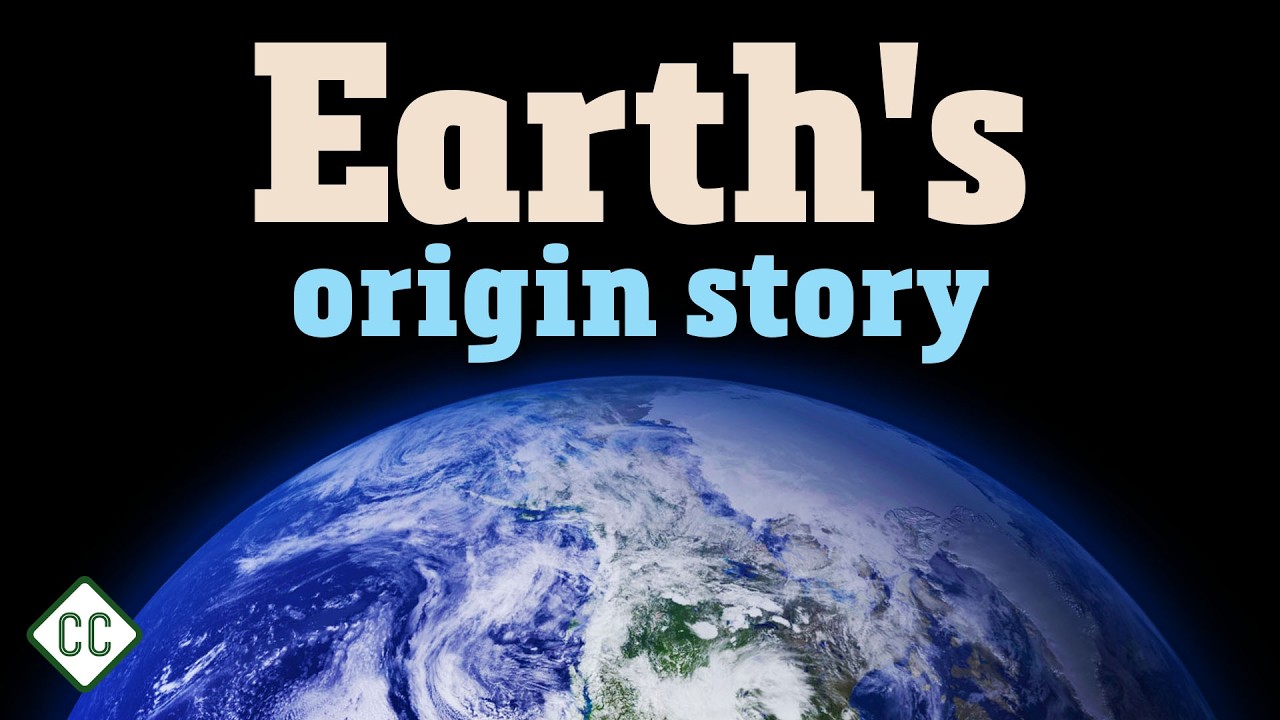
Earth's Crust and Mantle Explained: Crash Course Geology #3
10:14

Earth's Crust and Mantle Explained: Crash Course Geology #3

CrashCourse 23.04.2026 30 756 просмотров 2 052 лайков

Machine-readable: Markdown · JSON API · Site index

Поделиться Telegram VK Бот
Транскрипт Скачать .md
Анализ с AI
Описание видео
Nobody has made it to the center of the Earth—but not for lack of trying. In this episode of Crash Course Geology, we’ll journey through the crust and mantle that make up ⅔ of our planet’s insides. We’ll uncover how these layers affect our lives on the surface, and how geologists discover more about them without traveling into Earth’s depths themselves. Introduction: Kola Superdeep Borehole 00:00 Project Mohole 0:40 The Earth's Crust 3:23 The Earth's Mantle 5:33 Review & Credits 9:15 Sources: https://docs.google.com/document/d/1RpwM8ZQPFk_DkzMJjMdtRrNGrJSNJ7FbgmQybSZ2Cqo/edit?tab=t.0 Check out our CC Geology Extracurricular Playlist here: https://www.youtube.com/playlist?list=PL8dPuuaLjXtOmqnkvEtNVOrm0eaIjFjJ7 *** Support us for $5/month on Patreon to keep Crash Course free for everyone forever! https://www.patreon.com/crashcourse Or support us directly: https://complexly.com/support Join our Crash Course email list to get the latest news and highlights: https://mailchi.mp/crashcourse/email Get our special Crash Course Educators newsletter: http://eepurl.com/iBgMhY Thanks to the following patrons for their generous monthly contributions that help keep Crash Course free for everyone forever: Mike Cumings, Jr., NassauLinda, Chuck Smith, DexcilaDou, Martin G. Diller, Johnathan Williams, Allison Wood, Katrix , Jason Terpstra, Evan Nelson, Jennifer Wiggins-Lyndall, SpaceRangerWes, Dalton Williams, Chelsea S, Matthew Fredericksen, Michael Maher, AThirstyPhilosopher ., Mitch Gresko, Gina Mancuso, Roger Harms, Shruti S, Quinn Harden, Reed Spilmann, Stephen Akuffo, Andrew Woods, Kevin Knupp, UwU, David Fanska, oranjeez, Brandon Thomas, Toni Miles, Elizabeth LaBelle, Emily Beazley, Leah H., Rie Ohta, Barbara Pettersen, Ken Davidian, Tanner Hedrick, Trevin Beattie, Eric Koslow, Les Aker, Samantha, Laurel Stevens, Pietro Gagliardi, Alan Bridgeman, Stephen McCandless, Alex Hackman, Steve Segreto, Liz Wdow, Constance Urist, Thomas, Katie Dean, ClareG, Indija-ka Siriwardena, Jennifer Killen, Kristina D Knight, Nathan Taylor, John Lee, Evol Hong, Kyle & Katherine Callahan, Emily T, Breanna Bosso, Bernardo Garza, Rizwan Kassim, Jason Buster, Wai Jack Sin, Scott Harrison, Triad Terrace, Ian Dundore, Sarah & Nathan Catchings, Ken Penttinen, Barrett, Krystle Young, Duncan W Moore IV, Matt Curls, Erminio Di Lodovico, Perry Joyce, Siobhán, team dorsey, Joseph Ruf, Jason Rostoker, Luke Sluder, Caleb Weeks, Tandy Ratliff __ Want to find Crash Course elsewhere on the internet? Instagram - https://www.instagram.com/thecrashcourse/ Facebook - http://www.facebook.com/YouTubeCrashCourse Bluesky - https://bsky.app/profile/thecrashcourse.bsky.social CC Kids: http://www.youtube.com/crashcoursekids
Оглавление (5 сегментов)

Introduction: Kola Superdeep Borehole

Are you ready for this? I don't think you're ready for this. This is the deepest hole ever dug. I swear it's under there. It's called the cola, super deep bore hole. You can find it in the frigid ground on the northwest tip of Russia. And if you fell in, which is unlikely since the opening is only about 23 cm wide, you'd plummet 12. 2 km before hitting the bottom. That's deep. The wild part, this hole barely scratches the surface. It doesn't even go through the top layer of the Earth. So, what really lies beneath us? Hi, I'm Sage. This is Crash Course Geology.

Project Mohole

We humans have been wondering about Earth's insights for a really long time. In the 17th century, Edmund Hi's Comet Fame proposed the Earth was a hollow shell holding a smaller sphere like a gargantuan Kinder egg. In 1864, author Jules Vern imagined a world within our world full of oceans and prehistoric life forms. And in 1928, Arthur Conand Doyle envisioned a sea urchin-like planet with sentient squishy guts fighting people back when people drilled into it. Dwayne here is very glad they were all wrong. Though the Kindred egg one would be pretty neat, huh? Earth's crust, our planet's outer rocky shell, is the layer we know best. It's where we live after all. But it takes up just 1. 4% of Earth's total volume. We've never journeyed beyond it, but not for lack of trying. In fact, before KA super deep bore hole, there was project mohole. Let's dig a little deeper. In the late 1950s, a ragtag gang of scientists known as the American Miscellaneous Society hatched an ambitious plan. Drill all the way through the Earth's crust. Why? Because nobody had it before. The group dubbed their plan Project Mohole after the Mahoro Vich discontinuity or the boundary between Earth's crust and mantle. And in 1961, the team boarded a ship called, and I can't believe I'm saying this, Cuss one. On board, journalist John Steinbeck. Yep. The Grapes of Wrath guy compared it to an outhouse standing on a garbage scal. Here's the thing about trying something nobody has tried yet. Nobody knows how. Team Mohul needed to figure out not only how to drill through kilometers of rock, but also how to get that drill to the bottom of the ocean where the Earth's crust was thinnest. It was not going to be easy or cheap. So, they started small. They picked a spot off the coast of Mexico and drilled a few hundred feet and Eureka. They dredged up cores of rock and sediment from the seabed, discovering volcanic rock nobody knew was there. Steinbeck wrote that everyone aboard had a frantic interest. So much so that the scientists had trouble working around the crowd. And back on land, US President John F. Kennedy praised the team's remarkable achievement. But then came bureaucracy and bickering. Team Mohal disagreed about the next steps. Should they continue with small tests in shallow holes or go big, crust or bust? One geologist warned that the project would be either one of the most rewarding scientific ventures ever carried out or a foolish and unjustifiably expensive fiasco. Turns out it was neither. Money ran out. Project Moholm faded away. The

The Earth's Crust

dreamers and schemers behind Project Moholm didn't reach the big goal of drilling all the way through the Earth's crust. To this day, nobody has. Though folks are still trying, including my pal Dwayne. Grab your shovel, buddy. We're digging through the center of the earth. We're starting here at the crust. It's got all the fossils and fuel ever buried. All the sewer pipes, basement, and doomsday bunkers ever built. All the incrustables ever made. Which reminds me, would you? I thought I would have to share. The crust is made of solid rocky slabs, mostly composed of oxygen and silicon along with other elements like aluminum, iron, and calcium. These slabs, known as tectonic plates, slam into, slide against, and pull apart from one another over time, forming continents, mountains, and trenches up top. The crust is thickest under mountains, where it can be around 70 km deep, about the distance between Time Square and the middle of Long Island, New York. But oceanic crust forms differently and is much thinner than continental crust. It's typically only 5 to 10 km thick. You could basically do a fun run from top to bottom. As we keep digging, we'd eventually make it to the mantle, Earth's dense middle layer. It generates convection currents which help drive the churn of tectonic plates and recycling of rocks from the surface. The Earth's mantle is thick with two seas. It makes up roughly 84% of the Earth's volume with a depth of about 2900 km. That's about the distance between Time Square and the middle of Colorado. What we've covered so far from the surface to about 100 km down is called the lithosphere. It's the solid, rocky, relatively cool part of the Earth, which includes the crust and the uppermost part of the mantle. But then we'd enter the aesthety. The mantle is mostly made of rocks rich in iron and magnesium. As heat and pressure increase, the rocks get loosey goosey, ooey, gooey, even. The deeper we go, the more the rocks have the texture of taffy. For the first 410 km or so

The Earth's Mantle

we'd be in the upper mantle. Notice how it's greenish black. That color comes from a sparkling mineral called olivine. But the colors would start changing as we moved into the mantle transition zone, an area of increasing temperature and pressure that causes the chemical composition to shift. The deeper you go, the hotter and more densely packed the minerals are, and some can't take the pressure. Their atoms rearrange to become completely different minerals, changing color to black, red, and blue. Just as we'd hit the base of this transition zone around 660 km down, we'd find some wild terrain. a subterranean mountain range with jagged crags that no one has ever climbed, some of which might even be taller than Everest. Past the mountains, we'd enter the even hotter, denser, lower mantle, which stretches from 660 km to about 2700 km below Earth's surface. Here, because of the high pressure, the rocks flow less than they do in the upper mantle. And the lower mantle is big. It accounts for about half of Earth's total volume. But then what's that? Strange blobs the size of continents. What are they? We don't know yet. Maybe they're leftovers from an ancient collision with another planet. Or they're bits of tectonic plates that have broken off. For now, scientists have nicknamed them Tuzo and Jason. I love geologists and their strange naming conventions. After that slight detour, we'd arrive at the core, Earth's extremely hot, extremely dense center. We'll talk about that in our next episode. So, there you have it. Earth's three layers. crust, mantle, and core like one giant peanut M& M. Even with powerful drilling equipment, researchers still haven't been able to get past the crust. So, you might be wondering, how do we even know this stuff? Well, geologists have figured out ways to study Earth's deep interior by finding clues on the surface. They can learn about the mantle's composition through volcanic eruptions that spit out melted mantle rock or rip out hunks of it. And they get by with a little help from space, too. From iron meteorites, very old space rocks that likely form the core of ancient worlds. Geologists know Earth's core is made of the same metals which sank to the planet's center as it formed. And in 2014, a 4. 5 billionyear-old meteorite made it possible for geologists to observe for the first time the most abundant mineral inside Earth, bridgemanite, which scientists think makes up much of Earth's super hot lower mantle. Geologists also study deep earth through seismology, a field that analyzes seismic waves from earthquakes and other vibrations within the earth. From seismic wave measurements, geologists can take x-rays of the earth, piecing together properties of its layers. And even though we still haven't made it to the mantle, project mohole and the cola super deep hole weren't failures. They kicked off techniques that later scientists used to discover more about Earth's insides and past. Drilling and dredging up samples from the ocean floor has since brought insight to the Earth's climate millions of years ago and shaped our knowledge of how tectonic plates sculpt the landscape over time among many other discoveries. More on that in future episodes. There's still so much to learn from the inner earth, including how it connects to us. In 2023, a team on a ship called the Joyy's Resolution drilled about 850 meters below the ocean surface and pulled up chunks of mantle from an underwater mountain where the crust is especially thin. They observed how those rocks, sparkling green olivine, reacted with the ocean's water to create the hydrogen required to form organic compounds, life's basic ingredients. Those mantle rocks could offer clues to how life began billions of years ago. To this day, nobody has

Review & Credits

actually journeyied to the center of the Earth or even below the crust for that matter. By many measures, we know less about our own planet's insides than about the solar system outside it. But geologists have found ways to work around these challenges, building on early drilling techniques and refining new methods for studying the Earth's depths. There is so much more to discover about the world beneath our feet and how it shapes our lives up here. Next time, we'll put a spotlight on Earth's magnetic MVP, the core. See you then. Thanks for watching this episode of Crash Course Geology, which was filmed in our studio in Indianapolis, Indiana, which was made with the help of all these dope people. If you want to help keep Crash Course free for everyone forever, you can join our community on Patreon.

Другие видео автора — CrashCourse

Ctrl+V

Экстракт Знаний в Telegram

Экстракты и дистилляты из лучших YouTube-каналов — сразу после публикации.

Подписаться

Дайджест Экстрактов

Лучшие методички за неделю — каждый понедельник