2:36 - Prediction Market Background
9:38 - Prediction Market problems
17:02 - The Promotions
21:50 - The Gamblification of Everything
24:23 - Closing thoughts
Let's talk about prediction markets...
DISCLAIMER:
This channel is for education purposes only and does not constitute financial advice - Richard is not responsible for investment actions taken by viewers. Please seek out a registered advisor if you require assistance (while Richard is a registered portfolio manager at WDS Investment Management, he does not provide advice through The Plain Bagel, which is not affiliated with his employer). Richard makes no warranties regarding the accuracy of data included in this video.
Prediction markets are platforms that allow users to bet on the outcome of virtually any future event. Users can find a market that they want to bet on, buy a contract according to how they want to bet, sometimes represented by a blockchain token depending on the platform for a price that's based on the odds of that event occurring that way, and then either hold the contract until the event is triggered and a payout is made or sell the contract to another user earlier with the price of the contracts changing based on the evolving odds of that event. If you hold, however, the result is binary. Either the contract hits and you earn a predetermined return based on your entry price or it doesn't and you lose at all. Platforms like Khi and Poly Market charge a small fee on each transaction that can range anywhere from a few basis points to over 3% based on the odds of the contract, but they otherwise don't partake in the bet themselves. That distinction is important because while traditional bookmakers often take the other side of each bet with favored odds, prediction markets argue that they are merely facilitating bets and act more as a derivatives exchange. You see, these types of contracts known as event contracts are nothing new. The North American Derivatives Exchange, formerly Head Street Inc., has been trading event contracts, which are technically a type of swap and sometimes referred to as binary options because of their all or nothing outcome since 2004. But the events that these contracts cover is what's really changed here. Historically, the CFTC, the Commodity Futures Trading Commission, has been very restrictive in limiting what type of events these contracts can be on. In fact, back in 2012, they blocked the NADX from listing their own elections event contracts, deeming them a form of gaming, something explicitly prohibited under the Commodity Exchange Act. Even the Iowa electronic market, which has been permitted to trade election contracts for a number of decades, was only allowed to operate under strict research focused non-commercial conditions. And so originally Khi was actually blocked too when it tried listing event contracts on congressional control in 2023. This time around however Khi sued and a judge actually ruled in the platform's favor arguing that elections didn't constitute gaming and that the CFTC's judgment on public interest wasn't authorized by Congress. And so the floodgates opened with elections betting quickly sweeping across the country. But here you might be drawing a few question marks given that these platforms today have pushed heavily into sports betting, which by some definitions is a form of gaming. So, as you'd expect, there's been a lot of legal push back with a number of states angry that they are missing out on gambling tax revenue and arguing that these platforms should fall under their state gambling laws. But under the new Trumpappointed head of the CFTC, Michael Celig, the institution has not only allowed this activity for some reason, it's vehematly defended it with the group issuing public messages purporting the value of these platforms and arguing that the CFTC has sole jurisdiction over these markets. — To those who seek to challenge our authority in this space, let me be clear. We will see you in court. And the institution has made true on that promise with the CFTC suing states for restricting prediction market activity, filing an amicus brief in support of Crypto. com in its dispute with the Nevada Gaming Control Board, and even getting a judge to temporarily drop criminal charges brought on by Arizona with the institution completely abandoning the appeal it originally filed against Kalshi's original elections contracts. And so that's how we find ourselves today with our markets on whether Justin Trudeau and Katy Perry will break up by August. Now, there do remain some limits on what these contracts can involve. The CMA explicitly outlaws contracts with references to terrorism, assassination, war, and unlawful activities. But outside the CFTC just blindly ignoring the gaming restrictions, even some of those contracts are pretty easy to access thanks to some markets, namely Poly Market's main offering operating offshore, meaning savvy users can still largely access these types of bets. But this is where executives will defend these platforms. While most people again view prediction markets as just the latest degenerate iteration of investment gamification advocates including the CFTC I guess will argue that they're much more than just gambling platforms. They're presented for one as an innovative way to hedge risks. Companies for example can mitigate against an unfavorable candidate winning an election by betting accordingly. And even for sports team managers can bet in a way that mitigates the downside of a loss for their team. Then there's the data, that sweet, sweet forecasting data that prediction markets have become famous for. You see, prediction markets tap into the so-called wisdom of the crowds. The idea that collectively society's estimates are more accurate than those of individual experts. It's a concept similar to the efficient market hypothesis for stock markets. If markets have a lot of participants and low friction, then the market's collective buying and selling activity should roughly bring the price of things close to their true intrinsic value, especially as experts take advantage of any mispricings and arbitrage opportunities and themselves contribute to the price discovery for that thing. So with prediction markets, the idea goes that if people are allowed to bet on it, the probabilities that surface from the trading activity on the platforms will reflect fairly accurate forecasts. And there is some truth to that. Poly market gained massive publicity in the 2024 US presidential election for showing Trump as the winner weeks before professional polls did. Even the Iowa electronic market demonstrated back in the '90s the power of market-based forecasts. In comparison to more than 900 polls over the last two decades, the IM has been closer to the actual outcome 74% of the time with the key argument being that betters aren't influenced by the same bias that might sway news outlets or polls. It's also why many executives have argued that we should try and financialize everything because if we have people trading on it, then we'll have a pretty good idea of where it's going to go in the future with the poly market CEO even arguing that regarding war contracts, people in the Middle East can use prediction markets to decide quote whether we sleep near the bomb shelter. Now, just shoving our ethics to the side here for a sec, if you squint your eyes just right, you can see the argument. And for individuals, prediction markets are presented as a way to grow your money. Traditional investments are plagued with corruption. But with prediction markets, the layman can profit from their niche expertise or unique insight, which for anyone who's previously been unable to monetize their 180 hours of counting the cars that pass through a certain intersection, probably sounds like a dream come true. Except that's not really what we see for most people.
Prediction Market problems
When it comes to how much money users actually make from prediction markets, the odds aren't much better than what we see for things like day trading, where the vast majority of people lose money. One recent analysis by Jordan Bender, managing director of gaming equity research with Citizens, found that the median ROI for retail users of prediction markets was negative8% from July 2025 to March 2026. In a separate independent blockchain analysis of Poly Market by Andre Sergenov found that 84% of Poly Market users have realized losses with just 2% of the 2. 5 million participants having made more than $1,000 over their trading history. So you can see that despite how prediction markets are presented, making money with them is unlikely for most. In fact, the median ROI from the citizens note was worse than the median for legal US sports betting which sat at 5%. Now, there are of course examples of people who have profited from their niche experience, especially in the earlier days of the markets when there was less competition. And there is some evidence that select subsets are able to achieve better returns. The citizens analysis found that users trading over $500,000 saw their ROI improve to 2. 6%. 6%. But for anyone who's trading just a few thousand or less, i. e. most of the people the platform advertises to, the average returns are all negative, which seems to align with the idea that the market's returns are largely captured by a small cohort of professional users, i. e. those who exploit arbitrage opportunities between platforms, marketmaking institutions, or groups with the infrastructure to execute on opportunities faster than others. And while prediction markets argue that they're from more than just sports gambling, that's still their bread and butter where the vast majority of their revenues come from. Khi, for example, holds a 90% share of the US prediction market and sees a growing 13 billion in monthly volume. Roughly 79% of this is strictly for sports betting. The second largest category behind it, crypto, which takes up twothirds of non-sports betting categories, something we already have markets for. Now, beyond the concerns around the actual experience users have on these platforms, there's also the issue of how people abuse these prediction markets and what that means for other users. For one, there's the insider trading. In financial markets, it's illegal to trade securities on information that's not otherwise available to the public since doing so erodess trust in said markets. It's why insiders are traditionally required to publicly disclose their trades and their positions. But as you'd expect from a platform that lets people bet on literally anything, people have been quick to abuse their privileged information on literally whatever. Poly Market, for example, saw a number of users make substantial bets around the war in Iran and America's military actions in Venezuela days and even hours before they occurred. In fact, just this week, an NPR analysis discovered a trader who had made $300,000 betting on Joe Biden pardons. Bets that for some were rapidly approaching 0% odds. There's also the risk of market manipulation given how trivial some of these markets are. There are bets on whether YouTuber Moist Critical will get a haircut or what color Trump's tie will be during the State of the Union address. And there have been numerous accusations of people unfairly influencing the outcome of these markets. Lord Miles is sending money to the same address which is betting against him. This is something Trevor Noah even poked fun of at the Grammy Awards. Potato. If you had me saying potato on Py Market, you just made a ton of money. It goes to demonstrate how easily abused these markets are. even if it was a joke. The real contract didn't have the word potato as an option. Even around more serious news stories, we've seen examples of people trying to influence prediction market outcomes. There have been examples of journalists threatened for how they described a missile strike because of its impact on a $23 million polyarket market. And there are Discord communities allegedly discussing ways to influence the interpretation of news stories to help settle their online bets. Now, prediction market operators do have the power to veto bets and ban users, but they've been slow to enact real changes around these risks. For example, while both platforms recently announced changes like preemptively banning athletes from betting on their own sport, this only came last month in the face of proposed legislation to ban sports prediction markets following a series of insider trading scandals around college and professional games. And these late policy changes make sense because in a way insider trading is good for these platforms when it comes to prediction data. So it's clearly dangerous to assume that these platforms will self-regulate. And while the CFTC is supposed to be the one policing this activity and ensuring that insider trading and market manipulation aren't running rampant, it hasn't been doing much to penalize abusers. To date, there have only been two publicly reported enforcement actions from the institution regarding prediction market users. One against a political candidate for trading on their own candidacy and one against an editor for Mr. Beast for betting on his videos. Both of which were actually referred by Kulshi. In fact, the CFTC has taken more legal action against states trying to ban prediction markets than perpetrators of these illegal activities. Not to mention that regardless of how sophisticated the tracking measures used by these platforms might be for finding insiders and trying to clear them out, it's just not feasible to accurately identify insiders and market manipulators across the slew of markets available when you allow people to bet on literally anything. So, you can see that there are a lot of problems and risks that users face when using prediction markets. But executives for these companies have arguments there as well. For one, these issues are nothing new. Even traditional markets see insider trading and market manipulation. And while yes, the majority of the platform activity is tied to sports betting. Khi CEO Tar Mansour has argued that liquidity begets liquidity. Sports betting might not be the most useful application of Kulchi for society's sake, but that activity is needed to attract other activity for the more important stuff like economic and political forecasts. So, while people may use these markets to speculate just as some do with stocks and options, these platforms are ultimately just another financial exchange. And we've seen a lot of effort to legitimize that side of the business with even FanDuel, an actual gambling company, scoring a partnership with CME Group, a traditional derivatives marketplace, to set up a prediction market, which is all a bit awkward when we get to how these platforms promote themselves. As highlighted, prediction markets have bent over backwards to argue in the courts that they are not a casino. But when it comes to how they advertise, they certainly present themselves as one. In 2025, during the NBA Finals, Koshi aired a completely AI generated ad that feels like a cocaine induced fever
The Promotions
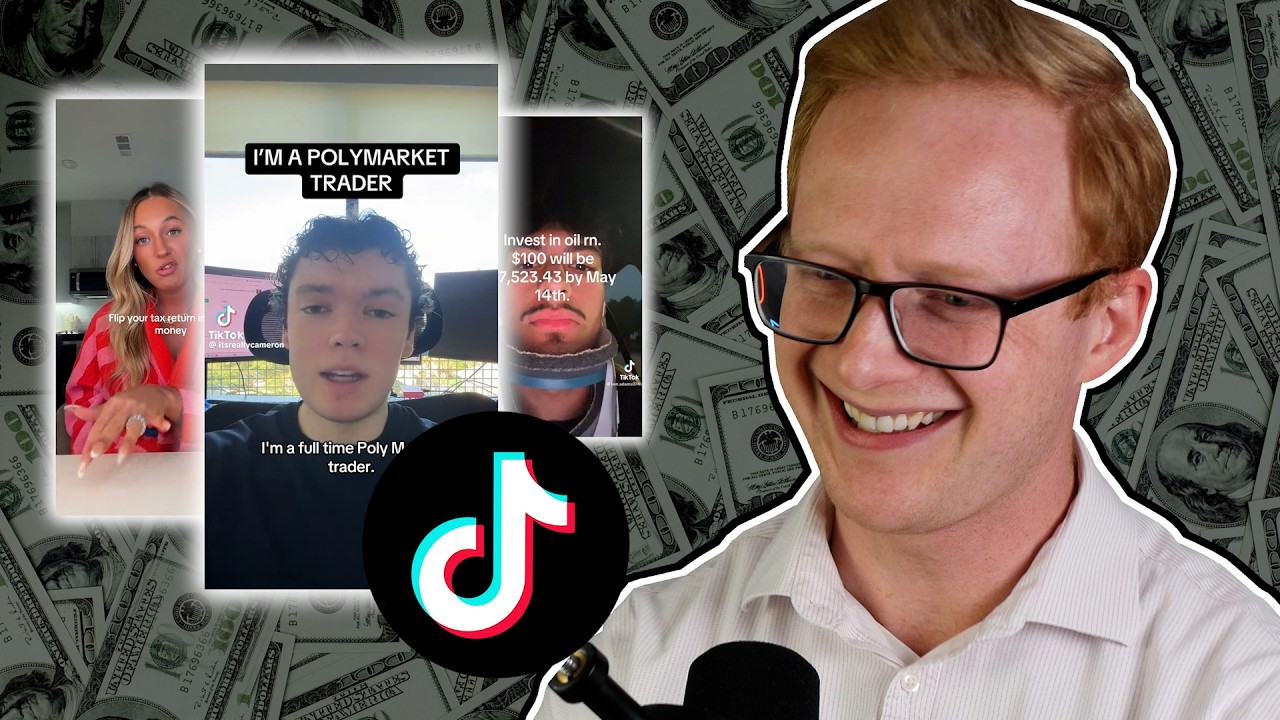
dream with people screaming, partying, and of course, betting their money. — Will egg prices go up this month? — I think we'll hit $20. — Social media ads, meanwhile, showcase users anxiously watching sports matches and press releases, hoping for their contracts to hit. YES, A HERO. — WITH OTHERS flaunting the money they're making. — Yo, you're 450 right now. What? — Bro, I only use Koshi now. — This despite that not seemingly being the typical experience. And despite what CEOs have said about their value beyond sports betting, a good chunk of their ads still focus on just that, even explicitly comparing prediction markets to traditional sports books. Now, to be fair, the companies have had efforts to diversify beyond this activity, especially because sports betting tends to be a maledominated industry. So, we've also seen a lot of ads targeted at women, and the advertising there isn't much better. — Do you think Kylie Jenner and Timothy Shalomé will actually get engaged? — There's actually a great article from The Atlantic that covers exactly this, discussing how ads will use terms like girl math, girl boss, and talk about paying for their coffees with their prediction market winnings. Meanwhile, affiliated accounts like Call Shey Culture and Poly Baddies post memes and influencer style videos to promote the platforms. And a number of these ads really blow out of proportion the upside here. One that later showed up in a lawsuit even read, "I was about to be unable to pay my rent, but I got 2 years of rent through Khi's predictions. " It's amazing. I also have to shout out Poly Market's just awful social media presence on X, where the company has blatantly posted misinformation, conspiracies, and at times even racial slurs to draw traffic to its website. A bit ironic for a company that deems itself a truth machine. And these are just the direct marketing campaigns. There's also, of course, the influencer marketing that these platforms have carried out, paying a slew of celebrities and online personalities to promote their offerings. Some focus on sports. A number try to legitimize the economic and finance trading aspects. Others not so much. — You're going to kiss Noah D. There's a 69% chance it. It's going Yeah, it's like it's going up in the market right now. — The cherry on top. A good chunk of these ads forget to disclose that they're paid promotions. So maybe they aren't. Maybe this guy just really likes talking about sophisticated trading patterns at the beach. — Do you think uh P Diddy will be sentenced to life in prison? — Oh, hell yeah. And while I wish it stopped there, Khi and Poly Market have made what's probably a really smart marketing move and introduced referral programs whereby with Kchi, users can get $25 for themselves and a referral when their friend spends the same amount on the platform. And Poly Market actually providing a share of trading revenues from your referrals when you bring them to the platform if you yourself have traded at least $10,000 worth of bets on Poly Market. So, beyond the massive influencer marketing budgets, we actually have users incentivized to talk about how great the platforms are so that they can help onboard their friends and family and start making money off of their betting activity. With some even utilizing their own social media accounts and making over-the-top claims about the upsides without the same marketing guides to hold back their messaging, — don't get a job, do this instead. And then there's the ecosystem built around prediction markets, the influencer courses, tools, platforms, and strategies that have everyone trying to convince you that this is all more than just gambling. And hey, maybe in some cases, for some specific users, it is. It might be that there are people who are really taking this seriously and able to make a profit, but that's not who the platforms are marketing to. — What's the payout? — Yo, 1,200 if I'm right, bro. No. And with such a heavy focus on the gambling side of the business, there's one aspect through all this that I find really concerning. If you haven't noticed, a lot of these ads are specifically targeting younger users. The minimum age for using prediction markets is just 18. Despite the fact that some gambling laws push this number up to 21, and this has led to a pretty young user base for these platforms. In fact, an estimated 24% of Kulchi users are under the age of 25, which compares to 7% for DraftKings and FanDuel. Which brings us to why these platforms aren't just potentially risky, they can also be outright dangerous. Gambling is incredibly pervasive in the United States. Online casinos and sports betting is widely advertised in sports games, podcasts, YouTube videos, and with celebrity endorsements. Even the White House has gotten in on the action with Trump posting an ad for stake, which itself offers offshore casinos and
The Gamblification of Everything
has been accused of facilitating underaged gambling. It demonstrates just how much money and influence the gambling industry has generated off of its users. It's also easier than ever to gamble thanks to the gamlification of everything with even video games making up part of the online gambling ecosystem and app development putting the power of risking your life savings in the palm of your hand. But gambling addiction which affects roughly 4% of the US adult population is an incredibly dangerous disorder. It can of course contribute to financial ruin. A recent report by the Federal Reserve Bank of New York found that states with legalized mobile sports gambling actually experience higher consumer credit delinquencies with spillover effects even impacting neighboring non-legal gambling states. Gambling also increases the likelihood of alcohol or drug abuse, is correlated with domestic violence, and carries the highest suicide rate among addiction categories. And the issue is that young adults, the very people these platforms seem to be targeting, are the most susceptible age demographic to the disorder. A recent poll from Fair Dickinson noted that regarding men 30 and under who wager on sports, a group that represents 25% of all men 30 and under, a full 10% admitted to having a gambling problem. And this all exists even when companies follow state gambling laws. when it's widely known that gamblers on average lose money. What happens when a platform or its avid users convince people that this is something different? Financial nihilism is already a growing trend where younger generations become disillusioned with traditional financial strategies and reject them in favor of riskier gamles around crypto and the like. What happens if prediction markets are themselves presented as the alternative to investing in stocks for the long term? — Stocks or bonds? — The weather. — Wait, you could trade on the weather? — Yeah, use Koshi. — What happens when these markets manage to financialize everything and have everyone trading in their garage as executives would like to have them? Will all of this still be good for society? There's this idea in economics that assigning a monetary value to something can erode its social value. There's an experiment carried out in Israel where daycarees implemented a fine on parents who were late picking up their children only to see their late pickups double with researchers suspecting that parents
Closing thoughts
had crowded out their social obligation with a monetary fee thereby eliminating the guilt they experienced from being a burden to workers who had to stay late. This is all highlighted in the book values by Canadian Prime Minister Mark Carney, which yes, I waited this long to share that given that politics, I knew I'd lose some of you. But when we talk about this idea of financializing everything, the — long-term vision is to financialize everything and create a tradable asset out of any difference in opinion, — it's something worth considering. executives have put out this goal of getting everyone to trade. Not just because it would make prediction markets just so much money, but because of the data it would offer. But with the odds being against the average user, that just asks for widespread losses. It is naturally a negative sum game when you account for the fees charged by these platforms. There's no productive use of these investments, no project that might generate additional cash flows, just a general redistribution of wealth between average people and those with better or potentially insider information and better infrastructure. Prediction markets also inherently come with moral hazard, the idea of incentives leading to riskier behaviors. Because if there's a payout to be had, there's a cost or risk someone's willing to take on to make it happen. We've even, for example, had concerns raised over so-called death contracts with both Poly Market and Kolshi having run into criticism for markets around the Iran war that involved the survival or death of specific individuals. Now, can prediction markets be useful? Certainly, there's an endless list of hypotheticals that executives will draw attention to on how prediction markets can be used. And yes, there is value in the prediction data offered by these markets. Maybe less so for contracts on which streamer will cry this month. But there is evidence that wisdom of the crowds works. But it brings us to the ultimate question. Is it worth it? Is the cutting edge prediction data worth the financial losses, the proliferation of gambling addiction, and all the other implications for users when we talk about prediction markets? Well, it seems like that's what the courts will be tasked with answering as we go through the nearly 50 pending lawsuits, some of which may very well make their way up to the Supreme Court. And it's worth noting that the CFTC is supposedly putting together a framework to crack down on insider trading. So, we'll have to wait and see what that ultimately looks like. But given this administration's track record of loosening financial regulations, pardoning people who have explicitly worked against finance laws and entwining themselves in every latest finance trend, I wouldn't hold your breath. So, on that note, we'll be taking wagers in the comment section down below on which topics you think the next plain bagel video will be on. Yes, prediction markets are technically still illegal where I live here in Canada, but I'm sure we'll fix that sometime soon. So, step right up, don't be shy. Any and all wagers are welcomed. Leave a like for your dealer if you'd like to leave a tip. And don't sweat it. It's not gambling if there's no casino.