🔔 Subscribe for more great content: https://www.youtube.com/lewishowes
▶️ Recommended for you: https://youtu.be/cIh5YgJ84NI
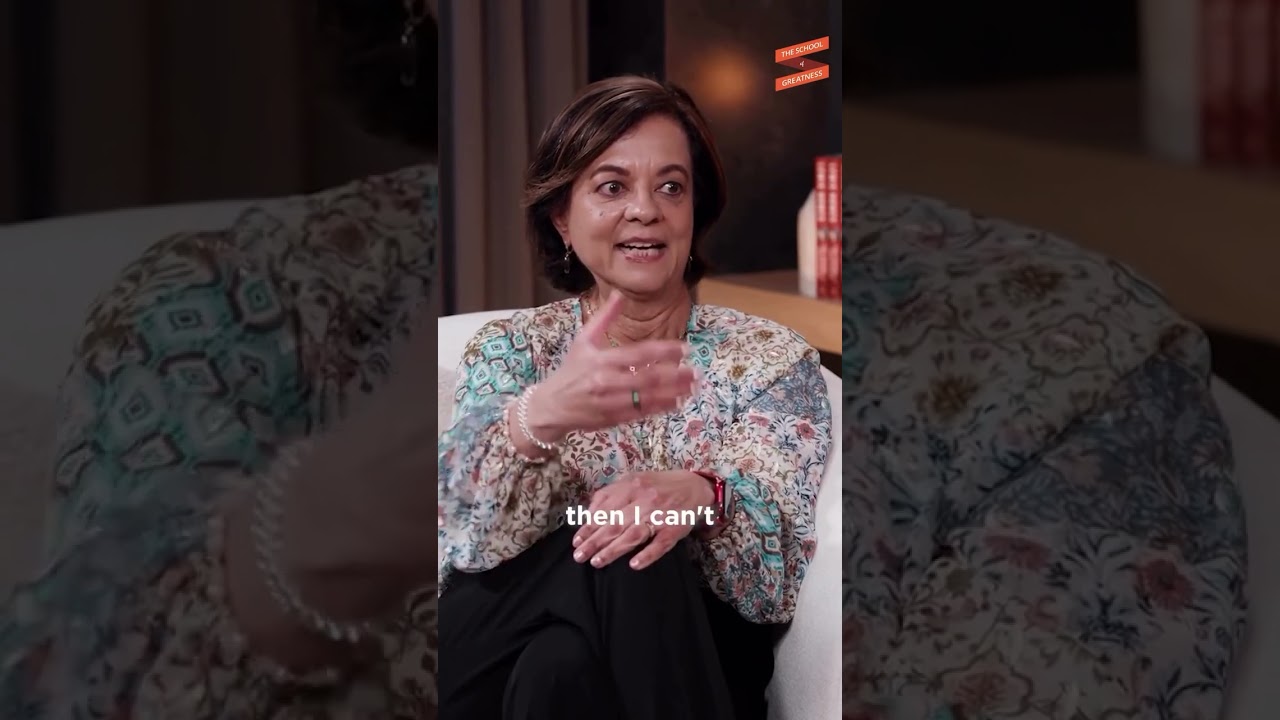
Anita Moorjani spent decades living in fear of cancer, people-pleasing her way through life, and shrinking herself to fit others' expectations - until the disease she feared most put her in a coma with organs shutting down. You'll discover why the real illness was never the cancer, and how facing death finally taught her to love herself enough to come back and live.
Anita’s books:
Dying to Be Me https://amzn.to/3PvLdj3
Sensitive Is the New Strong: The Power of Empaths in an Increasingly Harsh World https://amzn.to/4sKMKR9
What If This Is Heaven?: How Our Cultural Myths Prevent Us from Experiencing Heaven on Earth https://amzn.to/41HNp9P
Anita's Sedona Healing Retreat https://celebrateyourlife.com/sedona
Anita's Website http://anitamoorjani.com/
Anita's Facebook http://facebook.com/Anita.Moorjani
Anita's Instagram http://instagram.com/anitamoorjani
Listen to this episode on the go!
🍎 Apple Podcasts: https://podcasts.apple.com/us/podcast/the-school-of-greatness/id596047499
🟢 Spotify: https://open.spotify.com/show/07GQhOZboEZOE1ysnFLipT?si=a03d916bade54d4f
For more info about this episode, go to https://lewishowes.com/1924
💰 get my NEW YORK TIMES BESTSELLING book "Make Money Easy" today!https://lewishowes.com/moneyyou
📙 get my NEW YORK TIMES BESTSELLING book "The Greatness Mindset" today! https://lewishowes.com/gmyo
📤 sign up for my FREE newsletter https://lewishowes.com/greatnessdelivered
Follow Lewis!
Instagram: https://www.instagram.com/lewishowes/
Tiktok: https://www.tiktok.com/@lewis
Facebook: https://www.facebook.com/lewishowes/
Twitter: https://twitter.com/LewisHowes
💻 Website: http://lewishowes.com/
📲 For more Greatness text PODCAST to +1 (614) 350-3960
Get More Greatness!
Greatness Clips: https://www.youtube.com/@GreatnessClips
Spanish: https://www.youtube.com/@LewisHowesEspañol
Portuguese: https://www.youtube.com/@LewisHowesPortugues
Lewis Howes Shorts: https://www.youtube.com/@lewishowesshorts
00:00 - Introduction: Living Without Regrets
00:55 - The True Nature of Love vs Fear
01:31 - Clinical Death: The 30-Hour Coma Experience
02:42 - Growing Up in a Culture of People Pleasing
03:33 - Why Science Misses the Biggest Killer: Fear
04:55 - Arranged Marriage and the Struggle for Worth
10:24 - Running Away From Shame and Expectations
14:50 - The Emotional Aftermath of Choosing Yourself
16:56 - Understanding the Manipulation of Matchmaking
19:13 - Self-Loathing and the Diagnosis of Cancer
22:23 - The Futile Battle to Prevent Disease Through Fear
28:20 - Seeking Healing Between India and Hong Kong
36:40 - Organ Failure and Leaving the Physical Body
46:12 - The Revelation: Cancer is Not the Disease, Fear Is
51:19 - Encountering God and Unconditonal Love
53:49 - Choosing to Return: Finding Your Purpose
56:34 - The Mystery of Spontaneous Healing and Recovery
01:03:56 - How Repressed Emotions Manifest as Physical Pain
01:08:06 - The Mirror Promise: Never Letting Yourself Down
01:13:15 - Why We Are Conditioned to Choose Division
01:18:36 - Remembering Your Magnificence and True Worth
01:22:12 - How to Focus on Wellness Instead of Illness
01:27:20 - Three Truths: Seeing Through the Illusion of Fear
01:30:43 - The Definition of Greatness and Final Thoughts
#greatness #inspiration #motivation
Оглавление (24 сегментов)
Introduction: Living Without Regrets
I found a lump right here. I was diagnosed with cancer. What I felt inside was, "Oh my gosh, I did this to me. " — Every choice I was making in my life was made from a place of fear. Fear of cancer, fear of being disliked. — The thing that you wanted to prevent most your life came true. — Yes. — She's here to show you how to live a more full life so you don't have to die with any regrets. Please welcome Anita Morjani. — I could hear them saying to Danny, um, she's not even going to make it through the night. And while they're talking about all this, I felt myself leave my body. I've never felt so good before. I've never felt that free after coming out of the coma. Everybody says I was like a different person. I was light. I was euphoric. But I knew the important thing was I knew I was healed. And that
The True Nature of Love vs Fear
is what I want to try and replicate for people who are sick. — If love is our true nature, then why does it feel so much easier and more natural to choose fear in division? — I think even though love is our true nature, we are taught that. — Now, this is fascinating because I've never met someone who died and came back and essentially that's what happened. a coma. Did you technically die or was it just a coma for 30 hours and then you were experiencing something else?
Clinical Death: The 30-Hour Coma Experience
— So, I was in a coma. My heart didn't stop beating. So, I wasn't clinically dead, — but I was clinically diagnosed as being in a coma where the doctors told my family, "This is it. She's not going to make it through the night. Her organs have shut down. " — Wow. And um — is this like on life support or they are they have a machine connected to you or is it just — I was connected to an oxygen machine like I couldn't breathe without that oxygen. — Um I had also had a nutrition tube I couldn't eat so there was nutrition being piped into my body. — Um so and of course heart rate monitors and everything. So I had all these tubes connected. — So without those they were it was keeping you alive. It was yes it was helping me to breathe but my heart didn't stop. So but yes they were keeping me alive. I would have choked if I didn't have the breathing apparatus. — Wow. — And my lungs were filled with fluid. And so even by lying flat I the fluid I would choke on my fluid. So I had to be propped up a little bit and have the oxygen tubes. M
Growing Up in a Culture of People Pleasing
— now I was researching about kind of your backstory and how you grew up with a conditioning around you know living with a lot of anxiety trying to people please trying to do the right thing trying to fit into your Indian culture trying to behave a certain way to please people trying not to upset people — and also you ate perfectly is what it sounds like to try to prevent having cancer because you were afraid of getting cancer and a lot of your life was living in fear and so you ate raw vegan for a while, you were aurvetic for a while. You did all these correct things to not get cancer and yet you still got cancer. — Yes. — Why do you think you got cancer even though you did everything that science tells you to do to not get it? Because I
Why Science Misses the Biggest Killer: Fear
think science misses one point and really it took death for me to understand this and I share it because I don't want people to have to die to figure it out. The biggest killer was the fear. The constant living in fear doing everything I did from a place of fear. It doesn't matter what you eat, but if you are in constant high stress and anxiety day in and day out trying to live life a certain way. So for example, um in the community I grew up in, my parents are Indian, but they were immigrants. We lived in Hong Kong, predominantly a Chinese city. I went to a British school. Um, so my peers, my classmates were all British and I didn't fit in. I didn't fit in with the British kids because my parents were instilling the Indian culture in me. I didn't fit in with Chinese kids because I'm Indian. But then when I would be with Indian kids, I didn't fit in there either because my first language started to become English and I started to become um indoctrinated into British culture and British pop music. And so I was different. I was and I was all of these things and none of these things. Um so I was always
Arranged Marriage and the Struggle for Worth
trying to fit in wherever I was. I feel I didn't fit in. — The other thing was that as I was growing up, my parents were trying to groom me for an arranged marriage. I didn't want an arranged marriage because none of my British friends had to go through that. So I wanted to um I wanted to study. I wanted to have higher education and get a job and um earn my own money and travel the world. But I wasn't allowed to do any of that because it makes you less desirable to a potential arranged marriage husband. So women from that time from my culture or the particular community I grew up in particularly this happens with immigrants. they want to hold on to their culture tighter um because they're afraid their kids are going to lose their culture. So, — I grew up in this culture with a lot of gender disparity where a woman's worth is measured by how valuable she is to the men in her community. — Interesting. So, I always had very low self-esteem and was always trying to fit in, was always afraid of displeasing people, particularly my dad. I knew my dad was disappointed in me from the time I was a little child. — Really, — just because I was a girl, I think, — oh, — they favored boys. They favored sons over daughters. Daughters are considered a burden. — Come on. Really? — Yeah. Yes. I mean, I know it's changing today. So, I'm not trying to slam my entire culture, — but I think but I have met enough people in the world who have said, "Oh my god, you're telling my story. " So I know I'm not alone in this — where ch like girls are considered burdens by parents or fathers or just the whole — parents and by the whole of society because um in again in the community and — how are men born through women. — Exactly. — I understand as a burden. Yeah. And yet when a woman is pregnant, um all the good wishes like all the prayers given to her and she gets to go to the temple where the priests are blessing her, they're all blessing her with a son. And in our culture, a blessing is may you be blessed with sons. It's it's — Wow. Okay. I mean, how old were you when they were trying to create an arranged marriage? Well, it started when I was in my late teens. Now, my um so I had British friends, Chinese friends, Indian friends. My Indian friends started getting married from the age of 17. Arranged marriages. — All arranged marriages. Yeah. So, — none of them had a choice to of who they wanted to marry. — No arranged marriages. And so, one of my best friends got married literally as soon as we finished high school that summer. We were on vacation. And then my one of my best Indian friends says to me, "My parents just got me engaged. " And I was like, "What? " And then um so my parents didn't push me into it that soon, but when I was 19, my other absolutely best friend who was like a sister to me, she got engaged. So by the time I was 21, my parents are like, "Okay, — you're late now. — You're late now. " Yes. — So, they got engaged. They didn't know the man they were engaged to or they just met them or something. — They get to know them after they're engaged, but then it's too late to back out. — You can't back out. It's forced. — You're discouraged. They don't call it forcing, but they discourage you. And — but if you do, you're kind of like excommunicated, I guess, or you're shunned from the family or the community or the culture. — Cuz I did that and I was shunned by the culture and the community. So you're 21, you have an arranged marriage. And what happens? — So it took me a little while cuz I still was rebelling, but they started to try to push me towards an arranged marriage. And at first I said, "No, I'm going to find my own husband. " But then I started to get lonely because all my British friends had gone on to university and careers. Same with my Chinese friends. My Indian friends had got married. So finally I gave in and I got engaged. Um and then when I got engaged the realization hit me of what the rest of my life would be like because I discovered the family I was going to marry into. Um they didn't want me to work outside the home because I had whenever I had said to my own parents I want to work. I want to travel. And they would say you can do that after you're married if your husband approves of it. So again, in our community, in our culture, a woman doesn't move out of her parents' house. She leaves — when she gets married, — right? — And then she will live with her husband and most likely his parents as well. — That's common in different cultures, I guess, that like you may not leave if you're a daughter from your parents until your mid20s or even 30, I guess. But — as long as you're single, you stay with your parents. — Interesting. um at that time of course it's changing but um this is to give you the background of my own life my culture the upbringing and yes — okay so you're engaged for how long and
Running Away From Shame and Expectations
then — so I was actually engaged for quite a few months — uh during which time I was able to get to know the family and um and I realized I had made a mistake in agreeing to it but by that point you're discouraged from backing out because you're being told all the way along — that if you back out, no one else is going to marry you because you will have tarnished your reputation. — And I discovered that they weren't going to let me work outside the home. Um I said, "Can I go back to school? I never went to university. " And they said, "Nope. " Um, and I was to stay home and learn to be a better homemaker, a better cook, and to learn to clean house, and all these things. And I said, I'm willing to do all those things, but I want to also have something more. Um, but I was told, "No, and you're going to have to go to the temple a couple of times a week. " And um and so 3 days before the wedding, I just found myself feeling like I can't do this. I can't spend the rest of my life doing that. And I ran away. And if you know anything about Indian weddings, they are two week long affairs, you know, with uh musicians and banqueting and people flying in from all over the world. And so we had all the relatives had already come. Oh my gosh. From all of it was going to be in India. We'd all flown to India and I ran away and I hid at a friend's house and — three days before you were supposed to get married. — Yes. And I brought so much shame to my family and his family — and this is okay. So this was a long time ago. This was in 1987 and um the entire Indian community all over the planet had heard about what I done and this was before the days of the internet. — Oh my gosh. Talk about I guess shame that you were feeling. Guilt, shame. — Guilt, shame. I felt I'd let my dad down even more. No wonder I was a disappointment. No one in ever has walked away from a wedding and this one person did it, right? That's what it felt like, right? — You're the only one who's ever done this. — Yes. That's really what it felt like. I had so many relatives saying to me, "We flew in. " And you know, they'd brought presents. Oh my gosh. — Oh, it was. And people were saying to my family, they were blaming my parents. parents saying, "You spoiled her. Why didn't you just force her to still show up at the temple? " All these relatives were coming to my parents their door and they told my parents no parents are going to let their son anywhere near me after what I'd done. — Your parents, you know, all the friends and the families that flew in are like shaming your parents now and saying they should have forced you to just get married and — yeah, — don't be a spoiled little brat or whatever it is. like — yes literally they said you should just slap your daughter and make her turn up at the temple. They were even saying this the day before the wedding because I had already disappeared. They were like you know um we can find her and just slap her and send her to the temple and — what a traumatic way to get married. — I know — what a traumatic way if that actually did happen to be like we're going to force you and you're just going to like it. And my mom said, "I'm not going to force her if she was so distressed that she had to do this. I'm not going to force. " — There was a lot going on inside of her. — Yeah. She I think her mama bear came out and, you know, protecting us. — She was protecting me and she said, "I'm not going to force her. " — And that's when uh they were saying, "No. " And my mom said, "Obviously, there's something that's um preventing her from feeling comfortable to do that to move in with them. " And they the relatives were saying, "Oh, they'll sort it out after they're married. Just get her through this. " — Oh my gosh. So, you didn't get married? — So, I didn't get married. — Wow. What did that feel like the day after the wedding was supposed to happen when everyone cleared out and there was no more ceremony and you knew you weren't getting married? How did that
The Emotional Aftermath of Choosing Yourself
make you feel? — I felt heavy. It didn't feel like relief. It didn't actually feel it felt like I was caught between a rock and a hard place, you know, damned if you do, damned if you don't. It felt like I had disappointed everyone. Um, I felt sad. — Yeah. — I felt like grieving cuz I was young. I didn't know how to process the emotions. It felt like what today I would call grief. Mhm. — It was like something had just ended and I felt I'm supposed to feel relief, but it didn't feel like that. — Well, cuz everyone was disappointed in you, upset at you, they didn't want to be around you. They were — Yes. And I had luckily I had a few very close friends who were who said to me, "You did the right thing because if you don't feel love or excited to get married, you shouldn't do it. " and they were there trying to cheer me up, support me. So, it's good. You had that support. — I Side note, just curious. How many people do you know who got an arranged marriage back then that are still married and actually happily married? — Hardly any — really. — Are there I mean, I'm there has to be some, but — I'm sure there are. Are there any friends that you have from back then or any family members or relatives that you know back in the 80s and 90s who got married through arranged marriage where they were forced to get married essentially by others choosing for them and they're still they're like happily married or they're still you know maybe they're married but they're not happy I don't know — that's what I more shame to get divorced or something or — yes I know people who are still married now when um I say arrange marriage They don't think that they're forcing you. It's it it's an interesting situation where they say all we're doing is we're arranging the meeting and then it's up to you after that. — But it is forced — but it's manipulative. At least that's what I experienced um is that after
Understanding the Manipulation of Matchmaking
you've met and you then request let's say a second meeting at the most you're allowed maybe two meetings and always with chaperones and then maybe you go on one date and then after that I went um when you say something after going on the one date when you say something like yeah they're really nice I don't mind seeing them again that's when it's like oh you can't see them again unless you get engaged. And I'm like, oh, I'm not ready to get engaged, but I'm happy to get to know them more. And it's like, no, you can get to know them after you get engaged. — Interesting. — It's more like that. But you're not forced to get engaged, — but it's in that moment. Now, what happened is if — and the girl, the woman's side always has the disadvantage in these situations or at least used to. I believe it's changing a lot today and I certainly hope so for the woman's sake. But what happens is that if the man says yes, like he gets asked the same question, would you like to marry her? And then if he says yes, actually I think I will. I like her. For the man, it's the woman who has to give up her entire life and move into his house and follow his rules. He doesn't have to change anything. — He still goes to work. He still does his thing. — For her, she has to be willing to change everything. So, she wants to get to know him more before she makes — change her whole life. — Yes. So, he says yes. Now, the news comes back to the girl's family, he said yes. Now, the girl is told if he said yes and you say no, you come across as being choosy. And — is that a bad thing? I mean, — apparently, don't you want to be like — Yeah. Uh but no then it's like less and less people — will be willing to come forward and you know because all this is called matchmaking. — Sure. — You will get less offers is what they say. — So if you can sum up your the first 25 years of life what were the internal feelings and mindset you had about yourself and the world?
Self-Loathing and the Diagnosis of Cancer
— Um the internal feeling was that there was something wrong with me. I didn't understand why it was so easy for other young women in my culture to agree and go through with an arranged marriage and I wasn't able to. Um uh the internal feeling was total disappointment in myself, self-loathing, fear, stress, anxiety, disappointment to my family, to my dad. — Um yeah, I just thought I was a loser. A total loser. — Wow. Yeah, — this message is brought to you by Apple and Verizon. And if you scroll enough online, you'll hear it all. Miracle diets, fitness trends, crazes like celery juice and cold plunges, you name it. But with iPhone and Apple Watch, you get meaningful insights from a very trusted source, your body. Because the information you get should reflect the body you're in. With Apple Watch, you can track things like your sleep quality, your cycle, your cardio fitness, and more. You can then unpack all the information on Apple iPhone on the health app, which allows you to track and view your data over time. And all these health insights are developed with experts from start to finish. Find out more at apple. com/halth. Apple Watch is not a medical device and should not be used as a substitute for professional medical advice. — What had happened then? So, you ran away from the arranged marriage — and you were living in this fear of not wanting to get sick or get cancer as well. — That came after that. — After this, yes. — Why did that come where you were like, I don't want to get cancer, so I'm going to do all the right things to make sure that I don't get it. I had uh two people very close to me my own age. So this was a few years on. I met my husband. My dad passed away. Then I met my husband Danny who is amazing. I'm still married to him. Um we really love each other. Um and just a side note, his he's Indian. Um I told my parents I'm not marrying an Indian man, but I'm um but then I met an Indian man. We fell in love. His parents disapproved of me because of the broken arranged marriage. — My gosh. — Yes. But he — he didn't care. — Yeah. So, um we got married and um then two friends actually, one was a relative, a brother-in-law and my best friend, they both got cancer um at the same time. — And I How old were they? — We now were in our 30s. Mhm. — So we were in our mid30s and they both got cancer at the same time and um I watched them deteriorate. So as I got into my late 30s um I'd watched this happen and they were having the best cancer treatments that money can buy and yet they weren't improving. They weren't getting better. And as I
The Futile Battle to Prevent Disease Through Fear
watched this, I developed this huge fear around cancer. And um so I decided I'm going to do everything I can to prevent cancer. So I started reading up on cancer prevention and antioxidants. And — I started ordering every kind of um anti-cancer pill. — I was vegan. I used to grow my own wheatgrass juice. I ate only organic. which was actually harder to get at that time. But then food generally was cleaner at that time too. So — where were you living then? — I was living in Hong Kong. — Okay. — And so I wouldn't eat so much processed foods and um and I was cutting out sugar. So I was doing all these things and I was so fearful of cancer and food was something that was scary to me. Then when I would go out with friends and they'd be drinking or would be eating desserts, I would just be so scared of everything that I was eating because I'm watching these two people dying from cancer. And I'm reading these things and attending lectures held by naturopaths that are saying cancer, sugar feeds cancer, alcohol feeds cancer, um hormones in chicken, if it's not organic, um they feed cancer cells. And I'm listening to all these podcasts and lectures and audio books and so on. And I was obsessed with that subject. I don't know what got into me. I mean I do know it's because I was watching these two people. Um so you add that into the mix where every choice I was making in my life was made from a place of fear. fear of cancer, fear of being disliked, fear um and because of my upbringing, you know, where I mentioned that women were actually rewarded for being subservient. Um so I was not someone who was outspoken like I couldn't imagine the life I'm living today where I'm writing books, speaking publicly on podcasts with you that go out to millions of people. I could never ever have even imagined that for me. — Wow. But it sounds like you had a good marriage though, right? You had like love and connection and intimacy. — Yes. That was the biggest gift in my life was my marriage was Danny. Um he is amazing. He's funny. He has a sense of humor. Um because even when um we were dating um you know he was really funny. I knew that his parents didn't accept me. — Um, but he said, "Don't worry about my parents. " And he didn't live at home with them, which was rare for an Indian man at that time. He said, "I've moved out. I make my own mind. They know. I've told them I'm not going to marry an Indian woman, and they'll be shocked I'm marrying an Indian woman. " Um, so he was great. But at that time because I'd run away from the marriage, the rumor or the gossip that had spread about me in the Indian community in Hong Kong was that I ran away because I didn't want to do housework. — Oh my gosh. — I know. Isn't that — So when I mentioned to Danny, I just wanted to make sure he knew what people were saying because I didn't want him to hear of it later. — Sure. So I just said to him, you do know what all the people in the Indian community say about me. And he said, "Yeah, but you don't have to worry. I cook, I clean, I do windows. " And so I started laughing and I thought, "Okay, he's funny. " But um he was, you know, he was just he is still um so supportive of me and my life. But it was six years into our marriage that I was diagnosed with cancer. — Interesting. And so you're diagnosed after years of trying to prevent it. — Yes. — And then you're diagnosed. What type of cancer, I guess, were you diagnosed with? — I was diagnosed with lymphoma. Cancer of the lymph n lymph glands. — I found a lump right here. And at first they thought, "Oh, maybe it's um just swollen glands. " And so the doctor just gave me antibiotics at that time. And uh and she said, "Come back next week and let's see if it's gone down. " It hadn't. So she sent me to another doctor who did a biopsy. — Um and then it's it confirmed it was cancer. Then they sent me for the scans and they said it had spread to the upper quadrant. So they staged it at stage two. — What did you do next? — Um then I was in even more fear. — Right. The thing that you wanted to prevent most of your life came true. — Yes. — The scariest thing you wanted to prevent. that I wanted to prevent came true — because had your two friends were they still recovering from it? Did they survive? the day — while I was dealing with the cancer myself, I had this image that this is going to be a death sentence because I was watching them. While I was dealing with the cancer, they both died one after the other. — And for me, that confirmed in my head, in my reality, that this is a death sentence. — That's scary. — It was very scary. — So, what did you do? like how did you create a game plan of attacking it? Did you go like extreme veganism? Did you start doing chemo? Like what was
Seeking Healing Between India and Hong Kong
the process next? — So I started with just doing um uh natural me because I saw that the chemo radiation hadn't worked for them. — For those two. — Wow. — Um so first I'm grieving them and then dealing with my own cancer. It was so scary. So I started with trying um traditional Chinese medicine because I live in Hong Kong that was so easily available for me. But I also had a lot of um I also knew a lot of naturopaths because I was so into that subject of eating healthy. I knew immediately what practitioners to go to. — But here's what made it even harder for me. You had all these people like Hong Kong is very developed, westernized. There's more Western medicine available than say traditional Chinese medicine even though it's a city that's off of China because Hong Kong was ruled by British. — So it's very much infiltrated by British laws, British legal system, British organizations. So most of the people that I knew in society in the community were saying, "Oh, you have to go and do the normal route. " Because the doctors were telling me, "You need chemotherapy. " — I said, "Wait, I don't want to do chemotherapy yet because of what I've seen it do to my friends. " Um, everybody in my community and my friends and everybody was saying, "Don't be crazy. Don't be silly. This don't play with your life. do what the doctors are saying. My naturopathic friends, because I was so entrenched in that, were saying, "Don't do the chemotherapy. It's poison. It's going to kill you. " — It is poison, right? I mean, — yeah. So, I had both of these in my ears. And that made me even more stuck. — Every day I was like, "What do I do? I don't know what to do. " — It was just the worst place. I was scared of the cancer. chemotherapy, the treatments for treat uh I was scared of death. I was scared of everything. It was like I was trapped. I felt like I was in a trap. — What did you do? — I had to leave Hong Kong for a little bit and clear my head. — I actually went to India. Now even though I'm ethnically Indian I've never lived in India but I had traveled there many times. So I spent about six months there doing Ayurveda and in India because I was away from all that noise and the conflict the both sides saying don't do that don't be crazy don't do that I was away from all that and I started to practice ayurveda follow um a teacher yogic teacher who was an ayurvedic teacher and taught yoga as in a whole way of life. Um, he kept saying to me, "Forget about the word cancer. It's just an imbalance in your body. Let's balance your body. " That felt so good. For the first time, I felt the fear was starting to lift. It was actually shifting. — And he gave me an actual road map. But then I had to go every morning at 6:00 a. m. for an hour to the yoga teachers um the ashram and then I would get to go home. My mom had a house there at that time because she had left Hong Kong after my dad passed away. So I would go home and then every evening at 6 PM I had to go back. — So twice a day I had to go to this ashram which was really near my home. So it was great. — This is like doing a yoga practice or meditation or breath work or — it was all it was meditation, yoga practice, breath work and a teaching of what to eat, what not to eat. — And he would and there was his wife as well and they would check in. How are you feeling? How's your body doing? — Um and they would talk to me. And so it was I was there for six months doing this every single day. and they would um and my diet, even though I was vegetarian, I was no longer needing to be vegan. When I was with the naturopaths in Hong Kong, they were Western naturopaths. Um I was encouraged to be organic, raw vegan. And I didn't like that at all. — Yeah, that's tough. — It was tough. here in India um I was told that no you can eat hot food you can eat spices you can have cheese and milk and paneer cottage cheese so my diet actually broadened you can have oils butter ghee and so I was enjoying the food I was actually getting healthier and healthier — um so I was eating and I was um doing the yoga and I was being told and in an environment where we didn't even use the word cancer. My sessions at 6:00 a. m. was just me on my own. Um so I and then my sessions at 6 p. m. was with a group was with a class. And so going through this every day and they would tell me even when you are with your friends, your family, don't use the word cancer. Just say you're dealing with an imbalance. You're correcting it. And over the months, I actually got a lot better. I was healthier. The lymph nodes went down. It all went I felt it dissolving. It was pretty much gone. And I thought, "Okay, I can keep doing this. I'll keep doing this in Hong Kong. " I went back to Hong Kong. My husband had come to visit me a couple of times, but I was missing home. Um, when I went back to Hong Kong, people were like, "Oh my gosh, you're looking so healthy. You're looking great. What happened? " And I told them, "Now, all the people who were all pro- western medicine said, "Oh, wow. Um, you know, Ayurveda, I don't know. It's not proven. Um, I don't know about this stuff. You need to go and get yourself checked. Go see that oncologist anyway. Go check in and have them do the scans. And as soon as they started knocking Ayurveda and saying no, you know, it doesn't really work and it's all woowoo. Um, and I'm going back like 22 years or so from Yeah. So when they were saying all these things, I felt the fear all coming back and I felt this resistance of going into that hospital setting and I thought, "Oh my gosh, oncologist again. You're talking about chemo, radiation. That's all they know. I watch two friends die with that. All that is going in my mind. " But I was getting this hammered into me every day. My husband was so supportive of me though. It got to the point that where he even had to screen my phone calls because there were certain people that were calling me and saying, "We're saying this for your own good. You're being crazy. We saw your friend die. We don't want this to happen to you. You need to go to the oncologist. " And I felt, oh, but my friend died because of this — because of that. So um — so the fear and anxiety started to come back. — The environment, the friends, their although their intentions were good, their energy, their words, — the environment around that consistently created the reaction within you that caused more stress, anxiety and tightness which caused the inflammation of the cancer to come back is what I'm hearing. — Yes, exactly. And it took quite a few months, but I started to feel all the lymph nodes get swollen again. I knew it was back. — And I became really scared again. And at that point, um I just couldn't deal with it anymore. And I said, "Okay, I'll just go to the doctor. "
Organ Failure and Leaving the Physical Body
— And they're like, "Yeah, it's right there. — It's right there. " — That's how it all came back. Yeah. — Interesting. And they said they told my husband, "You only have three months to live. " — So from that moment until you're in the hospital for a 30-hour coma. — Yeah. — Because your organs failed, how long of time was it from that moment when they told you had three months to live until you had 30 hours in a coma? It actually only took six weeks for me to really deteriorate at that point because from the time so for me going into a hospital going and seeing oncologists going and starting that whole process um it was so traumatic inside and uh again this feeds to me wondering what is wrong with me. Other people go to hospitals, other people have treatments, — but my body just can't take it. I completely broke down inside. I couldn't eat. I lost my appetite. And because I couldn't eat, my body stopped absorbing nutrition. — Yeah, man. — And my lungs started to fill with fluid and I weighed about 85 pounds very, very quickly. I decreased dramatically the minute I started to enter into the um into the whole clinical hospital oncology environment. That's why today and I'm just jumping forward for a minute. I'm a big advocate for changing the way that hospitals treat patients because for me it was incredibly traumatic. — Yeah. — I watched people die in that situation. — Yeah. Not everyone does this, but it seems very clinical and cold and scary. — It doesn't feel emotionally warm. — Not at all. — And you know, — and you don't feel like they've got you. They're help. No, — they're just like on to the next and let's get you this and we got to get to the next appointment. — It's the whole system's broken because they're not encouraging doctors to really be practitioners. Yeah. — You know, it's like, well, you just got to get through the patients and move on to the next. — Yes. — So, it's, you know, who do you blame? You know, but — yeah, it's not the doctor's fault. They enter the system wanting to help you. — A broken system. — Yes. — This must have been scary then. Did you What happened right before you went into a coma? — Do you remember? Like — Yes. Clearly. So then because the doctors told my husband that I only had three months to live basically. They put you on or they kind of say there's nothing really we can do, you know. So, I was just being kept comfortable at home. Um, I had — waiting to die. — Yeah. I had a full-time nurse. — Um, nurse and my mom flew to Hong Kong to help take care of me. And my husband Danny, he lost his job because he was at home all the time. He didn't want to leave me even for one minute in case, you know, I went, in case something happened. And over those weeks, um, my condition deteriorated faster and faster. Like I was choking on my own fluid. And, um, I had to bring like I had the oxygen tank at home. I started to need the oxygen. As the weeks went by, I couldn't go even five minutes without oxygen. Not even 3 minutes. It just the time got less and less that I could be without oxygen. every two weeks I had to go into the clinic to get my lungs drained from the fluid. — Um, and so I deteriorated to the point where actually on February the 1st, um, I was in so much pain and so much discomfort. I just asked the nurse if she could just give me a bigger dose of morphine and so I can sleep because even when I would lie flat, I would choke. And of course, even in bed, I would have the oxygen on me. Um, so she gave me morphine and she went home for the night. Like she would leave at 10:00 at night and then my husband would be there in bed with me. And the following morning on February the 2nd, I didn't wake up. — And my husband called the doctor and the doctor said, "If you can get her into the hospital, please bring her here. like call an ambulance and bring her over here. — And he was trying to wake you up or shake you or — he was trying to see because my husband said there has to be something you can do. You know, he wasn't ready to let go. — But you weren't waking up but you were still your heart was still beating. — My heart was still cuz the doctor said she's still alive. He said yes, she's still alive. He's like, okay, if she's still alive, bring her in. If her heart is still beating, bring her in. Let's check if there's anything. — So he brought you in. So he brought me in the in the you know so in the ambulance my mom my um my husband and me and we go into the hospital and I'm already in the coma now the doctors are looking at me and they're saying she's in the coma and they're testing and they're checking my eyes and they and it's in my medical record records that she's clinically diagnosed as being in the coma and they said her heart's still beating but she's not there but I'm still connected. And then they take off all the portable things, the portable oxygen, and put me on the actual oxygen. And then they say, "She's completely malnourished. " That's the first thing they said. She is completely malnourished — cuz she hadn't been eating for 6 weeks or something. Yeah. — Yeah. So they say, "We're going to put a food tube into her and we're going to feed her piped — nutrition. " And then they're connecting me to a heart rate monitor and the oxygen thing on your finger and you're connected, but they're at least pumping food into me. Um, and they said, "But her organs have shut down. " They said, "Her kidneys have already started shutting down because my ankles were now swelling up. " And — so they told Danny that she's not going to even make it through the night. And while they're talking about all this, I felt myself leave my body. I literally, it was like I had been in so much fear, fearing death, fearing the disease, fearing the treatment, fearing everything. And it's like nowhere to go. I popped like I popped out of my body. Um, and I became aware of everything that was happening all around me. And I became aware of my physical body that was lying on that hospital bed. Now, I didn't have physical eyes. So, it's not like I was looking with physical eyes. It was something more powerful than that. It was like a awareness. Um, it was like 360 degree peripheral awareness. — So, it's not like you were above looking down at everything, but you could kind of see everything around you still. — Yes. But I could I was even aware I could see my body — and my but I felt incredible. I never — I've never felt so good before. I've never felt that — free. There was no fear. The fear was gone. The pain was gone. I just felt more incredible than I ever recall feeling in my physical life before. — And I felt powerful. I've never felt this powerful before. — Could you hear what was happening around you? You could see who was in the room. Like you could sense it. I guess you could — I could see it, — but not from your body. From a different perspective. — Interesting. — And I could hear it. not with my ears, but and I could see and hear and feel what was happening beyond the hospital room outside. And I saw and heard the doctors saying to Danny, "She's her organs have shut down. They're shutting, you know, they've shut down one by one. Her kidneys are completely shut down. " I could hear them saying to Danny, um, she's not even going to make it through the night. And if there's anyone you need to inform, now's the time. I could see my mom clutching one of the doctors by the arm or the elbow saying, "Isn't there anything you can do? " — And your eyes were shut during this. — Your eyes were shut, but this was like confirmed afterwards. They were like, "Yeah, all these things happened. " — This was confirmed afterwards. — Wow. Interesting. because I shouldn't have heard any I shouldn't even have heard that they were telling uh that the doctors were telling my husband that I wouldn't make it through the night because he later told me he didn't even say that to me in the room. He said it down the hallway at the nurses station. — But you still heard it somehow. — I heard it. It's like I was — everywhere. — Everywhere I was — like your soul expanded and it had different senses. — Exactly. It's what I understood is that — um in our physical bodies we are five sensory beings, but when we don't have our bodies anymore, we're actually
The Revelation: Cancer is Not the Disease, Fear Is
multi-ensory beings. That's what it felt like. And um my um and so I was I felt expanded and powerful and it felt like I understood why I had the cancer for the first time. It was like I was in this state of clarity. — What did this understanding? What did it say to you? — This clarity. It was like I could see and understand how it was that every incident in my life, every thought, every decision, every choice I had made up to that point had led me — to that moment of lying there in that hospital bed dying. And I could see — it was like I could see the whole trajectory and I understood why. And I understood in that moment, clear as anything that the disease wasn't the cancer. The disease was the fear. — Wow. — That was the biggest thing. Like, oh, it wasn't the cancer. It was the fear that killed me. — Because you all you did it sounds like you did a lot of the right actions. Yes. You took the right actions physically, nutritionally, learning about things like you acted in accordance to have no cancer except for the way you thought and the way you believed felt. — Mhm. — And those connections created so much tightness or fear or cancerous buildup. — Yes. — It manifested from your thinking into your mind into your whole body. — Yes. is what I'm hearing. — Yes. And it started even from the time as a child I was always a very repressed child. — Um introverted, shy, repressed child. — And uh so what it felt like to me, again, I'm not a scientist or a medical doctor, so I can just go by what it felt like to me — in that — um in that state. I wanted to know as well. It's like why did I how can I have got something so serious and so aggressive like I didn't do anything to deserve it. I was so careful with my diet and everything. And the response or the understanding that I was feeling was that it wasn't because of you did anything wrong. It was because your soul or who you are is so powerful that it has been wanting to express itself for so many years — and you repressed it. Not only because you didn't think you were good enough and you were not worthy because you were a girl and then because of the fear and the anxiety and the people pleasing. It's you pushing down something so powerful and repressing it that when it exploded, it exploded. It actually this is your soul's way of expressing itself. And if you think that cancer is aggressive, it's just a message to how powerful your soul was. It's your body communicating with you. — So it was like the little child in you that was had been repressed for 35 plus years. — Yeah. 40 years at the time. is screaming at you saying — yes — if you're not going to listen to me and actually communicate — yes — I'm going to express to you through pain — yes — so you are forced to listen — yes and here's the thing — um this um repression — was so this people pleasing — was so ingrained in me that even while suffering from cancer the cancer it's not the cancer that healed me from the people pleasing. It was death, which is why I keep sharing my message. — Um, while I had cancer, I was still a people pleaser. — Even though I needed — all the way to death. — Yes. And when people would try and help me, they would say, "We're going to drive you. We're going to do things for you. " I would say, "Oh, no, don't worry about it. I don't want you to go out of your way. I'm fine. I can deal with it. " I didn't want people to know I was sick. feel I needed help. It was only when I died did I realize, oh my god. Um, you know, I need to allow people to help me when I need help. This is why I tell people don't wait until you die. When I came back, when I, you know, obviously I'm here, I recovered. One of the first things I wanted to know is why did I need to die to find this out? Why don't we know this already? And this is why I share my story and tell people that you don't need to be a people pleaser and
Encountering God and Unconditonal Love
you know who you are is enough. Is — wow. — Yeah. — Did you have an encounter with God when you're in that coma? — So I have a different understanding of God because of the encounter. I feel that God is not a being but a state of being. Because in that space, in that state, I felt surrounded by other beings, — I felt my dad, my dad's essence as well. — And he had already passed. — He had passed 10 years prior. And I felt his essence. And what I felt from my dad was pure unconditional love. — Wow, that's beautiful. — And I was expecting to get judgment from him. There was no judgment. Now, of course, my dad didn't present himself as a physical being because he wasn't. Um, it was just pure energy or pure consciousness, but I knew it was my dad. It's almost like, you know, it's like telepathically — you're given this image. This is who this person was in your life. — Wow. — And I felt nothing but just love from him and for him. And that's when I understood that just as much as I'd been a victim of the culture, he'd same culture. — Yeah. — And I realized that when we cross over, not only do we lose our physical bodies, but we lose our gender, our culture, our beliefs, our religion, and all the baggage we've carried over all these years. All that is left behind over here. And what crosses over is just pure love or pure consciousness. — And that's what I experienced with my dad. It was his consciousness and mine merging. — This is something I read about what happened. It said within 5 weeks of being told you had hours to live, you left that hospital completely cancer-free. — Yes. — An oncologist flew from the US just to review your case and told you, "Any way I look at it, you should be dead. " What did that experience teach you once that doctor came in and said there's no way this is possible? It changed my relationship with my body because in that state when I was in that uh state I was given a choice as to whether I wanted to come back into the physical body or not — really in the coma — in the coma like so I was given the
Choosing to Return: Finding Your Purpose
choice and no part of me wanted to come back — felt so good — I felt so good peaceful — peaceful and I felt loved like I was in this sea ocean of love no part of me wanted to come back What is this choice? Was it like uh a being gave you a choice? Was it God was like what do you want to do? Like was it your own consciousness that said do you want to come back to the physical world or stay in this space? So it's almost like my own expanded consciousness, but again there are it feels as though I'm supported by just loving beings or love and but it's like my own consciousness and it's so the exact feeling was a feeling of oh this is as far as I can go but I can go further but if I do then I can't turn back. — Can never go back. — I Interesting. And then a big part of me was like, "Yeah, I don't want to go back. My body is in pain. Life sucks. " Basically, my family — I'm depressed. Everyone judges me. I'm a people pleaser. — Exactly. And my family um is suffering, taking care of me. I couldn't see a way out for my body. But that was when I just received the understanding. And it was possibly even my dad that was giving it to me because you know you're just receiving this understanding this clarity. It's like an you're expanding into more and more clarity — and that understanding was now that you know the truth of who you really are — your body will heal very quickly. So I immediately got that message and then I definitely felt this was from my dad saying you haven't completed your purpose yet and your purpose is linked to your husband Danny's purpose. If you don't go back he can't complete his purpose either. — Really? — Yeah. — Wow. — And so I made the choice to come back and that was when my dad said now that you know the truth go back and live your life fearlessly. So, — I just got the chills — because he didn't tell that. He didn't say that to you when he was alive. — No. And it was because of my dad that I was living in fear. My dad instilled fear in me while I was alive, but in death, he released me from that fear. — Holy cow. That is mind-blowing. Now, I've always fascinated by this. This may be I don't know if this is where I'm going with this, but I'm always curious like was that, you know, was that a 100% real or was this your brain through decades of like life creating this experience for you? Like I wouldn't know if that's
The Mystery of Spontaneous Healing and Recovery
It probably felt so vivid and so real. — Yes. But if it's just your brain creating something for you to imagine something while you're in a coma, like that's what I don't know. It's like the mystery of all these things. How do we know that's really real versus a dream that told you this? — Either way, it helped you come back and like live this life, right? — That's exactly my point. So, um I've had so many doctors look at my case and tell me different things. Every single one of them agree to one thing that I shouldn't be alive. That's the only one thing they agree with. That I shouldn't be alive and I'm very lucky to be alive. They all agree to that. But here's where they disagree with. There's been a couple of them that said that was my brain. It was the meds messing with my mind. — Um — you're hallucinating. And — but the ones that have really scrutinized my case and my own family doctor, not the oncologist, but the GP who has known me for years before, still knows me years after, who was there in the hospital room when I came out of the coma. Um, he's one and the one that flew from America to Hong Kong to study my medical records. Each of them say you cannot explain this even materialistically. Yeah. — Because what they say is that um — how did all those billions of cancer cells even leave my body when my organs was shut down? — That's interesting. — Yes. — How did your body heal when you were dying? — How did my body heal and what flicked the switch? And — that's interesting. — Yeah. And — it's like something in your not even your brain, it's something in your being in your essence — understood and knew the truth. — Yes. — It understood and owned the truth for the first time in your life. — Yes. — And in that instant started healing itself. — Yes. — Is that's what I'm understanding. — That is exactly — There was no medication they put in your veins that helped the cancer go away. There was no some of them claimed the medication did help but it also meant but — but either way even it helped it would come back and it would like you would die. Yeah. — They said there's no way that it could leave my body in such a short time. So in three weeks they could find no trace of cancer in my body. — That is crazy. And how long had you had it before then? — Four years. — Four years you had it and it was getting worse. Your organs were shutting down. — Yes. — You were in a coma for 30 hours. you almost die. And then — and they had given me one dose of chemotherapy which should not which should have actually made it worse which is what most — oncologists have said that should have actually killed you faster. — Yeah. — And they said but after but when you went into the coma something happened — like a gene switch happened that it started to heal. — Yes. — A healing gene turned on and your body started to heal itself. So three weeks later there was no trace. Were you still in the hospital like recovering? — I was still very weak. — Yeah. — So I was building up my strength. Yeah. So I was still recovering and they said you really need to build up your strength. Now after coming out of the coma um everybody says I was like a different person. I was light. I was euphoric. And I kept telling people I was trying to pull the tubes out but the doctors were like no you're still critical. This was like the first day. — I'm fine. I feel different. I said, "I know I'm well. " Actually healed, but my body just has to catch up. " But I knew the important thing was I knew I was healed. — That's so fascinating. — And that is what I want to try and replicate for people who are sick. The problem is sometimes going into hospital can make you feel sicker. Mhm. — Um, so — it is a knowingness and I guess, you know, and there's probably also people that, you know, know someone in their life that said, "I feel fine. I feel like I'm healed and then they maybe did pass away, right? You know, 6 months or a year later. " So, there's still fear in people that say, "Well, make sure you go to the hospital. Make sure you get checked. " So I'm always of like the mind of have common sense like do things get checked up you know eat healthy do the right things — yes — and also take care of your mind — yes — and your beliefs around — the energy you have around that condition — and don't allow that to become your identity of I have this maybe I'm in experiencing an imbalance I'm experiencing what people say is this and I need to correct my thinking — yes I get to correct my thinking. energy and my feelings around this. And I get to do the other common sense actions that will support this without the fear because the fear is what's going to grow the cancerous thinking and then therefore the cancerous things in my body. Right. And it's so interesting you say this that you felt so disconnected from yourself because of all these repressed emotions as a child and your whole life. And even maybe six, five, six years ago, there was a period of my life for maybe 3 years where I started to get these kind of like eczema like rashes coming out in different areas of my body at different periods when I would feel the most tension in my body. — Wow. — And it was all from a relationship that I was in that I was repressing myself by I was people pleasing the whole time. — Oh wow. — I was not speaking up. I was not being courageous in my communication. I was lacking the courage cuz I wanted to make this person happy. I don't blame this person for doing this. But it was my responsibility to not repress my feelings. Yeah. — And I lacked the courage. — And these kind of skin rashes would come out in my body. And I was like, you know, I'm eating healthy. I went to the doctor many times. I went to different specialists and I was like, did all the blood work and they were like, you have no allergies. You have no nothing. Like, you're completely healthy. There's nothing that you're eating that is causing this. They couldn't figure it out. — And deep down I was like, gosh, I'm just repressing my emotions cuz I feel chest pain in my heart. I feel clenchness in my throat. I feel like I can't speak in this relationship. — Yeah. — And again, this is not to blame someone. And this is me taking ownership of the lack of using my voice and expressing myself to try to please someone. And so I can relate to that experience you said where it's like, okay, your inner child or your inner emotions or your the version of you that wants you to be the most authentic person. Yes. Inside of you — is getting your attention. For me, it was through like rashes. Through you, it was through physical cancer. And it's going to continue to scream at you through physical manifestations. — Yes. — Until you change your way of thinking and your way of acting and being. And I remember the moments I started to shift energetically. It went away. Like the skin rashes were
How Repressed Emotions Manifest as Physical Pain
on for years. It went away. — Wow. — And it was like Yeah. It wasn't food. It wasn't this. It was like it was me repressing my voice and living inauthentic to my values — to try to please other people. — Yes. — And now I'm just kind of like a maniac where I'm, you know, not in a negative way, but I'm like if something's off, I'm going to tell you, you know, like you though — and I'm just like and I will confront you and I will say how it is. — And maybe I need to learn how to like have some more like grace around that. But it's learning how to not repress out of fear — of pleasing someone. — Yes. — And also having grace and you know communicating with courage and authenticity where it's you know also works. So I'm such a believer in this because I just think the more we repress our emotions um the more pain we will feel in our bodies. — Yes. And I appreciate you sharing that because even though that was painful for you. Yeah. — Um — I'm actually glad you had that experience because now you know and you understand how serious it can get because one of the things that I actually say is love yourself like your life depends on it because it does. And when I say love yourself, what it means is really love who you are inside and let that shine through. Let that express itself. And um you know and when you were talking about eating the right foods and or being sensible about it and even going for scans or doctor checkups, — you either go because you fear disease or you go because you love yourself, you love your life and you want to live long. That's the difference for me today. I still take care of myself. — Yes. — Um I still like to eat healthy and I'm sensible about it, but if I feel like eating chocolate, I'll eat chocolate. my body can handle it. But everything I do, I do it because I love my life. I want to live long. Um I love being here. So it's a very different perspective. — But it sounds like you had a lot of insecurity and low self-esteem and self-doubt for most of your life. — Yes. — So how can someone train themselves to overcome self-doubt? — So there are um many ways of doing that. And for me, I'll tell you what actually shifted is in fact it was right after I came out of my near-death experience. — Um I was still very weak. It was maybe the third or fourth day and um one of the nurses came and said, "We want to get you moving a little bit. We want to get your legs moving. " And so she helped me get out of bed and I said to her, "I haven't seen how I looked in a mirror for a long time. " And she said, "Okay, let's get you to a mirror. " We walked to the bathroom. I was holding her with one hand. arm and I was holding the u IV stand and we go and I looked in the mirror and I weighed about 80 pounds at that point cuz you know it was just 2 three days after the near-death experience. I hadn't really gained any significant weight back. And um I and I was bald and I had these open skin lesions that were bandaged up. — I looked awful. I was gaunt. My cheeks were completely sunken in. I looked absolutely awful. And I didn't know that's how I looked. So when I looked in the mirror, I was horrified because that wasn't — the image of yourself. Yeah. — Yeah. The image. And so I literally had to find myself and I just looked in my eyes and it was like there you are. That's, you know, and I started to cry. I actually started to cry because what I felt inside was oh my gosh, I did this to me. — Oh wow. — Through self-loathing and — Yeah. and through repressing myself and — and I looked at myself and in my eyes
The Mirror Promise: Never Letting Yourself Down
and I said, "Oh my gosh, I will never do this to you again. Even if other people let you down, um are not happy with you or disapprove of you, I will never disapprove of me. " — So I made that promise. And so what I would suggest to people is look in a mirror, look into your eyes and make a promise to yourself that you'll never let yourself down, even if other people are let down. — Because that's what we feared, other people's disapproval. And other people's disapproval is what we allow to determine our behavior. And that's how we lose ourselves because everything we do is to win approval. Gosh. So look in your eyes and say, "I will never let you down. Even if somebody else disapproves of me, I will still say it's okay. They'll get over it, but I still love me. " — Why is it so hard for people to approve of themselves when other people are disappointed in them? — We I know it's interesting. It starts I believe this. It starts because we need the approval of our parents. M — and when you don't get the approval of a parent, — you feel like your life is at risk. It's survival. — As a kid, it is. — And that's how it gets programmed in you. And I never had my dad's approval my entire life. And so you imagine as a little kid, it's like you're high alert all the time. It's like, is he going to approve of me? If I do this, is he going to disapprove? So you're always on high alert looking to do things to win his approval. And that's how I was on high alert. — Yeah. I have two twin girls now. No pressure. As a dad, it's like it's a lot of pressure for a father and a mother, I guess. But it's like, — yes. But the best gift you can give them is to be what you want them to be. In other words, you be a relaxed father. — Yeah. — You love yourself. You teach them what it's like to love themselves by being an example yourself. — Yeah. — I feel like I'm doing that. So hopefully — hopefully I'll continue to improve and get better. But yeah, — it gives them permission to be themselves. — Yeah. Well, I'm excited to hopefully create a good environment for them. — Yeah, I'm excited for you having these two little girls. They're lucky to have a dad like you. — I appreciate it. Thank you. — I feel like uh a life of trauma and learning how to overcome it and be at peace now gives me more tools hopefully that I can implement when needed. If there's challenges that arise, when hopefully I can step into the greatest version of myself rather than my most reactive childlike traumatic version. — Yeah. — And really be a stand for peace and possibilities. So that's my intention — as a father. — I think you will. I really do. — Yeah. And I have I've got, you know, blessed to have the right partner who also thinks in the same ways of peace and harmony and possibilities and abundance and joy. — Yeah. — So I feel like I'm set up in the right environment. you are, even from what I'm seeing of you and the work you do, you're very much in the right environment and I think that you've made all I think you've made the best choices, all the right choices. I mean, but even with the right environment, people can make bad choices and so it's like you still have to follow through and have courage. Uh even with the right people around you, the right environment, the right learning, you still have opportunities to respond. Yes, that's very, you know, it's been 20 years now since you were in the hospital. Is that correct? The near-death experience. — Did you ever feel like a moment where you were going to fall back into old patterns of lack of self-respect or insecurity or fear of judgment of other people's opinions? Have you ever fallen back? — I have um believe it or not, but I have that past experience to remind me. So I pull myself out of it fairly quickly. But yes, um this world with all its fears can be very persistent — and I have and you know earlier before the show you and I were talking about choosing a place to live and I said I like to live where it's really quiet. I need that quiet so that I can keep finding myself — without needing anyone else around me to judge or observe or anyone who I feel is watching or whose approval I need. — I need that um because — I find that if I'm around people all the time, uh I can fall back into what's h the patterns of fear. We live in a world that where fear is very pervasive and prevalent and I need to be away from that. And when I'm away from that, that's how I heal. — Yes. — That's how I Yeah. — If love is our true nature, then why does it feel so much easier and more
Why We Are Conditioned to Choose Division
natural to choose fear in division? I think even though love is our true nature, um we are taught that fear keeps us safe because it keeps us away from danger. — But we've taken it too far because in actuality too much fear and anxiety is not safe. It's actually dangerous. And you can tip the scales and you can then realize, no, actually it's love that keeps me safe. Me loving myself keeps me safer than feeling fear. But yeah, we're conditioned that fear keeps us safe. But it's the other way around. I mean when you were in the coma though you mentioned that you lost all sense of identity around culture and um fear and boundaries and judgment and everything felt peace. — Yes. — And your father was in acceptance of you and loving you and celebrating you and — you didn't your body felt free. All these different things you had a sense of freedom and peace. — Yes. Why is it so hard in this side of the world to create that feeling with you know because there is so many different I guess distinctions of environments from culture to language to boundaries to rules to laws and conflict like why is it so much harder in this world rather than the space you were in? — We lose it all. And so my interpretation of why it's so hard in this world is because of the way that we as physical beings have set it all up. So um I want to use an analogy if uh because that's the best way to describe it describe what I experience because there's no words to describe it. But the way I would explain it is something like um somehow somewhere we lost our way and it's being passed down to us like wrong teachings, the wrong things are being passed down to us generation after generation. We are living in this fear-based culture because it's almost like we're being groomed to fit in with the masses rather than to be individuals. — And that's my interpretation. And so — when I was in the other state, it felt like I wasn't restricted by my five senses. I was multi-dimensional. Um, and so if you imagine that from the time you're born, able to understand, imagine if your parents teach you that you have to keep your eyes closed for your entire life. Navigate life with your eyes closed. — That would be hard. really hard. — Yeah. — But imagine if every single person on the planet was told, "Keep your eyes closed. " And so everyone navigated life with their eyes closed. And then somebody opened their eyes and they're like trying to describe what they see, but there's no words because nobody's opened their eyes. So they haven't put words to what you see. They're like, "There's something more out there. " And everyone's saying, "No, you're crazy. " And uh you can't do that. And you've got to close your eyes back. Over time, your eyelids atrophy and it's harder to open your eyes. — Yeah. And so you have now created a world of four sensory beings who are creating a world for four sensory beings. In other words, um you now live in a world. So if you imagine what if you don't have sight, what doesn't exist? Things like fashion won't exist. Art won't exist. You won't have words for colors. You won't know that there's a sky above. You won't have words for sky. We won't know about birds. Like you would have a very different reality. But you would be navigating a world and your technology would be created to help you to navigate a world without sight, without having sight. So you would have technology like with sonar that's telling you that you're going to bump into something. So you you know when to stop. Now currently we are actually born I believe as multiensory beings. We know more than we think we know but it's been conditioned out of us. — And when people show that they know more. When people say, "Hey, this person's really intuitive," everyone debunks them. When someone says, "Hey, I'm psychic. " They debunk you. They find ways to debunk them. But I actually believe that we all have these abilities. And so because we have repressed so much of ourselves, we're living thinking that we are just five sensory beings when we're so much more. — Yeah. — And we are controlled by this feeling of fear. But actually we're so much more than that. And uh if we could see if we
Remembering Your Magnificence and True Worth
were aware of that, the fear would be gone. — Yeah. It reminds me of the quote by Helen Keller, which I'll paraphrase, which is something like, you know, one of the greatest crimes is having sight but no vision. — Yeah. — And it's, you know, there's a lot of people that can see. She couldn't see. — And but had a lot of vision. And there's a lot of people in this world who — can see but don't have a vision. They don't have a vision for possibilities or how to create more love or — what they're capable of or whatever it might be. And this is a quote from your book, page 132 of your book, Dying to Be Me, where you said, "One of the things I believe is that we already are what we spend our lives trying to attain, but we just don't realize it. We come into this life knowing our magnificence. I don't know why, but the world seems to erode it as we start to grow up. " And you know, that's why you talked about your the conditioning that you had from your father being disappointed that you weren't a boy growing up to them trying to put you in a box of marrying someone that you didn't want to marry to creating a belief around what your life was capable of creating instead of you doing that for yourself. And so you were conditioned to believe and close your eyes and limit your vision — for what was possible. Yet the little girl inside of you and the greatest version of you was saying — there's something more. You know I you no go don't do this, go do that. But the more you repressed it, — your body rejected that — and screamed at you. Yes. You know — that's very well put. That's exactly right. And we are born already everything. We already are everything we're trying to attain. Even when people say, "What more can I do? How can I attain it? " And I always say, "You don't need to do anything. " And in fact, one of the things I ask people to do is to actually let go of things that are not you. Let go of the things you're doing because you think you should do it. Stop doing the things that you don't want to do, but you're doing it just to win approval. — Yeah. You said being is more important than doing. — Yes. — So how does just being help solve the massive problems that the world is facing today? If people aren't doing, — you end up doing, but you end up doing from a place of being. I do more today than back in the days when I was trying to please people. And I used to think I needed to do more to be a better person. But when we think that, what we're doing is we're sending ourselves the message that I'm not a good person when I'm being myself. — So you're actually telling yourself that you're not good enough whenever you think I have to be better, do more, do better. But in actuality, if you allow yourself to be who you are, you are actually freeing yourself to be the best you that you can be. And I love to use this analogy. Michelangelo, he used to carve these beautiful statues of angels from these blocks of rock. — And one day somebody asked him, "How do you carve these beautiful angels from these rocks? " And he said, "The angel is already there. I just chip away until I set the angel free. " And so it's the same with us. We just have to let go at of what is not us. chip away at what is not you and set yourself free
How to Focus on Wellness Instead of Illness
— at this stage and season of life. Um, how do you continue to minimize fear, doubt or insecurity? Um, I focus on what it is that I want to create because whenever there's fear and doubt and insecurity, it's because something that I that you want is being threatened. Let's say even if you have fear of an illness. What is it that's being threatened? It's your wellness. So, what I do is I don't focus on eradicating the illness, which is what I used to do. I focus on magnifying health and wellness. — And so I don't believe in um illness awareness, cancer awareness campaigns. I believe in wellness awareness campaigns, magnifying wellness. And it's the same with everything. Anytime I feel fear of something, I ask myself, why do I feel that fear? What is it threatening? What is it that I want to see instead? and I quietly go and create more of what I want to see instead. — You're like the Mother Teresa of wellness. Instead of being against war, she was for peace, right? It's not you're against cancer awareness, you're like you're for wellness. — Yes. — Health, healing, wholeness. That's what you're for. — Yes. — Um that's powerful. And if someone wants to apply that to their life of wanting to they have a dream, a vision or a goal that they want to accomplish, they want to generate something in their business, make more money, get into a specific type of relationship. How did they think and be a certain way to create those dreams and goals? — I would say imagine that you are already there. And I even use this. I attract a lot of people who have cancer of course. So I use this even for them. Their goal is to be well. So what I tell everyone whatever your goal you have to live as though you're already there. — And so let's say particularly if I can just take the cancer person as an example. Um when you know when somebody has cancer I tell them imagine if you got a clean bill of health right now. — How would it feel? How Yeah. How would you celebrate? Yeah. Now go and celebrate. Do that right now. Now, how do you want to live the rest of your life? You don't want to go back to the life you used to live because that was the life that gave you cancer. And this applies to anything. If you want to achieve any goal, any greatness, anything. Start living as though it's already here. — Um what is the life? What does your life look like? Start doing those things. Start being that person who already has that — because the more you're living from the person you used to be thinking, "How do I get that? " The more you're actually embedding yourself in that energy. — This is powerful. Anita, I want people to get your book, Dying to Be Me: My Journey from Cancer to Near-Death to True Healing. So if you feel stuck in any area specifically in your health, make sure you give this uh a read and give it to a friend who might be going through a struggle as well. You also have a lot of uh great speaking and retreats that you do. There's a retreat coming up, 4day sacred retreat in Sedona to help you calm your nervous system, release fear, and come home to the truth of who you are. It's coming up uh very soon. And if people go to celebrateyoulife. com/sedona, they will learn more about that. They can also go to your website uh your social media, Anita Morjani. Uh if they go over on Instagram, Facebook, and all these different places, we'll have it all linked up. Um, I have a couple final questions for you, Anita, but this has been very inspiring and I want to acknowledge you for the journey you've been on of sharing this story for the last 20 years. And also making sure you catch yourself whenever you go back to a place of insecurity or self-doubt or a lack of self-respect quickly to get back into the presence of who you truly are. You're a great example of what is possible for people who are going through sickness and who feel like there's no hope. And it feels like in the last decade, more and more people have gotten sicker than ever before due to a number of factors, but a lot of it being fear that has crippled them and causing them to create these diseases, whatever they might be. So, I want to acknowledge you for — sharing your message and being a uh a voice and possibilities for people. — Wow. Thank you. — Of course. — Thank you. I appreciate that. This is a question I ask everyone at the end called the three truths. So imagine you get to live as long as you want to live. All of your wildest dreams come true. But for whatever reason on your last day of Earth, all of your content has to be taken away from this world. So this book is gone. This conversation no one has access to. Hypothetical, but you get to leave behind three lessons to the world.
Three Truths: Seeing Through the Illusion of Fear
I call it the three truths. What would those truths be for you? Um, one of them is I would want people to be able to see through the illusion of fear. Um, that's the biggest thing for me. I think that if people saw through the illusion of fear, they would see that um, fear that they've been conditioned to see life through a lens of fear. But that's not the truth. That's not how life really is. because there is as much greatness and love and hope and joy, but they're not seeing it because they're being forced to look through a lens of fear. Whether it's because of mainstream media, because of their religion, because of um medicine, all these different institutions force us to look through fear. So that I would want to really leave that lesson. Don't look through the lens of fear. you can shift that and look through the lens of love, hope. Um, — the second lesson I would want to leave people is love yourself like your life depends on it. Because it does. It really does. If you think loving yourself is selfish, it's not because when you love yourself, there is more of yourself to do more for people. I learned that. I used to think loving myself was selfish. So I never loved myself. I thought it was selfish to even have a voice. And um I treated myself like a doormat to the point of being almost invisible. — Now I do love myself. I do want to live long. well. And because of that, I'm able to help so many more people than I ever could when I didn't love myself. — Very cool. And then the third thing I would say is, oh, I'm a little stumped on that. Um, the third thing I would want to leave people is that I would say one of the most important things that you can do is I'm going to say raise your vibe. The most important thing you can do is to do things that actually make you feel joyful and happy because when we are not in our physical bodies and I experienced this we it feels like we are pure consciousness. When you are pure consciousness you're like pure energy. I felt that all of us whether we realize it or not are impacting each other. My energy in this room is affecting you whether you realize it or not. And yours is affecting me. And we surround ourselves with people and they could be negative, positive people. And each of us are impacting each other whether we realize it or not. — When your only obligation is to raise your energy and do what makes you joyful and makes you happy, you are impacting the people around you. Whether you're saying a word or not, if you are a happy, joyful, peaceful, contented parent, — you're impacting your children and your family even when you don't say anything
The Definition of Greatness and Final Thoughts
to them. — That's true. — Yeah. — Energy doesn't lie. That's for sure. — Yes. — Uh my final question, Anita, what is your definition of greatness? My definition of greatness is being as you can be, being as authentic and allowing your spirit to shine as bright as it can and allowing it to do what it came here to do. And uh I believe you're doing it already. — I appreciate it. Awesome. Anita, thank you so much for being here. Appreciate it. — Thank you. Thank you so much, Lewis. This has been a pleasure and an honor. — Yeah. It's amazing what you can do when you choose to not be a victim. focus on the possibilities instead of the problem. I lost my legs, my kidneys, my spleen, the hearing in my left ear overnight. My world was completely different. But what helped me not?