Mary Grey Jacobson of the Fuqua Career Management Center discusses behavioral interview questions, how to recognize them, and how to answer them in a way that communicates what you have to offer a firm.
Related video: https://youtu.be/z1RhqQwuFgM
Оглавление (1 сегментов)
Segment 1 (00:00 - 03:00)
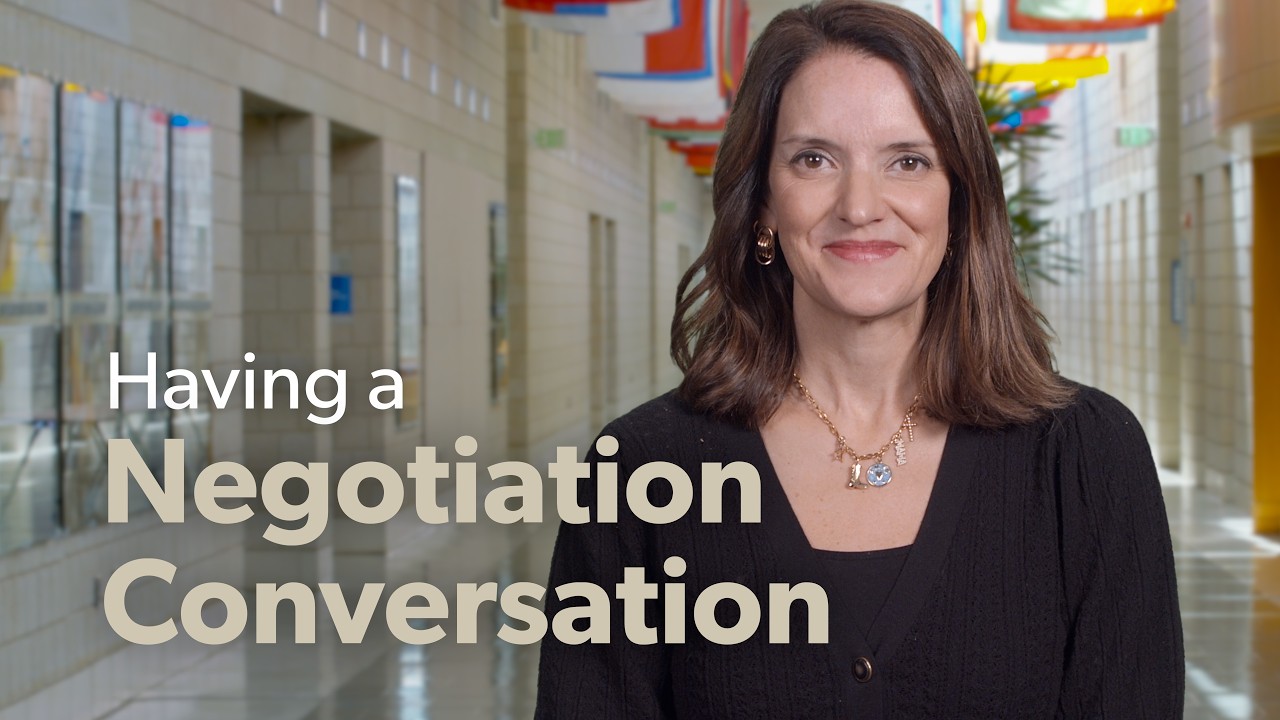
- Hi, my name is Mary Gray Jacobson with the Career Management Center at Fuqua. And today, we're going to talk about what a behavioral interview question is and why companies ask them. Most behavioral interview questions start with, "Tell me about a time when... " You know when you hear those words, the interviewer is looking for how you behaved in a real world situation, not a hypothetical one. Interviewers believe that a question based on actual past behavior is the best predictor for how you will behave in a similar situation in the future, and potentially at their company. Let's take a sample behavioral interview question: "Tell me about a time when you had to make a decision without all the information. " The interviewer is trying to predict how you would handle potentially ambiguous situations. They want to know three things. First, how you behaved when there were no explicit instructions, and or how you did not have all the information you needed. Second, the measurable value you added to that situation. And finally, how do you define something like "ambiguity," a concept different people might interpret differently? A solid answer to this question would be, "At my last company, I was asked to execute a marketing campaign, but I didn't have the budget to cover all three levels of customers, or enough data to determine which customer level would be most effective to target. I first gathered the analytics to determine which group to target, and decided that the mid-size customer range between 100 and $250 million in sales would have the most impact on the bottom line. Once I had that information, I designed the campaign, built the material, and distributed it. After the campaign was underway, I used Salesforce to assess the campaign's performance. In its first year, this targeted marketing approach led to a 25% increase in the number of responses and leads year over year, and had a $500 million impact on the overall company's bottom line. " Other behavioral questions may target key MBA competencies, like analytical problem solving, communication, leadership, with or without authority, teamwork with diverse and challenging teams, initiative, time management. Four things to remember when answering behavioral interview questions. Number one, try to predict what behaviors are most important to the company you are interviewing with. Read the job description to identify key competencies for that role, and look for culture fit statements such as, "works well with diverse teams," or buzzwords such as "proactive," "solution focused," or "flexible. " Ask questions in your informational interviews about the culture of the company. Is it highly collaborative? Is it highly extroverted and decisive? Is innovation and openness to change highly valued or discouraged? Is there more of an emphasis on planning or action? Number two, remember, there are not necessarily wrong answers. These questions are aimed at getting to know the real you. The important thing is to be honest and structure your responses in a way that communicates what you have to offer. We'll cover that structure in the linked CAR video. Number three, when in the interview, try to categorize the behavior the question is screening for within the first minute, so you have time to choose the best story for the soft skill in question. And number four, as with most interview answers, do not take longer than two minutes to answer the question. The longer you take, the more likely your interviewer loses focus on your answer. Please see the linked video on how to structure your answers, using the CAR method, challenge, action, result, and you'll learn how to catalog your stories in a convenient matrix.
Другие видео автора — Duke University - The Fuqua School of Business