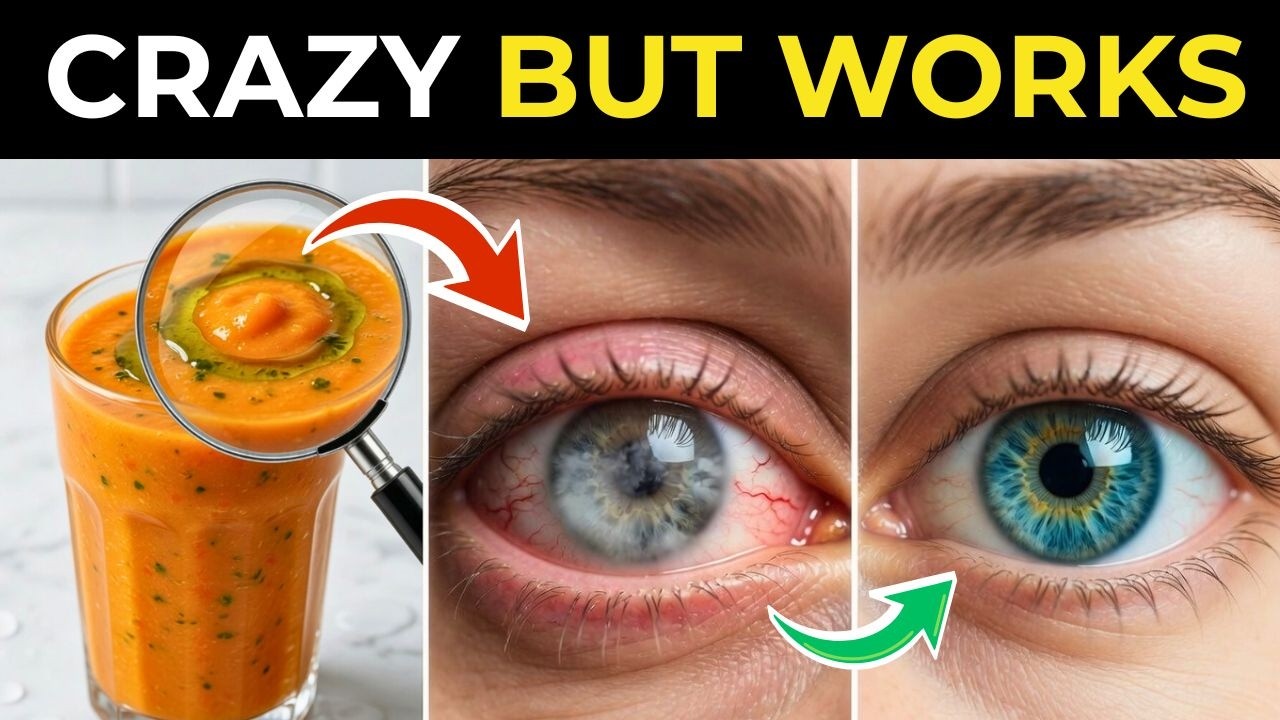
Forget Carrots — This Drink Repairs Eyes Better Than Drops
13:04

Forget Carrots — This Drink Repairs Eyes Better Than Drops

Healthy Long Life 19.04.2026 2 298 просмотров 140 лайков

Machine-readable: Markdown · JSON API · Site index

Поделиться Telegram VK Бот
Транскрипт Скачать .md
Анализ с AI
Описание видео
Books We Enjoy Reading, https://healthylonglife.notion.site/2dcc399bbb20804a8789c854e7ca3c97 0:00 Start 2:26 No. 5 Drink for Eyes 4:08 No. 4 Drink for Eyes 6:39 No. 3 Drink for Eyes 8:43 No. 2 Drink for Eyes 10:54 No. 1 Drink for Eyes ►Disclaimer: Healthy Long Life does not provide medical advice and the information provided throughout our videos, including but not limited to, text, graphics, images, and other materials, are entirely intended for informational purposes. The content of Healthy Long Life's videos is not intended to replace the professional medical advice that you should seek from your doctor. All the information presented in these videos is for educational purposes only. ►Copyright Disclaimer Under Section 107 of the Copyright Act 1976, allowance is made for 'fair use' for purposes such as criticism, comment, news reporting, teaching, scholarship, and research. Fair use is a use permitted by copyright statute that might otherwise be infringing. Non-profit, educational or personal use tips the balance in favor of fair use. No copyright infringement intended. ALL RIGHTS BELONG TO THEIR RESPECTIVE OWNERS. #diet #longevity #health

Оглавление (6 сегментов)

Start

Every year after 40, your eyes start losing a small but critical layer of protection. Not enough to notice right away, but enough that one day something feels off. The screen looks harsher. Night driving gets harder. There's a faint blur that wasn't there before. And by the time most people realize what's happening, a large part of that protection is already gone. Here's what almost nobody tells you. Inside your eyes right now, something very specific is changing. Your retina, your lens, your tear film, they all depend on a steady supply of nutrients and antioxidants. But over time, two key things start to drop. Protective pigments and proper hydration. When that happens, light becomes harder to process. Your eyes fatigue faster, and small problems start stacking up. Dryness, blur, sensitivity to light. This isn't just getting older, it's your eyes slowly losing the raw materials they need to function properly. But here's the interesting part. You can actually supply those materials again, directly through what you drink. Certain simple drinks contain compounds that support clarity, focus, and moisture inside your eyes. Not instantly, not magically, but steadily and noticeably over time. And one of the drinks on this list starts helping with dryness and irritation in as little as 48 hours. I've ranked all five from least effective to most powerful, so you know exactly what's worth your time and what's just hype. Because one of these, when prepared the right way, can make a real difference in how your eyes feel in just a few days. The first one is extremely common. You probably already have it, but most people only get a fraction of the benefit. Number five, drink beetroot and lemon. Most people don't think of this as an eye drink. It's not as popular as carrots or blueberries, but it does something different. Beetroot increases nitric oxide in your body. Nitric oxide helps your blood vessels

No. 5 Drink for Eyes

relax and widen. In human studies, this can improve blood flow by roughly 10 to 20% in certain tissues. Your eyes depend on tiny blood vessels to deliver oxygen and nutrients every second. So, when circulation improves, oxygen delivery can increase slightly, typically in the range of 5 to 10%. That doesn't sound like much, but in sensitive tissues like your eyes, even small changes can affect how they feel. What people usually notice is not sharper vision, but less fatigue, less of that heavy, tired feeling after long hours on screens. Here's the limitation. This works indirectly. You're not feeding the eye itself, you're improving the support system around it. So, the effect is modest. Most people report around a small, noticeable improvement in comfort, not a dramatic change in clarity. Warning. The mistake. Most people try this once or twice and expect something to happen. But in studies on blood flow, these effects only appear with daily intake over 7 to 14 days. How to use it. Fresh beetroot, water, a squeeze of lemon. Blend it, drink it once a day. Time to expect. After about a week, you may notice around a 5 to 10% reduction in eye fatigue. Subtle, but real. Score, four out of 10. Number four, spinach and

No. 4 Drink for Eyes

kale green drink. This is where things start to change. Unlike the previous drink, this one feeds your eyes directly. Spinach and kale are some of the richest natural food sources of lutein and zeaxanthin. These are the same pigments found in the center of your retina. They help filter light, reduce stress from screens, and protect your vision over time. Now, here's something most people don't know. The lutein used in eye supplements usually comes from marigold flowers. A typical supplement gives you around 10 to 20 mg of lutein. And 100 g of kale or spinach can fall into a very similar range. The difference is, with whole foods, you're getting it together with other nutrients that help your body actually use it. Now, here's where it gets interesting. In clinical studies, increasing lutein and zeaxanthin intake has been shown to raise macular pigment levels by roughly 20 to 40% over several months. That matters, because that pigment protects the most sensitive part of your vision. When it increases, people often notice less glare, better contrast, more comfort in bright light. Not overnight, but steadily. The mistake. Most people drink green juice and think that's enough, but they miss one critical detail. Lutein and zeaxanthin are fat soluble. Without fat, your body may absorb 30 to 50% less of these nutrients. Which means you're doing the work, but not getting the full benefit. How to use it. Spinach, kale, water, a small piece of fruit for taste, and most importantly, add a source of fat. A teaspoon of olive oil or a small handful of nuts is enough to improve absorption. What to expect. This one takes time. In most studies, noticeable changes begin after four to eight weeks. But once it builds, the protection is real. Score. Six and a half out of 10. Stronger, more direct, but the next drink is where you start to feel the difference much faster. Number three, blueberry and

No. 3 Drink for Eyes

yogurt drink. Now we're moving into something you can actually feel. This one works differently. It's not about long-term protection, it's about how your eyes feel day to day. Blueberries are rich in compounds called anthocyanins. These help support blood flow to the tiny vessels in your eyes. They also help reduce oxidative stress, which builds up when you stare at screens for hours at a time. Now, here's what studies suggest. Anthocyanin-rich foods have been shown to improve visual fatigue and eye comfort by roughly 10 to 20% in people who use screens regularly. That's not subtle. You can actually feel that. Less heaviness, less strain, less of that tired feeling at the end of the day. And here's the interesting part. Some small studies have shown improvements in night vision and contrast sensitivity after just a few weeks of consistent intake. Not dramatic, but noticeable. The mistake. Most people buy blueberry juice from the store, and that's where things go wrong. Most of those drinks are high in sugar and low in the compounds that actually matter. So, you're getting calories, but not the benefit. How to use it. Keep it simple. Fresh or frozen blueberries, plain yogurt, water or milk. Blend it. The yogurt adds fat and protein, which helps slow digestion and improves how your body uses the nutrients. What to expect. Within a few days, many people notice less eye fatigue. Within one to two weeks, your eyes feel more comfortable after long screen time. Score. Seven and a half out of 10. Faster than the previous drink, more noticeable. And the next one works even quicker.

No. 2 Drink for Eyes

Number two, chia and coconut mix. This is where things start happening fast. If your eyes feel dry, irritated, or gritty when you wake up, this is the one people notice first. Chia seeds are rich in omega-3 fatty acids, and your eyes depend on omega-3s to maintain a stable tear film. That thin layer of moisture is what keeps your eyes smooth, clear, and comfortable. When it breaks down, you feel it immediately. Dryness, burning, that scratchy feeling. Now, here's what research shows. Increasing omega-3 intake has been linked to improvements in dry eye symptoms of around 20 to 30% in several clinical studies. That's significant, because this is something you can actually feel. Less dryness, less irritation, more comfort throughout the day. And here's why it works quickly. Your tear film responds faster than deeper eye structures. So, unlike the previous drinks, you don't have to wait weeks. Many people notice changes within 24 to 72 hours. The mistake. Most people eat chia seeds dry or sprinkle them on food without preparing them properly. But dry chia seeds pass through your system without fully breaking down, which means you're not getting the full omega-3 benefit. How to use it? Soak the chia seeds first. Let them absorb water for at least 10 to 15 minutes. Then mix with coconut milk. The fat helps with absorption and makes it easier on digestion. What to expect? Within 1 to 3 days, you may notice your eyes feel more comfortable. Within a week, dryness and irritation often improve by a noticeable margin. Score. 8. 5 out of 10. Fast, effective, easy to stick with. And the next one is the most powerful overall. Number one is carrot and olive

No. 1 Drink for Eyes

oil drink. This is the one to build around. Not the trendiest, not the most exciting, but the most reliable if you stay consistent. Carrots are rich in beta-carotene. Your body converts this into vitamin A, a nutrient your eyes depend on to process light properly, especially in low-light conditions. When vitamin A levels are low, one of the first things to suffer is your night vision. Things look dimmer, harder to focus, more strain in the dark. Now, here's what matters. Vitamin A is fat-soluble. Which means without fat, your body may absorb significantly less of it. In some cases, up to 50% less. So, if you're drinking carrot juice alone, you're not getting the full benefit. The correct way. Fresh carrots, water, and a small amount of olive oil. Blend it. Drink it fresh. That small addition of fat can dramatically improve absorption. Now, here's what to expect. In people who are low in vitamin A, restoring intake can improve visual function by 20 to 30% over time, especially in low-light conditions. Even if you're not deficient, consistent intake helps maintain stable visual performance. What people usually notice, less strain in dim lighting. More comfort when driving at night. Clearer adjustment between light and dark. Not overnight, but steady. Timeline. Within 2 to 4 weeks, many people start noticing improvements in visual comfort. Over longer periods, the benefit continues to build. Score. 9 out of 10. Simple, consistent, and effective. Final takeaway. If you're only going to do one thing, make it this. Because your eyes don't suddenly fail. They slowly lose what they need. And when you give those nutrients back consistently, your eyes respond.

Другие видео автора — Healthy Long Life

Ctrl+V

Экстракт Знаний в Telegram

Экстракты и дистилляты из лучших YouTube-каналов — сразу после публикации.

Подписаться

Дайджест Экстрактов

Лучшие методички за неделю — каждый понедельник