Everyone wants a piece of the enterprise AI pie, and this week, we saw a string of companies making their moves. From Anthropic and OpenAI announcing new joint ventures targeting enterprise AI deployment to SAP dropping $1B on German AI startup Prior Labs, it's becoming clear that if you're a startup building enterprise tools, you're likely an acquisition target.
On this episode of TechCrunch's Equity podcast, hosts Kirsten Korosec, Anthony Ha, and Sean O'Kane dig into the week's enterprise AI deals, the xAI-Anthropic compute arrangement, and what it all means ahead of what could be a big IPO season.
Subscribe to Equity on YouTube, Apple Podcasts, Overcast, Spotify and all the casts. You also can follow Equity on X and Threads, at @EquityPod.
Chapters:
00:00 Intro
00:31 Spirit Airlines & the crowdfunded "people's airline"
03:25 xAI x Anthropic deal: is xAI becoming a NEO cloud?
13:47 Haun Ventures & a16z's crypto comeback
17:48 Aurora Innovation lands a commercial trucking contract
19:27 A big week for enterprise AI: who's actually making money?
26:45 The Pentagon's AI spending spree
31:04 Outro
Оглавление (7 сегментов)
Intro
Hello and welcome back to Equity, TechCrunch's podcast about the business of startups. Today is Friday, May 8th, and I'm Kirsten Korosec, transportation editor here at TechCrunch, and I'm joined, as always, by our senior reporter Sean O'Kane and weekend editor Anthony Ha. Spirit Airlines went bankrupt. It's folded. It's done. But I wanted to mention it because there is an effort to bring it back. And Anthony, I'm wondering if you made a pledge.
Spirit Airlines & the crowdfunded "people's airline"
pledge. I have not made a pledge yet, or at least I'm not admitting to it on this podcast. But yeah, as you said, there was this announcement that Spirit Airlines is going bankrupt. And I mean, it was like seemed like a very, very sudden process. People were stranded, had to like frantically book new flights, all of that. And then this TikToker, uh Hunter Peterson, said, "Hey, what if we all got together and crowdfunded and bought Spirit Airlines and turned it into the people's airline. " Which I mean, I find for interesting on multiple levels, but one of them is I don't necessarily think of Spirit as a particularly beloved airline. It's not like if I was trying to save an airline, Spirit is not necessarily the first on the top of my list. What would you say? Which one is savable? Which one is the people's airline, Anthony? — I mean, I think actually if I could go back in time, I mean, I would my favorite when I was like in my 20s and early 30s was uh Virgin America. So if like if I had a time machine and billions of dollars, that's what I would have saved. Um but I think part of what it speaks to is maybe uh again, I didn't pledge, but my sense is that the excitement about this is less about how much people love Spirit and more just like a general dissatisfaction with where air travel is nowadays and a sort of a desire to say, "Hey, like, you know, prices are going up, experiences are bad, it really feels like you're getting nickel and dimed a lot. What if we could do something better, but also that was still affordable. That's it. Let me turn this back around on either of you. Does anyone want to guess like what do you think is like the percentage likelihood that this will succeed in actually reviving Spirit? Zero, but — but it can only this could only happen with Spirit. I mean, this can only happen with an airline that, you know, people can bond together because of their miserable experience. Like if you were to say, oh, we're going to take like JetBlue and turn it around and turn it into a big No one cares. Cuz everybody's experience with JetBlue like it might be bad, it might be kind of good. Whatever. It it takes the sort of well-known worst airline in the country that has affected so many lives for the collective psychosis to happen where people say, you know, we can do this better than Delta. Yeah, it is the shared experience of misery that I think will bring people together to pledge, but I don't think it will be successful. So, best of luck to you. We should get on with the rest of the show. There is a lot to talk about uh from the XAI and Anthropic deal as well as Han's Ventures' latest fund. Then we're going to get into enterprise AI and what that means. Check in with the DOD and, you know, explore other things in the realm of SpaceX, X XAI, Anthropic. We've got it all today.
xAI x Anthropic deal: is xAI becoming a NEO cloud?
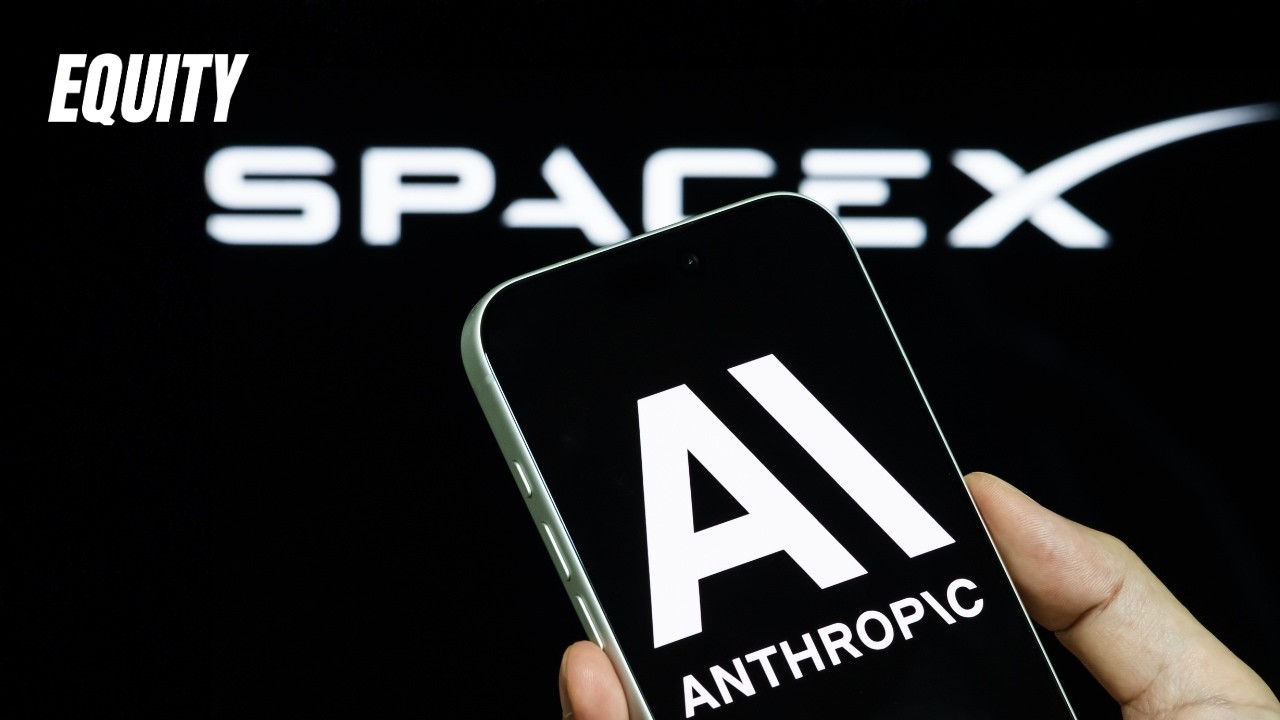
I want to start with a question that our AI editor posed, which is XAI a neo cloud now, which was a great headline. I loved it. But it actually is sort of an analysis on this deal between XAI and Anthropic. Yeah, this was a fun surprise this week, wasn't it? I always love a surprise, especially when everybody's eyes on you know, another ball like a a trial that's happening. Yeah, out of seemingly out of nowhere this week, SpaceX and therefore its AI subsidiary XAI, which apparently no longer exists now or is imminently not about to exist, which we can get to. Struck a deal with Anthropic and basically what the real version of the deal at the moment is that Anthropic's essentially taking over all of the compute at the data center known as Colossus 1 in Memphis, Tennessee to especially focus on Anthropic's more sort of enterprise-focused AI products, which you know, there's been a lot of reporting about how they've been looking for more compute. Especially for those they've we've seen and we've talked about in past weeks. They've been tinkering a little at the edges of you know, what's available in those models, how much it costs, when you run into a wall as far as how much you can use it. And so this seems like an escape valve for them to be able to strike this deal and get access to all this community compute in the near term. You know, yes, they are a neo cloud now in the sense that they kind of had to do something with all this compute that they were building because it certainly seems like they were not going to need it for Grok, which you know, outside of X is not burning up the world you know, as far as like becoming the new hot consumer chatbot. Yeah, and we should say that like in terms of what a neo cloud is for those who don't know, this is the idea of buying GPUs from Nvidia and the like and renting those out as opposed to using those for their own AI training their own AI models. So, this is a different kind of business and you know, the point that our AI editor Russell Brandon makes is that a lot of companies are building out data centers, but they are if given a choice between do they rent them out, you know, because they're doing cloud businesses and like this as I'm talking about like Google. They are still prioritizing using this compute for their own internal AI model training. So, I think that's an important point. Um and one that kind of suggests that maybe xAI isn't doing so much on the um the AI model training. Especially if we start talking about enterprise AI, which I know we're going to be getting to into uh later this episode. I don't know You don't hear a lot about people using Grok for like work critical tasks. And so, the question becomes how can xAI actually make money? And apparently, you know, just selling the infrastructure could be one of the main ways to do it. Yeah, and you could take a positive view on that, right? Like, oh, they figured out a way to make money and and sure, you could do that. But, I think that when you are um positioning your company, in this case, SpaceX/xAI, as a forward-looking innovative company, that's tougher to sell if you are simply just renting out your GPUs and not using them for that innovation. Why be positive when you could be cynical? Which is to say that like this seems like a major heat check before the IPO that we're about to see uh you know, sort of get rammed into the markets with SpaceX, which is you know, Anthony, you mentioned not only is Grok not being used for you know, big enterprise tasks, it also there's been reporting that xAI employees were using other models. Like, they weren't even using it internally. And that caused this sort of big shakeup inside of xAI post-acquisition from SpaceX that involved a bunch of the essentially all of the co-founders leaving other than Elon Musk. Him basically saying he's starting from scratch on xAI, despite the fact that SpaceX paid $250 billion dollars it in the run-up to this mega IPO. And now he's saying that they're going to dissolve XAI as a separate entity inside SpaceX altogether. And he's starting to call the whole thing SpaceXAI because the this man loves nothing but to ruin a brand that has some value to it. See Twitter. And you know, this may be a more believable business in the near term. And so on some level, I could see this being maybe more attractive to investors come IPO time because it's like a bit more reliable and certainly more real than being a leading, you know, frontier lab developer. But it's also not the kind of business that's going to draw the same kind of like I mean, at least in a normal environment outside investment that we're seeing go into all the frontier labs. And so that's just that's maybe one of the biggest tension points we've seen develop during this IPO process. And I'm really interested to see how that gets sort of priced into the whole the action come next month. Yeah, I think it's really worth underlining which we've talked about before the extent to which Elon Musk has has, you know, success on the public markets and presumably on the private ones, too, is about sort of presenting this vision of what the future could be and like don't pay too much attention to the current business, but like the think about what this could become eventually. And it does seem like that's harder to do when you're essentially when you're sort of just selling the infrastructure rather being a frontier lab, like you said. Although that said, I mean, you know, like you know, companies like Nvidia are doing just fine. So maybe that that's totally enough. I do also just want to come back one last time to say that yeah, SpaceXAI, like what a name. It's not clear how widely that's going to be used. I mean, so far this is basically mentioned in one of his posts on X. And you know, I think hopefully all of our listeners know to take that with some grain of salt of like — how widely is this going to be implemented? What does it even mean to dissolve XAI as a separate company? But, um yeah, they try to make that a real like company name. Uh it's bad. — Well, I'm so old, Anthony, that I remember when I was uh first covering Tesla, all of the kerfuffle around dropping motors from Tesla's name. So, I can't imagine the transition being very easy. And of course, you know, I mentioned Tesla because some of us out here believe that eventually it will all become like one company and it'll be, you know, SpaceXAI Tesla, some kind of version of that. Uh some super company in which it will be completely renamed, probably X because why not? I mean, Musk has long wanted to have a company called X after that was the original name for PayPal. He had the domain x. com for a long time. Now, he has a social media company named X. I personally I maintain that it's probably going to be called K2. That was one of the registered entities they've uh in one of the states to roll up some of these companies. He's obsessed with the Carter show scale. And, you know, to your point, Anthony, and then maybe we can stop talking about SpaceXAI. — There is an element of this deal this week that involves that future-looking thing, which is that Anthropic is not just renting the GPUs from XAI. They have also sort of approached XAI and SpaceX about the idea of using this presumed orbital compute that will exist in a few years when SpaceX is supposedly launching orbital data centers. So, like there's the thing that they're going to dangle to keep people, you know, uh interested in where things will be going, at least in Elon Musk's view. Musk has said so many terrible things about Anthropic. And yet, like when push comes to the shove, he comes hat in hand to Anthropic and, you know, basically says he I think he said on X like he his evil detector didn't go off, and so he was able to sort of reason with these people because they're going to hand him a bunch of money. So. Well, speaking of Elon saying bad things about companies, I want to just briefly touch on the fact that there is a trial going on right now, and this is there's been so much interesting fodder that has come from it. We have had a lot of coverage. We have a reporter, Tim Fernholz, who's in the courtroom, which has been great. But, one of the things that has come out, um you know, and I think it's important to mention it against the backdrop of all these deals, because what we are learning more and more, and many of us have known for years, which is what is said in the public sector, um particularly on X, formerly Twitter, and what is actually going on behind the scenes don't necessarily align. And there's been some incredible details about what was happening in this power struggle of moving OpenAI from a nonprofit to a for-profit. And we have a story which we'll link to in the show notes that talks about one of OpenAI's um co-founder's personal diary, which I'm sure he deeply regrets now being, you know, right here in this trial, really talking about Musk getting quite angry. There's a whole scene where he, you know, this gift he had been given, which was a a Tesla like art, you know, frame piece of art, being taken, and he storms out of the room. I think it should be like a warning shot to any other company that maybe is going to do business with you know, Elon Musk, that it could come to this, right? — Yeah, I feel like there's so much to talk about with this trial, um and I'm really regret not being here last week to show over the first week of testimony with you guys. But, I think we're going to talk about it more. Obviously, a lot more about AI, but let's take a like a little tiny temporary break from talking about AI to talk about crypto, which I am very surprised to be talking about in 2026. But, our next deal is um Katie Haun, who as I recall basically was leading crypto investments that are or involved in crypto investments at Andreessen Horowitz, um kind of struck out on her own and just announced raising $1 billion in uh for new investments in crypto, which seems pretty wild to me. Well, it's not
Haun Ventures & a16z's crypto comeback
just crypto though. It's crypto, blockchain, and agenda gay eyes. So, you know, there are some more current um you know, pieces of technology that are quite trendy that she's going to be investing in. Um but, yeah, I was actually surprised to see crypto back in the news. And, you know, maybe is it just life repeating itself or is there something new here with maybe an agentic AI edge to it? I mean, maybe. Like, that seems like I don't know that you can say anything more definitively than that. As she raised this money this week, Andreessen Horowitz also raised another fund for crypto involving $2. 2 billion. So, all of a sudden there's a bunch of money this week being directed at this stuff in a way that we haven't really seen uh over the last few years. And, the justification from Chris Dixon at Andreessen Horowitz is that this is cyclical. And so, now we're in you know, we saw a bit of a bust, but we've got the regulation, you know, the policy in place at the federal level. We clearly have Boy, let's put it nicely. An administration that is interested in crypto in whatever way that means. Uh and so, they feel like they're set up to be able to you know, invest in things over the next couple years in a way that will make them big returns. I am very curious to what extent I mean, I have seen, you know, startups and VCs talking about AI also being a big opportunity for crypto. Um I haven't found any of those arguments to be particularly compelling. So, I could see a scenario where essentially just a it just ends up being a lot of investments in AI and then a little bit of crypto as well. I guess we'll see. Um And I think just to go back to Shawn's point about the environment, yes, like obviously there's I think a lot of crypto true believers are just like, "Look, listen, some of this stuff is cyclical, you know, the true arrival of crypto's potential is still to come. " But it it's also yes, like the regulatory environment has just changed a lot and it's clear that like, you know, the Trump administration has taken a lot of steps to back off from anything that might make crypto companies uncomfortable. So, yeah, I could seem like this is a good time to be running one of those companies as opposed to a few years ago. Yeah, I mean, I wouldn't say cyclical as much as opportunistic based on what is happening politically. But here's one thing that I was kind of thinking about a little bit right before we, you know, started recording today, which was you know, you would think actually with all of the tailwinds that they have at least on the like regulatory policy like political level, that crypto would be doing much better than it is right now. And maybe 6 months to a year from now we will see sort of all the fruits from this very like regulatory free environment, but I don't see it the way I thought it would have translated by now. I'll give some credit to people who are involved in crypto and say that like, I think there's some actual caution being exercised here and for a good reason, which is that you have so much there's just so much choppiness in this area from the administration that we have right now sort of getting involved in crypto seemingly for the benefit of the people who are running the government. And you also have other stuff like you have Justin Sun, you know, who was getting involved with the Trump administration and some of the stuff that they're doing, but he's now you know, sort of speaking out about how badly he thinks that the Trump administration and the Trump family is treating him, and they're coming back at Justin Sun, and then, you know, that you've got kind of all of this crypto-based uh polymarketing and Calci activity and insider trading stuff. There's just a lot of stuff that's happening like that I feel like helps me understand why the administration giving its blessing to crypto hasn't set the price of Bitcoin to like, you know, $200,000 or something
Aurora Innovation lands a commercial trucking contract
like that. Well, lots of intrigue right now happening in the crypto world. I want to mention before we get into some of the deeper themes, um a deal that is timely base basically because we've recently um interviewed one of the founders, and I'm talking about Aurora Innovation. This is the company that's working on autonomous vehicle technology, specifically right now applying it to self-driving trucks. And they had a deal which I wrote about this week, and it's specifically a commercial contract, and I think this is important to note because so many of these companies have a lot of pilot programs. It's notable when these translate to commercial contracts. And Aurora is a publicly traded company, but I still think of them, you know, honestly, as a startup. They um they have a commercial contract with a company called McLane. This is a Berkshire Hathaway subsidiary that is basically one of the like largest distributors in the country. They really focus on like restaurant brands delivering sort of perishable foods and things to like fast food chains. So, this is going to be interesting to watch if they expand upon that. And in our show notes, there's a link to an interview that we recently did with the co-founder and CEO, Chris Irmson. And this was back during the Human X conference, but is absolutely timely, so I highly recommend that you listen to it. And unless you guys have some comment on self-driving trucks, I kind of think we should jump into enterprise AI. Let's do it. All right. Turns out there's a lot of deals happening everywhere. Everyone wants to get into enterprise AI. I couldn't have said that maybe a year ago, but it's absolutely happening now. Can either one of you give me some of the rundown of what's happening? Maybe the biggest
A big week for enterprise AI: who's actually making money?
headline is Open and AI and Anthropic announcing a joint venture to focus on enterprise AI and that's also happening kind of at the same time as Sierra, which is, you know, not quite as well known as or large as these companies, but is led by Bret Taylor, you know, who a lot of people may know from Salesforce, but they raised $950 million. Again, compared to some of the Anthropic or Open AI rounds, not huge, but again, a sign of even if you were not one of those, you know, top top tier frontier AI companies that investors are still excited to be backing you. And again, just kind of coming back to that theme of like And I think it's sort of an in some sense a theme for a lot of our discussion this week of sort of like, where is the actual money in AI? And it seems like there's a general sense that, okay, enterprise use cases, coding in particular, that's really going to be maybe the first gold mine. And you know where there's also money is if you're a startup and you get acquired. There's money there, too. There's another deal that happened, which is SAP spending, I think it was about a billion euros on an AI startup called Prior Labs. So, that's another space where if you are a startup that has some enterprise tools, you are absolutely an acquisition target. And so, that's not a revenue generator necessarily for the big companies, but it shows the interest. I think it's also good to remember the context of the fact that like we are expecting these companies, Open AI and Anthropic, to also do their own IPOs this year. This is To me, this feels more buttoning up uh ahead of those possible public listings and trying to come up with durable businesses. I mean, cuz like you take a step back and we think about the investment that's gone into these companies over the last couple years, it's all been about this meteoric growth and the phrase we hear all the time is annual recurring revenue. You know who doesn't really care about ARR? It's like public markets investors. Like ARR is a thing that you can glean on when it's obscured by the fact that you're private, but when you go public, it's not really something that matters anymore cuz your numbers are out there and people can see what you're making, what you're actually making and what you can bank on. And so, to me, this is more evidence that these companies have been had some sense talked into them that they need to come up with real, reliable revenue that, you know, yes, of course, there's going to be a large component of people wanting to own these stocks because of, you know, the companies and the story and the myth-making and everything, but there are also a lot of index funds and stuff out there that want to own it because they're going to see revenue rise and they're going to be able to bet on it and they're going to get, you know, Wall Street analysts telling them that yes, you can rely on this revenue to grow in, you know, X amount over the next couple years. What is really apparent to me and it's very interesting is that like so many SaaS companies got into launching enterprise tools, specifically agentic AI tools, because of concerns about the cannibalization of their business due to AI. And so, you see this massive rise, I mean, we had an interview with the Uber CTO at our Strictly BC event and I also spoke to him um on the phone and he talked about how Uber like blew through their budget um and their IT budget, not their whole budget, because they had been really encouraging people to use AI, specifically agentic AI. And he said that that's a revolution that's happened over the last 6 months. So, there's clearly use happening there and it's causing actually some companies to slow in Uber's case actually slow the pace of hiring. So, no layoffs yet, but slow the pace of hiring to offset the cost of this. So, someone's got to be making money somewhere, right? Like Uber is using cursor. But, you know, who is making money here and is there a winner on the enterprise AI side of things particularly with agentic AI. I think one thing that was kind of caught my eye in the Uber comments was I think they were basically saying that about 10% of their code at this point is basically generated by AI in some form and that is an interesting number cuz it is both like I mean you think about Uber's scale and how long it's been operating. You're like, "Wow, that's like both really significant and also when you think about people talking about how dominant vibe coding has become, how it's essentially replacing sort of traditional programming. You're like, "Oh, well, that's still not as big as I thought it would be. " Which I think speaks to a lot of discussion about AI right now is that both there is like really significant growth and also the hype is so incredible that it's slightly outpacing it. Well, sure, but I would push back a little bit on the fact that like in Uber's case, they didn't seem to be using agentic AI much until late last year. So, where are we going to be a year from now? I think that's going to be really interesting. I don't know if either of you I'm really curious about your opinions about this, which is there was an opinion piece in Semaphore by Reed Albergotti and basically he said that and it goes back to my point of who's making money on this. And his point is kind of like the workplace is already completely lost control over dictating what AI tools people make. Therefore, you know, you could translate that to there isn't going to be necessarily a winner. And he equated it to how people would use their phone and like some of the tools associated with that and companies kind of giving up. So, basically it's like employees are just using the tools that they like best and like trying to dictate that within a corporate setting through these like very large contracts of like that it's over. It's like it's already done. And I'm wondering if you agree with that at all. I mean, as someone who now uses Microsoft Word in his workflow, yeah, employee choice is great. Yeah, I think that the there are like a lot of different pressures. And I think that it's certainly true that, you know, that I mean I think this has been went by a lot of different like catchphrases over the years. I think one of them was consumerization of IT, right? The idea that you could just bring your use your own devices, like and sort of everything's SaaS anyway, so who cares? Um and that I think was true in a lot of environments and less true in other environments and I suspect that will also be the case here in the sense that I mean a lot of the concerns that are things that come up when you start talking about devices, like privacy and security, those are things that are also going to be an issue when it comes to AI. And so like, hey, if you're, you know, putting a bunch of company information into a variety of different AI models, you want to be really sure that is not going to become a security vulnerability in the future. So, it it's hard for me I mean, I think that he's both describing a reality now, which is that I think yes, absolutely companies do not have complete control over what AI tools their employees are using, but that doesn't mean it's just going to be a complete free-for-all. Well said. We have tiny bit of time, so
The Pentagon's AI spending spree
I think we should do a little check-in with the Department of Defense and find out what's going on there. And, you know, this isn't necessarily, you know, new news, but we've talked a little bit about in the past how there's been kind of a tug-of-war going on with Anthropic and DoD. Um it seems like, you know, to me, everyone is going after, you know, everyone, let's say, in Silicon Valley seems to be a dual-user is going after a defense contract of some kind, particularly in my world in autonomous vehicles. And I'm wondering what you two are seeing and if that tracks. I'd be curious what you guys think on this because to me, part of this seems to be driven by the fact that we're dealing with a government that is more willing to spend on new technology when it comes to defense. They've put this department, which they now call the Department of War, like front and center in a way that we haven't seen an administration do in a long time, which I think even further puts the pressure on them to look like they're um you know, being very forward-thinking with the technologies that they use. And also we have, you know, a budget for this department, which is already always been really high uh compared to other federal offices, that is only probably going to get higher. So, like to me, that's a huge driver of this. Like if you're building something that could be in some way useful to the Defense Department, like why wouldn't you try to line up some business? But I'm sure that can't be thing that's all of this. Yeah, I mean, I think one thing that's worth mentioning is the Pentagon um just inked a deal with Nvidia, Microsoft, and AWS to deploy AI in classified networks. So, these are really big companies that are certainly benefiting. And a lot of the news that we see are with these very large companies. But then there's a second tier of, you know, smaller startups that are either partnering with larger companies or maybe even existing sort of defense contractors to land some of these con- some of these possibly lucrative contracts and they're sort of doing it in a way as like another way to shore up capital. What's kind of interesting to me is or maybe not as so much interesting but like I guess my opinion here is that I don't necessarily think it's a bad thing that the US government is investing in startups and innovation. We have a long history of that. It's just it is singularly focused through the like defense and weaponry sort of filter. And we have a long history of grants on the science side or DARPA and that those didn't necessarily have a defense focus. So now it just seems like the risk here is that it's so focused on this, there is not a lot of diversity in terms of innovation. And to me that is I guess I'll be watching it and I don't know if it's necessarily a good thing. Well, I think the other risk of course given that part of the reason we're paying so much attention to this right now is because of that whole Anthropic dispute and how it seemed like the Pentagon really did not like that Anthropic was trying to draw some red lines around how AI gets used is that um I think there are some big questions about what does, you know, uh moral responsibility, what is decision making, what do all those things look like once you incorporate more AI into these decisions and I do not get the sense that the people in charge right now are interested in exploring those questions in any serious way. Not only that but as we've talked about on this show, this all comes down to like definitions of words and language where like, you know, you these companies can say all they want that like, you know, they're only agreeing to allow something legal to happen or whatever however they want to, you know, call it but, you know, what is the government's interpretation of that? How is it going to define it? So it's you can draw red lines and certainly that can be strong enough move to get you into some hot water like with Anthropic. Uh but also I feel like those red lines kind of don't mean as much as the companies would like you to believe. Yeah, absolutely. Well, we are out of time, but Equity will be back next week. And until then, you can follow us @equitypod on X and Threads.