How Climate Finance Creates Positive Tipping Points
2:34

How Climate Finance Creates Positive Tipping Points

MIT Sloan School of Management 14.05.2026 110 просмотров 3 лайков

Machine-readable: Markdown · JSON API · Site index

Поделиться Telegram VK Бот
Транскрипт Скачать .md
Анализ с AI
Описание видео
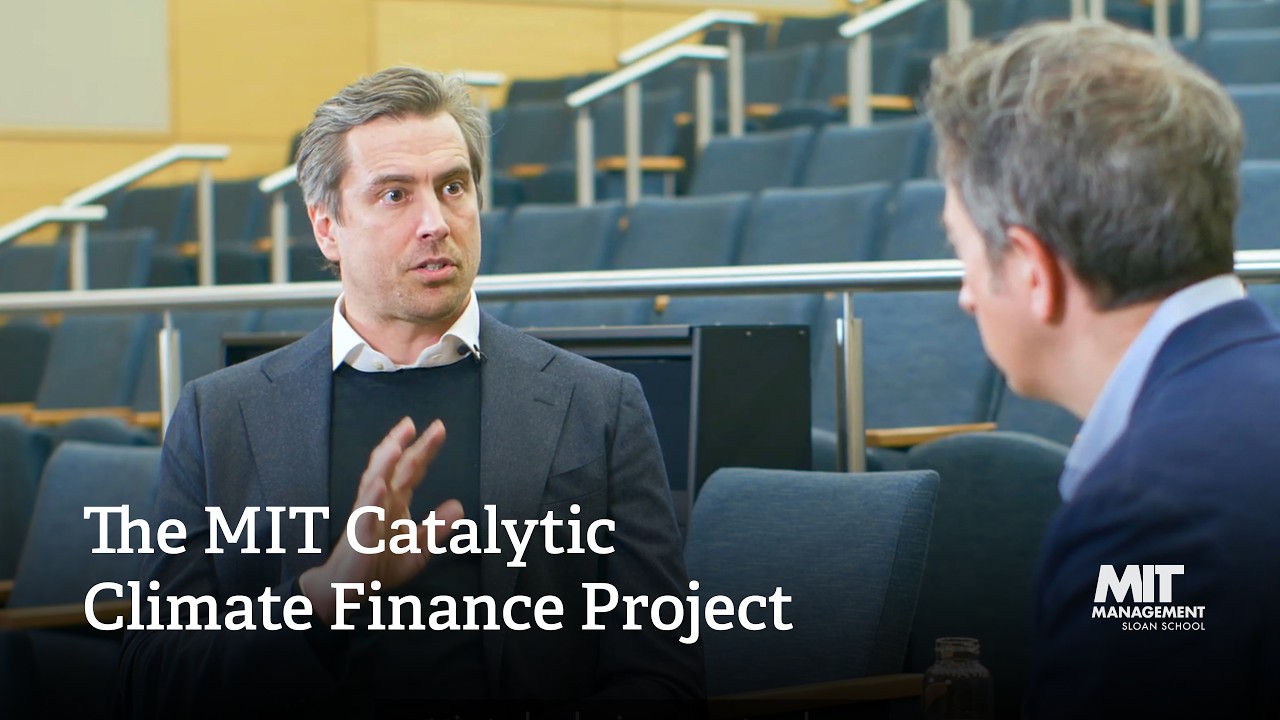
Climate scientists and scholars often warn when we approach dangerous tipping points in the global fight against climate change, when warming triggers reinforcing climate effects that become increasingly difficult or impossible to reverse. But there’s another kind of tipping point that offers reasons for optimism. Building on the work of Timothy Lenton and colleagues at University of Exeter, researchers have explored how positive tipping points can accelerate climate progress through reinforcing economic and technological change. In this conversation, MIT Catalytic Climate Finance Project co-founders Jason Jay and Florian Berg discuss how scaling climate technologies can help create positive tipping points — the moments when adoption accelerates, costs decline, and markets begin driving further growth. Consider solar energy. Decades of financing, grid investment, and policy support helped transform solar from an expensive niche technology into the world’s fastest-growing energy source. The question now is how to build the financial architecture needed for other technologies critical to advancing climate goals — like green steel and green ammonia — to repeat the success of solar. Watch the full conversation: https://bit.ly/4uKLRZh
Оглавление (1 сегментов)

Segment 1 (00:00 - 02:00)

Climate change is a really urgent threat. We've already warmed the planet 1. 5 degrees and scientists are warning that this is the part where we get close to these tipping points where the climate can actually start to run away, where we have reinforcing feedbacks and the planet getting warmer and warmer. So, there's a real sense of urgency here around any innovation around climate. And I'm just curious, how do you think about that pacing of the work and the the urgency and are these mechanisms that you're talking about up to the challenge of tackling this big global and urgent set of issues — in the Cadillac climate finance project? We certainly want to go for technologies that are broadly used or commodities that are broadly used. By scaling those technologies, we hope to create positive tipping points because once they are scaled and they start getting adopted, then this would be a positive tipping point that would hopefully slow down the negative tipping points that a lot of academic researchers, climate um scientists actually point out — that will happen in the future. Timothy Lenton at the University of Exit has talked about this idea of sort of the battle of the tipping points. Where do you see sources of hope? Like those positive tipping points already occurring that you're hoping to, you know, maybe build on or replicate in this project? — Solar energy, of course, it's the most widely um adopted energy source at the moment. And it wasn't like that 20 30 years ago. The technology is actually fairly old. But until it became cost competitive and the grids were ready to um integrate them in a mass fashion that took quite a while and that was a joint effort with policy and subsidies. And so this is actually a great case study for what we want to do. A great example. The image I have is of this kind of solar rocket ship taking off into the sky and we've got on the sidelines watching from the you know periphery of Cape Canaveral these startups with their green cement and their green steel and their green ammonia and they want to get on a rocket ship too and it sounds like you're trying to provide that. Exactly.

Другие видео автора — MIT Sloan School of Management

Ctrl+V

Экстракт Знаний в Telegram

Экстракты и дистилляты из лучших YouTube-каналов — сразу после публикации.

Подписаться

Дайджест Экстрактов

Лучшие методички за неделю — каждый понедельник