For more than a decade at Corporate Rebels, we've studied the world's most progressive, bossless organizations. We've visited 200+ pioneers, written books about what makes them tick, and taught thousands of leaders how to apply the principles.
At some point, writing and teaching about it wasn't enough. We wanted to prove these ideas hold up in the messiest corner of the economy: traditional small and medium-sized businesses. So we co-founded Krisos, a firm that acquires SMEs and radically transforms them into self-managing, high-performing organizations using everything our research uncovered.
This session is about how we actually do it.
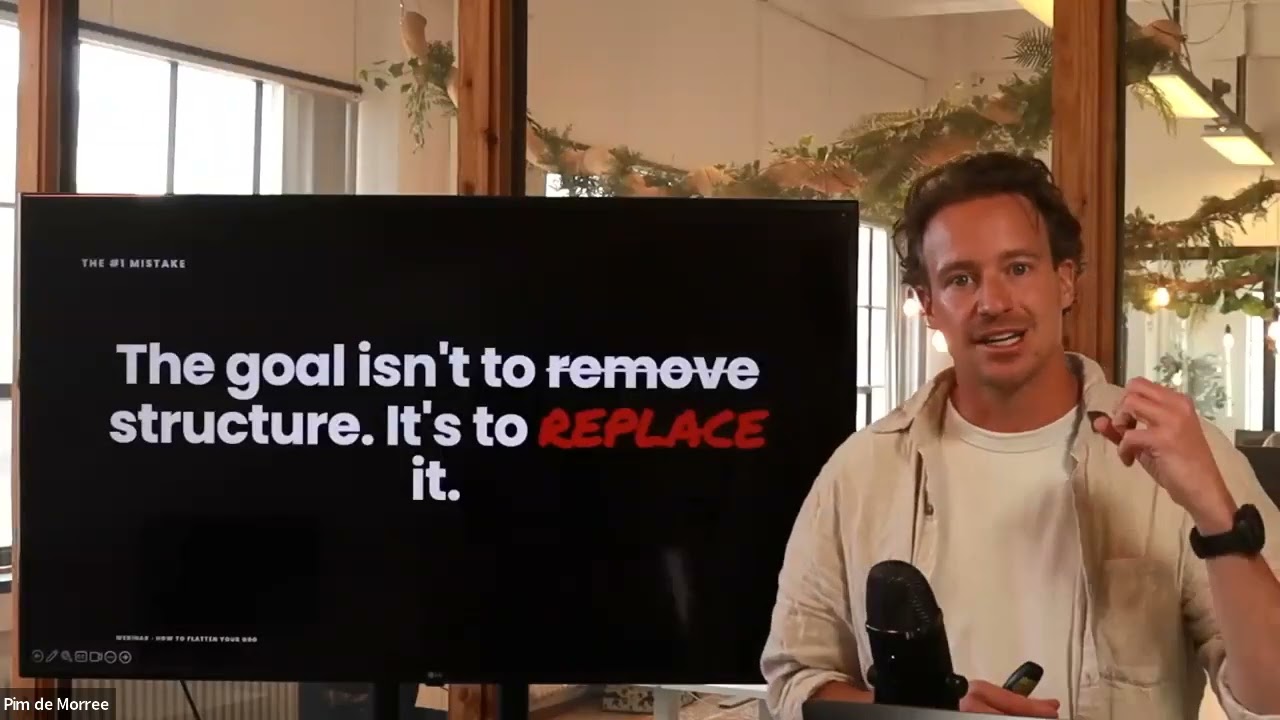
In this live conversation, Corporate Rebels co-founder Pim de Morree walks through the transformation steps. He's joined by Xavier Costa, leader of two portfolio companies, who shares the unfiltered story of going through the transformation on the ground. Hosted by Emma de Blok.
You'll learn:
* The transformation roadmap: what we change first, what we leave alone, and the order that actually works
* The first 100 days after acquisition: practical moves to redistribute decision-making without breaking the business
* A real portfolio company case: what Xavier did, what surprised him, and what he'd do differently
Based on 10+ years of research, 200+ pioneering organizations visited, and a growing portfolio of companies being rebuilt from the inside.
Оглавление (12 сегментов)
Segment 1 (00:00 - 05:00)
[snorts] — Okay, hello. Welcome. Good morning, good afternoon, good evening, wherever you are calling in from today. Thank you so much for joining us. We're actually quite blown away again by the response of this webinar. Over 500 people have registered with us today. And that always brings a lot of excitement that so many people are wanting to make work better. So, yeah, that's awesome. And today we are diving into the topic of how we buy companies and make them bossless. Maybe a bit of a provocative headline there. And we'll see how much we can kind of get into with that topic within the next hour. But yeah, my name's Emma. I work at Corporate Rebels and I will be with you all for this next hour hosting this session. And alongside me I have Pim, my colleague. Pim, do you want to say a quick hello? Hi. Good day, everyone. Nice. And we've got Xavier here as well. Hello. I'm Xavier from Barcelona. — [gasps] — Wonderful. So, you're in good hands for these for this next hour. Pim we have as a speaker today. He's going to be going through some of this transformation with you. And also Xavier. Xavier, do you want to maybe just do a really like quick intro to yourself so people can get to know you a little bit better? Yeah, very quickly. I am a partner of Crisus, one of the founders together with Pim, Dunia, Joost, and Javi. And I've been doing transformations for the last 10 years. First of all with K2K, Ner Group, Ner [clears throat] Concept. And now doing it uh with our own consultancy called Full Circle Team. Great. Thank you. Um and Pim, I mean, maybe not everyone knows Corporate Rebels yet. Uh so, also from yourself. Yeah, so my name is Pim de Morree. I live in the Netherlands. Um and I co-founded Corporate Rebels and Crises. Um we're going to talk about both companies today. Uh where Corporate Rebels is more the research and community building business, and Crises is really where we put the stuff into practice by buying traditional businesses and then radically transforming them. Great. Thank you, Pim. Um so, yeah. Two companies you've heard already, Corporate Rebels, Crises. Uh maybe you know us already, maybe you don't. Um but maybe we should start there, Pim, to maybe get a little bit of clarity around that and a bit of an introduction. Uh let's bear in mind there's people joining uh all different levels of knowing us uh today, so yeah. Over to you, Pim. Great. Okay, in the previous webinar that we did 2 weeks ago, we talked about um how to transform a traditional company and what you kind of need to put in place when you want to move into a self-managing organization and um when you want to get rid of the traditional hierarchy and bureaucracy, what are the things you need to get in place? Um and we also explained a little bit about what we do at Corporate Rebels, but since there are probably people who weren't there the previous one and who don't know much about what we do, let me start with a bit of a intro on Corporate Rebels. So, um if you break it down very easily, um what we are doing at Corporate Rebels is changing the world of work for the better. We believe that organizations have the opportunity to organize in a way that is more fun for people, uh more motivating, and also leads to more success um in terms of uh purpose and meaning, and also financial success of a company, if you organize it in a completely different way than what most people are used to. So, um at Corporate Rebels, we started in 2016 based on the frustration that Joost, my co-founder and myself, experienced in traditional corporates. We were fed up with uh bosses, top-down decision-making, no freedom, no entrepreneurship in those businesses. And we very quickly learned that traditional management was not for us. And we also very quickly learned that traditional management is not for many people. Um if you hear people talking about how they dislike their work, their work environment, this is such a common theme that there's clearly a need to reinvent the way we work. Um and research clearly backs this up, showing the huge amount of people being disengaged, not motivated, not truly feeling they contribute to something they believe in. So, that's why we started Corporate Rebels. You can break it down into three phases so far. So, the first one that started in 2016 was about researching
Segment 2 (05:00 - 10:00)
what is the alternative? So, we know that we are not a fan of traditional management, but what is the alternative? So, we went out to visit more than 200 organizations to date who are doing things differently. So, all around the world, companies from um the high-tech industry to IT, to consulting businesses, to government, to education, to health care, all sorts of organizations, big and small, that show that you don't need bosses, traditional hierarchy to run a successful company. So, that's what we still do. We publish everything to 10 million people per month. Um so, there's a clear need for people to dive into this topic and to learn how work can be organized in a better way. But then a couple years ago we realized it's nice to research and to write and to talk about these organizations. But it's would be much more powerful if we actually prove it ourselves. And that's why we have been very happy to team up with Xavier and Dunya and Jabbi, three of the best transformation people in the world that we know when it comes to the topic that we're talking about today. Um and we created a company called Crisos and through Crisos we buy traditional companies and then transform them so then they can become a force for good. And um when we talk about the companies we buy, so it's mostly organizations between 40 to 150 people is what we're focusing on. Um and the number one thing is that they need to be traditionally organized so we can actually make a big positive impact if we transform these companies from traditional to self-managing or progressive. We'll talk about that enough during this webinar so let me talk about our the third phase that we are now beginning to work on. So we know what works from all those visits and that research. We now show that it also works in practice. But then the big question is how can we make sure it scales to the world that the way organizations work becomes very different than what it looks like today because now 99. 99% of companies are organized traditionally. How about if we flip the script and the progressive organizations are not anymore the outliers but the norm. Um this is our goal to make sure that more organizations are actually places where people thrive and can do something meaningful that they truly believe in. So that's what we do at Corporate Rebels but today we're going to talk about that second phase. So proving it. Um again, nice to know that you have this research to back things up but it's much more powerful if we can prove it ourselves as well to show that organizations actually start performing better when you transform them into a radically new way of working. So, today we're going to talk about that and I want to start with a bit of a understanding of what our approach looks like. Because we're not too much tied to specific wordings like self-managing organizations or bossless organizations or teal organizations. Whatever you want to call it, we want to clarify what we do based on the 10 kind of essentials or principles of our approach. And I'll quickly walk you through them so you have an understanding of what it is that we actually do inside these organizations. So, number one is transparency or radical transparency as we say. This is about opening up all the information in the organization for people to understand what's going on. So, we open up the company financials, profit and loss account, the balance sheet. We teach people how to understand those and how they can then also influence them. Um but we also open up the salaries. So, everyone in the organization can see who earns what to make sure that people feel fairness and actually understand what's going on in the business so they can contribute better and are more engaged with what's happening. Second uh principle is no hierarchy. And with this I mean no functional hierarchy. So, we don't work with uh management layers where one person because of their position in the hierarchy has authority over somebody else. Um and people cannot be subordinate so you will not be uh a subordinate of a boss who can tell you what to do. No, we don't believe in that. Of course, there's natural type of hierarchy in organizations. There always is when people come together, but we actually want to make sure that this natural hierarchy can arise and that people can actually use the power of this natural hierarchy in a good way, but not having it blocked by a functional hierarchy that gets in the way of this. So, the third one is that we work with self-managing teams. So, teams who organize and decide on their work themselves. Um as I mentioned already, no bosses to decide. So, we work with teams who kind
Segment 3 (10:00 - 15:00)
of run things themselves. Um and one thing we do learn there is, for example, when they need to coordinate work, the teams elect representatives that go to different types of meetings that we'll talk about later as well. Um on to make sure that actually work in the organization is still coordinated, but it doesn't need to happen through a traditional manager. The fourth principle is no privileges. So, where in traditional organizations you often see the higher you get up the hierarchy, the more privilege you get. Um whether that's an office for yourself, a fancy corner office, or a nice car, or any other status symbols that created a difference between the managers and the non-managers, and creates a big gap between those. We don't believe in that. We think it's an outdated thing that um maybe worked well in the past, but sure as hell doesn't work well at this point in time. So, we get rid of those as well. Um the fifth one is a salary balance. We believe there should not be too much difference between the top and lowest earners. Um it should be fair, and there should be differences because some people pick up more responsibilities than others. Uh it's not communism, but uh we don't believe in big differences, and we want to make sure that therefore the gap is uh between the top and bottom earners is not higher than 2. 5 times. And remember, this is these organizations between 40 and 150 people. Then the sixth one is no controls and no control mechanisms. Uh People don't need to clock in, clock out. We don't need to track their every move to make sure they do the work they ought to be doing. No, we create the transparency. We give people authority and decision-making power so they can run this themselves and people are wise enough to make their own responsible decisions when it comes to work. We do measure and track everything to make it transparent so everybody is aware of what's happening. And so people can really see how is my team performing, how we are we delivering towards our commitments to customers. This is vitally important and Xavier will talk about this as well to show how much even this change in transparency and tracking everything can help improve the organization. Then the eighth one is shared decision-making. So we don't have bosses anymore. You have to share decision-making or figure out a way to do it. So we use for example consent decision-making where people can step up within their role to make decisions themselves and we try to distribute that decision-making as much as possible to the people closest to the work. So it's not managers who are hidden in their offices making decisions, but it's actually people working with the machines who know the machines best that can make decisions on their day-to-day work. A ninth one and this is quite unusual for a company that buys and transform businesses is that we don't do layoffs for economic reasons. We don't believe that buying company and then firing 10 or 20% of the people to create more efficiency is actually beneficial for the organization. We want to figure out and find out more creative ways of increasing capacity in the organization and in increasing the success. But we don't believe that happens through layoffs and we actually want to build trust instead. So, we say to everybody, "There's a place for you here. Um it's going to look very different for some people, but um we're going to support you on that journey to figure out how you can add value to this organization, maybe in a different way than if you were a manager before. " And then the 10th one, also a vitally important one, is profit sharing. So, if the company does well, the people should also be rewarded. So, we split 25% of the profit among people in the organization. Um so that if the organization does well, they do well, too. So, very briefly, this is what our radical approach looks like. Um all these 10 principles are non-negotiables. So, um we don't just pick and choose them for separate uh transformations. No, we do all of these things because we believe this is the core of what good works look good work looks like. Um So, now you have a bit of an understanding of what we do, and now I want to talk about the steps to get there. And I'm going to go through this on a higher level, and then Xavier will talk about this uh more deeply, and specifically from his experience at the companies he he's he is transforming at the moment, that are part of our portfolio. So, um let me go into this uh before sharing that, why did we actually uh pick this approach to transform organizations? Because it's been proven in more than 100 transformations before. Not through a buy and transform model, but um there was this group of consultants called K2K that have been
Segment 4 (15:00 - 20:00)
transforming more than 100 organizations with this specific approach. Um and they have shown that in all these transformations, you see a big increase in performance. And here you see some numbers, averages of these transformations, where revenue went up 80%, profit 200%, productivity goes up significantly. And at the same time, accidents and absenteeism go down significantly if you look at the whole of these transformations. So, that's why we actually wanted to uh work with this specific approach because we know it's powerful. It's been proven in practice time and time again. Um now, all we wanted to add to it is can we actually buy companies as well and then transform them into this model? So, then how do we go about that? Um it consists of five phases. What we call phase zero is the vote. Um then, phase one is where actually the transformation starts, the diagnosis. So, it's about listening to everybody and uh um really understanding the organization before changing anything. But then very quickly, we go into a complete structural overhaul. So, um redesigning the new organization, managers step back, peers step up. Um then, once that structure is there, um and ideally a bit beforehand to make sure they overlap is that we start training people on the mindset and skills required to work in this new type of environment. And then the final stage, or actually a stage that will never end, is continuous evolution or refinement of the approach. And many people think that in this journey you go from A to B and B is the end state. Uh unfortunately, it's not that simple. You will always need to be working and changing and uh and adding and removing to the organization that you have created because these types of organizations, they are not a fixed state. They always need adaptation and changing and that's also what makes them so powerful that there's always this search for how can we improve how we work and operate to make sure that um people can work well, find meaning in their work, and also lead to um or work towards good outcomes for the business. So, breaking them down a little bit more, the vote, um one of the more radical things we do, especially if you talk to lawyers before you buy a company. Um we want to make sure that the people in the organization are actually on board. Cuz we don't want to buy a company and then force people into a direction that they don't want to go into. So, what we do is we shut down the company uh for 1 or 2 days. We explain our transformation approach in a lot of detail. We show the benefits, the downsides, why it's hard to change an organization like this, and what it requires from people to join this transformation journey. And then, uh we want them to vote. So, we give them the option to vote in favor or against the transformation. And only if 80% or more uh vote in favor of the transformation, we go ahead and acquire the company. If less than 80% would vote in favor, then we would not uh buy this business. Again, because we believe that we want to work with people to make a transformation and not force them into something they don't want to do. Um and how this works in a buy uh process, so one thing we've learned in the first uh acquisition, we did the vote and then went into the um uh due diligence and negotiation process. Uh this didn't work out well because there was a lot of um unclarity for employees because they voted and then for a long time nothing was happening, and [clears throat] they thought, "Well, we put trust in this process and we voted in favor of this, but now there's nothing happening. We don't see any progress. " So, we switched it for the second and third acquisitions, and then we went through the negotiation, the due diligence beforehand. And then right before we went to the notary to sign the deal, we did the voting process. Uh luckily, in both occasions or in all three occasions so far, people have voted in favor of the transformation, so we didn't need to cancel that notary appointment. Um and actually the people were very much in favor of this. So, the first two acquisitions we had 87% and the third one we even had 100%. Um there's a bit of a background story to why we got 100%, but that's too much detail for now. But it shows that people are willing to go on this journey. Um even people who have never heard of self-management, bossless organizations. But if you talk about the principles and how we see a good environ- work environment happening, people love it and they step up and really want to be part of a journey like this. Then, um once we have secured the vote and we actually signed the deal, we then go into an important first phase
Segment 5 (20:00 - 25:00)
uh the diagnosis. So, um Xavier, Javi, and Dunia then start doing interviews with every employee to make sure we truly listen to what they are saying. What are their dreams? What are their hopes? What are their fears? What do they know about the organization that they've built up for years and they can share with us to create a better picture of the current organization and the desires for the future. And it's important that we do this before we start changing because it's we need to understand where we actually need to make the biggest adjustments before we go into the transformation journey. So, here on the right-hand side you see a sample of that cultural diagnosis that we do. So, we ask people to score the organization on a number of metrics. Um dimensions like trust, autonomy, transparency, conflict, pay. And then we pick out the things that are most important to them to start the transformation. Um and of course, we combine this with the experience of our transformation people, so we can then jointly create the journey going forward. Then, um structural overhaul. So, I mentioned already in the principles some of the things we do, but this is the really radical part of the transformation. So, once we have a good diagnosis, we change the entire structure. Because you can train people all you like, if you don't change the structure, the behavior will very likely not change. So, we make the big changes right at the beginning. We redesign the organizational structure. We get rid of the management positions and managers step back into the teams to add value directly to the teams. We open up the financials, as I said, radical transparency. So, the profit and loss account, the balance sheet, salaries are opened up for people so they understand um, what's happening in the business. Um, we work with peer-based salaries, uh, which are co-created with employees. Um, for some transformations, we put this at the very beginning, others we wait a little bit longer depending on the specific situation, but in the end this is a crucial element of the total, um, way of working that we feel is key, um, for people to, um, to learn as well. Not an easy thing, but definitely one that adds a lot of value. And then, since there are no managers, no bosses anymore, the teams elect representatives to coordinate work within the organization. So, normally that's a task that managers would pick up to coordinate work. Um, with us, the representatives do that. So, teams elect them themselves, and then they go to three different types of meetings. They elect a representative to go to a commitment meeting, which is more operational one, on delivering products and services to customers. Then there's a steering meeting on a monthly basis that talks more about strategic things, so investments, uh, strategy of the company, the direction, etc. Um, and then we uh, are implementing what we call caring meetings. So, it's more about the people side of the business. So, what are we struggling with internally, where are conflicts, what do we what can we do to support people to solve it, where do we need training, etc., etc. So, as you can see, um a quite different organization than what most people are used to. Um and the structural overall is a big uh phase in the transformation. Before we go into another important aspect that you might have guessed, um people need to be trained in a different mindset and skill. Because you can change the structure, but if you don't train people to thrive in this new type of system, you won't reap the full rewards, and you won't really get that untapped potential of an organization out. Because normally, in a traditional environment, a boss would help resolve conflicts, would give feedback, uh would help to develop people, and would do most of the decision-making. But in this organization, managers are not there anymore. So, people have to pick this up themselves. So, we spend about 40 to 80 hours um per person on um uh training in mindset and skills. So, giving feedback to each other, helping uh people to understand how they can resolve conflicts internally, uh emotional intelligence training, which is vitally important to collaborate well with other people, to understand yourself, how you come across, and how you can interact with others in a better way. And also decision-making, because managers need to learn to let go, and non-managers should learn to step up, take initiative, make decisions themselves. Um so, this is not an easy thing to do for many people. So, there's a lot of training that we give them, or that we hire others for, to actually support this transformation on a more personal and behavioral side. And then, as I mentioned already, this is a never-ending transformation. So, there's no finish line. Um a lot of people will hate me for saying that. Ideally would
Segment 6 (25:00 - 30:00)
you probably would have preferred me telling you it takes 2 years and then you reach the end state and you don't ever need to change anything anymore. Unfortunately, that's not realistic. So, with Alumi Press for example, the company that Xavier is transforming and leading, we're 12 months in, still a lot of adjusting to do. If we would be 18 months in, we're still constantly retuning the organization. And the first acquisitions at 3 years in, constantly changing and updating and upgrading as well. So, not the easy answer, but for sure the honest answer. And that's also what makes these organizations powerful that you constantly keep changing, adapting. And that you actually build the muscle in an organization for it to constantly change. And I think that's one of the powers of these progressive organizations that we create. So, now that's more of the kind of rough outline of the approach. Now, the interesting thing is that we have Xavier here today who can talk much more about the tough practice of actually doing this. The stories that make this come to life, the challenges, the successes so far. So, I'm handing it back over to Emma to dive into a conversation with Xavier and talk about these specifics of the one of the portfolio companies that we currently are transforming. Great. Thank you so much, Pim. I can answer some questions that are just coming up quickly. This is being recorded and we will share the slides. So, your full attention can be into this next part. And we will also have some time to go into some of the questions directly at the end. So, please stick around. I'll try and maybe weave some of them already into this conversation. But Xavier, transforming and leading Alumi Press, it's been around 12 months. Maybe to just paint that picture, um how was it when you first went into Aluminios Press? Because I've heard a statement going around that it was like it was in the '70s. Uh some people were telling me it was in the 18th century. Oh. — But uh no, it was a uh it's a company that has been created about 60 or 50 years ago, yeah? And uh machinery was uh still is uh very old. Some of the machines have my age, and I am not the youngest one here. Uh and people have been treated for many years as machines. But uh during the diagnosis, we didn't realize that many of them they were using the word slaves. Yeah? So, you do that you do that. Shut up. And even punishing them. But punishing that now you go and sit down in your chair, and you don't work for the next 2 hours. Things like that, eh? So, there was a treatment that was not human at all. Yeah? And uh and of course, people didn't know each other because they were walking like that, like zombies, doing their work, manual work, and going home. There were no relationships between uh them. And there were quarrels. There were people fighting, people fighting like this, eh? Like a little bit like Real Madrid is doing now. Uh so uh it was a dark, eh? If I would put a color, it was a gray, almost black color, yeah? And uh dirty, um no toilet paper, no hot water, whatever you want to call it. So, that was the situation because not because recently, but because after 30 years of working in a way, that was the culture. And it was tough. And many people, I remember when Javi Dunya came for the first time, they said or people from the land Korea, from the Nart Group that came and said, "Javi, that's going to be really challenging, really challenging. " Yeah. They said, "No, no, that's going to be nice. That's going to be — So, maybe going into that diagnosis. So, like just after that explanation that you said of people kind of walking around with their heads down and there's no relationships, when Pin was going through the phases, he mentioned that you kind of open up these conversations around fears and dreams, but how did that go? I mean, if these people are coming in every day and they're not used to being asked these questions, what did that look like and was there anything that kind of surprised you from those conversations that you were having with everyone? Uh — [sighs and gasps] — Well
Segment 7 (30:00 - 35:00)
in fact, what we did it was okay, let us start with the transparency. And after the first general meeting, after the board, yeah, we sat down. We showed the numbers. We explained them how was the company going and uh saying, "And we're going to go that direction. " So, a little bit creating It wasn't a road book, but almost, yeah. And this is where we want to go, yeah. So, at the very beginning, showing everything, talking transparently, answering all the that were creating fear. That were maybe so we did open that. And then the second thing that we did was listening. So we created a team that we called what was the name? There was a team called cleaning and maintaining etc. So simple to check out which were the basic things that needed to be repaired. Yes, so and and this already changed because they were very basic things that needed to be done. And that if we talk about the Maslow pyramid that were in the basics of it. Yeah. So starting from here and listening listening and listening. What do we need? So let's do it. Yeah. An example that I used several times. So today Today it's one year. So it's our first year. We signed that on the 12th. — And in June we had a very heavy [snorts] heat wave. Yeah. So temperatures above 34 35 degrees etc. There was no water because the water fountains didn't work and it was costly to repair them. So tomorrow we need water. So we went to buy boxes of bottles of water and then we replace as well the fountains etc. So very simple things what I'm talking about but they were necessary. Yeah. And then listening to the people and instead of trying to convince them it was mirroring and in a what can you do with that? What do you need? etc. But, me rubbing a lot and giving the responsibility to them. So, little by little, people were changing their way. Yeah? And then, every month, uh, during the general meeting, we were doing some, some facilitations, uh, like liberating structures, etc. So, people have started to know each other, to have discussions, and uh, uh, very simple things. Every day, when I'm walking, I go to say, uh, "Good morning. " to everybody. In the afternoon, the second shift, I go there. Not every night, uh, because otherwise, my wife would kick me out from home. But, uh, uh, so, being with the people, yeah? At the same time, we replaced the structures, yeah? We changed, we created new teams, yeah? And the bosses, uh, it's about 40 people in that company, yeah? There are 40 people working there, as far as I remember. It was 42 at that moment. Uh, there were five layers of hierarchy. Five, huh? So, we replaced these, uh, these layers. Now, there are teams. Every team has its own representative that has been elected by themselves. And, uh, we started to open discussions with the former, uh, managers. So, the first one, the CEO, the CEO is still here. His life is much better than it was at that time. He was using words, like, "I hate the people. I cannot stand anymore them. " Yeah? Now, he's happy. He's listening to them. He's giving them the responsibility. Why? Because he doesn't need to force the people [snorts] to use violence to convince them. No, you don't need to convince. So, it's This is our responsibility. We have to do this for that week. We need to accomplish these goals or these deliveries to the customers and giving it to them. And people there is always a Gauss bell. So, there will be people that we are will be going very fast and the other ones slowly. But people are responding. Yeah.
Segment 8 (35:00 - 40:00)
And that was a big change. So, today I can tell you some people there is a business school in Barcelona called IESE that has started a case during the first So, they started in the general assembly of the board and they are following it. And 2 weeks ago they came filming and interviewing the people. They were crying. They telling me, "Xavi, what did you do? " No, nothing. I mean, nothing. Yes, many things, but simple. Very simple things. And And treating people as humans as we all would like to be treated. Yeah. Exactly. And I'm kind of curious because you delve a little bit into that role of the CEO, but I think a topic that everyone is always quite interested in is this manager layer. Um and how like how is it for former managers? Like what is the hardest? And I think I saw a question coming in. I mean, they're really losing their status. Um so, how have you found that? And like do you have any examples of what happens there? Uh yeah. So, first of all, what I would like to bring one thing else that when we do transformation, it's not only one that is acting like me at doing the transformation. So, there is a team and in our case, uh, there are some people in our team that are coaches, they are trainers, they are specialists in systemic facilitation, in therapy, eh? So, what did we do with uh, some of the former managers, starting with the CEO? Work with him every week, having 1 hour of coaching or therapy, and this ego that had identified himself as being uh, the general manager, general cuz uh, an army name, eh? So, that's why I'm using that name. Uh, so, now he's living much better because all of his fears, all of his, yeah, the ego, uh, face has been reduced. Yeah, so then, now he's bringing leadership, he's bringing the knowledge. Many people are coming to him to ask, "Hey, Albert, how would you do that? " Because I am learning, yeah? And he's helping, he's bringing his knowledge without necessarily having to force the people to do the things because the things are happening anyway, yeah? So, that was one case. There were two other middle managers, no, three other middle managers, that for them it was a status as well, eh? So, we worked with them a lot as well with therapy because in some cases, well, this is something that, uh, in other webinars we have discussed because there is pain. And in the middle managers, there is a lot of pain too, yeah? In general, in the organizations, that pain that comes from home or that comes from, uh, from when we were children, so we work with them as well. Yeah? And healing this part has made them much more much better leaders and much more happier people. So and they are vibrating or they are working in a different way and everybody feels it. Yeah? So then the rest of the company, people are raising. It's and today we have so many leaders in our company that it is incredible. The factory still looks not very clean. Yeah? So this is but okay. Nice. Um and then to like flip that so like um with the managers, but what is like also hardest for employees who are used to coming in and being told what to do. Um and again I think there's this argument sometimes like maybe people just like that. Maybe people do just want to come in and be told what to do and from what you've explained um it very much was that environment. So what do you think was the hardest for employees then? Um who were so used to being told what to do on a daily basis? Yeah. I would bring two things. The first one that for me is key is confidence. Yeah? Trusting people. Trusting uh in their potential in their full potential. Yeah? So then when we approach to the people, when we are all together or individually discussing with them, we are trusting you. So what do you
Segment 9 (40:00 - 45:00)
want to do? What can you bring? Yeah? And and then there is a release. There is the tension goes down completely. Yeah? Uh and from that point then we can start talking, discussing, "Okay, what's next step? Do you want to move uh from being in that machine to another place? " Uh or there were some people that wanted to work on the in the night shift, but they have been forced to do the three shifts. So, listening to them, "Oh, that's what So, let's discuss with the team. " Then we were opening the discussions with the team, and the team was like, "Thank you. Thank you because I don't want to do the night shift. " And so, the agreements between themselves, they were coming, yeah? Uh here we have a cultural — [groaning] — cultural thing in that company. There are three different cultures inside. There is a group of 10 people uh from Senegal. Yeah? So, people that crossed the Mediterranean in a boat, yeah? So, their life is very hard, yeah? Or has been very hard, but they want to work here. They And they were telling me, "This is the bread of our families, and we have to commit in what is going on. " So, okay, this is acceptance, yeah? But bringing their knowledge or their knowledge was lower, but they bring anything that they can bring. Fantastic. There is another group of people from Ecuador, yeah? They were not treating each other properly, and so once they were treating the other from the negro, and the other ones uh I don't know, the Indian. I don't know exactly the name, yeah? But so, putting them together, wo- working together with them, opening discussions, listening each other, has created a new ambience. It's not one group and the other, yeah? And then there were the the local people that had their own things, yeah? So, discussing with them and accepting that there are some people that they only want to come here, do their job, and go home, they can participate in the general meetings. votings, but they don't want to do anything. This accepting is acceptance, yeah? But, there are others that wanted to flourish, that they wanted to do other things, like they wanted to learn new machines, new being more polyvalent. Okay. So, let me let's make it possible, yeah? So, it's like playing like that. We worked at while we were changing the structures, we always work on a kind of uh relationships handbook, yeah? So, setting the boundaries. How do we want to relation each other, yeah? So, uh what are our boundaries? What do we is What is it acceptable and what is it is not acceptable, yeah? For all of us. And then, this is clear. And then, then say then use it. So, they say, "Hey, we agreed on that, and you are not fulfilling it. " And then, the discussions are being opened. In the past, — [snorts] — those discussions may have may it happen, but they were fights, yeah? They were violent discussions, yeah? People were screaming your heart to each other, yeah? Now, it's let's stop, sit down, and let's bring it on the table, yeah? So, that's a Thank you. Um so, I think we spoke about it a lot today already, this like cultural shift, and it of course gets a lot of attention. Um I can understand why, but let's not forget that there's a business side to this at the same time as well. Um what's happened to the business side of things since you've acquired Alumni Press? Like do you have any numbers to give to us? — Yes, I got some numbers here. But the the thing was that this company has been losing money for the last 2 years. So before we came, yeah, 350,000 euros lost in 2024, I think, and another 300,000 in 2023, yeah. Losses. More or less, eh. So there was a problem. There was a problem of margins, basically. on pricing and on sales turnover, yeah. So what we did it was, okay, let's sit down and let's review, not me, eh, so with the internal people, so let let's review product by product, customer by per customer
Segment 10 (45:00 - 50:00)
the process and the margins, yeah. Recalculate the margins. So we did that work. It wasn't easy, but we we did it. And then we realized that there were some customers that maybe they were losing about 200,000 euros in one customer. Losses. But we cannot stop with them. Why? Oh, because he's paying No, we are putting 200,000 euros on the table for him, yeah. So stop in one of those customers, we stopped completely. And that means that uh that was 600,000 euros revenues, yeah. So on top So we stopped with them. So But with other ones we didn't stop. We went, we discussed with them, we reviewed all the processes, and there were a lot of things that has been added into the process without being invoiced to the customer. And the customer didn't know it, yeah. But it was this mentality we have to keep the customer and the turnover without looking at the margin. Uh you have to know that one of our obsession and at the net concept is really a key is look at the brutal margin. Yeah? And everybody knows about the brutal margin. So, all of a sudden inside the company people were talking about the brutal margin. And we need to produce every day per person that brutal margin. Yeah? So, they started to review people on the work floor, review the processes, and say "We cannot do that. This is costing to us too much money. " So, sales people go to talk to the customer and show them what's going on. Yeah? So, all of a sudden uh the margin has increased. And uh here there is a nice slide. When we started it was well, two mm uh 29% it was 1 year ago, but uh the the previous year it was 24% margin. Yeah? And now we are around 40%. Yeah? So, reviewing the processes, changing processes, sitting down with the customers, and saying "You will have to pay for that. You that. " Mm? And that can change. Even the productivity of the people has increased because people know what's going on. It's our project. It's our common project. Every month we have the P& L explained and we train people in the economics interpreting the P& L. The P& L is analytic P& L and it's not prepared or explained by an accountant that knows everything. It's explained by somebody that is not using the financial words. And then we say, "Well, you see the brutal margin. We said we need that. " Do you realize then, for instance, quality defects that is here, 2% to zero per but we don't show a percentage. We show the money that we have lost in quality defects because it's something that every everybody understands. We have burned 12,000 euros or we have burned 50,000 euros. Uh oh. And this goes against the harvest. Yeah? So, it's our harvest. So, if we are 40 people and we have burned uh the whole year 100,000 euros, so this goes to our pockets. Yeah? Yeah, so then mhm the focus on the people goes uh into making it better. We have increased our sales team. There was only one person. Now there are four people. Yeah? So, new projects are coming. Uh I didn't tell that, but uh AlumiPress sales turnover or AlumiPress customers, 87% of them, they are or they were in the Barcelona province. Well, let's say Catalonia, yeah? But there is the world. So, let's go and sell to Spain, to Germany, to France, to Switzerland, etc., yeah? So, we did open that. Now there are projects common, huge projects that are because we went to look or to get Let's go. Don't wait for the customers. Let's go and get them. So, all that kind of things have changed completely. So, last year we were positive, we were with an EBITDA of 95,000 euros. The year before it was 300,000 minus. Uh so, there was an increase even having lost 600,000 euros in sales turnover turnover, yeah? We didn't fire anybody. Three people left. Two because they found other projects or they moved to other cities. And there was one who was a former manager of the
Segment 11 (50:00 - 55:00)
foundry that he said, "I need to I need a higher salary. " And he found another job, so he moved. Yeah? And there was at the beginning there was this kind of negotiating people individually approaching to me, "I need a higher salary. " And I've been telling all of them, "This is not about you. This is not about individuals. It is about us. Let's wait until we have the salary balance everything written, and then we will see where you are. " Yeah? But it is not going to press me to negotiate for a higher salary. Thank you. Um all very impressive. I actually feel bad that we've tried to squeeze all of this knowledge into such a short session because I think we could talk for hours. Um thank you for sharing all of that. Uh Pim, we've spoke about like learning it. Um clearly we're out there like trying to prove it anyway at the moment. Um but how do we what do we do next? Like how do how we bringing this to the world um as such? Yeah, cuz if you hear this, it's uh like so uh like common sense, right? To understand that this is better and that also that it makes sense that if you show give people the information, give them the power to make decisions themselves, then they will start acting up and stepping up. But somehow this is not normal still. And there's a lot to be done. So we we're doing a lot of different things. At the moment we're currently working on expanding this buy and transform business into other geographies. Um so looking at Germany and the US and how we can kind of bring the same concept to other regions. Um but there's another thing I'd like to talk about today. Um so I'll keep this super short so we have some time more to go into questions from the audience. Um, but very briefly, so, if you are interested to dive more into this approach, um, into other progressive pioneering organizations, we have been running for 5 years now, 6 years, a masterclass that dives into these stories, and now specifically also dives very deeply into our transformation approach. So, if you want to understand more about how we actually set those peer-based salaries, uh, that analytical uh, P& L that Xavier talked about, or all the other stuff that uh, we actually do to implement this transformation approach, um, I would invite you to join our masterclass. It's a 6-week program, completely online, with two live sessions per week, um, where you dive deep into case studies of organizations that work differently, and we break them down very practically to show you how it's actually done. So, way beyond the theory. It's built on case studies exclusively, and then, I think one of the most unique parts of this masterclass is that you actually get to talk to uh, the people who are running these transformations, or who have founded these progressive companies. So, Xavier is involved in one of these Q& As, but also people from Buurtzorg, from higher, and from other pioneering organizations that you'll learn and study. And then, uh, you can join us as a single person, um, whether you're a consultant supporting other companies, whether you're leading a small medium-sized business that's uh, interested to transform, or whether you work in a big corporate, um, you can join individually or with groups, um, or we can even make a custom program that we do regularly for bigger companies. If you're interested, reach out to us. Um, this cohort specifically, we have some bo- bonuses that people tend to love. Um, so, we have a lifetime access to a membership platform, so, all the people who've have through the masterclass in the past and in the future will all join this program, so you have a global community of people fighting for the same stuff. Um, on that platform, we have a full course library and a growing number of case studies. And for the first time this cohort, we have a full new week on the power of AI and self-management. So, there's a lot going to change in how organizations work. Um, there is a path that goes into the control and the kind of Big Brother and George Orwell story. There luckily there's alway also another path that you can take, and there are self-managing organizations are showing how AI can actually help to elevate people even more. So, constantly putting people again at the center, but using technology to take out the routines or the boring tasks and let people do the stuff that they're best at. So, um, it starts on May 26th, so only 2 weeks to go. We have limited spots available, and you can sign up for the next week, and then the enrollment closes. If you're interested, go to corporaterebels. com/masterclass, and we'll also follow up in our email with a link to enroll for this masterclass. So, that was a kind of commercial break, and now back over to you, Emma. Maybe we have some time for more questions. — Yeah, we're going to have to try and do some like real rapid-fire questions here. Um, Jessica, did you ever
Segment 12 (55:00 - 59:00)
experience people not sticking to the new principles and agreements? Uh, — [groaning] — yes. The There will be always 2 3% of the people that are not ready for it, yeah? And that's good. I mean, if they want to join, fantastic, and they are moving with the Gauss bell, and several times many times it happens that at the end they are some of the leaders, yeah? It may happen. And some people believe. Yeah? And that's how it is. It's not their time, yeah? So, that's uh Fair enough. Um Aaron, maybe this is more towards your role than Javier. Like, how close do you need to be to the team, maybe physically? So, how often and during like the periods is it recommended? Um so, should there always be someone there? Like, for example, could this work if you're transforming and you're living 600 km away or something? What's your opinion on that? Uh so, what we do is that we spend 3 days a week in the company. And then — we do other transformations in parallel. So, and but when I am here, I am present. I am not in front of a screen. Well, today yes, yeah? But uh But mainly, we are with the people. teams. We are uh holding it, yeah? It's not We are not solving problems, but holding them. And uh allowing them to solve any issue, yeah? So, 3 days. Uh Dunia is doing 3 days, too. So, and Javi is We didn't acquire anything in Bilbao, but he's in several projects and he's doing 2 days in one project, 1 day in another one. So, it depends on the moment. No more than that. If we do it 5 days, the project becomes dependent on us, and we don't want to be depend or we don't want that dependency. Maybe this links into Sandra's question because she was asking, "How do you keep up with the operational tasks, daily business, and emergencies? " So, I guess she's meaning when you're transforming, how do you keep up with these things? Is that how your role like how you come in and play a role there? Mm. It's It's It's a mixed role, eh, because it's a leadership role and there is a direction that we want to follow. So, uh I can be on the floor, but I as well I have to go up to the hill and look all over the forest and say, "Hey, no, it's that direction where we are going, eh? " So, it is like dancing, yeah? A little bit, uh so we have an structure of meetings and the meetings in the within the teams the general meetings or the steering committees, etc. They need to happen and I try to be in all of them, yeah? But the rest people does it, eh? So, that's a Good. Thank you. — I don't know if I did answer it properly, eh? Sorry. Yeah, no, thank you very much. — your face and — No, it's good. I'm also like trying to go through the questions, but I've also looked at the time and realized we've come to the end. Um there are a lot of questions. I'm sorry we can't, of course, go through all of that today. As Pim mentioned in our masterclass, we have a 2-hour session where you are purely answer asking Xavier questions. It's awesome. Um so, yeah, if you want to get deep into this topic, please do check it out. Uh let us know if you have any questions. Pim, did we miss anything? — No, don't think so. Thanks a lot, Xavier. Loved it. Yeah, thank you so much for joining us, Xavier. Pim as well, uh bringing your knowledge, too. Sorry we can't answer everything in an hour, uh very quick, but we hope that gave you some insight into this transformation and answered some of those questions for you. Thank you so much for joining us. It means the world that you're here, you're showing up, and you're wanting to make a work better place. So, yeah, uh don't be strangers, uh be around, and we'll have another one of these coming soon, so keep your eyes peeled. Thank you so much, and yeah, we'll see everyone soon. Thanks everyone. Bye-bye. Thank you. Bye-bye. Thank you so much. Bye-bye.