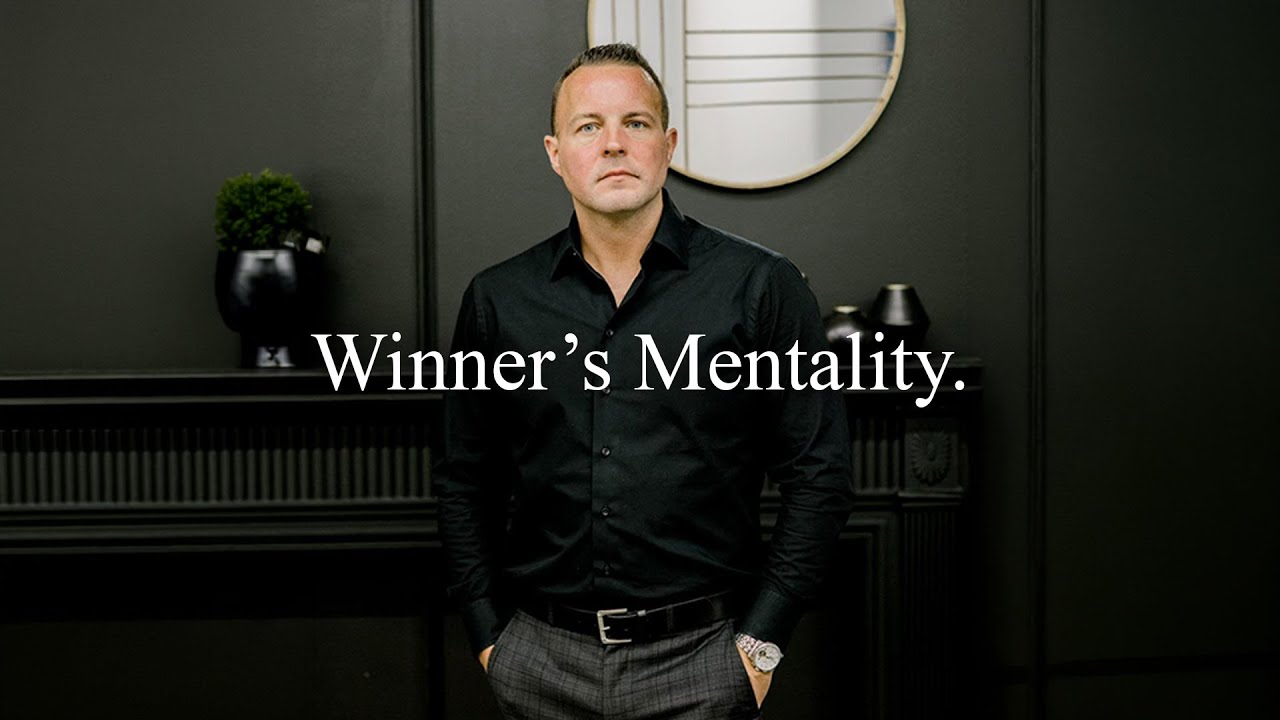
Are you ready to become the entrepreneur you were meant to be? It's time to get the Entrepreneur Mentality! In this powerful video, motivational speakers explain how strategic thinking and a growth mindset serve as the ultimate foundation for professional breakthrough.
Subscribe for new videos every week featuring only the best business motivation, interviews and speeches from the greatest entrepreneurs, business leaders, experts, thought leaders and wealthiest people of all time.
Let us know in the comments below what you would like to see in our next video!
_____________
Ways to stay connected with Motiversity and stay motivated:
▶Subscribe for New Motivational Videos Every Week:
https://bit.ly/businessmotiversity
▶DOWNLOAD our Top 100 Quotes of All Time:
https://bit.ly/topquotesfreepdf
▶JOIN our Newsletter for Exclusive Updates, Discounts, and Deals: https://bit.ly/Motiversitynewsletter
▶FOLLOW our Podcasts: https://linktr.ee/motiversitypodcasts
▶SHOP Official Motivational Canvases and Apparel -
https://bit.ly/motiversityshop
▶BECOME A MEMBER of Motiversity’s loyal community!
https://bit.ly/motiversitymembers
-------------------------
▶Speakers
Jasmine Star:
Instagram: https://www.instagram.com/jasminestar...
YouTube: officialjasminestar
Website: https://jasminestar.com/
David Hauser
https://www.davidhauser.com
Instagram: https://www.instagram.com/dhauser/
Jaspreet Singh:
Website: https://theminoritymindset.com/
YouTube: / minoritymindset
Instagram: / minoritymindset
Keith Krach:
https://keithkrach.com/
Facebook: https://www.facebook.com/keithkrach
Noah Kagan:
https://noahkagan.com/
Youtube: https://www.youtube.com/channel/UCF2v8v8te3_u4xhIQ8tGy1g
Instagram: https://www.instagram.com/noahkagan
Alex Hormozi
https://www.instagram.com/hormozi/?hl=en
https://www.acquisition.com/
Youtube: https://www.youtube.com/channel/UCUyDOdBWhC1MCxEjC46d-zw
Codie Sanchez
https://www.instagram.com/codiesanche...
Youtube: https://www.youtube.com/channel/UC5fI3kxC-ewZ6ZXEYgznM7g
Daniel Priestly
https://www.dent.global/
Youtube: https://www.youtube.com/channel/UCABR204CFV9ZoMz69TyspzA
Dave Ramsey
https://www.ramseysolutions.com/
Youtube: https://www.youtube.com/channel/UC7eBNeDW1GQf2NJQ6G6gAxw
Facebook: https://www.facebook.com/daveramsey
Evan Spiegel
https://x.com/evanspiegel
Marc Randolph
Instagram:https://www.instagram.com/marcrandolph/
Youtube: https://www.youtube.com/channel/UCGvn4Lkghbuw6DVOIKS5q_w
Emma Grede
https://www.instagram.com/emmagrede/?...
Kevin O'Leary
https://www.instagram.com/kevinoleary...
Youtube: https://www.youtube.com/channel/UC1dKnMpbZ-XDp_OhcSWoXoA
Rory Vaden
Instagram: https://www.instagram.com/roryvaden
►Follow Motiversity on Music and Podcast Platforms
Spotify Music: http://bit.ly/Motiversity
Apple Music: http://bit.ly/MotiversityAppleMusic
Podcasts: https://linktr.ee/motiversitypodcasts
Mindset App: https://bit.ly/MotiversityonMindset
Follow all the Motiversity YouTube Channels
https://linktr.ee/motiversity
►Music
Audiojungle
Affirmations + In Search of Solitude by Scott Buckley - released under CC-BY 4.0.
Website: https://www.scottbuckley.com.au/
Youtube: https://www.youtube.com/channel/UCUuUqWLLsUjheuYkP9AWxTA
►Video footage: All video footage used is either licensed through either CC-BY or from various stock footage websites. All creative commons footage is listed at the end of the video and is licensed under CC-BY 3.0.
►Submissions to Motiversity
Speeches: http://bit.ly/MotiversitySubmitSpeeches
Music or Footage: https://bit.ly/MotiversitySubmitFoota...
▶Recommended Reading List:
https://amzn.to/2SEkYpp
FTC Disclosure: Amazon links provided are linked to our Amazon Affiliate account & support the channel at no extra cost to you. Thank you for your support!
#motiversity #hustle #motivation
Оглавление (9 сегментов)
Segment 1 (00:00 - 05:00)
If you're not financially successful where you want to be at the moment, you want to look at building a personal brand — and attaching that personal brand to the right business. If you've got 5 to 50,000 followers within a high value niche, if you're seen as a key person of influence, that's enough of a personal brand to make seven figures. Uh if you've got an elegant business model, you can sell to anyone in the world, uh you can communicate your value to anyone in the world. That's some of the stuff with an elegant business model. So essentially those are the two pillars. If you see people who are really successful, they just move faster than you could ever imagine. And I remind myself that a lot. And so I would start there. Whether you're going to start learning, doing, whether you're going to start allocating, just start Mhm. Uh because you'll make some mistakes, but you'll learn a lot from it. It's my attitude and it's my effort. You're totally in control of your attitude. — And that's what I look for when I work with people and we hire people at appsumo. com. And her effort, there's literally no restriction on effort. There's no law. The only law is 24 hours. Besides that, you can work as hard as you want. Think about in your own life and your own businesses, like what is the thing you're looking forward to and excited about? And it can even be small. Like one of my phrases I like is put it on the calendar. What's on the calendar? What are you looking forward to? It's just go out and do something. Like take that next step. How about just call someone and ask them, "Do you want this service? " Right? Like after that, "Will you pay me for this? " Just do the Do any little step to move forward. Otherwise, a year from now, we're going to have the same conversation. I don't know what to do with my life. 16-hour days and cracking the whip and you're exhausted. You don't even know what you're doing and you're scared and you're lonely and you're you're you know, you're stepping and fetching and you're leaving the cave trying to find something to kill and drag back and oh my gosh, it's hard. It's really hard. And then add a bunch of outside societal variables to it that are all yelling at you that you're going to fail. It gets scary. It's hard. So what you're really trying to do is you're trying to have a dance with the marketplace. You're trying to come up with a bit of a hypothesis like a scientist would, how the market responds. And then, if you get a good response, you double down on it. And if the response is not so great, you adapt and you change. I think entrepreneurship, that shared experience of building a business, is for everyone who wants that. Being a founder not necessarily for everyone. There's two kinds of people in the world. There's people that own the store, and there's people that scrape off the floor. And there's nothing wrong with that. You can have a fantastic life. You won't be shackled to the ups and downs of entrepreneurship, the challenge of it, how hard it is. But you'll never be free. Building wealth is a very simple formula. Spend less than what you make, and invest the difference. Period. Think about in your own life and your own businesses, like what is the thing you're looking forward to and excited about? Jump, and the net will appear. Who I am now as a risk-taker is so different than who I was when I began. And the way that you strengthen that risk muscle is by taking risks. It's just go out and do something. There's so many people I talk to that get stuck, right? And where do they get stuck? It's like, "Okay, I need a business plan. I need to do this. I need a first customer. " Yeah, okay, right? But like, how about just call someone and ask them, "Do you want this service? " Right? Like, "After that, will you pay me for this? Otherwise, a year from now, you're going to have the same conversation. "I don't know what to do next. " Hire the best people, especially if they're better than us. Always raise the standard in everything we do in our people, our processes, and our products. And if somebody can't keep up with that standard, you got to do something about it. Otherwise, you've automatically lowered your standard. And if you don't show up in your business loving what you turn over for your customers or your clients, your business is in decline. The whole point is to switch you out of problem mode into solution mode. Most people can only see these are the 152 ways that this could go wrong. And we started doing that to say, "No matter how outrageous, there is a way to pull this off. So, what would need to be true for this to work? " Stop telling me all the things that aren't going to work. Tell me the thing that is going to work. First reaction after understanding, identifying the problem is, "Okay, what does it take to get there? What's the risk? And how big's the reward? " Like, that's the next step. I had no business starting a business. And yet I started one. And I have found ways to create and make and sustain multiple seven-figure revenue streams. But I don't think I'm special.
Segment 2 (05:00 - 10:00)
I strongly believe that every single business owner, once armed with what they know who have to do, and once armed with the marketing, discipline, and once armed with the consistency, that they too can build a six-figure revenue stream. It's my attitude and it's my effort. You're totally in control of your attitude. And that's what I look for when I work with people when we hire people at appsumo. com. And her effort. There's literally no restriction on effort. There's no law. The only law is 24 hours. Besides that, you can work as hard as you want. — There really five phases to business. Um there is what we call the startup phase, then we move into perseverance. That's like pre-profit. It's when we're still wearing lots of hats and there's not enough people. We get into viability, that's phase three. That's when we actually like look at the business and it's ready for growth, then scale, and then lastly succession. I have a systematic way of pushing the businesses through every phase with complete intention. And that's the problem with most small business owner. For your vision, uh and our vision at a Reboot is really simple. We said we want to build a great sustaining company into the 21st century. And then the mission is all about leadership because the objective of the game, particularly in Silicon Valley, is to be the category king. Because when you're the category king, you get 80% of the industry resources and 80% of market cap. And then your values. So, right? Integrity is there, courage, high ambition, accountability, respect, the basics. And then we had a set of team rules that kind of personify those values. And by the way, same team rules for all the companies. The first one is direct, open, and honest communication. In a word, the truth. Uh the second one is no idea's a bad idea. And then we added parentheses, unless it's the CEO's. So, because it's all about making a safe environment. — Sure. And and you can make it the safe environment when you knock out the CEO. The third one is always raise the standard in everything we do. In our people, our processes, and our products. And if somebody can't keep up with that standard, you got to do something about it. Otherwise, you've automatically lowered your standard. And the fourth one is we're — a team first and functional specialist second. So, you developers put your feet in the customer's shoes. You sales guys don't make commitments we can't keep. And then the fifth one is the most powerful one of all. And that is hire the best people, especially if they're better than us. And I'll give you a specific mentality that really works well. But I would say the success of a founder and success in as a if you want to be an employee CEO within a company is how are you being resourceful? How are you solving the goal and the problems and the priorities with the resources that are available? Most people sit and they complain. Like, "Oh, I don't have this. " Like, there's a lot of people, "I'm not getting paid enough. " Well, what are you doing about it? Did you put together a proposal? Did you go look at comparison analysis? Did you go create more revenue so it's obvious that people should get paid you more? We play a game called know what would actually take. So, once we sit there and go, "What is our goal? To build a studio as big as Disney. " All right, before you even get started, we sit there and go, "What like no BS, don't try and say like the things that we want it to be true, but actually what is true that what would need to be true in order for us to build a studio as big as Disney. " And so, we sat there and we said, "Okay, it's going to take us to put our own capital in. It's going to take us to work hard. " What does work hard look like? Is it a certain amount of hours? It's Is achievements where you put things into place and you make sure you're always incrementally working towards that. — Is it that you maybe you have to So, this is exactly what we did with Quest. It was, "Oh, we have to put the house on the line. " And [music and snorts] that was like the no BS, that's what it's going to take for us to go all in and build Quest Nutrition. And so, once we sat there and said, "Okay, it's going to take us to put our house on the line. It's going to take me at the time to be that the supportive wife to come in and help you out. It's going to take no vacations. It's going to mean you're going to need to take a third of your pay cut. " Like, we literally sat down and wrote a laundry list of what it's going to take to start Quest Nutrition. And once we had that list, we just looked at each other and we're like, "All right, are we willing to do it? " And if the answer when the answer is yes, now you just know what you're heading towards. You know with the type of path that you're about to approach. And so, there's no surprises. There's no all of a sudden him coming home and going, "Yeah, babe, so the business isn't doing well and so oh my god, I'm so sorry, but we lose our house. " Right? There's no surprise. We've established what we're going to do in order to go for that goal. And in that comes the sacrifices. What are you willing to sacrifice? What are the things that you're okay with um — putting aside for now? And a lot of that was my self-esteem, my ego of like I didn't know what I was doing. So every day I'm struggling, I'm trying to figure something out, and I'm keep failing. But I knew that I had to learn
Segment 3 (10:00 - 15:00)
in order to get to the goal that we wanted to get to. So I knew every day I had to get back up. And then the same with him, with the skill sets. What skill sets do I have to learn in order to get to the goal that we have to we want to get to. Now if you want to achieve more wealth, you need to invest more money. How can you invest more money? — You can spend less money, or you can earn more money. It's as simple as that. Now there's a limit to how much less you can spend. There is a limit to how many costs you can cut, but there's no limit to how much money you can earn. So if you've already cut back as much as possible, there's no other way that you can cut back, and you still want to invest more, and you want to see the return sooner, then you got to earn more money. Now again, how can you earn more money? Well, if you don't want to do it through starting a business or a side hustle, then you got to do it through your career. Are you at a job that will allow you to earn more money? Are you in a position Maybe you have to get a certificate. go back to school. Maybe you look for a different company. completely different career. Maybe you add on a second job. Now I can't answer that question for you, but this is where you just have to be honest with yourself and see what type of life do you want to live, and are you being honest with yourself? And then you just plug in the numbers. Like you got a guy that he's running a small tech company or a dry cleaner, or whatever it is. They will get into what we call perseverance mode, where they're making a little bit of money. Like and perseverance is like you might profitable one month, you might not be profitable the next month. You might be profitable for 6 months and then you might not be, right? And you don't have the right people in the right seats. systems. You don't There's no way to scale it. But what they do is they go okay, they start taking all their revenue and they start putting it into areas that really shouldn't be invested in until they're truly viable. And they misstep because they don't know the sequencing. What I've realized is there's a sequencing to growing businesses and it really doesn't matter what the business is. There's a sequencing to it and if I can actually grow the business properly, hire the right people, create the right governance layers, understand the right KPIs, right? At the right time, then I can systematically get it through that process faster than just about anyone else. I've mastered that and that's how we grow and run and scale and potentially exit all the businesses. Really, if you look at all the best CEOs today, the ones that I admire, almost all of them are immigrants. You know, my father's an immigrant, didn't speak English, came to this country. Uh Satya, Microsoft. Name these companies. I mean, just most of them. The guy running Google, Sundar. Uh a lot of the ones. I mean, even Elon Musk, who is debatably a great CEO, you know, South Africa. And so what is it with them that we can all learn from? And at appsumo. com, we have Ayman from Iran, my father's from Israel, Alon is from Uzbekistan, Sean is from London. Uh Vanessa is from Colombia. Like you know, what is it about immigrants that we can all copy? Because that is what built Am- America was we all came here from somewhere else. And so the two things that have really struck with me and I saw this woman who exemplified it. Her name was Sharon. And she kicked so much And she was working at basically at the Best Western, serving breakfast. And I you know, if you've never been in a Best Western, it should be called the okay western. Right? It sucks. But she was working like she was at, you know, the Four Seasons. I could not believe it. She's like bringing me a pancake, she's doing all these things. And she was acting like a founder and and a immigrant, I would say she is an immigrant. And I asked her, I said, you know, tell me more. What's really going on? She's like, there's two things. It's my attitude and it's my effort. And I think immigrants uh have been very successful from thinking, I got to figure this out. I can work as hard as I want. I'm going to do at least my best attitude around that and I think one thing that's common, especially for employees, is thinking that they can't escape being an employee. Right? I thought I couldn't escape being middle class. And through, you know, it does take time, patience, and belief, and vision. And vision sounds so ominous, but a dream, a fantasy. And through that you can create the reality that you can move outside of being the employee, if that if that's your dream, which I think everyone should be an entrepreneur, whether that's a millionaire entrepreneur, billionaire entrepreneur, at least some type of entrepreneur. — I thought it was impossible or difficult to ever position myself as an authority to be a consultant. That was impossible. That was impossible to ever create a course, much less create revenue streams of multiple seven-figures in the back of courses. Then I thought it was impossible to create a membership. impossible to start a tech company. So, the early the earliest part of my career was I want to become a photographer, and then a successful photographer. And then all of a sudden, the game got really slow. I could predict my income, I could predict the publicity, resources, I could predict the connections, I could predict the
Segment 4 (15:00 - 20:00)
publications. — And when I predicted it, I loved it and I appreciated it, and then I just didn't want it anymore. Key is when the world hands you sack of sour lemons, the objective of the game is to turn it to sweet lemonade. So, what ends up happening for the majority of people is you end up just being a pond in the system. You just continue fueling the system, because guess what? Corporations are going to get you to spend. They hired the best marketers in the world to get you to spend more money. You're going to continue borrowing money, because guess what? Banks are in the business of getting you to borrow money. And they hire some of the smartest people in the world to get you to borrow more money, to create programs to entice you to borrow more money. Salespeople are the same way. They go through trainings after trainings to learn how to sell something. Again, this doesn't make them necessarily evil. This is just the way the system works. The system is fueled by spending. What we don't have, the problem is we don't have the education to then tell us when we should spend and when we shouldn't spend. We're always chasing the easy thing, right? The quick fix, right? The scrolling on the phone, the quick hit of dopamine, all those pieces, where what we really want is to feel good, be happy, and have joy. Those are hard and take time and are difficult, right? It it really matters to slow down sometimes. I'm I go fast as anyone else, but sometimes we have to slow down if we want those pieces of life. That's slowing down and getting back to how do I feel? What's going on right now? And that takes a long time to get comfortable with. Like, at first it's really uncomfortable. Over time it feels better and better. You hear all these like, I'd say fake entrepreneurs or fake coaches. They don't actually have any real businesses. Uh they're like, you got to 10x today. You got to 5x. If you're not 5xing, you're failing. I was like, I've done that, but it's also interesting. What if you Our goal is now for appsumo. com is to grow 10% next year. And it's been that for quite a lot of time. And the reality is when you set less ambitious goals for yourself, you can stick with them for longer, cuz you're not burnt out, you're not tired. You can sustain. And then by having less ambitious goals, you also have creative freedom, cuz you're not stressed about hitting a target. And that gives you the ability to create 10x opportunities, because you're like, okay, cool. I'm not worried about making money in that, but I can do go do things that potentially, you know, be moonshots — and really drive the company for the future. Every Friday up until we probably got be about 100 people, we'd go around the room in what we call the round table. Anybody could say anything they want uh on their mind. We even we had seven founders, right? And so this one guy stands up, our VP of marketing, one of the founders, Bobby Lent. And he goes, "You know, this opportunity is way bigger than I ever imagined. Uh Rebus is going to be way more successful than I even I can dream of. " And he goes, "I think I think we ought to go out and hire a real world-class VP of marketing who's done it before, and I'll focus on partnership. " And you could just see jaws dropping. And the guy who came after him, I'll never forget, this guy was His name was Guy Haskins. He was about 24 years old. He just goes, "Bobby, I just came from a software company that's going to go bankrupt any day now. But if one guy would have had the courage to say what you just said right now, we could have taken it to the moon. " So from that point on, it became noble to hire the best people, especially the better than us. You know, I've had the good fortune of living the American dream. And I feel really really blessed. And so I think that was one of the things my parents, you know, obviously I my drive comes from my upbringing. And uh And it's about paying it forward, giving it back. And so if you look at the things, whether it's uh what I did in higher education or in the business world or in uh public service, it's all about that next generation. Um you know, it's it uh one of the things that I started before I went off in the government was called the Global Mentor Network, and it's all about uh — mentoring tomorrow's transformational leaders at scale. So, you know, we created all these videos of these really famous transformational leaders. And so, if you ask me, okay, so what would be your big legacy you want to leave behind? I think back of what my dad would always say about fatherhood. He goes, "Never know if you're a good father until you see your children's children. " So, I would say, you know, it's all about my mentees' mentees. You never know if you're a good leader until you see your mentees' mentees, because you're teaching them how to cascade that down. I've had some great mentors in my life. You know, there's a genealogy out here in Silicon Valley, cuz this stuff's not written in a book. Mhm. Right? So, you learn from the previous guy. My
Segment 5 (20:00 - 25:00)
mom would always say the best way to learn is OPE, other people's experience. She from your mistakes. She goes, "Learn from other people's mistakes. You don't have time enough to make your own, right? " I think the biggest thing that I took away from my time at Stanford and from that class was the focus on going after really, really big opportunities. And I think one of the things that's so different at growing up here in LA, I think a lot of the business community that I was exposed to is more focused on cash flow, right? Like, how quickly can this business turn a profit, you know, how can we do that really predictably, how much cash are we going to generate? At Stanford, the business culture is entirely oriented around, well, how big is that opportunity? Like, is that a huge opportunity? Is that opportunity big enough? Cuz if it if you're not going after something that could reach billions of people, that's not that interesting. Uh and that was a totally different way of thinking for me, combined with the venture capital approach, which is really to invest a lot of money early and scale quickly, and then build out the business later after you've achieved scale, after you've achieved mass adoption. The big So, the key is the big opportunity is build a personal brand next to an elegant business model. That is, that's everything. If you build the personal brand, it doesn't have to be a massive personal brand. — If you've got 5 to 50,000 followers within a high-value niche, if you're seen as a key person of influence in a high-value niche, that's enough of a personal brand to make seven figures. Uh if you've got an elegant business model, you can sell to anyone in the world, uh you can communicate your value to anyone in the world. That's some of the stuff with an elegant business model. So, essentially, those are the two pillars. If you're not financially successful where you want to be at the moment, you want to look at building a personal brand — and attaching that personal brand to the right business. Those are the two steps. So, ultimately, if you said if I was 21, I'm trying to build my personal brand, I'm trying to attach that brand to a great business. — That's the key to capital, it's the key to talent, customers. So, it's that personal brand on a scalable business. You look at every single person who's succeeding right now, they're focused on just those two things. If you're going to move on anything, what I would say is move as fast as possible. And it's fascinating because you've met with many billionaires now doing this podcast. I've met with many of them in buying businesses, building businesses, etc. And if there's one thing they all have in common, it's the same idea of speed. So, um you know, when I was talking to Bill Perkins the other day, who him and I have done a bunch of big deals together, he said the same thing. He's like, "I am not smarter than anybody else or richer than anybody else. I just move faster than anybody else. And by the time they'd even pondered an idea, I've made a move, made three mistakes, and found a better way. " And so, if I could give anybody broad money advice, it would be "You're waiting too long. " And maybe be a little honest with yourself about are you thinking a lot? Is there a lot of mental masturbation going on money? Are you actually taking action, and then doing like the scientific process, trial error, trial error as quickly as possible with as little cash as possible so you can figure out what works for you. And then the only other thing I would add is, you know, coming into this next year, you have what? I don't know, 40 days left in the year, something like that. So, January 1 can start on January 1 for you, or it can start today. You know, it can start 30, 40 days earlier than everybody else, and because of that you've already got a head run. You know, I can't tell you how many people, in fact, I was just talking to uh another person this morning, and they were saying, "Well, should I wait until 2025? " You know, because business financials at the end of the year, they're wrapping up their financials. It's actually a really reasonable question, but the answer to waiting is almost always no. And so, if you see people who are really successful, they just move faster than you could ever imagine. And I remind myself that a lot. And so, I would start there. Whether you're going to start learning, doing, whether you're going to start allocating, just start. Uh because you'll make some mistakes, but you'll learn a lot from it. And it's just it's all dependent on you, and you know that, and that's what you signed up for. So, it's okay, but you don't want to stay there cuz it feels like you're on a treadmill. And so, the way to level up out of that is to start to talk about, "Okay, how do we get some team on board that can create some revenue, and that can make some of the widgets, and can do provide some of the services, and I've got to learn to manage my freaking time? " Because you, you know, when you're in the treadmill stage, when I was you're you're — uh running from crisis to crisis. You just wear a fireman's hat all the time. And you're not doing any thought past the moment. All you're doing is living in the moment, and that just is chaos, chaos, chaos. The customers feel it, your spouse feels it, you feel it, and then you don't feel like you're getting traction cuz you're not. You're on a treadmill. And so, you've to start managing your time and going, "Okay, I'm going to set up blocks of time to think about something other than the
Segment 6 (25:00 - 30:00)
flavor of the moment, the crisis of the moment. And I'm going to start talking about how can I add team members, um just a few key ones, just to get this off of my shoulders. They're tired. — Yeah. And that That sounds very obvious, very primitive, very simple, but that is exactly how you level up out of that and move on. Yeah. And so, what would it take? And it's like, "Hey, if we have a deal that we're working on. " Like, "What would it take? " Now, you can make the decision whether the price tag's worth it, but at least you learn the price. And what I have found in my life is that when I try to answer those questions, like, "What would it take for me to be number one in this field? What would it take for us to to lead this market? What would it take for me to be the best — salesman in this company? " The answers are not as crazy as you'd think. And so, a lot of people spend most of their time answering questions not worth answering. It's playing games that aren't worth playing. It's like, if you play stupid games, you win stupid prizes. And so, no one asked the question before they play the game, "Is this game worth it? " And so, when you ask the question of like, "What What is the big goal? And what would it take? " Then you just get to solve for it. Mhm. And to me, it's just great. If I know what it is, then either I have those resources or I have to use my resource-fulness to get them. The framework is that every idea is stupid. There is Everyone You know, listen, you probably haven't had a corporate job yet in your — No, thank god. Yes, thank god is right. Because there's this thing in corporate I'll say corporate America, but corporate world, and it's the brainstorming session. Mhm. And they put everyone in a conference room, and they go, "We're going to brainstorm and try to come up with an idea for whatever it is. " And he goes, "But first, some ground rules for the brainstorming. Rule number one, there is no such thing as a bad idea. And I call There's plenty of bad ideas. In fact, there's no such thing as a good idea. Every idea is bad. We just don't know why they're bad yet. And so the framework I approach, I assume all these ideas are ridiculous. I assume none of them are going to work. But here's the difference. The reason I start from that position is I don't want to commit the single worst thing you can do as an entrepreneur, which is fall in love with your idea. And you've talked about the person who sees the dog throwing up and they go, "I've got a great idea. " And then what happens? Nothing. They go home and they go, "This is a great idea. " And they tell their partner and their partner goes, "Oh, that's brilliant. I'd buy that. " And so they go, "Okay. " And they begin working on a business plan. And they write this 10-page business plan. And they're dreaming about how they're going They're how amazing it's going to be. Just think about when we have this line of We can do cats, too. And then giraffes. You know, they've built this incredibly ornate business in their head all based on this feeling this must be a good idea. And you've got to nip that in the bud. And the way you nip it in the bud is you try rather than dreaming how amazing this idea is, the first thing you think about, the only thing you think about is how can I quickly, cheaply, and easily collide this idea with a real person and find out is it in fact a good idea or a bad idea. How can I do some kind of hack — that will allow me to quickly find out whether customers actually would want this or not. And almost always you build this quick, cheap, down and dirty I don't mean minimal viable product. I mean unviable. Something you can quickly do like turn on car around and mail a CD to yourself just to find out the basic premise of can I actually use the US mail to send movies back and forth? Because if that had failed, well, great. On to the next one. And that's such a critical step. That's the framework that everyone has to have. It is not about having a good idea. Having ideas is easy and trivial. The important thing is how clever can you be to come up with a quick and cheap and easy way to test it. It's such a waste of time because what happens is two things happen. One is this idea becomes so large and ornate and complicated in your head that you go, "Okay, Mark, I didn't need to get started. I need to raise $5 million cuz I'm going to have to hire all these people to build this thing. " And they're probably building the absolutely the wrong thing. Uh you you can't you can't just go ahead and base on what you think is going to happen. You've got to start from a position of real information. Listen, perhaps the cleanest way, since we have a bit of time, is to give you an example. I do a lot of work with university students.
Segment 7 (30:00 - 35:00)
— And I was meeting with a young woman who at the university and she goes, "Okay, Mark, I've got this idea. Um what I want to do is peer-to-peer clothing sharing. " In other words, I've got all this clothing in my closet that I never wear or I don't wear very often. And I know my friends have a lot of clothing in their closet and other friends have clothes in their closet. It'd be great if we had this website and we could all post what we have and we could borrow each other's clothes and — [snorts] — and I'm going, "Okay, that's interesting. What can I help you with? " She goes, "I'm trying to figure out should I drop out of college to do this? How do I raise the to hire a team to build this for me? And I went, "Whoa, you know, slow down here. " Okay. Interesting idea. But, let's figure out if we can come up with a quick and cheap and easy way to collide this idea with reality. — I said, "Do you have a piece of paper? " She goes, "Yes, smart. I'm a college student. I have a piece of paper. " I go, "Great. All right, do you have a magic marker? " She goes, "I have a marker. Do you have a piece of tape? " She goes, "Got a piece of tape. " I go, "All right. I want you to write on the piece of paper, 'Would you like to borrow my clothes? ' Knock. " And I want you to tape that to the outside of your dormitory room. And we're going to find out in the next 24 hours whether the very, very first principle behind your idea is real. Is anyone going to knock? Cuz if nobody knocks, well, you've learned something very important right there. This thing you think is so attractive might not be. But, let's be optimistic. Let's assume a bunch of people knock. Great, you've learned something. But, you're also going to learn the next thing, which is are there problems with fit? style? Are the people who knock and look at your clothes actually going to want any of them? All right, let's be even more optimistic. Let's say they do find out ones they want to borrow. Well, you're going to find out the next piece. How do you feel when your favorite blouse comes back stained or torn? You're going to find out about the cost of doing dry cleaning. You're going to find out all of these things, and you're going to find about all this for a piece with a piece of paper, a tape, and a marker. None of this raising money, dropping out of school, and doing any coding. You're going to do something very simple. Now, is this scalable? No. Is this repeatable? No. But, that's fine. You're going to do it all with 3 by 5 cards or on a pad. You're going to do it manually, and you're going to start your mind. But when you finally get to the point where you are ready to go and maybe raise money or drop out of school, you're going to know what you're dropping out of school for. raising money be able to tell someone, "Here's my acquisition cost. Here's my lifetime value. Here's my CAC. Here's my You're going to know all of these metrics. You're going to know the complexity. You're going to be tried all these different things. You're going to know what demographic" and you found out all of that for nothing except for your time. That's what I mean by figure out some way to validation hack. And that is the key to being an entrepreneur. You have an idea, quickly, cheaply, and easily test it, find out it's ridiculous, abandon it, go on to the next one. In life, only a third of people can become successful entrepreneurs. That's it. What's the mindset of someone who can succeed at launching a business? The mindset is curiosity. So, what you're really trying to do is you're trying to have a dance with the marketplace. You're trying to come up with a bit of a hypothesis, like a scientist would, how the market responds. And then, if you get a good response, you double down on it. And if the response is not so great, you adapt and you change. I used to work for Steve Jobs in the early '90s. Here's what I learned. There's a concept that he understood that very few people focused on back then in the early '90s, of signal-to-noise ratio. His vision of signal was the top three to five things you have to get done in the next 18 hours. Not your vision for the business next week or next month or next year, just the next 18 hours you're awake. You're going to get those three things or those five things done that you have deemed critical for your mission. They must get done today. Anything that stops you from doing that is the noise. So, the signal-to-noise ratio to be successful for Steve Jobs was 80/20. 80 signal, 20 noise. And I knew that to be true with him because he would email me at 2:30 in the morning, expect me to get back to him because back then we didn't have texts, it was all email. He was right.
Segment 8 (35:00 - 40:00)
And the only other person that I've seen that has a higher ratio than that is Elon Musk. He has no noise. It's not something for the light-hearted. And I think entrepreneurship, that shared experience of building a business is for everyone who wants that. Being a founder, not necessarily for everyone. There's two kinds of people in the world. There's people that own the store, and there's people that scrape the off the floor. And there's nothing wrong with that. You can have a fantastic life. You won't be shackled to the ups and downs of entrepreneurship, the challenge of it, how hard it is, but you'll never be free. The stage director, Eric, says to the entrepreneurs I've never met, "Hold. Don't mind the camera coming into your face. Hold. Hold. " Maybe for 2 minutes. And I'm right there in front of them. I'm 12 ft from them, and I just look at them. Not smiling, not blinking, not frowning, just looking at them. And before they say a single word, I know if they're winners or losers. Just like that. And I'm right probably 99% of the time. Maybe I get it wrong one out of 100. I doubt it, though. You walk in a room, you even though you've practiced, you know, you're — in the context of Shark Tank, 20-plus cameras, a billion-plus dollars in the five chairs there. You've been practicing for months your pitch. But it wasn't the real deal. Here you are. Cameras are rolling, tape is running. You know you've only got so many minutes. This is your moment. And you're on national television, 100 plus million people will see you in syndication. It's all in your mind. It's going through your head. — [snorts] — Can you project who you are with your eyes and the way you're standing? Can you project your confidence? Are you looking at the ground? Are you looking away from me cuz you can't stand me looking at you directly without saying anything to you? Or do you push back? Or do you say I'm going to stake my aura. ground here. — I'm going to show you I'm ready. And I can feel it. I can see that they're ready to do battle. They're ready to answer. They're ready to present. They're ready, ready, ready. Or they're not. And I've taken that out of the Shark Tank. I see that every day in life. I see it. So you have to learn how to project yourself in front of your peers or who's who you want to lead or teach. Or if you're a general or a preacher. That is maybe something you're born with or maybe you can learn that. I don't know. I don't care. But if you don't have it, you're going to fail. I would say that it's so important to be true to yourself in whatever you do. And you know, I think that I have an incredible gut instinct and I've very strong feelings that guide the decisions that I make. And that has really led me so well. So I'd be like have conviction about what it is that you feel deeply and go with that. But by the same token, I'd say know what you don't know, because there's a lot of places where I'm weak, and one of my greatest strengths and a superpower of mine has been know what you don't know and hire people into the kind of gaps and the holes that you have in your own knowledge. I feel like I'm so privileged that I've worked with people in one company and been able to bring them into another company and another, and I start almost a lot of things with like a similar group of people, and I love that because they fill in for where I'm not so good. Um and that's been really key. And then, despite everything you've been told, you're going to have to take some risks. And I think that everything that this kid knew was like don't be risky. Don't take any risks. Like figure everything out. And what I've learned is that nothing is going to come easy. I moved to America with a 2-year-old and a newborn baby, and — I had no friends here. You know, you forget when you move country, you move from all senses of what is familiar to you, and that's very it's very difficult in any tech stage of your life, but there's a special vulnerability that comes along with having a new baby and having a new venture that you don't really understand how to run at the time. And so, I would say like learning to take risks has probably been the best thing that I've done. We have a rule called the 70/30 rule, which is basically the way to make a transition cuz we get asked this question a lot, right? It's like someone requests a call and
Segment 9 (40:00 - 43:00)
they go, "Well, I have a day job, but I really want to be a speaker. an author. I really want to become a coach. " And they go, "How do I know when to make the leap? " And the answer is 70/30. As you go, "All right. So, right now, we got to go what's the main thing? " And that's like 100% of the money's coming from this thing. And then we want to build the new thing. And we build up the new thing into where the new thing is about 30% and once it gets to 30, then you can make the leap and kind of like go for it. Because it's hard to get it past 30 without going all in, but if you're at least 30% of your income is coming from that, you know it's going to work. If you're doing 30% with 10, 15% of your time. — Exactly. So it's like, "Okay, I'm doing this on the weekends or at nights or whenever, lunch break or whatever, I'm able to make this money. And now, what if I had all my time, then I could go all in on it and that 30 could get to, you know, maybe 50 pretty quickly of percent of the money I was making and then hopefully 100% and beyond. Yeah. And you when you look at money and doing new things, uh you hear the term runway a lot and I think that's actually a good metaphor because it's like how long is my window to succeed with the new thing? You extend your runway by limiting the amount of cash that you need to to get the thing off the ground. So if you keep your expenses down, you work pretty lean and you keep you stay out of debt and you uh you know, then you're extending your runway. You're giving yourself more time to take off before the plane just kind of crash. But here's what I'll say. Have you ever built LEGO? Back in the day, yeah. Okay, so get a box of LEGO and you look at the front of the box and you see the picture and you go, "Ooh, that would be fun. " And then you tip out all the LEGO on the table and it's just a big mess. And you think, "How on earth do I put this together? " Fortunately, they put instructions in the box — and they say, "Put this one on this one, this piece by this piece. " And if you follow piece by piece, it's actually incredibly easy to build what looks like the front of the box. Now, what happens with entrepreneurship is people see someone's life on Instagram and they go, "Oh, I want that, right? That's the front of the box. But then they look at all the things that you need to do for entrepreneurship and they go, "Oh, I got to hire people and create products and have a website and set up a LinkedIn post every day and I've got to do all these things. " And then they feel like total overwhelm. And what actually is needed is a piece-by-piece, step-by-step approach where it's like, "Okay, first do this, then this. " And then you go through and actually you can build something that's on the front of the box. To use another analogy, we you and I we would jump on an airplane without even thinking twice about our safety. But 100 years ago it was one of the most dangerous things in the world to do. But they figured out the process, they figured out aerodynamic principles, and the combination of knowing the principles and knowing the process means that it's the safest way to travel. So, you know, I think entrepreneurship is the same. There's a process, there's principles. If you follow process, if you follow principles, you can actually uh safely build a business.