History of the Afrikaans language
3:00

History of the Afrikaans language

Langfocus 14.05.2026 11 542 просмотров 752 лайков

Machine-readable: Markdown · JSON API · Site index

Поделиться Telegram VK Бот
Транскрипт Скачать .md
Анализ с AI
Описание видео
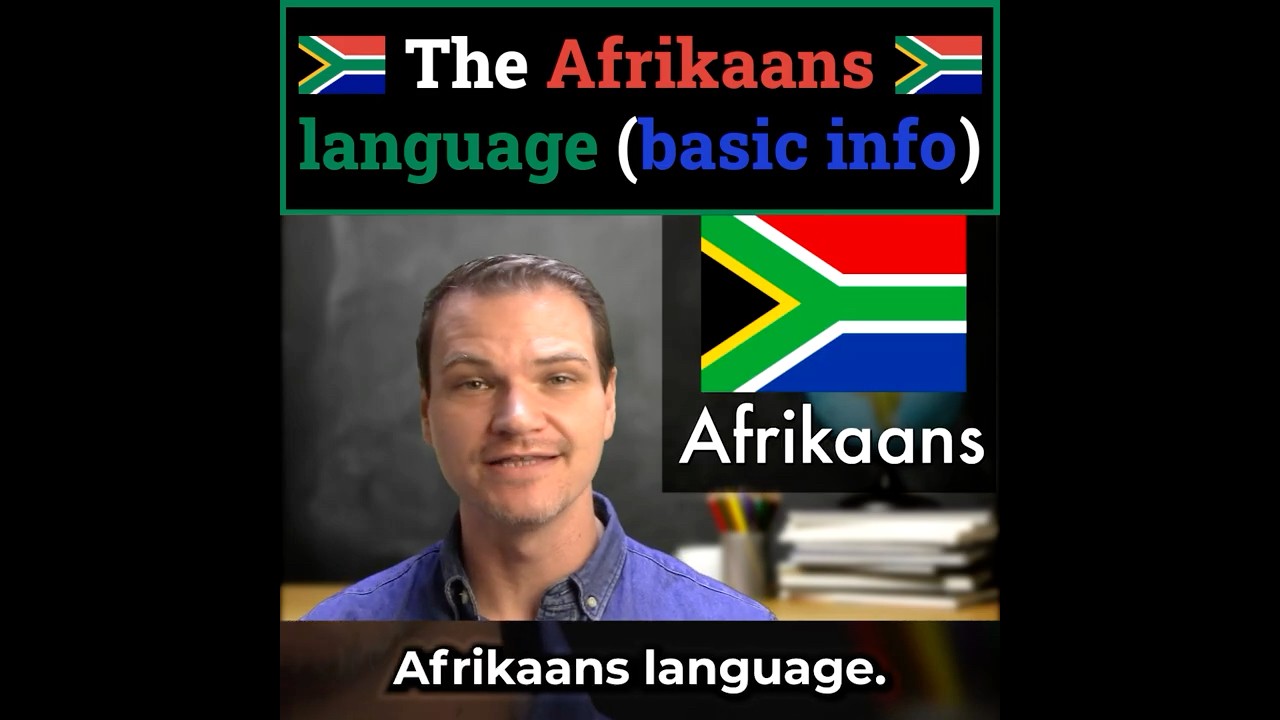
In this clip of a full-length video about Afrikaans, I talk about the language's history and evolution from Dutch.

Оглавление (1 сегментов)

Segment 1 (00:00 - 03:00)

So, how did the story of Africans begin? Dutch-speaking settlers arrived in southern Africa in the year 1652 when the Dutch East India Company set up a resupply station at Cape Town for its ships traveling to the Indian subcontinent and to Southeast Asia. Their goal was to get fresh water, food, and other supplies for their long sea journeys. When the local Koisan people, people who speak Koisan languages, were unwilling to meet the trade demands of the Dutch East India Company, the company drove them out of the area into the inland and replaced them with European settlers and with slaves from other parts of Africa. Most of the farmers, who were known as Boowers, were former laborers of the Dutch East India Company, and most of them were Dutch, but some of them were French or German, too. Upset with the conditions placed upon them by the Dutch East India Company, the European settlers began expanding inland so they could farm outside of the area controlled by the company. The Dutch East India Company wanted to prevent this inland expansion. So they outlawed the expansion, ended European immigration, and increased the number of slaves instead. Some of the slaves were brought from the Indian subcontinent and from present-day Malaysia and Indonesia. Britain seized control of the Cape Colony in 1815 and began to import British settlers. The British eventually took steps to eliminate slavery and to put heavy restrictions on the Boer farmers. Large numbers of boowers migrated further inland to escape British rule, setting up their own communities and encountering various native African communities along the way. After a series of conflicts with the British called the Boa Wars, South Africa became a unified British colony until its independence in 1961. But this is lang focus. We're supposed to focus on languages. Why is all this history important? well as to help you imagine the conditions under which the language spoken by those Dutch settlers changed and eventually became Africans. Exactly how Africans developed is a highly debated subject with some people insisting that it's a natural direct descendant of Dutch while other people insist that it's actually a creole language that arose when slaves and laborers attempted to learn Dutch. If you're not sure what creole languages are, you can have a look at my video on pigeon and creole languages right here. Nobody knows exactly what processes caused Africans to develop, but it's unlikely that either of those two theories is 100% true. In the early years of the Cape Colony, there was a continuous stream of Dutch-speaking immigrants, as well as other Europeans who learned Dutch as a second language. There were also many local speakers of Koisan languages who learned Dutch as a second language. And there were also African and Asian slaves who learned Dutch as a second language. Local Africans and slaves most likely spoke a Dutch-based pigeon language at some point. Typically, a creole language arises when a pigeon language becomes the native language of the next generation, usually without a lot of influence from speakers of the original standard language, for example, slave owners or colonial settlers. But in the case of Africans, there was always extensive contact with native speakers of Dutch, more specifically the emerging dialect called Cape Dutch. On top of that, standard Dutch and not Cape Dutch was the language that was taught in schools. Both of these factors would help Cape Dutch remain relatively similar to standard Dutch. So even if Africans is a creole language, it's more like a partial creole or a semi-real language.

Другие видео автора — Langfocus

Ctrl+V

Экстракт Знаний в Telegram

Экстракты и дистилляты из лучших YouTube-каналов — сразу после публикации.

Подписаться

Дайджест Экстрактов

Лучшие методички за неделю — каждый понедельник