Join SMB Inside Access: https://bit.ly/48LFbSi
#teamtrading #stockmarket #daytrading
00:00 The Myth of the Lone Wolf Trader
02:07 Every Trader Has a Kryptonite
02:59 Why Strengths & Weaknesses Matter
04:56 When Ideas Compound Across a Team
05:22 The Butterfly Effect in Trading
06:04 Case Study: The FSLY Earnings Trade
10:25 From Idea → Thesis → Market Confirmation
14:13 The Relay Race: How Teams Execute Trades
17:36 Why You Need the Right People on Your Team
20:26 Building Systems That Compound Edge
25:03 How to Find the Right Trading Partners
27:42 Complementary Strengths vs Clones
29:36 Communication: The Most Underrated Edge
32:59 Shared Playbooks & Team Review
36:22 Using AI to Multiply Team Performance
38:03 Why You Need to Build a Team Now
*SMB Disclosures* https://www.smbtraining.com/blog/smb-disclosures
Оглавление (16 сегментов)
The Myth of the Lone Wolf Trader
The power of collaboration unlocking success in team trading. This has been mentioned a few times by everyone who's been up here so far. So you can probably see already what an important part [snorts] of trading this is for our firm. It sounds like it was a part of the business plan before I even showed up. As Bella was kind of outlining and Dr. S was confirming that this was a big identity of what of what they were building here. And since I've come on to the desk, I've seen this aspect grow tremendously. To the extent to which I think that it's really important for me to actually focus on this today and talk about it. So when I started trading, I had a very specific idea of what a trader was. And it was this romantic vision of a trader in isolation with the screens and all this information just against the world, right? Like the maverick trader. Totally autonomous, right? We're going to we're independent. I don't have to answer to anyone. Right? That's part of that romantic myth of a trader, right? And then we get into it and we realize, well damn, it's actually really hard and I got to work really hard and I'm actually working more hours than my friends who have 9-5s and um of course you do it because you love it, right? you're curious as Dr. S says and you can not only can you see the potential in what you're capable of, but also you get that satisfaction from feeding your curiosity and unlocking this puzzle that is the market, right? But I'm sure many people here have read Reminiscences of a Stock Operator, right? And Jesse Livermore navigating the bucket shops all alone and making his way to New York and like I mean even when he
Every Trader Has a Kryptonite
was going on vacation in that book and this is the '20s it seemed like he was going out on his boat alone and then just kind of coming back. Again, this myth of the lone wolf trader. Every trader has their kryptonite. Right? The and I don't care who you are. Everybody does, right? Because we're all human. The best traders find ways to overcome these things and focus on their strengths and reduce their weaknesses. That's all part of the process. One of the ways that we can do this is by joining together and working together as a team. Right? So we can actually shrink this kryptonite. And I want to talk about how we can do that and I want
Why Strengths & Weaknesses Matter
to show some examples of how that happens. Everybody here has different strengths and weaknesses. Some of you might not know yet what your strengths and weaknesses are. Some of you might know very well what they are. And that might just have to do with the an experience level. But I think as we get more into this, as we work on our game you know, those things reveal themselves, right? So you could be a quant. You could be great with technology. You could be able to build anything. You can come up with all kinds of signals. You can create automation. You can create tools. Entry signals, exit signals. Maybe you're great at idea generation, right? Maybe you have great ideas. Maybe that's your biggest attribute. You're never fishing in the wrong pond. Like you're always where the action is. You're always trading the right stock. You've got the right stock selection. Right? There's we could go on and on, right? The narrative, the execution the risk management. These are all different facets of trading and different potential strengths and even Dr. S touched on the fact that we could potentially have a strength in bandwidth like Shark as he explained. And as Bella explained. Um someone could have really fast processing skills. Someone could be a very deep analytical thinker. These are all different types of traders and none of these are you know, it's not a bad thing if you're really great at one and not that great at the other. That's just being human. That's who we are. So we want to kind of figure out who we are lean on those strengths, accentuate them just like Dr. S said, but now what?
When Ideas Compound Across a Team
Right? Now what do we do? Well, on the desk we join together. And there's a way that we do this, like a structured way, a way that makes sense. And I'll talk about that. But I'll I want to talk about what happens when an idea doesn't just stay in your head. Because this is when things can really compound.
The Butterfly Effect in Trading
compound. This is where we've seen on the desk growth compound. And we've seen clearly that you know, the best traders aren't doing it alone. So everyone here has probably heard of the butterfly effect. It comes from chaos theory and it's you know, basically the idea that a butterfly flapping its wings somewhere can create a hurricane on the other side of the world. Right? Like some small little event can create something enormous, right? And we're not trying to create something destructive here. We're trying to we're trying to create something positive, but
Case Study: The FSLY Earnings Trade
this is a chart of Fastly. So this was a this was an earnings play from this season. And I want to tell you a story of how things can go when we don't keep an idea to ourselves and that butterfly effect can take place. So market's been stuck in a range, you know, come in the morning. There's not a lot in play compared relative to past days and weeks. Seemingly a quiet morning. I'm looking through my scanners. And there's one particular scanner that we use that we share in inside access in the Bionic Trader meetings and it's something that Tim and I found in our quant work as we were testing an earnings play automated strategy. And we call it the percent extended A ball, right? What does that mean? It means the percent of average daily volume that a stock is doing in the extended hours meaning the after hours or the pre-market. And specifically for an earnings play and you can use this for any play to detect something that could potentially be in play that day, but we like to use it for earnings play specifically because there's very clear metrics that tell us the odds of an earnings play having a big move on day one. And so I was looking at this scanner and I know that okay, you know, if it's doing above 20% of its average daily volume in the after hours or pre-market, that's good. We don't really want it to be less than that, but that passes muster. Sometimes we see 50%. Sometimes we see 80%. That's really good. That stands out. This morning Fastly was doing 200% of its average daily volume. And yeah, it was a quiet morning and when I saw that I almost fell off my seat. Cuz I don't think I've seen that. I didn't know anything about the report. I have not been following the stock since probably the run it had in 2021. But I knew immediately based on the research that we'd done that I needed to share this with my team. Because there's probably something there because this is such a rare signal. So I put it in the chat. I tell them, "Hey, this is significant. We should look into this. " And I knew that Tim would take this and run with it. Particularly because he specializes in earnings plays and he specializes in really understanding how to break down these earnings reports. And finding out if it's a true inflection quarter, right? It's a very specific play that he has that he's taught the team that we've adopted on the team. And so he took this thing and started diving into the report. Right? He comes back with his you know, his process. Okay, you know, they've already had their first clean profitable beat. So this is the inflection quarter because they had tremendous revenue growth and all of that good stuff, right? It it it passed the test. So now he's pounding the table that hey guys, this is at least an A maybe A plus, in terms of an idea, right? We haven't seen the market open yet. We don't know if the market's going to tell us if we're right, if it's going to confirm, but everything we're doing up until this point is pure stock selection, right? This is how we make sure that we're watching the right stock at the open. So, he starts pounding the table and the two other guys on our team, like their ears are perking up now, because they know when Tim's pounding the table on an earnings play, that's meaningful. So, I go back. Something that I do well is track the themes and the overall narratives of the market, and this was during the period, of course, that we're we've been having where software has just been getting annihilated, right? The AI
From Idea → Thesis → Market Confirmation
disruption, anything, you know, SaaS-related enterprise software, all that stuff is getting smoked. I haven't looked into Fastly for a while. We have a database of all the stocks and all these themes and it breaks them down and all this stuff and of course, you can just look it up on the internet, too. A, I wanted to make sure that this was not a software name, but B, I wanted to find out what is that narrative? And so often, when we break down these types of plays, one of the ways to find out the narrative, if it fits into one of these themes that's happening in the market, is to look at the earnings call transcript, right? That's where the CEO gets to explain things about the quarter. And so, the one single question that we're trying to answer is, okay, why the huge revenue acceleration? Could that be something that's relevant to what's going on in the market right now? So, we look into that, right? A little help of AI makes it a lot quicker. And we find that it's digital infrastructure, mainly a cloud computing company that also, um, now is major in edge compute. And the CEO said that the reason for the big revenue growth and the big beta of large part of that reason was because of the edge computing component. And we know, because we track the themes that edge computing is one of those themes that theoretically should scale with AI growth, because it allows that inference to happen away from the data center. So, in a robot, in a device, in a car. So, as we're going through this market where the big theme is AI going to disrupt it or is the or is AI good for this or is this immune to AI? The right that's been the narrative. We concluded that this is something that should scale with AI. This was safe. So, now we have the biggest volume we've ever seen in the after-hours pre-market based on when that report came out. We've got an inflection quarter in terms of revenue. Now, we've got it in the right theme. And the bell's about to go off. That's getting the rest of the team's attention. Now, we're all watching this with somewhat of a plan. Now, we need to see the market. The bell goes off. Bam, the thing just shoots like a cannon off the open with tons of volume. — [clears throat] — And then holds higher. And meanwhile, the market's selling off. I mean, just unbelievable relative strength. The tape was active. It was a tight spread. It was holding holding as the market was selling. And one of our other team members, who hadn't really spoken up yet, he was listening, but we hadn't really heard from him. He says, "Guys, the market's telling us we're right. Like this thing's holding up. Like the market's selling off. It can't even trade below VWAP. It ran off the open. Like we need to be getting bigger faster. What are we doing? " And we're like, "Okay, you're right. " Because, you know what? When this guy speaks up, we know that like that's the time to put the risk on, because if there's one thing that he's really good at, it's understanding when the market is confirming and watching the tape and the price action and understanding when it's time to strike. And of course, then we executed and and we used some algorithms that the fourth member created and all these other things. So, here's sort of the path that we took. And here's the intraday chart and you can see that hold above VWAP after that opening drive as the market was selling off. And it's just very clean price action.
The Relay Race: How Teams Execute Trades
So, throughout the course of this trade, we had a signal that was based on some technological research and some backtesting. We had a thesis that was based off of some digging in the pre-market. And then we had market confirmation and then that led to execution. These are all different stages of a trade that required specialization in all of these different areas. Okay, so this was a relay race. This was a bunch of traders passing the baton to the next trader and building off of the skills of the other. So, why is Rick Rubin up here? What's he doing here? So, for those of you who are into music, you might know Rick. He's one of the greatest producers of all time. If you've ever listened to Jay-Z or Metallica or Tom Petty or the Avett Brothers. I mean, I could go on. Run-DMC. I mean, he was instrumental in in bringing hip-hop to the mainstream and recorded the best stuff that the Red Hot Chili Peppers ever did. I mean, this guy is the real deal. And for those of you who know, which is probably everyone here, the Jay-Z song 99 Problems, when he says, what does he say? He says, uh, "You're crazy for this one, Rick. " I think he says that in the background. Like this is the guy he's talking about. So, he had an interview with Anderson Cooper and he was explaining that he doesn't know anything about music. He doesn't know how to play an instrument. He has no technical ability. And Anderson's like, "Well, so what are people paying you for? " All right? He says, "Well, I know what I like and what I don't like. And I'm decisive about They're paying me for the confidence I have in my taste and my ability to express what I feel. " So, clearly, this is really important. These artists would not be making the records that they're making without this guy, even though he doesn't know how to play an instrument. Now, to make an analogy to trading, I mean, you've got just imagine he's working with the Red Hot Chili Peppers and John Frusciante's, you know, fooling around on his guitar. He might not know what song to be working on. Rick might see that. John's got all kinds of talent. He can play guitar on anything. Rick might say, "Hey, this is the song. This is the head This is the one we need to be working on. I want you to rip guitar on this track. " John's like, "Okay, great. " Right? And that's how they're making a record. And so, you might want someone like this on your team. Like if you're trading alone, you might be missing out on something like this.
Why You Need the Right People on Your Team
You might be a great executor. You might be able to rip guitar on anything. But what if you had somebody who was really great at understanding, "Okay, this is what's in play. This is what we should be watching. shouldn't be wasting our time with. And this is where the big opportunity is. " I have a trader relationship with someone at the firm who started out as my mentor, and he still is. He's one of the best traders I know. And he barely knows how to set a price alert. So, he's always talking about rotations in the market and you know, how can we, uh, how can we see what's going on intraday? Like I want to know what are the strongest sectors? All right, is it the offensive stuff? Is it the defensive stuff? And in fact, the last time I was here with everybody, I talked a lot about this. These tools that we use in the market. And I build him an ETF filter. And this is, you know, this is nothing fancy. Well, maybe a little bit fancier than a price alert. But, it was something that was not really in his wheelhouse. But man, could he read this thing. So, I shared it with him and he uses it every day. And now, I get to hear call-outs from him based on what he sees in this tool that I created every single day. And I get to hear his thought process on what does it mean when X, Y, and Z are leading and we should probably pay attention to A, B, and C. So, just from sharing something that I created with somebody who could really benefit from it, I ended up benefiting from it even more. And that's the reciprocal edge. That's what happens when we start to work together. And I'll tell you one more story about compounding edge. This is what happens when we do something really small and really don't expect much from it. And before you know it, when everyone starts adding their strengths into the equation, something is created that we never thought would happen. So, here is
Building Systems That Compound Edge
some infrastructure that our team created that is built on notion and you can do this on you know, any kind of workflow software. With the way AI is going, you know, who knows where that's going to be built. It's probably just going to be built right on the AI at this point, but this is something that we built and it's a shared workspace. It's shared infrastructure for the team. And I spent some time putting this together because I thought that it was very important for us to have a place where we could share our playbooks. We could share the research we're doing. If we're look if your team on that Fastly trade looking into a catalyst and he does all kinds of work like I don't want him to and neither does he put that in like a Google Doc and then just have that thing just disintegrate into the ether like after the pre-market, right? Once the market opens. Like how many times have we done a lot of really great pre-market work and put it in some document and then like we it's just gone forever. What if we had a place where everything was organized and we actually had a stream of a catalog of all this work we're doing. So, you know, and I've heard Lance talk about the note. There's a note app on his platform where he'll do this similar thing where if he's taking some notes on a catalyst on a name, — [snorts] — those notes are always attached to that name, right? So, this is a very similar concept where any work we're doing gets attached to these names, to these tickers and they're organized and we have upcoming events that we might be watching in the market as a team and there's a common place for all of this. So, a big part of this was tracking the themes and you can see there's a widget there for the themes. And so, we broke down the important themes in the market, right? And what have they been? I mean, of course, we've seen silver and gold and we've seen um software and we've seen crypto and we've seen you know, we could go on and on, right? Energy and nuclear and batteries and space and um drones and I mean, this is the way the market's been moving, right? These groups are running together and sometimes they're in favor and sometimes they're not. And so, I built this thing and then all of a sudden, I see one of the guys on my team just going absolutely nuts building this thing out, putting going back in time and doing research on catalysts to study these earnings plays and adding them into timelines in here. Doing all kinds of work that I wasn't doing cuz I was building this thing. And then, people start adding to the themes and this shared infrastructure starts to grow and then one of the more tech-savvy traders on the team got a hold of it, pulled the API, put it into our firm platform, figured out how to create some really awesome tool that tracks the performance and the volume of all these baskets of themes so that we're able to track these things intraday and over higher time frames to see what not only what stocks are in play, but what themes are in play. Now, that is a has turned out to be an unbelievably powerful tool. I still don't know how he did it. But he never would have done it if I hadn't built this infrastructure in the first place. But when I place, I had no vision of something like that ever happening. And so, that's where unexpected edge can come when we join together and work together because things are a lot more linear when you're by yourself and you can feel it. Like you kind of know your limitations and when you're working on something, you can sort of see the ceiling, right? I've seen so many times on a team where that ceiling just gets blown through because of what other people are bringing to the table. And you start to get used to that. So, so who to partner? How do we do this? this properly?
How to Find the Right Trading Partners
Well, I would argue that you want to have as you're going out and you know, looking for who can I join up with, who can I recruit, who can I network with, I would argue that you want a shared playbook. Now, that might be an end goal. It might be where you're starting, but as you're hawking the market together, you want to be able to share a very similar objective in terms of we're trying to find these types of trades, right? That's going to bring you together and help all of this stuff compound, right? And you're going to be able to work on this playbook. But that also doesn't mean that you might join you maybe you trade breakouts, right? And you join with someone else who's trading breakouts and now you guys are finding ways to to catch more of them, right? You're communicating on which ones are good, which ones are ready, which ones are not. You know, here's my entry, what's your entry, right? And you're collaborating and you're building that playbook. But that doesn't mean that someone else doesn't have an IPO playbook and maybe you don't and then they can share that. And now you're growing, you're expanding your playbook because you're working with other people and that's exactly what's happened on our team. You want to have complementary strengths. So, you're not looking for a clone of yourself. Right? And there's obvious There's overlap and you know, there's no You're You'll know it when you see it, but the ideal situation is that you're finding people with various different cognitive strengths and market strengths so that these things can join together and compound. Right? Like we talk about everyone has a kryptonite, right? And you know, sometimes sometimes, you know, I'll tell you mine. Sometimes my strength is idea generation, understanding where to be looking, understanding what not to waste time on. Seeing the the bigger opportunities, but having a lot of patience to wait for those things. Now, sometimes with that patience comes maybe a little bit slow to ramp up the risk really quickly when I have like a great idea. And you can see how in the example that we showed with that Fastly trade that the seed of that idea turned into something that was bigger than me
Complementary Strengths vs Clones
and then my teammate whose strength is ramping up the risk really fast when something has happened, spoke up and accelerated the trade for the team. And that's how complementary strengths can really work and that that's what I've seen on the desk cuz there's so many different talents across all the traders on the desk and you know, when we listed, you know, quant narrative and execution and um thinking quickly, thinking analytically, high bandwidth. They're like there there's no one who's elite at like all 12 things, right? You might be elite at most of them. I mean, maybe Shark is. I'm not going to say that I can't really say that he's not elite at everything. But you know what I mean? I mean, it's like it's we don't have to be. And then emotional intelligence, which you can kind of imagine what that is. It's It's a little more than like don't be an A-hole, but um you know, are you a good listener? Do you respect other people? Do you have a positive attitude? And a good screener for this of course is do you enjoy working with them, but it could also be you know, have they read one of Dr. at least one of Dr. S's books? And if they haven't, maybe that's a red flag. So, you can think about that one a little harder. So, what are the things that are really important that we work on as teams on the desk? So, communication's the big one. Like we could probably have an entire conversation about this. Why is communication so big? Well, because it affects everybody.
Communication: The Most Underrated Edge
— [snorts] — It affects where people's thought process is you're going. It affects what we're focusing on. Right? We want things to be actionable. productive. We want things to be positive, reinforcing, and not negative. And so the way that we communicate as a team, especially when the market is open, is very important. And as you do that more and more in a pod, right? So maybe you're all trading individually, but you've got a team where you're communicating throughout the day. Maybe you're actually trading a joint account like some of us do. Either one is great. But that communication is so important. And some of the things that we focus on is avoiding that group think mentality, because of course if everyone's just agreeing and going along, you might as well be trading alone. You want everyone to be bringing their different thought processes and different strengths. You want people to feel like they can pound the table when they really feel conviction on something. You want people to go that one extra step during a call out. This is something very specific that we've noticed as a team where I think as humans, there's a tendency to assume that everybody else knows what I mean. Right? So if I say, "Hey, look at this. This looks good. " What's the What is that? What's that What is that providing for you? Well, not nearly as much as, "Hey, I'm looking at this and I think this is this relative strength I'm seeing is significant. Not because I see a trade yet, but because this is it's telling me that this sector in the market's not going down. And I know we've been talking about this group for a while, so we might want to start putting these names on our watch list. " That's a lot more productive than saying, "Hey, check out this stock. It's pretty strong. " And so we try to be specific. Define roles. Now, this is something that just happens. I wouldn't force it. I wouldn't say that this needs to be contrived or done early. It's just something that can really be beneficial once people's strengths start to shine through. And I think that this just sort of falls into place. But people end up having defined roles that are productive. And that doesn't mean these roles don't overlap. That doesn't mean everybody's not generating ideas. you know, executing or calling out trades or or working on tech. But it just means that everyone is earning some kind of identity on the team where they know that they now are the one who's going to go the extra mile in that department. And then a shared infrastructure. So, you know, we talked about that notion. I think every team can benefit from having a shared infrastructure because it's something that compounds. I mean, if you're adding examples to your chart book, right? Let's say you trade breakout trades and you've got
Shared Playbooks & Team Review
you know, 50 different daily chart breakout trades in your examples in your playbook. Well, what if you had a team of four and now you've got 200? Because everyone's adding their examples. And then that leads into the structured review. So, I mean, just imagine how productive it could be to at the end of the day review not by yourself with, you know, sitting with all of your um sort of questions and seemingly limitations and things like that you're trying to figure out for the market, but just imagine reviewing the same trades with a group of traders that might all have varying perspectives on the same play. Like imagine how quickly that might open up your mind to "Hey, I never thought about that. I should maybe think about trading it this way. You know, maybe this should be my focus. " You start to understand how the other traders are thinking about these trades so that in real time it then comes back and helps the communication even better because I know that, for instance, like this particular version of this play is Tim's favorite version. And so, that shared infrastructure and the structured group review are two practices that help compound like all of this edge that comes together and that's where 1 + 1 equals four. So, we want to set terms early, and this may seem like a small thing, but I think it's probably smart with any kind of relationship or business relationship. But you want to define You want to do your best to define how you communicate. Define how you review. What are the important things to this team? And you could do this as a leader. You could sit down as a group and figure this out, but this will give everybody some guidelines on what does it mean to be on this team. Right? You got to show up if you're on a team. You got to respect each other if you're on a team. So, defining those things early helps. And you could This is something that can be modified as you go, and you might learn some new things and put them in here. But it's an important thing to do. So, you're going to hear about this more. AI is moving really fast right now. So, that these slides are going to age really poorly, probably in about 5 minutes, but we're here now. — Um But I would use AI as we're all exploring this together, whether you're on a team or not. But when you're on a team, I think it's even more beneficial and more important to try to leverage this stuff because it really can be a multiplier. And so this is where that specialization comes in because now, you know, we have all these different models and agents that can do different
Using AI to Multiply Team Performance
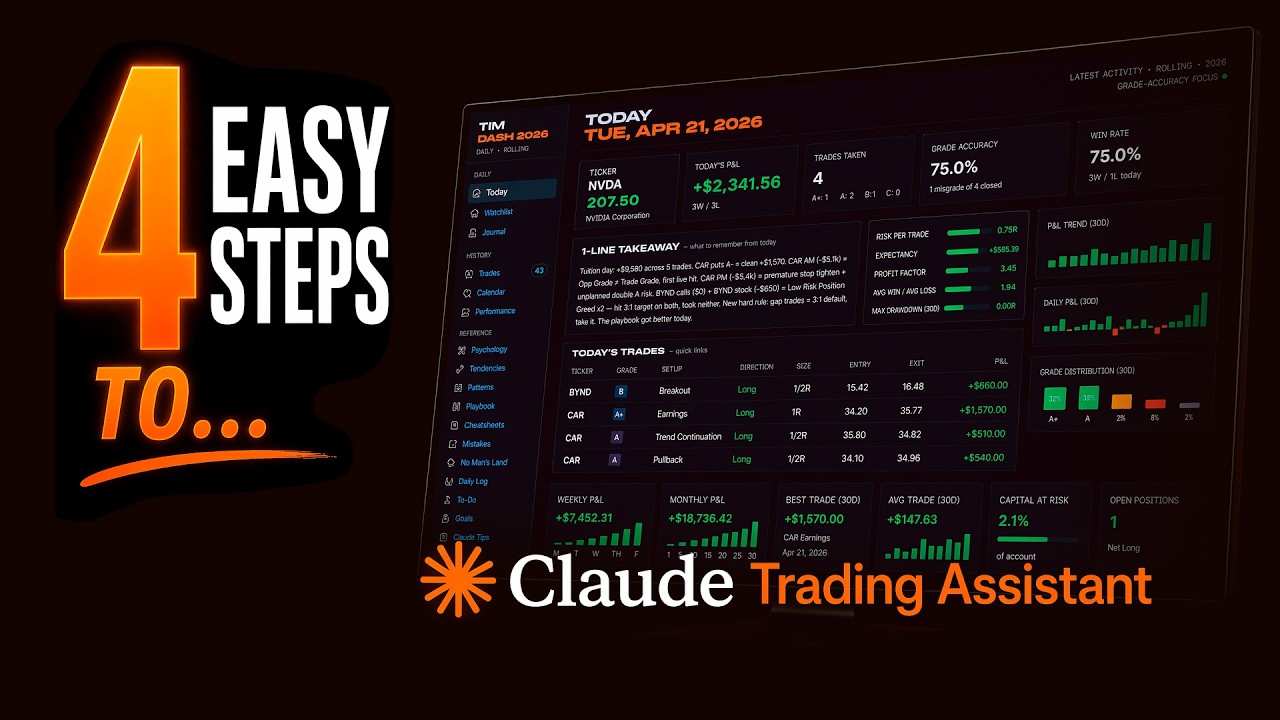
things. So, as different members of your team start to take on different roles and different specializations, you can now find a way to leverage AI for that very specific specialization. So, here are a few examples that we use um already where, you know, for some of our catalyst research, you know, Tim has found a great way to use Perplexity Co-pilot and created very specific prompts and and and a very specific process with that. So, of course, Cloud Code as a tool builder. That's what my teammate used to figure out that Notion theme tracker. Right? And Cloud Co-work as a task manager, something to build things, um something to maintain something like that Notion. And then of course, Quick Knowledge with the Gemini browser. So, I want everyone to look around and just just think about the fact that like everyone here today is here because they're trying to get better. Like you all have proven that this matters to you just by being here. So, that's really powerful. Because now we have an entire room of traders who are dedicated who are trying to get better. So, as Dr. S urged you to do, I would also urge you to
Why You Need to Build a Team Now
seize this opportunity while we're all here and network, meet each other, get each other's emails, start communicating after this seminar so that you have the opportunity to build a team of your own. Or if you're already working with a few other traders, maybe this is the opportunity to expand. Maybe you could just touch on the pod system, you guys. I'm not a part of that right now, but I see it on the scalp radar. And maybe just tell us a little bit about how the team dynamic works there. The Okay, yeah. That The Discord is a is various chat rooms through the SMBU network that have been created. So, for instance, um I run the Bionic Trader meetings on Tuesday as part of the Inside Access meeting. And everyone there has an opportunity to be part of the Discord Bionic Trader group. And that's where we share code and expand on the things that we talk about in the meetings. So, our Discord is filled with with groups like that. I just had a similar question. I mean, how do you divorce a member from a team that's not working? I mean, it's it's no different than running a business. Right? So, it's never an easy conversation, but you have to think about what's best for the team first. And usually is what's best for everybody and like I've found that usually those things end up being uh fairly mutual anyway because if someone is not driving then there's probably a reason for that somewhere. So it's just part of life. You know, we just do our best. Thank you, Garrett. I come from an energy background as well, so it's beset with politics. I wanted to know like when you disagree on a decision on a trading decision with your teammate, how do you resolve it and what happens the next time when there's a disagreement? Yeah, that's a great question. So my motto is there's absolutely nothing wrong with disagreeing. Like that should not be thought of as a negative. As long as you can back up why you're thinking the way that you're thinking like that should be a safe place. Of course, there's a way to disagree and that's why you want to define, like I said on the slide how you want to disagree, but debates are good. Right? Like you want to have like if someone thinks this is the best trade ever like they might be over overzealous, right? And you might need that trader to say, "Hey, hey, I think this has a lot of potential, but like whoa like you know, I don't know though about like right off the open. I think it might stuff there's a you know, we might want to be more patient even though like this is definitely what we're looking you know, and so there's like a give or take and the ideal situation is that actually creates a more powerful operation. And so you want that disagreement. You just want to be able to ground it in actual market analysis and not just say like "Hey, I'm always right, you know, like listen to me, right? " So I think my question revolves around like your team definition. You mentioned that there like defined roles within the team. Like you know, there's like idea person, there's executor and whatnot. So I work a lot with LLMs like on the daily basis as well. So do you see that certain roles being more important than the others? Like LLMs are really bad at ideas, but they're excellent executors. So would you say that like going forward um you're focusing more on developing your idea person more than kind of developing your executors? I I wouldn't put a premium on any any role over the others. Because it's just about the sum of the parts. Like that that's all it is. And they overlap, of course, right? Because you know, just because you might be the you know, the tech guru on the team doesn't mean I can't go in and build some filters and some stuff like that, too. Um so it's really about the sum of the parts. Like who are you who what does the team look like once combined? That's what I'm interested in. Oh, would the AI replace the executor? Oh, man. I mean that now we're into existential questions. Uh Yeah, I mean look, we already have um fully automated models in the market and we have for a while and like I have them in the market and our team does. So you know, and everyone thought that was going to take over and it created a flash crash, right? So my philosophy is like if the AI start trading like I don't know, they'll probably all start doing the same thing if there really is the a best trade out there and maybe there's another flash crash. But I don't really know. We'll have to see where this thing goes. It's moving too fast for me to tell. You know, a couple days ago Bella said told me something very interesting about joint accounts and how that dynamic enhances teamwork. I want to know your experience and insight about it. Oh, yeah. This was something that I experienced and didn't expect to experience necessarily. Maybe I did a little bit, but not to this extent where there's a big difference between a pod where you're all trading separately, but you're trading together and sharing ideas and that's wonderful. That's how I started with this. But once you create a joint account now you really have a shared playbook to the point where it has to be ironclad and you all have to be on the same page and now you're putting risk on with these ideas together and so the stakes are higher. And when the stakes are higher that naturally forces the communication to get a lot better. Those extra layers of description start to happen because it's necessary. So that's what I would say about that. Thank you. —