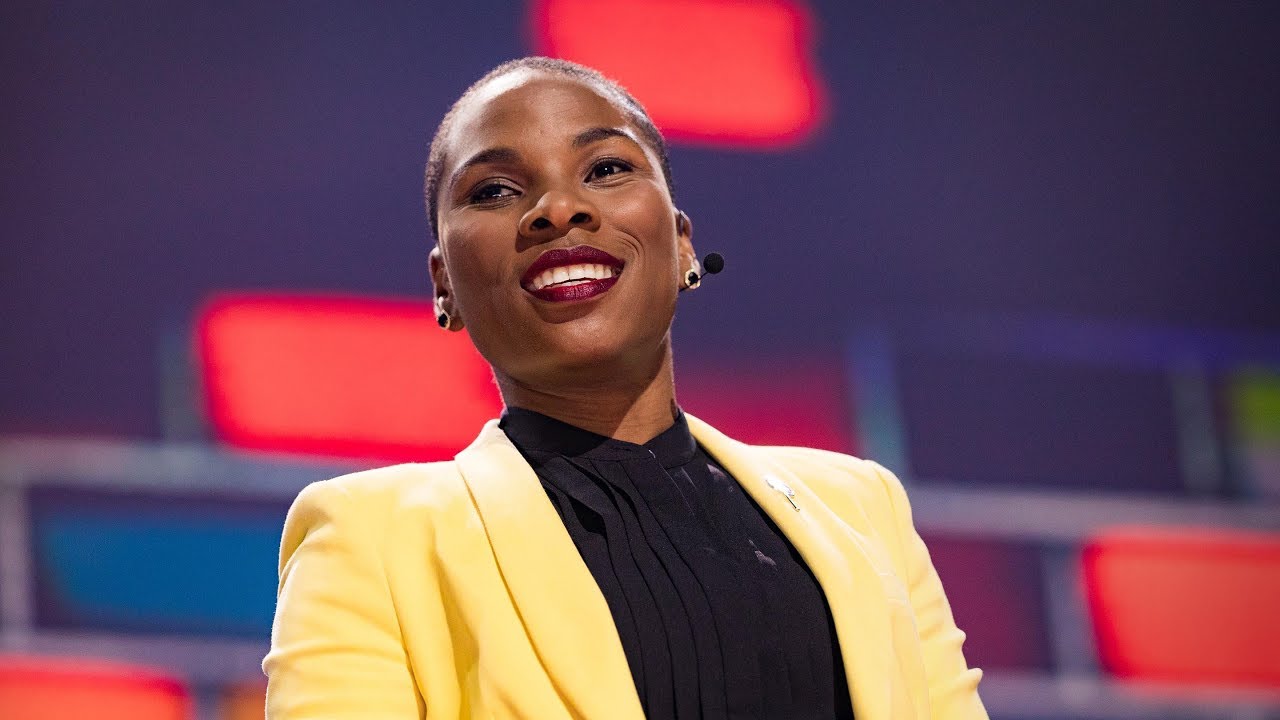
Multihyphenate entertainer Keke Palmer has mastered the art of performing — on stage and off. But she realized the skills that carried her family out of poverty might be the very thing keeping her trapped. In this powerful talk, she unpacks the hidden cost of hyper-functioning and what it really means to stop acting and start living. (Recorded at TED2026 on April 17, 2026)
Join us in person at a TED conference: https://tedtalks.social/events
Become a TED Member to support our mission: https://ted.com/membership
Subscribe to a TED newsletter: https://ted.com/newsletters
Follow TED!
Instagram: https://www.instagram.com/ted
LinkedIn: https://www.linkedin.com/company/ted-conferences
TikTok: https://www.tiktok.com/@tedtoks
Facebook: https://facebook.com/TED
X: https://www.twitter.com/TEDTalks
The TED Talks channel features the best talks and performances from the TED Conference, where the world's leading thinkers and doers give the talk of their lives in 18 minutes (or less) — plus originals, podcasts and exclusive content. Look for videos on Technology, Entertainment and Design as well as science, business, global issues, the arts and more. Visit https://TED.com for our entire library, transcripts, translations and personalized recommendations.
Watch more: https://go.ted.com/kekepalmer
https://youtu.be/RvzgUtjCxRw
TED videos may be used for non-commercial purposes under a Creative Commons License, Attribution–Non Commercial–No Derivatives (or the CC BY – NC – ND 4.0 International) and in accordance with the TED Talks Usage Policy: https://www.ted.com/about/our-organization/our-policies-terms/ted-talks-usage-policy. For more information on using TED for commercial purposes (e.g. employee learning, in a film or online course), submit a request at https://media-requests.ted.com
#TED #TEDTalks #KekePalmer
Оглавление (3 сегментов)
Segment 1 (00:00 - 05:00)
What’s up, everybody? I'm Keke Palmer. You might know me from the spelling bee movie "Akeelah and the Bee," my Nickelodeon TV show "True Jackson VP. " Jordan Peele's "Nope. " (Cheers) Maybe my viral meme where I was “Sorry to that man. ” (Laughter) Or more recently, my new TV show, "The Burbs," streaming now on Peacock. (Laughter) I've been working in front of the camera for over 20 years now. But today, I'm going to share my story with you. Not as a survivor soliloquy, but to expose a pattern, because survival can be so effective, you don't realize when it's no longer serving you. I grew up in Robbins, Illinois. And Robbins, by definition, is a food desert. The liquor store is often where I picked up my lunches before school -- Flamin’ Hot Cheetos and a pop -- a meal the teachers over at my Catholic school often criticized. Even still, my family had love. We was cash-poor but rich in culture and pride. My mother was a substitute teacher for disabled children. She sang for churches and did backup singing for extra cash. My father worked in the factory at a polyurethane company. He had Carhartt before it was fashionable, OK? (Laughter) But they fell in love doing speech interp and theater -- things circumstance slowly made no space for. The love was there. The joy was there. But even with both of my parents working multiple jobs, it wasn't enough. When I was eight, we moved somewhere a little nicer and qualified for Section 8 -- which is a subsidized housing program. I remember being told not to mention my father when the assessor came by, because it would reduce the support we needed. I didn't understand the system, but I understood the stakes. Stability was fragile, survival was urgent -- and in that urgency, I learned that protecting the whole sometimes meant shrinking parts of ourselves. Growing up in a place where access is limited, hamming it up became my pastime. A dream passed down. (Laughter) Then suddenly, performing was a gift that granted my family more access. See, only a child could fit through the gatekeeper’s gates -- especially a child like me that was so eager to please. So when I started auditioning and booking, it became clear I was the one who could do it. I could do something I enjoyed and lift some weight off my parents. So we did it. We moved to LA for my career. We drove four days and three nights from Illinois to California. My dad withdrew his pension, the church and extended family gave us what they could, and we was off. And right away, it seemed to be the right decision. In the first year, I starred in a movie alongside William H. Macy and got a SAG nomination. Then -- go ahead, clap. (Applause and cheers) Then I got a self-titled Disney Channel pilot, and I starred in my own movie. Suddenly, we had access to a life that didn't require constant vigilance. Each opportunity gave way to a world we never knew was possible. We no longer shared rooms, we had a car that worked, my parents weren't stressed about bills or their ability to get the best education for me and my three siblings. It got to the point where my career became the center of our orbit, and not because we chased success, but because it bought us freedom. That's when performing stopped being something I did for fun and something we relied on. Messing that up wouldn’t have just cost me -- it would have put our freedom at risk. And we already knew what it was like to live without it. So I adapted. Not all at once, but over the years. By the time I landed my own TV show, I was undoubtedly the breadwinner, and my job was just that. There was no time for outside activities, no time for vacation, no time for pause. And as the pressure got greater, stage became my home. Performing was the safest way for me to be free. In my roles, I could embody joy -- even briefly. I could be “True Jackson, VP,” “Working at a grown-up job never really knew I could work this hard. ” (Cheers) At the time, it was just a theme song I wrote. I didn't know how I was transmuting. In my roles, I could be sad.
Segment 2 (05:00 - 10:00)
I was allowed to be frustrated -- although often disguised as humor. Performing was safe because it didn't make people feel guilty about watching me carry the weight of adulthood far too early. As the years flew by, I didn’t just perform on stage -- I started performing off it, too. I began designing a character to survive my life. That character is Keke Palmer -- approachable, capable, funny -- a small container my full range could exist inside of without overwhelming anyone. And it worked. That character has carried me through 23 years in this industry, through childhood fame, the transition into adulthood, through success I could have never imagined. I even wrote a "New York Times" best selling book about how I did it, how I became a "Master of Me. " (Laughter) By every external measure, I made the system work for me. And then I had a son. His name is Leodis, and every year, my son and I do these elaborate Halloween costumes. And listen, he's really good. Like, he commits. (Laughter) He knows how to perform -- they've become full-on productions, and it's a cool way to share what I do with him. We have a lot of fun. But this past year after it was over, I noticed something. He was exhausted. And not the kind where you just fall asleep -- keep running and yelling and screaming. I thought once we got into the car he'd fall asleep, but he didn't. He couldn’t, and that scared me. So I pulled over, took him out of his seat and held him real tight. And he was fighting me. I kept saying, "It's OK to rest, you can rest. I’ve got you. ” After one last slap to my face, he fell asleep. (Laughter) When we got home, I still had work to do, but I had one hour free. So I laid down, closed my eyes, and before I knew it, the hour was gone. I hadn't slept one bit. My mind kept running. Then my mom walks in saying it’s time to go, and I get angry with her. She has no clue what’s going on -- now I'm crying, feeling this delayed sense of grief, realizing I'm acting like my son and expecting my mother to do what she never could. Not because she didn’t love me, but because survival taught her to value propulsion. Moving forward mattered more than being healed. My mother was terrified I wouldn't survive, so she gave me what she knew: survival skills. And sure, when I was younger, she'd say, "We can go back to Chicago," but going back didn’t feel like rest -- it felt like erasure. Stopping was always on the table alongside going back to how we were living before. So stopping never felt like a choice -- just an ultimatum. I wasn't trying to be exceptional. I was trying to be reliable. I carried the load, not because I had to, but because I couldn’t un-know what was at stake. Once you've seen life on the other side of poverty, you can't unsee the contrast. I couldn't live with the fact that we had a shot and I didn't take it, so I didn't fail. I just didn't know when it was complete. Somewhere along the way, I started believing I was a thing that saved us. I was Keke Palmer. I built an entire way of moving through the world around staying alert, staying useful, staying on. I was reflexively disembodied, constantly juggling everything thrown at me. I got so good at letting my body run on autopilot [that] I would have these huge gaps in my life where I lacked recall. I remember one time I was doing "Cinderella" on Broadway, and I couldn’t remember how I got to the stage while on stage. It's clear that system didn't know how to stop. It’s like a computer -- it works great so you never turn it off. You don’t even let it restart for updates, so you never know just how much better it could be. That was me: a billboard for hyper-functioning -- with style, of course. (Laughter) But the pattern finally broke. When I held my son and told him to rest
Segment 3 (10:00 - 12:00)
that was a small moment, but it ended something old, something that had been running for generations. When adaptive intelligence outlives the conditions it was built for, it turns into compulsion -- productivity without presence. What I want to share with you is that survival can be so effective, you don't realize when it's no longer needed in your life. You might think you need to earn more, prove more, secure one more opportunity, collect one more accolade, or just keep moving long enough until you finally feel safe. When in reality, you don't need another achievement. You need a break. OK? (Laughter) (Applause) You need a break long enough to look around, take stock and feel gratitude for what you've already built. It's important we check the systems we're still running on. Some of the functions that saved you may be keeping you from the very you were always trying to save. My parents survived inside of systems that never fully saw them. Learning how to live instead of just surviving became my way of returning some of that visibility. I went to Bali this past year and finally spent some one-on-one time with that little girl who left Robbins, Illinois all those years ago. So please allow me to reintroduce myself. My name is Lauren Keyana Palmer, and I’m the CEO of the Keke Palmer Company -- a company I created out of nothing with my mother, my father and my three siblings. (Applause and cheers) I'm just a girl that wanted herself and her family out of poverty, and once we was out, I forgot to let myself free. Yet I'm here today, grateful to say my parents showed me how to survive. I showed them how to dream, and my son is showing me how to live. (Cheers and applause) Thank you. (Cheers and applause)