🚀Work directly with Raj and get an AWS Solutions Architect job in 3 months: https://www.sabootcamp.com/
📰 Keep Up with the latest Gen AI & Cloud updates with me (FREE): https://cloudwithraj.short.gy/Q6MrN3
Guest Links:
https://www.instagram.com/madeline.m.zhang/
Connect with Raj:
🤳 Instagram: https://www.instagram.com/cloudwithraj/
🏢 LinkedIN: https://www.linkedin.com/in/cloudwithraj/
🐦Twitter: https://twitter.com/cloudwithraj
00:00 - Quitting Your Dream Job
07:54 - Getting Multiple Interviews and Jobs in Tough Market
12:59 - The State of DSA and System Design
14:23 - AI Applying to Jobs Good or Bad
18:00 - Career after Tier2/3 College
20:48 - 5 Years from Today
24:04 - Learn These 3 AI Concepts
30:29 - The Road Not Taken
Don't forget to subscribe to be updated about more videos like this!
Оглавление (8 сегментов)
Quitting Your Dream Job
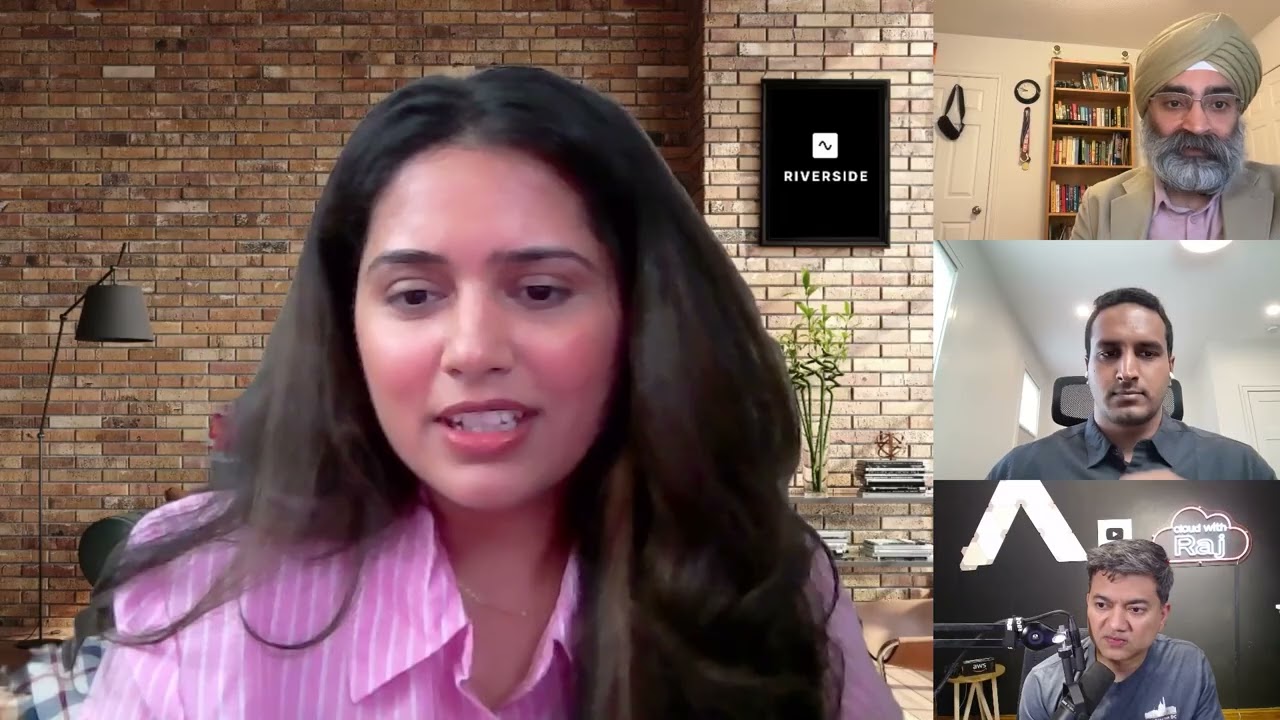
New grads are kind of in my opinion stuck between a rock and a hard place given the status of the market. It's very much a employer's market. There are a lot of people who are applying for jobs right now. Not hearing stuff is not a rejection, but it could just be a delay. Today we are joined by Maddie, an ex-Google engineer who left a job most people dream of and still landed multiple offers in today's tough job market. What is your advice to my viewers for number one, get a job interview and number two, crack the job interview? Number one, use referrals. Number two, don't be afraid of rejection. It's a numbers game. The last piece of advice I would say So there's a opinion in the job market, Maddie, that DSA is no longer relevant because you can use gen AI to solve all that. Some companies like Meta have already incorporated AI-assisted types of interviews. Even right now most companies do data structures and algorithms at least for the screening round. So like it or not, for now data structure is still what you have to crack in order to get a job. — How do you think the software engineering job will look like or will be affected 3 years, 5 years from now with gen AI? It's hard to predict anything in general, let alone in 3 to 5 years. However, I genuinely think that AI will not replace systems-level thinking, but the skills that will make you a successful engineer, I think are still relevant. First of all, Maddie, I'm very glad to welcome you to my podcast. Let's start with your career. So you left a job that most people dream of retiring from, Google. So what are your reasons of leaving such a prestigious company? That is a great question. That is a question I asked myself many times while interviewing and then when taking the offer. I would say there are three major reasons why I left. Um the first is I still love Google. I go back way too often to get coffee with friends and to catch up. However, I will say that like many big tech, I think Google is kind of siloed when it comes to some of the stack. So as a result, I really wanted to just see what was out there, see what other people in the industry were using. Um I was a full-stack software engineer, primarily front end at Google, and I just wanted to go a little bit more into the back end space as well. So just learning, I am a person who loves learning. I don't ever want to stop learning and I just felt like it was the move. Um I could have of course switched teams as well at Google, but I already switched teams once. So to me the next natural step felt like just, you know, scary but going out and trying something new and seeing how it went. So that was the first reason, learning opportunity. Um the second reason is, to be honest, probably not a good reason. Um I to me who I work with matters a lot. Most of my friends are still Googlers and I was terrified that if I left, I would just have no friends because I used to go to Google every single day, gym, used to play board games, used to like just hang out on campus until very late. That truly made me happy. It still is something I actually truly miss. But my irrational fear was that if I no longer had access to the campus after visiting hours, then my friends wouldn't talk to me. That is not true. My friends still talk to me. So um for [clears throat] me just like I guess the community of um where I work is really important and breaking that fear um and knowing that no matter where I actually work, I will still maintain the friends who want to be friends with me not because I'm in close proximity but just because of who I am as a person was very, very valuable. The third main reason why I left Google was um so when I left Google, I was 4 and 1/2 years in. I know that's not too much time in some industries, but for tech, I think that's kind of actually an eternity. They Google has stats on when you leave, you can kind of see like what percent of Googlers started after you. For me the answer was like that was 82%. So as a result, I think that I learned all I could at Google and I just wanted to try something else. Um I also think that Google is a great company, but it is inherently a really, really big tech, like arguably the biggest of the big tech companies. As a result, there is some necessary processes and approvals one must go through to launch stuff. So I was just curious what it be like to work at a smaller company where I didn't have as many approvals, especially given the nature of my work. So one thing do surprise me, Maddie, is so I worked in Amazon for almost 7 years and I have made more friends in my JP Morgan days or my Verizon days than in Amazon because in Amazon they clearly say we are picking for Super Bowl team. So there is there's a lot of competitiveness, but it does seem like in Google you have a chance to create deeper friendships. So is did you feel like the environment is not as competitive as in some other big tech? Yeah, I would say 100% yes. I will also say I used to intern at Amazon, so I did not have the full Amazonian culture, but I'm a little bit familiar. Um I think there's pros and cons to both. Yes. Obviously, um I think some people really value work-life separation. Personally, that was really hard for me to do at Google, so I'm not saying that one is better than the other. I'm just saying I noticed at Amazon, I think people were a little bit more kept to themselves, weren't socializing after work, which is totally reasonable. At Google, um I will also say I have many I know many people who also keep to themselves and, you know, have a family, have other stuff and don't socialize as much. However, if you do want to socialize at Google, there's always some kind of extracurricular, some kind of I'm not in college anymore. There's always some kind of activity, some kind of interest group, some kind of way that you can meet friends and meet people. That having that option to me was very valuable and that's another reason why I even joined in the first place because when I was interviewing I felt that people were really nice and really friendly and so eager to talk about what they work on and why they like the company. Um so that kind of gave me a very good impression and kind of um kind of framed Google to me as a place that wasn't just where I could get a paycheck, but also where I could maybe meet friends, where I could just spend a lot of my time and I will also say um there is the term golden handcuffs. Yeah. Google definitely exemplifies that. Um if you want, like I did, you can spend all your time at Google going to the gym, eating the free food, um going to get the free barista coffee. It's definitely — Sounds pretty good. Yeah, for me it was like amazing. It kind of felt like an extension of college. Um but then again, you know, you must graduate college at some point. So I kind of look back and it's like, you know, I was in college for a little bit over four a little bit under 4 years. I was at Google for a bit over 4 years, so that's kind of like the next chapter in the next graduation in the next chapter of my life. Got it. What is the biggest thing you miss from Google days, Maddie? Um to be honest, like I will say definitely I used to grab uh dinner with friends every single day after work um because there's free dinner on campus. Visiting hours end at 5:00 p. m. now, so I miss, you know, kind of the talks we used to have, but it's fine. They they go off campus to visit me, so that's one of the things I miss. Also gym. It's so nice having a gym where you work, like having it in the same building. I'm a well, I'm a gym running rat is what I'll say. No, I totally agree. Um so I was working in um Verizon headquarters. They have an amazing gym, okay, for free with free classes and everything. That made my life so much easier, but when I joined Amazon, I was going to Manhattan. They have no gym whatsoever and it was so hectic to come home and then change, go to gym and all that stuff. I'm a gym rat as well. Um I started working out in my mid-30s, uh but then I really got into it. Real
Getting Multiple Interviews and Jobs in Tough Market
quick, guys, if you want to get a AWS Solutions Architect job without coding or learning every AWS service, waitlist for the next cohort of SA Bootcamp where we cover technical, behavioral, executive communication, hands-on, LinkedIn resume improvement, mock interviews, and more. Find details and waitlist at sabootcamp. com. All right, back to the video. So one thing which is very impressive about you, Maddie, is even in a tough job market you were able to switch it and not only that, uh you had multiple offers. So what is your advice to my viewers for number one, get a job and number two crack the job interview? That is a great question. Um I will say I was lucky in that uh first and foremost, I was interviewing not for new grad roles. I will say quite frankly, given the status of the market, it's very much a uh employer's market. So new grads are kind of, in my opinion, stuck between a rock and a hard place um unfortunately, but I I also know plenty of new grad friends who got offers, so there's the flip side of the coin, too. But what I'll say is um the first piece of advice what I'll give is what I did not take myself, but please take it. Number one, use referrals. Uh number two, I would say it's honestly a numbers game. There are a lot of people who are applying for jobs right now because of the market conditions. Um don't be discouraged if you don't hear back. Like I will say I have um had companies that I applied to, didn't hear back for months, like back in the day, and then reached out all of a sudden being like, "Hey, we actually want to schedule you for an interview. " So that basically not hearing stuff is not a rejection, but it could just be a delay. Um and I used to be terrified to apply to jobs because I was afraid of rejection. I've since gotten rejected by so many jobs, I no longer care. So I think having being a little bit more open to rejection is something that has got me actually quite uh far in life, in my opinion. Um it's kind of cliche to say, but you know, like the saying, "Failure is the mother of success. " Like you don't If you don't try, you don't know what will happen, right? Um so, yeah, definitely don't be afraid of rejection. It's a numbers game. And I would say finally, um if you do apply for a job that you really want, make sure that you do actually write a cover letter. I know that it's not feasible probably to write a cover letter in every single of your applications, but if it's a job that you particularly want a chance of getting, would recommend doing that. Um the last piece of advice I would say, um this is one I also did not take, but has worked well with for a lot of my friends. Um definitely use AI to help your job search. Um I, as I mentioned, only really chatted with people who reached directly out to me, but my friends have had excellent um opportunities come if they look at not just LinkedIn, but they also, for example, one built like an uh job scraper to search like Y Combinator and other job boards as well. Um again, it's a numbers game, so the more opportunities you hear about, the more the better your chances are of actually getting one of those opportunities. That is the advice I'd give for trying to get an interview in this job market. Personally, what I did was I read uh I reread Cracking the Coding Interview, which is the I'm sure you uh Raj can show on the screen. It's like that green book that everyone reads when uh doing data structures and algorithms questions. I will also say, um do a lot of LeetCode. I invested in LeetCode Premium this time around. I think it was very worth it. I'd never had it before, but it was so nice to be able to kind of uh see some of the premium questions and kind of see the types of question that different companies ask. I will also say NeetCode 150 was also my savior. So, LeetCode 75 is a list of 75 questions that cover the basics of data structure and algorithms. NeetCode 150 is a list that is a super set LeetCode 75 and curated by uh Nav, who is uh the founder of neetcode. io. And actually met him in person. Um I'm good I was such a fan girl. Uh anyway, point is he has very good resources. Those are what I recommend for data structures and algorithms. For the system design interview, I personally would And also uh this is not sponsored by any of these people. I just genuinely like these resources, just for the record. Sorry, Raj, if I'm putting like name dropping. — No, it's all good. Okay. Hello Interview does very extensive walk-throughs on sample system design questions. Um I believe they have a paid service, which I do not use, but they have free YouTube videos. The reason why I recommend the YouTube videos is because they do a really good job of not just saying like this is the correct solution, but also saying this is why this is the correct solution. And also, they mention this is passing for mid-level, for senior, for uh staff, for senior staff. And I think that delineation is good because you not only know what is passing for your level, but you also know the gap that you must overcome if you end up interviewing for the next level years down the road. So, just like having a forward-thinking roadmap of how to be good at system design was extremely valuable. Those are the resources I recommend for um getting the interview and then cracking the interview.
The State of DSA and System Design
interview. So, there is a uh opinion in the job market, Maddie, that DSA is no longer relevant because you can use GenAI to solve all that. But do you still uh recommend that candidates definitely do data structure and algorithm for the interviews? Mm that's a great question. Some companies like Meta have already incorporated um AI-assisted types of interviews. However, as far as I'm aware, just like talking to friends, even right now, most companies do data structure and algorithms at least for the screening round. So, like it or not, for now, data structure is still what you have to crack in order to get a job. I will also say I know that companies some big tech companies have even started moving people in person again for on-sites because of, you know, the AI cheating and stuff. So, I'm not exactly sure where the industry will land on as a um uh benchmark in the future, but for now, most companies still ask your standard data structure and algorithms questions. That's definitely good to hear. Uh so, I'm more in the cloud world, and you know, a lot of my students will be like, "Raj, I'm doing this GenAI, this Claude code, this Codex, and all that stuff. " But if you ignore the cloud system design and the fundamentals, you will get rejected in the cloud interview as well. So, good to see that is true for the software engineering as well. So, I have to go
AI Applying to Jobs Good or Bad
back to your previous answer. So, you said you definitely use AI to search for jobs. So, Claude recently came out with a feature where not only you can search, but you can also apply to jobs using AI. What's your opinion on this? Don't you think then applying becomes meaningless because everyone is going to apply to thousands of jobs, and everything is driven by bot? Like, how can someone separate themselves in this like GenAI automated job apply? That's a great question. Um I will also say this as a disclaimer, I I'm very happy in my job. I'm not looking to leave, so I haven't thought about job applications in more than a year. When I was interviewing um previously, I did read forums where employers could tell when a application was written by AI. Since I I guess yes, AI can help you apply to multiple jobs very fast, but if everyone is, for example, using the same AI tool, and a recruiter sees like 50 resumes or 50 like write-ups on why they want to join the company that are like the exact same. I'm hoping that will give some precedent to the people who manually write out their cover letter or, you know, their application. That's what I'm hoping. Um I will also say that there at least I know ChatGPT and Claude have some indicators like, you know, it's not X it's Y, the em dashes, but — Yes, em dashes. Um there are some indicators of AI-assisted writing that as of now um is still a telltale sign. So, for example, you know, it's not X it's Y, the em dashes, everything. Um so, at least for now, I think there are some indicators that will point um people toward realizing if an application is AI-assisted or not. Uh that's why when I said like, you know, use AI to help with your job applications, I'm not saying use I personally am not advocating use AI to write. I'm saying use AI to help you find opportunities that you might not have known about otherwise, but still put your human thoughts and writing into applying to those jobs. So, in your experience uh these days, is sending resume still the number one way to get a job or get a interview call or activities in the LinkedIn, and getting a call from LinkedIn is the number one uh thing right now? Yeah. Um I will say I uh last time I primarily only applied to companies that reached out to me first via LinkedIn, so I'm maybe a bit biased. Um I will say I myself, when I was searching in the past, I've never had luck being doing the one-one-click apply on LinkedIn. I just think there's so many candidates that do that, it's really hard to stand out. Um I will say definitely either reaching out to the LinkedIn recruiter personally or just submitting a resume helps. Cold email A cold reach-outs obviously have a lot less of a success rate, but I do know that, for example, um my friends have had experience successfully when they applied to cold emailed when they had cold when they cold applied to some place, but they also like kind of reached out to the recruiter in parallel and explained why they were a good fit, why they thought they're a good fit. So, that's what I've heard second-hand. Um yeah, but definitely I would say referrals are the best if you can get a referral from someone who can vouch for you. Yeah, I think um yes, definitely if the recruiters reach out to you, that's the best way because then they get the bonus. Then for sure referral is a good way. Uh I think like uh yeah, just cold applying is a little bit tough in this market. Maddie, you are
Career after Tier2/3 College
definitely a brilliant young woman. Um you went to MIT, so it makes it a little bit easier in the job market. Do you have any advice to folks who didn't go to like a prestigious school like MIT, and they're trying to crack into this job market? Yeah. Um I will say in my opinion, um after the first job, the university you went to, or if you didn't go to university, matters a lot less. I have a lot of friends, for example, who I met at Google who did not go to a quote-unquote like prestigious software engineering computer science school, but did wonderfully, did better than me, got promoted faster than me, and are doing great in their careers. So, I believe that employers kind of do see MIT or Stanford or Harvard, or you know, those schools as kind of like a signal when it comes to the initial new grad funnel. Um however, obviously, because Google and, you know, these companies are so big, they must take people who are not in that funnel, right? So, if you get in that funnel, and then you are given the chance to prove yourself, and you do better or you do the same, that's all that matters, in my opinion. I I will recognize that like I believe that my job search was probably easier in some ways because I had MIT on my resume as a new grad, but once you get in industry and have a couple years of experience, hiring managers care much less about where you went to university like 5, 10 years ago, as compared to what you actually accomplished in your uh you know, day-to-day responsibilities at your actual job. So, I would say definitely it does it did help me in the land my first job, but to the people who didn't go to a prestigious university, quote-unquote like that doesn't mean anything about how you are as an engineer. Again, like some of the best engineers I know went to uh state schools I know one has heard of, and they're doing amazing. It's more on how you apply yourself after you get the role, rather than the defined by the university that you went to. So, yeah. Got it. Now, that's very effective advice. Also, I think sometimes people get fixated on joining Big Tech from get-go. But, there are many different ways to reach the top of the mountain, right? There is no issues at all if you join a different company and then you get the experience and use that to join Big Tech. That's what I did because I didn't go to any prestigious college. Um also, I will say because now I'm out of Big Tech, once you join the novelty wears off. Because from the outside, you'll be like, "Oh my god, Google, Amazon, Meta. " Right? Now, once you are in it, you will start seeing the cracks as well. Um Yeah, I agree. Like, I think there are pros and cons to all jobs and it's kind of like once you work at the candy factory, you realize there's some stuff about the candy factory that you didn't know. That's right. Yeah. So, I'm not going to
5 Years from Today
ask you because I'm sure everyone is asking you this thing whether GenAI is going to take software engineering job. But, what I want to know is how do you think the software engineering job will look like or will be affected 3 years, 5 years from now with GenAI? Yeah, I think well, the AI world is moving so fast. I feel like it's hard to predict anything in general, let alone in 3 to 5 years. But, I think there's some overarching concepts that I think are true. Um as the AI models get better, mundane tasks get easier to and easier to automate. Um even for non-technical people. Like, I know like, you know, Claude co-work, like you mentioned like a Claude product. Um and there's just it's just easier and easier to just build and prototype. However, I genuinely think that AI will not replace systems-level thinking. And I think as of now, AI is really good at executing when you give it a good prompt. However, you need to give it a specific prompt. You need to tell it, "Oh, here are some of the edge cases. Here is some of the considerations that you must take. " And AI cannot as of now cannot communicate with other stakeholders to get buy-in and cannot handle like, you know, political and bureaucracy pressures. So, I think it's definitely going to be a very different job than when I started as a new grad and even now. But, the skills that will make you a successful engineer, I think are still relevant. So, for example, to be a successful engineer now, then, and in the future, I think that you must be very willing to adapt, to learn, to be honest, to read, and to build stuff outside of your regular 9 to 5, unfortunately. Like, that's I feel like I'm Software engineering is like a role where I think you're you constantly I feel pressured to like learn the newest framework, learn the newest AI tool, or the newest like prompt engineering technique. But, I think it's useful to do so. Um so, yeah. Forever learning, I think is an important aspect. Also, yeah. Just having like being able to figure out how different components work together to build a product and not just focus on each individual product on its own, I think is a very important um trait that makes someone a good software engineer in the past, then, and in the future. Yeah, I believe one of my theory is as the AI becomes more and more dominant, I think system design and behavioral will have even more importance because you cannot just give dry information in system design round and behavioral round because you have to explain your thought process. And like you said, AI cannot really explain to different people. You may explain the technically superior solution to two different people, but depending on their agenda, they might perceive it differently. And AI cannot really tweak that. Uh so, I think that skill is going to be huge. Also, I think generalists will be very valuable who has a knowledge on different domains and they know how to connect those different topics and create the final solution. So, Maddie, every day new AI
Learn These 3 AI Concepts
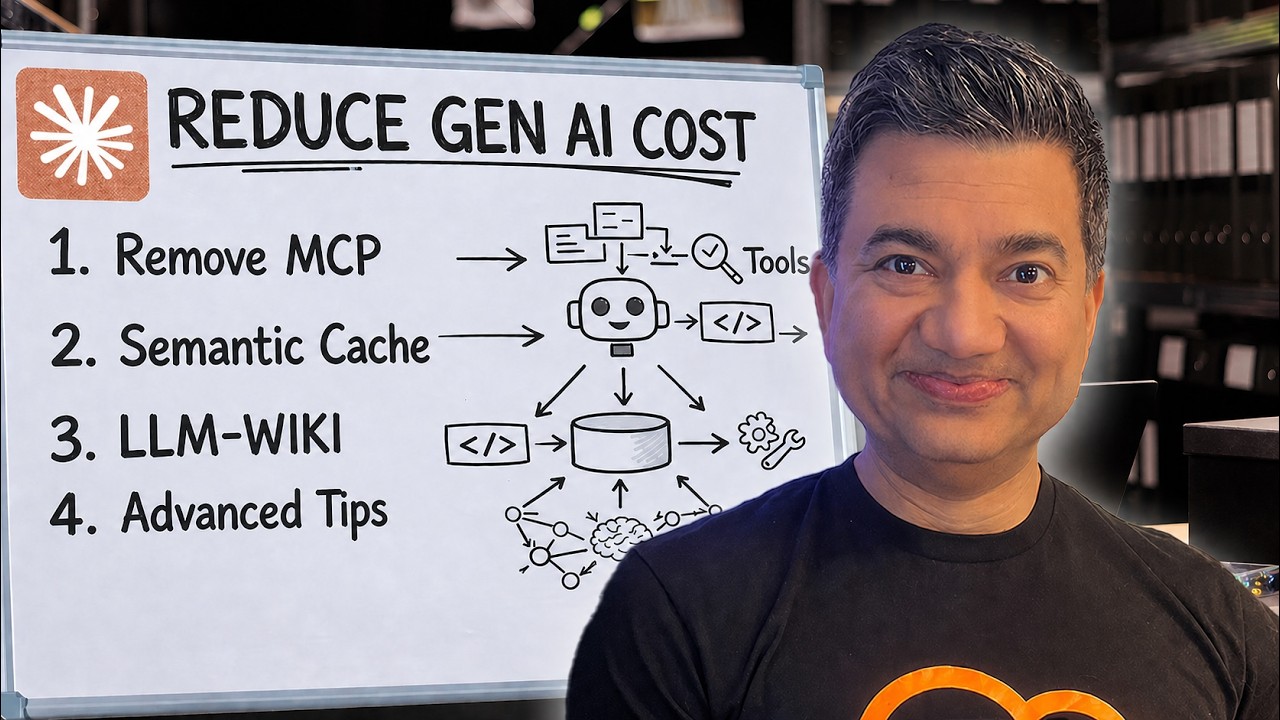
concept is coming up. It's impossible to keep up. If you have to pick three concepts that candidates should focus on for their jobs, what they would be? That's a great question. Um I feel like there's always just like 100 new concepts and it's hard to figure out which one you should really be focused on. But, I think the three that I can think of that are kind of proving their worth time over time, and I'll talk about them one by one. Uh so, first, MCP. Um as your viewers probably know, MCP stands for model context protocol. Um it was created by Anthropic, but then has been uh donated to the Linux Foundation and is now open source. Um MCP is basically a way for AI agents to be able to actually like access um tools like Gmail, like Slack. So, for example, you can um or Perplexity. So, you can have your Claude do deep research on Perplexity without moving away from the um CLI or from the text box. The reason why I think MCP is really important is because fundamentally uh what differentiates an AI agent from a chatbot is the ability to perform actions. Like, for example, the ability to book a flight for you if you want to trust it with your payment information. The ability to schedule meetings for you. Um the ability to act on behalf of you in like a different system like Discord or Slack. And MCP is the canonical way that is done. Um I also feel like for example, when I debug, um it is really useful to be able to use an MCP to connect my uh LLM with the actual uh API that calls that is showing like the logs and stuff instead of me like copy-pasting from like, "Oh, this is the dashboard like screenshot. This is what it looks like. What's wrong? " Um being able to have the MCP connect the LLM to like actually dig deep, look at the timestamps, like go click on stuff is really really important. So, as a result, I think my productivity has drastically increased after I started using um like MCP servers essentially. The second thing that I think is really important, like I mentioned, is RAG. So, RAG stands for retrieval augmented generation. Um RAG is basically a way a company or you can um take an existing model and then augment it or add your own knowledge to that model instead of just relying on the model's training data. So, I believe that RAG is super useful because um you know, everyone uses the same models, right? With some tuning. However, different companies and different people have different requirements and sometimes you need to train the AI on your own specific requirement in order to get a good response and not just a generic one that anyone who's searching ChatGPT or Claude can come up with. So, basically, being able to um just index your data, chunk and retrieve it correctly, um like give it relevant context can make a really big difference in if your AI is outputting garbage or if it's actually outputting results that are useful to you and your company. And the third one is evals. This one I think is actually very underrated. Um With how AI is structured, fundamentally, I think it's really difficult to actually have a objective way of evaluating if an agent is right or wrong. If you think about it, if you give it a query, um there it can go through many different paths and use many different tools or calls to get at an answer, right? So, if the answer is wrong, you don't necessarily know like why it's wrong. Like, as an example, I have encountered uh times when I gave it a query, it arrived at the wrong arrived at the right answer, but it did like go down like a rabbit hole and like went like this and eventually come here. So, that is a waste of tokens, it's a waste of time. That is also going to make it harder to debug in the future because it obfuscates the real issue. So, as a result, I think having a good evaluation system that not just only evaluates the end output, but also like evaluate like also evaluates every single step of the uh testing process uh sorry, AI and every single part module that you have in your system is really useful. And I believe that it's a bit underrated because I think evals are not as like, you know, exciting as like building a new AI agent or something. Right. But, I think in order to build scalable systems, even like teams of agents, it is extremely important to have like a systematic way to determine if an agent is truly performing the way that you expect it to. Mm. I don't know if I'm allowed to share this. Like, do you use GenAI tools like the MCP like you said just now and eval extensively in your day-to-day coding work or at this point it's mostly like experimental? So, I do a lot of like coding work pers- for personal projects. Um I have built RAG systems for me personally. I've also tried to do evals for me personally. So, um this is not just like me saying this is a concept like this is stuff that I have coded up and I have tested and I do think that these are the most important things. Got it. I really like your approach of um going and testing it out because uh let's say you are back in the job market as someone who's looking for a job, if they can do this stuff and showcase this in LinkedIn and their GitHub, that really elevates their profile from the other folks, right? Because most of the folks are just studying, but to my viewers, if you do whatever Maddie is saying, and then you showcase it, that really sets you apart because recruiters can see that you have put some effort in there. Regarding cloud, do you ever want to switch to cloud exclusively as in become an architect or become a cloud developer or you are more interested in just doing the coding part and you don't care about the infrastructure part? I personally have not thought seriously about switching over to be a cloud engineer, but there's definitely times where I'm debugging something and something in the pipeline breaks. I'm like, "Oh, I really wish I had more cloud knowledge. " So, I think just to become be a good well-rounded engineer, it is really useful to know cloud and know cloud skills. Got it. So
The Road Not Taken
Maddie, so you have experimented a lot. You tried different companies. So, if you have to go back to the start of your career, knowing what you know now, would you do anything different? I have loved working for every single company I've ever interned and worked full-time for. However, I do think there is value to trying different types of companies. So, as an example, I started My first ever internship was a very small like five-person startup. Then I moved to a mid-size business analytics company. Morgan Stanley, which is a bank. Then I moved to Microsoft, and then I moved to IBM and finally to Amazon before working at Google. So, I do think I've had most of the gauntlet in terms of size of companies. Mhm. Something that I do wish I had tried a bit more is I think more research-focused companies because I did do research in my undergraduate and I did enjoy it, but I never actually ended up applying any of what I learned to a company outside of the academic sphere. So, even though I really liked all the companies I worked with, I think if I had more If I could go back, I probably replace one of them with a more research-based company. Got it. One thing which is impressive is I didn't know you went through the full gauntlet, really. And like you said before, you are not afraid of rejection, which is such a difficult thing to realize. It took me 35 years. But let's say I want to talk tell young generation or you want to teach this skill to young generation, how can someone learn this? Uh this is a selfish reason I'm asking because my daughter is very intelligent, but she suffers from, you know, like she doesn't believe in herself and she's scared of rejection. So, how can you put your experience in a jar and give it to someone? Well, yeah, that's a great question. I myself I've mostly gotten over rejection, but it's something that still bothers you from time to time. Mhm. I think what your daughter is experiencing is something that I personally have experienced most of my career, which is imposter syndrome. Mhm. Imposter syndrome is defined as basically you always think that no matter what opportunities you get, no matter what awards you win, you always think that you are you don't belong, you're fake, you're going to get found out, etc. Um again, I maybe I'm projecting, but that's something that I have personally struggled with. I also think it's more common in women than in men. — Right, 100%. Especially in like the tech world. The way that I have thought about it to help me combat imposter syndrome is realizing is basically by talking with more people in the industry because everyone that you meet in the industry when they first meet you, they always present your their best self, right? They always like, "These are This is what I did. These are the cool things I've done. These are the papers I've published. " Um however, if you get to talk with people more and especially if you find like a mentor or mentees, I've come to realize that everyone most everyone to some extent has imposter syndrome. Yes. And the reason for this is because if everyone is putting their best face forward, you are always comparing your worst face to their best face, which is not a fair comparison. Right. Knowing that doesn't make my insecurities go away entirely, but I do think it frames it in a way that is more manageable and more realistic cuz I'm like, "Okay, even if this person is amazing, which most of the people that I talk to are, they still have some struggles. So, maybe their struggles are just different from what my struggles are and maybe their struggles are not something that they put explicitly online or something. So, that's how I have dealt with rejection and feeling like I didn't belong, just understanding that I'm not alone in this battle and also talking to more people. So, I genuinely believe that I like making friends who are in the tech world, not just because I can play board games and then be friends with him, but also because sometimes like they have experienced things that they can talk to me about and we can help each other become the best software engineers we can be. Love it. Maddie, how can people find you? I'm on most platforms now. You can find me at Maddie Zhang on YouTube. I'm also madeline. m. zhang on Instagram and TikTok. Um yeah, thank you so much for having me. Yeah, likewise. Thanks for coming. I'll give all the links in the description and have a great rest of the day. Thank you, you too.