GITHUB Copilot: Run your own LLM models!
2:54

GITHUB Copilot: Run your own LLM models!

That DevOps Guy 14.05.2026 5 789 просмотров 119 лайков

Machine-readable: Markdown · JSON API · Site index

Поделиться Telegram VK Бот
Транскрипт Скачать .md
Анализ с AI

Оглавление (1 сегментов)

Segment 1 (00:00 - 02:00)

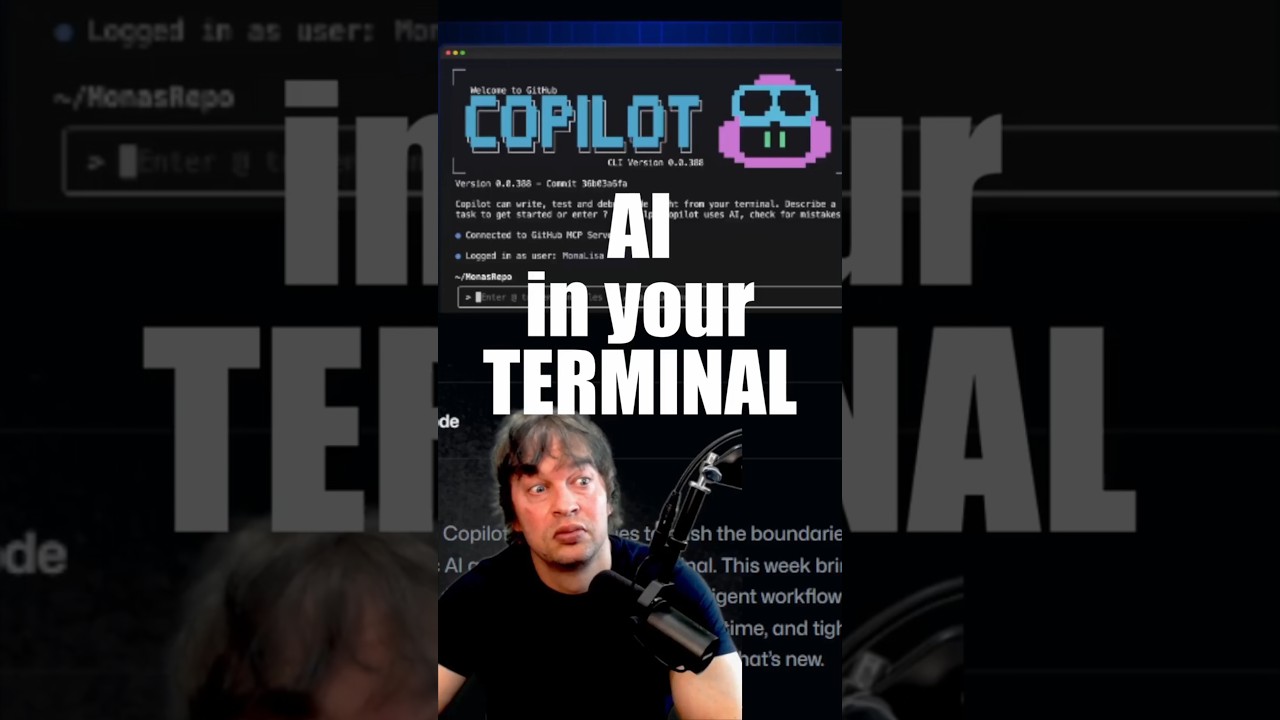
So, GitHub made a pretty cool announcement. The Cop-ilot CLI will now support local LLM models. In the past, with the C-pilot CLI, when you launched it, you were forced to sign into a GitHub account. Since the new release, GitHub authentication is now optional. It also means that they now support offline mode for air gap environment. So, you no longer need an internet connection. And the cool thing here is that GitHub Copilot CLI now allows us to connect to any model provider. So you can use your copilot subscription. You can connect to anthropic Azure Open AAI or any Open AI compatible endpoint. The coolest thing about this is you can now use your own LLM models using the GitHub copilot CLI. So if you're running something like O Lama or Llama CP or VLM or any kind of local model runner, you can go ahead and set Copilot environment variables like a base URL, an API key and a model. In this case, I'm using Gemma 4. In this example, I use Llama CPP and I use Docker to run a local model. With the Docker container running Llama CPP, I can then use the Llama server and start up a model on port 8080. And with that local model running on localhost port 8080, all I have to do is set the Copilot provider base URL. And I set that to localhost port 8080. After setting these environment variables, I can go ahead and run the Copilot CLI. And with the CLI up and running, you can see here that it references my Gemma 4 model. And it's also listed at the bottom corner. I can go ahead and ask a prompt. What is Kubernetes? I can immediately start seeing traffic in my Llama CPP container. And here we can see Copilot got an answer from our Gemma 4 model that we're running locally. So what are my thoughts about this? Overall, I think it's a great step for a company like GitHub to enter this space. The fact that they have documentations on bringing your own LLM model means that GitHub is now investing in this space, which is a good thing. Now I know Claude code CLI also has this anthropic base URL where you can point to local models and run local models like Gwen or Gemma but the reality is that I found this pretty garbage. This is because a CLI tool has to be aware of the model otherwise things like tool execution sub aents and context doesn't really work properly. Now, since GitHub has a formal document announcing that you can use your own LLMs means that they're invested in making their CLI work with local models, unlike Claude Code, which don't have documentation on bringing your own models, which gives me the vibe that Anthropic doesn't really like you to bring your own models. And personally, I think that this anthropic base URL just exists for their own internal engineers to use future models that are about to launch like Mythos. So overall, I think this is a good thing for GitHub. Personally, I would still use Open Code in the meantime to connect to local models just because, as I mentioned earlier, it's a huge investment to make sure your CLI can actually work with local models with tool execution. And Open Code has a large community behind it which kind of makes sure that this kind of stuff works. So, let me know your thoughts in the comments down below.

Другие видео автора — That DevOps Guy

Ctrl+V

Экстракт Знаний в Telegram

Экстракты и дистилляты из лучших YouTube-каналов — сразу после публикации.

Подписаться

Дайджест Экстрактов

Лучшие методички за неделю — каждый понедельник