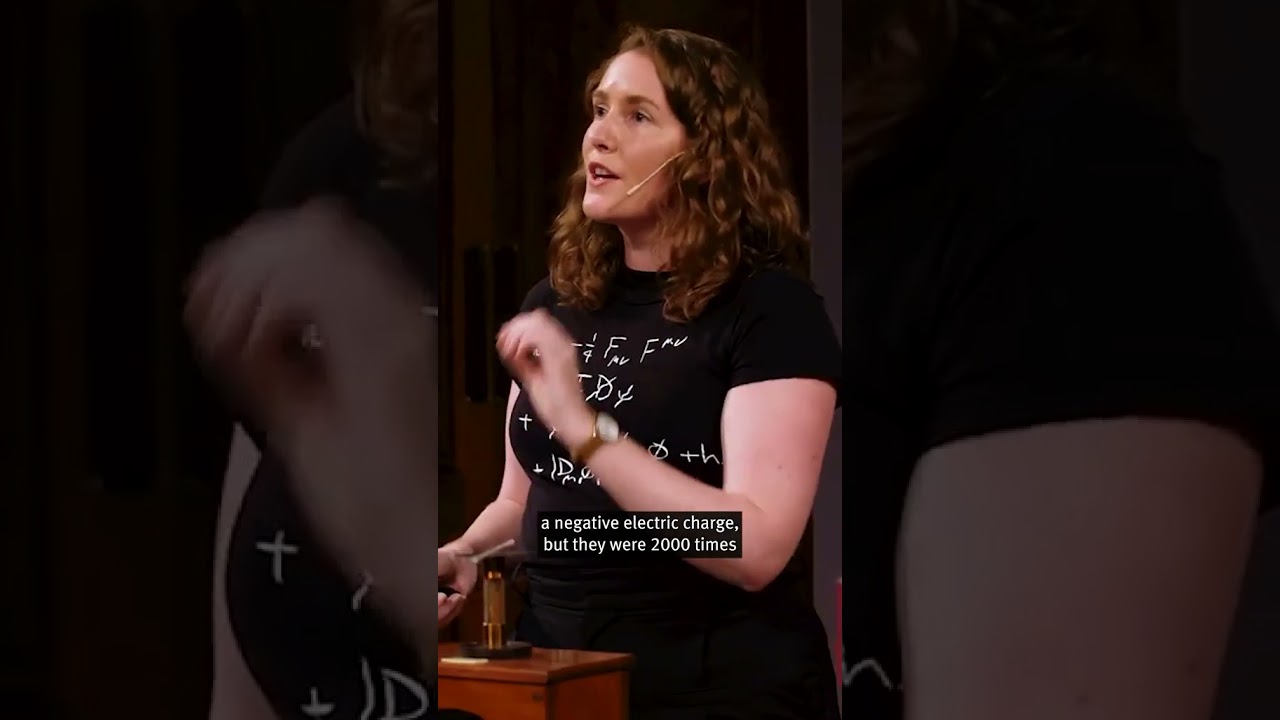
How electrons were discovered | Suzie Sheehy #shorts #sciencefacts #electrons #scienceeducation
2:18

How electrons were discovered | Suzie Sheehy #shorts #sciencefacts #electrons #scienceeducation

The Royal Institution 22.05.2026 12 946 просмотров 336 лайков

Machine-readable: Markdown · JSON API · Site index

Поделиться Telegram VK Бот
Транскрипт Скачать .md
Анализ с AI
Описание видео
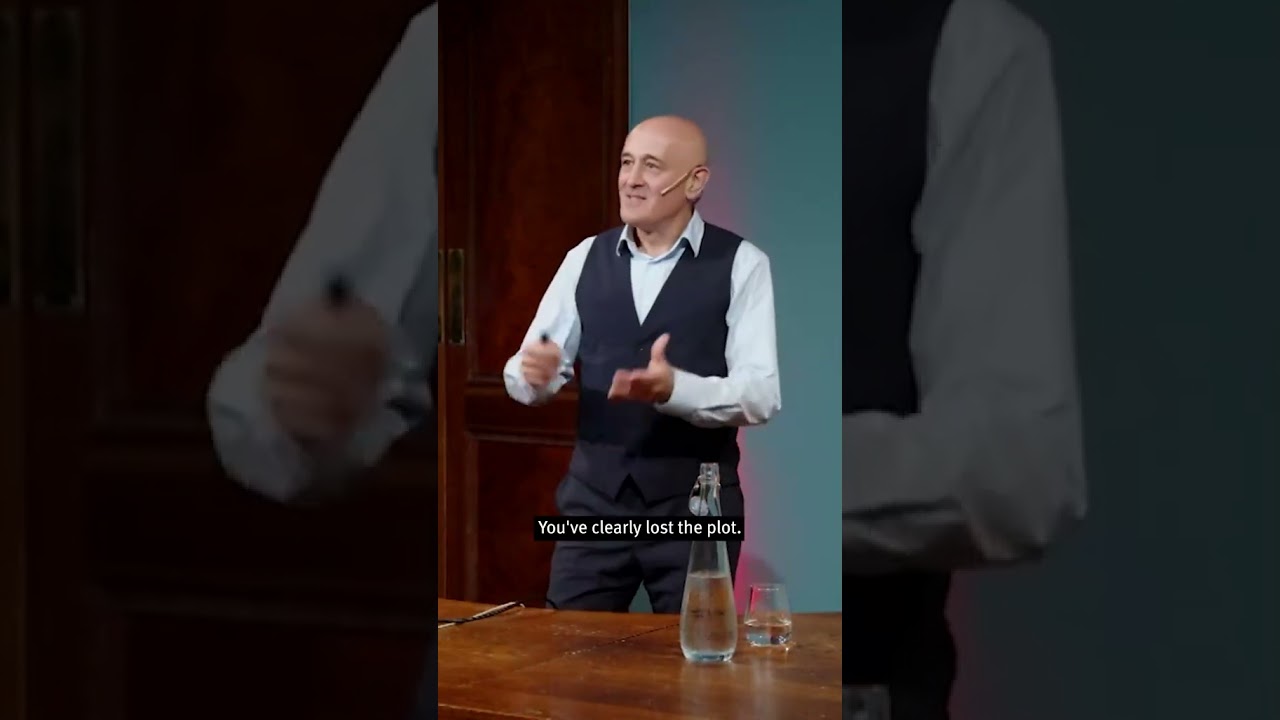
Physicist Suzie Sheehy brings to life one of science's most pivotal moments by replicating J.J. Thomson's groundbreaking experiment that revealed the electron. This demonstration, conducted with simple tools, vividly shows how atoms, once thought to be indivisible, are actually composed of smaller, fundamental particles. Thomson's discovery of the electron in 1897 fundamentally altered our understanding of matter and paved the way for modern physics. Sheehy's recreation makes this complex scientific history accessible and engaging, highlighting the power of direct observation and experimentation in scientific advancement. The experiment visually proves the existence of negatively charged particles within the atom, a concept that revolutionized scientific thought and led to further exploration of atomic structure. Watch the full talk for a deeper dive into this remarkable piece of scientific history. Join this channel to get access to perks: https://www.youtube.com/channel/UCYeF244yNGuFefuFKqxIAXw/join Subscribe for regular science videos: http://bit.ly/RiSubscRibe
Оглавление (1 сегментов)

Segment 1 (00:00 - 02:00)

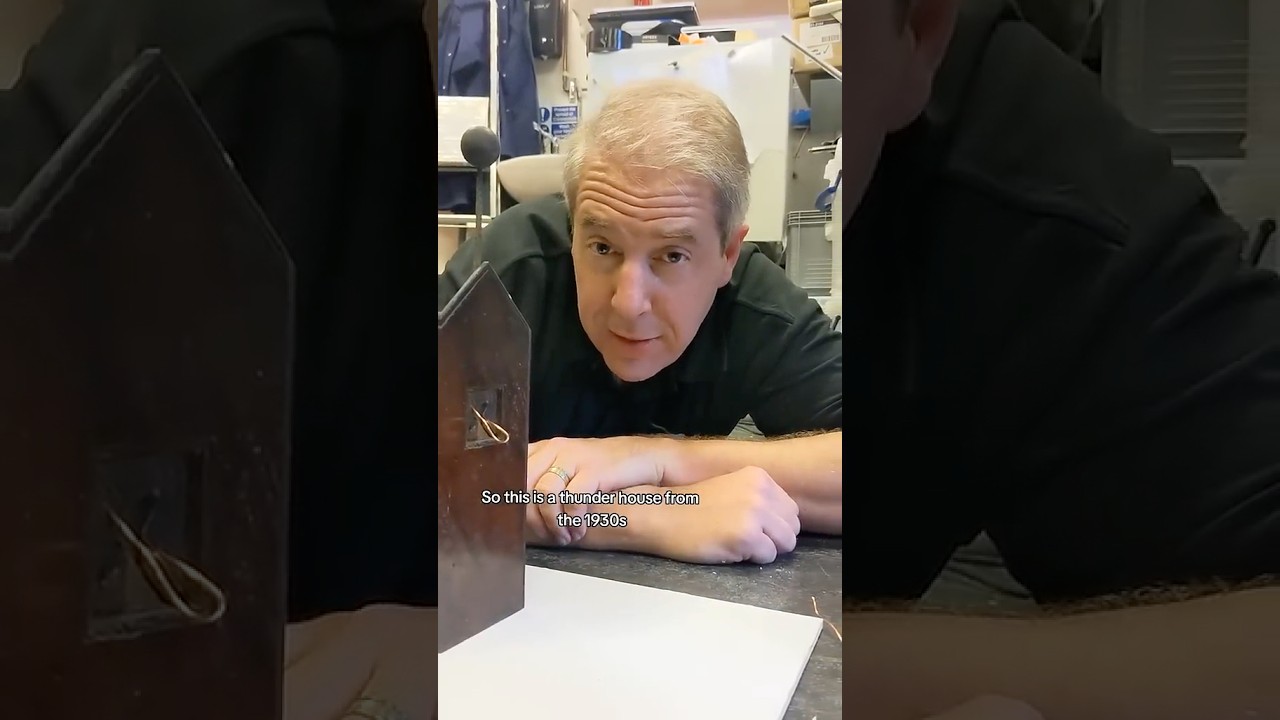
So, I've got just a perspects rod here and this um cloth which hopefully will charge the perspects rod up. So, this is called an electroscope this device and it just it has sort of this metal plate on the top. Um there's a metal rod coming down and hanging off the metal rod is two thin leaves of foil. Um and that would usually be big gold or this one looks silver in color so it might be I don't know some other thin highly ductile metal. Um, and when you charge up the electroscope, there we go. I'll just leave that placed on there. Hopefully you observed that. Um, the people in the front hopefully can see what happened was this. The leaves did this. Yeah. They spled apart. Um, and so by measuring, so you could charge up one of these and when you put a something that was charged onto the plate in a version of this, over time the leaves would fall back down. um toward each other. And if you sort of measured how long that took, you could measure the charge that was being deposited onto the electroscope. Um and eventually they put sort of meters on them so that you could call it an electromemeter, right? To actually measure it over time. Um so I'm very glad that worked from the collections. Thank you Charlotte for who's our collections manager for bringing it up. Um so this is the kind of equipment that JJ Thompson was working with. Now what he found was that um this these cathode rays um had a normal electric charge of a negative electric charge but they were 2,000 times lighter than the hydrogen atom which was the lightest thing they knew at that time. What he discovered was the electron as we now call it. and Thompson um announced and did this series of experiments showing the charge and the mass and the different um uh bending with the electric and magnetic fields in this very theater perhaps at this very desk that I'm standing at. So, it is quite an honor to stand here and explain his experiments poorly, I'm sure. Um uh unfortunately, I don't have his exact device to show you the exact experiments. Um, but it's quite an astonishing thing that with such a simple apparatus made from glass and a simple electroscope made from sort of a wooden box and some bits of metal that you could discover the first subatomic particle, the first particle smaller than the atom. This

Другие видео автора — The Royal Institution

Ctrl+V

Экстракт Знаний в Telegram

Экстракты и дистилляты из лучших YouTube-каналов — сразу после публикации.

Подписаться

Дайджест Экстрактов

Лучшие методички за неделю — каждый понедельник