Go to https://ground.news/rationality to stay fully informed on breaking news, compare coverage and avoid media bias. Subscribe through my link for 40% off unlimited access this month.
To support us on Patreon (thank you): https://www.patreon.com/rationalityrules
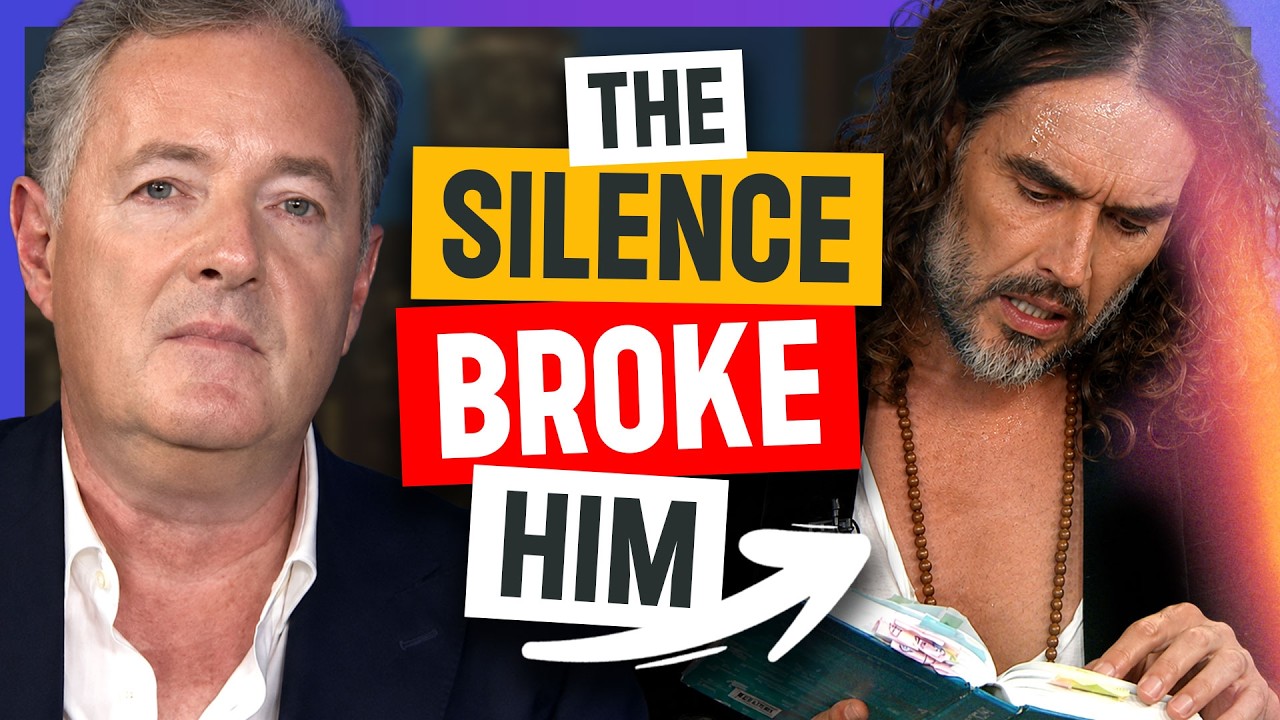
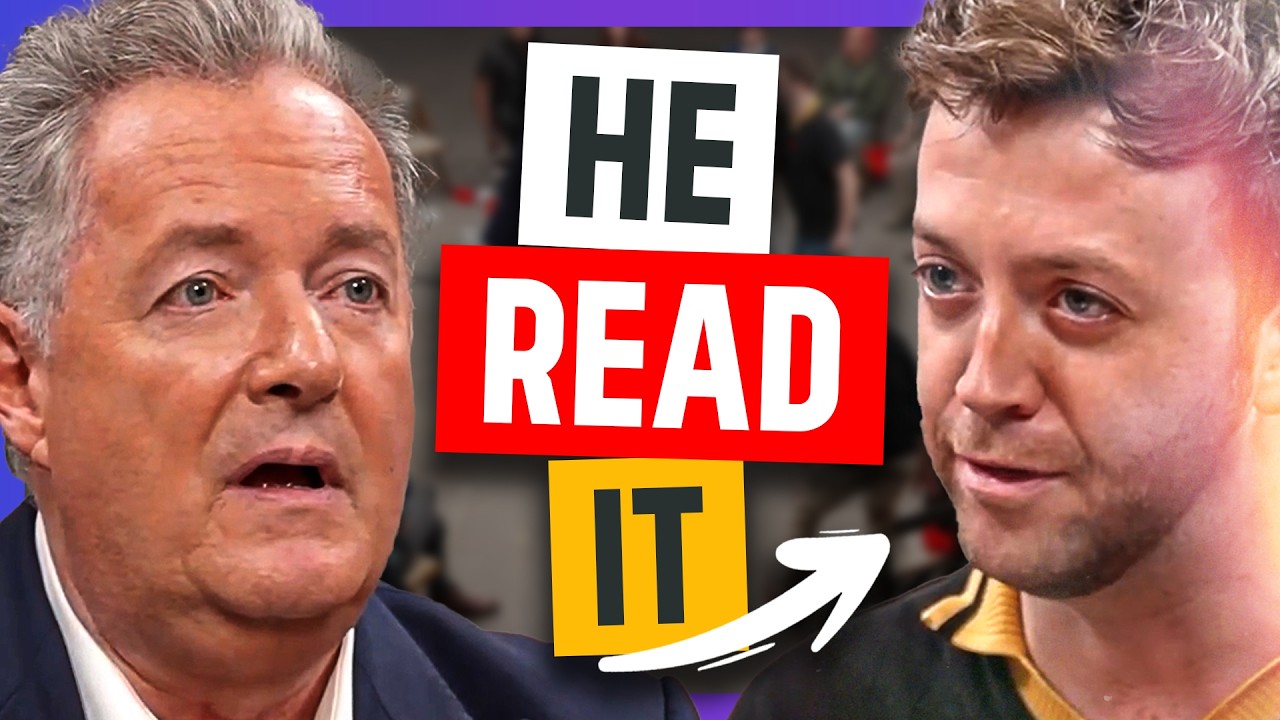
Steve breaks down the 35-million-view Russell Brand Bible fumble — and the 40 years of broadcasting training Piers Morgan had to ignore to make it happen. Brand walks into the interview armed with pre-emptive accusations, bulverism, and the single greatest sentence ever spoken on live television: "I'm not preempting your question. I'm preempting your essence." Piers absorbs all of it without flinching, quietly returns to the same question he asked twenty minutes ago, and then does the one thing the entire industry trains you never to do.
The silence is the technique. The fumble is the proof. You have to see how deliberately Piers refuses to rescue him.
To support us through PayPal (thank you): https://www.paypal.me/RationalityRules
To visit the DEBUNKED card game website: https://www.debunkedcardgame.com/
To follow Steve on Facebook: https://www.facebook.com/RationalityRules
To tweet with Steve on X: https://twitter.com/RationalityRule
--
Original - "Massive GRIFTER!" Piers Morgan Grills Russell Brand On Allegations, Prison, 'Truth' & Religion: https://youtu.be/kv5tXkmEMyo
Should I go back to asking you a question about your Bible? — Yes, if you want to. — Thank you. That was that the one you took into court? — You're the very one. — Okay. What was your thinking of taking it into court? And what you were seeing looking at some passages. What were the relevant passages for you? — All right. Thank you for asking me. — Thank you. That didn't hurt, did it? — A little bit. Um, it was this from Isaiah. It says here the word that the verse that I was looking at that day was not this I can't actually find the verse that I had that day. Napoleon Bonapart once said never interrupt your enemy when he is making a mistake. It's a maxim. It's wellknown. It is when wielded with full discipline one of the most powerful rhetorical moves available to anyone willing to hold their nerve. And what you've just watched and what we're going to dissect in detail is one of the most devastating instances of it in a broadcast interview. A guest digging his own grave painful second by second while the man across the table refuses to lift a finger to help. — I'm not preempting your question. I'm pre I'm preempting your essence. — Why hello my fellow apes. I hope you are well. Today we're going to be looking at Piers Morgan's mega viral interview with Russell Brand. — One 2-minute clip of Brand flicking through his Bible has now been viewed 35 million times so far. And the whole exchange has sparked a huge debate about whether or not his conversion to Christianity is sincere. You see, Bad Boy Brand is on a book tour promoting his dubious how to become a Christian in seven days with the Bible he carried into court while facing sexual offense charges, which he denies sitting on the desk between them. What follows is a mediatrained showman meeting a 40-year veteran off the interviewer's chair. A sermon meeting a question that refuses to go away. A guest who wants to talk about anything except the book in his hands. And a host who has realized for the first time in his career that sometimes the most powerful thing he can do is shut the up. — As my team has taken great pleasure in telling me it shows how great I can be when I just shut up. — Now, we could just play the two minutes that everyone's seen, but the silence is the climax of something that's worth appreciating. minutes of peers refusing every bay the brand sets, every detour the brand opens, every accusation the brand levels. The clip is the payoff. The technique is what we're here for. So that's where we're going to start with good old preaching. And in Christ, there is the potential that you yourself can live with the odd paradox of your brokenness and the sort of failings of your life and the mistakes you've made and the errors, but also becoming whole in that whole in that. For there even to be justice or innocence, these concepts and words we're banding about, there has to be a god or you can't have those concepts. — So brand opens in full sermon mode. The vocabulary is theological. The cadence is pulpit and the structure is typical preacher. Start with our shared brokenness. Root us through Jesus and land on the necessity of God. It's smooth. It's practiced. And it's designed to sound profound enough that you don't notice the second move. The bold metaphysical claim slipped in at the end. — There has to be a God or you can't have those concepts. — Justice and innocence, he assures us, cannot exist without God. Full stop. No argument offered. Just asserted in the tone of someone who would be pretty disappointed if you needed it to be explained. And here's where you would expect a combative interviewer to pounce. That is a huge claim. Whole libraries of secular ethics exist precisely to dispute it. But Pier doesn't bite. And that is the first thing that's worth flagging. Piers is a Catholic. He tells us this nearly every other episode. — As a Catholic, I'm a Catholic. I was — raised a Catholic. — And he's been long an opponent of all things atheism. — You know, my big question for all atheists, well, is okay, you don't believe in God? But what was there before the Big Bang? — If God doesn't exist, who wrote the Bible? Checkmate, atheists. — So, he's not particularly inclined to defend secular moral philosophy. And more importantly, he is sharp enough to know that is not the thread to pull. The metaphysics is a tarpit. It always is. It always has been. It always will be. Brand wants to be in that tarpit. Pier has somewhere better to go — or you can't have those context. — You took probably this Bible actually, but I think it was this one you took into court, wasn't it? — Here's a story where you would expect the facts to just speak for themselves. Trump threatens to cut off all US trade with Spain over refusal to use military bases in Iran war. You see, Spain declined US military use of its bases for strikes on Iran. Trump threatened a full trade embargo. — So we we're going to cut off all trade with Spain. We don't want anything to do with Spain.
Segment 2 (05:00 - 10:00)
— And so Prime Minister Shan says responded with three words, no to war. Simple, right? And yet, ground news shows 442 sources covering this story. 61 left, 62 right, and 109 centrist with framing so different you'd be forgiven for thinking that they were reporting from separate planets. This level of insight is only possible thanks to Ground News, a website and app designed to make reading the news easier and more datadriven. Every day, they gather thousands of news articles from all across the world and organize them by story. with each coming with visual breakdowns of reporting bias, reliability, and ownership to give you a cleaner sense of how the news is being framed. Let's return to our story, and you can follow along at ground. news/rationality. The Hamilton spectator, leaning left with high factuality, leads with Sanchez as the protagonist. Spain's Sanchez stands firm on opposition to war in Iran despite Trump's trade threat, warning the conflict risks playing Russian roulette with millions. One courageous leader holding the line against Washington. Then there's WLT report far right with low factuality. Breaking. President Trump cuts off all trade with Spain. Trump is tired of being treated unfairly. And Spain's PM is of course dismissed as their leftist PM. No geopolitics, no alliance considerations, no nuance, just a victory lap. And Euro News centrist with very high factuality simply reports no to war. Sanchez reaffirmed Spain's stance on Trump's Iran campaign. No heroes, no villains, just what happened. Same event, three completely different stories. And without Ground News, most people would only ever see one of them. If you want to start seeing the full picture for yourself right now, you can get 40% off Ground News's Vantage plan at ground. news/rationality or scan the QR code on screen now. You'll be supporting independent media and indeed this channel at the same time. Thanks. — Or you can't have those concepts. — Probably this Bible actually, but I think it was this one you took into court, wasn't it? — Notice what Pierers does here. Brand has just floated up into abstraction. Broken souls, divine concepts, cosmic justice. And Pierers reaches up, grabs his ankle, and pulls him straight back down to earth. from the nature of innocence to did you bring this specific book into this specific courtroom. He's converting a sermon into evidence. Abstractions float free. Concrete actions have to be defended. — Was this one you took into court, wasn't it? — Some also think you're not listening. Like that's why like I was — all righty. Our first deflection lands instantly. It's reflexive and it's revealing. The question is about Brand, the Bible, the core, a specific decision that Brand made. And within a second, Brand has flipped the subject onto Piers's attentiveness. He's accusing instead of answering. — You're not listening. Like that's why like you're literally talking about — But like, but what I mean by that is that the that you're the This might sound a bit I don't know, woo, hippie, that the sort of the energy is a kind of like you talk this Bible into court and I feel like I already know where that thread's going. Something special is now happening here. Brand is now poisoning the whale against a question that has not been fully asked. He's preemptively framing Pier's very inquiry as a trap complete with imagined hostile intent. — I already know where that thread's going. — It's a remarkable move when you slow it down. Brand is salting the ground around the question so that it will arrive sounding cynical, gotcha flavored. Where's it going? A snappy r and it is super effective. Pierce refuses to let Brand argue with a phantom. If you're going to attack a question, you have to name it. He's making Brand own the projection because the moment he has to articulate the bad faith question he's accusing Piers of asking, he becomes responsible for it. Where's it going? — It's going to go, well, you know, like holding. What did you think there was going to be a truth by that? — So, Brand obliges and speaks Pier's words for him. He invents a snide, dismissive line of questioning, performing it in a sneering register, and then asks Pers to confirm that yes, this is what he was really about to do. It's a straw question. Building a hostile version of the interview in his own mouth so that he can react to it as if it were real. — What did you think that was going to be achieved by that? And it's like, it's cynicism. That's what it is. It's cynicism. I think you're cynical. — Pierce tells him plainly, that wasn't my question. To which Brand responds, not by asking what the actual question was, but by doubling down on the diagnosis. Cynicism, that is what it is. The accusation is now a verdict. Pier has been psychized, found guilty, and sentenced all without ever getting to ask the thing he wanted to ask. — Cynicism. — It's a red herring of the cleanest kind. The Bible question is gone. It's been buried under an argument about Piers's inner posture, his motives, his alleged
Segment 3 (10:00 - 15:00)
spiritual deficiency. Now, with almost every other interviewer, this would be the end of it. The thread would never come back. The interviewer would either get defensive or change topic or try to prove that they're not cynical and the moment would be lost. But this is Piers Morgan and whatever you want to say about him, he is very, very good at his job. — Cynicism. I think you're cynical — about what? — I'm not preempting your question. And I'm pre I'm preempting your essence. I think you're cynical about human beings. yourself. — Not at all. — Stop and savor that for a moment because it's one of the most extraordinary admissions you'll ever hear in a televised interview. Brand is openly telling Pierers and the audience that he is not engaging with the question. He is engaging with the man's soul. — I'm preempting your essence. He has appointed himself prosecutor of Pier's inner life and he's claiming jurisdiction to rule over it before the question has been understood. This is bulverism in its purest, most undiluted form. Bulverism, as a reminder, is the rhetorical move of skipping past whether someone's argument is true and going straight to why they're making it. You diagnose the claimment rather than refuting the claim. And once you've diagnosed them, the claim itself becomes well, irrelevant because everyone knows it was made in bad faith by a damaged person for cynical reasons. — I think you're cynical. — Brand isn't hiding any of this. He's announcing it. He has openly declared that he is psychoanalyzing peers instead of answering him. And he's pretending that this is a higher form of engagement, as though reading someone's essence is more honest than, you know, addressing their question. And look, there is something, what should we say, almost theologically odd about this whole performance. Brand is here ostensibly as a Christian. He brought a Bible into court. He's now being asked gently to speak about it. And rather than talk about Jesus, he is doing absolutely everything he can to avoid the subject. He's interrogating the interviewer's spiritual condition instead of revealing his own. For a man who supposedly just found God, he is remarkably uninterested in talking about him. — I think you're cynical about yourself. — I'm one of the most positive people you'll ever — I don't think you believe that you're capable of greatness. I don't think you're I've already achieved greatness. — Oh god, darling. I don't think you think you're capable of participating in meaningful change or even meaningful conversations. — The accusation grows. It started as cynicism. — Now it's expanded. Pier doesn't believe he's capable of greatness. I don't think you believe that you're capable of greatness. — Doesn't believe that he's capable of meaningful change. — I don't think you think you're capable of participating in meaningful change. — Doesn't believe he's capable of meaningful conversations — or even meaningful conversations. — The deflection has matured into a full spectrum character assassination delivered by a man who was simply asked to open his Bibles. — Indeed, darling. Brand has moved past disagreement into pity. He's positioning himself as the spiritually evolved one, looking down with sorrow at this poor, cynical creature who can't even imagine his own greatness. It's theater. But there's something else happening here that's worth emphasizing because it's subtler than the bulverism. Brand is also quietly redefining what greatness is. When Pierce says, — "I've already achieved greatness. " — Brand doesn't engage with that claim, does he? And he doesn't ask what Pierce meant. No, he just rolls straight past it and continues as though Piers hadn't spoken. The implication is unmistakable. Whatever Pierers has achieved doesn't count. Real greatness, the kind that Brand is talking about is something else, something spiritual, something brand presumably has access to, and Pier definitely doesn't. So, Brand is doing two things in the same breath. He's psychoanalyzing peers as deficient and he's setting himself up as the only valid arbiter of what that standard even means. You're cynical. You're incapable of greatness. You're incapable of meaningful conversation. Oh, and by the way, I get to define all of those terms. It's a closed loop. There is no answer that peers could give that would satisfy it because brand owns both the question and the rubric. Now, this should be working. By every conventional measure of how interviews go, this should be effective. The interviewer is being painted into a corner, accused, diagnosed, dismissed. Most hosts at this point would be flustered or get defensive or fight back or maybe even capitulate. The original question, the Bible, would have long disappeared under layers of psychoanalysis. — You took probably this Bible actually, but I think it was this one you took into court, wasn't it? — But Pier isn't biting. He is too damn good at this. He's calm. There's no raised voice. There's no counterattack on Bran's character. There's no scrambling to prove his own stature with anecdotes and credentials. He's offering oneline corrections. — Allow yourself. Not at all. — And then waiting. He's letting Brand keep talking.
Segment 4 (15:00 - 20:00)
He's letting Brand keep stretching, keep escalating, keep digging. — Oh, God, darling. — Because Pierers is relentlessly tracking the dialectic. The question is still there. The Bible is still on the table. And when Brand finishes the sermon, Pierers is simply going to ask the question again calmly, quietly, as if none of this ever happened or even meaningful conversations. I think you think the best that Pier Morgan can do for himself is to host hideous spectacles of conflict about real serious awful dreadful stuff. — The escalation continues. Not content with diagnosing peers as cynical about humanity and cynical about himself, Brand now extends the indictment to the show itself. And all right, maybe there's a point here. — Girl, don't you have a Beyonce album to get pissed off because she's wear she's in a cowboy outfit. Oh, she got an American flag on. She thinks she's a country singer. I'm sure you've got a few videos to do about — that, but whatever. — But you know, this is the platform he is currently sitting on. The platform on which he is pedalling his book. — The host hideous spectacles. Earlier he poisoned the question and now he's poisoning the venue. He's contaminating the very ground beneath his feet, painting the entire enterprise as morally bankrupt before the question can land. If the show is a hideous spectacle, then any tough question that comes from it can be dismissed as part of the circus — about real serious awful dreadful stuff. — Why are you here then? — A sublime simple counter punch. If this is a hideous spectacle, then why are you on it? It's a consistency test and it lands with quiet weight. Remember, Brand has come on this show in large part to sell his book, How to Become a Christian in 7 Days. He's here because Piers Morgan has an audience and he wants to access it. Which means the moral high ground that he's been claiming is built on a foundation he can't actually defend without exposing the trait. — Well, I'm here actually because I don't mind trying to learn a little bit from you. The laugh is the tell. It's a pressure release laugh. The laugh of someone who's been caught and needs to find a way out. And the way he chooses is flattery. I'm here to learn from you. Suddenly, Piers is the teacher. Brand is the humble student, and the moral hierarchy stays exactly where Brand wants her. But think about what he's actually saying. A moment ago, the show was a hideous spectacle of conflict about dreadful stuff. hideous spectacles of conflict about real serious awful dreadful stuff — now. He's here to learn from the man hosting it. — Don't mind trying to learn a little bit from you. — Both can be true technically. Maybe he's here to learn how to sell his book on a platform that he considers degrading, but that's not the noble interpretation he's leaning into. You prepared to come on something you categorize as a hideous spectacle. — Pierce swats away the flattery. He restates the contradiction in plain terms. This is the same discipline he's been showing the whole time. Apply gentle pressure. Don't take the bait. Let the other person's words do the damage. — No, I think it's a hideous spectacle. Say for example, the stuff where there's multi panels and people are like really screeching each other maybe about trans issues or whatever. And I don't know, maybe there's something cathartic in it. Maybe. I don't and also I don't want to like lay all that on your shoulder. — The retreat is in full swing. The hideous spectacle was simply what Piers Morgan does for a living. Now it's been quietly relocated away from Pier, away from this show and onto the other shows, the other formats, you know, the multi-panel shows that brand isn't in right now. To put a name to this specific backpedaling, this is a Mott and Bailey. The original accusation was sweeping. Yet the moment it was tested, the very it shrank to something narrow and conveniently elsewhere. — And also, I don't want to like lay all that on your shoulder. — Well, this is a polite withdrawal. He's giving Pier a face saving exit, but really he's giving himself one. He's quietly stepping out of the circus that he just accused Pierce of running and pretending that he was never pointing at him in the first place. And through all of this, through the venue poisoning, through the laugh, the flattery, the retreat, Pier is still doing the same thing he's been doing this whole interview. He's listening, he's testing, and he's still got his eyes on the book in front of brand. — And also, I don't want to like lay all that on your shoulders. I'm just saying I don't think that's the right way for us to be stewarding the culture. And I think we could do better. And I suppose if to really go into it, what I'm I think is this is a person I could probably learn from and benefit from, but it would there'd have to be trust. And it's hard to trust because I sometimes think you're too caught in the world that you used to be in. And it — Oh boy. The conversation has shifted again. Brand has now repackaged the entire encounter as a question of trust.
Segment 5 (20:00 - 25:00)
The question has stopped being, "Did I do something wrong? " or "What does my Bible say? " It's now, can I, Russell, find it within myself to trust you, Pier? The accountability has been inverted. The man being interviewed has put the interviewer in the hot seat. And the charge is that Pier is too contaminated by his old world to be worthy of Bran's openness. And let's just name what this is for what it is. Brand is convinced that he's succeeding brilliantly at the only goal he has right now, which is to point the conversation anywhere, absolutely anywhere at all. than you know the Bible that's right in front of him — because I sometimes think you're too caught in the world that you used to be in and it — can I go back to asking you a question about your Bible — just brilliant absolutely brilliant one sentence no edge no exasperation no with respect framing no theatrical sigh has sat through the cynicism accusations the essence preempting the venue poisoning the trust deficit the it scares me a bit and he simply lets the whole character trial expire. Just a very quiet return to the question that was asked minutes ago. This is the part that deserves real credit because remember Bran's entire strategy has depended on Pierers taking the bait. Every accusation was an invitation to argue about Pierers. Every detour chase. And Pierers has done none of it. He's let the smoke clear. He's kept the original pressure point in his back pocket the whole time. And now he's calmly placing it back on the table. — Should I go back to asking you a question about your Bible? — Yes, if you want to. — Thank you. — It's subtle, but Brand is still fighting. He's giving us permission. Can't you see? As if, you know, the last several minutes were a necessary spiritual exercise that Pierers has now been graciously allowed to leave. As if returning to the question that Pier asked in the first place is a small indulgence that Brand is willing to grant. It's a tiny tell, but it is a tell. He is still acting as if he is in charge of the agenda. He isn't. — Thank you. That was that the one you took into court? — You're the very one. — Okay. What was your thinking of taking it into court? And what you were seeing looking at some passages, what were the relevant passages for you? — Let's appreciate the construction of this question. There is no provocation in it. There's no setup. There's no gotcha or even hostility. It's neutral. But this is precisely what makes it lethal. Because the question, stripped of all of its drama, is now an invitation for Bran to do one thing and one thing only. Actually demonstrate that he knows the book that he carried into the courtroom. There's nowhere to go. There's no cynicism to accuse, no essence to preempt, no oldworld contamination to diagnose. There is only the Bible, the question, and Weather Brand can answer it. What were the relevant passages for you? — All right. Thank you for asking me. — Thank you. That didn't hurt, did I? a little bit. — And just like that, it's as awkward as a boner at a funeral. Brand's calm thank you is faint gratitude as stage management. The kind of ceremonial flourish that you offer when you want the room to feel that something sacred is about to happen. And then the page turning begins. Pierce, for his part, allows himself one small jab. Thank you. That didn't hurt, did it? and then immediately closes his mouth and keeps it closed for what is about to become one of the most devastating silences of our time. And so what we're going to do is sit with the next part in full with no commentary from me, no interruptions because the technique that Pierers deploys here only works if you experience, you know, the whole thing as it was experienced by the audience as it unfolded with no escape hatch. What Bran does and what Pierers refuses to do are equally important. Once we've done that though, then we'll come back and break down the details. So, I don't know if I can say this, but enjoy. — All right. Um, it was this from Aiah. You're right. Be did say, you know, be chilled. Sometimes I lose the chill, man. It's pretty Is this They don't like that, do they? In the old gallery. But remember, you just said it's a hired spot. This is from Isaiah. Excuse me.
Segment 6 (25:00 - 30:00)
It says here The word the verse that I was looking at that day was not this. I can't actually find the verse that I had that day. But this is good enough. — I mean my word that was bloody brutal. The first time I saw this, I had my hand over my mouth dying from secondhand cringe. — Oh god, darling. — The gym from the office look that Pier made at the camera was, whether he meant it or not, comedy gold. It turns out that the best piece of journalism that Piers Morgan has ever done is the sound of him not making a sound. So, embarrassment aside, what did we actually just witness? It's a quintessential example of Napoleon's maxim, never interrupt your enemy when he is making a mistake. It's counterintuitive in that it's instructing you not to take advantage of your adversar's blunder. Because let's face it, when your opponent stumbles, every instinct in your body says now. Now is the moment. Now's the time to pounce, to twist the knife, to make sure the blood spills. But the maxim is telling you to do the opposite. Rather than punching them while they're already midfall, keep your hands to yourself and let gravity finish the job. — They don't like that, do they? In the old gallery. — Brand was tumbling. He was flicking through pages, breaking the fourth wall, scrambling to find a verse he couldn't find. It's a car crash. And so ask yourself, what possibly could Pierers have said to make it worse? Because the answer is nothing. Anything that Pierers did in that moment, any word, any expression, any take your time would have been a hand reaching out to interrupt it. And no, the gym moment doesn't count. It offered Brand nothing to latch onto. But here's what makes this hard. And here's why you almost never see it pulled off. The other instinct of any interviewer in this situation is to rescue, to get rid of the silence, because the silence is unbearable and as is taught in the industry, terrible for ratings. as Pierce himself said days later. — But in that moment, the natural instinct of any interviewer is to feel very uncomfortable about silence. We call it in the trade dead air and we're taught to fill it immediately with something, anything. So in that moment, Pierce had two voices in his head. One was saying, "Go in for the kill. " The other was saying, "Fill the air. Say literally anything. This is unbearable. " And both of them, if obeyed, would have been a mistake. They would have taken the shovel off brand. They would have given him something external to react to an exit ramp out of his own collapse. I mean, put another way, whether you punch him or save him, you're interrupting the fool. Pers played this one perfectly. Napoleon would have been proud. One 2-minute clip of Brand flicking through his Bible has now been viewed 35 million times so far, and the whole exchange has sparked a huge debate about whether or not his conversion to Christianity is sincere. Now, here's what's strange about this. Brand is mediatrained to a level that very few people on Earth can match. He understands optics. He always has. He understands cameras. He understands that clips can go viral. And so, he must have known on some level while this was unfolding that this was going to be carved up and posted and replayed tens of millions of times. And yet, he kept going. He kept fumbling. He even tried to manage the audience through it, cracking little aside, turning his own demise into a shared joke, hoping the room would bail him out. Thank you. That didn't hurt, did it? — A little bit. — And honestly, for me, this moment is actually one of the most persuasive pieces of evidence that Bran's Christianity is genuine rather than a grift. I'm serious. I mean it. Because, as said, Brand is well aware of the optics. He knew how this was going to play out. And the moment he realized he couldn't find the verse, he knew that the media savvy move was to shut the book to smile and say, "You know what? I unfortunately can't find this specific bookmark at this moment. " That's it. That's all he had to do to save himself from utter destruction. Any pundit with half of his experience would have seen that exit and they would have taken it. But he didn't, did he? He kept flicking. And so what unfolded by my estimation is something you actually see in genuinely devout people fairly often. A complete indifference to how the search looks compared to whether the search succeeds. The material reality of the room if you will recedes in that moment for Brand
Segment 7 (30:00 - 31:00)
all that was in front of him was the holy book. And that is the signature of a man who's been reading the thing in private and has now been asked to perform it in public and has discovered that those are very different exercises. Or to be fair, it's all a grift. I don't actually know for sure. I have suspicions either way, but I see this viral fumble at least as paradoxically evidence in favor of a true conversion. Anyhow, Brand went on to preach, don't worry, we're only going to tolerate a bit of it. people that patted me down for secur Russell Gizer just 50 years old just some normal geyser patted me down and that for weapons or I know sharps and uh I'm going to have to touch your hair now you're not going to like this and he went the whole country is behind you mate whole country's behind you and I felt very encouraged — again what a scene strip away the page flicking the bulverism the venue poisoning the trust deficit the darling ing. Strip away all of it and what you're left with is one man who refused to let go of one question. Pier had every chance to rescue Bran. He attack him. And yet he did neither. He just held the line, kept his hands to himself, and let the maxim do its work. Never interrupt your enemy when he is making a mistake. So that's the lesson. Restraint isn't always weakness. Sometimes the kill is the silence. It didn't hurt, did it? — A little bit. — Anyhow, as always, thank you kindly for the view and an extra special thank you to everyone who supports the channel, including today's sponsor, Ground News.