Have NordVPN watching your back online and get a HUGE discount: https://nordvpn.com/tierzoo
Thank you for your patience, this video took many months to produce!
Video sources:
Getty Images
Pond5
Nature Picture Library
Biopixel
Viralhog
Storyful
Huge thanks to my supporters over on Patreon! You can support my work here: https://www.patreon.com/c/TierZoo
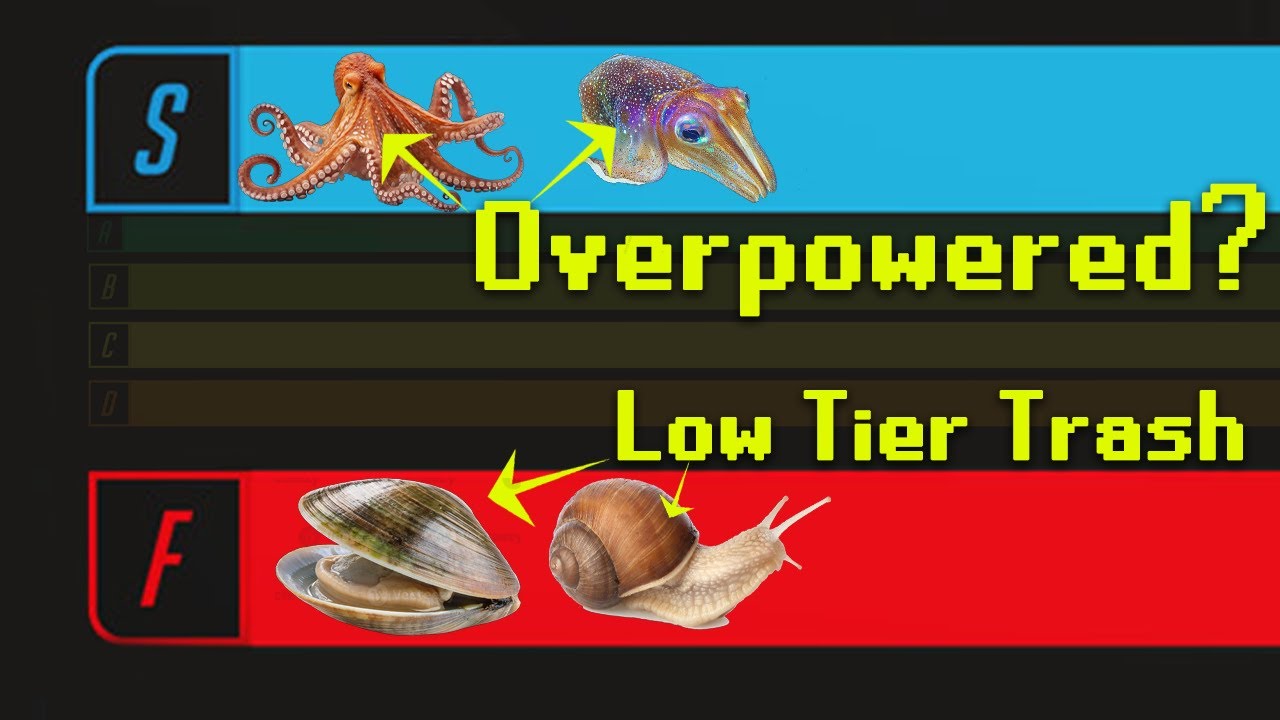
Throughout the history of the game, we've seen several dramatic shifts in the meta. From the early invertebrate meta to the age of fish reptiles, it feels like every major faction has had their time to shine. But, in the current meta, one class has dominated the competitive scene. The mammals. Ever since the devs rolled out harsh nerfs to the Arcosaur faction, mammals have become the most successful archetype in the game with competitively viable builds in nearly every biome on the map. But, how do all the incredibly diverse mammal builds stack up against each other? Find out today in the mammal tier list. Before we get into the rankings, what even is a mammal? The most important aspect of the mammal faction is their access to the unique ability lactation, which might seem like a minor perk compared to things like venom or color change, but genuinely is one of the most cracked abilities in the game. Its primary use is to allow low-level players to speed run through the early game and reach a large size much more quickly than any other faction could dream of. And even if we discounted all the other crazy advantages mammals have in the current meta, this ability alone is a big component in why mammal players have way higher odds of reaching the late game than players in any other faction. But, mammals have much more going for them than just lactation. These next abilities are shared by most mammals and aren't necessarily mammal exclusive either, but are still core components crucial to understand the average mammal. Fur is the next notable trait. As the reptile player base was optimizing for defense and specking into heavy scoots and scales, mammals were adapting the same base material, keratin, into a much less armored but much more versatile coat. Fur has worse defenses than scales and reduces your mobility in the water, but in exchange, enhances your perception stat and buffs your cold resistance. Some mammals skip specking into this trait, usually because their size alone is enough to keep them warm. We'll talk more about that during the actual tier list portion. Mammals are also all warm-blooded, generating their own body heat at the cost of requiring much more food to survive, and generally having a shorter max lifespan. This makes mammals a high skill floor faction, as if you're bad at finding food, you'll starve to death a lot more quickly than a similarly sized reptile would. A significant drawback for sure, but having a faster metabolism means your potential max speed is way higher, and your stamina regenerates a lot more quickly than cold-blooded builds. Your stamina regen also isn't debuffed due to lower temperatures or lack of sunlight. It's what a build can do with all this extra energy that matters, though. So, let's get into this absolutely massive tier list. At the bottom of the tier list, we have the sloth. Look, there aren't that many F-tier mammals, but there's no nice way to put it. Sloths are so bad that eagle players will actually leave the ones in their territory alive so that their offspring will have easy hunting targets to train on in the early game. Sloths have awful base stats across the board, with a particularly terrible mobility stat, easily the worst in the entire mammal faction. Given that above-average mobility and high stamina regen basically come free with the mammal starter kit, it's pretty strange, and I'd argue horribly suboptimal, for them to trade all of that just to gain the ability to digest cellulose. Instead, sloth mains play extremely passively, relying on their only good stat, stealth, to carry their borderline AFK playthrough. Now, AFK builds are fine. I'm not one to disparage people who like idle games, but there are significantly more viable ones available if that's your thing. Builds like the barnacle and leaf sheep. They don't have the same glaring weaknesses as the sloth. Namely, that sloths need to regularly put themselves into extremely risky situations where their camouflage is simply not enough. They have to visit the ground fairly frequently, whether it's to reposition to a new tree or just to do their business. Either way, sloth players get grieved hard during these choke points in their game plan. Sloth players also wasted another perk slot on buffing their swim speed, an ability which rarely comes up during a typical sloth playthrough. Sorry, sloth players, but your only decent build got banned in the quaternary balance patch, and you guys have been bottom-tier ever since. Next in F tier, we have one of my personal favorite builds, the tapir. Tapirs have a bunch of abilities that are all individually almost good, but in practice have very little synergy. The tapir is closely related to rhinos, but rather than a horn, tapirs spec into the trunk ability, similar to the elephant, saiga, and shrew. Trunks are incredibly versatile. They buff your perception stat, extend your grab range, and allow you to access loot that might otherwise be out of reach. With the right setup, it can function kind of like an additional appendage, similar to a prehensile tail. Unfortunately, in the tapir's case, their proboscis isn't really long enough to be useful for any of those more advanced techniques, like tool use or throwing objects. And so, all it can be really used for is as a snorkel, which is definitely situationally useful, but if
Segment 2 (05:00 - 10:00)
they're not going to fully invest in the proboscis skill tree, I think it would have probably been better to just spec into horns like rhinos did. Tapirs are also the largest terrestrial mammal build in all of South America. Their size isn't quite big enough to make them too intimidating for predators to want to attack. While the largest mammals on other servers are basically untouchable to predators when at max level, South American tapirs are still consistently attacked by solo caiman and jaguar players. A few tweaks, and tapirs could become a real force to be reckoned with, but for now, they're stuck in F tier. Last in F tier, we have the sea cows, large, slow-moving marine herbivores with a high HP stat and decent aquatic mobility, but basically zero offensive moves. Dugongs have tusks, which could have made for decent weapons, similar to those of a walrus, but they are constantly dulled and worn down because of the way they drag their faces across the seabed in order to feed. Their entire build essentially just relies on being too large to grapple, which does not work against caimans or sharks. Sea cows also have oddly low frost tolerance, a strange vulnerability for such a large mammalian character. The reason for this is that the only way the sea cow build is even functional at all is that they opted for a low metabolism, allowing them to subsist on a calorically light diet. With a low metabolism comes lower stamina regen and lower frost resistance. So, this ends up being a pretty risky trade-off for manatees and dugongs, which must migrate as quickly as they can if a polar vortex ever hits their local server. With how low their movement speed is, a complete party wipe due to a bad cold front is unfortunately not uncommon. First in D tier, we have the platypus, a build with one of the strangest assortments of abilities in the entire game. The platypus has webbed feet, a flat beaver-like tail, a duck-like bill, venomous spurs on its hind legs, electroreception similar to a shark, and the ability to lay eggs similar to lizards, and probably a handful of other abilities I'm forgetting. Though these are mostly good abilities, the issue with the platypus is that they have an almost equal number of weaknesses. The platypus cannot see underwater, cannot hold its breath for very long, is not a fast swimmer, has no teeth, isn't well camouflaged, the list goes on. — I probably should make an entire video about the mess that is the platypus build, but in short, most of its abilities are there to compensate for its terrible stats and many weaknesses, — rather than amplify the platypus's strengths. Each ability comes with trade-offs in and of itself, so due to a general lack of synergy, the platypus really struggles to gain a true competitive edge. For example, the platypus's webbed feet are meant to boost its unimpressive mobility stat, which does work, but this is a huge hindrance to their mobility on land, forcing them to slowly walk on their knuckles to avoid damaging the webbing between its toes. Might seem like a minor drawback, but all of their abilities have trade-offs, and situations where they matter are not rare enough to discount them. Next in D tier, we have the first marsupial on our list, the opossum. Kind of the opposite scenario from the platypus, the opossum only has one signature move. The faint death ability is situationally very powerful, as it can literally save your entire play-through if you succeed on the deception check. — This ability is common among builds in the medium weight class, but the opossum's version is more likely to succeed due to how the opossum augments the performance with chemical secretions, giving the player an off-putting diseased stench. But, this technique has a few vulnerabilities. It is triggered automatically in response to a major threat. Things like an aggressive approach from a player in a higher weight class, failing against an intimidation check, or taking sudden heavy damage. This means the player cannot actually control when this ability activates, which in the current meta is far from optimal. The ability works fine against some predators, especially mid-sized cats like the lynx, puma, and bobcat. But, especially in urban biomes, the number one threat is the domestic dog, which is not dissuaded by rotting smells and loves to ragdoll defenseless players just for the fun of it. This ability also cannot help against ambushes, as the ability would not trigger until it's too late in those cases. So, builds like the owl can cause major issues for opossum mains. All that said, the opossum's base stats are by no means terrible. Their intelligence is low on account of them being a part of the marsupial sub-faction, but they are reasonably tanky and have some pretty wicked jaws for a build in the medium weight class. So, they can still be somewhat viable so long as they don't have their fainting ability exploited. And I know I said faint death was their only ability, but they do also have a prehensile tail, which does enable them to carry objects a short distance, which helps with base construction. Next in D tier, we have the mole, a small carnivorous build that operates almost exclusively in the relatively uncontested subterranean server. Moles have a few unique abilities that synergize nicely with their play style. The first is suffocation resistance. Moles can persist in low oxygen environments, such as deep below the surface, for far longer than most builds. This gives them plenty of time to set up their network of tunnels
Segment 3 (10:00 - 15:00)
before they need to return to the surface. Their next perk is an odd one. The mole's bite has a paralytic effect, which can incapacitate prey, allowing moles to move and store it for later. The first ability makes total sense, but paralytic venom is kind of a clunky adaptation that is only necessary because the mole's core game plan precludes it from storing energy reserve the normal way, as fat reserves. Bulking up doesn't work when you have to squeeze through burrows constantly, so this was their best work around. Moles are easily the apex predator of the subterranean meta. No worms or insects can challenge them head-on one v one, but this should not give mole players a false sense of security. Their base stats are pretty low in the grand scheme of things, and even though they are hidden while burrowing, they aren't all that difficult for skilled players to detect and punish. Last in D tier, we have the rhinoceros, a heavily armored herbivore with one of the most dangerous basic attacks in the game. It may come as a shock to see such a powerful tank in the lower tiers, but although rhinos have solid stats in power and defense, their low intelligence and even lower perception stats create way too many exploitable vulnerabilities. Builds with a higher intelligence stat can easily distract, kite them, or intimidate them with a single improvised projectile attack. But hey, getting outsmarted by elephants isn't saying a lot. They're a tricky build, after all. No, what matters is rhinos are so easy to trick they can even get outplayed by accident. They will randomly get baited into attacking stationary objects like termite mounds, or even their own party members. So, despite their stellar stat spread outside of those two stats, they struggle to focus their power on their actual opponents. Still, with a power stat like this, other players do absolutely have to respect their threat range, so they're by no means bottom tier. First in C tier, we have the rabbits and hares, a faction of mobility-focused herbivorous builds, which specialize in the jump movement option as their primary way of getting around and of escaping attacks. The rabbit's gameplay is straightforward and honest, with no severe vulnerabilities nor overpowered attributes. They got one thing, they jump, which is a surprisingly versatile maneuver. Similar to the kangaroo, rabbits and hares can accelerate forward rapidly by just spamming the jump button, reaching top speeds comparable to most domestic dogs at 1/10 the size. Given that they are small enough to crawl into most bushes, crevices, and burrows, this means that rabbits are rarely more than a second or two away from cover. But, if they ever are caught out in the open, mixing in vertical jumps can really disrupt a carnivore player's attack and cause them to completely whiff, giving them time to escape. Rabbits are also equipped with some powerful fangs, which are strong enough to pierce scale armor, leading to some potential upsets in the matchup chart. However, I don't want to oversell the rabbit's effectiveness. They must be on guard constantly. One momentary slipup can cost them the game, as they still have bad matchups against birds of prey, venomous reptiles, and mid-sized carnivorous mammals. Having a powerful jump combos well with the climbability, which rabbits actually completely lack. Instead of setting up their home base in trees, rabbits opt to burrow, which is kind of a non-bo, as their movement is restricted to crawling while underground, something rabbits are much worse at. This is one of their biggest flaws, one which gets punished hard by some of the builds higher on this tier list. Still, a competent player can make this build work, and every so often, I'll see a clip that makes me think maybe rabbits are secretly kind of broken. Next in C tier, we have the armadillo. Armadillos are the tortoises of the mammal faction, with a defense stat dwarfing that of most other mammals. Their signature move defense curl makes them nearly impervious to attack. Now, being a slow defensive build works a lot better when you're cold-blooded, since being warm-blooded requires you to be able to find food a lot more quickly. Still, armadillos do make it work, in part because they honestly aren't even all that slow, but also because rather than needing to traverse a large territory to feed on tender plant growths, they instead are highly effective at digging and can find enough insects to spawn kill that way. The armadillo's defenses are solid, but they do have a massive weak point on their underbelly, which predators can exploit to inflict massive damage despite all their heavy armor. — And with a perception stat as poor as theirs, it's certainly not unheard of for a predator to catch them with their guard down. — Next in C tier, we have the pangolin, a build quite similar to the armadillo, just found on a different server and with a few key differences. So, unlike the armadillo, pangolins really are extremely slow moving and are completely unable to run. But, this is mainly because pangolins are much more well-armed, having serious claws on their forelimbs. Using these claws, they can easily tear into termite mounds, making for a consistent source of XP. They don't really use these claws for combat though, instead relying purely on their armor and curling up into an impenetrable ball when attacked. Their scale plate armor is extremely effective, but because it drops the mobility to zero, they essentially are just hoping the attacking player gives up, which they often do if they have no match-up experience. But, skilled players have discovered strategies that can get around this defense, such as actually picking up the pangolin and
Segment 4 (15:00 - 20:00)
dropping it into water, inflicting the drowning status condition, eventually forcing the pangolin to uncurl. This strategy is pretty situational and it requires a lot of time, plus high intelligence to execute. So, by no means does this completely invalidate the pangolin's incredible defenses, but still, small tank builds have it rough. Near the top of C tier, we the first ruminant on our list, deer. Now, deer are a hugely diverse group, not so much in terms of their game plan, but in terms of size, which ranges from the toy poodle sized pudu to the 7-ft tall bull moose. Despite their broad range of sizes, deer have a pretty consistent game plan, focused primarily on stealth and agility, supplemented with a respectable power stat and a great utility perk called rumination, which increases the XP gained from fibrous plant sources, allowing ruminants to survive on plants that are normally considered pretty trash loot. I plan to do a deer tier list at some point, since there are some outliers that far exceed the norm, but as far as the average deer goes, I consider it to be a mid-tier build. Deer have the tools to handle or escape most encounters, and when everything goes according to plan, they can even appear almost broken. But, with their below average HP and intelligence stats, they're often slow to adapt to counterplay, and fold more quickly than you'd expect once things start to get out of hand for them. In particular, they often over rely on their solid, but not exemplary stealth, — and fail to switch tactics when necessary. Their power stat is also not evenly distributed across the player base, being restricted to only players who've had the right RNG as they spawn into the game. And even then, they only gain their powerful antler perk for a fraction of the time. Now, in fairness, they can still deliver a powerful flurry of kicks even without antlers, and antlers do also restrict movement, especially in dense forest biomes. So, this isn't necessarily a flaw, but rather an optimization that saves their energy during the harshest months, when there's not much fighting to be done anyway. Next on the tier list is the antelope. Similar to deer, antelope have the rumination ability, and can also vary dramatically in size, yet almost all retain a light and nimble frame to maximize their mobility stat. Compared to deer, antelope tend to have lower HP, lower stealth, higher mobility, and are roughly equivalent in everything else. Unlike deer, antelope have horns rather than antlers, which are kept year round rather than being shed during the winter. Most antelope species also grant the horn perk to all players, rather than gating it behind RNG, which I think reflects the fact that antelope have to fight to survive a lot more often than deer do. It's easy to think of antelope exclusively as dainty sprinters, but many of them are powerful enough to give Africa's top predators a run for their money. Nonetheless, most carnivores in the savanna biome are pretty experienced in the antelope matchup, attacking the neck, which both deals crit damage and immobilizes their primary means of counterattack. So, while certainly well equipped, there are literally zero easy days as an antelope main. You may be noticing a bit of a theme here, but next in C tier we have yet another group of ruminants, the goats. Goats have far lower top run speed than deer or antelope, but make up for it with vastly superior agility on uneven surfaces, such as the rocky bluffs and cliff faces of mountain ranges. They also have a far greater power stat, owing most of this to their skull bash attack and cranial cushion, both of which enable them to push the horns attribute to the absolute limit. Their main downsides are their smaller stature, which compounds the main weakness of horns in combat, that being the difficulty in dealing with multiple opponents at once. Last in C tier we have the bats. Bats are the only mammalian build with the flight ability, making mammals one of only three factions to have access to it. Their echolocation ability allows them to attack other players even in total darkness, making them an excellent counter to a lot of nocturnal stealth strategies. Their incredible mobility lends itself well to chasing loot that is normally difficult to access, whether that be flying insects in midair or ripe fruit in canopy treetops. However, bats have incredibly low defensive stats, easily getting one-shotted by the most haphazard of attacks. Their echolocation requires frequent chirping too, constantly giving away their location and making themselves easy to pick off. So, even though the flight ability is cool and all, I doubt Batman will ever truly rule the air. Finally moving on up to B tier, first we have the anteater. Similar to the pangolin, the anteater uses its claws to tear into fortified insect bases. Unlike the pangolin though, anteaters have no plate armor, so instead, in order to have any chance against predators, they go all in on their claws DPS, turning their basic attack from just a mining utility move to a genuinely deadly combat tool. This, coupled with their far superior HP stat, means that nothing short of an apex predator will even bother challenging them. And even in matchups versus top predators, they've got to play things pretty carefully. Despite being the closest living relative of the lowest ranked build on this list, they're far from bottom tier. Their only real weakness is a low perception stat, which some predators exploit by using their stealth to fish
Segment 5 (20:00 - 25:00)
for a crit, hoping to never have to contend with their attack power at all. Next in B tier, we have the seals, a group of agile marine carnivores which traded in their paws for flippers, sacrificing a lot of their power in order to buff their aquatic mobility. This ended up being a worthwhile trade, as a lot of marine builds were entirely unprepared to deal with an onslaught of what were essentially finned wolverines rolling up on them. But while they are an absolute menace to crustaceans and mollusks in the water, seals can't actually remain in the water indefinitely. They need to eventually return to the coast to recharge their stamina, and on land, they're so pathetic they can sometimes give sloths a run for their money. The seal faction is split into three different subfactions, true seals, sea lions, and the walrus. The latter two at least being able to hold their own on beaches and icebergs. Stat spreads can vary dramatically within this group, with the walrus and leopard seal being real outliers in terms of power, sea lions having the highest mobility stat of the group, and elephant seals dwarfing everyone in terms of their HP. Seals have excellent thermoregulation abilities, enabling them to thrive nearly anywhere, from tropical islands to desert coastlines to Antarctic ice shelves and even bustling industrial harbors. So, despite their vulnerabilities on land, they earn a respectable spot on this tier list. The kangaroo is the largest build in the marsupial faction. Most marsupials are fairly small, averaging around the size of a dog, but the kangaroo can reach sizes greater than that of a deer, putting it beyond the scope of what most of Australia's top predators could ever hope to take down solo. Their kicks are mostly used for traversal, but can definitely deal some serious damage when the situation calls for it, too. But, the kangaroo's true strength lies not in its size, nor its powerful kicks, but its efficiency. Once up to their top speed, maintaining their speed costs almost zero additional stamina, meaning they can keep up a dash almost indefinitely. This makes escape pretty easy, assuming they don't trip over any obstacles while fleeing. Still, it's hard to give kangaroos a true top-tier spot, given the lack of apex predators in Australia. The only predators kangaroos have to worry about are dingoes, canines only about a third the size of a wolf, and even they do manage to score kills every so often. So, we really don't know whether or not their dominance in the Australian meta is simply due to a lack of real pressure, or if they could actually hold their own against larger carnivores. In mid-B tier, we have the camelids. Camelids are some of the most unorthodox builds in the mammalian meta, trading typical DPS and bulk for extreme environmental survivability. By using humps for fat storage and thermoregulation, combined with specialized padded feet that negate movement penalties on sand and snow, camels excel at long-distance traversal, where other builds would suffer from harsh terrain debuffs. While they lack the aggressive offensive tools like the horns or tusks seen in top-tier herbivores, their natural durability resistance to dehydration and starvation keep them reasonably viable. And even without horns, the larger camelids are still a force to be reckoned with, as their long legs and toothy the can deal plenty of damage on their own. Though they're not the tallest builds on this list, they're tall enough that some builds can't effectively target them. Although much of the player base is currently carried by human alliances for trade and transport, they have proven their independence by successfully colonizing wild servers like the Australian Outback. Smaller camelids like the llama, guanaco, and alpaca have useful abilities of their own and can even function as guards for more vulnerable party members like sheep and chickens. But ultimately, their large weak point and lack of potent combat maneuvers does bring down the camelids average, landing the group as a whole in B tier. The horse is the ultimate mobility-centric herbivore, ditching the armor-heavy meta of horns and tusks in favor of pure speed and endurance. By skipping the ruminant perk, they retain a lean, agile frame capable of sustained movement that outpaces just about every predator in a long-distance chase. Some horse-type builds employ unconventional strategies like confusing skin patterns, but for the most part, their kit relies on two main pillars: sweating for efficient thermoregulation and their signature kick, which functions as a high-damage counterattack that can be deployed while retreating. A rare ability that allows them to defend themselves without sacrificing movement. However, this high performance comes with some glaring vulnerabilities in the late game. Because they lack the ruminant digestive perk, they are forced to spend massive amounts of time grazing with their heads down, making them extremely susceptible to stealthy ambushes when separated from the herd. Furthermore, while their kick is devastating, it is highly situational and requires precise positioning. If a predator manages to land a grab from the front or negate the horse's ability to run, the build is left with few defensive options. Ultimately, their reliance on constant vigilance and their inability to effectively fight back when cornered keeps them from truly dominating the meta. Next in B tier, we have the weasels, a faction of energetic carnivores with short legs and slender frames. I have an entire tier list for this faction because of how varied they are, but in general, they're quite effective predators, and each build, from the very smallest to the largest, are capable of
Segment 6 (25:00 - 30:00)
bringing down prey larger than themselves. Their loose skin allows them to shake off attacks that would probably one-hit similarly-sized builds from other factions. Many of them pack a powerful chemical defense, too, making them unusually difficult to deal with in one-on-one combat. Their slender frame lets them weave in and out of cover more easily than most predators, which helps both with their own evasion and with flushing targets from cover. Despite all of this, I actually think musteloids are some of the most overrated builds in the game, with lots of people thinking builds like the honey badger are downright invincible. They're not. While their innate durability affords them more second chances than most, their reputation has gone far beyond their actual capabilities. Next in B tier, we have the mongooses, a faction of energetic carnivores with short legs and slender frames. Yes, at surface level, they're very similar to the weasels. However, they are a distinct group, being a part of the more cat-like feliform archetype, rather than the dog-like caniform archetype like weasels are. Mongooses actually have significantly worse stats than weasels, being quite fragile in battle and not all that dangerous on offense, either. However, they are more intelligent and utilize safety in numbers to hold their own on servers with a seriously tough meta. They are kind of carried by their poison immunity, though, because without that, their matchup spread would look borderline low tier. — The hyena is arguably one of the most misunderstood builds in the African server, frequently maligned despite its above-average win rate. With one of the highest bite force-to-size ratios in the game, the hyena's bite can crack bone, and their highly resilient immune system allows them to capitalize on food sources that would give other builds a game-ending disease debuff. Their double-sized heart provides superior endurance, turning them into persistence predators that can wear down almost any target over distances. However, this build has clear limitations. They lack the top end speed of their rivals, are notoriously loud, which gives their location away, and suffer from a rather toxic player base with a lot of infighting, often losing their hard-won kills to larger felids. And lastly, they lack the ability to climb, a limitation that many players readily take advantage of for defense. Despite these flaws, as far as scavenger hunter hybrid strats go, they are highly efficient. The best hyena builds place pretty high on the tier list, but on average, they fit squarely in B tier. Just shy of A tier, we've got a build that I bet not many of you were expecting, the shrew. The shrew may be the most ferocious vertebrate build in the entire game if you were to normalize for size. With a classic glass cannon style stat spread, the frenetic play style of the shrew is notorious for absolutely steamrolling unsuspecting players. Shrews have a special ability that is extremely rare among mammals, a venomous bite, which inflicts paralysis on affected players. When combined with their high mobility and excellent olfactory perception stats due to their trunk, this attack strategy gives even the most well-armed defending players very little time for counterplay. Shrews also have an extremely basic version of the echolocation perk, not precise enough to enable them to detect enemy players, but helpful in navigating complex environments from such a low vantage point. Of course, with such a low defensive spread, one mistake and it's GG for the shrew. This mistake doesn't necessarily have to come in the form of sustained battle damage. Even a single failed hunt can mean game over for a shrew. Similar to hummingbirds, shrews have an absolutely turbo-charged metabolism, granting them near infinite stamina, but requiring they consume food almost constantly to avoid starvation. This is an extremely difficult play style to master, as it leaves very little room for mistakes, and even when played optimally, there's very little a shrew can do about the ever-present risk of attacks from birds of prey, as they really don't have time to play it safe and use stealth. At of B tier, we have the bovines, one of the few remaining ruminant builds on our tier list. Bovines are by far the tankiest ruminants with excellent defensive stats and far greater average weight than the others. Cattle often get a bad rap for being humanity's livestock of choice, but this is really just an unfortunate side effect of one of their best abilities, lactation. Cattle produce an incredible amount of milk, uniquely high among mammals, enabling low-level cattle players to level up more rapidly than other large herbivores. This minimizes the risk of being picked off while they're still too weak to defend themselves. And once at their max size, bovine builds really do not mess around. The cattle's signature move is goring rush, an extremely powerful head bash attack that deals heavy damage and inflicts incredible knockback, forcing the target back a good distance and likely also knocking them prone, which allows for easy follow-up attacks. Their sharp hooves deal extra damage to prone enemies, so this straightforward combo can be devastating if it catches an opponent off guard. Cattle can hit hard, but they have very little in the way of damage mitigation, including the recoil from their own strikes. Unlike builds like goats, a full force skull bash against the rigid object severe recoil damage, so cattle have to be careful what they deploy this technique against. And with that, we're officially out of the middle tiers and onto the
Segment 7 (30:00 - 35:00)
truly high-tier mammals. A quick note, if you've watched all the way to this point in what is undoubtedly my longest video ever, and you aren't already subscribed, please do consider dropping a sub. I've been stuck at just shy of 4 mil for almost a year. Help me cross this massive milestone. Thanks. First in A-tier we have the rodents, arguably the most adaptable build on this entire list, and one of the only factions to survive the massive balance patch that capped off the Mesozoic expansion. While they now take a wide range of shapes and sizes, all rodents share one signature trait, powerful incisor teeth that grow continuously. Similar to the claws of the anteater, their primary use is for environmental block damage rather than combat, but are by no means useless in battle, either. Rodents also have an intelligence stat well above the average mammal, with some rodents even ranking within the top 10 across the entire game. These two traits combined give rodents one of the best terraforming abilities of them all, allowing them to both build and destroy with ease, manipulating the environment to conform to their exact needs. Their incredible resilience to environmental effects has enabled them to conquer just about every corner of the map, in spite of their generally lackluster physical stats. Though they do often lose in 1v1 combat, their rapid respawn rate and ability to infest just about any environment means they can lose as many 1v1s as they want and still have the numbers to make them a force in the meta. Next in A tier, we have the game's ultimate rogue assassin builds, the cats. Their combination of high stealth and mobility, plus an absolutely cracked perception stat, makes them perfectly suited for deleting opponents with an ambush strike. While their defensive stats are pretty weak, their incredible combo of speed and perception can actually serve as a form of defense in and of itself, allowing cats to parry incoming strikes to avoid damage rather than needing to block it or tank it. Cats are some of the most well-armed builds in the game, equipped with fangs that deal bonus critical hit damage and retractable claws which both buff the user's climbing ability and can inflict bleed damage in combat. Their only real weakness is that their bite force tends to be fairly mid for an apex predator, meaning in order to take down their targets, they basically have to fish for a crit. This is risky and can backfire in spectacular fashion if they miss a pounce attack, but while not invincible, the cat matchup is something that will cost you your run if you're not prepared to defend against it. And even then, they might just get lucky and crit you before you can get a chance to react. At roughly the same rank as cats, we've got their classic foil, the dogs. Similar to cats, dogs also have an absurdly high perception stat, owing to their unparalleled sense of smell and hearing. Their top speed tends to be lower than cats, and with no retractable claws or dagger-like canine teeth, their damage output tends to be lower than cats, too. So, how are they on equal footing on this tier list? — What dogs lack in burst speed and damage, they make up for in persistence and endurance. While cats rely on crits, dog builds tend to chip away at the targets, making use of bleed damage, pack hunting tactics, and extended chase sequences. This can be unbelievably effective, enabling relatively small predators to score some huge wins. Of course, the dog's main weakness is the reverse of the cat's as well. Cats have to take a big risk to make a big play, — but once they land the hit, it's pretty much over. Dogs are forced to play the long game, which means they have to sustain near-flawless gameplay for an agonizing amount of time. One misplace or greedy attack can derail the entire hunt, or even cost them the game. But, just like with cats, this matchup check is also a game ender if you're not ready for it. In the middle of A tier, we have the hogs, an unorthodox tank build, which, somewhat similarly to rodents, thrives off of its incredible adaptability and well-rounded stat spread, rather than doing what most tank builds do and just dumping all their points into pumping up their size. Boasting an impressive intelligence stat, pigs can adapt to new environments quickly, using techniques like mud bathing to gain resistance to new environmental debuff effects when necessary. Their powerful tusk-lined snout is useful both as a weapon for bulldozing their enemies and a tool for bulldozing through their environment. This synergizes well with their omnivore perk, letting them access all sorts of valuable loot buried underground, like tubers, eggs, grubs, and fungi. The hog may be the most frequently underestimated build in the game. Though they might not be truly dominant, there's very few meta games where they can't effectively hold their own, and even go toe-to-toe with the top tiers. Next in A tier, we have the primates. Let's get this out of the way. Humans are broken. There's no question about it. They are the undisputed number one top tier. But this list is about the more general groups, and for humans that group is primates, including lemurs, tarsiers, monkeys, and apes. And as a group, primates are still very solid, just not quite that busted. Primates tend to have relatively mid base stats with the exception of intelligence, which is quite high, and mobility, which is situationally high. Typically contingent on there being a
Segment 8 (35:00 - 40:00)
lot of verticality to their environment, whether that be a dense forest or concrete jungle. Primates are actually some of the least well-armed mammal builds in the game, as they lack sharp claws and have the teeth of a generalist rather than tusks or fangs. Because of this, they do struggle in one-v-one combat, especially if caught out in the open with no easy escape routes. However, primate intelligence manifests both in their dexterity and tool use, and their social cohesion. So, it's pretty rare for a primate to ever be in combat alone. Primates will keep watch, defend each other, share loot, and even remove parasite debuffs from each other, making sure each party member stays at the top of their game. So, not a great build for those who prefer lone wolf style strategies, but excellent for players who like friend slop style gameplay. Near the top of A-tier, we have the tallest build in the game, the giraffe. This build's ranking comes almost solely from its height. Other than height, giraffes are pretty standard ruminants and would probably sit in C-tier like deer or antelope. But, being taller than every other character in the game by a wide margin comes with several advantages. By elevating its vantage point, the giraffe entirely negates the stealth bonus from natural cover, things like tall grass and bushes that ambush predators rely on, meaning giraffes can spot threats long before they can close the distance. This height also doubles as a top-tier defensive buff, placing the giraffe's vitals well above the reach of most builds, and forcing opponents to attempt risky jump strikes that are easily punished by devastating counter attacks. And as a third side effect of having long limbs, the giraffe's main attacks have incredible range, making defending against an ambush predator even easier. Outside of their vulnerable early game, the giraffe's only significant weakness is that getting knocked prone is extra difficult to recover from. So, a persistent pack of hunters can sometimes proc a trip and score a big win on them. And at the top of A tier, we have the bears. Bears are the largest omnivorous builds in the game, and because of this, they're the only builds in the game other than humans that can claim both the role of adaptive generalist and apex predator. The bear's stat spread is honestly borderline ridiculous. I often see people debate whether or not a grizzly could one-v-one a gorilla, and I don't know which is worse, the degree to which people overestimate gorillas or underestimate bears. But, in case it's the latter, let me make this clear. Bears are stacked in every category other than stealth. They have the same loose skin perk that weasels do, which lets them shrug off a lot of hits. Not that they needed it, given that their HP is on par with most herbivorous tank builds, and would be enough to survive most physical attacks even without the extra padding. The bear's claw swipe move is one of the most brutal attacks in the game, and can easily take a stock in only one or two hits. And similar to the hog's snout and anteater's claws, the bear's paws are also extremely useful for breaking open valuable loot, such as the honeycombs of a beehive or the metal containers humans store food in. Because they're omnivorous generalists, that they can often store enough fat to completely skip the toughest months using their hibernation ability. They'd be an easy S tier faction if not for pandas. And finally, the S tier mammals, builds with next to no weaknesses, dominating their servers in essentially all circumstances. The hippopotamus is a truly ridiculous tank build with excellent base stats and nigh unbeatable combat prowess, all packaged in a relatively unassuming character design that looks almost soft and harmless until it opens its mouth. The hippo strategy is interesting. Such a dense massive build theoretically should incur pretty severe movement penalties, especially in the water. Yet hippos are aquatic and actually seem to swim faster than most. This is because by being so dense, they can actually just run on the bottom of the seabed using their normal ground-based movement abilities and didn't need to invest into developing their swim speed at all. As a result, hippos dominate any lake or river they occupy. From their origin servers in sub-Saharan Africa to the Colombian jungle rivers that they become invasive in, African mammals are at their most vulnerable when crossing rivers due to the ever-present game ender level threat posed by crocodiles. The hippo is one of the only characters in the game able to completely ignore this threat and sit right beside crocodiles as though they're little more than a nuisance. Crocodile attacks have the potential to one-shot most mammals, but a hippo can shrug them off like they're insect bites. They're only really vulnerable to piercing attacks. Razor-sharp claws and teeth generally just don't cut deep enough to pose much of a threat, which means that other than the rhinoceros, which they're generally just able to scare away, their only bad match-up is the next build on our list. The elephant is such an overpowered character that it regularly makes some of the best builds in the game look pathetic in comparison. Its physical size alone is enough to make most match-ups hopelessly one-sided. They can literally just walk at you and win. Most characters can't do a thing about it. Any player foolish enough to not respect their space will find out pretty quickly just how easily those tusks can end your play-through. But physical strength is
Segment 9 (40:00 - 45:00)
far from the only way elephant players embarrass their opponents during a face-off. You may remember from the start of this video that one of my main issues with the tapir build is their extremely shallow investment into the trunk skill tree. The elephant demonstrates just how busted this ability can get when pushed to its limit and combined with a high intelligence stat. In addition to buffing their grab range and carrying capacity, and being useful as a bludgeoning weapon, a prehensile trunk is one of only a small handful of abilities in the game that enables tool use. And with tool use, they can basically invalidate the few potentially unfavorable matchups they do have by using projectiles for distraction and intimidation. And last on our tier list, we have the cetaceans, a faction of highly intelligent marine mammal builds, including whales, dolphins, porpoises, and narwhals. As we've seen, there are a lot of mammals which have either partly or fully traded their ability to walk for the ability to swim, but cetaceans truly held nothing back. Also sacrificing their ability to smell, as well as all fur, in order to fully maximize their swim speed. Cetaceans truly dominate ocean servers with insane base stats, including excellent perception on account of their echolocation ability, an intelligence stat second only to humans, an HP stat that ranges from decent to literally the highest in the game, and great mobility for reasons we've already discussed. Their sonar completely invalidates camouflage, and in some cases can even be used as a sonic weapon to incapacitate enemy players. Their intelligence manifest in well-optimized social coordination, including some truly amazing hunting techniques, plus knowledge of how to exploit any weaknesses, turning unfavorable matchups into winnable ones. Their mammalian metabolism provides the consistent energy needed to power massive brains and fuel high-speed pursuits over thousands of miles. All these advantages together effectively give cetaceans a monopoly on the ocean's most lucrative resource nodes, and with a matchup spread as dominant as theirs, they deserve nothing less than a position at the top of S tier. While mammals are an incredibly diverse fashion, you may have noticed that there are still some abilities that are completely absent from the builds in this video, despite being relatively common in other factions of the game. For example, even though most mammals have decent HP, taking a high damage attack can still ruin their run because mammals are some of the worst builds in the game at regenerating health. Plenty of builds in the amphibian, reptilian, and invertebrate factions can regenerate entire appendages, an ability that mammal builds can only dream of. Color-changing abilities aren't exactly common, but most factions have at least a few builds that can pull it off. No mammals can. Venom isn't entirely absent from the mammalian faction. We talked about a few builds today with venomous attacks, but they're far less common here than other factions, with the exception of birds, which have zero. So, for players looking to experiment, there's still a lot of uncharted territory for the game's current most dominant faction. But, exploring uncharted territory is not without risk, and this is true whether you're exploring new ecological niches or exploring the internet from unsecure places. Public Wi-Fi networks, like the kinds found at cafes and in hotels, — are susceptible to man-in-the-middle attacks, where bad actors host an evil twin version of the same network, hoping unsuspecting patrons log into their network instead of a real one, allowing them to observe your activity and steal any sensitive information you happen to give away. It makes it needlessly stressful trying to stay connected on the go. But, rather than being in constant anxiety mode while traveling, let NordVPN watch your back. NordVPN guards against all manner of attacks. They'll encrypt your traffic, making all your activity impossible to observe via a dodgy network. Their threat protection pro feature will sound the alarm whenever you've been sent a phishing link, an issue that is only becoming more concerning due to the proliferation of fake online shops. Their dark web monitor will keep a vigilant eye out for any data breaches so that none of your reused passwords become compromised, — while their NordPass feature makes them a breeze to manage. And their world-class VPN will hide your IP address so that nobody will be able to DDoS you to boot you off of any multiplayer games you're crushing too hard at. Many of the most successful animals in the world rely on symbiotic relationships for security, and I see no reason why we should be any different. Delegate your security to the experts so that you can keep moving at top speed online. Of course, even in a perfect scam-free world, VPNs are also just useful in their own right. Some online content is region-locked, which can be insanely annoying if you're abroad and come to find that one of your favorite subscription sites isn't available at your vacation destination. With Nord, your browser is back at home at the click of a button, giving you all the access you're used to, and potentially more if you get creative with where you set your location to. So, if your online security is as important to you as it is to me, sign up to Nord VPN today. Click the link in the description or scan the QR code on screen, and you'll not only get a massive discount, but also get four additional months for free. There's no reason to spend any more time
Segment 10 (45:00 - 45:00)
without someone watching your back. So, once again, that's nordvpn. com/teerzy. And it's completely risk-free with our 30-day money-back guarantee. Thanks again for watching, and good luck out there. Thank you so much for watching, and special thanks to my patrons, especially my amazing god-tier patron supporters: Andrew Nichols, Nix, Ross Darroch, and Cheery, and Side Track. —