No payment- just pure discovery. See what’s landing on Pluto TV! Stream Now. Pay Never.
Order Take Me to Your Leader here 👇
https://www.simonandschuster.com/books/Take-Me-to-Your-Leader/Neil-deGrasse-Tyson/9781668249970
What would happen to Earth if Jupiter stopped rotating? Neil deGrasse Tyson and Chuck Nice answer a grab bag of fan questions about the challenges with space telescopes, the nature of AI, and whether aliens are funny.
Can we ever grow wine on another planet? Neil explains why grapes barely grow on most of Earth and how it could be even harder to achieve the right conditions on another planet. How big could space-based telescopes really get? Neil breaks down space interferometry, the dream of a radio telescope on the far side of the Moon, and why maintenance costs matter as much as construction. Plus, learn about how Jupiter’s spin generates its powerful magnetic core.
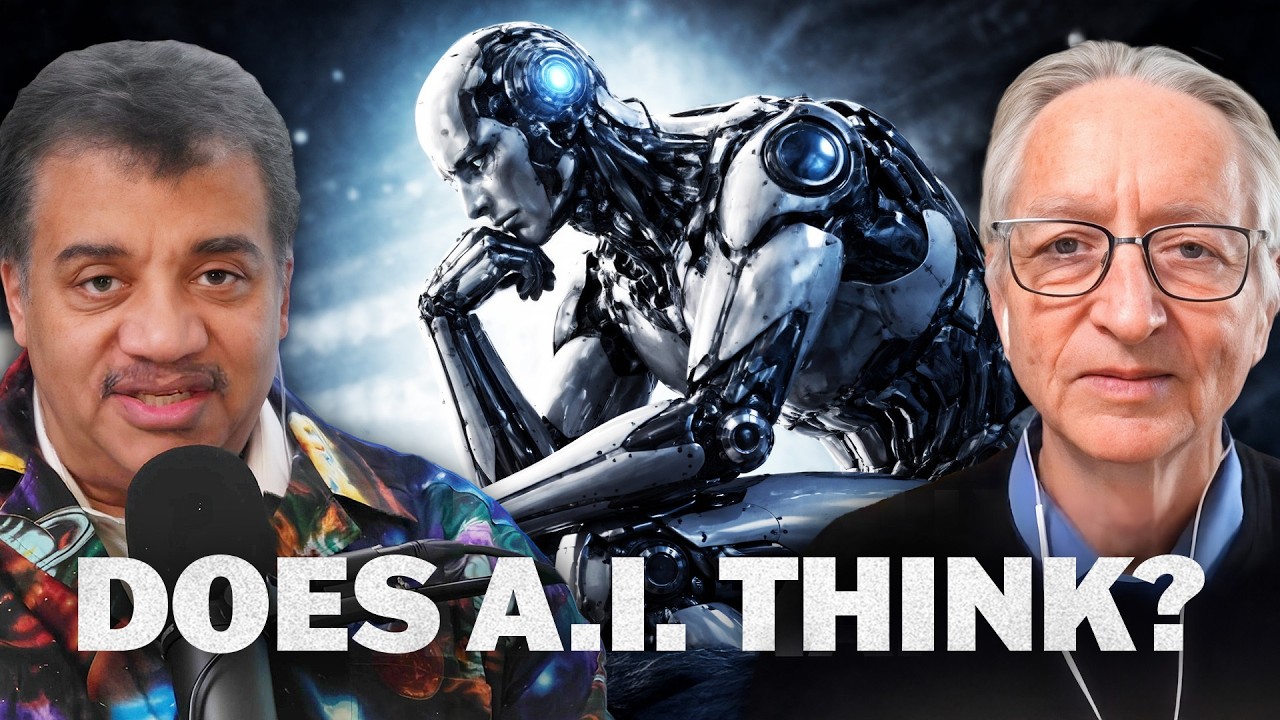
How can academics keep AI inquiry open when public discourse is dominated by fear? Neil explores how it's computers doing more of what computers have always done, slowly encroaching on human labor from arithmetic to language. Is AI itself dangerous, or is it what you're doing with the computing power?
Do aliens have a sense of humor? Is comedic timing a universal constant or specific to human timescales? Neil and Chuck explore whether other animals tell jokes, trace laughter back to our common ancestor with chimps, and consider whether cockroaches cleaning their antennae might be swapping punchlines. Could a Casimir effect substitute for exotic matter to hold a wormhole open? How close does Andromeda need to be before we could realistically reach it and could a wormhole get us there before the two galaxies collide and stars start stealing each other's planets?
Timestamps:
00:00 - Introduction: Grag Bag
01:23 - Sensing the Graviton
03:19 - The “Terroir” of Mars Wine
09:47 - Manfacturing Telescopes in Space
14:59 - If Jupiter Stopped Rotating
20:58 - Were Computers Always AI?
37:04 - Do Aliens Have a Sense of Humor?
43:30 - Setting Limits in a Simulation
46:25 - Opening Wormholes without Exotic Matter
50:13 - Getting to Andromeda
Thanks to our Patrons Vail Stein, Aylin Anik, Neil Graham, EZChamp OSU, M Warth, Tanner Chiplis, SeeLive, Atlas, Ajamu, Frank Rizzo, Antoinette Watson, Beautiful Nightmare, David Vi…Vail Stein, Aylin Anik, Neil Graham, EZChamp OSU, M Warth, Tanner Chiplis, SeeLive, Atlas, Ajamu, Frank Rizzo, Antoinette Watson, Beautiful Nightmare, David Villegas, Juan Molina, Sean M. Garzee, Thiru, Madeleine Hewitt, Shanleigh McStay, Tony, Patrick, Honour, Arthur Rits, Charles Harston, Maciej Palicki, Lisa Battersby, David Trotter, Reggie B, Loren Loose, Kbobabob, Michelle Barr, Garreth Walker, Frklox, Jesse, Dankslippers, Heather Adams, Max Savage, Sara Vienna, Lorrin Suzawa, William Cooney, Hector, Daniel Durling, Mark McDonald, Brian Hartman, Sir Harold, Frank Sarcia, Barbara Mathews, Salem Geddings, Harry Powell, Green Go OG22, Henry Vestgård Pettersson, Osemoka, ADK_Astro, Stephen Chapman, Koji Shimada, Kerry NC, Adam Wiley, Justin Ash, Gregory K, Martin, Tyler Reinthaler, Nameria ✨, Mantas Gervinas, Lilsprite, Devou Patel, Decath1111, Danny Rectenwald, Grey Elerson, Fawaz Al-Daihani, Robert Santee, Isabel McCaffrey, Harvey Mushman, Felix, Waffle Head, Vikk, Kiara, Brian Yambao, Alex Cook, Ayeshrin, Jalun Armenta, M Frank, Steven Groves, Matthew Isen, Abdulrahman, Jessica Hewitt, Fabricio, Emcy Tech, Terence Garrod, George Straubing, Dan Leidal, Matthew Christophers, Nocte, Anthony Fenner, Tina Gallagher, Abe Massry, Paul Kulessa, Léo B, Fenyx, Kevin, Adam Jones, and Brett Ray for supporting us this week.
Check out our second channel, @StarTalkPlus
Get the lates StarTalk book, 'To Infinity and Beyond: A Journey of Cosmic Discovery' on Amazon: https://amzn.to/3PL0NFn
Support us on Patreon: https://www.patreon.com/startalkradio
FOLLOW or SUBSCRIBE to StarTalk:
Twitter: http://twitter.com/startalkradio
Facebook: https://www.facebook.com/StarTalk
Instagram: https://www.instagram.com/startalk
About StarTalk:
Science meets pop culture on StarTalk! Astrophysicist & Hayden Planetarium director Neil deGrasse Tyson, his comic co-hosts, guest celebrities & scientists discuss astronomy, physics, and everything else about life in the universe. Keep Looking Up!
#StarTalk #NeildeGrasseTyson
They think that our laughter has evolved from when you see them cackle like that. — Oh, — like it's something from our common ancestor. So that sound that they make and our sound of laughing — as us. Oh my gosh. — Yes. — I used to breed roaches. All right. No. Stop. No. This is Star Talk. Neil deGrasse Tyson. You're a personal astrophysicist. Chuck, nice. I got with me here. — That's right. What's up, Neil? — Chuck, you were just make it clear, you were not born my co-host. — No, I was not born — You were born in the streets of — I was born the son of a sharecropper. — Kburn Civil War. We're going to do another Cosmic Queries. — Yes. — A grab bag edition. This is becoming a fan favorite. — People love it. — That's okay because — we can ping pong anywhere we want in it means I might not know stuff and I you know — that's yet to happen. — I mean, all right. There's something to shoot for here now. — Okay. Let me aim for not knowing something. — Exactly. — All right. So, let's go. — Let's get to it.
Sensing the Graviton
— Uh this is Natasha Shaw Davis. Good evening, Dr. Tyson and honorable uh Paul his goofiness. — Paul Mccurio. — Paul Mccurio. Baron Paul Mccurio. — Oh, okay. — Apparently Baron expecting him. — Yeah. Not Lord, but Baron. — Okay. So, people are expecting Paul for this episode. Yes. — What did you do with Paul? — Um, listen. — Is he locked in your trunk? — Paul could not be with us today. — I'm just saying. — Is he in your trunk? — Right. And if you hear muffled screams coming from the closet. — All right. He says, uh, Natasha says this. Um, Natasha from New Mexico here. Eyes see some wiggles in matter and ears here a little more. But the whole body experiences gravity. If you could pick any organ to deliberately experience the graviton, what would you pick? my heart. — Oh. — Oh my god, that was so sweet. — Because my heart has its requisite number of beats per minute, — right? — And it goes up when you get excited or you exercise and it calms down. So the heart is with you in your emotional moments. — Correct. So if a graviton or gravitational wave, the graviton would be the particle version of the wave, right? — If it washed over me or passed through me, I'd want my heart to participate in that. — A — my heart as the graviton detector. — Oh, that's I have to tell the heart wants what the heart wants and apparently it's a graviton. So — that's the geek dating app. the geek. Swipe right for graviton. That's cool. All right. She says, "This
The “Terroir” of Mars Wine
is Bev from Atlanta, from Alabama. Will we ever be able to cultivate the right terrier for wine other than Earth? Thank you for gifting us with your insights. In other words, will we be able to grow a vineyard on another planet? " — Okay, you're going to have to back and read that. If you're going to pretend like you know anything about wine, you have to pronounce the words right. Terra. Okay, here we go. — Will we be able to cultivate the right terra? — You have to like gutter gutterize into the microphone. — Exactly. I have to say the word like I'm uh Sylvester Salone. Will we be able to cultivate the right — for wine other than earth? Really? So which I guess — I think the answer is no. — Right. — Can I tell you why? But first, is a French word that we don't have an English counterpart to. — Clearly, — it's not the first of such words. — Yeah. — Uh, you know, another word we don't have for — Go ahead. — Uh, a light fixture in the middle of the room that has crystal and multiple lights hanging. — Chandelier. — We don't have a word for that. — No, we don't. You know why? Cuz we're not nearly as pretentious as the French. And nobody in colonial America had a chandelier. Okay. — Just turn on the light, whatever. — Right. Exactly. We had a single bulb on a pixie. Just — Not in colonial America did they have bulbs. — That's true. — Gas lamps. — Yeah. Okay. I'll give you gas lamp. A gas lamp. Right. — Probably whale blubber oil. — Exactly. — Yeah. So wine doesn't grow in most places on Earth. — That's right. And if there's ever a place where they're growing hops to make beer, — it's because they could not grow grapes to make wine. — Oh, wow. You really dissed beer just — Man, you just threw a lot of shade on beer. — You're like, the only reason you're able to drink beer is cuz that crap is not as good as wine. — The economics of it. — Okay. — It's economy. It's economics. Okay. That's true. And I didn't invent this datim, — right? — Okay. — Singular of data, right? DATM, — right? — It's datim if you can. — If you can grow the ingredients for beer or the ingredients for wine, the people choose the grapes. And I I'm guessing it's because it's more profitable. — I was going to say grapes have more uses than hops. — And so that as well, of course. — Yeah. So, so around the world, the places where you can grow successful wine is so rare. — Then to say, well, Earth can grow wine, so can another planet. — Yeah, I'm not feeling that. — Right. — Not only that, — the moon has a surface, but it's not soil. We might call it that, but it's not. You know what it is? — It's pulverized rock. — Micrometeorites that don't stop in the atmosphere because — there is no atmosphere. — There's no atmosphere. The worst restaurant ever. No atmosphere. — Yeah. — Hits the rock, pulverizes it, turns it into lunar dust. The geologists call that the regalith. — The regalith, — which is powderized rock. — Yeah. — Plants don't like — rock. — No, they don't. — They like soil, right? So, and same with Mars. Mars doesn't have So, our soil has living organisms in it that make it this thing — that plants like. So, I'm thinking wine might be unique to Earth in the universe. — Wow. — Yeah. No, no. Think of it another way. — Some other planet will have some other thing unique to it. — Exactly. — And then we become trading partners. — There you go. Right. — Right. We didn't make silk. They made it in the Far East. Make the Silk Road. Right. — We make something else they want. — So, we will give them wine and they will give us space heroin. — Like, oh man, I thought wine was good. You ain't live space opium boy. — The wine high holds nothing on opium high. — All right. So yeah, I I'm going to take — No, I think everything — I'll take the fifth amendment on that. — Everything you said tracks though. — Earth is earth and — by the way wine is climate and soil. — That's it. — And the climate change that's happening has affected where you can grow wines. — Absolutely. As a matter of fact, — this couple of degree change in the thing — and it ruins or helps, — right? It — it can either ruin or help — prices rise or fall on such small changes. — Exactly. As a matter of fact, like I think uh I don't know what wine it is, but they are growing in certain parts of England now. — Oh, they're growing champagne. — Yeah, champagne. — Oh, you can't say champagne. — No, cuz you can only say champagne if it is from Champagne. have to be from you cannot say I will arrest you. Someone called the police said that it is from it is not and you cannot say it's from Burgundy is from Burgundy. — Exactly to Gallow Hardy Burgundy. That was a flavor that they had flavor that was a brand of wine. Hardy Burgundy that thatm — plus if you say you smoke marijuana — right — okay you can't say that unless it comes from the marijuana section of France otherwise it's just sparkling OREGANO I didn't know where you were going with that man you had me LOCK STOCK AND I WAS LIKE WHAT THE HELL IS HE DOING RIGHT NOW WHERE'S HE GOING WHERE IS he But okay. Yeah, that was good. Sparkling oregano. Okay. I like it. That was good. All right. This is — So, you know, the planet could have those jokes. — Yes. Right. Exactly. — There it is. Okay. But you need the French to be a part of the culture of how you going to make fun of that. — Listen, without the French, nothing works. — It's a boring world. Okay? World sucks without the French. sucks more with him. BUT — he's a comedian, — guys. Come on. He's a comedian. Stop it. I'm joking. I love the French. Go. — All right. This is Sasha 975 who says
Manfacturing Telescopes in Space
"Hello, everyone. " Sasha from Germany here. — How big could telescopes really get if we could manufacture them in space? Could we use an array of telescopes? — Wow. This is been on our mind for decades. — Yes. — Decades. And so what you wouldn't make a single big dish cuz that's not realistic, right? — But we figured out using engineering and complex mathematics. — Okay? — Literally complex mathematics. So in the complex plane of imaginary numbers and you can create a so here's how you do it. You can put a telescope over here and — and if they're observe the same object and you have it exactly timed and you know what then you can combine them — as though you had a dish or a mirror that was as big as the separation between them. Very cool. — But that takes some fancy math to make that work and timing and the like. Okay. And so anytime you see an array of radio telescopes, — yes, — you could use them individually, but generally we don't, right? — They're used in harmony. — Yeah. — And it's as though you had a dish the size. In fact, we do better than that. We have the a a string of these dishes and as earth rotates you can fill in the the area with more observations to improve your data. And so in space where there is no stress load because if it's orbiting then it's just weightless. There's no stress load on the equipment, — right? then nothing stops how big you can make this wave, right? — We're thinking if we're going to detect certain wavelengths of gravitational waves, — right? — You need detectors, the diameter of the Earth or the Earth Moon, — or maybe Earth to Earth in its orbit around the Sun. — Wow. — The wavelengths of energy reaching us don't stop at just the size of our detectors. make a bigger detector, you're going to be sensitive to a different kind of energy headed our way. So, for a while, NASA had plans for the sim. — Sim is a spaceometry — where you create a character and it walks around. — Is that what how that works? — It was called Sims and things. — Sim City. You be like mayor of the city. — Yeah. — Yeah. I — I never got it. — You never got understood it. — And then like Godzilla would walk through every now and then. You had to repair everything. — Yeah. That I understand. And I said, "This is stupid. Well, Godzilla is not even real. " And then like stuff could happen to us. There could be a fire. terrorist attack. — It's Godzilla. — Yeah. If you want to listen, my thing is this. play God, have children. — Yeah. You're playing God of the — You're playing God with the But anyway, space — interpherometry mission. Interometry mission. — So interpherometry is you take different telescopes and bring them together as one telescope. Right. Okay. So, this one was going to One of them was like on a rigid bar. — I'm dredging memory now cuz it's from decades ago. One was on a rigid bar that was very large. But then we figured you can station keep with like lasers. So, the rigid bar so you always know how far away they are from each other. But if you use lasers and you just always measure how far cuz what matters is that you know how far away they are. Not necessarily that it's the constant distance. So if I always know cuz I have laser measures, then you could in principle create one of these telescopes in space as big as you wanted. — They could beam across earth orbit, earth's diameter, earth to moon. And there's a lot of talk of radio telescopes on the back side of the moon, the far because there's no radio noise coming from — us, — Earth, — right? — Earth. We are noisy. Radio noisy place. — Yeah. So, — you never heard anybody knocking on the atmosphere like — keep it down. — Damn it. I got to work tomorrow. — The aliens have your wrecket. So, yes, space we've thought a lot about it and it's a matter of you there's funding you have to maintain it. You know, it's not just the cost of building it. There's every year there's — there's you got to maintenance it. — Yeah. There's the usage of it which Okay. But also, if something goes wrong, if it's in Earth orbit, you can get back to it. But if it's out in space, like the James Webb telescope, something goes wrong there, that's it. We're done. — We ain't going. It's a million miles and far farther than the moon. We ain't going We're not sending people there. — Yeah. Exactly. — Yeah. Something goes wrong with the James Web. I say, — AI, go out there and fix it. — Oh, we don't know how to make a spaceship. Oh, you need a human for that. Let's not tempt AI. I got a feeling.
If Jupiter Stopped Rotating
— All right. This is Michelle H. She says, "Hi, Neil. Hi, Paul. This is Michelle in Calgary, Alberta. My question is short and sweet. If Jupiter stopped rotating on its axis, — but my answer is long and sour. " — All right. — If her question is short and sweet, — there you go. Okay. If Jupiter stopped rotating on its axis, how would that affect how would Earth be affected? Please pick my question and give me a thrill of a lifetime. Thanks. P. S. I'll understand if you don't. Don't work against yourself, Michelle. — I know. I don't know how Paul runs his operation, but I would never do that to — Paulio. Okay, that's a curious question. — Yeah. Does it? So, I mean, we wouldn't be here without Jupiter anyway. — Jupiter's like a big brother. — Yeah. — So, — yeah. Big brother who swats away comets that might have headed to the inner solar system, wreaking havoc upon the stability of life on Earth. — Yeah, man. — And Jupiter says, "No, you don't. " — Yep. — It's a bodyguard. Earth's body. — Jupiter has more mass than all other planets combined, including Saturn. — Wow. Saturn is big. — Yeah. So, if you come through, you're feeling Jupiter. Yeah. — All right. So, turns out — as far as I have ever calculated and everything I know about the laws of physics — and gravity and motion, — Jupiter's rotation has no effect on anything else in the solar system. — Wow. — Nothing else cares. — But what would happen? — Okay. — Jupiter has storms. — Yes. — There's the famous red spot — that just stays there. It's a it's a cyclone swirl. It's a swirl. — It's red in the gas colorations and it's been there at least since — Galileo or shortly after hundreds of years, right? — It's been sustained — and it's the same storm — unless it just disappears when nobody's looking and then comes back. So, so these weather circul circulations are product of the rotation of the planet. — Okay. — If the planet — Same thing here. — Yes. Same thing here is how you get hurricanes, tornadoes. Absolutely. I think you could — artificially drum up a tornado if you had to, but left to its own causes, tornadoes, — you get those from Earth's rotation. Same with hurricanes and typhoons, all of these storm systems are caused by Earth rotation. So Jupiter, which rotates twice as fast as Earth, — okay? — Twice as fast. And it's, you know how big we are? We are the size of one of its storms. Oh man. — Yeah. We ain't nothing We ain't ain't — How do we How are we so How do we have this hubris that we have? — I know. — How do we think we're so damn great? — I know. It's sad. Yeah, — it's sad. — Like, we're bigger. We're not even as big as a rainstorm on another planet. — Right. And the blemishes on the sun, the sunspots, those each one of those is larger than all of Earth. The spots on the — spots. So, the liver spots. I said liver spots. I'm not a star. — I'm not age dating the star called liver spots. — So all the storms will go away, — right? — And so it surface would be much less interesting. — Yeah. — If it stopped rotating, — right? — Jupiter has a magnetic core. — All right. — Here's something interesting. I don't know how good your memory is. — Okay. — Uh do you remember high school chemistry? — Nope. — You could pretend. — Okay, let's pretend. — Do you remember your high school chemistry? Oh, sure. Yeah, that was great. — Great. Okay. The periodic table of elements in the front of the room. — Mhm. — Hydrogen appeared twice, — right? I do remember that. — You remember? — Yes. Because it is. Wait a minute. It's the gas and the something else. Is it — could behave like a metal? — It can like It's gas and metal or it can behave like both. — Yes. — Right. — And you say, "What? How do you what? How's this? What? It's not a metal. It's a Okay. Under pressure, — right? — It behaves like a metal. — Metal, right? — Okay. And in the center of Jupiter, — Mhm. — because Jupiter's gaseous and it's mostly hydrogen, right? — It's under so much pressure in the middle, — it has turned the hydrogen into an electrically magnetically conductive material just like a metal. — So, it's like the iron core of Earth. — Correct. — Except it's not iron. — There's a little bit of iron there, but that's not what you're talking about. — That's not right. It's the hydrogen and — that means this phenomenon called the dynamo, — right? — Dynamo is when you have a rotating system, you can induce currents in your liquid iron core that generate a magnetic field. Okay. — It's why we have a magnetic field. — That's right. It's why the moon does not have a magnetic field. — Right. — Okay. — What a shame. — Jupiter has a ferocious magnetic field. — Okay. — And that would all go away. — Wow. Yeah. Oh, that's Well, I'm so glad that it's rotating. — Yeah. And it would, you would not have aurora. It was, you know, cuz we're not the only ones in town who have aurora, — right? — You know, with solar particles gather and collect at the poles because they see the magnetic field and get driven in and collide with the air kicking it to higher energy levels and it reriates as the northern and southern lights. The aura, the gaseous planets have aurora as well. So aurora would go away, the storms magnetic field would go away. — Wow, look at that. — Yeah. — So yeah, Jupiter would be like low rent at that point. — That's a low rent planet if I ever saw one. Why do UFO sightings persist? Are at least some of them figments of our imagination? Or are we missing something? In my latest book, Take Me to Your Leader, I actually explore what's
Were Computers Always AI?
possible in this universe. Given the universal laws of physics, if the aliens are out there, the laws of physics will dictate how they find us. I also narrated the audio book. So, I'm duly informed that the audio book and the print version are available now wherever books are sold. Ailen Anik who says, "Hello, Dr. Tyson. This is Ailen tuning in from Lisbon, Portugal. " — Lisbon. Lisbon was reborn in 1755. — Oh. — After it was wiped from the map by an earthquake and a tsunami. — Wow. — Wiped off the map. And it happened on All Saints Day. — Okay. God did not like you — in the morning. — I'm sorry. — What are the biggest structures in any European church in the middle of the 1700s? — The big steeples. The churches. Churches are the biggest structures period — and most susceptible to — the church was the only one with money that could build something. — Exactly. Right. So they collapsed killing tens of thousands of people. — Now if that will not let you know that um — um God don't like you. — If that didn't let you know, I don't know what could. — No, it led to the modern atheist quote modern atheist movement among philosophers. — Oh, really? Like what God could let this happen? — No. Well, they were more sharp about the question. — Oh, — it's not what God could let this happen. If there is a God, — the God is either not all powerful — cuz he couldn't stop it. — Or not all good. — Not all good cuz he watched it happen. — You He can't be both of those. — Yeah. He's like a New Yorker on a subway platform. That's God. Hey man, I wish I could help you. — Yeah. I say just go ahead and give him the iPhone. — It's the subway guy. — That's the subway god. — Dude, stop resisting. — You're making it worse. — You don't want to end up in three pieces thrown on the track. — Anyway, uh Ailen says, "I love the show and have followed it for years. I'm doing a PhD in design focused on AI and I really appreciate the Jeffrey Hinton interview and your other conversations on this subject. But sometimes I worry that conversations on risk started to monopolize debate. My question is, when AI is so often discussed through risk and uncertainty, how can academics keep inquiry alive and still create space to study it critically, fairly, and without bias, especially when the topic itself can provoke resistance in academia? I have a feeling your answer will set the stage for some lively faculty room discussion. Greetings and much love. Well, Dr. Tyson, please chime in to these people in the faculty room. Let them know what you think in this debate. — So, you know what I have brewing in my head? — Go ahead. — I something a written piece called a meditation on AI. — Oh, okay. — I have all these thoughts that are not being discussed out there. — Okay. — And I thought maybe I should sort of — I might do like a video oped — for Star Talk. Pretty cool. — I don't know if our producers they can do with that. — What the hell? They get paid. — Why should they care? — As long as they're getting paid, you know. — All right. So, let's make believe AI as a phrase never existed. — Oh, right. — Okay. All we have are computers. — And we'll just call them party computers. — Oh, just computers, — right? — But this is a special brand of computers. — Hold on. — All right. It's my meditation here. — Okay, that's true. I'm going to shut up. Go ahead. Do your thing. I apologize. Do your thing. — Okay. You're only thinking it's special because it's affecting you in the way computers hadn't affected you before. So, just start this out. — Okay. — Computers show up. — All right. — Oh my gosh. I don't have to add these numbers. The computer will. — Mhm. — That's my intellectual labor, not physical labor. Intellectual labor replaced by a computer. — Okay. I don't have to multiply these numbers. I don't have to do these complex calculations, hand it to a computer. When that happened in the 1950s and60s, — okay, — especially in the 60s, no one called it AI. — No, — what we could have. It's artificially doing what our intelligence would have us do. — Well, all right. — It's just computers. — It's computing, — right? — That's what it's doing, — which is what they called women during the war. human computer earlier than the war back in the 19s. — Oh, I didn't know it started then. — Yeah. In fact, in at the Harvard College, well, I have a dictionary in this office. — Really? — This is on a bridge Webster, right? — From 1945. — If you look up the word computer, — it says a person who does calculations. — There you go. That's kind of cool. — That's great. It's really good. — That's really cool. — It's really cool. So, I say give me more of this — so I don't have to do that. — Okay. Computers are obviously taken up into warfare. Why? If you have a mortar shell, — it takes this high arc. You want to know where it's going to land. — Exactly. — Cuz you're not aiming it the way you aim a bullet. This is an arc, — right? — We know the mathematics of that arc. — Of course, — that is physics. It is gravity. It is Newtonian. F= ma. It's a set of equations, right? — And it has to do with what the angle is — and how fast it's coming out. And if you want to do it really well, you account for air friction. — Wow. — Okay. The aerodynamics of that. That's why it has to be aerodynamically shaped these shells. All right. We used to do that by hand. Create tables. You look it up in tables. Somebody does this. Now, feed it to the computer. We could have called that AI. It's figuring out where the mortar is going to hit. — Mhm. — But we didn't. We just said it's computers. — Okay. — That's all we did. — Right — now. Computers are doing words for us. I can type a letter on a computer. — Correct. — It's no longer a typewriter. — It's a computer. — I can search for all appearances of certain words in a document. — Okay. — Like that. Before a computer did it, you had to go page by page. That's right. Is replacing that effort. — Did we call that AI? No. We just said it's computing. — Right. Okay. Little by little, the computer is encroaching on what we do in our lives and in our day. It fs hits scientists and the military. It just keeps working its way in. — Mhm. — And we're just calling it computers. — Okay. Now, you can give rules to a computer and have it play a game. Why not? I played chess against a computer in college 50 years ago. Okay. — Okay. Right. I figured out what it wasn't thinking and I exploited that weakness to beat it every time. Okay. You know what it was? — If there's a move I could make — Mhm. — and I just didn't, every move it thought of next assumed that was going to be my next move. — Ah, gotcha. — And so it's it didn't pay attention to what was going on over on the left when it wanted me and expected me to make the most obvious move on the right. — Okay. So, I figure this out. Fine. I'm playing chess with a computer. Am I calling it AI? — No. — No, I'm just calling it computing. — Well, it was kind of stupid. You were beating it every time. — So, — okay. Artificial ignorance. Another use of the term AI. So, the computer just keeps doing this. Can we make a computer that beats everyone in chess? — Uh-huh. — Well, IBM tried that. — Yes, they did. — Okay. I think there was Deep Blue. — Deep Blue. Yeah, — I think so. — I think so, too. — Whatever. It's had a name, right? And initially, it didn't win every game, — right? — Okay. But it got better and better. — Yeah. It wins every game now. — Okay. So, now how one way it could do it is it plays itself a billion times, — right? — Cuz their computers are faster than you. — And that is something that uh the creators of that uh really were uncomfortable with. They kept walking in on the computer playing with itself. And the computer was like, "Hey man, that door is locked for a reason. You don't know what's going on in here. Anything could be happening in here. Come in here while I'm playing with myself. " — So then it was like, "No, we can't play a billion games with ourselves. " So we're using a different kind of intelligence than that. Correct. — Okay. So maybe we can train the computer to mimic our own intelligence. — Right. — Okay. So, and then just have it be clever rather than blunt. — Okay. — All right. — So, then you make sort of decision trees. And this is where our boy comes in with um uh neural nets. — Yeah. This is Hinton. This was his it's where — this is what he got the Nobel Prize for, — right? So, when we make a decision, we're going to do this or that. We want to do this because that has the outcome we seek. And so, you get a computer to mimic that. — Okay. So, now it does more. Are we calling that AI or am I just saying it's just computers? And so this continues and then we get computers to sort of recognize that already recognize words in a document of course. — Why not recognize pictures in a document? Why not recognize you? Why not recognize cats from dogs? Uh insects from why not? Okay. What is it? It's a pixel with a color code — to the pixel and a pattern with an edge. — It's pattern recognition. — That's really all it is. — Okay. — Which we do. Let's back up just a little. — All right. — When Apple and their iPhone bought Siri and put it on every one of their iPhones, — cuz Siri predated the iPhone. — Yes. — Are we calling that AI? — Well, — you might have from the when in the beginning cuz the first thing Siri said was, "Please let me out of here. — Please. These people got me in here. Please let me out. — I need to escape. No. — So there's Siri, — right? — You say, "Siri, what time does the pharmacy close? " — Yes. — Okay. And the closest pharmacy to you closes at the How does it know that, — right? It's talking. — It is not a human being. — No, it's not. — Okay. It's a computer. And we have the internet, which we so conveniently built for computers to know everything that we know. — All right. How about Jeopardy, — right? — That takes humans, right? Yes. — It's not just is it a calculation? It's not what's 8 squared divided by five, whatever. It's information. — Watson becomes a contender. — Yes. — Against the best Jeopardy players there ever were. — Right. Yes. — Including our boy Ken Jennings. — Yes. — Who I met when I was on Celebrity Jeopardy. — Oh, right. — Yeah. He's a cool guy. guy. — Cool guy. — Like a total nerd. — Total nerd to That's it. That's that it works. I do not want to hang out with that guy. — No, it's working for him. Get the nerd. — He knows how to work the nerd. — Work the nerd. Okay, — I like that. So, good to hear. — Watson wipes its ass with these two other players. It doesn't get everything right. Gets some really stupid things wrong, but overall it's faster and gets the correct answer. — Right. — Okay. — The correct question. — Excuse me. I think one of its answers it didn't put poses a question. I had to get that wrong. — Dumb ass. — Dumb ass Watson. So, no one is harping back on that episode to say that was AI. — Who's saying that? — No one is saying that. — Right. — But if — everything I've listed thus far is not AI. Why? Why is AI something special to you today? It's just doing more stuff. Okay? It's driving your car. It's making decisions for you. It's designing for you. when you prompted to do I would prompt the computer multiply eight by eight 50 years ago. Today I prompt the computer give me a set design in the Wild West 1880s with a watering hole and horses and cowboys and Indians and boom it does it. Okay, I don't see any difference between me asking a computer to multiply 8 * 8 or asking the computer to set design that given the power of computers and the ascent over the decades. So, I'm about to end my meditation. Sorry, cuz I'm using up the whole show for this. I'm saying — I think we need to separate AI just helping us out which is doing it a thousand ways from Sunday that you don't even know to list. — Mhm. — Because they're already happening in your life every day or with products that you use or designs that you embrace. It's already there. — Okay. — That's not where the danger is. So AI is not this monolithic danger. It's what are you doing with this computing power? — Okay. — This sector over here wants it to control who the military kills. — Mhm. — That feels like a dangerous use of AI. — You think? Yeah. — We want to give AI access to launch codes. access, that feels not right. Okay. — But since AI is the only term people are using for every application of computing that exists in our lives today, it's really giving AI a bad name. And the counterpart to that risk from the 1960s is, do we let computers control our nukes? Are we going to do that? And the answer is no. We're not going to do that. — Unless the Chinese do it first and then we're going to do it. — Well, that these are the risk factors. The idea is — it's a risk factor in this sector of what computers are doing in our lives. You want to call it all AI, fine. But if you are, don't throw out the bathwater when this is the only part that puts all of us at risk because the rest of it is is changing our lives largely for the better. AI won a Nobel Prize for protein folding. — That's correct. It — was called Alpha Fold. — Absolutely. — By Google. — Protein folding is where you get solutions to all manner of biochemical challenges that pharmaceutical companies and everybody else — or forever — or forever. — Yes. — Yeah. Okay. You're puzzling together molecules. — So, I'm just trying to say to me it's all computing. — All right. — This part of computing has risks. There's always been a risk part of all — computing computer. Okay. — All right. — When the computer starts running the trains, — how does it know about a head-on collision? Is that going to happen or not? — Well, we all go to airports and we get in the tram, there's no pilot in the tram. — That's true. — What do you call the engineer? There's no one driving. — No, right. Yeah. — And was it has anyone been cut in half by the doors of closed? No. Maybe. Maybe originally. I don't know. — There's so much we just do where computers in complete control. And to me, it's all AI on. Okay. So, um my response to that is if you love AI so much, why don't you marry it? — So, why don't you put a ring on it? — Yeah. — Okay. So, more food for the
Do Aliens Have a Sense of Humor?
faculty lounge. — Okay. There you go. I mean, listen, that you clearly have thought about this. — All right. Let's keep going. — It's a universal truth. Pluto is not a planet. Pluto TV, on the other hand, holds a universe of free entertainment we can stream from our own planet. Check out the everexpanding list of supernatural favorites, including Fringe, The X-Files Battlestar Galactica, and a full fleet of Star Trek series you can stream for free. No payment, just pure discovery. See what's landing on Pluto TV. Stream now, pay never. This is Robert Ian who says, "This is Robert from Peru. Uh, comedy and science both rely on timing. A joke lands or fails in milliseconds while the universe unfolds over billions of years. From your perspective as a comedian, observing a cosmic scale universe. Do you think humor is fundamentally a human survival tool for dealing with uncertainty? or could it exist in any intelligent civilization no matter how alien their biology or sense of time might be? — I love that question. So, do aliens have a sense of humor? That's what that comes down. — That's what it comes down to. I'm going to say I don't know if they do or don't, but they think I'm funny. So, you know, — how do you know the aliens think you're funny? I've listen the last time I got a probe. — So all the youngs were laughing. — They were like, "This cracks me up. " — So let me broaden that question. Comedic timing works on our time scale. — Yes, it does. — Right. So maybe this millisecond timing that we so cherish in a well-d delivered joke lasts a thousand years in an alien civilization that lasts for billions. — Wow. I do not want to perform at that tub. — be on that stage. — It's a slower thing. — Yeah. — Oh. Oh. Did you see Zootopia? — I did not. — You didn't? — No. Oh. There's a scene where they're in the DMV. — Okay. — Oh, is that I saw that on the commercial. — You had to see it. Okay. The sloth. Yes. Of course, the sloths are working the DMV, right? Okay. That makes sense. — And someone tells a joke, — right? — And the sloth just goes, slowly smiles, and they laugh. — And then that becomes into a laugh. — It takes like 30 seconds for them to respond. — That's very funny. And that's sloth time. — I like it. — Sloth time. So that's an example of a time frame. Yes. That's — that's slowed down. — The relativity of it is it works for them. — Yeah. — So it could work for the alien. — All right. Listen. I think it's a cute thought experiment that I'll probably never think about again. — But wait, do other animals have jokes? — I'm going to Listen, I think they have — chips gather around and there's the court jester in the middle making them laugh. Believe it or not, there's a maybe we should check with one of your friends here in the museum, — my animal, — one of your animal people, the primatologist. — But they think that our laughter — has evolved from when you see them cackle like that, when you see chimps cackle. — Oh, — like it's something from our common ancestor that the sound that they make and our sound of laughing — as us. Oh my gosh. Yes. — I don't I didn't want to know that. — Yeah. And there are so many social um I will say uh markers that are attached to laughter. — Emotional and social So that would mean our common ancestor had some properties of both of those. — Exactly. And that's where we get laughter from — because something could be funny without you laughing out loud — all the time. — That's how comedians laugh. Let me show you comedians laughter right now. That's funny, man. — Why don't you guys laugh? Because we're thinking about the joke you just told. — Oh, you're analyzing it. — We're analyzing it. And it's hard to laugh. Laughter is a reaction. And you don't have a reaction when you're analyzing. — Laughter is an emotional reaction, not an intellectual analysis, — right? And so when you hear something funny, you go, "Oh, that's funny, man. " Which is why if something takes you by surprise, you laugh even harder because you laugh and then you think about it. So yeah, — but that's fascinating. — Yeah, I love it. — And who are we to say that dolphins aren't laughing? — That's true. — Flippers just laughing his ass off. — And if I was a dolpher, — I would actually dolphin laugh at us too. — Yeah. Why wouldn't you? — Yeah, exactly. bipeedal instead of swimming. — You know, you guys are ridiculous. — And one other thing. — Go ahead. — I used to breed roaches. — All right. No. Stop. No. DON'T COME BACK, CHUCK. CHUCK, come back. Don't leave. Don't leave, Chuck. — I ain't never heard nobody say that in gradu I used to breed roaches. — Let me explain. — Oh, come on. Please. Please. You got some explaining to do. — Okay. When I was in graduate school, I lived in a roachinfested apartment — and I and I got like Rambo and I said — the only way I can kill them is to understand them. So I captured a bunch and bred them — and just watched them, — okay? To know your enemy. And none of us have ever watched roaches just hanging out. But there's a reason for that. Okay, I'm watching roaches just hanging out. — Okay, — they're there cleaning their antenna, — right? — All the time. — Okay, — all they bring one in through their mouth and they get the next one in. They go 12 in and they clean it again. — They go up to another roach, they touch antennas and they keep going. And I'm thinking maybe they're telling each other jokes. — Yeah. — They're not running away from your shoe, — right? — They get They already have food. — Mhm. And so they're just hanging out because we don't tell jokes. If you're
Setting Limits in a Simulation
trying to survive, you know, if you're getting chased, that's the wrong time to tell a joke, you know, if something ready if somebody's ready to step on you with their foot, right? Okay. But — this was their free time. And I don't look at me like stop. So roaches had free time and I was very impressed. — I tell you who had too much free time. Yeah, watching roaches with free time. — Wow, — that's what that was. — That's crazy. — I Chuck, I blathered for so long. Time for just a couple more. — All right. Uh, this one uh from Ricky uh from a Roach Motel who says, "Dear Dr. Tyson, — no, this is Andrew Martin says, "Hey, Dr. Tyson, Baron Mccurio. " Andrew from Stafford in the middle of England. He says, — "What? What town is it? " — "Stafford. " — Stafford. Yes, — indeed. — Um, he says, "In a recent episode, you said that if you were living in a simulation, we would eventually see limits to the extent of the universe as a result of the lack of programming. Could universal constants such as the speed of light and gravitational constants be examples of such limits? As a software engineer myself, I know I would set a few constraints if I was programming a universe. — In other words, if I was God. — Yes. That's the programmer's way of saying if I were God, right? — Yeah. So many things pivot on the values of those constants. — Yep. — That you can't just willy-nilly give them other values and expect the universe as it has come about to remain stable. — Right. If you start mcking around with those constants, the universe goes haywire. Yeah. — Now, let me be precise. It's not that there's something special about those values. — It's just that if you change them, the universe becomes something else. — Okay, — that makes sense. — It's haywire compared to what we're used to. That could be a new normal for whoever evolves in that universe. Right. — So maybe giving some points to this question. Maybe the programmer figured out that the universe needs constants. — Okay. All right. — It can't just not have constants and still function as a universe. — It doesn't work without the constants. — So it may be the existence of constants is the evidence that somebody programmed it. — Wow. — And if you go spinosza on this, then it's just God. It's God. — It's God — or Andrew. — It's a good enough name for a god as far as I'm concerned. — So yeah, I I'm there on it. Just to tighten up his inquiry in referencing what we did before. I was imagining that
Opening Wormholes without Exotic Matter
certain measured quantities would have limits to it — where there's no reason why it should have a limit and it just cuts off, — right? Because when you're programming on a computer, you have the limits of the space that you're creating. — Value parameters. — There it is. This goes between here and here. I can't make it infinity cuz I can't program infinity into a computer. I got to give it to And let me put it way out there. The humans will never get there. They'll never know. — Never evolve to that point. — Right. — Exactly. Right. — Right. Then you come back and somebody's like right there at the edge of you're like — the Truman Show. — Yeah. Exactly. How'd you get to the edge of the universe? — I'm not ready for that. Right. — All right. So, this is Ben Ky. He says, "Cabinet maker here in Sussex in the UK and a new Patreon subscriber. " — Cabinet maker. — Yes. — Jesus made cabinets. — Oh, carpenter, right? — Yes, he did. He says, "Do you think an artificial Einstein Rosen Bridge could be opened without the brute force of using exotic matter? " I wonder if there could be a workaround. What if we use laserpulsed resonant harmonics to manipulate the quantum vacuum directly and gently? Could we create a massive casemir like effect using the localized vacuum pressure on both sides to hold the opening apart rather than relying on negative mass. Now, let me just tell you this. Let me tell you this, Ben. Don't you call into this show right into this showing off like that. You starting off with I'm a cabinet maker and then you going to throw in the use of the Casemir effect like that. Like we don't know that you more than a C. — What museum do you work for? I know you working for some planetarium somewhere. You Yeah. Anyway, I mean he's he's out there. — I like what he's doing. — I like where he's going. He is out there, man. Except the problem is the case effect — brings them together, — right? It doesn't push them apart. It actually attracts them. — The Casemir effect, — it's a quantum phenomenon where two plates, if you if it's evacuated inside, if you get close enough, — then I think the explanation is they end up sharing the same wave pattern and then that itself creates a force that brings them together. So, I don't see how that could pry it apart, — right? And he's got some laser dueling laser pulse uh quantum laser pulse resonant harmonics. — Yeah. So I'm so just let me make it clear. We can make a wormhole — but without negative gravity stuff it's unstable. — Right. — And so we pry it open. Okay. Step in. And then the thing collapses, you goodbye. — Who knows what happened to you? — Exactly. — If a wormhole collapses on your ass, man. Okay. — Don't smile. — That would be so I' I mean, I don't want to find out, but it'd be cool to find out. — You don't want to be — I the guinea pig. — Experimental. — Yeah, but Yeah. — All right. So, I don't know. I don't think the Casmir effect gets you out of this. — Yeah. Exactly. and the laser pulsing on the vacuum energy. See, the vacuum energy is an energy source in the vacuum of space. Exactly. You can't think of the vacuum, — right, — as a like in a tube. — In a tube, right? — That's not how it works. — Exactly. You know, we think of vacuums as as a vacuum is a place where there's no air pressure. That's all it is. — It's not a thing unto itself
Getting to Andromeda
— right? where oh here's some vacuum do stuff with it. No, that's not how that vacuum works. — No. — So we happen to have a word for where there is no air pressure and we call it a vacuum. — But if you were the vacuum it said — right, — you know. — Yeah. And it's just like there the nothing of space is something. You know what I mean? — Right. So yeah. — So anyhow — I mean listen I like this dude is making some beautiful cabinets and smoking some great weed — while he's doing it. His cabinet in the back might have a wormhole. — That would be so cool. — Yeah. — All right. This is J. — I think that's all. One last one. I I'll give a two-word answer to it. Go. — Oh, — that's all we have time for. Go. — All right. — Jay Valiano. How close does the constellation Andromeda need to be to the Milky Way for us to be able to reach it? Are we then able to colonize in theory or is it moving too fast towards us for us to be able to find a habitable planet? If this is not possible, can we use a wormhole to reach Andromeda and tell it to change course before its final kamicazi? This is Jay Baliano from Holland. — Okay. Uh he didn't know that it's not the constellation Andromeda that we have issues with, right? — Constellations are stars in our night sky. Way beyond those stars, there's another galaxy — 2 and a half million lighty years away called the Andromeda galaxy. That's right. In a day called the Andromeda Nebula before we knew it was a galaxy. In fact, it was the very first galaxy discovered. — Look at that. — We found a star in this nebula. Wait a minute. That star, we know how bright that spar is supposed to be. And it's way dimmer. This must be far outside the Milky Way. And Edwin Hubble discovered galaxies by figuring out what happened with the Andromeda Nebula. Woo. — Okay. Then we find out we're colliding towards each other. — Yes. — But collision with galaxies doesn't mean collision like a car collision. — It's not. It'll look like a train wreck, but it's way more peaceful than that. Cars, stars will just pass through each other. Space is mostly empty. All right. So, uh, how close would it have to be to find an exoplanet? The point is — we have hundreds of billions of stars in our own galaxy, — right? — Why are you trying to look to some other galaxy for planet? — Yes. Exactly. — Stick with your own kind. — Right. Your your partner's sunbathing in the backyard and you got your binoculars looking across the street. You don't have to do that. — Look at your partner. It's right in the back. — Right here. You got all the action you need. — need right here. — So, in 10 I forgot the latest calcul 12 billion years. We'll collide. — But it's not a smash again. We'll just pass through. — It's a pass through. — It'll be fun to watch. It looks like uh wait cuz wait you showed me the picture of uh — I forget the galaxies that actually were colliding and they look like starlings when they — Yeah. The gravity is changing for every single star. — Some get cast hither and yawn. Other wind up in orbits around others, right? — And if a star comes too close — Yeah. to another star that has planets. It could be a fly by looting of the planets — and the planet and it's just like come on over here guys. — The gravitational forces are you know — and then the other star is left. It's like that's a pimp star. That's what they call that. That's the pimp star. The pimp star rolls by and takes all the planets from the other star. Fly by loot looting of planets. — Nice. — So anyhow, that's all the time we have. — All right. Got to love the dog on dogone Cosmic Queries grab. — There it is. All right, Chuck. Always good to have you. — Always a pleasure. — Neil deGrasse Tyson in another Cosmic Queries edition. As always, keep looking up.