For more deets about the DJI Lito X1 and Lito 1, and how they compare to other DJI drones - click this link here [affiliate link]: https://click.dji.com/AMJSd2zRa0GPatWbGWcTbA?ch=launch-litox1-kai%20wong&pm=custom
Visit Squarespace for a free trial and 10% off your first purchase: http://squarespace.com/kai
Super Bokeh Bros Merch! https://superbokehbros.com
Оглавление (2 сегментов)
Segment 1 (00:00 - 05:00)
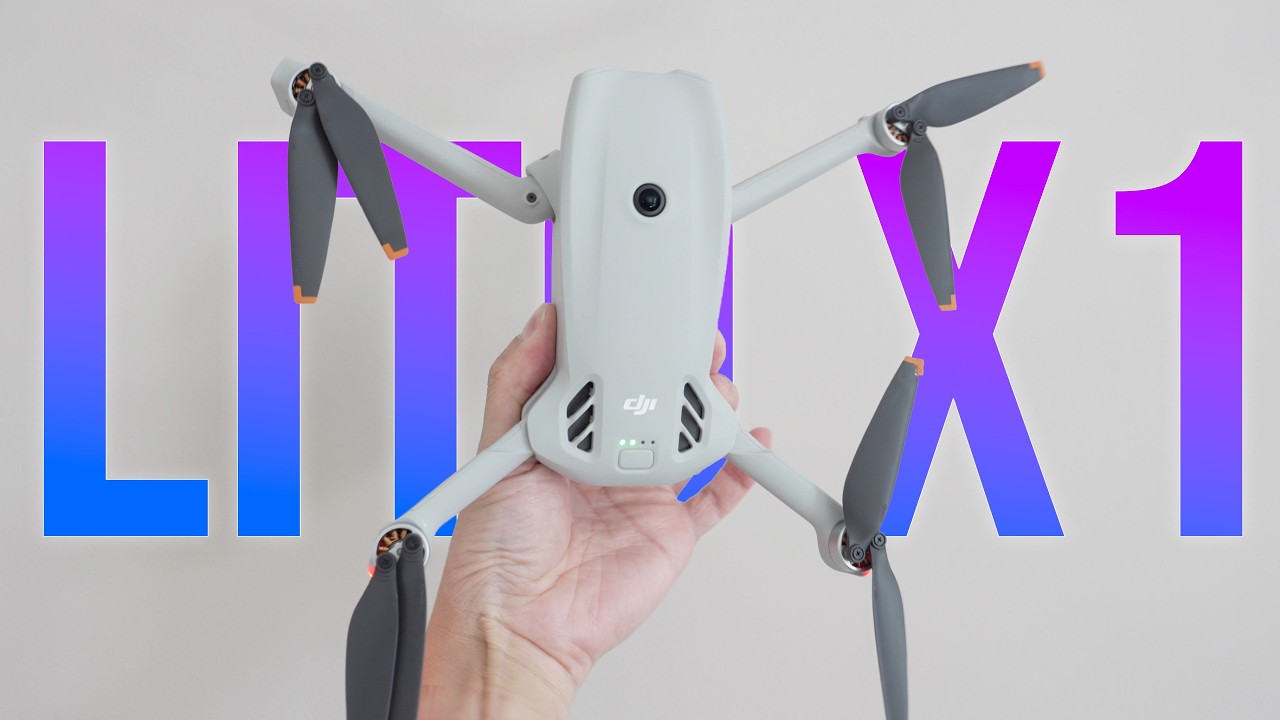
Oh, yes, some brand new exciting news or maybe it's not going to be all so brand new because it is about 36 minutes away from announcement. So, let's see how it goes. All right, so this is the DJI Lito, another name, a seemingly more confusing lineup of products. But to be further things further, there's the Lito X1, this one, and the Lito 1. I've only got the Lito X1 with me, so I'll put how it compares with the Lito 1 on screen. But the X1 is definitely the spicier version. Even though by the looks of it, it comes in a very similar looking flavor to all the other stuff DJI has dished out before. Well, the Lito is positioned somewhere between the Neo and the Flip and the Mini 5 Pro and bigger. Size-wise, this is more Mini than Mini 5 Pro. The Mini 5 Pro has beefed up even though they're similar in weight. But also, this is going to be a continuation of where the current standard Minis are at the moment. So, essentially, it's going to be bye-bye Mini, hello Lito. So, it's a sub-249 g drone. I weighed it, it's pretty much on the money, 249 g. So, low on weight, but potentially high on performance because you can add an intelligent battery plus to get up to 52 minutes of flight time. And then there's 15 km of video transmission, too. Anyway, let's get flying. So, this is aimed as a clear step up from the Neo and the Flip. They're fun drones to fly. They're kind of akin to walking a dog that floats and takes video. So, not really like walking a dog. The Litos are going to be for those that actually want to get into drones, to get some nicer looking drone footage, but haven't flown before. So, not too expensive, super simple and easy to get started. That sounds like I'm doing a Squarespace read out. Um but yeah, if you want to get started with setting up a website, you can get a discount code. There's a link down below, anyway. No, anyway, so simple, not too expensive, but also you can get nicer looking footage from it because it's not spec'd too low. In terms of sensor size, it's a 1 over 1. 3 in sensor. So, you can take 4K 60 frames per second HDR and 4K 100 FPS videos in 10-bit Dlog-M. So, in terms of sensor size, it's bigger than Neo, not quite as big as the Mini 5 Pro. So, it'll have all right night performance. You know, just a couple years ago, it felt like the entry-level drones didn't have the amount of obstacle detection as the more expensive drones, which felt kind of a bit odd because if you've got an entry-level drone, you don't want to crash it so easily. But now, with the Lito X1, you've got omnidirectional obstacle sensing. And then on the front, lidar. You know, when you first time fly, it just makes things a lot more stress-free. You don't have to worry about stacking into a tree. And with the lidar, it's going to be better in lower light as well. And then ActiveTrack 360. And it's so-called ActiveTrack 360 because it combines that tracking with the omnidirectional sensing stuff. So, therefore, it can track 360, obviously. And that does that up to a speed of 43 km an hour, which is pretty decent. But if you want the full potential of that ActiveTrack 360 omnidirectional stuff, it's better if you don't have so many obstacles like I do here at the minute. So, I think I mentioned that the ActiveTrack is up to 43 km an hour, that's 12 m a second, 12 m/s. But in terms of the max speed that you can fly in sport mode is 18 m a second. And that's for both the Lito X1 and the Lito 1. And then if you compare that to the Neo 2, Neo 2 sport mode only goes up to 16 m a second. And if we're talking about the Lito X1 and the Lito 1 as beginner drones, the Neo 2 feels, well, more beginner-like because it has the prop guards. But the Neo 2 is a lighter drone, I believe it's 151 g lighter than the Lito X1 and Lito 1, both 249 g. So, Lito by name, not quite as Lito as the Neo 2, but Neo 2 will be affected by wind a bit more than the Lito X1 and Lito 1. So, yeah, Neo 2 lighter weight, but also a bit more lightweight in terms of features and operating time, 19 minutes versus the 36 minutes of the Lito X1, Lito 1. Although, as I mentioned before, you can do up to 52 minutes with the intelligent flight battery plus. The 1 over 1. 3 in sensor size is plenty sufficient, especially on a good day like this, to get nice looking footage or photos. 48 megapixel photos. Of course, Neo 2 will be good for some fun stuff, but 1 over 1. 3 in sensor, I mean, some phones have a main camera with that sensor size now. So, it kind of feels like if you want better looking drone footage, this is where you should start from, at least. The Neo 2 and Flip aren't really suited for more high altitude stuff, whereas this will be a bit better. One of the DJI drones that really excited me when it
Segment 2 (05:00 - 05:00)
first came out was the Spark. I mean, obviously, looking back now, the specs don't quite measure up to today's standard, but it was more the idea, the concept at the time of launching something so small, something actually portable, that could produce some amazing looking footage. Whereas, the Mini 5 Pro has kind of beefed up, it's sized up, it's increased in terms of specs. The Lito X1, the Lito 1 is taking it back more towards that concept, that hero beginner drone, that tiny little thing that won't disappoint when it comes to getting nice drone footage.