Farm Basics from Ag PhD Episode #1467 | Air Date 5/17/26 - When corn seed puts down roots, it brings the whole family! The Heftys introduce you to all the members from, seminal to brace.
Оглавление (1 сегментов)
Segment 1 (00:00 - 04:00)
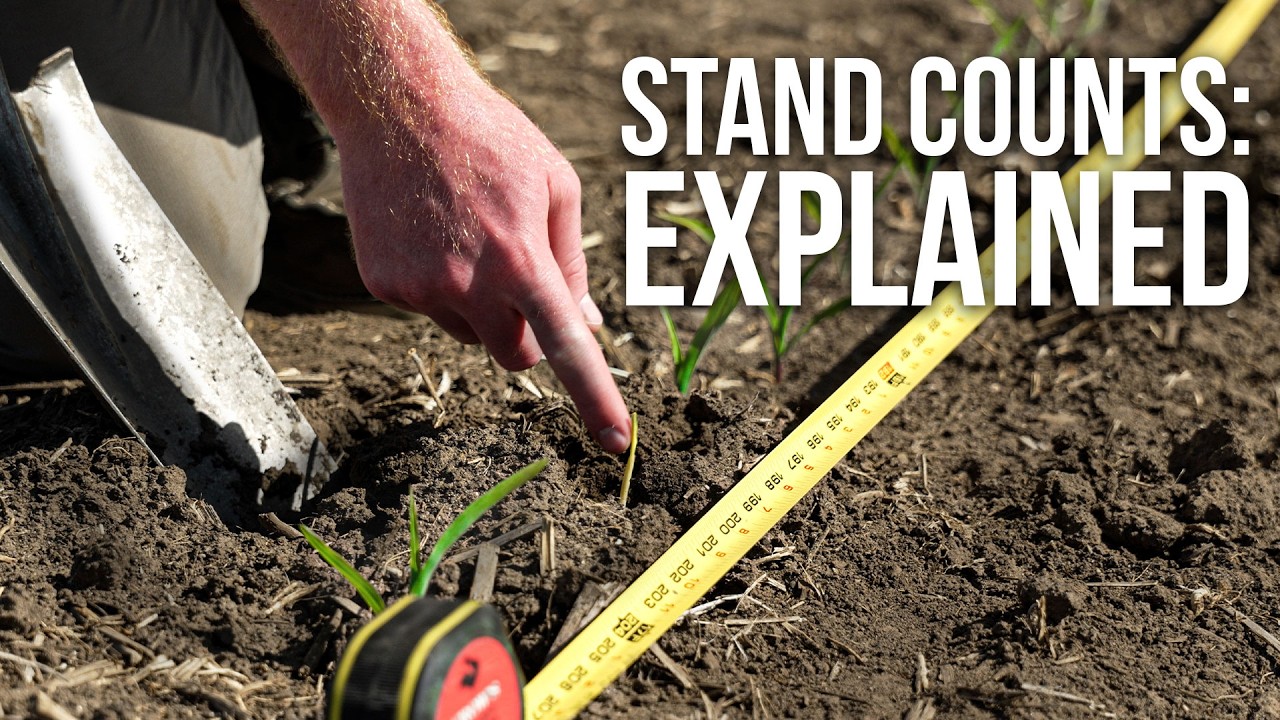
Ag PhD full episodes and more are now available on Acres TV, the newest ag platform connecting you to fields of information. Look for us on watchacres. tv. com. During our farm basics time today, we're going to talk a little about the root system of the corn. It's kind of a unique plant because the main root system actually comes out above the seed. Well, let's start by talking about the roots that come out of the seed. We've got the first root coming out of a corn seed is called the radical root and its job is just to grow downward and anchor the plant. And one of the goofy things about corn seed is well, if it's laying in the furrow and the tip is pointed up, that root has to grow around the seed to get back down. Now, if the plant is put in the ground or the seed with the tip down, well, that's going to make it that much easier for the radical to just quickly anchor that seed. All right, then the next root that's going to come out, it's called the seminal. A lot of times people will refer to this as more of a lateral root system. So, rather than going down, it's usually going sideways. It helps that young plant get going just like the radical does, but once you get just a little bit of growth, that's when we start to see the main root system, that nodal root system come out. — Well, with the seminal roots, there's going to be several of them. They're going to branch out in the ground. As Brian said, their purpose is only for just a few leaf stages. Once those nodal roots come out above the seed, as you kind of hinted at before, those roots are going to take over and they're going to be the primary source of water and nutrients for the plant. — All right, so the way this plant grows, it's kind of interesting. It puts a shoot that goes up to the soil surface and at that soil surface, it's what we call the coleoptile sheath. Once that sees light, now it's basically going to tell the rest of the plant, "Okay, I have found the light. We're good. We can start developing. " And then, in addition to this growth, we have the main shoot coming up where we are going to have the first leaf coming out. And when you see the very first leaf coming out, the first ring of nodal roots is forming below the soil surface. But, it doesn't matter how deep you plant, you're going to find that the first ring of nodal roots is going to come out roughly 3/4 of an inch below the soil surface. Well, this is really important because they're eventually going to be five rings of nodal roots that come out. They're all going to be above the seed, and they all need to happen in about 3/4 of an inch or so on that stem. So, if you're not planting deep enough, what can happen is some of those nodal roots could actually be forced to be above ground, which means they aren't going to do as good a job at finding water and nutrients for you. They're going to be much, much exposed to herbicide applications or even just hot sun and weather conditions. So, anyway, we just find it very interesting that with most plants, you see the roots come out below wherever that seed is. But, with corn, that is absolutely not the case. And the main root system of the corn plant is always going to be right below the soil surface, or at least that's where it's going to start. And typically, as long as you don't have lots of compaction or any other big soil issue, those roots are going to grow down at roughly a 45° angle. So, we've talked about the radicle root, the seminal root, and again, the main root system of the plant, it's the nodal roots. There'll be five rings of nodal roots. You're going to see each ring come out when you see a leaf stage. So, one leaf stage, one ring of nodal roots. Two leaf stages, two rings of nodal roots, and so on till you get to five and five. And then, the last set of roots is going to be the brace roots above ground. Now, the brace roots form as a result of stress. You've got a big tall corn plant, perhaps. You've got a great big ear, hopefully, that corn plant's going to hold. Unfortunately, there's some wind. And so, the plant will try to stabilize itself even more by putting some roots out above ground. And you'll typically see one, two, maybe even three sets of brace roots under normal conditions, which I will say are stressful and windy and hopefully a big ear, as I mentioned before. — Well, anyway, we just wanted to talk a little about the corn plant and the very early life stages in that plant, cuz it's kind of interesting. And especially at this time of year, we're seeing a lot of that on our farm, where we're evaluating how our stand is, what those roots look like, the early leaf stages, and all that kind of thing. So, we figured we'd share that with you today. What's important to understand about the root system underneath plants, like for our weed of the week, for example, it's got a tough root system underneath it, which is what makes it tough to control. So, we'll talk about stopping this particular weed coming up later in the show.