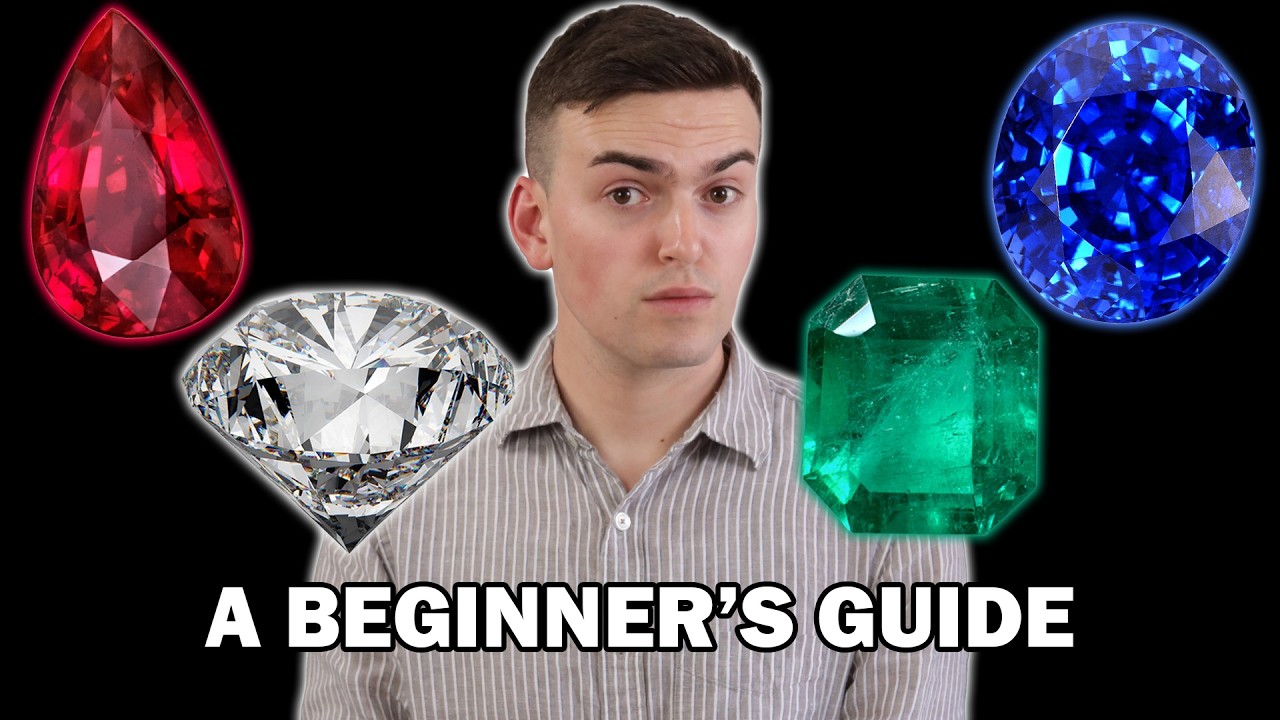
Have you ever wondered why Diamonds and Gemstones hold such weight and desire in the world? Well, so do I. So in a HauteLeMode first, we are exploring the history and origin of 4 gemstones, the Diamond, the Ruby, the Emerald, and the Sapphire. We'll look aty how they're formed, their history, cultural significance and some famous examples of each!
Join this channel to get access to perks:
https://www.youtube.com/channel/UCoEj4uRzynPXEEegNqMnJVw/join
Social Media:
Instagram: https://www.instagram.com/hautelemode/
Personal Style: https://www.instagram.com/hautelemess/
TikTok: https://www.tiktok.com/@hautelemode
Twitter: https://twitter.com/HauteLeMess
For business inquiries please contact: hautelemode@whalartalent.com
Video Edited by:
Rachel Fritz: https://www.instagram.com/rachelfritz/
Оглавление (3 сегментов)
Segment 1 (00:00 - 05:00)
Throughout my years of making fashion content, I never really thought much about jewelry until now. Maybe it's because I've been looking at engagement rings and suddenly I'm researching diamond clarity like there's going to be a final exam that I'm going to administer to my boyfriend. But in all seriousness, take the Koh-i-Noor diamond for example. It's valued somewhere between 140 and 400 million dollars. It's less of like a gemstone and more of a small country's GDP, which might explain why it's locked away in the Tower of London. It just all got me wondering. Why do humans care so much about shiny rocks? Because somehow across thousands of years and entirely different civilizations, humanity collectively decided this mineral means love and this one is power. Over here we have royalty. This shade means protection. They all indicate wealth, but a select few denote eternal devotion. So today, let's talk about some of the gemstones that have shaped history. We'll start off with diamonds, move into rubies, get into emeralds, and then some sapphires. So let's start with arguably the most famous of them all, the diamond. The word diamond comes from the Greek word adamas, meaning unconquerable. And honestly, ancient civilizations were obsessed with diamonds because nothing could scratch them. Hence why the Romans called them unconquerable. They might have had some self-referential moments in there, but alas, diamonds are the hardest natural substance anyone has ever encountered, which led many cultures to associate them with strength, protection, and even divine power. Some believe diamonds could ward off evil, illness, or bad luck. Others thought they connected the earthly world to the heavens. Even during the Black Death, wealthy Europeans believed diamonds had healing properties, which is maybe the most rich people solution to a plague ever. And over time, diamonds became deeply tied to royalty. Monarchs placed them in crowns and ceremonial jewelry as symbols of wisdom, status, and power. Now, scientifically, diamonds are also kind of insane. They begin as carbon buried around 100 miles underneath the Earth's surface, where extreme heat and pressure slowly transform them into crystal over billions of years. Eventually, volcanic eruptions push them closer to the surface, where humans find them, panic, and immediately turn them into engagement rings. Now, what makes diamonds so iconic isn't just rarity, it's light. Diamonds bend and scatter light better than almost any natural substance on Earth, creating that signature sparkle we associate with luxury. But, interestingly, diamonds didn't always look that brilliant. For centuries, cutters experimented with different shapes and faceting techniques, but then they finally unlocked the sparkle we recognize today. In 1919, a mathematician named Marcel Tolkowsky literally calculated the ideal proportions for maximum brilliance, creating the modern round brilliant cut. So, that really means that your engagement ring was basically optimized using geometry. And so, now I finally understand why geometry might have been important in high school. Now, in case that you also thought geometry was useless, I'm going to explain a little bit of a diamond crash course so you understand without having to get too deep into the textbooks. There are officially four C's when it comes to diamonds: cut, color, clarity, and carat. Carat measures weight, clarity measures internal imperfections known as inclusions, color evaluates how colorless or colorful a stone appears, and cut determines how effectively a diamond reflects its light. Ironically, the flaws inside diamonds are part of what makes them valuable because inclusions help gemologists determine whether a stone is natural or lab-grown. When we think of a diamond, we often are thinking of a white diamond. Diamonds that are practically transparent and haven't been affected by other minerals producing different shades in this luscious rock. See, despite what most people think, not all diamonds are colorless. Some of the rarest and most valuable diamonds in the world come in shades of yellow, blue, green, pink, champagne, brown, black, and even red. Yellow diamonds get their color from nitrogen atoms trapped inside the crystal structure, while blue diamonds owe their color to traces of boron. Green diamonds develop when natural radiation alters the crystal, and pink diamonds remain one of geology's greatest mysteries. Though scientists believe immense pressure deep within the earth physically distorts the crystal lattice itself, creating their distinctive color. Don't actually ask me what that means, I don't know. For centuries, colored diamonds were viewed as rare curiosities reserved for royalty and aristocrats. Blue diamonds in particular became associated with power and prestige due to their extreme rarity. One of the world's most famous diamonds is the Hope diamond, a legendary blue diamond valued at hundreds of millions of dollars. Beyond its rarity and beauty, it became notorious for stories surrounding its alleged curse, with tales of tragedy and misfortune befalling those who possess it after it was supposedly stolen from a sacred temple in India. Then there's the Koh-i-Noor, as we mentioned earlier, the most controversial diamond in history. Originally discovered in India, it passed through multiple empires before eventually becoming part of the British Crown Jewels. Legend says it brings bad luck to any man who wears it, which is
Segment 2 (05:00 - 10:00)
why it has traditionally been worn only by queens. I feel like we're not noticing the dichotomy of queen and me maybe possibly trying it on. Just saying. Now, diamonds became the ultimate symbol of romance largely because of a 20th century advertising campaign called A Diamond Is Forever. Alongside Hollywood glamorizing luxury and engagement culture. From Marilyn Monroe singing Diamonds Are a Girl's Best Friend in Gentlemen Prefer Blondes to Elizabeth Taylor collecting gems like she was assembling the Infinity Stones, which with the price tags of hers, she was, celebrities transformed diamonds into superstars both on and off the screen. But diamonds weren't the only gemstone to become such a status symbol. Long before engagement rings dominated modern culture, another stone had already captured the attention of kings, warriors, and entire empires, the ruby. Now, if diamonds symbolize eternity, rubies symbolize power. The word ruby comes from the Latin word ruber, meaning red, and in Sanskrit, they were called ratnaraj or the king of precious stones. Rubies form when chromium mixes into a mineral called corundum. This is probably the craziest fact that I figured out from this whole video is sapphires are also a mixture of chromium and corundum. It's just that the different trace elements and colors affect what is considered a sapphire and ruby. And you should know that the rarest of all rubies are known as pigeon blood rubies, prized for their vivid deep red color. Now, unlike diamonds, rubies aren't cut primarily for sparkle. They're cut to preserve color and their weight because with them color is everything. And large rubies are incredibly rare. In fact, high-quality rubies can sometimes cost more per carat than diamonds. Historically, rubies were treasured across Asia and Europe because their intense red color, which became associated with blood, passion, courage, and protection. The world's most legendary rubies came from Myanmar's Mogok Valley, often called the Valley of Rubies. Rubies with inclusions from Burma, now known as Myanmar, are even considered more valuable than rubies from other locations that are perfect in nature. Within the world of jewelry, the Burmese ruby is the gold standard or I guess ruby standard. Now, warriors in Myanmar believed rubies made them invincible. Some supposedly embedded rubies into their skin before battle to protect themselves, and I wouldn't recommend it, but also like, listen, who am I to judge how you wear them. Today, rubies remain among the most sought-after gemstones in the world. Elizabeth Taylor's famous ruby and diamond suite from Van Cleef & Arpels helped cement the gemstone's reputation as one of the most glamorous stones in modern jewelry history. Even now, record-breaking Burmese rubies regularly sell for millions at auction, proving that humanity's obsession with red gemstones is very much alive. And next, we have the emerald. The word emerald comes from the ancient Greek word smaragdos, meaning green gem. A little on the nose, but sure. Over the centuries, the name has passed through Latin and Old French before finally becoming the word we use today. Emeralds form when the mineral beryl encounters trace amounts of chromium, vanadium, or sometimes iron during crystallization. Ironically, the same geological conditions that create emeralds also make them highly fractured. Unlike diamonds, perfection is not expected. In fact, nearly every natural emerald contains internal inclusions and fissures that tell the story of its formation. Almost all natural emeralds contain fractures and inclusions that can resemble moss, branches, or tiny forests trapped inside the stone. French jewelers even call these inclusions jardin, meaning garden, which is honestly the most beautiful rebrand of imperfections I've ever seen. I actually have a gigantic jardin on my forehead right now, so don't look too close. Now, one of the most fascinating things about emeralds is that gemologists can often identify which mine an emerald came from simply by studying its internal inclusions, meaning the cracks inside the stone basically function like a geological fingerprint. Across many cultures, emeralds became associated with life, fertility, rebirth, abundance, and the natural world because of their rich green color. Their vibrant appearance made them one of the history's most symbolically powerful gemstones. And no historical figure loved emeralds more than Cleopatra. She wore emerald jewelry constantly, gifted emeralds to foreign dignitaries, decorated royal garments with them, and even claimed ownership over Egyptian emerald mines. Emeralds were also revered far beyond Egypt. The Inca and Muisca civilizations of South America considered emeralds sacred long before European explorers arrived. In India, emeralds became associated with wisdom, prosperity, and protection, often appearing in royal jewelry and ceremonial objects. And eventually, some of the world's most legendary emeralds were discovered in Colombia. And today, Colombian emeralds remain among the most valuable in the world. Emeralds continue to hold a special place in modern jewelry, too. Celebrities including Angelina Jolie, Beyoncé, and Elizabeth Taylor have all famously worn emeralds on red carpets, while major auction houses regularly sell exceptional Colombian emeralds for millions of dollars. Thousands of years after Cleopatra's reign, emeralds remain synonymous with luxury, power, and old world glamour. And lastly, let's talk about sapphires. Now, the word sapphire comes from the Greek word sappheiros and the Latin sapphirus, terms historically used to describe blue precious stones.
Segment 3 (10:00 - 12:00)
Like rubies, sapphires are composed of the mineral corundum. The difference comes from the trace elements. Iron and titanium create that classic blue color, while other combinations can produce yellow, pink, orange, green, and even color-changing sapphires. For thousands of years, sapphires were associated with heaven because ancient civilizations believed their deep blue color reflected the sky itself. Ancient Persians thought the earth rested on a gigantic sapphire, whose reflection colored the heavens blue. Throughout medieval Europe, clergy and royalty wore sapphires as a symbol of wisdom, loyalty, and divine protection. In ancient Hindu traditions, blue sapphires were associated with Saturn and believed to influence destiny and fortune. Throughout Asia and Europe, sapphires became symbols of truth, loyalty, and protection, often appearing in royal regalia and religious artifacts. And although blue sapphires are the most famous, sapphires naturally occur in almost every color except red. Some sapphires even change color depending on the lighting conditions, appearing blue in the daylight and purple indoors, like a mood light. One of history's most famous sapphires is the Stuart sapphire, which has been part of the British Crown Jewels for centuries and passed through generations of monarchs before finding its place in the Imperial State Crown. Sapphires also re-emerged as a modern pop cultural icon in a massive way in 1981 when Princess Diana received her famous blue sapphire engagement ring. And decades later, when Prince William gave that same ring to Catherine, Princess of Wales, it transformed the sapphire into one of the most recognizable engagement rings in history. What fascinated me most about this gemstone experience is that they're ultimately just minerals pulled from the earth, and yet humanity built entire empires, religions, love stories, wars, royal collections, and billion-dollar industries around them. A diamond represents devotion, a ruby symbolizes passion, an emerald reflects life and renewal, and a sapphire stands for wisdom and loyalty. But more than anything, gemstones matter because humans have always needed beautiful objects to represent emotions and ideas that feel larger than themselves. Whether it's a cursed diamond locked in a museum, a royal crown jewel, engagement ring someone spent their entire life savings on because society decided 3 months salary sounds reasonable, these gems aren't only just about them being rocks. It's about meaning, about turning a piece of the earth into a symbol of love, power, status, faith. And at the same time, we have to respect the process to make these gems that took millions upon millions of years and just ever so special conditions that created them each in their own cut and shape and light and shade. With that, I hope that you've learned a little bit about the world of gemstones and diamonds, and that you're not as much of a dummy as you were coming into the video like myself. If there are any other subjects like this you want us to explore, let us know and we'll be working on it. So, thank you guys so much for watching. I hope you enjoyed, and TTYL.