Vogue Business and Paypal webinar: Young US consumers have a new attitude to finance and shopping
28:10

Vogue Business and Paypal webinar: Young US consumers have a new attitude to finance and shopping

Vogue Business 29.07.2021 493 просмотров 13 лайков

Machine-readable: Markdown · JSON API · Site index

Поделиться Telegram VK Бот
Транскрипт Скачать .md
Анализ с AI

Оглавление (6 сегментов)

<Untitled Chapter 1>

welcome everyone thank you for joining today's webinar on young consumers attitudes to finance and shopping before we begin i'd like to let you know that our recording will be made available of this webinar on demand should you wish to rewatch it and also there will be q a at the end so don't forget to submit your questions throughout the webinar via the zoom q a function my name's lucy mcguire i'm trends editor at vogue business

Webinar Panel

and i'm thrilled to be joined here today by heather fields director of global pay later product marketing at paypal heather is also a mentor to maryland's most promising startups and previously she's held roles as vp of marketing at order up during its f fast growth leading to acquisition by groupon vp of marketing for give corp which was acquired by network for good and she's also former director of marketing at bill me later one of the earliest final pay later solutions which was acquired by paypal i'm also joined here today by samina virk global cmo of personalised shopping service thread styling samina is a senior executive with over 20 years of experience in the fashion e-commerce and digital industry she's currently global cmo of thread styling leading an international team across social content editorial and brand marketing in our previous roles demeanor has led various marketing and brand growth initiatives for companies like ebay target guild group and asos as well as launching in the us market for vestia collective thank you both for joining it's great to have you here thank you glad to be here thank you great to be here and so today's webinar is bolstered by research conducted by vogue business and paypal which surveyed vogue and gq readers in

Gen Z: The financially savvy generation

the us we're going to talk about approaches to personal finance among younger consumers the buy less buy better movement that's sweeping this generation and also purchase factors and how they've been altered by the pandemic now according to vogue business and paypal research 74 of gen z's are worried about accumulating debt more than any other generation heather what's unique about younger generations attitudes to personal finance yeah thanks again for having me lucy glad to be here with you samina um i think what came through this research and other research we've done is that gen z are definitely very financially savvy and i'd say savvy overall um at the time of this session we're live in several countries with buy now pay later and currently more than one third of our buy now pay later users are under 30 years of age and during our earnings call yesterday our ceo shared that we saw one and a half billion dollars in buy now pay later transactions last quarter alone which was up 50 from the previous quarter and i share that to say that we have a really rich audience to understand and share with our merchant partners and what we see is this generation really does understand money they use and move money differently they send it digitally from the palm of their hand to friends to split the rent to their beauticians for a blowout to their dog walker and i know many of you probably like me are now just as savvy at sending money because we learned it from this genera generation z or the millennials in our lives um and in addition our studies are showing that they are debt averse and that's because they've observed and understand that their parents and grandparents had to experience debt um but to that point gen z does have credit cards they just like to pay friends differently by moving money you know with their mobile device and they also appreciate buy now pay later because that gives them an easier friendlier way to pay online and primarily that's to avoid interest so they're very savvy about interest lastly i'd say this research and other research we've done shows that gen z customers who use buy now pay later they're higher income relative to the general population but they're also savers so they're using buy now pay later i think the study here i think we're going to show this 65 of the buy now pay later users say that they like it because it helps them manage their budget um i could speak a little bit too also to their savviness when it comes to purchasing in categories most notably over the last year we've seen large upticks in apparel accessories and cosmetics which i think we'll speak to later in this presentation and then lastly on their savvy i would say that we're very interested in the research that we've done with vogue and our own research that goes beyond demographics we really want to understand gen z for our own good and for the good of our merchant partners and what we see that i think is really interesting is their values and we want to understand those because we want to meet their motivations and expectations around payment i'm sure many of our listeners know that this generation shops based on their values and your brand values they know what you care about and it really matters to them and we see that too but they also value shopping as an adventure they don't want to get into debt so there's a lot of spontaneity but also that personal responsibility around their shopping absolutely and you touched on buy now pay later there and the study showed that one third of gen z and millennials are likely to use buy now pay later for fashion purchases which is ahead of the average why does buy now pay later boost fashion purchases amongst this generation great yeah and i saw there was a three or four things on the slide that kind of upticked last year i would say that i've worked in payments for most of my career much of it in buy now pay later you mentioned bill me later which goes back to 2003 and so two things i sort of believe and have learned over time is that money needs to work for everyone and financial freedom is like a near universal goal and i believe by now pay later fits really into those two beliefs and those two beliefs were really amplified last year during the pandemic when customers were driven to shop online and that's where they discovered buy now pay later so it's become much more important than it was just nine months ago based on your research i think because of that um again i think i mentioned this but our research shows that paypal customers choosing buy now pay later they're doing it because they can purchase with no interest and they love the certainty of monthly installment amounts it makes their money work for them it helps them preserve their savings one of the other reasons that came up in choosing buy now pay later over the last year is that i can purchase things that i want or need and i don't need to save up in advance so they get to take advantage of a limited time opportunity or a moment of discovery or some inspiration which i think fits perfectly into what samina's going to be talking about here in just a bit um and i would say lastly by now later has grown because we see that it really does strengthen emotional connections between brands and customers there's very strong loyalty with buy now pay later and again on our earnings call yesterday our ceo shared our reuse rate for buy now pay later customers it's very significant so within the first six months of their first finale buy now pay later purchase 70 go on to purchase again within those six months and we see a really high number that are doing two or more purchases using buy now pay later so um yeah i think it's definitely resonating wonderful and you speak there about you know gen z's and millennials even making their money work for them and coupled with worry over day feels like there's this real desire for financial literacy among gen z's particularly since they've seen their parents struggle amid the pandemic as you touched on from influencers on tick-tock to the

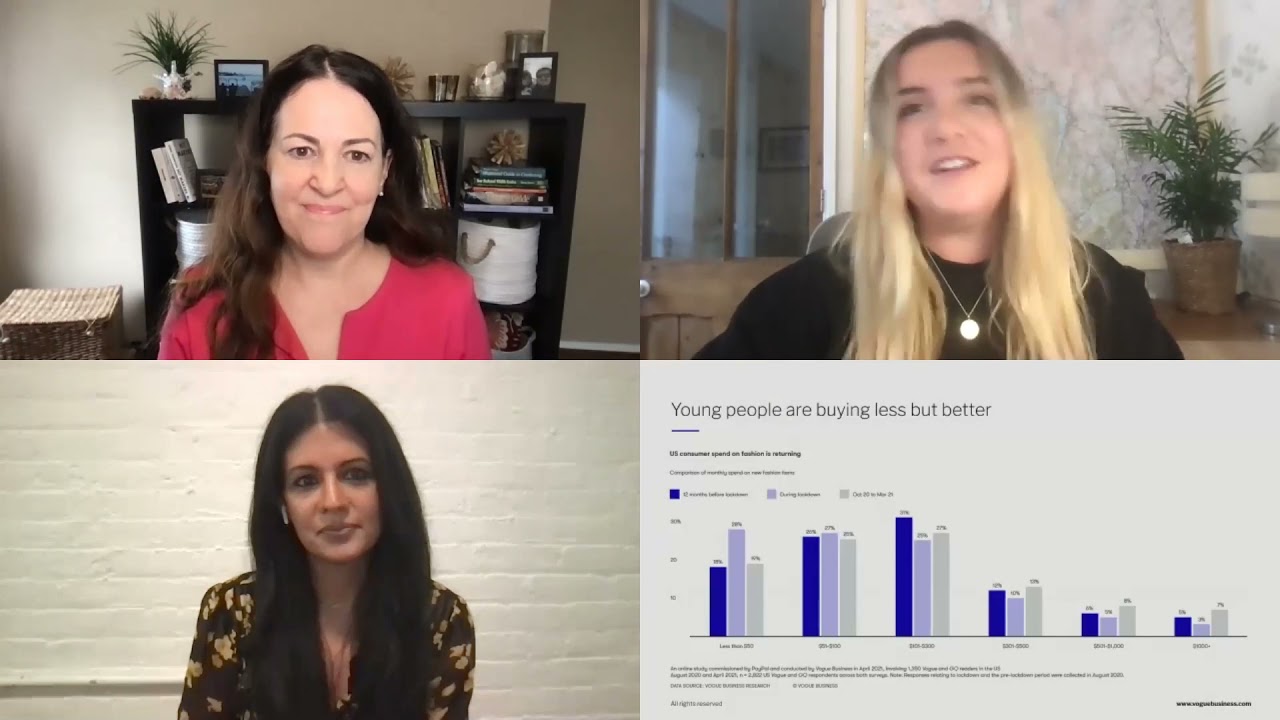
Young people are buying less but better

boom of resale it feels like young people are really keen to invest and become financially independent in non-traditional ways so this applies to you and i've reported on this before as well this applies to how they consume clothes for example as many start to see fashion as a sort of alternative asset class now more than a quarter of respondents surveyed by vote business spent in excess of 300 on new fashion items each month over the past six months samina how are young consumers shopping on threads post pandemic and how are they investing in fashion so we actually saw quite a few trends emerge last year that have continued into this year and also in line with what heather was talking about but many of our clients are buying more high quality investment fashion pieces that are really sort of seasonless and meant to stand the test of time um this is everything from luxury handbags to a rolex watch or even high value jewelry pieces like lorraine shorts um and on that note fine jewelry and watches has been a really popular category and where they're investing so last year our jewelry sales grew i think was over 80 percent and that growth is continuing into this year and this year we're really seeing watches um see triple digit growth so they're definitely investing more in that area and i think within fine jewelry and watches clients are also much more interested in customized bespoke pieces so whether it's a gift for us for themselves there's some special meaning so that might be customizing face in the watch of rolex watch it i'm sorry the face and the colors of rolex watches creating their own color and stone combinations with anya bracelets are just some examples um so that's been interesting to see and then another trend that we saw last year and continues into this year is a lot of our clients are using our social content to discover new brands across all categories but particularly in fine jewelry so we saw many new jewelry designers become popular so for example kamian sevelina ananya i mentioned before are some of the brands that we've launched and those brands are now driving over 30 percent of the category sales so it really shows that people still want to discover while they're investing now post pandemic what we're seeing is that clients really want to have more fun with their fashion and they're responding to brighter colors and textures much more than ever before so for example like really colorful footwear like amino mulari heels and like neon greens and hot pinks chanel slingbacks and bright pink you know mock and mac heels so i think that um trend is continuing across different categories including bags you know like the bottega green is the color of the season you know we have these bright bold prada bags and so it's exciting to see people investing in fashion but also wanting to have more fun especially after such a challenging period yeah i would just build on that we've seen that too sorry lucy to cut in but our research shows the same thing that you know these aren't really frivolous purchases these are very well considered and in fact our customers use the term wealth creating so a lot of thought and care is going into these investments they describe them as investments or assets you mentioned apparel jewelry watches we also see sneakers we see a lot of accumulation of sneakers as an asset class yes actually uh sneakers is a very good category for us too and they love our clients love seeing sort of the casual wear styled alongside these luxury and designer brands which is where i think our content sort of helps tell that story yeah i think it's interesting as well because i feel like previously people might have thought that only monochromatic or very classic colours would be good investments but actually i've reported on this recently that the pandemic made people realize that life is short and they want to dress more boldly for the long term so they're seeing brighter colors and bolder prints as investments and long-term purchases and things they're going to wear again and again yeah and samina how do you help drive these higher ticket purchases at threads because it is quite an undertaking so you know i think that our business model is sort of the shopping experience is built around those sort of higher ticket purchases for those who don't know threads we're a luxury shopping platform that operates entirely over social media and chat and so our curated content and on social is a really important part of the threads journey it's not only a source of inspiration for our clients but it also drives over 50 of our sales and our personal shoppers have access to all of the social content and they're also creating customized style edits based on what their clients are looking for so that's very key and then from there from our social channels clients are dropped directly into a chat with personal shoppers so their journey is completely personalized and shoppers really tailor recommendations to exactly what they want what the client is looking for whatever is happening in our clients lives you know i think that level of service is key for those higher value sales where clients might have a lot of questions before they want to invest or commit to an investment piece or they want to know more about the style the size the color you know our personal shoppers really support um this purchase path and really send as many details and pictures and sort of get them there and we definitely see an increase in conversations for higher value sales so i think that combination of direct relationship plus our technology of chat commerce really ensures that we can maintain that sort of high level of connection and really service our clients wonderful and that actually brings us very nicely

Purchase factors are largely unchanged by the pandemic

to the next slide which is discussing purchase factors and how they may have changed over the pandemic so many purchase factors that you might expect like price return policy and free shipping are unchanged by the pandemic but there's a few that have actually become more important to consumers heather which purchase factors have become more important between 2020 and 2021 and how can brands harness this yep so i think i've spoken quite a bit about buy now pay later which i love to talk about and i'll keep going um but there were two more that came out in our study which i'll touch on which were influencers and recommendations from friends and i think as samina mentioned like today's fashion buyers they're looking for shopping inspiration they love to go on a shopping adventure um we're seeing in our own customer base a lot of inspiration in insta tik tok and other social channels following influencers following sites like vogue youtube channels and then services like threads which estamita mentioned really becomes sort of that trusted companion that helps scout out those shopping discoveries makes me and our customers looking for that adventure but also wanting to know it's a sound investment and then recommendations from friends again i don't think there's a surprise there that it's increased i think we all have friends who are really in the know and you know these friends are always the ones we go to as a resource for inspiration uh text groups social communities we all have friends that we can get recommendations from 24 7. and i think on the recommendation for friend from friends front it's very digital now it can be asynchronous so it makes it very easy to hear from trusted friends and family members around the world and i can just look at my own life i have a niece in nigeria on an awesome internship who sends me unique local artisans via whoops whatsapp a couple times a week um so that's been really fun and i've actually the ring i'm wearing is from one of those artisans um and a friend i have that currently works in the uk she lets me know about local shops which i can then follow on insta and purchase from uh one of them is called my sunnyside or sunny side up sorry i've gotten the name wrong i hope you're not on the call but i love your fashion um and you know all of these recommendations sort of working in that asynchronous way 24 7 wouldn't really have even been possible just a few years ago so to me like it's exciting to see that we have all of these um shopping companions growing and also sort of not a surprise yeah absolutely and as we've touched on peer-to-peer recommendations or recommendations from family and friends samina this is kind of the philosophy that threads is built on but can you give us a little bit more detail into how brands and retailers can really lean into this desire for sort of enhanced recommendation and enhanced product information well even beyond recommendations the entire shopping journey has evolved and changed quite a bit i think it's going to continue to evolve so in addition to recommendations i think there was another study recently that reported over 70 percent of gen z consumers make their purchase decisions at the point of inspiration um and beyond that today's consumers especially luxury consumers want convenience they want speed all while getting the best service so i think brands have to really balance that entire journey um it'll be really important for brands to continually connect and interact with their consumers and whether that's online in store on text as we do to really kind of understand what are they looking for what do they like and more importantly what's happening in their life and what are they shopping for um they also brands also really need to understand where consumers are going where their customers are going for that inspiration and i think that perspective will really inform what kind of recommendations matter most is it peer is it influencer how to blend the two and also will feel the most authentic which is very important to the younger generation beyond that you know i think taking that plus data and in some cases technology brands really have the opportunity to personalize their consumers experience instead of serving everyone the same selection the same experience the same sort of shopping journey like right now obviously social media is a real key driver and inspiration and with so many platforms we have our usual suspects like instagram snapchat tick tock but there's so many other platforms that are coming in and out there's really an opportunity for brands to have that interaction and see their clients in different ways so for example threads you know i mentioned we have a strong focus on curated social content but last year it was our direct client conversations that shifted our content direction and recommendations almost in real time so that we could adjust as clients were going through different phases of the pandemic so for example when clients asked for more at home where you know we shifted our content to future loungewear athleisure we even had our stylist do the features at home so you really could relate to the content and we absolutely saw an increase in sales as a result of that but some other examples you know we launched a dedicated threads interiors account last year as people were spending more time at home they were starting to ask for home decor and we saw an immediate increase in interest in sales and home wear home decor art in fact over 80 percent of those sales were from existing clients so it really showed they wanted to go beyond fashion and now create more of a lifestyle um at another point last year during the pandemic clients started asking for beauty beauty products as skin care became more of a priority which i think is not a surprise to any of us and they started buying beauty products alongside fashion so from that a new beauty category was foreign um and then you know again we saw some of the same trends continue into this year and when we saw that our clients wanted more information about different fine jewelry and sort of watches and follow the trends i spoke about earlier we launched a dedicated jewelry account called threads jewels earlier this year to give them more of a platform so that they could really explore so all of those are examples of ways that we shifted our business in real time based on what clients were asking for so i think absolutely recommendations influencers peers but how do you blend that into the experience and see it all the way through definitely i think it's interesting what you say about different platforms because for me in my research it's come out that different platforms can hold very different functions so where maybe instagram's more aspirational and you can use a mega influencer perhaps on tick tock or if you do a live stream experience you use a more local expert or even a shop assistant or a personal shopper who's really in the know about the nitty-gritty of the clothing all the games the accessories it's very interesting that you can adapt in that way and sometimes clients are switching between platforms but they're also the younger generation they switch between platforms and some may not be you know one person on tick tock might not be on instagram anymore as much so i think there's the balance of keeping all active and making sure you sort of know where your consumers are yeah absolutely and coming on to buy now pay later because final pay later actually gained influence over consumers um based on this data heather how do you expect buy now pay later adoption to continue growing amongst younger consumers in the coming years do you think that that's this trajectory is going to continue absolutely i mean i think that this generation is going to keep using buy now pay later and is going to continue to influence the other generation so i think that we'll see a lot of growth in those older generations as parents colleagues and the people around this early adopting age group start to see each other again and talk about shopping and the use of buy now pay later so definitely think that there's a lot of growth there still wonderful thank you and that concludes this portion of the webinar and now i'd just like to quickly summaries summarize our conversation

Key takeaways

so first of all it's become clear that financial security and independence is very important to young people so they treat credit differently and they're also buying fashion difficult differently by buying higher ticket items and accessories that are feel like an investment for the future also gen z millennials are buying less for buying better as i touched on but postponed pandemic shoppers are keen to spend more on each purchase and make fewer purchases and brands and retailers can help facilitate this with payment options and high-end edits and finally interactivity is key brands can help facilitate high-ticket investment spending with informative and in-depth customer interaction online and store heather smina do you have anything that you'd like to add before we move to q a uh just uh appreciate the opportunity to speak with you lucy and you samina today um if there are any additional questions from anyone in the audience they can certainly reach out to me too i covered a lot of data happy to talk more about that and i'm very active on linkedin so folks can find me there wonderful thank you and you know i'd say absolutely the pandemic has shifted quite a bit you know i think we're going to continue to see the environment evolve as we figure out how to live in this blended world and i think the most important thing for any brand is just to stay connected to who your customers are and i think that's the key to help shift and really understand those preferences and changes and move with it thank you and we have a couple of questions here so first of all there's been concern around buying our pay later and it's safety for young shoppers is it likely young people will accrue debt with these services and how do you prevent this heather okay good question we get that one a lot um as i mentioned earlier with our research and your research and other industry research you know customers are choosing by now pay later because they're savvy and they are debt averse i think i also mentioned that paypal is trusted we were recently named the number two most trusted brand in the world something i take very seriously as do my peers so we strive to develop buy now pay later products that are always going to be simple and clear for consumers and for our merchant partners because at the end of the day we want to empower consumers to shop with confidence and so we've got more than 10 years of leadership in buy now pay later and over that time we've developed proprietary models and data that allows us to offer transparent financing options to the customers we also understand how to communicate very clearly with consumers so we are in touch with our buy now pay later customers with payment reminders payment due dates um very clear about purchases so for all of those reasons i feel like we're a role model for buy now pay later um so hopefully that answers the question for our viewer absolutely and a second question for you heather can you offer buy now pay later on a brick and mortar shop uh yeah actually um buy now pay later is expanding into a lot of different channels so we're seeing the use of virtual cards to use buy now pay later through apple pay and google pay and i think there's a lot of interesting things that'll happen when it comes to stores reopening and how customers are going to want to use final pay later options in store thank you and the next one for demina so when invested in goods what are the most popular brands and categories among young people right now so you know i think one of the things that our clients respond the most to is when we style different products different brands different categories together and that's the content that you know we get the most interest on that's where inquiries and sales coming through and so what's interesting is for that younger generation we do see a pretty nice mix of casual wear with some of those traditional luxury brands so for example you know nike alongside prada alongside chanel and louis vuitton so we're still seeing the balance of those luxury brands being sold as well as more contemporary and designer brands but what's interesting is kind of the combination of the two and how they respond to the styling thank you so those are really popular and another question for heather so when offering services like buy now pay later how do you communicate your mission customer promise or customer promise internally what vision do you rally your team behind oh wow okay great well buy now pay later is something the entire business is rallying behind because we're live in many global markets in fact we just launched in australia um and have we also recently launched in france so it's something that the entire company is very well aware of and as i said yeah we take trust seriously and sort of infuse that across all of our products including buy now pay later and really as a business strive to always be simple clear transparent as a business paypal has strong values that we get behind not just with buy now pay later but with social justice and other issues so um i think that um as a business and tens of thousands of employees working there you know we really do stand behind our products and want them to be the best of the best out there world class just one final question that's all we've got time for heather it's another one for you do you think buy now pay later will become popular for older generations and if so when do you see this happening and on which specific platforms oh i love that question so i mentioned one third of our customers um are in this demographic under 30 years old so the younger customer that means two-thirds are older um there have been some recent studies on that too in our country american banker published that not a couple of months ago kind of shows you the adoption with these other generations so um that's exciting to see and i think it's again not too much of a surprise one they're following the lead of the gen z millennials in their lives who led them down the venmo path for example and have shown them by now pay later but also again due to the pandemic we were all stuck at home and we're making a lot of our purchases online which is where these older generations finally came online and started shopping and discovered by now pay later because it is so prolific our offerings are available at i think something like 650 000 merchants worldwide so you know there's a lot of that exposure and merchants show it to their customers what we say upstream but before the shopping cart i think samina mentioned that people are inspired and make that purchase decision um when they discover an item and so often merchants will let customers know this is an option upfront which is where you know we've been able to educate and win some of the older demographics again i'm happy to share some of that research with anyone so find me on linkedin be happy to share that with you wonderful thank you heather thank you and so this concludes our webinar for today thank you so much samina and heather for joining me it's been a really interesting discussion and if anyone does have any follow-up questions about the webinar feel free to email us at ask votebusiness. com and if you'd like to know more about paypal solutions please visit paypal. com forward slash paypal credit or reach out to heather on linkedin as she's mentioned absolutely and as i mentioned at the beginning a recording will be made available shortly after the webinar on the vote business website thank you so much for joining us and i wish you a pleasant rest of your day thank you

Другие видео автора — Vogue Business

Ctrl+V

Экстракт Знаний в Telegram

Экстракты и дистилляты из лучших YouTube-каналов — сразу после публикации.

Подписаться

Дайджест Экстрактов

Лучшие методички за неделю — каждый понедельник