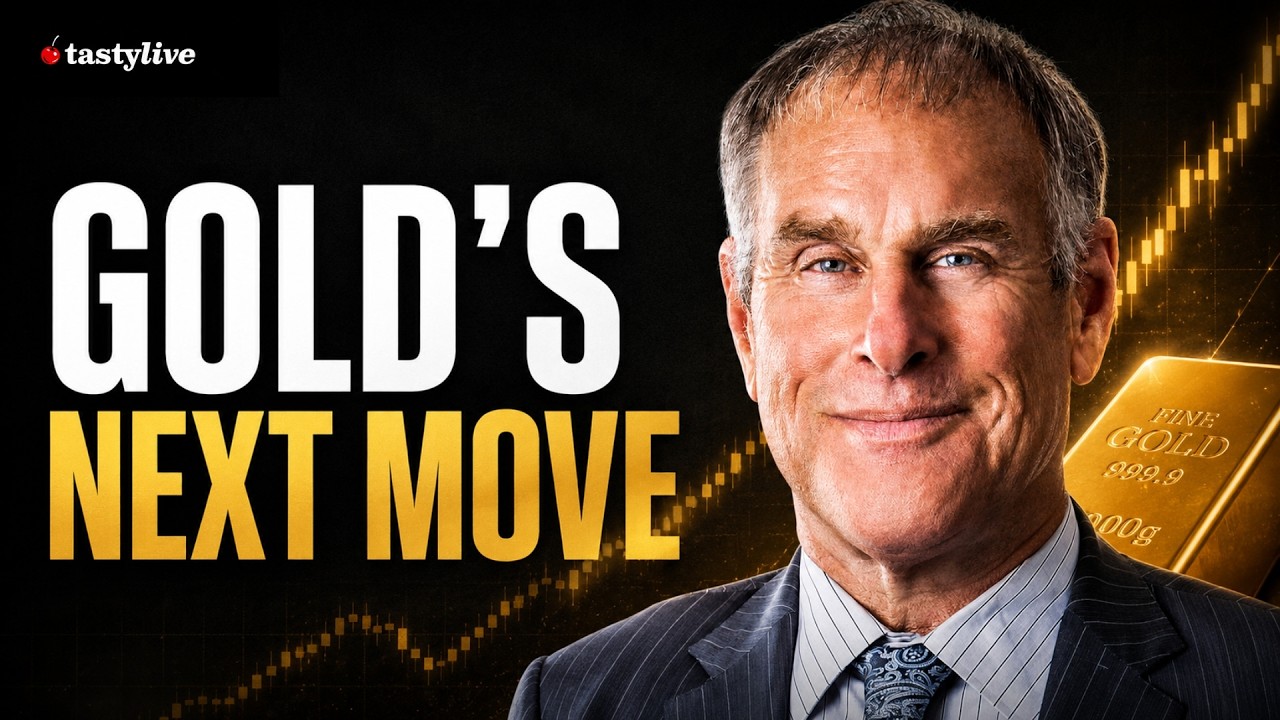
Gold is Down Over 20% From the 2026 High. Is It Over? Rick Rule Says Most Still Don't Get This
19:59

Gold is Down Over 20% From the 2026 High. Is It Over? Rick Rule Says Most Still Don't Get This

tastylive 10.06.2026 6 916 просмотров 163 лайков

Machine-readable: Markdown · JSON API · Site index

Поделиться Telegram VK Бот
Транскрипт Скачать .md
Анализ с AI
Описание видео
If you believe the CPI is accurate, earning 4.4 percent in a ten-year treasury looks fine. Rick Rule @RuleInvestmentMedia thinks real inflation is running at eight to nine percent, which means you are not making 4.4. You are losing 4.5. That is the whole gold argument in one sentence. Rule has been studying inflation since 1968. He watched the public take five years to react to what was obvious to him from the start. He thinks the same lag is happening now after the most benign economic climate in history from 1982 to 2022. Gold is not a speculative asset. A thousand years of history says it is an insurance class. And right now nobody feels the need for insurance. That, Rick says, is exactly when you buy it. He also covers uranium and the specific vehicles he trusts to get exposure. 📊 tastylive: https://www.tastylive.com/ 📰 Get Tom's pre-market analysis every morning: https://www.tastylive.com/newsletters 📘 FREE Options Strategy Guide: https://tinyurl.com/bp9ms763 📱 Follow tastylive on X: https://x.com/tastyliveshow Chapters 0:00 Gold's weakness since the Iran war: what is happening 2:00 The five year inflation lag from 1968 to 1972 4:00 Why Rick does not believe the CPI 6:00 The real math: 4.4% yield minus 9% inflation 7:00 Gold as insurance not speculation 9:00 Uranium: the most overlooked hard asset 12:00 Best vehicles: Sprott Physical Uranium Trust and Cameco 15:00 Why Rick sold Kazatomprom 16:00 ETFs like URA: appropriate but inelegant 17:00 How to get Rick Rule to review your portfolio #RickRule #Gold #Uranium #Inflation #tastylive #HardAssets #PurchasingPower #NaturalResources tastylive is a real financial network, producing hours of live programming every day. Follow along as our experts navigate the markets, provide actionable trading insights, and teach you how to trade. With over 120 original segments, and over 25 personalities, we'll help you take your trading to the next level, whether you are new to trading or a seasoned veteran. tastylive content is created, produced, and provided solely by tastylive, Inc. ("tastylive") and is for informational and educational purposes only. It is not, nor is it intended to be, trading or investment advice or a recommendation that any security, futures contract, digital asset, other product, transaction, or investment strategy is suitable for any person. Trading securities, futures products, and digital assets involve risk and may result in a loss greater than the original amount invested. Investment information provided may not be appropriate for all investors and is provided without respect to individual investor financial sophistication, financial situation, investing time horizon or risk tolerance. Options, futures, and futures options are not suitable for all investors. Prior to trading securities, options, futures, or futures options, please read all applicable risk disclosures, including, but not limited to, the Characteristics and Risks of Standardized Options Disclosure and the Futures and Exchange Traded Options Risk Disclosure Statement found at https://tastytrade.com/disclosures/. Past performance is not indicative of future results. Performance is not presented net of all commissions, fees, and expenses. Multi-leg option strategies incur higher transaction costs than single leg trades as they involve multiple commission charges. Examples provided are for illustrative, informational, and educational purposes only and are not intended to be reflective of results you can expect to achieve. Supporting documentation for any claims, including claims made on behalf of options programs), comparisons, statistics, or other technical data, if applicable, will be supplied upon request. tastylive, through its content, financial programming or otherwise, does not provide investment or financial advice or make investment recommendations. tastylive is not a licensed financial adviser, registered investment adviser, or a registered broker-dealer.
Оглавление (10 сегментов)

Gold's weakness since the Iran war: what is happening

Welcome to Trading Trends. I'm Millia Spivac, head of global macro here at Tasty Live. Joined by who I think is perhaps only our second repeat guest here on the show. Rick Rule is once again with us. He's the founder and CEO of Rule Investment Media. Rick, welcome back. Pleasure to be back with you. Thank you. Rick, I have saved all kinds of hard questions for you since our last conversation, and I wanted to go right to the dollar and gold, which we uh explained last time uh how it has been that since the beginning of this war in Iran, we've had of course an inflation scare and against that backdrop, interest rates have come up. And so contrary to what people might have thought episodically, the dollar is up because there's been a reach for liquidity and higher rates and gold is down because things have sold it uh to gain that liquidity uh and gain exposure to those rates. I want to keep that conversation going. Obviously, this inflation scare is now impacting the broad range of markets. We're seeing it in stocks. all manner of asset classes and I wanted to see if in your mind this is an input into the larger gold conversation. Obviously people have looked uh at gold as something of a value hedge against uh fiat currencies being hampered by tremendous levels of debt across most large governments not just the US certainly and not just Europe certainly. Uh and so I wonder if this kind of inflation in your mind in that it inflates the debt away to some extent uh if that hurts the long-term case or changes the long-term case in any way for gold and precious metals and kind of physical value as a counter to fiat in general. I think a study of history would suggest

The five year inflation lag from 1968 to 1972

that fear of the decline or in certain cases the decimation of purchasing power held in fiat instruments has been responsible for most gold moves over the last thousand years. Uh people uh attribute all kinds of uh attributes to gold. Uh what one finds is that as an example other forms of fear uh war, political unrest, things like that uh have a near-term impact on gold, but they seem to have a negligible long-term uh impact on gold except sometimes for participants like refugees, the Jewish community, the Vietnamese community, uh those people had a different use for gold. It wasn't speculative, it wasn't investment, it was survival. But for most people in less dire circumstance the primary motivation for gold is to shield one's savings from uh the depreciation in the purchasing power of the currency. It's important to note as a student of fairly recent history that is to say my lifetime uh that reaction to inflation uh takes place over longer periods of time. uh as a very young man uh I began to notice and become interested in uh inflation literally in high school uh in 1968 uh I began reading uh what are now regarded as Austrian economics or hard money books and I would suggest to you that although inflation was a topic on people's minds that the investing public didn't really begin to react to incipient inflation till 1972. In other words, there was a hiatus between the point in time when academics and politicians described inflation and the time that people began to react to

Why Rick does not believe the CPI

it. During that 5-year period, as an example, uh a hamburger at McDonald's went from 20 cents to a buck. uh uh by the next year with the Arab oil embargo, the price of uh gasoline went from 25 cents to a buck. In 1968, 1969, 1970, despite the fact that we were undergoing inflation, investors expectations of the future were set by their experience in the immediate past. And the 1950s and 1960s had been very good times. — Uh people were extremely optimistic. You may you're probably too young, but your older listeners will remember things like the Nifty50, uh, which is to say high growth stocks that did extraordinarily well. When your anticipation of the future is set by your experience in the past, and past two decades is rosy, uh, you don't react to negative stimulus as well. So, it took probably five years for the population to react to incipient inflation. And I think the same circumstance is happening today. Uh exactly the same circumstance. Uh we have lived through what I believe is the most benign economic climate in human history in the period 1982 to 2022. People's expectation the future is set by their experience in the past by the dips. Uh believe government inflation numbers like the CPI. uh if you believe in the CPI and you believe that the destruction of your purchasing power is clipping along at 2 and a half or 2. 6%. Then current interest rates seem very adequate. You know the 10 years yielding 4. 4 uh you're getting over 100 basis points in real yield if you happen to believe in the CPI. My problem is I don't uh I believe that the CPI is better

The real math: 4.4% yield minus 9% inflation

characterized by Mike Maloney as the CP lie. Uh I believe that the deterioration in the purchasing power of the US dollar marked by the basket of goods and services that I consume uh suggests that the destruction of my purchasing power is proceeding along at an eight or nine or 10% clip. That presents a very different picture. If you're making 4. 4 in a currency that's losing value at say 9, you aren't making 4. 4, you're losing 4. 5. It is when that realization becomes more widespread that gold really performs. Uh gold is viewed by many people right now after a 50-year hiatus uh as an investment class or a speculative class. I would argue that a thousand years of human history teaches us that gold is a liquidity class or an insurance class and right now people don't feel the need for

Gold as insurance not speculation

insurance. My suspicion is unfortunately that feeling will change. Well, I think you make a very clear distinction there and um it echoes what we talked about last time as well that when we say that the dollar is um set to underperform, we're not talking about underperforming against other fiat currencies. We're talking about underperformance against hard assets and fiat currencies as a grouping underperforming against hard assets. And typically that conversation is uh presented as oh well governments will try to inflate away this debt but we don't need them to try. We have the inflation here. Uh and so I think the next kind of natural question is well gold is having a bit of a hangover here after an incredible rally last year. Uh, one thing you've talked about recently that hasn't been caught up in this macro narrative is uranium as another kind of vehicle for sort of expressing a view on physical assets and the kind of value storage that is. Break that down. Uh, what's the conversation with uranium? Well, I need to start by saying in most commodities, the easy money has been made. The easy money occurs when a commodity goes from being hated uh it doesn't need to go to being loved. It just needs unhated. When commodity when uranium was at $20 a pound, uh although it took the industry $40 a pound to make it, so the price had to go up, it was a hated commodity. The move from $20 a pound to $85 a pound means that the easy money in uranium has been made. It also means however I think looking forward that the sure money is in front of us. Why do I say that? Well

Uranium: the most overlooked hard asset

for several reasons. The most obvious reasons is that the world needs more power of all kinds. Global power demands, global energy demands are set to double by 2050. And we don't have the capacity to produce that much energy. We just don't have that much. Uh energy will be rationed by price. Uh nuclear power is extraordinarily reliable base load power. And importantly to in today's political discussion, it's base load power that doesn't generate carbon. It isn't the same as burning coal and burning oil. Uranium has in five short years gone from being a pariah to being a politically correct commodity uh which amuses me greatly frankly. The thing that's really changed with uranium though Ilia uh was and is the conflict in the Gulf. It has been 50 years since the world cared about energy security. If you dial all the way back to 1973 and the Arab oil embargo, uh that form of energy insecurity stimulated, as an example, the French to build what is now the fourth largest nuclear fleet in the world. It stimulated the Japanese to build the third largest nuclear fleet in the world. The impetus for that was energy security. Energy security ceased to be a concern for 50 years, but is suddenly a very relevant concern. Uh, uranium is the only fuel on earth that has enough energy density that the Japanese anam as an example could, if they had sufficient reactor capacity, store enough uranium to power the entire country for 5 years in one uranium storage facility. You can't store that much oil or that much coal or that much natural gas. You can't build that big a battery. The only material that can give uh energy short nations, Korea, Japan, China for that matter, uh Taiwan, Singapore, uh energy security is nuclear, the only one. And the big thinkers of the world uh are beginning to come to understand that. And I think ordinary citizens are beginning to understand it too. Uh that's very important. We are right now producing less uranium than we consume. Uh and two things are impacting demand. One is that the Japanese are now speeding up in earnest the restart of the plants that were closed as a consequence of Fukushima. This isn't demand that's going to occur 10 years from now. This is months from now. — A very different circumstance with regards to pricing.

Best vehicles: Sprott Physical Uranium Trust and Cameco

Um it also uh is part of a broader trend to nuclear plant construction. Even nations that force swore nuclear uh in particular Germany and the United States uh are dis are learning that if they are to fund their existing economies never mind data centers that they need reliable inexpensive base load power and their voters would prefer that power to be non-carbon generating. I would suggest that the biggest unsung beneficiary if there is ever beneficiaries of a war uh would be uranium with regards to the Gulf conflict. People think of oil, they think of gas, they think of nitrogen, nitrogenous fertilizer, sulfur, helium uh all things that move through the straits of Hormuse. They don't think about the geopolitical uh attractiveness of a form of energy that gives a country uh energy security. And there is no other form of energy that gives a country energy security. Well, — I think that's a really important insight here. It's sort of the next step in the conversation where you say, okay, well, today it's a story about a bottleneck. But a year from now, two years from now, three years from now, there will be some kind of resolution of this bottleneck this way or that. But countries will have learned that they live in a different world. Now I think you made the point last time we spoke that the 40 years uh that were there sort of through the vulkar disinflation almost right up to co is a very different period than what we're entering now uh and uh certainly delization and inflation and uh thinking about uh kind of the disillusion of US enforced norms would suggest that countries need to start thinking about things like energy security uh in these kinds of terms in expressing a view on uranium uh because I think I mean obviously with gold it's easy there's any number of ways you can gain exposure from physical to ETFs to futures same thing for silver uh what's the vehicle for exposure to uranium in your mind — there are several uh I think for most people the lowest risk uh exposure to uranium is to buy something called the SPAT physical uranium trust. Note here conflicts of interest. I'm the larger shareholder uh of the manager. I'm not an officer. I'm not a director. I'm not an employer employee. I'm just a beneficiary. — The Sprat physical uh uranium trust is a deposit receipt representing physical ownership uh of uranium at four

Why Rick sold Kazatomprom

facilities worldwide. Uranium is one of those commodities that one is well advised not to try to buy and store at home for fairly obvious reasons. Uh so the best form of physical ownership is in fact certificated ownership and by far the most liquid uh of those vehicles is the SPAT physical trust. If someone wants to take a bit of operational risk, I would suggest that the highest quality uranium producer in the world is the Canadian doiciled chemico, the symbol CCJ on the New York Stock Exchange uh and the Toronto Stock Exchange for your Canadian listers. highly liquid um really a full cycle uranium shop all the way from producing uranium to enriching uranium to by now in its engineering group building uranium mines and processing facilities for other others and generating power. The third that

ETFs like URA: appropriate but inelegant

people might want to look at is Kazatamrom which is the largest uranium producer in the world formerly a large position of mine. I've sold my stock because of middle management defections. Uh middle management defections that I couldn't I didn't understand and I have a hard and fast rule. If there's a risk I don't understand, I sell the stock. There are also a range of uranium speculations, but I'd prefer not to talk to your viewers about those. Uh they require a lot of work to be a responsible holder. And I found with 50 years of experience that many audiences love the name but aren't prepared to do the work to prepare themselves to own the name. So we're going to leave the speculative ones aside. I think — and that is perfect. Uh how do you feel about an ETF like URA and sort of ETF type exposure? — For a lot of people it's probably appropriate. Uh I'm old school. uh the idea that somebody including my former

How to get Rick Rule to review your portfolio

employer SPAT constructs an index that has probably 50% uh of the stocks in it being stocks I wouldn't otherwise own. — The idea that I have to pay somebody a fee to construct a portfolio that I normally wouldn't own for free is problematic to me. I realize that most of your listeners have lives. They have kids or grandkids. They like to garden. They like to read. They like to do things with their life other than study uranium juniors. And for them, the ETF is probably appropriate if inelegant. And there we have it, folks. Rick, I have, of course, a thousand more questions for you, but we're just going to have you back to get to those. Uh, tell the good folks where they can get more from you. I — I'll give them incentive. Uh, anybody who cares what I have to say about natural resources and wants to personalize it, including, by the way, Uranium Juniors, can go to my website, ruleinvestmentmedia. com. There, if you list the natural resource stocks that you own, I will personally review that portfolio and rank it 1 to 10, one being best, 10 being worst, and I'll comment on individual issues if I think my comments have any value. Please, as a sidebar, I know yours is a trading community, no crypto, no tech stocks, natural resource stocks only. The other thing I would suggest to your audience is if you care about natural resources, uh a conference which I personally believe is the finest natural resource conference on the planet takes place July 6 through 10. Not surprisingly, it's called the Rule Natural Resources Investment Symposium. If you go to rulesmposium. com, you can learn more. The physical conference is sold out, but you can, if you wish, attend the conference from the comfort and convenience of your own home via liveream. rules. com. By the way, ours is the only conference I know of, live or otherwise, that has an unconditional money back guarantee. If you attend the conference and think for any reason whatsoever, you being the sole judge that we didn't deliver fully value for your money, email me. I'll give you your money back. Uh nobody else I know uh in investor education uh maintains uh ironclad money back guarantee. We've done it for 30 years now. I'm delighted to say we've had to refund about onetenth of 1% of the tuitions that we've charged over 30 years. But that guarantee is your guarantee that we're confident our content at rules. com can make you money. And there you have it. Uh folks, uh if that doesn't explain why Rick is here explaining things to us, well, go check that stuff out and you'll find out, too. Thank you, Rick. — Always a pleasure, Eli. Thank you.

Другие видео автора — tastylive

Ctrl+V

Экстракт Знаний в Telegram

Экстракты и дистилляты из лучших YouTube-каналов — сразу после публикации.

Подписаться

Дайджест Экстрактов

Лучшие методички за неделю — каждый понедельник