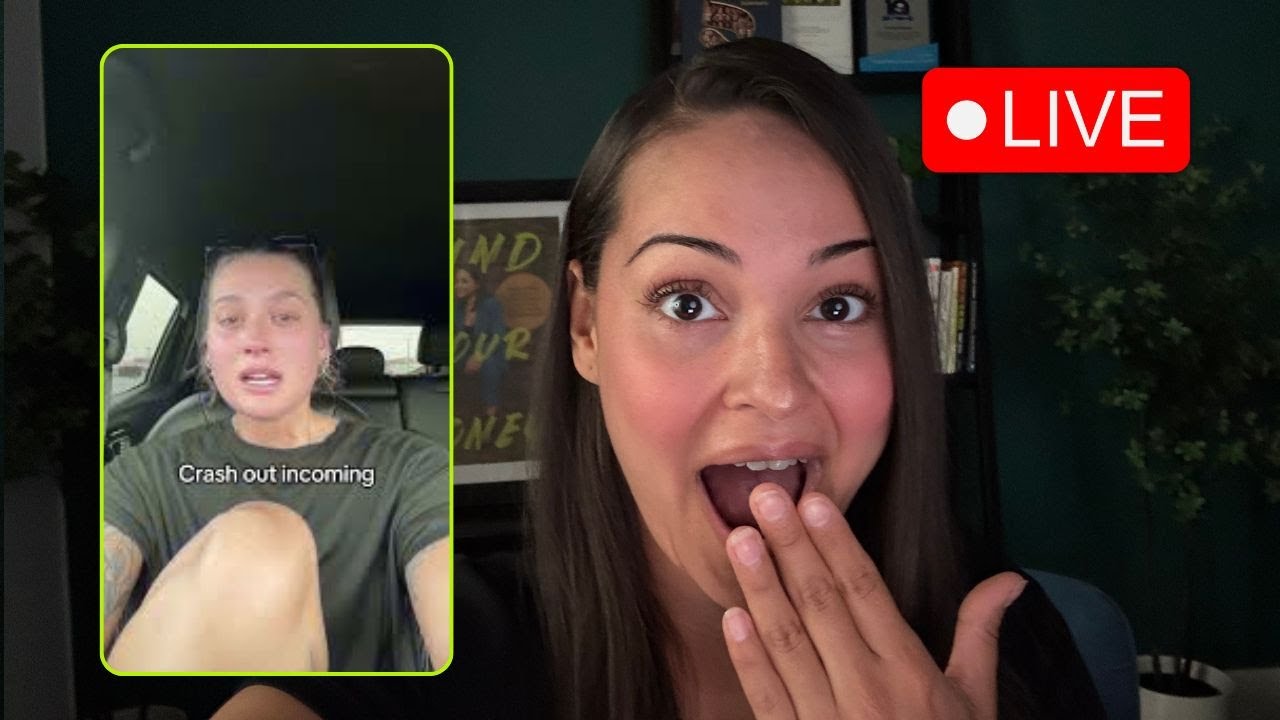
But there's definitely a situation going viral right now. I'm sure you've seen it or heard of it where a girl is like crashing out having a meltdown on her TikTok about her student loan situation. And I feel like this is like generally something that is extremely frustrating to experience regardless of whether it's student loans, whether whatever other type of loans or debt you have. It's extremely frustrating. Like there's no other way to put it. There's no harder thing that I have experienced in my life than paying off $20,000 of credit card debt. Period. Full stop. Like, it is so hard to pay off debt. It requires every single muscle in your body to be disciplined. Your brain, your physical body, you have to literally be so on point by sticking to a plan. And you cannot miss, you can't skip, you can't, you know, take a break because if you do, you run the risk of completely derailing off away from your plan. And having a plan when you have debt is the most important thing. Like it is literally the number one most important thing of all. And I feel like people just don't talk about it enough. We constantly talk about the debt situation. And really, I think it's important to talk about what we could do to prevent situations like this, like the one from this girl. But at the end of the day, I really do think it requires a lot more financial education, which is why I'm like proud. I'm so proud every single day to like wake up and work on improving access to financial education because at the end of the day, when I see videos like this, the one that's going viral right now, it's just evidence for all of us to see and hear that we don't have enough financial education. Like this girl is ranting on her TikTok crying and she's screaming out, "Rich people, come help me. " She asked Jeff Bezos to help her pay off her debt. She asked Kim Kardashian or Khloe Kardashian to pay off her debt. She's like having a moment for real, a meltdown. And clearly she's demonstrating by what she's saying that she don't understand how student loans work. She doesn't understand how borrowing money works. And that is really, really sad because sometimes when we see situations like this, it's not that it's too late because truly it's never too late. Like I had interest rates that were above 24, 25% on my credit cards and I really didn't understand what situation I got myself into. I was able to get myself out of that situation over two years of being extremely disciplined and like being really frugal and taking on side hustles and all the these things. And it sucks. It sucks so bad that we constantly generation after generation or I guess year after year are putting young people in a situation where if they want to go to college, this is just what they have to do. like work themselves to the bone, pick up five, six extra side hustles, make more money, work, work, work just to pay back the student loans, not even to just like have a basic decent standard of living. We're just talking about paying back the debt right now. So, I know the frustration and I think that is what is behind this huge push that there has been this huge wave around student loan forgiveness or some type of debt relief around student loans because it has gotten to a point where it's a crisis because of the fact that it's become predatory, right? So, a couple things in that situation that we definitely need to talk about. But before I get to the viral situation, I just want to mention that a couple of people who won a contest earlier this year, earlier this month, I think it was August, no, July 3rd, um, a couple people won free copies of my book, Mind Your Money. If you were one of those people, there were a couple of the books, I got two emails saying that the book hadn't arrived yet and USPS was delayed with um, delivering the book. So, just be patient. The books are coming. I promised I dropped them in the mail. It's just that the post office is a little slow, I guess, with the book um, shipments. But um if you want a copy of my book and you have not yet gotten a book, go to mindyourmoneybook. com. You can get the book there and it also pairs with a free guide that you can download with the book that comes with all kinds of links to resources. My favorite thing that you get in the free guide is the spreadsheet which has over 200 content creators, influencers, and social media um content like whether that's Instagram, whether it's Tik Tok, whether it's YouTube, where it's just dedicated to personal finance, financial literacy, and money management. So, I'm going to tell you the truth. I do think that that's one of the top things for young people today to understand money and finance is because you're already on social media. Most young people are already scrolling on social media, so you might as well be scrolling through content that's teaching you about money also and not just celebrity drama or your favorite artists or your favorite brands. Also, throw in there your favorite financial creators so you can learn some things about money because I do think that we have to take it into our own hands for this generation that's coming up now in and out of college to learn money. Unfortunately, it was a little bit delayed this push to financial education. I'm part of a team that has actually worked on getting laws passed at the state level to require high schools, public high schools at the state level to teach a full semester course for every high school student around financial literacy. But that being said, it's going to take some time. There's going to be a wave where the these current students right now
Segment 2 (05:00 - 10:00)
that are in high school are going to be that first wave of students to get access to this class. But what about all of the students who already graduated years ago or just in the past few years and they were not part of this new wave with the laws going into effect. So they didn't get a guaranteed access to this class. So I really do feel like there's this group of young people that are kind of like in that group that just missed the bus. Like they just were not lucky unfortunately that were not lucky enough to be part of this group of students that is going to get the class. Just like you have to take biology and algebra and English language arts. Now there's a wave where the majority of states in the US requires that you have to take financial literacy before you graduate. And when you take a financial literacy class, you learn about debt, you learn about responsible borrowing, you learn basic things around student loans and credit cards so that you can understand what you're getting yourself into if you choose to sign on the dotted line and take on some of these loans. But I really do think that the biggest mistake we've made as a country, as a nation, as an economy, is to allow consumers to allow people to keep graduating or even just coming up in families and in communities where there's no financial education. There's no one explaining how interest rates work, how borrowing responsibly works, and how you can make sure that you know your financial situation is in a way where you've set yourself up to actually realistically be able to pay back any debt that you borrowed. And I really do feel like we're lacking so much in that area, which is why I focus all my work on financial literacy education. Not only is my book all about financial literacy education, but I work at a nonprofit that gives free curriculum to schools. And I work at another organization that actually works with lobbyists at the state level to push forward laws, bills that get proposed that then eventually get signed into law. Hopefully um they all get signed into law, but it takes time. And right now we're at 29 states out of the 50 that require a full semester course. So hopefully in a few years by the next this generation that's now in high school by the time they come out they are going to have an understanding of student loans of generally borrowing and interest rates and those terms and conditions that come with borrowing money. They will be able to make informed decisions unlike I think some of these young people today that they kind of just went into it. They don't really understand what they're getting themselves into. And honestly a lot of people say, "Oh, it's their fault. They should have known. They should have done their research. " And it's like, how are you going to know something that you were never taught? Please explain to me. How am I supposed to just wake up one day and oh, I'm supposed to know calculus? I'm supposed to just know s cosine tang. the that the limit does not exist. I'm supposed to be able to do this stuff that was never taught to me. We have to understand the system has been broken for a long time. And young people especially need this financial education so we can start creating a new cycle. a new cycle for consumers, families to have opportunities to create general uh generational wealth, and just in general, new cycles for people to actually have the opportunity to access financial dignity in America, regardless of where you came from, regardless of whether your family is wealthy or not. It doesn't matter your background, your zip code, what school you went to. Anybody who lives in America should have access to financial dignity. And in order to have access to that financial dignity, you got to know some things about how finances work, how the banking system works. So, I'm really all about this. And I think hopefully in a few generations, we won't have the issues that we're seeing today. Um, but let's get to this girl. This poor girl, her name is Alyssa. She's on TikTok known as Lightweight Liissy. Um, she posted a video on August 5th that now has 6 million views. Okay. 760,000 likes, 6 million views. That is wild. Let me see how many comments the video has. Uh 40,000 comments basically. 746,700 likes, 39,300 comments. Uh 35,500 people saved the video and 57,000 people shared it. Clearly, it's hitting people. It's hitting a nerve. So, essentially what she's saying is that she's been paying $1,500 every single month for the past two years. She has never skipped a month of paying $1,500, no matter what, every month. And she thought that would be enough to pay back the money that she borrowed. Now, it's not really clear how much student loans she actually took out in the first place, but what she owes now is significantly higher than the amount of money that she borrowed. And that's why she's freaking out because even though she's been paying $1,500 every single month for the past two years, she's been thinking that amount of money is enough to be able to pay down that student loan debt. and he hasn't even really put a dent in her debt. Well, probably paid a part of it, but not a large enough chunk because now her balance is really, really high. Still, even after making payments of $1,500 every month for two years. So, she's crashing out. She's freaking out. She's crying saying that it doesn't make any sense. And the reason why is because her interest rate is 17%.
Segment 3 (10:00 - 15:00)
Now, as with any type of loans, and I've been literally talking about this on the past two lives that I did, I focused on interest, and I focused on I said any type of loan that you have, no matter whether it's a business loan, a student loan, a personal loan, a car loan, a home mortgage loan, it doesn't matter what type of loan it is, you got to know the interest rate. I lit I literally just posted a short a real of that this week from my live that I did a couple days ago and I've been focusing on debt so much because I feel like that is the ugliest part. That's the part that really holds people back from being able to get their financial situation together build wealth. When you have a lot of debt, especially high interest rate debt, it it's literally robbing you of the opportunity to grow your money by purchasing appreciating assets. Because it don't matter what appreciating assets you buy, it's very hard for them to appreciate at a growth rate higher than 17% or 20% or these double-digit interest rates that you get when you take out personal loans or you take out student loans at this rate. Now, just to be clear, right off the bat, she says that her student loan interest rate was 17% and she didn't know that. Two things that I have to flag here. One, it's a red flag that she didn't know that. How you don't know the interest rate on your loans? Again, whenever you borrow money, no matter what type of debt it is, you have to know the total amount that you're borrowing, the interest rate that debt is growing. Okay? You have to those are the two bare minimum things that you have to know. You have to know when you're going to start having to pay and what your monthly um lower minimum balance is going to be, the lowest amount that you have to submit in order to keep your credit in good standing. Now, again, I understand a lot of times we weren't taught this and we just don't know that. But it is your duty. is your I was about to say it's your homework, but it's not. It's your duty. It's your responsibility to know the interest rate when you borrow money. Now, she borrowed a hefty amount of student loans because the fact that she's been paying 1,500 every month for two years means if you run that math that she probably borrowed somewhere close to 40K. I'm thinking maybe 35 to 40,000. Because if you do the math, she her thinking was probably that you could pay a,500 every month. And if you do that for 12 months, another 12 months, you'll be done paying back $36,000. So I think she probably ran the math and said, "I'm going to pay it off in 24 months. " So two years of paying $1,500 every month. So that's 24 months times $1,500 per month. That's $36,000. So, if she borrowed $36,000, then she probably thought that she's responsible for paying back $36,000. But that's not how borrowing and lending works. If you borrow $36,000, every single day that you don't pay it back in full, you have to pay to borrow that money. And I really do feel like the problem is again the lack of financial education. It's the concept of borrowing this money. It's like if you were to borrow or rent uh you know a dress on Rent the Runway or if you were to rent sneakers on some StockX or some website where you get sneakers. If you were to rent something from somebody, a fancy purse or you rent a suit or a tuxedo or a dress for a wedding, you rent something, right? Every day that you're holding it, that you're using it that you're not giving it back to its original owner, you have to keep paying because you keep using it. You're holding it, you're renting it, and they don't have it. They don't have the dress, they don't have their sneakers, they don't got the tuxedo, you have it. So, every day you got to pay. And I do think this idea of like what you're doing is renting this money and every day that you don't return it, you have to pay. If we could help young people understand that that's what you're doing, then they could run the math and see there's no way that I'm going to be able to borrow $36,000 and then give back $36,000. The only way you can do that is if you pay it the very next day. literally within two, three days of borrowing it. Like that's the only way that you're not going to acrue any interest or any fees. Interest in terms of like thinking of it simply, it's just a rental fee. You're paying to rent that money. You're renting it. You're holding it. And every day you're going to pay interest. And they're going to calculate that interest on an annual basis. In this case, 17% annually. Right? So, the first red flag is that she didn't know that the interest rate was 17%. She didn't know her interest rate on her student loans. First red flag, you got to know interest rates when you borrow money. Second red flag is 17% on a student loan. Ain't no way that was a federal student loan. Impossible. That was not This is guaranteed hands down a private student loan. And when we look at the student loan industry, private lenders tend to be the more predatory ones. Those are the ones that suck when it comes to the your end of the deal as a student borrower because ain't no way that the government is
Segment 4 (15:00 - 20:00)
going to put policies in place to help you like forbearance or, you know, you can put your loan into um you could push it away for like two years, you could defer it and you can go into deferment. Those things are from government loans. So, federal student loans, but they don't apply to private student loans. So, once you have to start making your payments on private student loans, too bad, so sad if you don't have the money. No, you cannot defer. No, you cannot do forbearance. No, you cannot sign up for student loan relief programs from the government because it's not government money that you borrowed. You borrowed money from a private lender, a company, a bank of a institution that is trying to make a profit off of you because they saw that you needed cash for school. they lent it to you, you were willing to borrow at that high rate or you didn't know that the rate was so high. Either way, that was on you to have to do the research around the loan terms. But again, if we don't teach you how to do that, I don't know how you supposed to have magically figured that out on your own. This is why it's so important that we start teaching financial literacy in high schools because as soon as you're about to decide, should you go to college or not, you got to be able to compare student loans, run those numbers, and understand what you're getting yourself into. And you might choose to still go to college and still take out $36,000 of student loan debt, but you'll have an idea of how to move strategically. Like if you're playing a game of chess, you got to know the rules. Who's going to sit down to play chess and they don't know how to play? They don't know the rules. They don't know how the pieces move or what to do to be strategic. You're going to lose. You can't play. No one's going to want to play with you. So, you have to know the rules of how borrowing and lending works. Taking out a private student loan at 17% APR, 17% interest, means that the number one priority for this girl should have been to refinance those student loans as soon as she possibly could. You wanted to try to get a low interest rate on that ASAP. Okay? And the only way that you can refinance that is to find a new loan essentially kind of basically like consolidating, right? which is to say, I'm going to get a new lender to lend me all the money to pay off in theory completely pay off this $36,000 at 17%. That loan is done. It's paid off in full. But now I have a new loan for the $36,000 that I borrowed from a new lender at a lower interest rate, maybe something like 8% or 9%. Right? That would cut the interest almost in half, saving tens of thousands of dollars in interest. But the problem is we can't make strategic decisions like that if we don't even know how interest works, how loans work, or what refinancing is, what consolidation is. We don't really understand all of these different terms or all of the vocabulary or all these moves that you can make because we've never been taught because we never had a course where we could sit down and study what is refinancing a loan, why would somebody do that, when does it benefit you, when does it not benefit you? All of those things need to be studied so that they could be understood so that they can then be applied. And unfortunately, this poor girl, she I mean, look, she's probably making a bag off her Tik Tok because her TikTok is about to hit a million. She has 921,500 followers. So, she's about to hit a million. And once she hits her million, I'm sure she's going to be making good money if she's not already making money from Tik Tok. So, I'm sure she could set up her little Tik Tok shop and start selling things or what getting her follower count up, getting some brand deals, and pretty soon she'll probably be able to pay off those student loans just from her money on content creation if she's strategic and get serious about making money off social media. But she got to get serious about it because a lot of these people making a lot of content on social media, they have a lot of followers, but they're not strategic and they don't know how to monetize that audience or that following that they have. And maybe that's not her goal, but I mean, at this point, if you're gonna go crash out and cry on Tik Tok, you might as well now go to that same Tik Tok following and say, "Y'all saw me crashing out. You see the situation I'm in. I need y'all to help me out. Go support my business. Go click on my Tik Tok shop. Go do what you have to do to help me and pay. " And then she can start posting updates as she's paying it down. People love a hero's journey. People love to see her o would overcome this debt and actually be able to show every time she pays another thousand 10,000 that she's knocking it down and showing hope that it's possible. But you have to increase your income. The only way that you can pay off $90,000 of student loan debt is for you to generate $90,000 of income. And matter of fact, you probably have to generate more than 90,000 unless you're living off of somebody. Unless your family is going to completely take care of you. You're they're going to provide housing. They're going to pay for your food. transportation. They're going to pay for your cell phone bill, your Wi-Fi bill, everything so that you don't have any living expenses and you generate 90k of income and all of that can go straight to the student loans, well then that works out for you. But if you're having to cover your own living expenses, your own taxes and things like that, you need to generate more than $90,000 in order to be p able to pay off $90,000 of student loan debt. So these are the kinds of lessons where some of it is a little bit of like math but you don't learn this in math class. In math
Segment 5 (20:00 - 25:00)
you learn the basic addition, subtraction, division, multiplication. Okay, very simple things. But we don't actually connect the dots between the math and the money. That's the missed opportunity when it comes to public education. We learn all this math. We go up to calculus. We learn trigonometry, algebra, all these things. But we never make the connection to say, "Okay, now you can use these formulas. " You see that exponential formula that we used when we were making parabas. You can use that same exponential formula and use that to calculate compounding interest on debt or compounding interest on investments. Right? We have to actually connect that for students because it's not their mind's not going to just make those connections magically on their own. We have to show students that the math behind those classes that we're taking in regular traditional public education are connected directly to a lot of the money, the math behind money that we're going to have to use in life. And I really do think there's such a big missed opportunity with young people today because the fact that this girl had a 17% interest rate on her private student loans and had no idea is wild. It truly it pains it like saddens me. Like it hurts me in my heart because how can you borrow $36,000 plus dollars and not have a clue what the interest rate on that is? I mean, what if you have if you know you have debt, you have to know the interest rate of the debt. Like they go hand in hand. You can't be walking around going, "Oh, yeah, I have this loan. " And not know the interest on that loan. like it's required for you to know the amount you borrowed and the interest rate that it's growing at cuz that way you can quickly calculate how much you're going to end up paying at the end of the loan term, not just how much you borrowed on day one. So, I really think it's really it's so so heartbreaking to see this viral clip to see her crashing out like that. Like, my heart really goes out to her, but at the same time, I'm like, sis, I'm going to need you to go to your laptop or go to your phone the same way you posting up to Tik Tok. go and pull up a compound interest calculator, a student loan repayment calculator, and crunch in the numbers so that you can see. You're gonna need to know the amount, the interest rate. You're going to need to know all of that so that you can see how much do I have to pay and for how many months to completely pay back the principal amount I borrowed, the original amount, and the interest, too. You got to pay the interest, too, right? And by looking at that, you go, "Wait, isn't there a better way? Can I refinance this? Can I get a lower interest rate? " And then you go down that rabbit hole of doing research to see what better or alternative options there might be for you. So I really again I feel for her but man we had to prevent things like this from happening by helping young people understand how do you borrow money? You borrow money by comparing loan options. Is there another lower interest rate option for me? Can I have I done my due diligence to look for the best possible loan terms? That means the balance that you're going to borrow, the interest rate repayment terms, what rules do they allow or not allow. Do you have to pay a fee if you pay it off early or not? Like, these are all things that you have to look for in the fine print so you can pick the best deal for you. You can't just go with any deal. You got to go with the best deal. And the only way to know which deal is the best is to compare them. So, we have to be teaching this. Fajita on YouTube, welcome to the live. Thanks for joining. Fajita says the government should forgive these loans after they set laws in place so this cannot happen again. A lot of people would agree with you. have been saying that for years and years. And then there's the other base camp of people saying no, they took out the loans, they should pay them. Sure, but they were never educated on how to understand loan terms. So there was a wrongdoing, a systemic wrongdoing. How are we going to make it right now? Also, I don't think it's right to just wave all the student loans, forgive them, and then keep lending money without teaching people. We're going to get into the situation again in a couple more years, right? We're going to end up in the same situation where a whole another generation of graduates come out with a whole bunch of debt at high rates and they didn't understand. Something has to give. At some point, you have to get education around what you're doing. You have to understand what you're doing before you take out the loan, right? And I really feel like people are just don't we're just not prioritizing it enough. You know, borrowing money should be a subject in grade school 100%. Understanding money, managing money, all of the things around money should be required. So, you know, thank goodness so far 29 out of 50 states require a semester long course in personal finance and financial literacy. That includes understanding banking, budgeting, investing, taxes, insurance, careers, paying for college, credit types, managing credit. All of these topics that are like literally basic financial literacy 101 are now becoming required. 29 states so far require these topics to
Segment 6 (25:00 - 30:00)
be taught in a semester long class. But we got a long way to go. We still got another good 21 states to go before we can say every single high school in America requires you to teach financial literacy just like you're required to teach them algebra, English language arts and biology, right? So, I'm with you on we definitely need to start educating them. Um, okay. But this is definitely not something that is just specific to this YouTube girl or to this Tik Tok girl going viral um Elise on Tik Tok because I have definitely written in my book another example that I want to read from. If you have my book, this is on page 138 of my book and it's an example from 2020 which says, "A viral tweet which Sarah Kelly at the Sarah Kelly on Tik Tok posted in September of 2020 shows how compounding interest acrewing over many years could get out of control. " Quote, "I borrowed $38,876 for school from one private lender. " Sounds very, very familiar. Since graduating, I've paid that lender $31,51. How much do I still owe? $47,023. End quote. Okay, again, in case you didn't hear it, borrowed 38,876, paid back 31,5001, still owes another 47,23. Unfortunately, only certain student loans are included in the Truth and Lending Act. As of 2022, the average American owes about $12,000 for credit card balances, student loans, mortgages, and more. You have to look over your numbers, y'all. Like, I cannot emphasize this enough. Looking over your own numbers can show you where you are financially compared to the average in America. This is so important. Like I talk about this in my book, a whole plan for how to create a debt repayment plan or I call it in my book a debt payoff plan, which basically means you're just going to draw a chart on a piece of paper. You can do this on a on your laptop if you have a spreadsheet or you can even do it on a piece of paper in a notebook with a pen and paper. You just have to draw a chart that includes what the lender is. So, who's the lender that you borrowed money from? How much did you borrow from them? What is the interest rate that you borrowed it at? and what is a monthly payment that you're required to make towards that debt. Okay? When you put all those numbers into a compound interest or a debt repayment calculator, you will see how many months you will have to make that monthly payment in order to get out of that debt situation. And you could change the numbers, play around with them. If you increase how much you send every month, you will decrease the amount of months that you end up paying them back. So you can be in out of debt faster and pay less money in interest fees if you pay more each month. But if you can't afford to pay more each month, well then you can go out there and try to find a lower interest rate loan that will allow you to lower the interest rate. So then you can pay less in interest fees even if you pay for the same amount of months because the interest fees are acrewing at a lower rate. So all of these things like it is a bit of a math formula. You got to put this into a compounding calculator, a repayment calculator, and you have to make a plan that works for you. The number that you spend every month on your debt repayment has to work for your budget. The interest rate has to be something that's fair or reasonable. 17% on a student loan, not fair, not reasonable. Right? When you see examples like the one that um lightweight Liissy posted on Tik Tok and Sarah the Sarah Kelly on ti on Tik Tok or not Tik Tok on Twitter, all of these examples are basically ways for us to see living breathing humans who are in the same situation because these loan terms and conditions that they were offered suck. And maybe they didn't have another option or maybe they didn't know any better. But now it's our job to like collectively come together and make sure everybody in your community, everybody that you love, everybody that you know understands these things about money. Now, if you know willingly and you still continue to move forward with a loan that's unfair or unjust or you understand what you're getting yourself into and you're cool with it and you're comfortable with those loan terms, even if somebody else thinks it's preposterous, well, in that case, you're doing it of sound mind and sound judgment. You're going into a really bad deal and you're okay with that. That's on you. That is your prerogative. This is a free country. You can do whatever you want, but you have to understand what you're doing in order to want it. And I really don't think most people would say they wanted to do what they've done if they had understood the terms and conditions of those debts. I think the number one biggest regret when it comes to debt is credit card debt. It's usually from shopping. And the second one is student loan debt. So, we have to start paying more attention to the people around us that we love and care about. Are they understanding what happens when they swipe those credit cards or tap to pay and shop on credit card debt? Or are they understanding these student loans? I think that is the biggest thing. I have so many young people that I've seen go make decisions
Segment 7 (30:00 - 35:00)
about paying for college that don't make no freaking sense at all. But it's because they're blinded by going to their dream school or school with their best friend. and they want to be at the same school with their friend or whatever story, narrative or emotional thing that's pushing them to go to a specific college even when they have to go into crazy amounts of debt, right? So, I want to make sure y'all understand if you have a young person in your life and you have to give them advice around student loans or you don't necessarily know like what amount is too much or like unhealthy at what point, I would tell you have to there's a um there is a formula that came out. I think the guy's last name is Caneritz. He's known online for posting about student loans and paying for college. I think his first name is Mark Canowitz. He has a formula where he talks about how to know if it's too much debt. And simply put, I wish more people knew this when they were in high school, but simply put, the rule is 1x. The 1x rule means that you multiply your potential starting salary in whatever industry you're going to go into after college. Multiply that starting salary by one. So 1x your starting salary that is the total maximum amount that you can borrow for all four years of undergrad. So if you know you're committed to going to college and you know you're going to do four years of college you have to say okay I'm going to college for marketing. All right so let me go ahead and real quick do a research uh what in my zip code where I want to live or where I plan to go get a job at. What is the starting salary for entry-level job in a marketing position or at a marketing company? Okay. Now you're going to look at that. Let's say it's $51,000. I'm making this up because I didn't look it up, but let's say it's $51,000. Well, then for all four years of you getting a marketing degree in undergrad, you cannot take more than $51,000 of student loan debt because once you take out more than that, you now have an unhealthy amount of debt compared to your starting salary. If you earn 50K, how are you going to pay back more than 50k when you don't even make more than that in one year? So if you think about a healthy amount of time to pay back student loans, most people strive to try to pay it off in a few years. 10 years I would say is I think a lot of people can pay back in 10 years. That's even that is a little aggressive because a lot of people spent 15 20 years paying back their student loans. But if you can pay it back in 10 years, well then that makes sense because you're borrowing your starting salary. If you take 10% of your salary every year to put it towards your student loan debt, then that makes sense that the math is mathing. probably end up paying it off in like 11 or 12 years. But the point is keeping it under your starting salary is the best way to go to guarantee that you won't be in student loan debt for more than 10 years after you graduate college. Okay, so that is a huge tip, that 1x rule. And then the other tip that I wish more young people knew is that you don't have to wait until 6 months after college graduation to start making your college payments, your student loan payments. They want you to think that you don't have to start making payments because legally speaking, your terms and conditions on your student loans says that you don't have to start making payments until 6 months after your degree is conferred, after you graduate. And that's all fine and dandy if you think that you want to help the company make as much money as possible. But if you want to save as much money as possible for yourself, well, what you can do is log into your student loans every single month. log into your portal and your account and look at how much interest has accured every month. It's usually small because it starts off very low. So if you borrow $10,000 and it's at a, you know, 9% interest rate, well then that 9% annually on that $10,000 is a very small figure on a monthly basis. So, if you log into your student loan portal and you see that they charge you $21 in interest fees for the month of August, well then pay $21. Just send the $21 right now. And what you'll be doing is guaranteeing that when you graduate, you'll owe exactly the same dollar amount that you borrowed in the first place. Because every month when they add a little bit of interest, they sprinkle little interest fees on top. You knock it out. you complete, you pay the interest fees right away. And we're talking 20, 30, 40 bucks a month. We're not talking 500, $1,000 a month. We we're not making monthly payments yet. We're just erasing the interest out of the account by paying it down right away as soon as it occurs each month. That way, when you graduate, you owe exactly the same amount that you borrow. The balance is the same when you end college as it was when you started college. That is the biggest gift I think. I mean, the biggest gift you could give yourself is actually to pay more than the interest, but I know that that's not realistic for a lot of broke college students because I was a broke college student once in my time. So, I understand you might not have 50, $60, $100 extra to even put towards a student loan. But if you log in a month and you see that they charged you $17 in interest, pay them $17. Get the interest
Segment 8 (35:00 - 40:00)
out of the way so that you owe only what you borrowed, that is giving yourself a huge gift. And I know that if this girl had done that, she wouldn't be crashing out on TikTok talking about, "Oh my gosh, my interest rate at 17% means that I owe 90,000 when I only borrowed 35 or 36,000. " Because the interest of 17% would not have been acrewing that high. So, it's on us to like what is the part that we can do? What is within our control? Because I know that a lot of these things are out of our control. A lot of it feels like it's impossible for us to even change. Like the laws allow private lenders to charge us these crazy high interest rates. That should not even be legal for them to charge an 18-year-old 17% on a student loan for college. Those should be capped at single-digit interest rates, 9% or lower. Like, I'm sorry. That is too high for a freaking 18-year-old to be acrewing 17% interest for four years while they're in school studying, trying to, you know, get a degree so they can increase their earning potential. Those should be capped at lower rates. Well, we can't change that. The laws are what they are, but what we can change is our behavior. We can log into these accounts, take a look at what they're charging in interest, pay that little by little, so that we can only owe back what we borrowed. I know it's a lot and it's annoying because that $17 that you could have put towards lunch or breakfast or a coffee something else while you're in college, but this is more important than you getting a cup of coffee once a week or twice a week in college. This is more important. This is your financial future. This is your livelihood. This is you being able to exit college with actually having an opportunity to put one foot in front of the other and move forward financially. So, at the end of the day, I think it's all of us having to advocate for better, more just laws, advocate for more financial education, and spread what we know around our own communities. Make sure that your nieces and nephews, your little brother and your little sister, your, you know, the kids of your neighbors, your mentees, the younger people that work at the company, your interns, all of these younger generations, if you are near them and around them, it's on you to like take them under your wing a little bit and help them understand things that we didn't understand because otherwise we're just perpetuating these cycles again and again. And this student loan debt crisis is never ever going to go away. So, it's kind of like both. It's top down and it's also grassroots. It's all of us working in community and also fighting for them to improve these laws and start to actually regulate what these lenders can and cannot do because yes, 17% on a private student loan is abusive. It's predatory. It shouldn't be allowed. And so, it's going to take a lot of advocacy for us to change the industry, but in the meantime, what else can we be doing that is in our control? So, I mean, I feel really, really sad for this girl. My heart goes out to her because she was literally crashing out crying on her TikTok. But at the end of the day, we have to make sure that when we're borrowing money, we understand the loan terms and conditions on that loan. If you don't, you shouldn't be signing up for it. You shouldn't be accepting money when you don't know what's coming attached to that money. You don't know what your end of the agreement is. So, at the end of the day, that's all we can really do is make sure we understand, make sure we're educated. Um, I'm going to get off my soap box and stop screaming because this is that. But I got so heated when I saw that video. This girl crashed out and I felt so bad. Free Willie792 on Instagram. Thank you for joining me live. Uh, thank you for writing your book. It feels so nice to have a Hispanic woman explaining how to get out of debt. Thank you. I really appreciate that. I'm also Hispanic and I'm glad that you know what I'm going through while also taking care of family. That is a fact. So many of us are what's called the sandwich generation where we're having to worry about ourselves in the middle, but then our parents or grandparents at the top and then the next generation, our kids or our nieces and nephews at the bottom. we're trying to like figure out all the parts of the sandwich at once. And it's usually the millennials or older millennials that are stuck in that kind of sandwich situation. And um I don't think we talk about it enough around how to like help console each other, help guide each other. But one of the biggest things is finding other people that are in the similar situation and using really smart strategies to help each other. A lot of that is just educating ourselves, reading these books about finance, listening to podcasts about finance, putting each other on to resources, spreadsheets, strategies. Like, we have to really be there for each other because at the end of the day, nobody is dealing with this in isolation in a silo. We're all doing the same thing. We're all trying to move in the same direction and help our families and our communities at large. And so, we should be doing it together, but instead, everybody's kind of like doing it on their own. So hopefully my channel and my content helps a little bit with breaking the stigma around talking about money and financial literacy and just us trying to get out of debt and all these things. Um let's see who else on here. S Dash Pande 5 says, "You are right. My students always ask me this question. " Listen, good thing that your students are asking you this question because at le starts by them asking, "Hey, what's
Segment 9 (40:00 - 45:00)
up with this? What's going on with these student? " because if they don't ask, they won't learn. And unfortunately, it's taking us such a long time to change the financial education system, the public education system to involve financial literacy education in the system to actually include a whole class. It's taking a long time. It's not going to happen like tomorrow at the snap of a finger. It first the bill has to get introduced. Then it takes months and months, sometimes years for a bill to get signed into law. And then when it gets signed into law, it usually has like a twoyear or three years until it actually goes into effect because they need to give schools and districts a few years to like prepare the curriculum and make a decision about who's going to teach the class and train the teachers who are going to teach it. All that they need time to do. They can't just start teaching it tomorrow. So the laws usually give some runway. So you got a couple years for the bill to become a law. Then you got a couple years for the law to go into effect. all that time another graduating class and another graduating class that's not getting financial literacy like make it make sense but we're working we are working on it even though it takes time you know but that doesn't mean we just give up because it takes time no we just got to fight the good fight and be disciplined and stay motivated and keep fighting because eventually the time will run out and everybody will have access to this class so that's just the light at the end of the tunnel still Massachusetts does not have a requirement. No, Massachusetts is one of the 21 states that does not require the financial literacy class at the high school level yet. That being said, the treasurer in Massachusetts and a few senators are very um passionate about getting this done. So, I do think that Massachusetts will get it done in the near future. It's just that, you know, it's going to take a while because they have to introduce a bill, then it has to get heard in the Senate Education Committee, then the Senate floor, then it has to get heard on the House uh education committee, then on the House floor, and then they have to make sure that everybody agrees, and then it gets sent to the governor for signing. So, it's a lot of steps in the process, and it takes a long time. But I think there's enough support in Massachusetts um from education leadership, from teachers, from students, community members, from the lawmakers um and the governor's team and the treasur and a lot of these people that have a bully pulpit and some type of power. Um there's enough that of the of people there that really care and that know how important this is. So hopefully Massachusetts gets it done soon because I believe that Massachusetts is probably one of the best if not the best uh in terms of education, public education. So, we really want them leading the movement on financial education, too. All right, let's see what else y'all got for me. And someone can repay the loan earlier if they can, right? That is a really good question. Every single loan is different. With private student loans, you got to be real careful cuz sometimes they write into the terms and conditions that there's extra fees that you have to pay or penalty if you pay the loan off early. Those are the worst types of loans. Avoid the hell out of these loans. If you see a loan that says prepayment penalty, avoid it like the plague. Sign up for any other loan besides that one because a prepayment penalty means that you're going to have to pay extra money because you decided to be responsible and get out of debt earlier. What? That should be something to celebrate, not to penalize you for doing that. But there are some loans out there when you read the terms and conditions in the fine print that will penalize you by charging you extra fees just because you paid the loan off earlier. So you this is why there's no blanket answer. It really depends on the loan. Each loan has different interest rates, has different loan terms and conditions. Some have prepayment penalties, some don't. So it's if you're going to go to the private sector to borrow money, if you're not we're not talking about federal student loans, we're talking about private lending. You have to be extra diligent to read the fine print on the loans and terms and conditions. And nowadays that should be easier than ever because all you got to do is copy and paste all the fine print, put it into AI and say, is there a prepayment penalty in these loans in terms and conditions? Like AI makes it easier for us now to find information about loans and to compare two different loan offers to find out which one is the best one to save money by paying less overtime and lower interest fees over time. Do not be afraid to compare these loan options, y'all, because yeah, you got to do it. Um, all right. Let's see. Anybody else? No. Okay, Instagram, if you have any other questions on Instagram live, go ahead and hit me because I didn't see any others. Um, but that's all I got from YouTube. Also, I only had one other question about loan terms and how to create a debt repayoff plan. If for in if you don't know how to do literally anything when it comes to a debt payoff plan, um I would highly recommend you don't even have to buy my book, you could just go to mindyoumoneybook. com and download the free guide. The free guide has a free step-by-step plan about
Segment 10 (45:00 - 48:00)
how to create your debt payoff plan. And there's a free website. You click on that link, you go to that website, and you enter the loan amount, the interest rate, or the minimum payment, all those things. And you'll be able to see different ways that you could pay off the debt. Like, can I pay it off in 30 months? 26 five years or seven years? How much would I have to pay each month to get out of debt one year earlier? You can play around with the numbers on that loan calculator and then come up with a plan that works for you. And then if you get a raise, you can go back and readjust your plan. um or if you lose hours at your job or they cut your pay or you lose your job. Okay. Well, then you can go back and readjust everything and see what it looks like for, you know, temporarily until you come back. So, I really think it's important to be looking at your repayment plan and your debt plan at least twice a year so you can make sure it still works for you and you're still in a good place. But if you don't have a debt payoff plan, if you don't know out loud, you can't tell me right now what day you're going to make your last debt payment. If you don't know the day, literally the month, the day, and the year that you're going to enter your last debt payment and be done with your debt, that tells me you don't have a debt payoff plan. So, either get a copy of my book and make your debt payoff plan. In chapters five and six, I tell you how to make a debt payoff plan. Or just go to mindyoumoneybook. com, download the free guide, and that way you can create your debt payoff plan. But the detailed steps for how to do it are in the book. The free guide gives you a link to how to do it. You either you have to know no matter what. Either way, you got to have a debt payoff plan. You have to know when you're going to make your last payment and be completely debtree. If you don't know that date, you don't have a debt payoff plan. I'm telling you right now because the debt payoff plan, the whole point is to see when you make your last payment. So, I cannot urge you enough. If you have debt, you got to have a debt payoff plan. They go together like peanut butter and jelly. You got to have You can't have one without the other. All right, y'all. I'm going to wrap this up. I've been going on for a long time. If you haven't seen this viral clip, it's circulating on Instagram and Tik Tok and YouTube. It's basically this girl crashing out about um not understanding that she had a 17% interest rate and now her debt which was probably like 30 or 40,000 when she started spiraled out of control ended up being like over $90,000 and she's crying and crashing out about it. Definitely go check out the video and the comments on it and like you know just this conversation around like why are we in such a place where we have such a crisis. It's a lot of different factors. Um, so you know, I think it's a lot of education, a lot of conversations around understanding what we're getting ourselves into and then also a lot of advocating that the government needs to change these laws to be a little more protective of young people who are, you know, trying to put their best foot forward by going to college and getting an education, but they shouldn't be charged 17% interest. Come on, it's ridiculous. So, we have to kind of come at it from all angles. We got to advocate for better policies and protections for young people. we also have to be, you know, um, on top of young people that they also have to do their homework and do their due diligence to understand what they're getting themselves into when they borrow these large amounts of money. So, all of these things are true. It's not this or that. It's this and that. So, hopefully that, you know, shed a little bit of light on it. If you've been seeing it on social media and you didn't know what was the clip, what's the situation with this girl, now you know what's up. And if you have a question or a comment or a topic that you want me to post about or talk about on my channel, I go live every single day. I've not been going live on weekends, but mostly Monday, Tuesday, Wednesday, Thursday, Friday. But lots of content on my Instagram, also YouTube. If there's a Substack live that I did that you missed, you can always watch it on my YouTube lives. And you can comment on my most recent video or you can email me missbelpful@gmail. com. Send me an idea for a topic or theme for a video and I will try my best to include it or cover it in my next live. All right, that's all I have for y'all. I'll catch you on the next one. Peace.