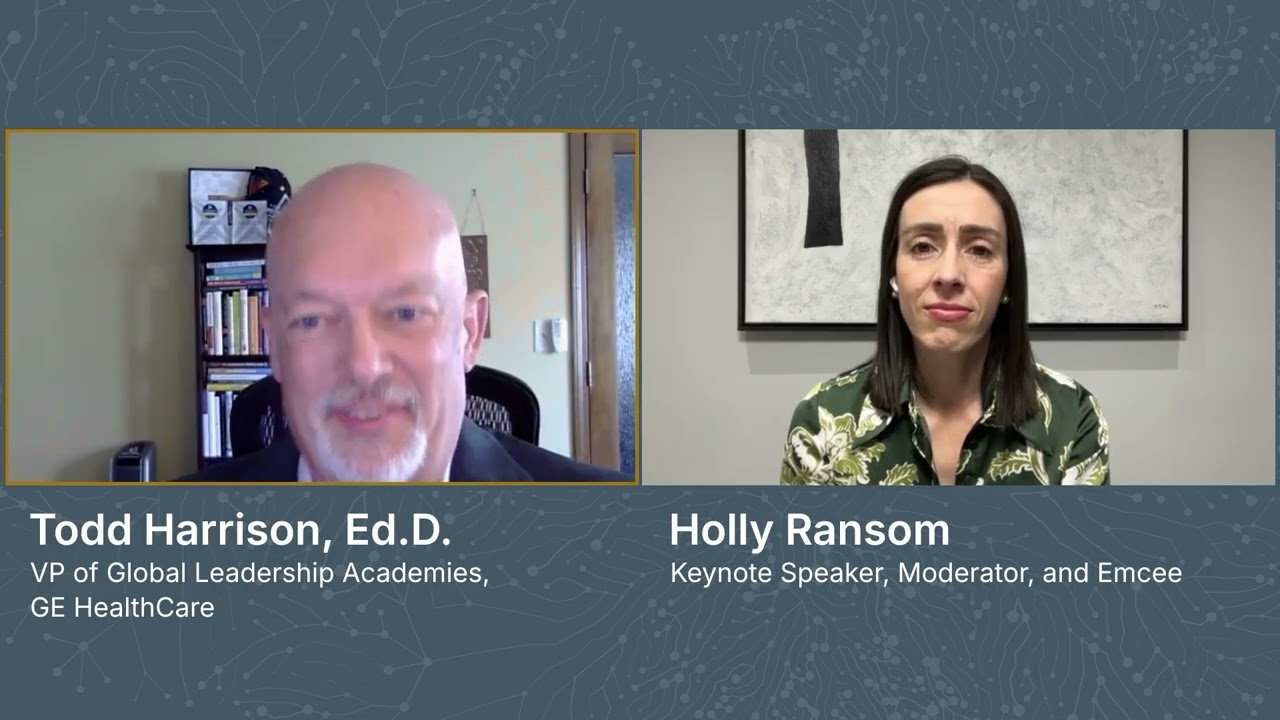
When GE HealthCare became an independent company, leadership development became essential to the company's future.
In this case study, Todd Harrison, Ed.D., VP of Global Leadership Academies at GE HealthCare, shares how the organization used leadership development to prepare leaders for a new business reality. Learn why leadership became a business priority, what was at stake if leaders weren't prepared, and how GE HealthCare helped technical experts become leaders who empowered their teams to deliver results.
Watch the full interview with leadership expert Holly Ransom: https://youtu.be/3mqVIF3CK4s
Read the full client story: https://www.ddi.com/client-story/ge-healthcare-rebuilds-leadership-to-fuel-business-growth
#LeadershipDevelopment
#LeadershipStrategy #OrganizationalCulture
Оглавление (2 сегментов)
Segment 1 (00:00 - 05:00)
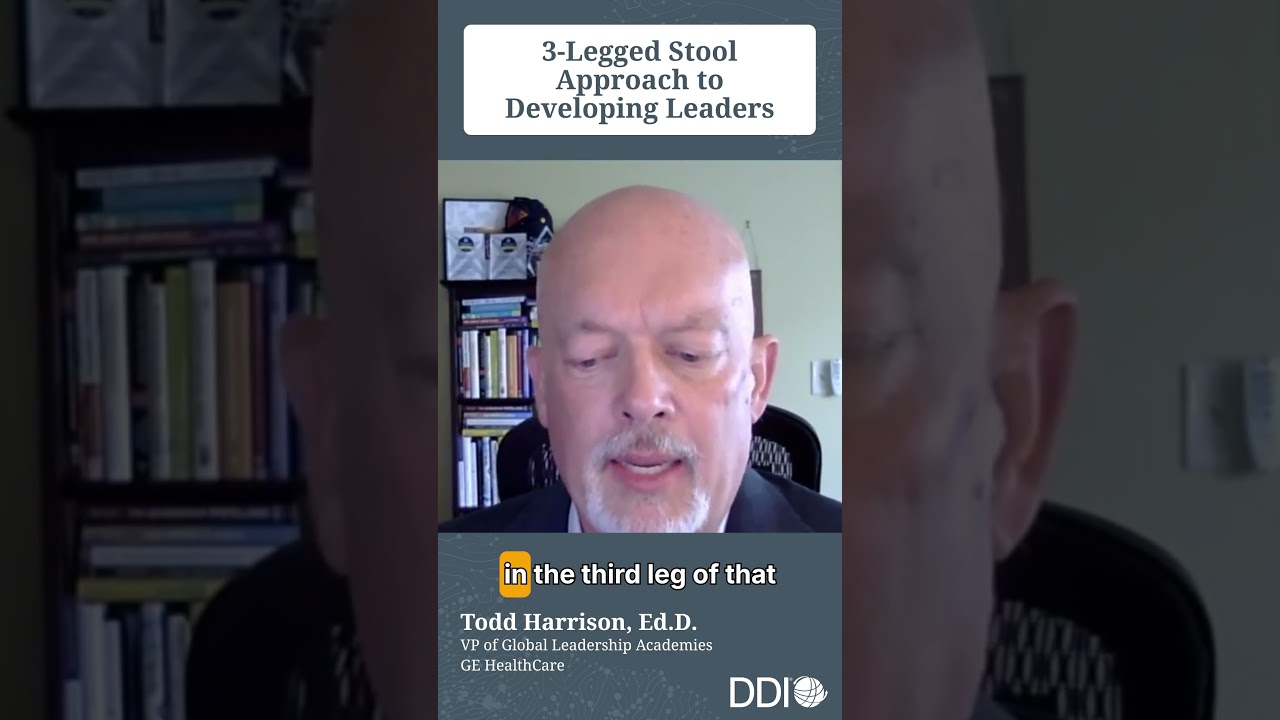
But our retention numbers are phenomenal. I mean, we are running in the mid-teens where we were in the mid-20s previously. People are talking about this culture feels different. We feel like we're part of something bigger. It's transformational. I mean, the not only the timeline, but the quality of what we were able to produce would not have been possible — without the partnership with DDI. — Dennis, you've been on quite an extraordinary journey going from, you know, being a part of one of the world's most iconic companies to standing up this extraordinary independent business, 50,000 people, 160 countries. And you know, when I think about that, that's not just a structural change, that's a complete reinvention of identity. And right in the middle of that, you made this really bold call to treat leadership development not as a nice to have, but actually as an engine of that transformation. — You mentioned we were part of an iconic company, GE. So, in 2023, we separated into an independent publicly traded company. So, we like to refer to ourselves as a 130-year-old $20 startup. Right before spin-off, we lost access to the world-renowned Crotonville Jack Welch Leadership Development Center. So, we needed to feed the beast and bring back uh development for our leaders. They were hungry for it. They had missed it. — What gaps were starting to emerge for you? What was becoming visible in the business? — Fundamentally, what we were seeing was a lack of just foundational blocking and tackling skills of leaders. Being they were promoted on technical skills, um great technicians and their expertise in their areas, but had really lost the ability to get things done through teams. How coach? How do you delegate and empower? How do you have a critical conversation? — And what was your view about? What was at risk if nothing changed? — You know, we needed people to step up their game. You know, they we needed them to act like entrepreneurs. get more done with less. If we didn't get leaders stepping up and having their team step up, we were going to lose our innovative uh nature. not grow as quickly as we needed to as a new startup and meet kind of our mission with our customers. I was very deliberate in going back and not just saying, "We need to replicate Crotonville. " Because that's the ask I had when I joined the company about 5 years ago. And I said, "Well, let's look at this uh and see what's changed. What do we need to do differently? We're a different company. We're in a different environment. " And that was really where the partnership with DDI began uh because they have a legacy of research, scientifically backed focus on leadership development. Being current, understanding what's going on. So, that partnership, understanding how neuroscience now fits in, which wasn't around when Crotonville was built. So, we're taking a dramatically different approach with how we do leader development by not the week-long immersive, intensive training on campus in upstate New York. We're doing a much more multimodal, longer, what I call dose-feeding the training. Teaching them one or two skills, allowing them to practice it until it becomes habit. Then moving on to the next skill and making it kind of a building format. — Talk to us about some of what you started noticing and hearing inside the organization. — Well, we saw that humanistic aspect that we saw missing when I first got to the company, we started to see show up in different ways. We heard, uh you know, the formal ways with our culture survey, uh you know, the numbers were improving. It felt like they were more part of the team as opposed to waiting on the memo. Our leaders have said, "We are going to continue to invest in growing leaders because we're feeling and seeing a difference in how they're working and their teams are. " — Are you seeing it translate in some of those hard numbers in the business, too? — We absolutely are. I mean, but our retention numbers are phenomenal. We have been able to tease out the data on those who have graduated our academies from those who haven't, and we're seeing an exponential difference in those leaders. But, I think it's also having a knock-on effect for those that haven't been to the academies. Right? So, I think we're seeing kind of a it is it's propagating itself um by leaders showing what good looks like after they complete their experience with us. — What do you think are some of the things that have been part of the design of this work that have really helped it get traction? — I call it my three-legged stool
Segment 2 (05:00 - 07:00)
approach, right? So, we believe strongly that again, different than Crotonville, but something that's a big part of our program is self-insight at every level. You can't lead your others until you can lead yourself. So, we've built that into the program with science-based and signals-based assessments, something again DDI taught us. Not only what it are predictive things that we can look at, but what are the actual behaviors. So, we use the 360 tool with competencies from DDI. Uh we do that extended learning journey. That's also different. It puts them in a place where they can practice and use what they're learning back on the job, and then reinforce it so that it becomes habit. And that's where the results are really coming from. And the third thing that we've added in, the third leg of that stool, is coaching. And you know, I consider coaching a force multiplier in leader development. It's helping with that transfer of learning back to the job. It's helping individuals put it even more in context with their role and what they're facing, and it helps sustain that change once they get back on the job. And I think that's the biggest difference we're seeing is habit forming, not just behavior change, but habit forming and results coming from those habits. — Like, how does this program position you for future growth? How has this been factored into the way that you've designed it? — GE historically has been known since Edison as an innovative company. The only way we're going to maintain our innovative pace with integrating AI into our products and how we're leveraging that is for people to work better together. And I think that's where our growth comes from is that collaboration, that innovation, that entrepreneurial mindset that we're starting to create now that we're an independent company. — I wonder if I can ask probably the hardest question yet, which is if you had to describe the impact on the organization in one sentence of what you have built with this program, with this piece of work with DDI, how would you describe it? — Transformational. I mean, the not only the timeline but the quality of what we were able to produce would not have been possible without the partnership with DDI.