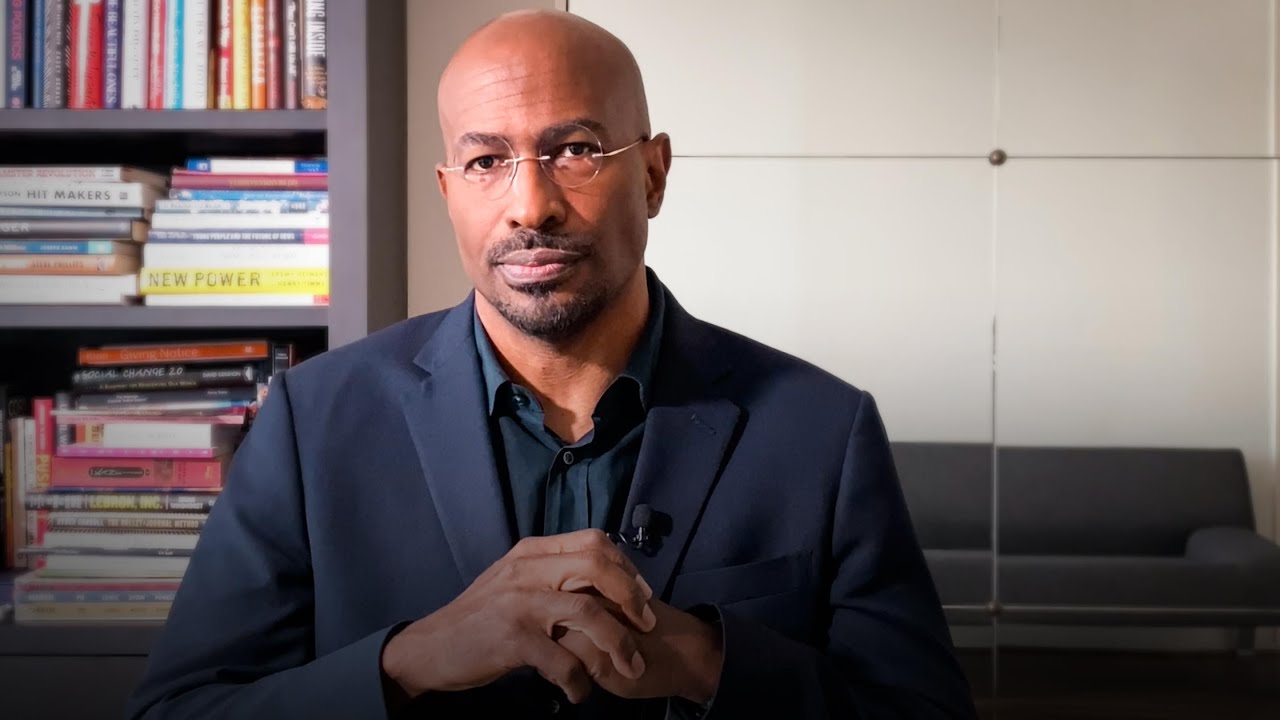
What do you want to be when you grow up? It's a universal question — and yet at some point, people stop asking you. Drawing on a nationwide survey across the Philippines, consumer researcher Lance Katigbak makes the case that countries should keep track of their citizens' ambitions and aspirations. His radical proposal: What if governments didn't just track GDP but also started measuring dreams? (Recorded at TED@BCG on October 23, 2025)
Join us in person at a TED conference: https://tedtalks.social/events
Become a TED Member to support our mission: https://ted.com/membership
Subscribe to a TED newsletter: https://ted.com/newsletters
Follow TED!
Instagram: / ted
LinkedIn: / ted-conferences
TikTok: / tedtoks
Facebook: / ted
X: / tedtalks
The TED Talks channel features the best talks and performances from the TED Conference, where the world's leading thinkers and doers give the talk of their lives in 18 minutes (or less) — plus originals, podcasts and exclusive content. Look for videos on Technology, Entertainment and Design as well as science, business, global issues, the arts and more. Visit https://TED.com for our entire library, transcripts, translations and personalized recommendations.
Watch more: https://go.ted.com/lancekatigbak
• Why Countries Should Measure Dreams and Am...
TED videos may be used for non-commercial purposes under a Creative Commons License, Attribution–Non Commercial–No Derivatives (or the CC BY – NC – ND 4.0 International) and in accordance with the TED Talks Usage Policy: https://www.ted.com/about/our-organiz.... For more information on using TED for commercial purposes (e.g. employee learning, in a film or online course), submit a request at https://media-requests.ted.com
#TED #TEDTalks #Economics
Оглавление (2 сегментов)
Segment 1 (00:00 - 05:00)
What do you want to be when you grow up? At age four, I wanted to become a computer scientist. At five, a vacuum cleaner salesman. At six, a priest. At 17, an award-winning filmmaker. And at 22, when it was finally time to decide on my first job, I became a management consultant. (Laughter) What do you want to be when you grow up? I'm sure everyone here has been asked some version of that question, but perhaps not recently. Somehow, the questions have changed. "What do you do for work? " "How much money do you make? " "Where are you going on your next vacation? " We've become obsessed with asking these types of questions to measure even our nation's productivity. We track growth rates, remittances and exports without really asking if these numbers reflect the lives that people are trying to live. I see the problems with this system at home in the Philippines. Our GDP is soaring, but we're doing it in a way that doesn't quite align with the kind of lives that people want to live. For one, we send millions of people abroad to take care of other people's parents and children, and we train millions more to stay awake while their families are asleep so they can be up all night answering phone calls from halfway across the world about how much money is in their bank account. And somehow, we're rewarded for it. We’re told that we’re Southeast Asia’s second-fastest-growing economy, and in a few years, we'll be upgraded to an upper middle-income country. As a nation, we've become really good at hitting metrics that were never ours to begin with and climbing a ladder that was designed by those who were already sitting on top of it. But what would happen if you asked Filipinos what metrics mattered to them? What would happen if you tried to measure dreams? Last year, my colleagues and I at BCG ran a nationwide, nationally representative survey to answer this very question. Now look, no client had ever asked us about dreams, but if you look at the websites and mission statements of the country's largest businesses, all of them are trying to connect their work to national development in some way. And so we knew that even if nobody was asking the question, the answer was one that many people would be interested in. We discovered three things. First, we discovered what the Filipino dream was. The number-one ranked dream across all socioeconomic segments was to achieve financial security to absorb health scares. But we learned more than that -- we also heard stories. We heard stories like that of Tidri, [a] 26-year-old preschool teacher who dreams of becoming a beauty queen, a host, a politician, opening a hair salon just like her grandmother. But right now, Tidri can't afford to do that because she still has to help pay for her grandfather's healthcare bills because he just had a stroke. Second, we learned who those dreams are for. Most Filipinos don't actually dream for themselves. They dream for their extended family. We met people like Joey, [a] 56-year-old radio technician who works from 2am to 11pm most nights. He lives in a boarding house close to the station, given the demands of his job, but still wants to be a farmer, a social worker and a high school teacher. But he really wants to retire. But every time he asks his company, they say, "Ah, not yet. " Right now, he doesn't really have a choice because he still has to finish paying for his daughter's education. And third, we learned how people perceived institutions as helping them achieve those dreams. We learned that most Filipinos actually didn't feel like public and private institutions were helping them achieve their dreams, and so they could only rely on themselves. We met people like Sweden, [a] 35-year-old news reporter who spent years moving from one field assignment to another. But when she had her first child, she decided to stay home and start a children's clothing business from her garage, believing that making and selling children's clothes online would be a better way of creating financial stability for her family. Today, she dreams of opening up a flagship store in a mall for her business, and of buying a second home in the mountains for her family. Tidri, Joey, Sweden and 1,500 other Filipinos we've interviewed all still want to be something when they grow up and their dreams seem so achievable. But somehow to them, they still feel out of reach. We shared this report with clients, the business community, media, even government officials. And every single time they asked us the question, why hasn't this been done before? Why haven't we tried to measure dreams? Look, there are many reasons, but I think it's because those who have the power to ask the question think they already know the answer. In every single forum where I've asked the question, “What do you think is the number-one Filipino dream,” I've never seen the most senior person in the room answer it correctly.
Segment 2 (05:00 - 09:00)
They usually guess something safe, like to buy a house or something generic, like to have a happy family. Less than about five percent of people guess it and it's usually somebody more junior, somebody who grew up in a lower-income family and worked their way up the ladder. And I wonder, in how many other countries in the world is this actually happening? Where what we call “development” is really just watching some numbers somewhere going up and to the right, but people on the ground feel nowhere closer to where they're actually trying to go than they were yesterday. Where the only way up is out. But wait, we already have something better than GDP, right? Doesn't Gross National Happiness measure the same thing? Look, Bhutan's GNH, I think, has really redefined development for them. It's asked whether people are happy, whether their culture is thriving and whether they feel spiritually fulfilled. But being happy today is very different from feeling like you're coming closer to your dreams. Bhutan might be one of the most obsessed countries in the world with measuring happiness, but about 10 percent of their skilled and educated population emigrated in 2022. Maybe that's the problem with measuring happiness. I could be happy today because I've got everything I need and things are going well, but I might not actually be closer to where I'm trying to go. And I think that's what measuring dreams can do for us. Look not only at how we feel today, but at the vector of that progress over time. And I don't think what I'm suggesting is too far off. After all, most of us here already work for companies that have HR departments that measure the progression of our employees. So why couldn't our countries have HR departments that measure the personal ambition and fulfillment of its citizens? If every country has the Department of Defense, why couldn't we have a Department of Dreams? Imagine this. The annual Aspiration of the Nation report presented by the Secretary of Dreams. It looks at what people dream of by age, by income group, by geography. It looks at how people came up with their dreams, how they graduate to bigger ones, and when they decide to give up on old dreams. Imagine National Dream centers where you could attend trainings on making personal progress, or social workers trained as life coaches who can help keep you on track. Imagine the Department of Dreams could work with the Department of Health to measure how healthcare emergencies affect ambition. Could we not improve healthcare outcomes if we took a lens on how these emergencies affect ambition and motivation? The Department of Dreams could work with the Department of Trade and Industry to ensure that when people say they have these dream businesses, they actually get the tools to create them. Or with the Department of Labor, to ensure that the jobs that people say they want are the same jobs that are being created. Or with the Department of Education to train future students for those dream jobs. Look, I understand that there are free markets, but could we not imagine a world where people said, I want to become a writer or a historian or an astronaut or a psychiatrist, and government said, "Sure, we'll find a way to make that happen. " Imagine how much better the world would be if everyone was obsessed with helping each other achieve their dreams, and somehow there was a government official somewhere accountable for making that happen. There's so much more we still want to do in our work in measuring dreams. And we're really just getting started. For one, we hope to run this survey every few years to see how these dreams change over time. We also want to run the survey in other markets to see how the Filipino dream might be different from the Malaysian or the Emirati dream, and encourage governments and companies around the world to begin taking dreams more seriously. So let's measure dreams. Let's measure what people dream of and how the content of those dreams changes over time. Let’s measure how much progress people feel like they’ve made versus last year, and how much more progress they think they'll make looking into next year. And then let's measure whether people perceive institutions as helping them or holding them back from achieving those dreams. Then let's create the conditions that allow people to truly live their dreams. After all, we all still want to be something when we grow up. Thank you. (Applause)