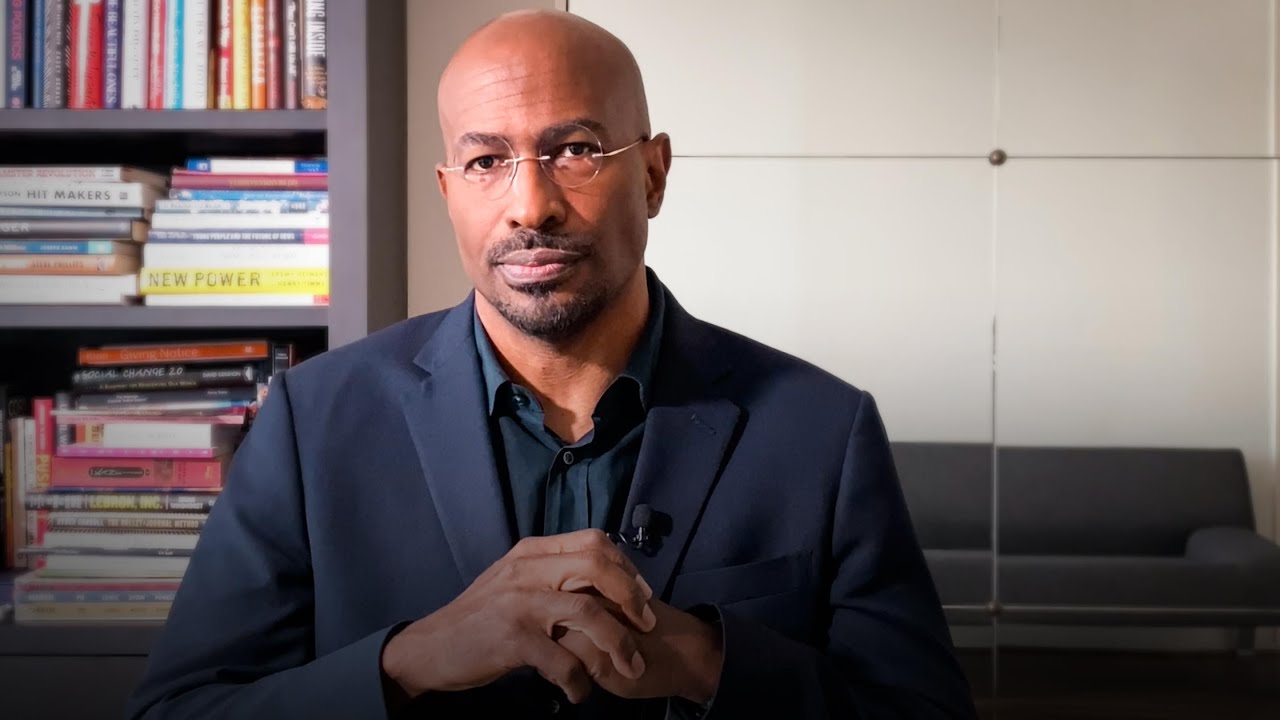
How to Talk Truthfully About Black History | Clint Smith | How to Be a Better Human | TED
20:30

How to Talk Truthfully About Black History | Clint Smith | How to Be a Better Human | TED

TED 17.12.2025 21 823 просмотров 422 лайков обн. 18.02.2026

Machine-readable: Markdown · JSON API · Site index

Поделиться Telegram VK Бот
Транскрипт Скачать .md
Анализ с AI
Описание видео
How do you grapple with national history, legacy, and the stories you tell yourself? Clint Smith is the author of the narrative nonfiction, How the Word is Passed, and the poetry collection, Above Ground. Clint joins Chris to talk about the cognitive dissonances that shaped American history. From understanding the complexities of Thomas Jefferson, who wrote “all men are created equal” while enslaving over 600 people – to reflecting on growing up in New Orleans – a major site for domestic slave trades, Clint urges you to examine historical contradictions. He also discusses his love for poetry and why it’s crucial to teach joyous moments in Black history too. So students won’t see slavery and Jim Crow as the totality of the black historical experience but can envision themselves of possibilities beyond subjugation. Join us in person at a TED conference: https://tedtalks.social/events Become a TED Member to support our mission: https://ted.com/membership Subscribe to a TED newsletter: https://ted.com/newsletters Follow TED! X: https://www.twitter.com/TEDTalks Instagram: https://www.instagram.com/ted Facebook: https://facebook.com/TED LinkedIn: https://www.linkedin.com/company/ted-conferences TikTok: https://www.tiktok.com/@tedtoks The TED Talks channel features talks, performances and original series from the world's leading thinkers and doers. Subscribe to our channel for videos on Technology, Entertainment and Design — plus science, business, global issues, the arts and more. Visit https://TED.com to get our entire library of TED Talks, transcripts, translations, personalized talk recommendations and more. https://youtu.be/hZMaiUsIQog TED's videos may be used for non-commercial purposes under a Creative Commons License, Attribution–Non Commercial–No Derivatives (or the CC BY – NC – ND 4.0 International) and in accordance with our TED Talks Usage Policy: https://www.ted.com/about/our-organization/our-policies-terms/ted-talks-usage-policy. For more information on using TED for commercial purposes (e.g. employee learning, in a film or online course), please submit a Media Request at https://media-requests.ted.com #TED #TEDTalks #HowToBeABetterHuman
Оглавление (5 сегментов)

Segment 1 (00:00 - 05:00)

Dr. Martin Luther King Jr. in a 1968 speech where he reflects upon the civil rights movement states, "In the end, we will remember not the words of our enemies, but the silence of our friends. " As a teacher, I've internalized this message. Every day all around us, we see the consequences of silence manifest themselves in the form of discrimination, violence, genocide, and war. In the classroom, I challenge my students to explore the silences in their own lives through poetry. We work together to fill those spaces, to recognize them, to name them, to understand that they don't have to be sources of shame. In an effort to create a culture within my classroom where students feel safe sharing the intimacies of their own silences, I have four core principles posted on the board that sits in the front of my class, which every student signs at the beginning of the year. Read critically, write consciously, speak clearly, tell your truth. I find myself thinking a lot about that last point, tell your truth. And I realized that if I was going to ask my students to speak up, I was going to have to tell my truth and be honest with them about the times where I failed to do so. — Hi, I'm Chris Duffy and I'm host of the TED podcast, How to be a better human. Every week on the show, I talk with TED speakers about their big ideas and how you can put those big ideas into place in your real life. Today on the show, I'm talking with the author Clint Smith about his best-selling book, How the Word is Passed. We're talking about history, honesty, and justice and what it means to reckon with ourselves and our world. — Hi there, my name is Clint Smith. I am the author of How the Word is Passed, which is a work of narrative non-fiction, and two poetry collections, Above Ground and Counting Descent, and I'm a staff writer at the Atlantic magazine. I think the first thing that I'd like to talk to you about is there's an idea that you touch on in how the word is passed about the distinction between history, memory, and nostalgia. So, can we start by talking about the relationship between those three ideas? Yeah, you know, that um sort of triangulation of ideas came from one of the folks that I spoke to at Montichello. He's a guy named David Thorson. He's a guide at Montichello Plantation. Um which is, as many of us know, the home of Thomas Jefferson, the third president of the United States, one of the intellectual founding fathers of this country. Uh and David has been a guide at Montichello for many years. and he focuses on the experience of the enslaved at Montichello, which was a story that people didn't tell at Montichello for a long time. Part of what's so fascinating about that place is the way that the story of how it tells the story of itself has changed in the sort of decades um of its existence. Uh and even now in 2025, how it tells the story of itself. And so David was making a point about how so many of the people that he speaks to who come on these tours to hear about Jefferson and are sort of surprised to encounter uh such an honest um accounting for who Jefferson was as not only a philosopher, a statesman, uh a politician, a president, but also as an enslaver. And so David has these ideas of history, memory, and nostalgia. Um, with the idea that history is what happened. Um, nostalgia is the story of what we want to have happened and memory is the thing that kind of exists in between. And so I thought that was really apt because that's how our memories are formed. They're this kind of amalgam of the stories we've been told by the people around us, by the people we love, by our families, by um the sort of in information ecosystem that surround us. Um and some of those things are aligned with empirical fact and reality and some of them are not, but all of them sort of come together um fact and fiction to shape our understanding of the past and thus our understanding of ourselves. It's interesting because so much of um your books, but also so much of uh the issues going on in the world today have this intersection between um the things that we want to be true about ourselves and the world and the things that are actually true. And it seems to me from reading your work that you're someone who really cares uh deeply about honesty as a principle, as a virtue, as something that we really need to strive for. Can you talk to me about why honesty is so important to you? — Especially I mean generally as a virtue um I think it's incredibly important. I I'm a father of two young kids. Um and it is central to my sort of pedagogy of parenting and how I try to

Segment 2 (05:00 - 10:00)

create kind, thoughtful, generous human beings. Um and in the context of history, I think if we're not honest about what has transpired uh over the course of history, [snorts] we end up misunderstanding the reason that our world looks the way that it does today. I mean the what drove me to write How the word is passed which is a sort of examination of uh the memory of slavery in the United States and places that are uh engaging with that memory honestly as we said uh and places that are engaging with it a little more dishonestly. Part of why I wanted to do that was because I remember growing up as a young person growing up in New Orleans um in the 80s and 90s and being inundated with all these messages about all the things that were wrong with black people. how uh the reason black people didn't have um the same health outcomes, the same economic outcomes, the same uh social outcomes, that we didn't have the same opportunities, why our communities look certain ways was somehow because of something black people had done wrong or something that black people had failed to do. Uh, and it wasn't until many years later that I discovered the scholarship and the writing and the art and the film uh, that gave me the language, the toolkit, the information to help me understand that actually the reason one community in New Orleans looks one way and another another way is not because of the people in those communities, but what has been done to those communities or extracted from those communities generation after generation and the origin of that in terms of black white inequality in New Orleans and across the country um begins with enslavement. And I am someone who grew up in New Orleans, which is the heart of the was domestic slave trade. Uh and I am the descendant of enslaved people. Like my grandfather's grandfather was enslaved and I didn't understand the history of slavery in any way that was commensurate with the impact and legacy that it left on this country. And there were so many gaps in my own understanding, education. And this book was an attempt to fill those gaps because in doing so it allowed me to look at the country with a different level of clarity uh with a sort of clearsightedness that made it so that I couldn't be lied to anymore. That made it so that um I was able to sort of more fully situate myself and um the inequality that existed around me um in a historical context that provided an understanding of why that inequality existed. um in r in ways that ran counter to these sort of uh more insidious um and ultimately incorrect narratives that it was somehow the fault of certain people rather than of policy. you wrote in the um acknowledgements section of how the word is passed that uh one of the main drivers for you in writing this book and a goal that you hope to live up to is that the students who you taught when you were a teacher would um be proud of this book and that it would have been the kind of book that you could teach to them. Um, you also have talked about how, you know, both in your own parenting and in the ways that there's this kind of like public push back around like what we can talk to kids about that you have to kind of protect kids from stuff. And yet I think anyone who has actually worked with kids, especially as a teacher, knows that kids are so much more capable of understanding complex nuance and hearing really hard stories and in fact that when you don't tell them, they still kind of know something is up and they kind of figure out their own version of it. when it comes to these stories of like the brutality of slavery, of the ongoing injustices in the United States, but also around the world, how does that honesty play out in the sense of um I guess trusting kids that they can actually like use it to make sense of the world rather than be destroyed by it. There's a bad version of this where you are just inundating a young person with information about like all the terrible things that black people have experienced over the course of the last 400 years in this country in a way that they experience as a sort of paralyzing force more than an emancipatory one. Um, and I think bad ped bad pedagogy um, and and treating this history as if it is all that defines the black American experience can have the effect of of again sort of paralyzing um, and overwhelming black children to be sure. And so I think what you have to do is strike this delicate balance of at once communicating to young people and being honest and being clear about the centuries of violence and oppression of and subjugation that black people have been subjected to while also not falling

Segment 3 (10:00 - 15:00)

into the trap of implicitly or explicitly suggesting that is all that defines the black American experience because it is so much more expansive than that you have to understand the history from which we come, the violence from which we have emerged in order to understand where we are as a community, as a people broadly defined today. And you have to also provide space for young people to imagine a set of possibilities for themselves that exist beyond the violence, that exists beyond um the subjugation, that exists beyond slavery and Jim Crow. Because I think sometimes what can happen is in an effort not to overwhelm like a good faith black children or children in general, we can move away from this history or soften this history or sidestep this history and talk about, you know, the more expansive uh joyful elements of black life. And I think that that's deeply important, profoundly important. But if we don't talk about the other part, then what happens can be a version of the sort of misunderstanding that I grew up with where you you look around and you see inequality, you see racial inequality and you you hear certain things about oh well this community uh you know looks this way because these people don't work hard enough. Maybe there's a biological thing or a cultural thing. Um, and if you have not given someone the history and the context and the tools to understand that that's not correct, um, then it it's very human to sort of fall into the trap of making assumptions about why certain people in certain communities look the way that they do. And I just I wrote this book because I wanted to write the sort of book that I felt like I needed in my high school American history class. Um, and I have a young reader edition of the book coming out because I wanted I imagined an even younger version of myself sort of uh wanting access to this history because I can't begin to explain how liberating it was, how emancipatory it was, how um empowering it was to be given information that allowed me to make sense of why the world in front of me looked the way that it did. And that's in the context that can exist in the context of race, but that exists for the for young people in the context of a range of things. That's why it is so important to teach history across a range of different experiences, race, immigration, LGBTQ issues, you know, the list goes on and on. Uh, and I think that when we explain how systems of oppression have shaped the contemporary landscape of inequality, it disabuses us of the idea that individual people are singularly responsible for the circumstances they find themselves in. Which isn't to say that people don't have agency, but it is to say that our agency exists within the context of a set of larger historical forces that have shaped it. And I think that that's so important because suddenly people are not blaming themselves or their family for their um for failures that are reflective of something that exists beyond them and not just and are not just reflective of something they have or haven't done. I I'm so glad you put in that broader context too because you know this show obviously a lot of people who are listening are in the United States and are living in the remnants of this history but there's also a lot of people who are listening outside of the United States and other countries and in other continents and I think that this is a pattern that exists globally and a really important piece of understanding truth and history and like you said these systems of inequality continue to exist and we often only learn a small little piece of them. Um, I'm curious to address a little bit of the like what feels to me like push back around this kind of idea for people who don't want to learn like this more accurate idea of history is people they say some version of like you're rewriting history which is funny [clears throat] because right like — you're not rewriting you're just exam examining the thing that actually happened but then there's also this sense for people like me who are I'm a straight white man that somehow understanding this is going to make me feel bad or guilty in a way that is unfair. — I've always found it strange that the idea that we would be asked to hold multiple truths or multiple realities at once and alongside one another is something that instills a sense of um fear or a sense of u guilt within people. And so for example, you know, we talked briefly about Montichello, but Montichello is so interesting to me and I wanted to go and sort of examine Jefferson and how the legacy of his enslavement is remembered because [snorts] I think that Jefferson in so many ways embodies the

Segment 4 (15:00 - 20:00)

cognitive dissonance of America, which is to say America is a place that has provided unparalleled, unimaginable opportunities for millions of people across generations in ways that their own ancestors could have never imagined. And it has also done so at the direct expense of millions and millions of other people who have been intergenerationally subjugated and oppressed. And both of those things are the story of America. It's not one over here and one over there. You get to talk about this one and not talk about that one. Both of those things are central to understanding what America has been and continues to be. In the same way that Jefferson is somebody who again sort of personifies that tension. and he is someone who wrote one of the most important documents in the history of the western world and is also someone who enslaved over 600 people over the course of his lifetime including four of his own children. He's someone who wrote in the Declaration of Independence that all men are created equal and wrote in notes on the state of Virginia that black people are inherently inferior to whites in both endowments of body and mind. All I'm asking us to do is to sit with the duality and the complexity and the contradictions and the cognitive dissonance of what America is. — The very last line of how the word is passed is at some point it is no longer a question of whether we can learn this history but whether we have the collective will to reckon with it. — It is the question. Um, and I think that the last several years of our um, social and political lives collectively uh, demonstrate that it is that experience is uneven. Um, that experience is inconsistent. uh that experience is geographically and racially uh and politically divergent. The very thing that might uh look like an honest reckoning to one person may be felt as and experienced as um treasonous or um unpatriotic um by another. Part of what I learned in writing how the word is passed, you know, I went to all sorts of places. I prison, you know, the largest maximum security prison in the country. I went to one of the largest Confederate cemeteries in the country. Uh I spent time with the descendants of uh enslavers, the descendants of the enslaved. Even when you do not agree um even when you find someone's views abhorrent I think it is important to take seriously where those views come from and why they exist because if we don't if we turn one another simply into caricatures and say that the reason certain people are doing this is because they're just they are evil and they have no soul and I think the emotional impulse is one I understand and I also think that the it is important for us to take seriously the emotional texture that is animating beliefs that we find to be incredibly harmful um or incredibly frightening. And so many millions of people in this country do not want to talk about slavery, think about slavery, be taught about slavery, have their children taught about slavery, read books about slavery, watch films about slavery. They don't want anything to do with it. As well as many other things that are part of the American Historical Project. And I think it does mean that we have to continue to try to make sense of what is animating such retrenchment. Because if we don't understand what's animating the retrenchment, then we're just going to have a bunch of folks talking past one another and we're going to be caught in the sort of political um [clears throat] fissures that we continue to experience today. How do I see some of the things happening in our country right now? How am I How can I be both clear and forthright about what the implications of this will be? How dangerous, profoundly um ungenerous, how evil the actions themselves are. without turning people into static, irredeemable

Segment 5 (20:00 - 20:00)

caricatures, and some days I'm better at it than others. Well, Glenn Smith, thank you so much for being on the show. I cannot recommend more highly your books and your work, and I really appreciate you taking the time to be here. — Absolutely. This is a pleasure.

Другие видео автора — TED

Ctrl+V

Экстракт Знаний в Telegram

Экстракты и дистилляты из лучших YouTube-каналов — сразу после публикации.

Подписаться

Дайджест Экстрактов

Лучшие методички за неделю — каждый понедельник