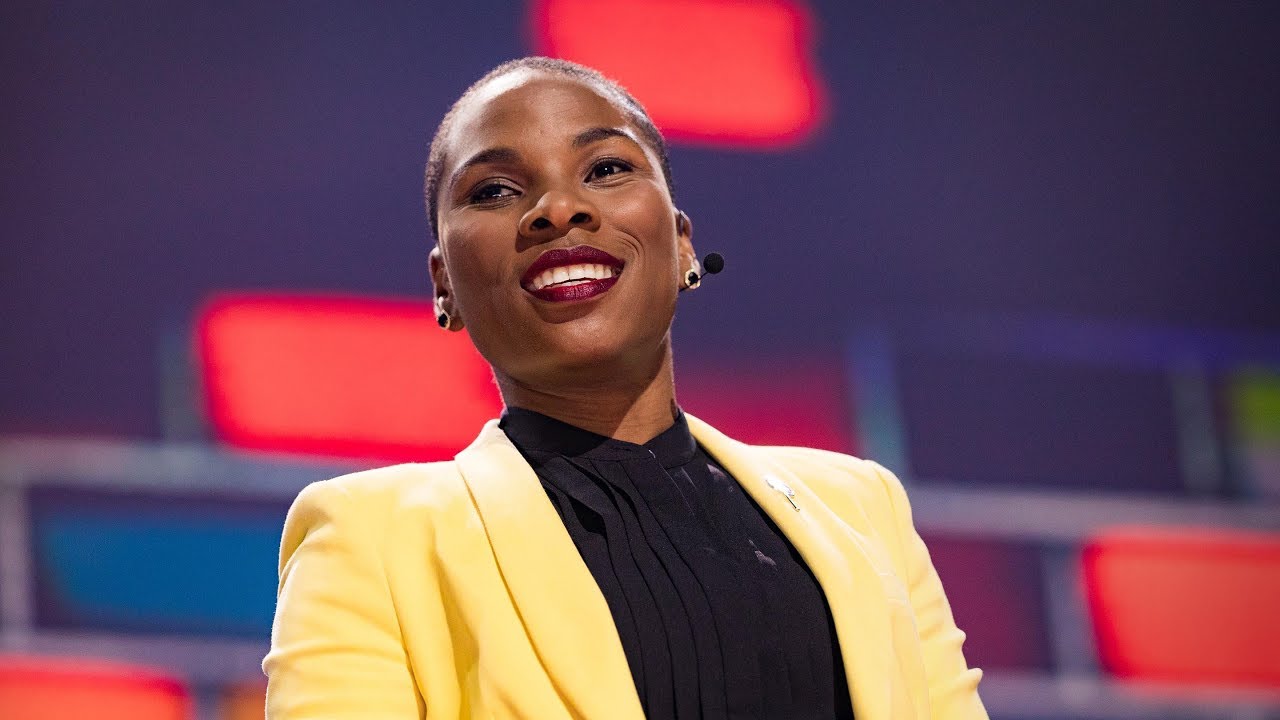
When conservationists talk about rewilding, most people picture wolves and bison roaming endless landscapes — but Isabella Tree discovered the real revolution is happening in ordinary backyards. She shares the incredible story of how she and her husband transformed their failing farmland into a nature paradise, offering a three-step formula for anyone looking to turn their green space wild. (Recorded at TED Countdown Summit 2025 on June 17, 2025)
Join us in person at a TED conference: https://tedtalks.social/events
Become a TED Member to support our mission: https://ted.com/membership
Subscribe to a TED newsletter: https://ted.com/newsletters
Follow TED!
X: https://www.twitter.com/TEDTalks
Instagram: https://www.instagram.com/ted
Facebook: https://facebook.com/TED
LinkedIn: https://www.linkedin.com/company/ted-conferences
TikTok: https://www.tiktok.com/@tedtoks
The TED Talks channel features talks, performances and original series from the world's leading thinkers and doers. Subscribe to our channel for videos on Technology, Entertainment and Design — plus science, business, global issues, the arts and more. Visit https://TED.com to get our entire library of TED Talks, transcripts, translations, personalized talk recommendations and more.
Watch more: https://go.ted.com/isabellatree
https://youtu.be/SjLO9ogmyQU
TED's videos may be used for non-commercial purposes under a Creative Commons License, Attribution–Non Commercial–No Derivatives (or the CC BY – NC – ND 4.0 International) and in accordance with our TED Talks Usage Policy: https://www.ted.com/about/our-organization/our-policies-terms/ted-talks-usage-policy. For more information on using TED for commercial purposes (e.g. employee learning, in a film or online course), please submit a Media Request at https://media-requests.ted.com
#TED #TEDTalks #ClimateChange
Оглавление (3 сегментов)
Segment 1 (00:00 - 05:00)
You may have heard a lot about rewilding recently. It conjures up visions of vast landscapes, reintroductions of wolves, great herds of bison. It’s the most important message we can hear at the moment: that nature can restore itself, given the chance. But it doesn't have to be at vast scale, and it doesn't have to be in the middle of nowhere. Rewilding can happen in your own backyard, in an urban park, anywhere there's a tiny patch of space for it. And it can happen really fast. And that's transformative, not just for nature and the climate, but for ourselves. How do I know? Well, for the past couple of decades, I've been helping to rewild big and small. When my husband was 21, he inherited 3,500 acres of farmland in the busy southeast of England. Knepp Estate is on the worst possible land for intensive agriculture. It was already losing money. But Charlie had trained as a farmer, and so for 17 years he tried to turn it around. By 1999, we were 1.5 million pounds in debt. We knew we had to do something radically different. We wanted to work with nature rather than battling against it all the time. We began to rewild. Europe, like Africa and all the other continents of the world, was once home to vast numbers of free-roaming animals, animals that we hunted to extinction or close to it. Their disturbances shaped the land. They cleared forests, they opened up wetlands and created grasslands, they stimulated the soil, they spread seeds. We were really excited by large-scale rewilding projects happening in Europe that were showing that by introducing these animals back into the landscape, that nature could recover, that biodiversity could rocket. But could it actually happen at smaller scale? Could it happen on a farm like ours that had been ploughed and drenched with chemicals for decades? Could we bring our own land back to life? The first steps were so much fun. We pulled up all the internal fences, we smashed up the Victorian drains, we allowed the water to sit where it had always wanted to sit, and the fields began to scrub up with thorny bushes, and soon trees began to recolonize. And then we ring-fenced the whole area and began to introduce our free-roaming animals. Old English longhorn cattle for their extinct ancestor, the aurochs. Exmoor ponies for the extinct tarpan. Tamworth pigs for wild boar. Red and fallow deer, and eventually beavers. (Laughter) The results were beyond our wildest dreams. Everywhere these animals went, life surfaced in their wake. Our land became a kaleidoscope of complex, shifting habitats, the kind of messy margins that wildlife loves. Soon we were hearing nightingales and turtle doves, birds on the verge of extinction in Britain. We had bats and owls and dung beetles and butterflies homing in on us as if out of nowhere. And our soil was restoring too. So suddenly, we're pulling down vast amounts of carbon, whereas before, under the plough, we'd just been releasing it. And all of this happened in five years. We looked at our land in amazement. It was like it was breathing a sigh of relief. And so were we. Suddenly, we could just sit back and watch the miracle of the Earth restoring itself. Of course, we couldn't just let the numbers of animals grow and grow in our small project. Biodiversity flourishes when there are neither too many grazing animals nor too few. In vast wilderness areas, nature takes care of this herself. But we don't have wolves and lynx and bears in the southeast of England. So we had to become the apex predator. And that meant suddenly we had an income stream that surprised us. We had wild range meat. And together with wildlife tourism, it's become one of the ways that we can finance rewilding. It's turned the fortunes of the estate around. Inspired by Knepp, hundreds of thousands of acres are now rewilding in the UK on land that isn't suitable for intensive modern agriculture. But of course, not everybody has hundreds of acres to play with. And soon we were receiving messages from people who had seen the magic of Knepp, but wanted to know if they could rewild their back garden, their schoolyard, their urban park.
Segment 2 (05:00 - 10:00)
Yes you can. Our house has a Victorian walled garden of about an acre in size that for years was dominated by a monoculture lawn. Lawns have become an obsession the world over ever since the 1950s, when artificial fertilizer and weedkillers and mowing machines became available to everyone. We looked again at our high-carbon, high-maintenance green desert and wondered why on Earth we had it. Three years ago, we decided to rewild it. It's become a wildlife haven. In just three years, biodiversity has increased 35 percent. Rewilding a garden isn't about simply closing the garden gate and letting it go. It takes intentional interventions to create the right balance of plants and to create the kind of habitats that wildlife loves. So this is what we've learned. These are our three top tips for making your green space and garden wilder. First, the Earth is not flat. In nature, there are mounds of anthills and molehills and pits made by pigs and wallows made by rolling bison. Creating lumps and bumps produces patches of sun and shade and damp and dry, which create conditions for a much wider spectrum of plants, and that creates many more opportunities for wildlife. We happened to have some old farm buildings that we were demolishing nearby so we asked the diggers if they would come and dump hundreds of tons of crushed brick and concrete onto our perfected lawn. You may have a patio or a piece of concrete or tarmac that you can pull up. Crush it up and mix it with sand, and you have the perfect free-draining medium for a dry garden. In a dry garden, you can have plants like wildflowers that really love poor soil conditions. And because you're not having to water and fertilize, you're saving yourself a lot of time and money. But you're also helping the planet. We've planted 1,100 different plants, mostly from arid parts of the world, but you don't have to have that many. You can make an enormous impact just by choosing plants that insects love, and by extending the pollinating and nectar season and supporting forgotten creatures like night-flying moths, some of our greatest pollinators. And all of these plants are rubbing shoulders with our native self-seeding wildflowers. We vowed never to use the word weed again. You can learn to love your dandelions and clover. Second, think like a herbivore. The job of a gardener is never to allow one single plant to dominate. If you do, you lose all those plants that are creating species richness in your garden. So when you're pulling out the thugs, think of yourself as a wild boar, rooting out those docks and thistles. And when you're pruning your roses or your climbers, you're the nibbling teeth of a deer. Thinking of yourself as an animal in an ecosystem is incredibly freeing. It allows you to become more holistic and organic. It allows you to get messier. There's still room for a lawn in the wilder garden, but think of it as part of the mosaic. Consider a wildflower or a chamomile lawn. And when you mow, be the cow. Graze very tightly in some areas, but allow others to stay long, providing protection for small mammals and birds. Mix it up, grow a Mohican. Finally, find life in death. In nature, death is a primary source of life. But in a garden, we get rid of anything that dies. Leaving dead wood and piles of leaves is fantastic habitat, but it also creates natural fertilizer for next year's growth. And leaving seedheads instead of obsessively deadheading provides really important food for birds over winter. In the UK, we have 23 million private gardens covering an area four and a half times the amount of land that is designated to national nature reserves, and most of those gardens are dominated by a green desert lawn. Imagine if all those gardeners thought differently, if they put away the artificial fertilizer and the herbicides and began to think of themselves as a keystone species, as a mole or an ant or an earthworm. Like this amazing city gardener who's become obsessed with bees, everything from bumblebees to sharp-tailed bees to leafcutter bees to masonry bees.
Segment 3 (10:00 - 11:00)
We tend to think of bees as aggressive and scary, but if you watch them, they're just gentle, sensitive creatures going about their business. You can fall in love with them. This is our neighbor's garden, now attracting nightingales and tawny owls. We can rewild balconies in cities, even in high-rise blocks. Even a window box can become a nature reserve. And cemeteries and churchyards, and bus shelters and whole streets. We can rewild our public monuments. This is the Tower of London, now a wildflower meadow heaving with bees. And this is the Field Museum in Chicago, once a green desert and now a vital food stop for birds on migration. We can have whole tower blocks erupting in plants, bringing life to our windowsills, capturing carbon, producing oxygen, cleaning the air, insulating us in winter, cooling us down in summer. So much of rewilding is about changing the aesthetic. It's about questioning what we've always been taught to think of as beautiful and normal and stable. It's about shedding our obsessions, particularly our desire to be always in absolute control. Rewilding is about embracing the messy and the unpredictable. It's about letting go. It's about rewilding ourselves. Thank you. (Applause)