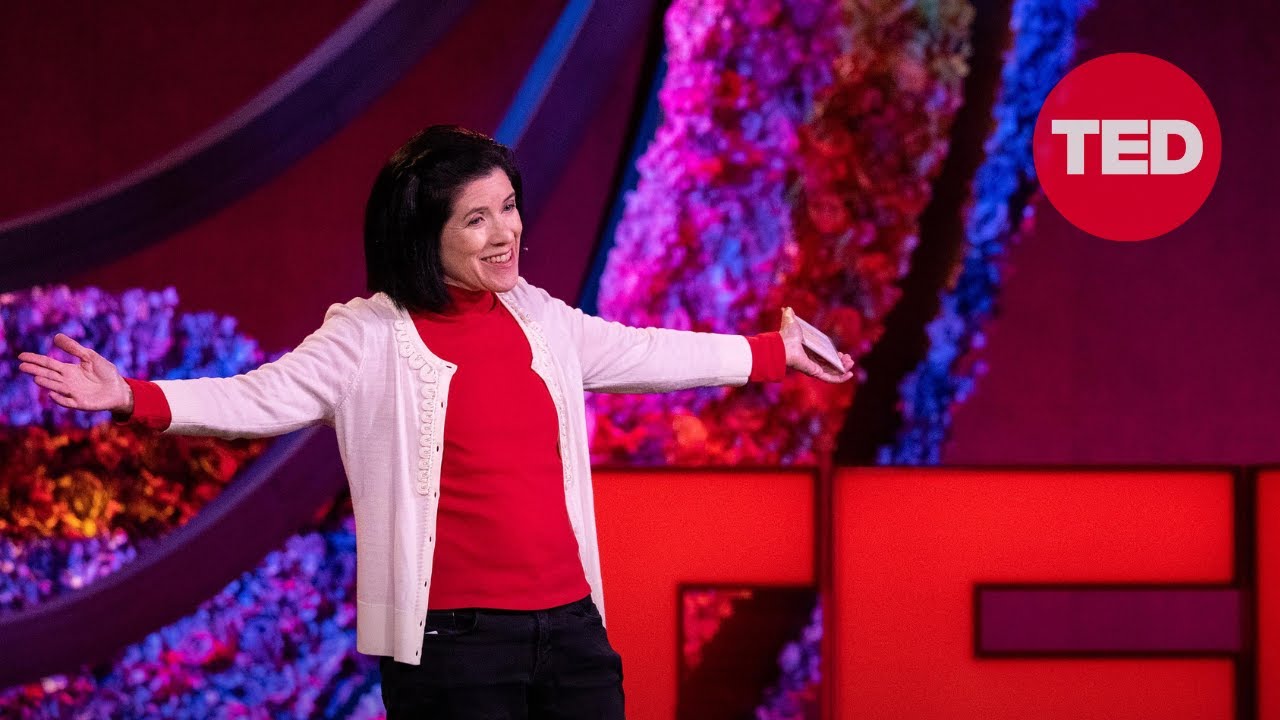
The Creativity and Community Behind Fanfiction | Cecilia Aragon | TED
14:56

The Creativity and Community Behind Fanfiction | Cecilia Aragon | TED

TED 29.03.2022 34 883 просмотров обн. 18.02.2026
Поделиться Telegram VK Бот
Транскрипт Скачать .md
Анализ с AI
Описание видео
The wildly diverse, thoughtful and hilarious world of fanfiction -- where writers reimagine favorite stories like "Harry Potter," "Pokémon," "My Little Pony" and more -- is ever-growing and becoming a vital social and learning tool. Author, professor and fanfiction writer Cecilia Aragon has observed how this incredible outlet for creativity encourages and empowers young people to embrace their imagination. Detailing her research into the vast online fanfiction community, Aragon shares its potential to foster a sense of belonging, strengthen writing skills and shape the future of literature. If you love watching TED Talks like this one, become a TED Member to support our mission of spreading ideas: http://ted.com/membership Follow TED! Twitter: http://twitter.com/TEDTalks Instagram: https://www.instagram.com/ted Facebook: http://facebook.com/TED LinkedIn: https://www.linkedin.com/company/ted-conferences TikTok: https://www.tiktok.com/@tedtoks The TED Talks channel features talks, performances and original series from the world's leading thinkers and doers. Subscribe to our channel for videos on Technology, Entertainment and Design — plus science, business, global issues, the arts and more. Visit http://TED.com to get our entire library of TED Talks, transcripts, translations, personalized talk recommendations and more. https://go.ted.com/ceciliaaragon https://youtu.be/uXZVfNJ_EXY For more fascinating talks from TED Women: https://www.youtube.com/playlist?list=PLOGi5-fAu8bH1aqR3ZBQ-njyeLtKcSk-T TED's videos may be used for non-commercial purposes under a Creative Commons License, Attribution–Non Commercial–No Derivatives (or the CC BY – NC – ND 4.0 International) and in accordance with our TED Talks Usage Policy (https://www.ted.com/about/our-organization/our-policies-terms/ted-talks-usage-policy). For more information on using TED for commercial purposes (e.g. employee learning, in a film or online course), please submit a Media Request at https://media-requests.ted.com #TED #CeciliaAragon
Оглавление (4 сегментов)

  1. 0:00 <Untitled Chapter 1> 609 сл.
  2. 5:41 WORDS OF FICTION WRITTEN IN ENGLISH 522 сл.
  3. 10:19 Distributed Mentoring 286 сл.
  4. 12:33 WRITING LEVEL US STUDENTS IN GRADES 8 & 12 278 сл.
0:00

<Untitled Chapter 1>

So when I was 10 years old, I was a lonely, geeky girl; a first-generation Latina growing up in a small Midwestern town where hardly anyone else had parents who spoke with thick accents. But then I came across Tolkien’s fantasy trilogy, “The Lord of the Rings,” and I fell in love. (Applause) What a cool world of elves, orcs and small but heroic hobbits fighting against impossible odds to defeat a powerful enemy. Kind of like life. But one thing bothered me. There weren’t enough female characters in this book. The adventurers accompanying the protagonists were all male. It made me feel left out, like I did in school when -- you’re not going to believe this -- when my 7th grade teacher told me, “Why are you working so hard in math? You should be getting a boyfriend!” (Audience boos) But worse, it offended my sense of fairness. Surely girls could have adventures too. So what could I do? I sat down with my spiral notebook and I rewrote the story. (Laughter) (Applause) I regendered a couple of the main characters, and I added new scenes, like one where a female hobbit devised a clever plan to foil the Balrog, a monster who caused the death of one of my favorite characters. By reimagining Tolkien’s fantasy world, I was creating a place where someone like me could feel at home. Writing my story gave me comfort. But it also taught me a lot about how to write. I never shared that spiral notebook with anyone. But what I didn’t realize then was I was writing something called fanfiction -- (Laughter) a story based on characters or settings from another’s work... and that I was not alone. It was an experience I never forgot. And many years later, after I became a data science professor at the University of Washington in 2013, I met another professor named Katie Davis, and we sat down over lunch and discussed a recent news story that claimed “kids today can’t write, all they produce is misspelled short texts.” Katie and I didn’t believe it. We both knew kids whose writing abilities defied these stereotypes. What’s more, the talented young people we happened to know all had heavy involvement in fanfiction reading and writing. So this apparent contradiction sparked our exploration into one of my most enduring research projects: a deep data dive into the vast world of fanfiction to study the impact that writing these stories could have on the writers themselves, and whether writing fanfiction could actually teach kids to become stronger writers. And what we found surpassed anything I could have imagined. So let me set the stage. For those of you who haven’t heard the term before, fanfiction, sometimes known as transformative literature, is said by some to go back centuries. After all, in the 1600s, John Milton wrote “Paradise Lost” using characters from the Bible. (Laughter) But today, scholars generally feel that modern fanfiction traces its origins to typewritten zines written by “Star Trek” fans in the ‘60s and’ 70s. And with the growth of the internet, barriers to sharing have been lowered further. Millions of people are writing and sharing fan fiction on a variety of websites around existing plots like “Harry Potter,” “Twilight,” “Naruto,” “My Little Pony” -- (Laughter) and “Pokémon” and many others. You probably have a teenage relative or neighbor who reads or writes fanfiction. These stories are wildly diverse and may be creative, thoughtful or hilarious. You might find titles like, “When Harry Potter Accidentally Started a Cult.” (Laughter) Or, “Five Times Hermione Snogged Harry -- (Laughter) And One Time She Didn’t.” (Laughter)
5:41

WORDS OF FICTION WRITTEN IN ENGLISH

The sheer quantity of fanfiction that’s been produced is astonishing. In the past 20 years alone, over 60 billion words of fanfiction have been written and posted on a single online site: fanfiction. net, which is only one of many fanfiction hubs. Now compare that with the amount of fiction written in the English language that’s been traditionally published in all of human history... 80 billion. So this is an incredible outpouring of creativity. And on this site, it's written primarily by young people. This site’s 15 million members write in 44 different languages, and their median age is 15 and a half. Most of the authors are between 13 and 21, and most are teenage girls. 73 percent identify as female, and interestingly, more fanfiction authors identify as gender nonconforming than male. Authors we interviewed told us they wrote fan fiction because they love the characters and worlds. And over again, they told us how much they learned about writing from participating in these communities. Here’s an example. One author told us she started writing fanfiction at age 13 when she had this intense crush on a fictional character. (Sighs) It led her to write fanfiction with phrases like “gorgeous cerulean orbs”, or (Laughter) “manly hunks of muscle.” (Laughter) Kind of embarrassing. (Laughter) And she told us, “But reviewers were kind enough to be positive about my amateurish fangirl postings, mostly because they also like this character. But they also pointed out my uses of clichés and overwriting. As a result, I learned to be sensitive to these types of bad writing. Today, I publish original fiction, and no one has ever called me out on a florid writing style.” She concluded with, “I think if a teacher had simply red-pencilied my childish scribbles, I might have been so discouraged as to never write again.” Another author, who later became our student, told us that she learned about spelling and grammar while writing fan fiction. But she also told us, “When I started writing fanfiction at age 13, I was a queer, autistic middle-schooler who hadn’t yet realized I was either of these things. I had difficulty with social situations. Fanfiction communities were a vital social and learning outlet.” Today she’s done something that few undergraduates ever have. She’s published a first author academic paper in a top-rated venue. (Applause) After studying many individual writers’ stories over time, we came to see that these personal stories were consistent with the data, The young writers’ use of words grew more diverse as they received more reviews. So how did these kids learn and from whom? To find out, we did a deeper dive into mentoring in fanfiction communities. Now, we expected to find traditional mentor-mentee pairs, older or more experienced authors mentoring younger or less experienced ones. But what we found was completely different. We found millions of authors and readers communicating via multiple channels and reviewing each other’s work regardless of experience level. People of all ages listening to and reviewing each other’s stories. This was so cool we had to give it a name, so we call it “distributed mentoring”.
10:19

Distributed Mentoring

You can also think of it as nanomentoring. Each piece of mentoring is tiny on its own, but the combination of all of it is much greater than the sum of its parts. A key attribute of distributed mentoring is its abundance. One author we interviewed, who wrote both traditionally published fiction and fan fiction, told us that she received more feedback in a single week on her fanfiction than she did in two years on her published novel. It’s a difference not only of degree but also of kind. By itself, a single comment on a story such as, “loved it,” is relatively meaningless, but hundreds or thousands provide valuable feedback. Like... “I like the ambiguity of your ending -- it leaves me feeling hopeful,” and others like these. Reviewers build on and reference each other’s comments. This enables authors to piece together an overall view of their writing that’s supportive as well as constructive. We found only one percent of comments constituted bullying. And these are anonymous. This is a surprisingly low number, as anybody who has read comments on an internet platform knows. What’s more, we found the supportive nature of most of these comments was critical in writing development. One author, who was Black, made all the characters from a popular TV show Black. She got comments filled with readers’ sense of freedom and delight from reading her story. It not only encouraged her to keep writing, it gave her the conviction that what she was doing was worthwhile. And so through this research, Katie and I found ourselves not only believing that, yes, kids can be good writers, but also that fanfiction and distributed mentoring could be used in formal education.
12:33

WRITING LEVEL US STUDENTS IN GRADES 8 & 12

A report from the National Assessment of Educational Progress found that a whopping 73 percent of US students in grades eight and 12 lack proficiency in writing. Research has shown that adolescence is a wonderful time to improve your writing skills, and the popularity of fanfiction in this age group shows what an opportunity there is to use it as a learning tool. So here's how I'm imagining it. Students with similar interests from school districts across the country could be connected with one another to get and give anonymous feedback on their writing. It must be anonymous. I know this from personal experience. Teachers could moderate the channels to make sure feedback was constructive, as well as helping students learn from it. If this work grew burdensome for teachers, hierarchical moderation could help, which is a system where members themselves can report negative or abusive comments, and volunteer moderators from among the students could decide which ones to delete, with teachers weighing in only when necessary. This technique is used in many large, online communities, and lots of adolescents are familiar with it. Fanfiction is a private universe that’s become a welcoming community, particularly for those from marginalized groups. This vast and vibrant resource for kids who have something to say is especially meaningful to me when I contrast it with the isolation I encountered growing up Latina in the US. And sometimes I wonder what would have been different in my own life, and maybe in many other people’s lives, if only we could have access to this supportive community of millions of young people and their distributing mentoring as kids. Thank you. (Applause and cheers)

Ещё от TED

Ctrl+V

Экстракт Знаний в Telegram

Транскрипты, идеи, методички — всё самое полезное из лучших YouTube-каналов.

Подписаться