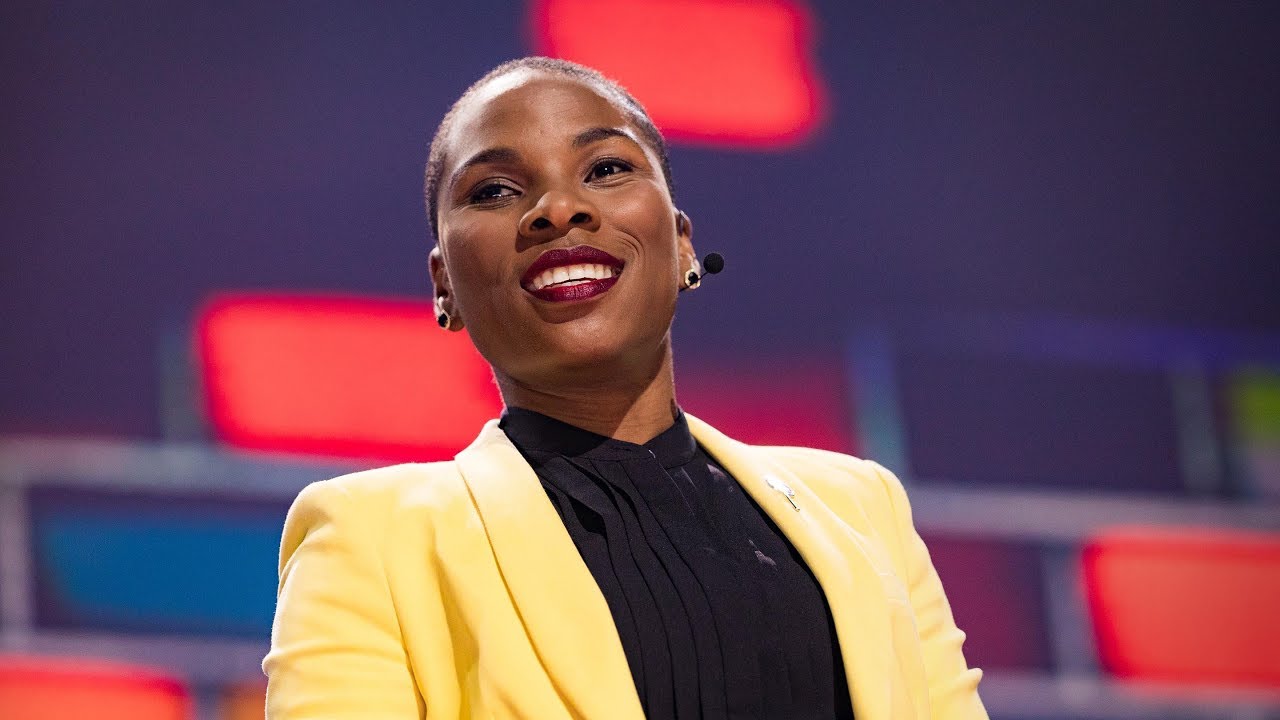
Women's sports are surging in popularity around the world, with record-breaking viewership, attendance and revenue growth. And yet, social media algorithms still skew towards covering men's sports. Olympic rower Kate Johnson, who now leads global marketing strategy for sports and entertainment at Google, unpacks why this is still happening — and what it will take to level the playing field for women’s sports. (Recorded at TEDSports Indianapolis 2025 on September 10, 2025)
Join us in person at a TED conference: https://tedtalks.social/events
Become a TED Member to support our mission: https://ted.com/membership
Subscribe to a TED newsletter: https://ted.com/newsletters
Follow TED!
X: https://www.twitter.com/TEDTalks
Instagram: https://www.instagram.com/ted
Facebook: https://facebook.com/TED
LinkedIn: https://www.linkedin.com/company/ted-conferences
TikTok: https://www.tiktok.com/@tedtoks
The TED Talks channel features talks, performances and original series from the world's leading thinkers and doers. Subscribe to our channel for videos on Technology, Entertainment and Design — plus science, business, global issues, the arts and more. Visit https://TED.com to get our entire library of TED Talks, transcripts, translations, personalized talk recommendations and more.
Watch more: https://go.ted.com/katejohnson
https://youtu.be/R4_trBh25Vk
TED's videos may be used for non-commercial purposes under a Creative Commons License, Attribution–Non Commercial–No Derivatives (or the CC BY – NC – ND 4.0 International) and in accordance with our TED Talks Usage Policy: https://www.ted.com/about/our-organization/our-policies-terms/ted-talks-usage-policy. For more information on using TED for commercial purposes (e.g. employee learning, in a film or online course), please submit a Media Request at https://media-requests.ted.com
#TED #TEDTalks #Sports
Оглавление (3 сегментов)
Segment 1 (00:00 - 05:00)
The Olympics has always served as a touch point for me to reflect on just how quickly our world changes. Think about it. Every four years, the Summer Olympics shine a massive spotlight on how much our technology evolves between the games. So I want you to take a minute and picture yourself in the year 2004. Try to remember the world back then. We didn't have iPhones, The Facebook, as it was originally known, was just emerging on college campuses and YouTube? It wasn't a thing. I competed at the Athens 2004 Olympics in women's rowing, which may as well have been the ancient Olympics, as far as technology goes. I was still using a flip phone, and I sent my friends and family email updates from the games using my Hotmail account and dial-up internet. (Laughter) So now I want you to imagine what it was like to win the first US Olympic medal in the event in 20 years. And rather than getting to instantly share that news with the world via my Instagram or TikTok account, my teammates and I had to wait to see if the Olympic broadcasters and journalists would cover it. Our story was entirely in their hands to tell or not. Well, 20 years later, and all of this has changed. In an instant, we have sports scores, match results and news stories at our fingertips and on our phones the moment it happens. And this is incredible. But there's still a problem. It's one thing to seek out the information you're looking for. It's another thing entirely to stumble upon it. The stumbling upon it goes like this. You're scrolling through your social media feed, you see something that captures your attention, you click on it and poof! Down the rabbit hole you go. You're locked in. Well, this stumbling upon is what we in marketing call discoverability. And for sports, it's the magic that fuels existing fans and captures new ones, pulling them in. But while it's easier than ever to search for sports news on Instagram, TikTok or Google, the information that fans stumble upon, or rather discover, well, it's served up to us by algorithms. They use historical data, fan interactions, and what's trending. Which mainly skews to men's sports. Despite incredible talent, heated rivalries and growing popularity, women's sports remain largely invisible in our daily content feeds. And this has real-world implications. I've spent nearly two decades in global sports and entertainment marketing at IMG, at Visa and now at Google, and I've seen firsthand how and why this happens. So I want to unpack this with you all. I want you to think about these technology platforms as massive digital libraries and the algorithms as the librarians. They’re great at organizing, indexing and cataloging information, but here's the important bit. They can only make recommendations from what's on the shelves, which historically, for many decades and only until very recently, has been 19 stories about men's sports for every one story about women's sports. Nineteen to one. So if I ask any of these technology platforms, who has scored the most goals for their country in international football, who do you think I get? Most of you are debating, is it Cristiano Ronaldo? Maybe Messi? Well, as of recently, Cristiano Ronaldo has scored 141 goals for Portugal. But factually speaking, this answer is wrong. And spoiler alert, it's not Messi either. The correct answer to this gender-ambiguous query is Christine Sinclair of Canada, with 190 goals. (Cheers and applause) That's right. This isn't just a mistake. It's a symptom of a bigger problem. And it's one example of many. These gender-ambiguous queries come down to word-matching issues within the algorithms. When sports journalists, commentators, content creators consistently publish content that gender-qualifies women's sports, but not men's, we get an imperfect response. For the person looking to settle the Messi versus Ronaldo debate, this answer works, and for the majority of people entering this query, this is what they're looking for. But the factual omission of women in these answers and in our daily content feeds, well, it negatively impacts the athletes who have worked very hard for the distinction
Segment 2 (05:00 - 10:00)
but also the fans who are looking for this information. This lack of visibility fuels what's often referred to as the vicious cycle of underinvestment. In 2023, for example, president of FIFA Gianni Infantino went on record criticizing many of the traditional broadcast networks for offering up to 100 times less for the women's rights, even as the 2023 World Cup tournament approached half that of the men's tournament. The same thing's happening here in the United States with NCAA men's and women's basketball. The men's tournament earns 1.1 billion dollars per year in media rights fees, 17 times more than the estimated value of the women's tournament, even as the last three finals, on average, are approaching par. These costs, they don't just undervalue women's sports, they're undervaluing the women's sports fan, which is a huge miss in the bigger economic picture. It turns out, compared to men's sports, fans of women's sports are younger, they're generally more tech savvy, and they're more loyal to brands who sponsor women's sports. But in a world where men's sports are everywhere and women's sports are harder to find, these short-sighted media rights holders and gatekeepers, well, they're failing, certainly the athletes, but also the fan and especially, and maybe more importantly, our girls. Which leads me to the real kicker. Despite the recent surge in women's sports, our girls are still dropping out of sport at twice the rate of boys by the age of 14. If they can't see incredible content of female athletes crushing it in sport and in life, it makes it harder for them to see sport as a pathway for themselves. If they can't see it, how can they ever dream of becoming it? I know without a doubt, I would not be the person or leader I am today, were it not for the lessons I learned as an athlete. The grit, the determination, the teamwork, the accountability, the resilience, all of it has had a significant impact on the rest of my life. And this makes sense. We know there's a direct correlation between girls who grow up playing sports, becoming women who lead. But while 94 percent of C-suite women grew up playing sports, only six percent of global CEOs are female. Which means when girls drop out of sports, a significant pipeline for future female leadership suffers. Now there is good news. Women's sports are growing, and it's thanks to the contributions of new media players that are reimagining the sports landscape for women's sports. Brands who understand the value and are leaning in, athletes, fans who are working as content creators behind the scenes. And yes, even you and me. Brands and media rights holders who understand the value of women's sports audiences, they're leaning in and they're reimagining traditional models around sports rights. Take Visa. They became the first-ever standalone sponsor of UEFA women's football. They worked with UEFA to basically unbundle the women's sponsorship rights from what was traditionally sold as a bundle with the men's. Another interesting example this year came from streaming platform Netflix, who secured the exclusive rights in the US and Canada for the next two FIFA Women's World Cups. I'm proud to say that at Google, we're tackling the bias challenge from both sides. We're getting smarter at responding to your gender ambiguous queries while at the same time working with content teams like Arsenal, Liverpool, women’s clubs, making sure that across India Women’s Cricket, the WNBA, the National Women's Soccer League, we're creating more stories for the algorithmic librarian to catalog and recommend. This is an example of Liverpool Football Club. Today, when you enter this into the search query, you're given the choice of do you want the men's team or the women's team? Our search products are getting better at women's sports discoverability, and at the same time, we’re working with media partners at ESPN, “The Athletic,” even “British Vogue,” increasing the coverage of women's sports. Athletes and fans are also playing a critical role in reimagining new models. They're building their own audiences with social media, creating brands that live far beyond the field of play. Take US rugby player Ilona Maher. She blew up on social media during the Tokyo 2020 and Paris 2024 Olympics with her hilarious behind-the-scenes glimpses of athlete life in the Olympic Village.
Segment 3 (10:00 - 12:00)
She became her own media channel, connecting with audiences and making herself and women's rugby more visible and more relatable than traditional media ever could. Canadian creator and fan Logan Hackett, aka “sportswithlogs,” is another awesome example. She breaks down complex plays, rules and controversies, making women's sports easier to understand and more accessible to new fans. More recently, I've been paying attention to how AI is poised to accelerate all of this. While AI slop is a real thing, in the right hands, tools like Gemini and ChatGPT can enable anyone to create thoughtful, production-level, quality content and distribute it at scale. Take podcast host Sean Callanan, whose “Sports Geek” rapid rundown podcast uses AI to curate the business news of the day into daily episodes on a variety of topics, all in his own AI-generated voice. He churns these out with incredible speed and efficiency. But the real impact? That's going to come from all of us. Your likes, your shares, your follows, the athletes that you track, the sports that you follow, it all plays a significant role in contributing to the library of women's sports content. My challenge to you is this: Go futher. Go beyond what the algorithm serves you. Follow athletes that intrigue you. Maybe try your hand at telling their story as a content creator yourself, even if on a small scale. If you're a brand, consider investing in women's sports media or becoming a sponsor. If you're a consumer, buy brands who sponsor women's sports. It all matters. For too long, "you cannot be what you cannot see" has been a quiet barrier. But what if we flip that from a warning into a call to action? Had I been able to instantly share my proudest Olympic moments way back when, I wonder what young athlete I would have reached through the void, and what boardroom she might be sitting in today. Leveling the playing field for women's sports is going to take all of us, from brands, media rights holders, athletes and fans, to you and me. When we choose to reimagine the future of women's sports, we open the door to possibility. Let's reimagine the future of women's sports not as something we have to work hard to find, but as something we deliberately and collectively build to be seen. Thank you. (Applause)