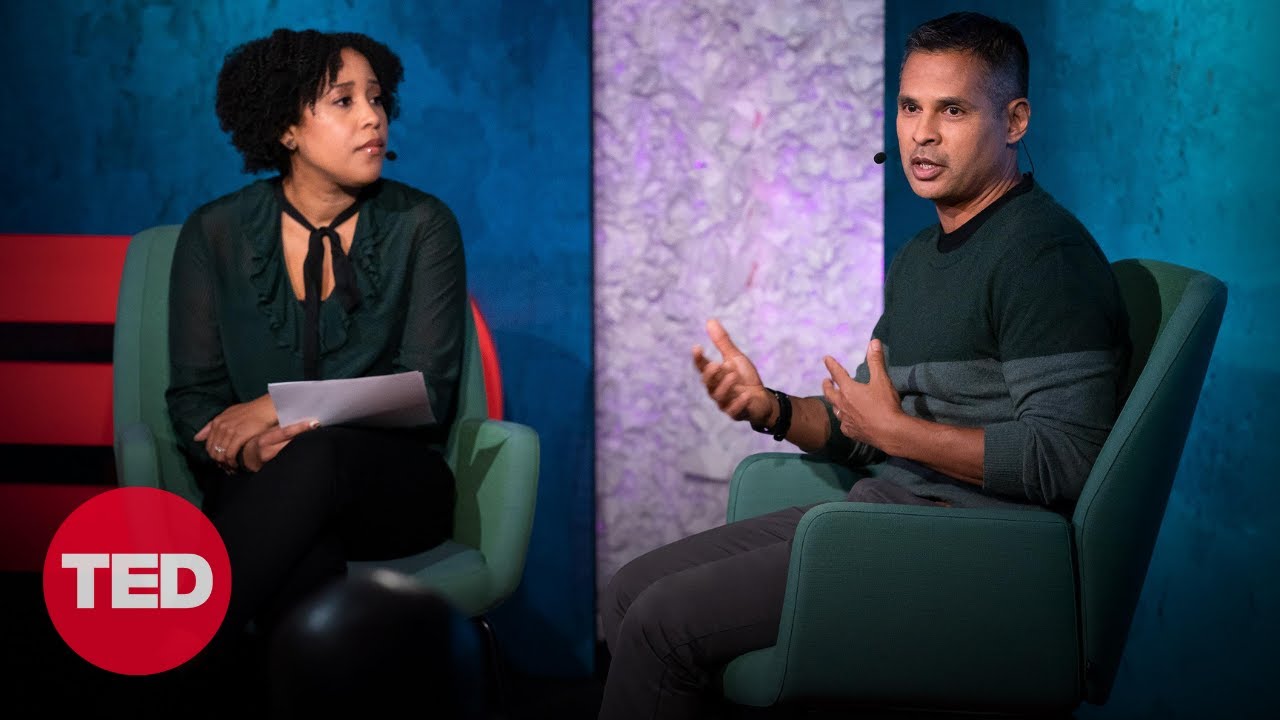
How to Fix Two of the Most Broken Systems in the US | Nick Turner | TED
16:16

How to Fix Two of the Most Broken Systems in the US | Nick Turner | TED

TED 12.03.2022 24 481 просмотров обн. 18.02.2026
Поделиться Telegram VK Бот
Транскрипт Скачать .md
Анализ с AI
Описание видео
In an engaging, insightful conversation, criminal justice reformer Nick Turner breaks down the ways the US criminal legal system perpetuates centuries-old racial and economic inequality. He joins TED current affairs curator Whitney Pennington Rodgers to outline why the best way to actually deliver justice and safety is to shrink the system and recognize the humanity of those caught in it. Visit http://TED.com to get our entire library of TED Talks, transcripts, translations, personalized talk recommendations and more. The TED Talks channel features the best talks and performances from the TED Conference, where the world's leading thinkers and doers give the talk of their lives in 18 minutes (or less). Look for talks on Technology, Entertainment and Design -- plus science, business, global issues, the arts and more. You're welcome to link to or embed these videos, forward them to others and share these ideas with people you know. Become a TED Member: http://ted.com/membership Follow TED on Twitter: http://twitter.com/TEDTalks Like TED on Facebook: http://facebook.com/TED Subscribe to our channel: http://youtube.com/TED TED's videos may be used for non-commercial purposes under a Creative Commons License, Attribution–Non Commercial–No Derivatives (or the CC BY – NC – ND 4.0 International) and in accordance with our TED Talks Usage Policy (https://www.ted.com/about/our-organization/our-policies-terms/ted-talks-usage-policy). For more information on using TED for commercial purposes (e.g. employee learning, in a film or online course), please submit a Media Request at https://media-requests.ted.com

Оглавление (7 сегментов)

  1. 0:00 Intro 310 сл.
  2. 1:50 History of mass incarceration 427 сл.
  3. 4:38 Is mass incarceration trendy 356 сл.
  4. 6:42 Impact of the pandemic 230 сл.
  5. 8:09 The most important thing we can do 532 сл.
  6. 11:23 Defunding the police 527 сл.
  7. 14:23 Final thoughts 296 сл.
0:00

Intro

Transcriber: Whitney Pennington-Rodgers: Hi, Nick, thanks so much for being here. Nick Turner: Whitney, thank you. WPR: For those who aren’t familiar, could you start by just telling us a little bit about Vera and the work you do? NT: The Vera Institute of Justice is a leading justice reform organization. We seek to transform the criminal legal system and the immigration system. We call it the criminal legal system because to call it a criminal justice system is a little bit of a misnomer. It doesn't deliver justice. And we work to transform the immigration system because many of the problems that we see in the criminal legal system are just the same in the immigration system. And by transform, what I mean is to shrink both of those systems to make sure that they are less brutal than they are right now and that there's some modicum of justice that's provided. We work on some of the biggest problems that are facing the country in these two realms and try to provide solutions. So I'll just give you an example of that. One of the things that we did over the last years was to participate in a campaign that ended up overturning the congressionally imposed ban on Pell Grants, which is federal financial aid for low-income students. 1994, Congress said that those were no longer going to be available to incarcerated students, and we were able to win that back at the end of 2020. And that makes a remarkable difference to close to 20,000 people right now who have an opportunity to earn a degree, find a pathway to employment, to higher income, to end intergenerational incarceration, and for people who are concerned about it to save money because there's less recidivism. WPR: I know you do so much more than just that, but I mean
1:50

History of mass incarceration

even thinking about the reason we need this sort of thing in this country and sort of how our justice system ended up in this space where this sort of work is even necessary. Maybe you could describe a little bit about that and how it plays into the rest of the world. NT: Well, there's a little bit of history to tell. I'm not a historian, but I think it's probably something that all of you are familiar with. This system that we have and the roots of it, they go down to our very bones. I often describe it as being just as American as apple pie. The system of mass incarceration that we have is just the latest iteration, the modern iteration of a system of racial subordination in the country. And it manifests and has manifested in different ways in America. But you can go back to slavery, you can go back to the 13th Amendment, which outlawed slavery except for people who were convicted criminally. You can think about post-Reconstruction era, 1877 on, when the South, which didn't have a work force because it was deprived of enslaved people, passed laws, Black Codes, that made criminal things like standing on a corner, standing on a street, called it loitering. And then people would be arrested, and then their bodies would be sold to private industry and leased as labor. So that was our first interaction with mass incarceration in the country. And if you flash forward 100 years and you re-begin the story in the early 1970s, that was our second post-Reconstruction period where, in response to the gains that were made in the civil rights movement, politicians sought to tap into the frustrations of many white voters so that you talk about it sometimes as the Southern Strategy, and started responding to disorder that was seen in cities and said, "We need to have a war on drugs." "We need to have a war on crime." And generation of tough-on-crime laws, mandatory minimums were put in place. And that's what we have now. And we went on a sort of stratospheric, 700-percent increase in the prison population over the course of the 50 years between the early '70s and the aughts. And here's the thing that we should know, is that we did it. This is a product of democracy. It did not have to be this way, but we elected people who promised us that safety and order could be delivered by a criminal legal system that we have today.
4:38

Is mass incarceration trendy

WPR: Well, thank you for that. I think it's interesting in thinking about this moment right now where I feel like there's so much interest in this subject and thinking about justice reform and how we can fix this system. And I'm curious to know from you, sort of, your thoughts about this moment right now, where it is in some ways kind of trendy to support issues around criminal justice. NT: I've been doing this work for about 25 years, one way or another, in direct services at first and then in the policy work that Vera does and you know, I admit that I have seen in the past five or six years that this has become sort of a cause célèbre and people have gotten excited about it. I think that is a fundamentally good thing. If you remember what I said a moment ago, that this is democracy that created this monster that we have, and so the only way that we will undo it is if people engage. And so the mere fact that we have discussions like the one that we're having tonight, that you can name a slew of celebrities from Kim Kardashian to, you know, to John Legend, and sort of, list goes on who have elevated this issue and made people start to think about it differently, that we have a generation of young people who have grown up with the concept of mass incarceration and understand it's actually not something that is necessary to deliver safety, but in fact that there are all sorts of profound costs and burdens that are associated with it. So it may feel trendy because for, you know, up until five or six years ago, while many people carried the stigma and the sadness that one in two Americans have a family member who has been incarcerated -- that's massive, one in two. This is what we've created, and a lot of people carry that stigma and so that people are finally talking about it and calling attention to it is absolutely necessary. So I'm OK if people are on trend.
6:42

Impact of the pandemic

WPR: And I'm curious if you feel the pandemic in any way has impacted your work or the way that we all should be thinking about justice reform. NT: Well, not enough. I mean, I think one of the things that happened when the pandemic started was that we actually saw a pretty remarkable reaction on the parts of jail systems and police where we recognize that, you know, some of the most profound vectors of COVID spread were going to be in congregate care facilities. That’s jails and prisons around the country. And jail populations dropped about 15 percent because sheriffs were letting go of people, judges were not imposing bail, police were issuing tickets rather than arresting and sending folks to jail. And so that was actually a very positive sort of, general reaction to see. We've seen those numbers start to tick back up, so it didn't quite have the durability that we would like it to. But one of the things that I think we learned at that moment in time is that it actually didn't cost people anything. Those decisions could be made, and people stayed safe. And there was a manifestation that what mattered was, you know, public health over public safety. And people’s humanity mattered. And so it was a remarkable thing to see, but we've got a lot more work to do.
8:09

The most important thing we can do

WPR: And to that point, I guess, what is the work that we have to do? What do you think we do in this moment to fix this system? NT: I think the most important thing that we can do is to redefine what we think delivers safety and safety for whom. So we have this pretty simplistic notion in this country. We grow up talking about bad guys and good guys, cops and robbers. We brand people as criminal for a certain act that they have committed, as if that is the sum total of who they are. But the formula that we have basically been fed, and I think mostly have ingested and tend to embrace as a people, is that if you want safety, you have to have police and you have to have prosecutors and you have to put people in jail and prison. But the fact of the matter is, is that we as a country are quite unusual in that we use this, this criminal legal system, to respond to an array of problems and challenges that people have that are really non-criminal. So I'll give you one statistic. Every year, about 10.5 million people are arrested in this country. So that's one every three seconds. So it just happened again. And some people might be OK with that, and they think, "Well, you know, it's a violent country, there are a lot of guns out there." But when you look at statistics, one of the things that we see is that only five percent of those arrests are for violent crime. An 80 percent -- so we're talking eight million of those arrests, which means people going to jail, getting a record that's going to make it hard for them to get a job, are for conduct that's associated with poverty, homelessness, mental illness and substance use. And so we're investing in this apparatus that sucks people into the system that isn't well adapted to address these complex problems, because many of these things are public health problems. Homelessness -- we should have supportive housing. Why would we lock someone up? If someone is decompensating, would we rather have two people with side arms pop out of a car and address that situation, or we'd rather have a trained person who actually knows how to de-escalate and understands mental illness and connect that person to the right kind of system? So what we need to do is invest less in this massive apparatus and invest in the things that we know will actually provide the kind of safety and the thriving and far less harm than what we currently have. So it has to be a fundamental, sort of, reordering of how we think about things. We have to be deprogrammed. And then we have to go out and we have to act and we have to vote on that and we have to participate in local elections for district attorneys and sheriffs and demand these kinds of changes. And demand from mayors and governors that they invest in public health and invest in communities rather than in the systems that end up harming them.
11:23

Defunding the police

WPR: So what you're describing is really this idea of decarceration and defunding the police, which has gotten a lot of air time in the past, you know, year or two. And I think there are definitely people who think that this idea feels either too pie-in-the-sky, that it’s too far from where we are right now as a nation to get there. And other people who maybe just feel like this just isn't the right way to go about fixing these issues. And so I'm curious what you would say to skeptics. NT: Well, you know, I mean, the first thing that I would recognize is that, you know -- so the language of defund is intentional, you know, provocation. And it sort of sharpened the issue. And I think that in the political context, Democrats have been very effectively trolled by Republicans and have been tagged with the issue. But if you really stop and you look at it, if I were to talk to you and I say, look, we're spending 115 billion dollars a year on policing. In major cities in this country, we're spending 30 percent to 40 percent, sometimes 50 percent on policing of a city budget. Not on housing, not on public health, not on substance abuse care and not on mental health care, on policing. And by the way, 80 percent of the things that the police are stopping people for are for conduct that relates to poverty and homelessness and mental illness and substance use. Does that make sense to you? Is that how you want to spend dollars? Is that what you believe is the right return on investment for societies? First of all, I think it's important you have to listen to people. And if they're fearful about crime, you've got to acknowledge that might be the case. And certainly in communities where we've seen a lot of crime, people do have a right to be fearful. I come to this work because of my commitment to racial justice and equity. Others on the other side of the aisle might not. They might come to it for civil liberty reasons that, you know, they want to shrink the size of government, they don't like government overreach, they are concerned about how government spends its money. So I think it's important to figure out how to meet people where they're at to have the conversation that obviously requires listening first. And then the last thing that I'll say is that I would urge people to do exactly as we've done tonight, which is to recognize the humanity of people and to, you know, again, one in two Americans have had a family member who was incarcerated. And so I know there are people in this audience who have experienced that, who have maybe stuffed it away and are challenged by, you know, coming to terms with that stigma. But for us to remember what we would like for our sons and our daughters, or our brothers or our fathers, and to start from that perspective. So I would try to engage people on a human empathetic level.
14:23

Final thoughts

WPR: And just, I guess, as a final thought here. Do you feel hopeful, I guess, about this moment? Do you feel like we're moving in the right direction? NT: Most days. Most days, I feel hopeful. I mean, I talked about the deep roots of this system that we have, and I talked about the fact that this is something that democracy chose, that we all chose, that we can unchoose it, and we can act differently. I think it will take a long time. I'm very hopeful again that we're having the kinds of conversations that we are having tonight, that people are engaging. I see movement on the policy level, but I'm also not tricked into believing that it will be easy. And some of the same tools that we have seen that have created this apparatus -- the fear mongering, sort of the iconography of gang bangers and, you know, cities of carnage and Willie Horton and all of these, sort of, the things that fueled this movement -- I see that again today. I see that on headlines. My mother-in-law visited for a while, she watched a lot of Fox News, I saw it 24 hours a day. And so that's dangerous. And so that makes me remember what, you know, what a task we have ahead of us and how much we're really going to have to lean in and to be resilient, to claim victories when we can. But to wake up the next day and know that we're going to have to reach harder and stronger to get more done. WPR: Thank you so much, Nick, you've given us a lot to think about. Thank you for being here tonight. NT: Thank you, Whitney, it's a pleasure. (Applause)

Ещё от TED

Ctrl+V

Экстракт Знаний в Telegram

Транскрипты, идеи, методички — всё самое полезное из лучших YouTube-каналов.

Подписаться