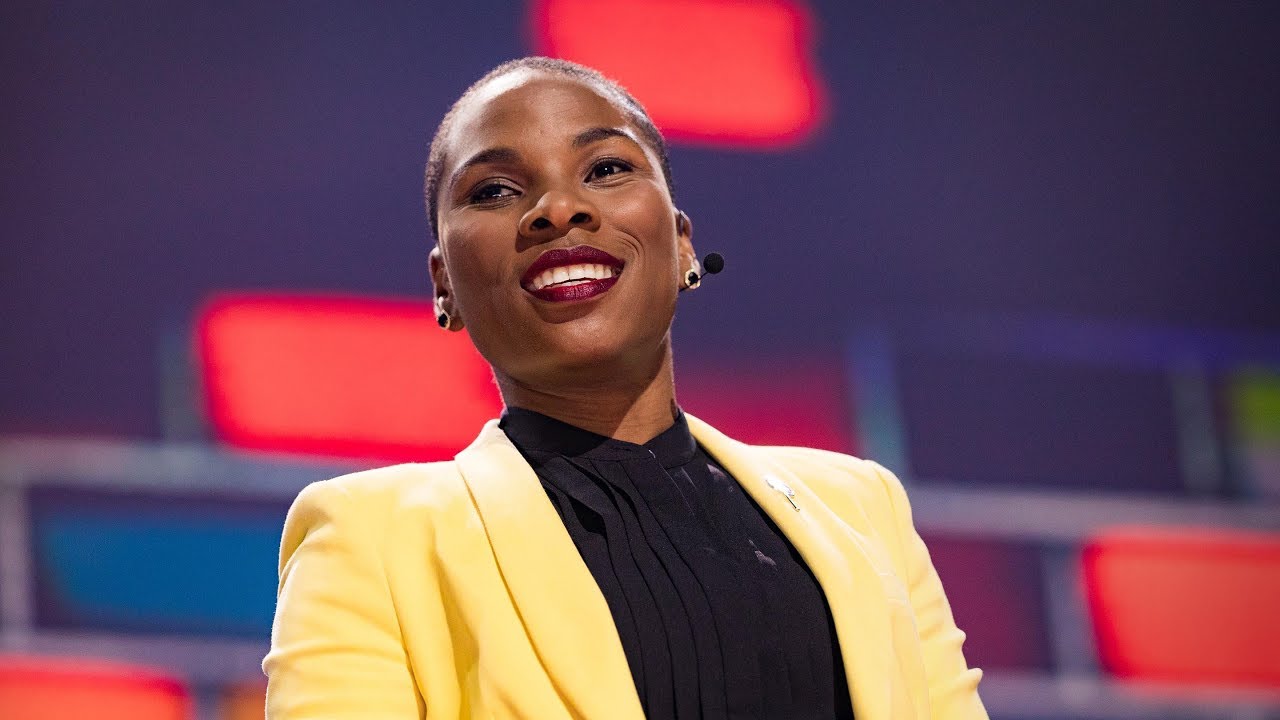
Sustainable Cooling That Doesn’t Warm the Planet | Rachel Kyte | TED Countdown
10:24

Sustainable Cooling That Doesn’t Warm the Planet | Rachel Kyte | TED Countdown

TED 10.03.2022 41 333 просмотров обн. 18.02.2026
Поделиться Telegram VK Бот
Транскрипт Скачать .md
Анализ с AI
Описание видео
"The way we cool things down is heating the planet even more," says sustainable development expert Rachel Kyte -- and the solutions go well beyond just fixing air-conditioning. She identifies four major areas with transformative solutions -- from roofs painted with bright white paint to solar control glass to more efficient cold chains for vaccines -- that can be implemented in fair and sustainable ways. Learn more about what a community designed for cool could look like. Countdown is TED's global initiative to accelerate solutions to the climate crisis. The goal: to build a better future by cutting greenhouse gas emissions in half by 2030, in the race to a zero-carbon world. Get involved at https://countdown.ted.com/sign-up Learn more about #TEDCountdown: Twitter: https://twitter.com/TEDCountdown Instagram: https://www.instagram.com/tedcountdown Facebook: https://www.facebook.com/TED Website: https://countdown.ted.com Watch the full 2021 TED Countdown Global livestream here: https://youtu.be/SG_vqlb1pOQ Visit http://TED.com to get our entire library of TED Talks, transcripts, translations, personalized talk recommendations and more. The TED Talks channel features the best talks and performances from the TED Conference, where the world's leading thinkers and doers give the talk of their lives in 18 minutes (or less). Look for talks on Technology, Entertainment and Design -- plus science, business, global issues, the arts and more. You're welcome to link to or embed these videos, forward them to others and share these ideas with people you know. Become a TED Member: http://ted.com/membership Follow TED on Twitter: http://twitter.com/TEDTalks Like TED on Facebook: http://facebook.com/TED Subscribe to our channel: http://youtube.com/TED TED's videos may be used for non-commercial purposes under a Creative Commons License, Attribution–Non Commercial–No Derivatives (or the CC BY – NC – ND 4.0 International) and in accordance with our TED Talks Usage Policy (https://www.ted.com/about/our-organization/our-policies-terms/ted-talks-usage-policy). For more information on using TED for commercial purposes (e.g. employee learning, in a film or online course), please submit a Media Request at https://media-requests.ted.com
Оглавление (14 сегментов)

  1. 0:00 Intro 44 сл.
  2. 0:20 Rachels story 56 сл.
  3. 0:39 The problem 91 сл.
  4. 1:21 Sustainable energy 162 сл.
  5. 2:29 Access to energy 101 сл.
  6. 3:15 Solutions 91 сл.
  7. 3:56 Building Design 203 сл.
  8. 5:12 Solar Control Glass 89 сл.
  9. 5:54 Energy Efficiency 81 сл.
  10. 6:27 HCFC Free 61 сл.
  11. 7:01 New Regulation 111 сл.
  12. 7:55 Cold Chain 65 сл.
  13. 8:27 Solar 73 сл.
  14. 8:57 Conclusion 191 сл.
0:00

Intro

This summer, I was visiting family in England. There was a heat wave. It was hot, and it was humid. There was very little breeze. The temperature was hovering around 29 degrees centigrade for days on end, and the nights were not much better.
0:20

Rachels story

In our little bungalow, there was nowhere to get cool. We had one fan moving hot air around. I was worried for my mom. Heat can send your heart rate all the way up. The only place to get cool, the only relief, was at the supermarket in town, standing in front of the chiller cabinets.
0:39

The problem

In 2021, extreme heat has captured the headlines on every continent. And globally in July, surface temperatures were the highest recorded since records began in 1880. The problem is that the way we cool things down is heating the planet even more. Today’s air-conditioning is energy inefficient, depends on polluting refrigerants such as hydrofluorocarbons and many traditional cooling technologies waste heat. I’m sure you’ve had that experience of walking in an alley behind a convenience store and feeling that blast of hot air on your face coming from the chillers inside.
1:21

Sustainable energy

And the demand for cooling is going up. The International Energy Agency estimates that by 2050, today’s two billion air conditioners will have multiplied to more than 5.5 billion, and that by 2030, electricity demand for cooling buildings could jump by 50 percent. And think about this: most households in hot countries have not bought their first air conditioner yet. I’ve worked on sustainable energy for many years in different ways; on energy access in the Sahel, to cold chains in East Africa, to financing large-scale energy infrastructure projects around the world and to getting access to cooling in low-income communities in the UK and the US. I've always focused on the twin problems of sustainability and fairness. I think cooling gets at the heart of these challenges. Why? Well, because most wealthy people can stay cool. They often live in wealthy, leafy suburbs with an air conditioner and a generator out back, and they have cool offices, cool schools and hospitals.
2:29

Access to energy

But many people on low income live and work in urban concrete jungles void of green space and shade, or live in rural areas well beyond the cold chains needed for produce and vaccines. Almost a billion people live without energy access today; billions more live without access to reliable energy; and 2.3 billion can only afford a highly inefficient or polluting air conditioner. These people’s quest for sustainable energy, for cooling, for comfort, for cold chain, for a healthy diet or better health care, can drive a virtuous circle where we can provide cooling for everyone without warming the planet.
3:15

Solutions

Entrepreneurs with new technologies are emerging everywhere. Framework agreements guiding government action are in place, and there are big and new commitments being made. The solutions go well beyond just fixing air-conditioning. The solutions range from city design to architecture, from building materials to appliances, from geoengineering to green roofs. The solutions can be high-tech, they can be low-tech, and there are four areas of promise, four areas where solutions could be transformative if we step up to the plate, prioritize, regulate and invest. We’ll go through them one by one.
3:56

Building Design

First, we need to build and design differently for cooling. For the last 70 years or more, air-conditioning has driven building design. We need to change that, and we need to move away from hermetically sealed concrete and glass boxes where you can switch on an air conditioner but you cannot open the window. You know it doesn’t have to be a window rattler as a solution. District cooling can provide cooling solutions for building complexes by running water through insulated pipes. And in Denmark, better known for its wind and its rain, district cooling provides, with a combination of heat pumps, wastewater and groundwater, cooling solutions for offices and homes. And we can make roofs cool, too. The race is on for the brightest, whitest paint that reflects 98 percent of sunlight that hits its surface, much better than the 80 to 90 percent we achieve today. And if not white then green. Green because they’re planted with gardens and vegetables, also contributing to the food that has to come from urban farming. Roofing materials matter, too. In India, modular roofing panels made from paper and waste wood can reduce the temperatures by up to 10 degrees centigrade in the homes below.
5:12

Solar Control Glass

And we can change windows, too. In the European Union, solar control glass is available that provides high daylight transmission, thermal insulation, transparency and low reflection. Second, we need to make cooling hyperefficient. In the developed world, if you buy a high-end air conditioner today, it’s probably 25 to 50 percent more efficient than anything you could have bought 10 years ago. Now we need every air conditioner for sale everywhere to be at least 50 percent more efficient than the most efficient air conditioner on the market today.
5:54

Energy Efficiency

It helps if we think of energy efficiency as our first fuel. That’s not the priority we give it in policy. We need much more of our economic activity to be covered by energy efficiency standards that are much tougher than today’s. Radical efficiency is important for heating too. Heating accounts for most emissions from building, but emissions from cooling are the fastest rising. So we need much more synergy between heating and cooling. Remember the alley behind the convenience store?
6:27

HCFC Free

High-efficiency energy pumps will be solutions for both. Third, we need our air-conditioning to be hydrofluorocarbon or HFC-free. In 2016, governments agreed to phase down the production and the consumption of polluting HFCs, a refrigerant that accelerates global warming. That agreement, the Kigali Amendment, is now ratified by 125 countries and the European Union, including China, the largest producer of air-conditioning.
7:01

New Regulation

India, a growing producer and a big consumer, has agreed to follow suit. And while not a party to the agreement -- yet -- the United States announced in September 2021 a new regulation that would insist that US manufacturers reduce HFCs by 85 percent in the next 15 years. Now what’s interesting is that there are existing, emissions-free, non-polluting technologies on the market today, ready to go to scale, including membrane technologies that can both cool and dehumidify air without using compressors or refrigerants. So the Kigali Amendment, together with a ban on the exports and imports of illegal HFCs, could make a real difference and grow that market fast.
7:55

Cold Chain

And fourth, we need cold chains for food, medicines -- especially vaccines -- for everyone. Distributing vaccines along a secure cold chain to reach the most vulnerable is essential. Solar, nontoxic vaccine refrigerators, cold boxes and carriers operating on off-grid energy are increasingly on order. And mobile cold storage units that run on solar convert energy into ice. And so when the sun goes down
8:27

Solar

that ice can be used to keep temperatures steady and cool. And using Bluetooth technology, even in areas where there is no energy access, we can monitor all the way along the cold chain to guarantee safety. And using drones, we can shorten the cold chain. Today, change is often portrayed as expensive or scary, but you can see that there’s nothing scary about living in a community designed for cool, where affordable
8:57

Conclusion

efficient, nontoxic air-conditioning and refrigerators run on clean energy, on and off the grid, and in a community where farmers get more income because more of their produce gets to market and everyone rests easier knowing that their vaccines are safely stored in the clinic -- a clinic which, with a different roof and different glass in the windows, is safer for the nurse to work in. What is scary is that we are not having enough conversations in enough places and driving enough investments into affordable, nonpolluting, efficient solutions for cooling for everyone on this warming planet. Scientists are seeing that animals, especially birds, are beginning to shape-shift to adapt to climate change. As their environments get hotter -- so their ears are growing and their beaks are growing to help them cool down. Now our species is not shapeshifting yet, nor do I think bigger ears will help. (Laughter) But we can shape-shift our cities and our towns, and we can change the way that we cool ourselves down and we can change the way that we keep our medicines and food safe. Thank you. (Applause and cheers) (Applause)

Ещё от TED

Ctrl+V

Экстракт Знаний в Telegram

Транскрипты, идеи, методички — всё самое полезное из лучших YouTube-каналов.

Подписаться