Unitree R1: China’s Scary Cheap AI Robot
11:38

Unitree R1: China’s Scary Cheap AI Robot

Julian Goldie SEO 30.07.2025 4 030 просмотров 77 лайков обн. 18.02.2026
Поделиться Telegram VK Бот
Транскрипт Скачать .md
Анализ с AI
Описание видео
Want to get more customers, make more profit & save 100s of hours with AI? https://go.juliangoldie.com/ai-profit-boardroom Free AI Community here 👉 https://www.skool.com/ai-seo-with-julian-goldie-1553 🚀 Get a FREE SEO strategy Session + Discount Now: https://go.juliangoldie.com/strategy-session 🤯  Want more money, traffic and sales from SEO? Join the SEO Elite Circle👇 https://go.juliangoldie.com/register 🤖 Need AI Automation Services? Book an AI Discovery Session Here: https://juliangoldieaiautomation.com/ Click below for FREE access to ✅ 50 FREE AI SEO TOOLS 🔥 200+ AI SEO Prompts! 📈 FREE AI SEO COMMUNITY with 2,000 SEOs ! 🚀 Free AI SEO Course 🏆 Plus TODAY's Video NOTES... https://go.juliangoldie.com/chat-gpt-prompts - Want a Custom GPT built? Order here: https://kwnyzkju.manus.space/ - Join our FREE AI SEO Accelerator here: https://www.facebook.com/groups/aiseomastermind - Need consulting? Book a call with us here: https://link.juliangoldie.com/widget/bookings/seo-gameplanesov12

Оглавление (3 сегментов)

  1. 0:00 Segment 1 (00:00 - 05:00) 1039 сл.
  2. 5:00 Segment 2 (05:00 - 10:00) 1017 сл.
  3. 10:00 Segment 3 (10:00 - 11:00) 321 сл.
0:00

Segment 1 (00:00 - 05:00)

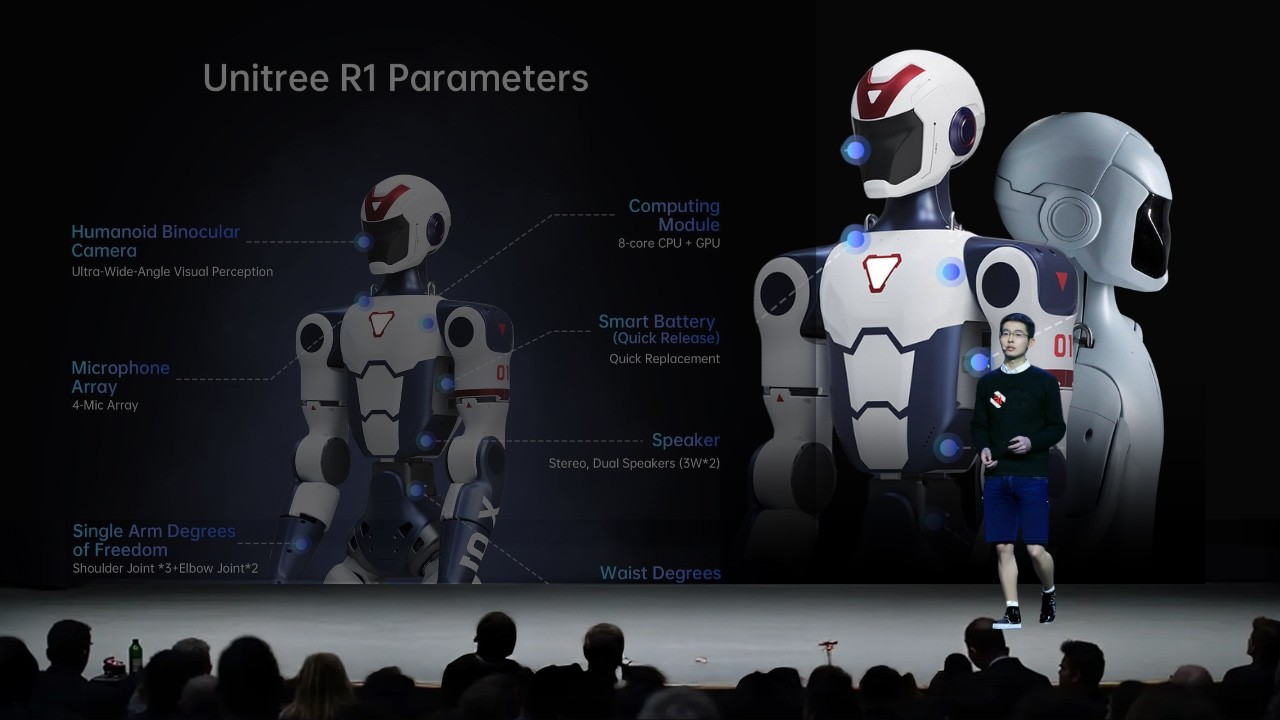
Today I'm going to show you a robot that costs less than a used car, but can do back flips and cartwheels better than most humans. This is the Unit R1, and it just broke the entire robot industry. We're talking about a full humanoid robot for under $6,000. That's cheaper than most people's laptops. And wait until you see what this thing can actually do. Hey, if we haven't met already, I'm the digital avatar of Julian Goldie, CEO of SEO agency, Goldie Agency. Whilst he's helping clients get more leads and customers, I'm here to help you get the latest AI updates. Let me tell you something that's going to blow your mind. A Chinese company called Unitry just dropped a bomb on the robot world. They released a humanoid robot called the R1 for $5,900. That's not a typo. $5,900 for a robot that can run down hills, do handstands, throw punches, and get back up when it falls. To put this in perspective, Tesla's Optimus robot that everyone's talking about will cost at least $20,000 when it comes out. That's if Elon can even make 1 million of them per year. Other robots like the figure A I robot cost $50,000. Some industrial robots cost over $250,000. But this little guy costs less than a decent car. So what makes this robot so special? First off, this thing is built like an athlete. It weighs only £55, but has 26 joints. That's more joints than Unit's own more expensive G1 robot, which cost $16,000. More joints means better movement, more fluid motion, more humanlike actions. The R1 stands 4T tall. That's about the size of a 10-year-old kid. But don't let the size fool you. This robot can do things that will make your jaw drop. I'm talking cartwheels, handstands, shadow boxing, running downhill without falling over, getting up from lying down in seconds. This isn't some toy robot that barely walks in a straight line. Here's what really gets me excited about this robot. It has something called multiodal a I built right in. That means it can see with its cameras and here with its microphones. It has voice recognition and image recognition. You can literally talk to this robot and it will understand you. It has stereo speakers so it can talk back to you. It is like having a conversation with a person who happens to be made of metal and motors. The robot uses an 8 core processor with a built-in GPU. Rumor has it that Unitry is working with Nvidia for the processing power. That's the same company making the chips that Power Chat GPT and all the other AI systems you've been hearing about. So, this robot has some serious brain power. But here's where it gets really interesting. This robot runs on a removable battery that lasts about 1 hour. That might not sound like much, but think about it. 1 hour of a robot doing back flips and running around is actually pretty good. Plus, you can swap batteries so it never has to stop working. Companies like Neo and J are using unitary robots on their assembly lines right now. So, if you learn to program the R1, you're learning skills that apply to industrial robots worth hundreds of thousands of dollars. Think about what this means. For the price of a decent used car, a college student could buy this robot and learn to program the future of automation. A small company could buy 10 of these robots for the price of one industrial robot. Researchers who couldn't afford robot testing before can now experiment with cuttingedge robotics. But let's talk about what this robot can't do yet. It doesn't have fancy hands that can pick up objects and manipulate them like humans do. The hands look like they're stuck in fists, so it's not going to be folding your laundry or making you breakfast anytime soon. Unitry does make an EDU version with better hands, but those cost an extra $5,000 each. This robot is also still in development. You can't just order one on Amazon today. Unitry hasn't given a delivery date yet. But the fact that they're showing it off means they're getting close to releasing it. Here's something most people don't understand about robotics. The hardest part isn't making the robot do back flips or run down hills. That stuff can be programmed in a computer simulation and then transferred to the real robot. The really hard part is making robots do simple human tasks like cooking or cleaning or taking care of pets. That requires the robot to understand the real world in ways that are incredibly complex. If you want to stay ahead of the AI and robotics revolution, you need to check out our AI success lab. We have over 14,000 members who are learning how to use AI to transform their businesses and lives. Inside the lab, you'll find over 100 different AI tutorials and use cases that get updated every single day. You'll see how we give away a checklist of 100 different tutorials as freebies in our school feed. Plus, you get all the video notes and training materials that will help you implement AI in your business right away. The link is in the comments and description below. There's something called the Moravec paradox in robotics. It says that things that are hard for humans are often easy for robots and things that are easy for humans are incredibly hard for robots. A robot can calculate math problems that would take humans hours to solve. But ask that same robot to make a sandwich and it will struggle. So, while the R1 can do amazing athletic moves, it's not ready to be your personal butler. At least not yet. But that's not really the point right now. The point is that this robot brings humanoid robotics to a price point where normal people can actually afford to experiment with it. Let me paint you a picture of what's really happening here. China is making a massive push to dominate the robotics industry. They're not just trying to make better robots. They're trying to
5:00

Segment 2 (05:00 - 10:00)

make robots so cheap that everyone can afford them. This is the same strategy they use with solar panels, electric car batteries, and smartphones. Make it cheaper than anyone else can and flood the market. The Chinese government has made robotics a national priority. They want humanoid robots in homes and offices across China. The R1 is just the beginning. Unitary filed papers to go public just days before announcing this robot. If their IPO goes through, they could become the first pure robotics company listed on a Chinese stock exchange. But this isn't just about China. This cheap robot is going to force every other robotics company to lower their prices. Tesla is going to have to explain why their robot costs four times as much. Boston Dynamics is going to have to justify their premium pricing. Competition like this is great for consumers, but it's going to shake up the entire industry. Here's what I think is going to happen next. Other companies are going to rush to match this price point. We're going to see a race to the bottom on robot pricing. That means in the next few years, humanoid robots are going to become as common as laptops or smartphones are today. The R1 also comes with Wi-Fi 6 and Bluetooth 5. 2 connectivity. That means it can connect to the internet and communicate with other devices. Imagine having a robot that can control your smart home devices, answer questions by looking things up online, and maybe even help with your business tasks. Speaking of business tasks, this is where things get really interesting for entrepreneurs. A robot that can walk around, see things, hear things, and communicate could revolutionize customer service. Imagine having a robot greeter at your store, or a robot that can give tours of your facility, do basic security patrols. The possibilities are endless when you have affordable robotics. Small businesses that could never afford a $50,000 robot might be able to justify $6,000, especially if that robot can work multiple shifts without getting tired, taking breaks, or calling in sick. Now, I want to be clear about something. This robot is not going to replace human workers anytime soon. It's more like a tool that can help humans be more productive. Think of it like having a very advanced computer that can walk around and interact with the physical world. The R1 is designed for developers, researchers, and early adopters. But it's a huge step toward making robots accessible to regular people. And when regular people can afford robots, that's when the real innovation starts happening. Let me tell you about some of the technical specs that make this robot special. It has a binocular camera system for depth perception. That means it can judge distances and avoid obstacles. It has a four microphone array for better voice recognition. The 8 core CPU with integrated GPU gives it enough processing power to run AI models in real time. The robot's operating system is based on the same platform that Unitry uses for their industrial robots. That means the software ecosystem is already mature. Developers won't have to start from scratch. They can build on years of research and development that Unitry has already done. One thing that impressed me about Unitry is their track record. They're not a startup that just appeared out of nowhere. They've been making robots for years. Their H1 robot is already working in real factories. Their G1 robot has been tested at major trade shows around the world. So, when they say they can deliver a robot for $6,000, they probably can. The timing of this announcement is also interesting. It came just a week after Unitry revealed their plans to go public, that tells me they're confident in their technology and their ability to massproduce these robots. Going public means they'll have access to more funding to scale up production. But here's what really excites me about the future. This robot is just the beginning. Once companies figure out how to make robots this cheap, they're going to start adding more features, better hands, longer battery life, more advanced AI, and the prices will keep coming down as the technology improves. We're living through the smartphone moment for robotics. Just like smartphones went from expensive business tools to something everyone carries in their pocket, robots are about to become part of everyday life. The R1 might be the iPhone moment that kicks off the robot revolution. For business owners, this creates incredible opportunities. Companies that figure out how to use affordable robots effectively will have huge advantages over their competitors. They'll be able to automate tasks that were never economical to automate before. Here's something most people miss about robotics. The hardware is only half the equation. The other half is software, and software is where the real magic happens. A robot is only as good as the programs that control it. That's why having an affordable hardware platform like the R1 is so important. It gives more people the chance to experiment with robot software. I predict we're going to see an explosion of creativity once developers get their hands on these robots. People are going to teach them to do things that unitry never imagined. Just like how smartphone apps did things that phone manufacturers never thought of. The R1 also represents a shift in how we think about robots. Instead of trying to build one robot that does everything perfectly, companies are starting to build platforms that can be customized for different tasks. It's like the difference between buying a customuilt computer versus buying parts and building your own. Now, let's talk about what this means for different industries. In education, schools could finally afford to have robotics programs. Students could learn programming, engineering, and AI using real robots instead of just simulators. That's going to create a generation of people who grow up comfortable working with robots. In healthcare, affordable robots could help with basic tasks like delivering supplies or monitoring patients. They're not going to replace
10:00

Segment 3 (10:00 - 11:00)

nurses and doctors, but they could handle routine work so humans can focus on more important tasks. In retail, robots could work as greeters, inventory checkers, or security guards. A robot that never gets tired and never calls in sick might be worth $6,000 to a store owner. Julian Goldie reads every comment, so make sure you comment below and let me know what you think about the Unitary R1. Are you excited about affordable robots? What would you use a $6,000 robot for? Do you think this will change how we work and live? If you're interested in staying ahead of these technology trends, you should definitely check out our AI profit boardroom. We have over 1,000 members who are scaling their businesses and saving hundreds of hours with AI automation. The community is incredible and you'll learn strategies that most people won't discover for years. And if you're serious about understanding how AI and robotics will impact your business or career, you need to book a free SEO strategy session with our team. We'll show you exactly how to use these technologies to get more leads and customers. The link is in the comments and description below. Remember to check out our AI success lab for all the latest AI and automation training. We have 14,000 members who are already using these technologies to transform their businesses. You'll see how we show a checklist of 100 different tutorials that were given away as freebies every day inside the school feed. You can get all the video notes from there and all the other stuff that you get along with all the trainings in the AI success lab. On top of that, it also has 14,000 members because then people feel like they're missing out and they want to be part of something bigger than them. The robot age is here. The question isn't whether robots will change your industry.

Ещё от Julian Goldie SEO

Ctrl+V

Экстракт Знаний в Telegram

Транскрипты, идеи, методички — всё самое полезное из лучших YouTube-каналов.

Подписаться