Farwiza Farhan: The powerful women on the front lines of climate action | TED Countdown
7:14

Farwiza Farhan: The powerful women on the front lines of climate action | TED Countdown

TED 01.02.2022 28 544 просмотров 779 лайков обн. 18.02.2026
Поделиться Telegram VK Бот
Транскрипт Скачать .md
Анализ с AI
Описание видео
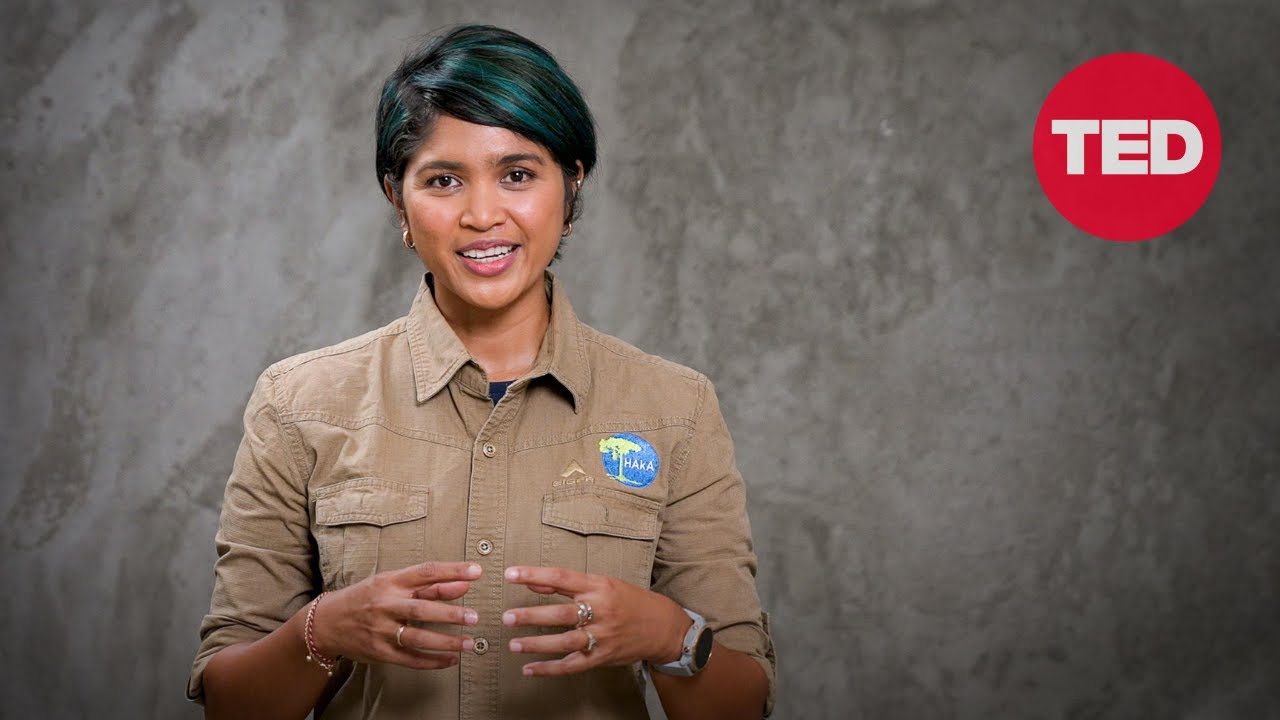
When it comes to big problems like climate change, we tend to focus on big solutions -- but many of the best ideas come from people on the ground, facing day-to-day conservation battles. Sharing her effort to protect the Leseur ecosystem in Indonesia (the last place on Earth where the Sumatran rhino, tiger, elephant and orangutan still roam together in the wild), TED Fellow and conservationist Farwiza Farhan explains the challenges women face on the front lines of forest preservation within patriarchal societies -- and the resilient, world-changing power they hold. Countdown is TED's global initiative to accelerate solutions to the climate crisis. The goal: to build a better future by cutting greenhouse gas emissions in half by 2030, in the race to a zero-carbon world. Get involved at https://countdown.ted.com/sign-up Learn more about #TEDCountdown: Twitter: https://twitter.com/TEDCountdown Instagram: https://www.instagram.com/tedcountdown Facebook: https://www.facebook.com/TED Website: https://countdown.ted.com Watch the full 2021 TED Countdown Global livestream here: https://youtu.be/SG_vqlb1pOQ Visit http://TED.com to get our entire library of TED Talks, transcripts, translations, personalized talk recommendations and more. The TED Talks channel features the best talks and performances from the TED Conference, where the world's leading thinkers and doers give the talk of their lives in 18 minutes (or less). Look for talks on Technology, Entertainment and Design -- plus science, business, global issues, the arts and more. You're welcome to link to or embed these videos, forward them to others and share these ideas with people you know. Become a TED Member: http://ted.com/membership Follow TED on Twitter: http://twitter.com/TEDTalks Like TED on Facebook: http://facebook.com/TED Subscribe to our channel: http://youtube.com/TED TED's videos may be used for non-commercial purposes under a Creative Commons License, Attribution–Non Commercial–No Derivatives (or the CC BY – NC – ND 4.0 International) and in accordance with our TED Talks Usage Policy (https://www.ted.com/about/our-organization/our-policies-terms/ted-talks-usage-policy). For more information on using TED for commercial purposes (e.g. employee learning, in a film or online course), please submit a Media Request at https://media-requests.ted.com

Оглавление (2 сегментов)

  1. 0:00 Segment 1 (00:00 - 05:00) 675 сл.
  2. 5:00 Segment 2 (05:00 - 07:00) 258 сл.
0:00

Segment 1 (00:00 - 05:00)

When it comes to big problems like climate change, we tend to like big solutions: new technologies, global policies. But many of the most important solutions are rooted on the ground by actors that don’t walk the corridors of power, by actors that might not speak the scientific language of climate change but who are dealing with its impact every day. I am a forest conservationist from the Leuser Ecosystem in Sumatra, Indonesia. You might have never heard of this landscape. But it’s the last place on Earth where the critically endangered Sumatran rhino, tiger, elephant and orangutan still roam together in the wild. Meet Sumini. Sumini is the leader of Indonesia's first women-led ranger team and a mother, a conservationist whose action is rooted in her community on the edge of the Leuser Ecosystem. In the patriarchal society where she operates, a woman is expected to be quiet and subservient. During a village meeting, the ladies tend to congregate in the kitchen while the men discuss village policies and budget. And oftentimes, even if she is present in the meeting room, she is expected to not voice her opinion, rather letting a male relative answer [questions] addressed to her without consulting her first. When I asked Sumini why she chose to protect and conserve the forests, she said, "We are mothers and grandmothers. We are responsible for everything. From the moment we wake up, we have to wash clothes, cook and make coffee for our family. More than anything, we need water in every aspect of our life. And the only thing that protects our water source is the forest up the mountain." The path for Sumini to lead these rangers is anything but straightforward. She became familiar with the forest when she began accompanying her husband trekking. During these trips, they witnessed encroachment and logging. They saw people taking out timber and encroaching into the forest. When they would try to warn off the loggers, they were met with a challenge. "Who are you and what are your authorities to tell us off? Go away!" Logging an encroachment that happened upstream soon turned into disasters downstream. A heavy rainfall that lasted for a few days turned into flash floods and landslides, destroying the village and its essential infrastructure. After the disaster, Sumini and other villagers had to take refuge in a shelter for a while. "Being a refugee is hard. You don't have privacy and security. You don’t even have access to clean flowing water. It's hard to even keep yourself safe and clean. I don't want that kind of disaster to happen again," she said to me. For Sumini and her team, the first part of becoming a ranger was not putting on a uniform but creating a map of the forest. You see, in Indonesia, access to land and forest are often contested, and one couldn't simply walk into a patch of forest and declare that they will protect this patch. No, no. The government needs to acknowledge that you are the legal guardian of the particular forest. And then they will give you the paperwork to affirm your role. In order to obtain this permit, the community needs to create a proposal with a map. So they get the work. Of course, they know where things are in the forest: where the water and the waterfall [are], where the orchid is and where the bear sleeps. But putting this knowledge on paper is something else. Climbing up into the forest with her crew, they learn to read the GPS, orient around a map and take note of important flora and fauna as well as signs of wildlife. They begin to plant trees and restore parts that were degraded. Up to this day, In Indonesia, there were only a few patches of forest formally managed by groups of women. And Sumini led one of them. It might sound awesome, but the work is not done. The conservation work is never done. Sumini and her team still face many challenges every day.
5:00

Segment 2 (05:00 - 07:00)

And sometimes they are still being patronized and undermined. But the power of these women is patience and persistence. They're embedded in the community, so they learn to navigate the tricky path of being a strong female leader in a conservative patriarchal society. Unlike a conservation expert that parachutes in from outside, Sumini and her team are here to stay. So their approach is instantly different. At this point, we know that tropical forests are a stabilizing force for climate. And protecting tropical forests is one of the most cost-efficient ways to avert climate disaster and biodiversity collapse. But the conservation world needs an overhaul. We need more women in the position of leadership -- women from the grassroots, women like Sumini. Women make up half of the world's population, yet only a fraction sits at the decision-making table. Women in the communities are the guardians of environmental wisdom, yet they are often an untapped source of knowledge, underappreciated and therefore underresourced. Community based alone is not enough. A study by WRI showed that most community forestry initiatives benefit elite village leaders, usually men, and worsen gender equality on the grassroots. So how do we change this? First, we need to acknowledge that the problem is complex. There are close to 85,000 villages in Indonesia, about 25,000 of them are located in and around forests. Each have their own complexities and challenges, but each of them also has its own Sumini. It is up to us to find them, work with them and invest in them. Thank you.

Ещё от TED

Ctrl+V

Экстракт Знаний в Telegram

Транскрипты, идеи, методички — всё самое полезное из лучших YouTube-каналов.

Подписаться