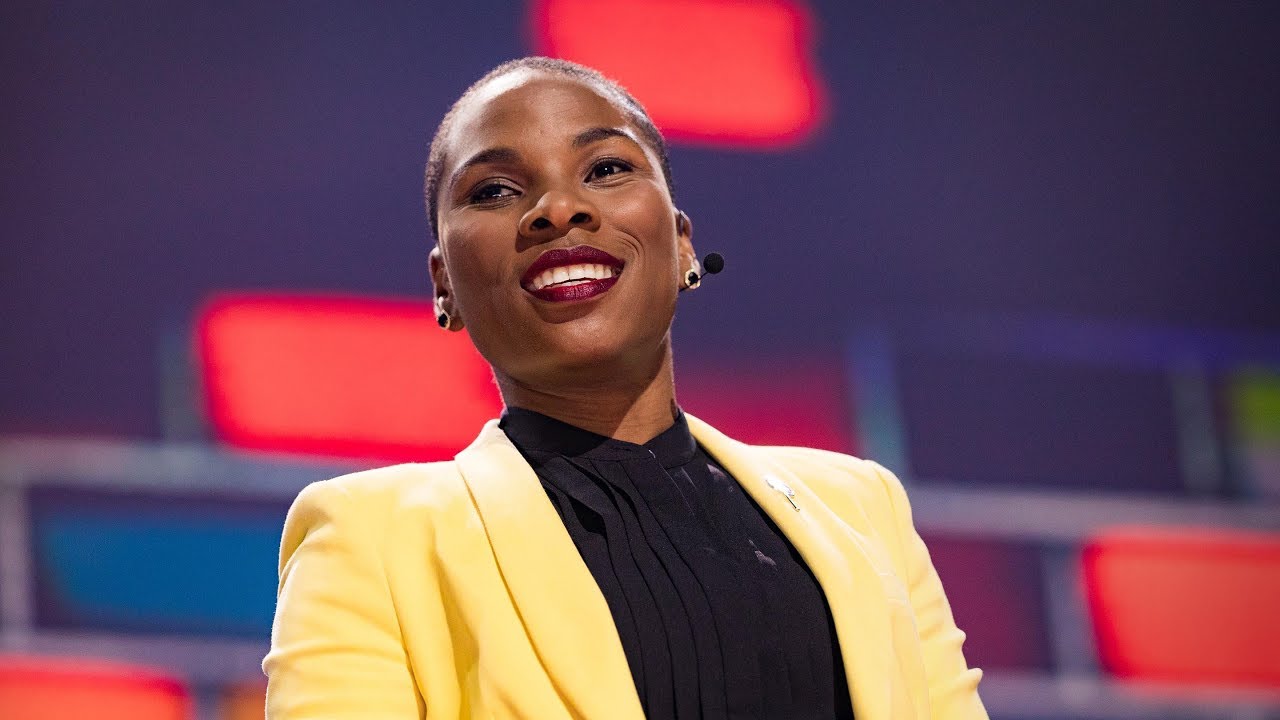
Your smartphone, computer and electric car all depend on one thing — critical minerals buried deep underground. But there’s a catch: the mining industry has gotten dramatically worse at discovering new deposits just when we need them most, says mining innovator Mfikeyi Makayi. She introduces new AI-powered technology that could fix this problem by predicting mineral locations 10,000 times faster than conventional methods and transforming an industry essential to a sustainable future. (Recorded at TED Countdown Summit 2025 on June 18, 2025)
Join us in person at a TED conference: https://tedtalks.social/events
Become a TED Member to support our mission: https://ted.com/membership
Subscribe to a TED newsletter: https://ted.com/newsletters
Follow TED!
X: https://www.twitter.com/TEDTalks
Instagram: https://www.instagram.com/ted
Facebook: https://facebook.com/TED
LinkedIn: https://www.linkedin.com/company/ted-conferences
TikTok: https://www.tiktok.com/@tedtoks
The TED Talks channel features talks, performances and original series from the world's leading thinkers and doers. Subscribe to our channel for videos on Technology, Entertainment and Design — plus science, business, global issues, the arts and more. Visit https://TED.com to get our entire library of TED Talks, transcripts, translations, personalized talk recommendations and more.
https://youtu.be/GUn0ocX5G-0
TED's videos may be used for non-commercial purposes under a Creative Commons License, Attribution–Non Commercial–No Derivatives (or the CC BY – NC – ND 4.0 International) and in accordance with our TED Talks Usage Policy: https://www.ted.com/about/our-organization/our-policies-terms/ted-talks-usage-policy. For more information on using TED for commercial purposes (e.g. employee learning, in a film or online course), please submit a Media Request at https://media-requests.ted.com
#TED #TEDTalks #ClimateChange
Оглавление (2 сегментов)
Segment 1 (00:00 - 05:00)
I was born and raised in Zambia, a country known for its rich copper mining history. Alignment of the stars meant that by birth and by science, I became a miner. Everything we build and use was either grown or mined. From the walls to the windows, the tables and the chairs, your phones, your computers, the stage, my copper earrings and maybe your jewelry. So today when we talk about building a circular economy, we mean we need to electrify everything. Our economies will have cars and trucks, robots, drones and aircraft powered by batteries. Our children will need computers in all schools with equal access, and we'll have data centers full of advanced chips to bring us AI, all sourced by abundant sources of renewable energy. The raw materials we'll need will be recyclable so we can become clean and circular. So that means a lot more lithium, copper, cobalt, nickel and others. So we need to build more than 400 new mines by 2040 for us to become circular. But before you can build a mine, you have to find the raw materials. The thing is, today's mining industry leaders are doing too little to advance our qualities of life. In other industries that rely on discovery for growth, like pharmaceuticals and technology, for every dollar they return to shareholders, they spend about a dollar in R and D. In mining, however, for every dollar returned to shareholders, less than a penny is spent in exploration. With such underinvestment, it shouldn't surprise you that the technology used in exploration and mining has barely advanced. In fact, we've gotten ten times worse in the last 30 years at making ore body discoveries. But there's good news. The vast majority of ore deposits are still out there waiting to be found. They're just harder to find. Of all the past mines we know of, they were easy because they were poking out of the surface and they were near the surface. So we need to look deeper. Controversially, we've been taught that these materials will run out. We don't lack ore body deposits. We lack information of where they lie. So if you had a crystal ball, you'd just look into it and start digging out the rocks that are the best and generate the least waste. But we don't have a crystal ball. So the thing that we should do is make predictions of where these materials lie. My colleagues and I at KoBold are doing what the industry has neglected to do. We aim to predict everything, quantify what we don't know and collect information efficiently. So we're all going to try that right now. I want you to predict 1,000 meters below your feet what the concentration of copper is right where you're sitting. I want you to predict how hard it is, how fractured it is, what's its density? We aim to predict all these things and more. We're developing machine learning technologies that help us predict all of this and rigorously quantify our uncertainties in these predictions. So what does this look like in practice? When we're exploring for mines, we often fly aircraft thousands of kilometers across the Earth to try collect information such as the Earth's magnetism, its gravitational field, that tells us something about the rocks beneath. But there's a problem. For everything that we're looking at, there are going to be an infinite number of possibilities. And that's because we're building three-dimensional models to fit two-dimensional data. So if a body was smaller and closer to the surface or larger and further away, the measurement would be the same. So this body will also fit the data. And will this one, and many more. The incumbent industry deals with this problem by ignoring it. They pick one possible answer and act like the other ones don't exist. And as a result, we design suboptimal mines, make suboptimal decisions, often mining unnecessary material. We've invented a different way. We collect all the possibilities consistent with the data measured, and we do this by simulating the physical response of each of the arrangement of rocks. We do this 10,000 times faster by training an AI to learn the relevant physics of the rock beneath, in the time it takes the conventional method to test one. That means we collect better data, we make better predictions of where to look next. So if you had a rock body and a rock body that's denser than material around it
Segment 2 (05:00 - 08:00)
you might drill through the middle of it. But if you have all the hundreds of thousands of possible solutions, the best thing you can do is to collect data where you're the most uncertain and rigorously eliminate as many possibilities as possible. This enables us to maximize the information we get for every dollar we spend, and we do this repeatedly so we can quantify our uncertainties. Even after we've made an ore body discovery, we still have to contend with this uncertainty. We have to define the size and shape of this ore body. Let me illustrate how difficult this is. So now, 1,000 meters below your feet, you drilled, you sampled the rock and you determined that it has five percent copper. So now you know, you've got your data point and your observation. Now, I ask you to make a prediction of the concentration of copper of the person sitting next to you. (Laughter) What would your prediction be and how confident would you be in your prediction? What about across the room? Think of any person across this room and try to predict 1,000 meters below them. What about in the next building or the next city? This is the vast challenge that we face. We've only sampled a tiny fraction of rock, collected several football fields apart from each other, for which we're trying to make predictions of all the rock properties in between. This technology has helped us move fast in Zambia, where I come from, to design and develop a mine based on our predictions for which we've only sampled a tiny fraction of rock. Once again, there are many possibilities, all consistent with the data. Some with a lot more metal, some with less. And the difference is a measure of uncertainties. This enables us to know where we should collect information next, where we should drill the next hole, and when we can stop drilling and actually start building a mine. To build the mine of the future, we continue to contend with this uncertainty. The industry designs an entire mine based on a single model. We're developing KoBold mine, a mine-design optimization tool that looks at the many possible mine designs against the many possible ore body geometries that we talked about earlier. This enables the best decisions about how much ore we're going to mine, how much waste we're going to produce, how much water we'll use, the cash flows, and so on. This enables the best mine planning decisions about where to put permanent infrastructure, like a shaft. Where the traffic and the tunnels will be placed so we can make efficient decisions, and also how we can maximize the ore and the metal we get and minimize the waste. This technology will move into mine operations to help guide day-to-day decisions for efficiencies. Better predictions don't just mean profitability. It means a safer mine, knowing where the rocks are weaker. It means an environmentally sustainable mine so we can lessen our impact on the environment. And it also means a resilient mine with cash flows to support local communities and businesses through different commodity pricing cycles. Our Mingomba project in Zambia will be the mine of the future. It's being designed and developed by amazing talent from around the world, including Zambians and Africans like myself. We face the reality that our need for these materials will continue to grow because our lifestyles are going to advance and they're going to demand for it. So the mining industry must ensure they transform so we can become responsible miners and build better mines with better technology. Asante and thank you. (Applause)