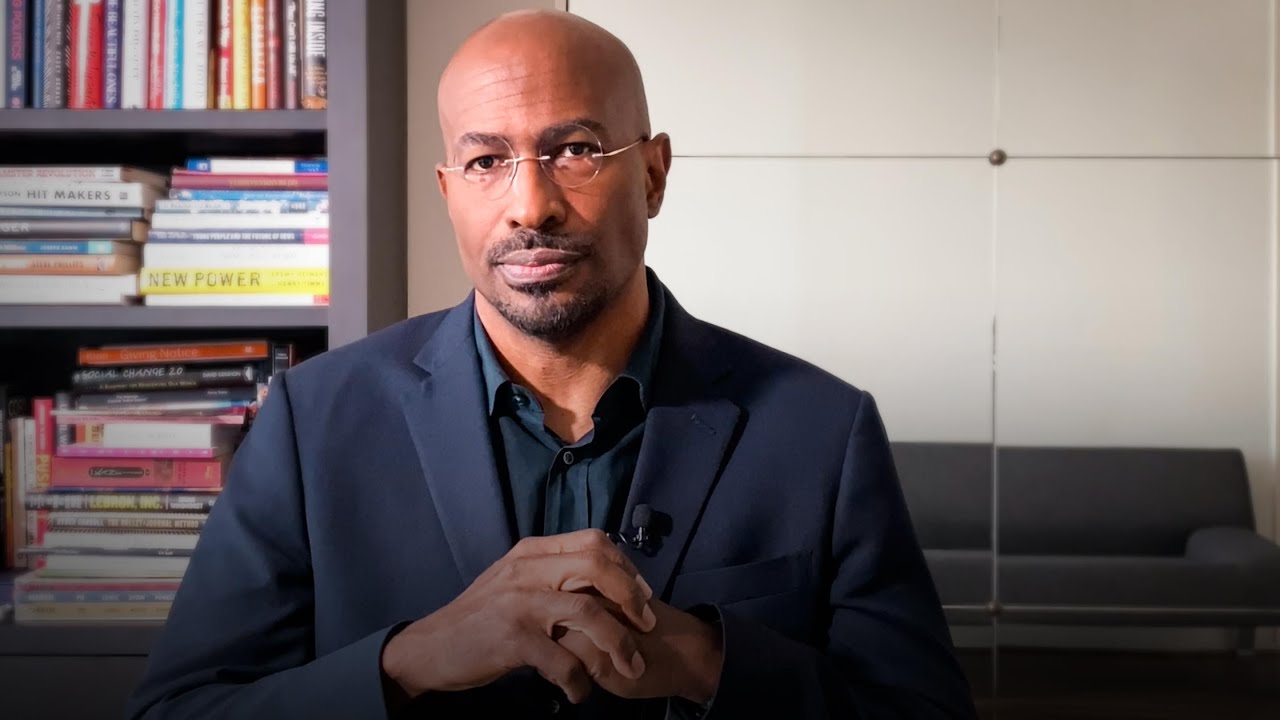
Give yourself permission to be creative | Ethan Hawke | TED
9:16

Give yourself permission to be creative | Ethan Hawke | TED

TED 11.08.2020 3 276 460 просмотров 191 367 лайков обн. 18.02.2026
Поделиться Telegram VK Бот
Транскрипт Скачать .md
Анализ с AI
Описание видео
Visit http://TED.com to get our entire library of TED Talks, transcripts, translations, personalized talk recommendations and more. Reflecting on moments that shaped his life, actor Ethan Hawke examines how courageous expression promotes healing and connection with one another -- and invites you to discover your own unabashed creativity. "There is no path till you walk it," he says. The TED Talks channel features the best talks and performances from the TED Conference, where the world's leading thinkers and doers give the talk of their lives in 18 minutes (or less). Look for talks on Technology, Entertainment and Design -- plus science, business, global issues, the arts and more. You're welcome to link to or embed these videos, forward them to others and share these ideas with people you know. For more information on using TED for commercial purposes (e.g. employee learning, in a film or online course), submit a Media Request here: http://media-requests.TED.com Follow TED on Twitter: http://twitter.com/TEDTalks Like TED on Facebook: http://facebook.com/TED Subscribe to our channel: http://youtube.com/TED
Оглавление (8 сегментов)

  1. 0:00 Intro 124 сл.
  2. 0:50 Allen Ginsberg 181 сл.
  3. 1:50 Human creativity matters 154 сл.
  4. 2:48 White Fang 147 сл.
  5. 3:40 Know yourself 369 сл.
  6. 5:49 A calling from God 236 сл.
  7. 7:04 Creativity is vital 176 сл.
  8. 8:05 Play the fool 100 сл.
0:00

Intro

I was hoping today to talk a little bit about creativity. You know, a lot of people really struggle to give themselves permission to be creative. And reasonably so. I mean, we're all a little suspect of our own talent. And I remember a story I came across in my early 20s that kind of meant a lot to me. I was really into Allen Ginsberg, and I was reading his poetry, and I was reading -- he did a lot of interviews -- and one time, William F. Buckley had this television program called "Firing Line," and Ginsberg went on there and sang a Hare Krishna song while playing the harmonium. And he got back to New York to all his intelligentsia friends
0:50

Allen Ginsberg

and they all told him, "Don't you know that everybody thinks you're an idiot, and the whole country's making fun of you?" And he said, "That's my job. I'm a poet, and I'm going to play the fool. Most people have to go to work all day long, and they come home and they fight with their spouse, and they eat, and they turn on the old boob tube, and somebody tries to sell them something, and I just screwed all that up. I went on and I sang about Krishna, and now they're sitting in bed and going, 'Who is this stupid poet?' And they can't fall asleep, right?" And that's his job as a poet. And so, I find that very liberating, because I think that most of us really want to offer the world something of quality, something that the world will consider good or important. And that's really the enemy, because it's not up to us whether what we do is any good, and if history has taught us anything, the world is an extremely unreliable critic.
1:50

Human creativity matters

Right? So you have to ask yourself: Do you think human creativity matters? Well, hmm. Most people don't spend a lot of time thinking about poetry. Right? They have a life to live, and they're not really that concerned with Allen Ginsberg's poems or anybody's poems, until their father dies, they go to a funeral, you lose a child, somebody breaks your heart, they don't love you anymore, and all of a sudden, you're desperate for making sense out of this life, and, "Has anybody ever felt this bad before? How did they come out of this cloud?" Or the inverse -- something great. You meet somebody and your heart explodes. You love them so much, you can't even see straight. You know, you're dizzy. "Did anybody feel like this before? What is happening to me?" And that's when art's not a luxury, it's actually sustenance. We need it. OK. Well, what is it?
2:48

White Fang

Human creativity is nature manifest in us. We look at the, oh... the aurora borealis. Right? I did this movie called "White Fang" when I was a kid, and we shot up in Alaska, and you go out at night and the sky was like rippling with purple and pink and white, and it's the most beautiful thing I ever saw. It really looked like the sky was playing. Beautiful. You go to Grand Canyon at sundown. It's beautiful. We know that's beautiful. But fall in love? Your lover's pretty beautiful. I have four kids. Watching them play? Watching them pretend to be a butterfly or run around the house and doing anything, it's so beautiful. And I believe that we are here on this star in space to try to help one another. Right? And first we have to survive, and then we have to thrive.
3:40

Know yourself

And to thrive, to express ourselves, alright, well, here's the rub: we have to know ourselves. What do you love? And if you get close to what you love, who you are is revealed to you, and it expands. For me, it was really easy. I did my first professional play. I was 12 years old. I was in a play called "Saint Joan" by George Bernard Shaw at the McCarter Theatre, and -- boom! -- I was in love. My world just expanded. And that profession -- I'm almost 50 now -- that profession has never stopped giving back to me, and it gives back more and more, mostly, strangely, through the characters that I've played. I've played cops, I've played criminals, I've played priests, I've played sinners, and the magic of this over a lifetime, over 30 years of doing this, is that you start to see that my experiences, me, Ethan, is not nearly as unique as I thought. I have so much in common with all these people. And so they have something in common with me. You start to see how connected we all are. My great-grandmother, Della Hall Walker Green, on her deathbed, she wrote this little biography in the hospital, and it was only about 36 pages long, and she spent about five pages on the one time she did costumes for a play. Her first husband got, like, a paragraph. Cotton farming, of which she did for 50 years, gets a mention. Five pages on doing these costumes. And I look -- my mom gave me one of her quilts that she made, and you can feel it. She was expressing herself, and it has a power that's real. I remember my stepbrother and I went to go see "Top Gun," whatever year that came out. And I remember we walked out of the mall, it was, like, blazing hot, I just looked at him, and we both felt that movie just like a calling from God. You know? Just... But completely differently. Like, I wanted to be an actor. I was like, I've got to make something that makes people feel. I just want to be a part of that.
5:49

A calling from God

And he wanted to be in the military. That's all we ever did was play FBI, play army man, play knights, you know, and I'd like, pose with my sword, and he would build a working crossbow that you could shoot an arrow into a tree. So he joins the army. Well, he just retired a colonel in the Green Berets. He's a multidecorated combat veteran of Afghanistan and Iraq. He now teaches a sail camp for children of fallen soldiers. He gave his life to his passion. His creativity was leadership, leading others, his bravery, to help others. That was something he felt called to do, and it gave back to him. We know this -- the time of our life is so short, and how we spend it -- are we spending it doing what's important to us? Most of us not. I mean, it's hard. The pull of habit is so huge, and that's what makes kids so beautifully creative, is that they don't have any habits, and they don't care if they're any good or not, right? They're not building a sandcastle going, "I think I'm going to be a really good sandcastle builder." They just throw themselves at whatever project you put in front of them -- dancing, doing a painting, building something: any opportunity they have, they try to use it to impress upon you their individuality. It's so beautiful.
7:04

Creativity is vital

It's a thing that worries me sometimes whenever you talk about creativity, because it can have this kind of feel that it's just nice, you know, or it's warm or it's something pleasant. It's not. It's vital. It's the way we heal each other. In singing our song, in telling our story, in inviting you to say, "Hey, listen to me, and I'll listen to you," we're starting a dialogue. And when you do that, this healing happens, and we come out of our corners, and we start to witness each other's common humanity. We start to assert it. And when we do that, really good things happen. So, if you want to help your community, if you want to help your family, if you want to help your friends, you have to express yourself. And to express yourself, you have to know yourself. It's actually super easy. You just have to follow your love. There is no path. There's no path till you walk it, and you have to be willing to play the fool.
8:05

Play the fool

So don't read the book that you should read, read the book you want to read. Don't listen to the music that you used to like. Take some time to listen to some new music. Take some time to talk to somebody that you don't normally talk to. I guarantee, if you do that, you will feel foolish. That's the point. Play the fool. (Plays guitar) (Sings) Well, I want to go Austin, and I wanna stay home. Invite our friends over but still be alone. Live for danger. Play it cool. Have everyone respect me for being a fool.

Ещё от TED

Ctrl+V

Экстракт Знаний в Telegram

Транскрипты, идеи, методички — всё самое полезное из лучших YouTube-каналов.

Подписаться