Today, I want to share a new episode with Morgan Brown.
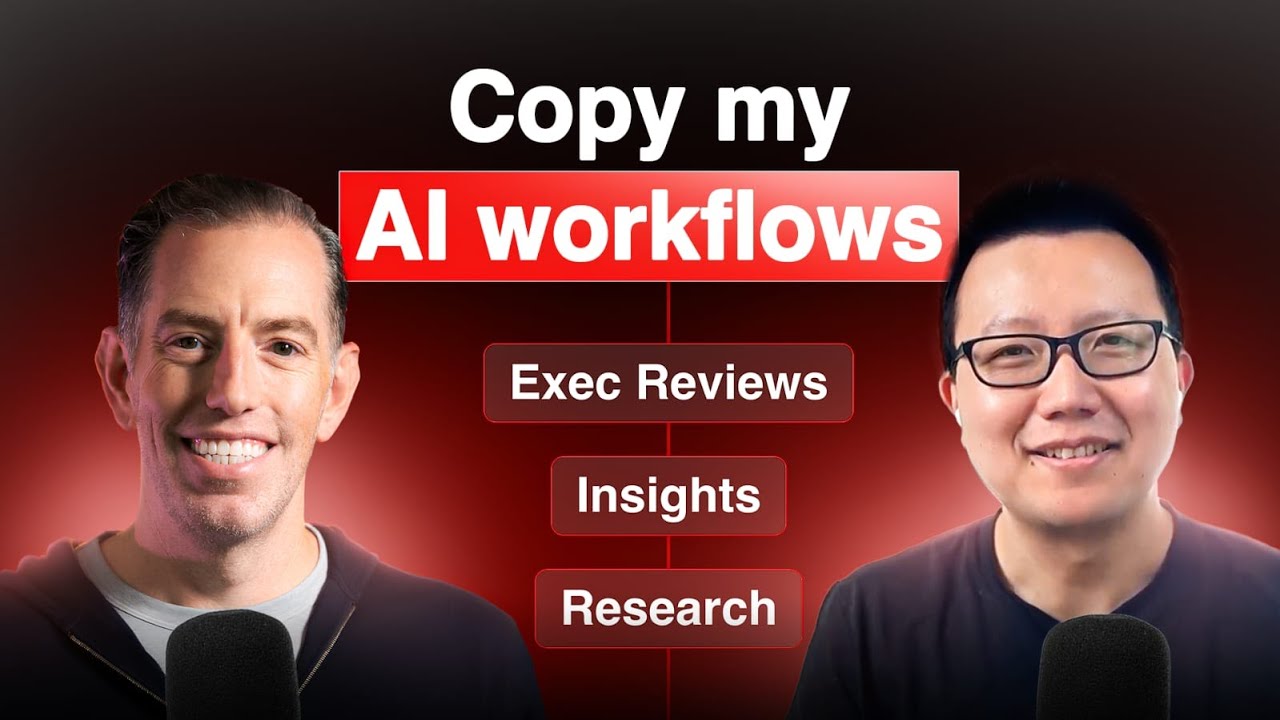
Morgan is the VP of Product for AI at Dropbox. He gave me an inside look at his top AI workflows, including his “council of LLMs” approach. We also talked about building Dash, Dropbox’s new AI agent for work, and how AI will reshape PM.
Timestamps:
(00:00) How Morgan uses AI as a companion for everything he does
(01:26) Morgan's 3 best AI workflows to save time at work
(06:07) Inside Dash: Dropbox's AI agent to find anything at work
(14:35) The evaluation process behind Dash's search results
(18:49) How to ship fast while motion doesn't equal progress
(22:09) How to balance internal alignment with customer obsession
(27:27) What Morgan learned from Drew (Dropbox), Tobi (Shopify), and Zuck
(35:39) The 3 types of PMs Morgan looks for in the AI era
(38:02) What product management will look like in one year
Where to find Morgan:
LinkedIn: https://www.linkedin.com/in/morganb/
Website: https://dash.dropbox.com/
Get the takeaways: https://creatoreconomy.so/p/dropbox-vp-best-ai-workflows-to-take-back-time-morgan-brown
📌 Subscribe to this channel – more interviews coming soon!
Оглавление (9 сегментов)
How Morgan uses AI as a companion for everything he does
Morgan is the VP of product for AI at Dropbox. So, I was reflecting yesterday. I went through the whole day and there wasn't a single thing that I did that I didn't use AI as a companion to do it. I would love to hear about like your top three favorite ways to use AI to save time, get more done at work. We did a study and uh found that, you know, knowledge workers spend about 160 hours a year just looking for stuff and switching between uh different contexts. I created another kind of prompt which basically takes all of the stakeholders that I meet with regularly and effectively every document or every meeting agenda that I have for that I can run it through that prompt and it gives me a anticipated perspective and questions that they might ask. What kind of PMs do you look for to bring on forum? The idea has to stand by itself more so than because it's my idea is the reason it should stand. a year from now, dude. Like, what would PMA look like? Yeah. All right. Welcome everyone. My guest today is Morgan Brown. Super excited to talk to him about building Dash, Dropbox's new AI agent for work. Morgan also has some uh great hot takes about how AI will change product management and what it can do today. So, welcome Morgan. Thanks, Peter. Thanks for having me. Really excited to be speaking with you today. Yeah. So, why don't we start with just
Morgan's 3 best AI workflows to save time at work
like a overall question like I would love to hear about like your top three favorite ways to use AI to save time, get more done at work. Yeah, I think you know I was reflecting yesterday. I went through the whole day and there wasn't a single thing that I did that I didn't use AI as a companion to do it. Um, and it really dawned on me that I think that's the first time that I've had a technology so pervasive maybe since kind of the, you know, some of the cloud tools that we use every day for work or maybe my iPhone. Uh, it was kind of remarkable. Uh, so it's integrated deeply in everything that I do. But I think my three favorite things are um pre-ereads. You lead product, you run product. We read a ton of documents. Um, and one of the things that I realized is that I give the same types of feedback over and over. What's the job to be done? What's the customer evidence? What's the supporting data? Uh, does this have strong uh logical rigor to it? Are there any assumptions or gaps? Second order effects that we're not considering, risks, tradeoffs, so on and so forth. And so I really uh started to codify that into a a prompt um to run my pre-eread documents through. So, I created a prompt template and every time I get a pre-eread, I run uh a document through that and it gives me a really um really clear perspective on the types of questions that I would ask, the types of feedback that I would give and really lets me hone in very quickly into the areas of uh concern or opportunity. So, that's been one of my favorites. Um, another one is meeting prep. You hear this one a lot, um, but I do my meeting prep slightly different. I created another kind of prompt which basically takes all of the stakeholders that I meet with regularly. So whether that's Drew, whether that's our CTO, uh whether that's our head of legal, head of GTM, head of sales, and effectively every document or every meeting agenda that I have for that, I can run it through that prompt and it gives me a anticipated perspective and questions that they might ask. So, it's kind of a pre-brief for myself to get ready for, hey, what kinds of questions uh might Drew ask? What kind of questions might Alli, our CTO ask? And really trying to steal man some of my arguments uh get prepared uh to be as effective as possible in those meetings um is another one of my favorites uh for sure. And then I think um there's a bunch of automation and uh things that I try to keep tabs on that I really love. So for example, I want to keep uh tabs of all the latest uh AI papers that come out of archive. Uh so I have a chat GPT operator uh script that just runs every day. It says give me the top three AI papers published on archive today. Um summarize them, highlight the ones that are like groundbreaking, incremental, and the ones that'll be most meaningful uh to the areas that I work on such as knowledge work and productivity and that thing. So um yeah, really goes everywhere. Um, but I use it in my personal life all the time. I actually probably the most interesting way that I use AI is I use it as follow on uh follow on work for my therapy sessions. So, you know, the I meet with a therapist a couple times a week and uh we had an agreement where I can take those sessions, dump them into chat GPT and I use them to kind of uh track my progress and ask questions there. So, yeah, there's not a spot that I'm not using it. Yeah, I love Let me call two things that you pointed out. I think the CEO like getting feedback from the AI CEO before the real CEO is like a really good one. So you probably have a bunch of information about like how Drew likes to think and like you know that kind of stuff in there, right? Yeah, absolutely. It's kind of a a learning loop where um and the nice thing with Dash um is that it connects to the Dropbox company sources. So documents that have Drew's feedback document that Drew has shared with me and written, I can use that as source information to really dial it in. So, it's not some generic CEO that the LLM has hallucinated. It's actually drew based on his writings um and kind of an estimation there. Yeah, I feel like every CEO that we talk about dash, but every CEO should just like write a document about like how my principles, what I like to think, and then like you just add it to the AI project so every employee has that, you know, probably save so much grief and time. Yeah. uh just it gets everyone aligned much faster and focused on the things that matter and basically pushes my thinking like second order effects um strategic uh advantage like those are all things that I should be thinking about constantly but you know if I'm tired if I'm in backtoback meetings you know maybe I'm not as sharp as I should be and the M just helps nail that.
Inside Dash: Dropbox's AI agent to find anything at work
Awesome. So um I would like to see kind of Dash in action. Maybe you can show us how it works and what it is and we talk about like some magic moments people have the product like what kind of jobs to be done it's trying to solve. Yeah, absolutely. Let me uh go ahead and pull it up. Hopefully you can see my screen but this is Dash. Uh Dash is really AI powered search and organization that connects all your work apps in one place. So it makes it easy to find, organize and share company info with the right people. One of the things that we found when we talk about jobs to be done is um knowledge workers like you and me uh there's you know Paul Graham famously wrote about maker time versus manager time and if you're a product manager you spend a lot of time in manager time which is rapid context switching lots of meetings lots of follow-ups and that time eats into our ability to do deep work deep creative work and so the idea of dash is hey there's a lot of productivity and time that's spent in kind of these fragmented coordinating sets of work which are important but they eat into that really focused heads down maker time which is so valued by companies uh to kind of do this you know deeply human deeply creative and highly valuable work for example um let's just imagine that I'm a creative marketing studio I'm helping you know people in the entertainment industry uh with kind of uh their production their show schedules that type of This is a very common use case among kind of the Dropbox customer base. And so um what I'll do is I'll look for a um uh a video uh from Desert Gold. Uh you know, maybe this is a video that we're producing for um a company in LA. And so I just go ahead and search Desert Gold LA music video. And you can see here, this is the search results page. So it's kind of searching across a variety of different content. You can see I have a Slack message here. I have some paper documents here. Um, I have a bunch of Dropbox files here as well. I've got a mood board from Muro. So, it's really searching across all of my sources. Um, but one of the things that Dash does really well is multimedia search. So, while a lot of these retrieval products are focused on textbased information, Dropbox's heritage is really in these creative and marketing fields where work is more than just documents. It's uh images, it's video, it's uh you know advertising assets, it's slides and PDFs and all of that. So really focused on making Dash work across different uh media types. So here I can see kind of all the related images to the music video. I can pull these up, you know, here's a bunch of uh scouting shots, um some location uh and I can go ahead and just kind of like click through all of the different uh scouting locations for this video. Um, I can go ahead and close out of it. Um, there's also, you know, video assets potentially involved with, uh, with this video shoot. So, here I can see all the clips that are coming out, uh, here as well. So, it gives me just a really powerful way to search across all of those, uh, different assets and, um, and just find what I'm looking for very quickly. You know, uh, one of the things, um, that was really stood out to me when I first joined Dropbox was the realization that most knowledge workers like you and me, um, companies that work in these industries, they have over a hundred different SAS tools. Um, and so they're spending a ton of time, you know, navigating through tabs, navigating through different search boxes. And so the ability to find everything just in one place, uh, really is like a massive timesaver. Uh in fact um we did a study uh and uh found that you know knowledge workers spend about 160 hours a year just looking for stuff uh and switching between different context that's you know at 40hour weeks that's a month of time uh and if you multiply it um you know you and I are not cheap resources Peter um so uh it's really a ton of time that uh that gets wasted doing that um so search is really important um but like I said it's not just about finding those uh documents. Um it's really about helping you get answers. And I can, you know, if I want to go and kind of uh you know, kind of get ready for a meeting to talk about that, I can come over here and I can create a brand new um you know, document if I want. So, for example, if I wanted to uh create um a uh a meeting summary, if I wanted to create a marketing template, um there's a whole bunch of templates that we can create and kind of store in here so anyone can use them. And if I want, I can just say, hey, you know, help me create um help me understand and create the pilot treatment um and really just kind of create any document that I want. So, let me go over here. I'll create a brand new chat. Um, I'll go ahead and uh say, let's see here. I want to um view more templates. So, you can see I can uh pick all sorts of templates here. So, I'm going to pick a uh a pilot campaign uh template. Um let's assume that we're going to create a new um a new uh campaign for uh this new echo chamber project. So, we want to create a marketing uh about marketing and buzz. I can add uh a notion document to it. I can add a screener bunch of sources. And then I, you know, once I put it in, because I have the template already saved, it's going to start creating this uh this template for me around the campaign. So, giving me creative direction, giving me the social platforms, the different content buckets, a timeline, the assets needed, and all of that. Yeah. And that's just a great first draft that helps me get everything off and running. Um, if I wanted to, I can go in and I can kind of change the tones for it. So, if I wanted to make it more persuasive, say I had to pitch someone on this. Or if I wanted to make it more analytical, maybe I had to go to the CFO but the budget request, I could change uh the writing style of it. But one of my favorite features is this kind of your tones which you can see here we have like a company tone uh that's been created specifically with the voice of the company. So I'm publishing you know external documents um working with customerf facing uh content you know that the team can kind of set a tone and a voice style guide that can be shared with everyone on the team to really kind of standardize it. So that's you know kind of on the generative side. I think uh being able to create your own custom template is like a super underrated feature. Like for anyone who even knows a little bit about how to prompt AI like my uh you know what grinds my gears about I'm going to go on a rant. What grinds my gears about like you know some of the Google Docs AI like Zoom AI is like I just don't like the templates that they have. like I want to make my own template with my certain bullet bullet point size and like my certain style and that makes a huge difference between having to like copy and paste something into like chat GBT and try to prompt it again versus just like one click like getting this exact style that I want you know. Yeah, absolutely. That's kind of what I do with my pre-eread documents. I kind of create the template once, try to dial it in and you just get, you know, you get that savings over and over again, which is uh pretty amazing. Um, I know I talked a lot about kind of the search and find, but Peter, I know you you're in you kind of are deep in product and across all these things. Do you like how does like that the idea of like finding anything kind of across uh all those connected sources land with you and kind of just the ability to find, you know, media and all that? I'd love your thoughts on that, too. I mean, like a funny thing happens in a lot of tech companies, right? you spend so much time like you know I working on my strategy document to do a review with maybe you and Drew and then you know go back and forth like multiple VPs review it and then once you're done you're like okay this is done and then you just leave it there and then do I look at it again may maybe most likely not I move on to the ne next thing so that document is just kind of like sitting there collecting dust and being able to find the relevant pieces from it or like being able to use it as context for your other work is like huge you know so yeah absolutely Yeah. And I always find that I have it in a one of like 150 browser tabs and then someone will ask for it in the middle of a meeting and I kind of stare helplessly at my browser tabs and wonder which little chicklet it's hidden behind. Yeah, it sounds like there's like a lot of uh different use cases and features
The evaluation process behind Dash's search results
for Dash. I would love to hear about uh like going behind the scenes a little bit. Talk about your kind of evaluation process for making sure that Dash gives the right re results. like what kind of steps did you go through for that? Yeah, absolutely. So, um first and foremost, uh Dash is only as good as the data inputs that come into it. So, one of the things I didn't show you is we have a product called protect and control which allows administrators to manage the data flowing into Dash and also manage the visibility of documents uh and kind of permissions within that. So right now um the way that this is done typically is your IT department has someone who's like an unshare guy or gal who uh basically that means that alongside their normal job they have to go through all of the clouds when you know someone uh leaves the company or when you offboard a contractor or an agency and make sure that all the sharing settings on documents are set the way they are and it's a real actual pain point. um protect and control lets them do that all in one uh spot and lets them do it in minutes instead of uh hours. And so um really kind of controlling the quality and the visibility of data that comes into Dash first and foremost to make sure that um Dash is really kind of pulling from the right sources of information. Um the second thing that we do is we run pretty multi a pretty robust multi-tered um evaluation uh process. So um we use kind of LLMs as judges for our for the relevance uh and ranking uh but we also have golden sets of data both um that we've created. So you can imagine that for a bunch of the workflows around product management that I talked about we use our product managers to kind of you know uh do some of that evaluation. So we have both a mix of LLM based evaluation human and expert-based uh evaluation and then kind of the tooling to support that. So we're constantly looking at you know the value of the answers we provide the relevance and then also try to provide like the transparency around those. So site direct citations for everything the documents that they're sourced from and so on. So like a maybe an example of a golden data set is like I'm looking for some strategy document or PRD and this the right stuff shows up in the list or Yeah, exactly. So um you can imagine that the entire search result page can be evaluated for its relevance like every single link on it. And so um what we do is when we generate all those results whether it's the images, the videos, the documents um we have an LLM rate the relevance of those um and then we can you know in our internal builds we can see what that rating is and then we can provide real time or kind of user feedback internally on those results to help uh improve that. And so that's one. And then we kind of augment that with a golden set of um you know uh answers, prompts, uh search results um so that we can constantly make sure that uh that we're not drifting um even in that uh LM eval process. Yeah. The LM the LMS process is like pretty fancy. you can like scale it to a lot of different use cases but like I think ultimately what's behind it is like a human has to you know give the right prompt and make sure everything's make sense you know so yeah absolutely and so we can kind of you know um both generate kind of how we use because Dash is used across Dropbox um we use it to run our business and it's an incredible test and learning ground for the product team to have you know a couple thousand people using it constantly internally um so we can learn you both from how we use it but how other teams use it. So how customer support uses it, how communications and the events team uses it and then really kind of understand hey are we you know nailing those search results are we nailing those uh answers uh and chat sessions and use that to kind of improve uh the loop over time. So I agree it's a bit of platform dashboard technology but then ultimately you know human subject matter experts like really verifying and helping um improve those outputs. Yeah. Human jud judgement. Yeah. So, um, so, so Morgan, you have like, uh, some really great posts on LinkedIn thing, and I want to
How to ship fast while motion doesn't equal progress
hear some of your hot takes about PMing and AI. There's like a lot of, uh, there's, you know, there's both good and bad parts about our job, right? So, so I think first I think you're a big believer in kind of uh, moving fast, but at the same time, you also had said that motion doesn't equal progress. So, maybe so like what is progress then? What does move moving fast do? Yeah, I think moving fast is your rate of learning, your rate of understanding. So I think I believe a lot of teams are focused on activity without actually closing the loop of understanding what happened, right? Um my degree is in biology. I think in terms of systems with everything, ecosystems uh with everything. And every time you, you know, put something into an ecosystem, um, one of two things happens. Either something changes or something doesn't or nothing changes. Um, hopefully you do more work where something changes. And within that something changes bucket, either it affects it positively or affects it negatively. And so doing the work is just one step of that process. But really the ultimate goal is to understand did you affect the system positively or negatively and then use that as input into your next uh next attempt. And so you know one of the things that I see teams really focused on is you know output over outcomes. And I really want to drive teams to outcomes where you know you can do the post-mortem. You can understand you know what actually changed. You have a problem well enough defined so that when you ship the thing you can actually get data back on whether uh it improved it or hurt it. Um and I think that is the most important thing about moving fast. So moving fast just to do more stuff not super valuable. moving fast to up your learning rate. Um I really believe your learning rate is the derivative of all progress and success and so the faster you can move that the better. Yeah. And like uh learning doesn't mean like shipping is really important but you can also learn just by like showing a mock to the customer or like looking at metrics. There's multiple ways to kind of get that feedback loop, right? So yeah 100%. I think yeah and I don't think it yeah it doesn't even to your point it's not about necessarily shipping code but it's kind of like you know getting out of your own head get getting out of hypothetical and trying to you know put ideas into contact with reality I think so many meetings are spent debating hypothetical uh situation hypothetical products and is like what are we doing yeah that's something that I personally struggle with maybe you can give me some advice like I uh really love you know like just kind of like crafting a great product, obsessing about details, showing to users and like shipping it and like getting some feedback. But I think a lot of times uh at larger companies, you have to you're like crafting internal artifacts instead. You're making documents and making plans and uh there's like a bunch of internal feedback loops, right? Going up to the director, VP and so on and so forth. And um in some ways kind of like you only have like 24 hours in there or like you know, however long you work. So like balancing the internal stuff with the customer facing stuff like how do you find the right balance there you know? Yeah, absolutely. I think it's a challenge that all of us face. I think
How to balance internal alignment with customer obsession
when I managed a team of PMs at Instagram, I would kind of look at their, you know, we would do kind of a twice a year, you know, survey, employee satisfaction survey, and one of the number one pain points was, you know, time doing low value stuff, whether it was like uh writing status reports or being in an alignment meeting or all of that. And so really that was one of the things that drew me to kind of work on Dash was like try to solve all that busy work so you can actually do more of the stuff uh that you mentioned that's really important like talking to customers and um you know building these like beautiful products. But I think the way that I think about it is one um I basically have three levers uh for me and my team. I have the product road maps, I have the people on my team and I have the processes and cadances that support the development of those products through those people. Um and so generally that's my framework for where I have leverage uh in the system. And then when it comes to this internal alignment piece, um really I think it comes down to um how do I what's the shortest path to um solving a user problem of kind of putting of you know putting a new product or a new experience in their hands that I think has the or that we think has the best chance of solving that painoint. And so if I work backwards from that, first of all, it's hey, what evidence do I need? You know, uh or sorry, maybe we'll start with like what problem am I trying to solve? What's the what's my hypothesis? Do I have a good hypothesis? Why do I have that hypothesis? Is it my own personal experience? Is it something I'm dealing with? Is it something I've seen in the data? Is it something I hear from sales, user research, customer support? So what's what's my hypothesis? And is it a good one? Is you know, how strong is it? uh from there like what's my evidence and then where do I lack evidence and that's actually where I think some of the speed opportunity comes from where it's like hey if I'm short of evidence what are the things I can do right now to get more evidence and it could be get a prototype in front of some rapid research uh UXR sessions it could be talk to some of our friendly customers on our customer advisory board about the problem and whether they're experiencing it uh mine through gong calls for sales to find customer you know talking points where and conversations and watch those conversations uh around those items. So building that evidence I think is where you can get a lot of velocity. Um and then do you have the right kind of processes set up to drive alignment very quickly like do you have the right sets of reviews? Do we is it are people really clear on how we make decisions? to frame decisions and trade-offs so we can make decisions more effectively? you know, we all talk about like oneshotting an LLM. I like to try to like oneshot decisions, you know, like how do you do that? Um, and so yeah, I think across those three levers of uh you know, product people and process, there's opportunities to kind of cut that distance down to as short as possible. Got it. So, so it's about having the doing the research and it's okay to admit that you don't know some things and like I I guess the goal of the alignment meeting is to figure out like okay this is the next step I'm going to do to actually learn right to figure out to confirm my risk assumptions. Yeah, exactly. I mean, yes, I think that's the first thing is like, hey, our goal is to like seek truth and then try to build solutions to kind of uh meet that truth. And so, yeah, I often start with like saying, I don't know what I'm talking about. You know, this is all just a hypothesis. Um, but I think the um working from there and working forward, I think the part that people miss is that they often don't agree on what the principles uh are that they're using to make a decision. So what's most important? Is it monetization? Is it user satisfaction? Is it uh you know kind of task success? Is it you know legal and privacy risk? Like there are all these inputs into decision-m that are usually implicit and they're not ever stated. And so one of the things I really try to push my team to do is hey what are the principles by which we're making this decision and which of those criteria are most important? And then when people start debating the solutions or the options, you can kind of debug. Is it an option problem? Is it a principle goal or hypothesis problem? And that gives you kind of much more leverage to drive alignment faster. I found Yeah, I think there's always different artifacts like vision, strategy, and road map. But I found like having a crisp set of principles like super useful because you can use them to make daily decisions and you can be like hey this is my principle and this is why I'm trying to deliver this first or like you know I think lying on a principle is like super helpful. So yeah, you can say oh I actually think that's the wrong principle which kind of would then change the option set you know entirely and um just to dig a little bit deeper on this you know like uh we talked about he sha before this uh interview and um for like founders or like founderminded people who come into these like larger companies and um you know he mentioned you're really awesome at bringing clarity to ambiguous situations a lot of opinions and you talked about some of this already but like what what's your advice for like the founder or like the PM who really wants to like get done but like has to figure out how to navigate all this stuff?
What Morgan learned from Drew (Dropbox), Tobi (Shopify), and Zuck
Yeah. Yeah. Absolutely. And I do think this is a important question particularly for founders entering like bigger companies because I think the experience that I've seen and I've even had this a bit in my own experience while I'm not a founder before I got to Facebook I was the chief operating officer of a small company uh that we scaled up and led to a successful acquisition. So, but when I got to Facebook, I realized that a lot of my arguments in meetings were just failing. They just were not landing at all. Um, and I was, you know, not able to drive kind of consensus. I was struggling driving my road map forward. Uh, I was actually like very worried that I was like not going to last very long there in my first six months because I was like, I just, you know, don't know why this isn't working. And luckily I had an amazing manager uh who pulled me aside and said, "Morgan, the reason your arguments aren't landing is because you're relying too much on your own personal experience and analogies and pattern ratching from the past and not kind of the empirical logical rationale behind it. " And he said something that really stuck with me. He said, "People don't really care about what worked in the past. They want confidence in what's going to work today and here. " And that really struck me, right? I was like, "Oh, wow. Okay, that whole shift makes sense. " And it's not that taste and pattern matching and judgment and experience aren't important. They're critically important, but they have to be paired with kind of, hey, how do you drive alignment across a large number of people who are coming at the problem from many different perspectives, have many different points of view, and want confidence uh in these ideas. And so the idea has to stand on itself uh by itself more so than because it's my idea is the reason it should stand, right? It should be defensible and strong enough on its own. And so a lot of what I try to do to kind of clear up ambiguity is one make sure the idea is defensible and you know steel man or very strong logically uh and evidence-based as much as possible and where it is taste subjective that's great. We need that. That's how you get differentiation. But like call that out explicitly and then be really clear on what you're trying to solve and how. And I found that you know rapidly clears up a lot of kind of ambiguity and swirl because you've eliminated a bunch of implicit inputs and you've replaced them with explicit uh inputs. So it's kind of like what I tell what you know what we tell our kids in schools like show your work and I think a lot of founders like you know they have that confidence of the team obviously they've been able to like create a vision attract a lot of capital people to that vision really because of their belief in it and I think really the change is you have to take that internalized belief and then externalize it in a way that can be uh viewed and challenged and approved approved and I also think like you mentioned being a little bit vulnerable like people want to have like the perfect pitch or the perfect thing. If you have if you're like 100% confident, they probably like way too long, right, to like actually make the pitch. So like being a little bit vulnerable like I said, being open about what you're not sure of and like what you want to validate, I think probably builds a lot of trust, too. Yeah, absolutely. I think the more that we can do that where yeah, the objective is to like build great products. It's not to be right in every meeting or um you know the you know there's like a bunch of like second order incentives but like you kind of have to keep your eye on the prize. And I think you know when I worked at Instagram Adam Miseri told me something once he just said there will be many situations where you can never have enough data. Yep. You'll just never have enough data to make a call um with 100% confidence. And so you have to get, you know, it's a diminishing returns curve and you have to know when you're on the diminishing uh return side of that curve. And the punch line is that you're there more often than not. Uh which just kind of encourages you to kind of, you know, move faster in your decision- making. Got it. So um so you work with like some pretty amazing founders. You worked at uh you know, you worked at Meta obviously and then with Toby at Shopify and also with Drew at Dropbox. Id love to hear like your top learnings from each or like how each one operates. Yeah, I think I mean I think they're all incredible companies and they're all different uh in their own way. So I think um Meta uh incredible company um learned so much there. Uh I think the thing that was really clarifying for me is that it was very clear how they made decisions. You know they were data le um you ran experiments, you had opportunity to run a lot of experiments. you could collect a lot of uh information about how those things improved or didn't improve products. And so everyone used that language of decision-m. Hey, did this make retention better? Did this make engagement or growth better? Um you know that was kind of a very crystallized and clear decision-m uh framework and allowed the company to move very quickly even and like really extraordinary uh scale. Um, and I think some of the best, you know, decision- making I've ever seen kind of has happened there in terms of like how to do that really well at scale. Um, at Shopify, um, they are not like datalled. They are data informed. They use a lot of data and understanding but they are led by uh Toby's vision for the future of e-commerce and the future of commerce generally and kind of the hundredyear view of the role that Shopify should play in the ecosystem and its role in um encouraging entrepreneurship around the world as one of the you know the best kind of forces of good that's out there. Um, and so while you would use data, really the most important thing was, hey, does this is this aligned with where Shopify is going, where we want it to go. And so it really was um more of a uh, you know, taste and kind of an opinion of like what the future should look like that came directly from Toby. Um, and so the company, you know, like Toby would tell our growth team, like, don't run a bunch of random experiments just to see what moves the metrics. He's like, I don't want any of that to happen. What I want you to do is have a point of view on how this helps make more entrepreneurs and then experiment there and learn there about whether you're right or wrong. And so, it's a subtle but important shift. Um, and I think, uh, what I love about Drew is Drew, like Toby, is also an engineer. And so Drew really wants to kind of understand your rationale and uh and argument uh very clearly. So he can understand it very deeply. Um he is one of the most technical uh founders I've ever met. Um you know when you talk to him about AI he is you know he's building his own uh GPUs. You know he is really down like in the technical details. And so the incredible opportunity with that is to think about product not just from the user side but also from the technical capability side and like what is actually possible. And I think until you kind of truly understand technically what's possible particularly with um some of the systems we're building today you kind of your option set and your space of what's possible for product solutions is like too small. But once you kind of really get the depth of the technicality, then you're like, "Oh, wow. " Like actually the opportunity to build is, you know, much larger. And so that's kind of his superpower, I think. Yeah. Especially with AI because like this stuff like blows my mind every couple weeks. So you got to really follow the news and understand what's possible. You gota Yeah. And the more you understand what's possible, the more you know, options and more spaces to play open up. And like I love how you cover all three because I think it's also important for listeners to think about like what style resonates the most with them. Like you know like if you're not someone who's like super experiment focused or like let metrics decide, they probably not going to do too well at Facebook, right? So you got to think about what resonates with you. Yeah. Yeah. Absolutely. You got to find that kind of uh philosophy fit with how you like to build and what you want to accomplish. Okay. Okay, so let's wrap up by
The 3 types of PMs Morgan looks for in the AI era
talking a little bit about uh you know our PM function and how AI would change it. I mean you're leading a whole AI product or uh let's make this super practical, right? Like what kind of PMs do you look for to bring on board like people who have high agency or like what kind of PMs? Yeah. Um, so I think uh three things. The ability to like take very ambiguous situations and come up with a clear approach and a way to work through that, right? Like I think we're all being thrown, like you said, this changes every 24 hours. We're being thrown new problem spaces, new challenges. They're all very ambiguous. um they're rapidly evolving and you need people who are able to effectively move through those in a way that is um uh you know is not scattershot it's not kind of um random but it's like no I I know how to take an ambiguous space frame it put some bounds around it establish what I think is important and then figure out a way to kind of work through it so that kind of like critical thinking essential the second part is what you uh mentioned which is agency the ability to execute like the world is moving so fast. The only way to kind of be successful in it I think is to up your learning rate is to kind of you know validate or invalidate your hypotheses um you know as fast as you can. The ability to kind of get stuff out of the hypothetical and into reality is all about execution. And so people who can get stuff done uh is critical. And then I think the third piece um is that product sense um we you know that taste that opinion. I think everyone you need a point of view on what you think should exist. Um you know if you don't have a point of view on where you think this technology should go how it should be applied um then you know you're kind of more in project management than you are in product development. And so those are the three things that I really champion and want to build on my team. Yeah. You kind of need all three, right? You need to have like uh like if you have a point of view but you don't like ship, then maybe point of view is wrong. You never know. Yeah. Yeah. It's all hypothetical. You make good thought leadership posts on LinkedIn, but you know, is that it? Okay. Um and like uh why don't you paint
What product management will look like in one year
a picture for our last question about like even like a year from now, dude? Like what would PMA look like? Like are we going to have all maybe using Dropbox like have all these AI agents working for us and like you know what do you think it will look like? I Yeah. I think um it it's going so uh I think you know if you think of it on a spectrum in terms of stuff that should be automated and out of your way and stuff that's like on one end of that spectrum and stuff that's like deeply human creative and valuable uh and differentiated on the other. I think I would say that most PMs spend a lot of their time in the middle of that distribution. Uh where it's like a bunch of project management, a bunch of busy work, a little bit of deep you know uh spending time with customers, all that. But our distribution is clustered in the middle of that continuum. And I think in a year the best PMS will have two nodes like as far out to each of those poles as possible where AI will take a lot of the busy work whether it's finding stuff organizing stuff uh generating stuff or orchestrating stuff out of the system and I think whether it's Dash you're seeing a bunch of like interesting automation workflow platforms whether it's like Zapier's workflows whether it's uh NADN um so I think you'll have a bunch of kind of human in the loop automations and it feel more like orchestrating that. Yeah. Um, you know, right now I use Dash, I use Claude, I use Chat GBT, I use uh um Groc like I have this kind of council of LLM. I think that will just expand. Um, and you know uh you'll have LLM that are in charge of other LLMs and other agents. You have MCP. So all of that will get really dense and then hopefully what it can do is get you out of that center of that continuum. And so most of this now frees up all this time to, you know, could I spend 80% of my time talking with customers, talking with my team or thinking about how to better solve their problems. Mhm. In a year, if I can get much closer to that because of all of this that's like taken care of over here, I think that would be a huge win for us as a function. Yeah. Like so much more job satisfaction. The the other end is like the fun part, you know? Yeah. It would feel like pie. flow. It would feel like jamming with smart people on really important problems. It wouldn't feel like uh project management or alignment meetings or all of that. So that's my hope. I think uh year uh is um very feasible uh with kind of the rate of change. Maybe it's even you know six to nine months at this rate. But we'll see. Maybe we can get like Peter AI and Morgan AI to align first and if they can't do it then we bring the humans in, you know. Yeah. I'm just kidding. Yeah. Okay, great. So, uh, where can people find you and also, Dash? You can find and try Dash at dropbox. comdash. Uh, can see a demo, see all the features, all of that good stuff. You can find me on LinkedIn, um, Morgan Brown or, you know, Morgan B on X and LinkedIn and all the various places. So, yeah, happy to connect and, you know, follow what I'm thinking about on any given day. Awesome, Morgan. Thanks so much, man. This has been an awesome conversation and uh best of luck on Dash. Yeah, same and thanks for all you do. It's great to connect with you.