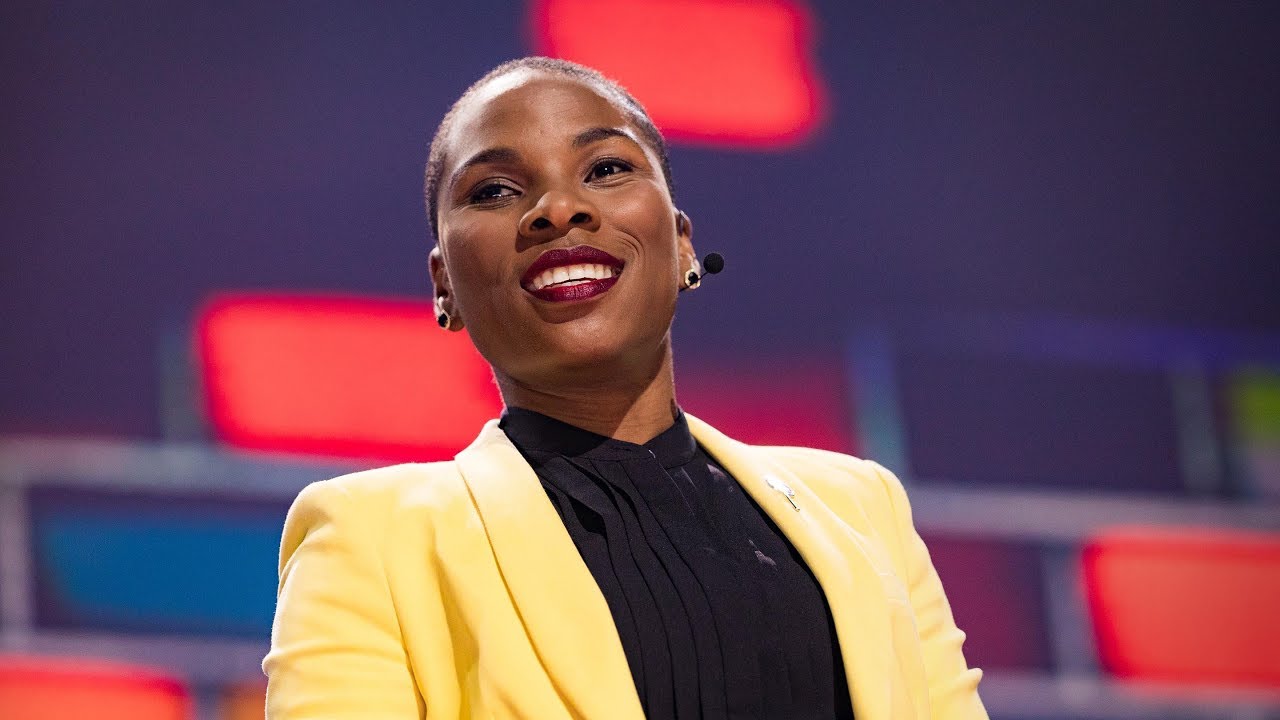
Actress Chloé Hayden is best known for her role as Quinnie on the popular TV show "Heartbreak High" — one of the first-ever autistic characters to actually be played by an autistic person. Now, she's inviting us to imagine a world where seeing autistic people in any role isn't groundbreaking, it's simply expected. (Recorded at TEDxSydney Youth on August 28, 2024)
Join us in person at a TED conference: https://tedtalks.social/events
Become a TED Member to support our mission: https://ted.com/membership
Subscribe to a TED newsletter: https://ted.com/newsletters
Follow TED!
X: https://www.twitter.com/TEDTalks
Instagram: https://www.instagram.com/ted
Facebook: https://facebook.com/TED
LinkedIn: https://www.linkedin.com/company/ted-conferences
TikTok: https://www.tiktok.com/@tedtoks
The TED Talks channel features talks, performances and original series from the world's leading thinkers and doers. Subscribe to our channel for videos on Technology, Entertainment and Design — plus science, business, global issues, the arts and more. Visit https://TED.com to get our entire library of TED Talks, transcripts, translations, personalized talk recommendations and more.
Watch more: https://go.ted.com/chloehayden
https://youtu.be/aEsikH322n4
TED's videos may be used for non-commercial purposes under a Creative Commons License, Attribution–Non Commercial–No Derivatives (or the CC BY – NC – ND 4.0 International) and in accordance with our TED Talks Usage Policy: https://www.ted.com/about/our-organization/our-policies-terms/ted-talks-usage-policy. For more information on using TED for commercial purposes (e.g. employee learning, in a film or online course), please submit a Media Request at https://media-requests.ted.com
#TED #TEDTalks #Autism
Оглавление (3 сегментов)
Segment 1 (00:00 - 05:00)
When I say autism, what's the first thing that comes to your head? For many of us, it will be what Hollywood, what news articles and what stereotyped ideologies have taught us. We think of Sheldon Cooper. We think of “Rain Man. ” We think of "What's Eating Gilbert Grape. " Maybe, for you guys more recently, we think of Manic Pixie Dream Girl autism. We think of TikTok Quinni from "Heartbreak High" autism. We see autism through a lens that has falsely been taught to us, rather than viewing it for what it really is. Growing up, I was so confident that I had crash landed on this planet from my own alien planet. I knew from as young as four that I wasn't like the kids around me. I knew it when, at kindergarten, I would be hanging out with birds and snails while watching the other kids talk to each other, wondering how they made it look so easy. I knew it when I would hold my mum's hand a little bit tighter when someone my age would walk past me, already painfully aware of a neurotype that I didn't have. I knew it when I would read books and watch movies and never once to see a character that I could relate to, instead finding peace in fantasy characters who also didn't fit into the world around them. Similar to how others knew that I was different, I did too. Still, at the age of 27, I didn't know what it is that actually made me so different, and I don't know why my peers clung to that difference so deeply either. Maybe this little box of normality that all of us have been taught that we have to mould ourselves to fit inside, starts far younger than what we believe, that it's societally conditioned into us to be normal, to behave, to be like everyone else, far before it starts showing its claws and its talons. When I was 13, I was diagnosed with autism. And because of the stereotypes that I have heard about autism, I knew my brain to be wrong, to be broken and to be cursed. A lot of my peers thought the same. When I told my best friend that I was autistic, she looked at me with fear in her eyes, took a big step back from me and said, "Can I catch it? " My other best friend, a friend of six years, the longest I have ever had a relationship, by the way, sent me a text. "Hey, we can't be friends anymore. People are probably going to tease me because I'm friends with someone that's autistic. " Because of the fear that we have on autism, I have lost countless, massive acting opportunities, casting directors and producers specifically telling me it was because of autism. When I was 16, I decided I was going to start a blog because the story that I was being told wasn't going to live. I also have ADHD, I’m stubborn as hell, and I was not going to let that story define me. I also knew that I wasn't that special. If I had crash-landed on an alien planet, surely there was other people on that rocket ship with me. In 2022, I made history as becoming Australia's first-ever openly autistic actress. (Applause and cheers) My character, Quinni, in "Heartbreak High," made history in her own right as being one of the first-ever autistic characters to actually be played by an autistic person. (Applause) I find this really interesting because you guys are clapping, and it is incredibly exciting. But doesn't it also make you feel a little bit sick that it's 2024, and only two years ago we got some of the first correct representation? How come correct autism representation is seen as so inspiring? history-making, is seen as so groundbreaking? Quinni was history-making. I know for a fact, if I had Quinni when I was a teenager, my entire life would have been different. And I've received thousands of messages from autistic people saying that they got their diagnosis because of her, and thousands more messages from people that have said that they now understand their students, their peers, their children better because of Quinni. Quinni has undoubtedly shaped our perception of autism. But I do think it's really important to note that Quinni was so well received because she's palatable. Quinni is, for better or worse
Segment 2 (05:00 - 10:00)
a variance of Manic Pixie Dream girl autism. She is real and she is authentic, and I pride myself on that. But she's cute and she's quirky and she's funny and warm and likable and relatable. And most importantly, she's high-functioning. For those who don't know about functioning labels, functioning labels have historically stereotypically been used in order to associate one group of autistic people over here as being less autistic, as having less support needs, as therefore being high-functioning. And another group of autistic people over here on the spectrum as being more autistic, as having higher support needs, as being low-functioning. We need to see functioning labels for what they really are. How capable is this person of blending in with the rest of us normal people, and in turn, how capable is this person of producing capitalistic value? Because this is the real reason why we use functioning labels to determine a person's economic worth. We live in an incredibly capitalistic society, where, for every single one of us, our worth and our value is heavily dependent on what we do, what we achieve, what we make, and what we contribute. Autistic people who are unable to be a productive cog in this capitalistic machine are seen as less than, and given the label of low-functioning. An autistic person's level of functioning is going to fluctuate throughout their day, throughout their week, throughout their life, because of an abundance of circumstances. You see me standing on this stage today. I'm wearing a bright outfit and colorful makeup, speaking a pre-written script in front of all of you. Today, I am high-functioning. Tomorrow, there is a high chance I will not be able to speak at all. My husband is going to have to dress me, feed me, shower me and be my complete caretaker. Tomorrow, I am low-functioning. Functioning labels, as we know them, do not exist. The autism spectrum is not a linear spectrum in which one end is a little bit autistic and the other end is a lot autistic. It is more so a color wheel, a color spectrum of autism. If you are autistic -- and only if you are autistic, comments of "Oh, but everyone's a little autistic" are not welcome here, you can happily leave -- then you are on this color wheel. Your hex code of autism represents your strengths, your struggles, your likes and dislikes, your habitat, where you are in your life at the moment and how society perceives you amongst a million other factors. Just as no color is more or less than another color, no autism autism. So how do we start to unlearn what we know and relearn what we need to know? The answer is embarrassingly simple. Listen to autistic people. For so long we haven't been heard. We haven't had voices. Our voices have been silenced and shut down and cast out. We cannot afford to do this anymore. We need to see the voices so we can be. We need to see autistic people in media, we need to see them on TV shows, in movies, in leading roles, we need to see them giving TED Talks, we need to see autistic people behind the cameras. We need to see them as directors in writers rooms, as teachers, as doctors, as politicians in positions of power, because autistic people are good as hell at doing that. We need to make sure that we are seeing BIPOC autistic people, we need to make sure we are seeing high support-needs autistic people, non-speaking autistic people and every other minority group of the hex codes of autism that are not currently being represented in all of these positions, too, so that it isn't just Sheldon Cooper and Manic Pixie Dream Girl autism that we grow comfortable with, but all hex codes of autism. Because I am tired of being the first. I don't want to be have to be history-making. the representation. Have you guys noticed that we never, ever hear the phrase straight white man representation? (Laughter) Being the representation is tiring. It is responsibility-inducing. It means that I am constantly up for public debate. It means that people tune into my social media
Segment 3 (10:00 - 12:00)
and they either see themselves or they think it is fake and false. It means that I am either sent messages of appreciation or daily death threats. It means that I am constantly too autistic or not autistic enough. It means that my support needs are constantly up for a public debate that I was not included in, despite no one having any clue what happens to me the second I get off this stage. Contrary to what many people may think of me, an autistic person who is known for being an autistic actor, mainly doing autistic roles, who was an autistic advocate for autism, I don't really want to be the advocate for autism. And I certainly do not want to be labeled depending on how valuable I am to society. I just want to be. If you are autistic and you were in this room today, I need you to know that you hold so much worth and so much value exactly as you are. I also think it's important for you guys to know, as a side note, that whatever it is that you are studying, whatever career want to go into, I want you to research the top people in that career. I promise you, they're autistic. But with that in mind, it is also OK to just be. If you are not autistic and you are in this room today, I am assigning you an incredibly important job to do. No fairy tale can end without a happily ever after, and no happily ever after can begin without a sidekick. Be our sidekicks. Raise our voices, share our stories, use the privilege that you have. Because I don't want there to be a need for representation anymore. I want to see all hex codes of autism represented so constantly and so normally, that it simply just is. Because it is not representation when it is the expectation. Thank you. (Applause)