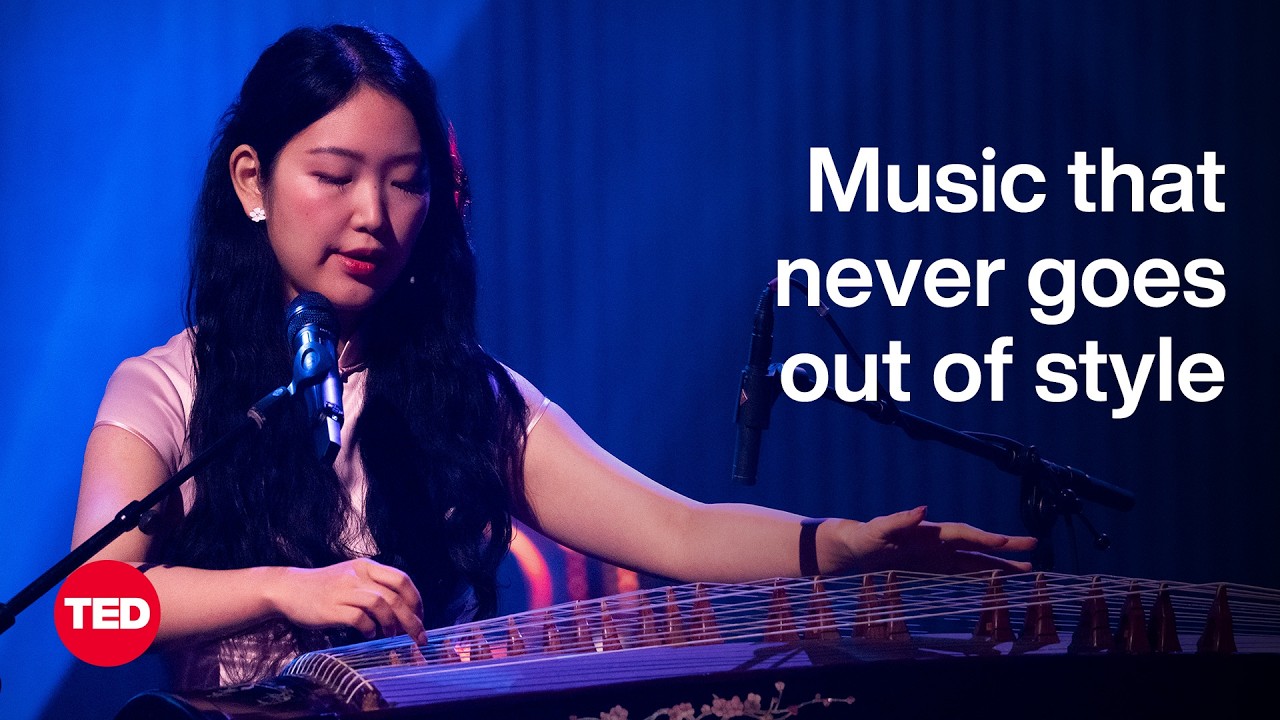
A Multigenerational Musical Journey | Yijia Tu | TED
9:42

A Multigenerational Musical Journey | Yijia Tu | TED

TED 31.08.2025 127 777 просмотров 1 348 лайков обн. 18.02.2026

Machine-readable: Markdown · JSON API · Site index

Поделиться Telegram VK Бот
Транскрипт Скачать .md
Анализ с AI
Описание видео
In an enchanting talk and performance, singer, multi-instrumentalist and songwriter Yijia Tu traces a path from the world’s biggest stages to a family lullaby passed down through the generations, showing how music carries memory across centuries and cultures. Blending East Asian folk traditions into modern sound, she shows how honoring tradition isn’t worshiping ashes — it’s keeping the fire alive. (Recorded at TED2025 on April 11, 2025) Join us in person at a TED conference: https://tedtalks.social/events Become a TED Member to support our mission: https://ted.com/membership Subscribe to a TED newsletter: https://ted.com/newsletters Follow TED! X: https://www.twitter.com/TEDTalks Instagram: https://www.instagram.com/ted Facebook: https://facebook.com/TED LinkedIn: https://www.linkedin.com/company/ted-conferences TikTok: https://www.tiktok.com/@tedtoks The TED Talks channel features talks, performances and original series from the world's leading thinkers and doers. Subscribe to our channel for videos on Technology, Entertainment and Design — plus science, business, global issues, the arts and more. Visit https://TED.com to get our entire library of TED Talks, transcripts, translations, personalized talk recommendations and more. Watch more: https://go.ted.com/yijiatu https://youtu.be/3kkMPD744dY TED's videos may be used for non-commercial purposes under a Creative Commons License, Attribution–Non Commercial–No Derivatives (or the CC BY – NC – ND 4.0 International) and in accordance with our TED Talks Usage Policy: https://www.ted.com/about/our-organization/our-policies-terms/ted-talks-usage-policy. For more information on using TED for commercial purposes (e.g. employee learning, in a film or online course), please submit a Media Request at https://media-requests.ted.com #TED #TEDTalks #Music
Оглавление (2 сегментов)

Segment 1 (00:00 - 05:00)

Can I get a show of hands if you know what this instrument is. Great. Five people, that's what I'm here for. (Laughter) So this is a guzheng, an ancient Chinese zither that has over 2,000 years of history. But growing up in China, I played the two most popular instruments. Can you guess what they are? It's the guitar and the piano, yeah. (Laughter) Not this. So I wrote a song on the guitar that ended up on one of the biggest music shows of the time, called Zhōngguó Hǎo Gēqǔ. And at 16, my life changed overnight. I entered this parallel universe as the Hannah Montana version of myself as a high school kid. I saw my face on news headlines. I heard my music played in public, which was a weird experience, and I was working with music legends I grew up admiring, who helped my debut album win the prestigious Huá Yǔ Bǎng Zhōng Bǎng, also known as the Chinese Music Awards. However, as a Chinese musician, my music was very "westernized. " I didn't sound Chinese, and in a way, I'm not sure if I really wanted to. See, with traditional music, I didn't really think it was cool. I have to admit, in my language, there's this word for something that's not cool or backwards, called “tu. ” But “tu” literally means the earth or soil that we stand on. On the other hand, you have this word called “yangtzi,” which means the opposite, something very trendy and cool and avant garde. But “yangtzi” literally means Western. And over time, I realized that this isn't just a Chinese issue, but a global one. Music traditions are dying in the hands of our generation. But how can we preserve a tradition if we don't feel a personal connection to it? So I felt inspired to learn the traditional instrument and folk music to reconnect with my roots. But instead of playing traditional music traditionally, it's important for me to be creative with it. So I'm going to show you how I do that. I'm going to play you a song that's a combination of a traditional folk song, as well as my own composition. I think you can guess which part is the traditional, which one is not. (Music) (Singing)

Segment 2 (05:00 - 09:00)

(Applause) So there's this quote attributed to the composer Gustav Mahler that I really like. That tradition is not the worship of ashes but the preservation of fire. And music can transcend not just the barriers of language and culture but also time and space. For me, music can build a bridge between the East and the West, the past and the present, and between you and me. And I've witnessed how music can reach beyond the limits of not just our human memory but even our very own consciousness. When my grandmother developed Alzheimer's, we could no longer communicate through words. However, there was this lullaby that she used to sing to me when I was a child. It’s a lullaby that her mother used to sing to her, so it’s been passed down my family for over four generations. And whenever I sing the melody, she would recognize the melody and sing along with me, which was really sweet. And even though my grandmother has recently passed away, whenever I sing this lullaby, I still feel deeply connected with her. It's almost like she's still singing along with me. Perhaps somewhere in the space that only exists through music. [Lullaby] [Holding and swinging my little baby] [Baby needs to go to sleep] [Gently rocking my baby to sleep] [You feel asleep, you wake up] [When you wake up there will be cake] [Gently rocking my baby to sleep] (Singing) (Music ends) (Applause) Thank you. (Applause)

Другие видео автора — TED

Ctrl+V

Экстракт Знаний в Telegram

Экстракты и дистилляты из лучших YouTube-каналов — сразу после публикации.

Подписаться

Дайджест Экстрактов

Лучшие методички за неделю — каждый понедельник