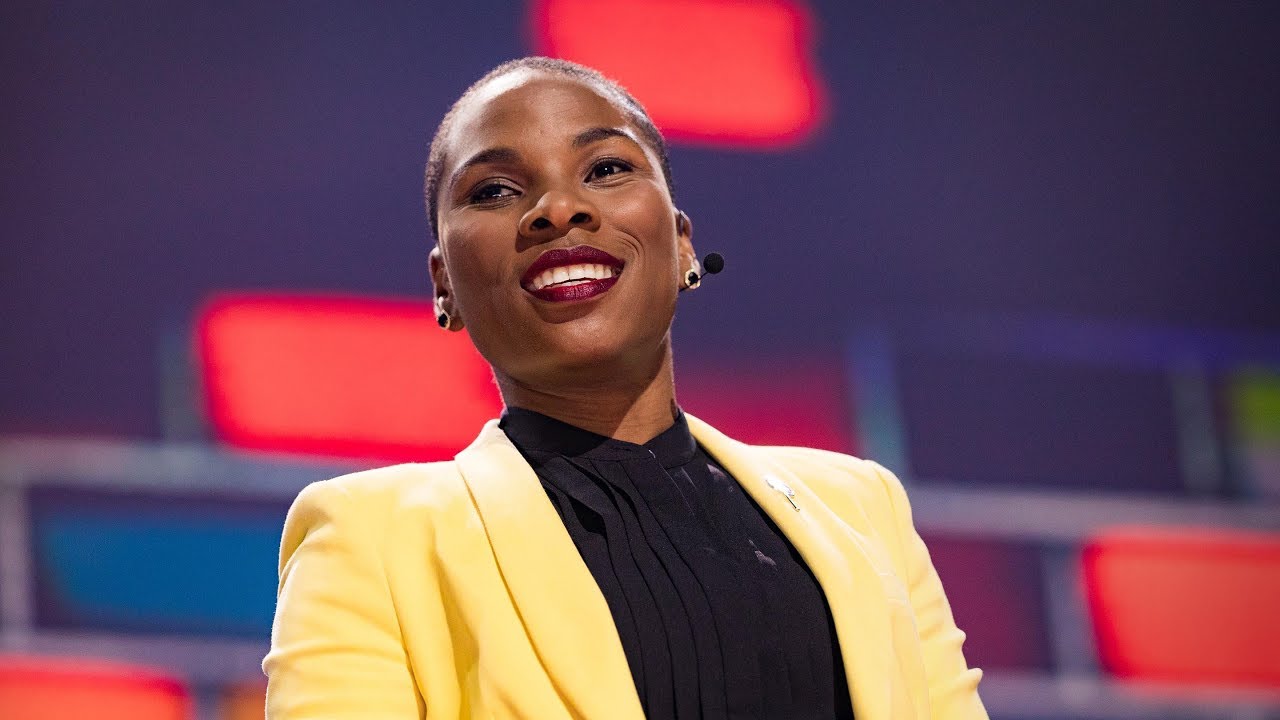
The Blueprint for Serving a Million School Lunches — Every Day | Wawira Njiru | TED
9:29

The Blueprint for Serving a Million School Lunches — Every Day | Wawira Njiru | TED

TED 19.08.2025 25 133 просмотров 622 лайков обн. 18.02.2026
Поделиться Telegram VK Бот
Транскрипт Скачать .md
Анализ с AI
Описание видео
Sometimes feeding just one child can seem challenging. Not for entrepreneur Wawira Njiru, who’s gone from serving lunch to 25 children from a makeshift kitchen to establishing her nonprofit, Food4Education, as a cornerstone of Kenya’s school meals system. Currently serving half a million meals to children every day, she’s now thinking even bigger. Hear about her incredible plan to serve delicious, nutritious daily meals to millions of kids across Africa by 2030. (This ambitious idea is part of The Audacious Project, TED’s initiative to inspire and fund global change.) (Recorded at TED2025 on April 9, 2025) Join us in person at a TED conference: https://tedtalks.social/events Become a TED Member to support our mission: https://ted.com/membership Subscribe to a TED newsletter: https://ted.com/newsletters Follow TED! X: https://www.twitter.com/TEDTalks Instagram: https://www.instagram.com/ted Facebook: https://facebook.com/TED LinkedIn: https://www.linkedin.com/company/ted-conferences TikTok: https://www.tiktok.com/@tedtoks The TED Talks channel features talks, performances and original series from the world's leading thinkers and doers. Subscribe to our channel for videos on Technology, Entertainment and Design — plus science, business, global issues, the arts and more. Visit https://TED.com to get our entire library of TED Talks, transcripts, translations, personalized talk recommendations and more. Watch more: https://go.ted.com/wawiranjiru https://youtu.be/vhvyid7vVoQ TED's videos may be used for non-commercial purposes under a Creative Commons License, Attribution–Non Commercial–No Derivatives (or the CC BY – NC – ND 4.0 International) and in accordance with our TED Talks Usage Policy: https://www.ted.com/about/our-organization/our-policies-terms/ted-talks-usage-policy. For more information on using TED for commercial purposes (e.g. employee learning, in a film or online course), please submit a Media Request at https://media-requests.ted.com #TED #TEDTalks #Nutrition
Оглавление (7 сегментов)

  1. 0:00 Intro 124 сл.
  2. 1:10 My story 347 сл.
  3. 3:51 Food for Education 238 сл.
  4. 5:44 Supply Chain 94 сл.
  5. 6:39 Cost Efficient 108 сл.
  6. 7:35 Long Term Sustainability 172 сл.
  7. 9:03 Outro 37 сл.
0:00

Intro

What do you see when you picture world hunger? A skinny, starving kid in Africa? An aid worker swooping in to save the day? A grain sack stamped with a flag of a distant nation? Now picture something else. A farmer harvesting fresh crops, secure in the knowledge that they will feed local schoolchildren instead of disappearing at a throwaway price to a volatile market. Bustling kitchens across Kenya, serving thousands of meals daily, powered by clean energy and run by local women. A mother contributing to her child's lunch with a tap of a wristband. Now the world has long treated hunger as a crisis that Africa suffers and the West solves. But what if Africa had the blueprints to feeding the future?
1:10

My story

I was raised in a home where generosity was a way of life. My parents were health care workers and church leaders, and that meant they were always willing to help, even when we didn't have much ourselves. I'll tell you a story. My dad once sold our TV, the only TV we had, to help someone who needed the money. It sounds so altruistic now, but as a kid, I was really pissed at that. (Laughter) And I'm kind of still pissed at it. (Laughter) Our home was never really just ours. There was always someone staying with us. Someone who needed a meal. Someone who they just could not turn away. But that spirit shaped me. When I started a school lunch program, I was not trying to end world hunger. I was a 21-year-old university student trying to help kids in my community of Ruiru, a town that's outside of Nairobi, the capital of Kenya. Back where I grew up, kids in my neighborhood did not end up like me. While I went to school, well-fed, ready and able, they went to class on empty stomachs. And as a result, many of them were held back, and others dropped out. But I know every single one of them saw their potential being wasted. Hunger was a thief of opportunity, one that we had to stop before it swallowed us all. So as a nutrition student, I started researching on school feeding programs. But what I mostly found was flawed systems and broken promises. Across Africa, a lot of the food supply was run by foreign organizations, and it was aid-based. They relied on warehouses full of imported food, sidelining local producers and not involving local communities or governments. Elsewhere in the West, where school meals were almost universal, they had issues of their own. Programs relied on processed foods and complex supply chains that were harmful to the environment and local economies. At home in Kenya, outside a few targeted programs, a few schools provided kids meals, but it was often expensive and inefficient.
3:51

Food for Education

Schools would often require parents to pay in advance, which was inconceivable for low-income families. Quality was also an issue, with high incidences of spoilage and contamination. So I stopped. I stopped looking for the perfect model, and I started looking at the strengths of the communities and the people around me. That was a start of Food 4 Education, an African-led and locally run solution to ending childhood hunger. School feeding programs have existed for hundreds of years. It's one of the most bankable social safety nets a society can offer. In fact, I'm so sure many of you may remember your favorite school meal from your younger days, and I hope that memory is a good one. And yet, Africa has the lowest penetration of school feeding programs globally, at just 19 percent. If school meals can be ubiquitous in New York and London, they can and should be in Africa too. Schools are where children gather, where they spend most of their day. In fact, we have 600 million kids in Africa today. That's a lot of kids. That makes schools the most practical and impactful place to deliver critical nutrition. By feeding kids in school, we're not just giving them calories, we're giving them the ability to focus, to grow and to thrive. So today, we harness the power of local governments, parent ownership and technological ingenuity to provide half a million meals daily.
5:44

Supply Chain

But how? (Applause) Thank you. School feeding programs have long struggled with global supply chains, so it was obvious to us that we needed to work with local smallholder farmers. On every plate, there are ingredients that have been harvested in the most recent season, making our meals fresh, nutritious, delicious and supporting our local economies. Mary, a supplier from my hometown, now provides us 10,000 times the number of bags of beans than she provided to us in 2012. Her first delivery to us was with a motorbike. Her latest... 65 trucks. (Applause)
6:39

Cost Efficient

I love that for her. Our meals are cost-efficient, at just 30 cents, making it Kenya's most affordable and nutritious meal. Parents contribute a subsidized amount, and kids just tap to eat. Our kitchens are built for scale and better for the planet. We have built Africa's largest green kitchen in Nairobi, feeding 60,000 kids a day. But the key to this work is working hand in hand with government. Although it's hard, as a truly African and local organization, we've been able to partner with our government for long-term sustainability. When governments commit to school feeding, it can mean real kitchens, real budgets and real policy changes.
7:35

Long Term Sustainability

It can mean instead of a child relying on an NGO that might go away tomorrow, they can rely on something greater: a public commitment to their right to food and education. We want to see that across Africa. We are redefining what school meals can and should be. Since that first tiny kitchen, feeding 25 kids a day, we've served over 100 million meals. (Applause) We will feed a million kids a day in Kenya by 2030 and two million more through our work with African governments to make school feeding programs sustainable and scalable. Today, one in eight people in the world are African, like me. By 2050, we'll be one in four. These kids are the future global workforce. We're feeding a future where kids will know hunger only as a fleeting sense of anticipation and not a constant state of being. A future where all African kids can live up to their potential. But this is not just a Kenyan story or an African story. It's the world's.
9:03

Outro

How we feed our kids determines the kind of planet they'll inherit. And if we get it right in Africa, the place where humanity began, we might just show the world the way forward. Thank you. (Applause)

Ещё от TED

Ctrl+V

Экстракт Знаний в Telegram

Транскрипты, идеи, методички — всё самое полезное из лучших YouTube-каналов.

Подписаться