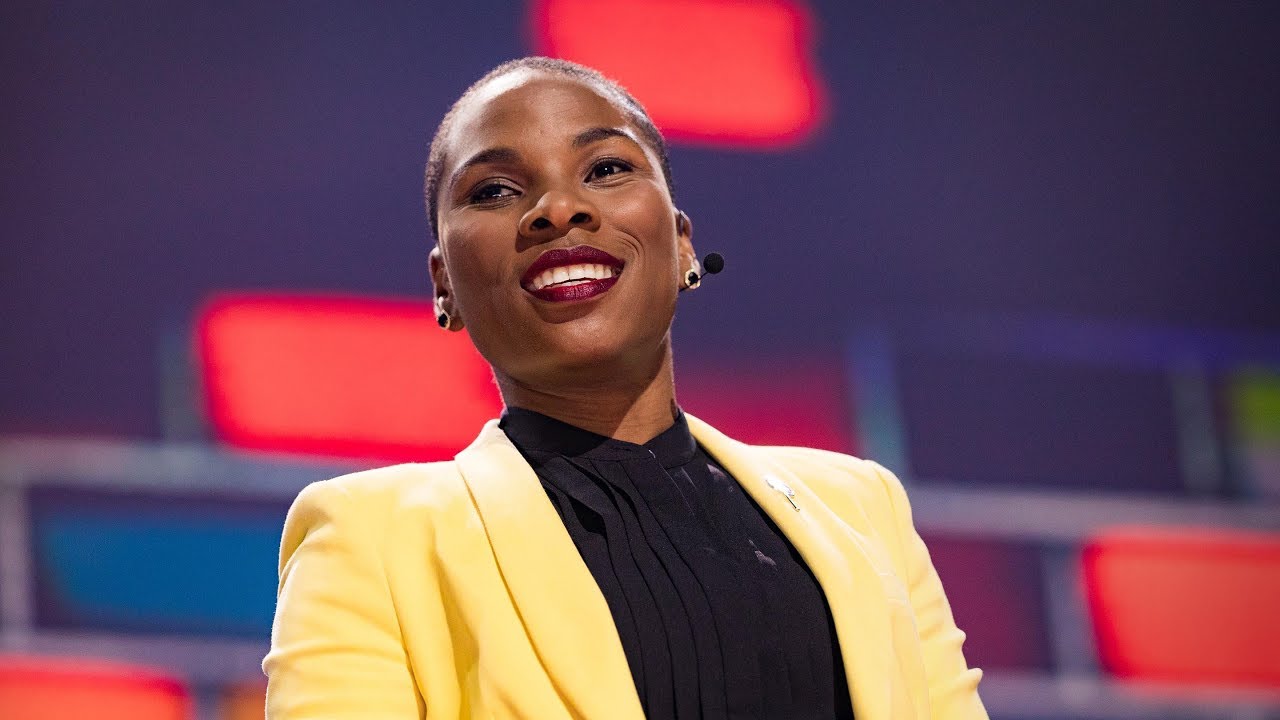
700 Million People Still Live Without Electricity. Here’s the Fix | Jacqueline Novogratz  | TED
12:58

700 Million People Still Live Without Electricity. Here’s the Fix | Jacqueline Novogratz | TED

TED 14.08.2025 72 341 просмотров 611 лайков обн. 18.02.2026

Machine-readable: Markdown · JSON API · Site index

Поделиться Telegram VK Бот
Транскрипт Скачать .md
Анализ с AI
Описание видео
Impact investor and Acumen CEO Jacqueline Novogratz unveils a bold vision to bring off-grid solar electricity to 700 million people still living in darkness, transforming lives while slashing emissions. She asks a thought-provoking question: What if this generation could be remembered for finally bringing electricity — and dignity — to everyone on the planet? (Recorded at TED Countdown Summit 2025 on June 17, 2025) Countdown is TED's global initiative to accelerate solutions to the climate crisis. The goal: to build a better future by cutting greenhouse gas emissions in half by 2030, in the race to a zero-carbon world. Get involved at https://countdown.ted.com Join us in person at a TED conference: https://tedtalks.social/events Become a TED Member to support our mission: https://ted.com/membership Subscribe to a TED newsletter: https://ted.com/newsletters Follow TED! X: https://www.twitter.com/TEDTalks Instagram: https://www.instagram.com/ted Facebook: https://facebook.com/TED LinkedIn: https://www.linkedin.com/company/ted-conferences TikTok: https://www.tiktok.com/@tedtoks The TED Talks channel features talks, performances and original series from the world's leading thinkers and doers. Subscribe to our channel for videos on Technology, Entertainment and Design — plus science, business, global issues, the arts and more. Visit https://TED.com to get our entire library of TED Talks, transcripts, translations, personalized talk recommendations and more. Watch more: https://go.ted.com/jacquelinenovogratz25 https://youtu.be/E74FQTMWPVw TED's videos may be used for non-commercial purposes under a Creative Commons License, Attribution–Non Commercial–No Derivatives (or the CC BY – NC – ND 4.0 International) and in accordance with our TED Talks Usage Policy: https://www.ted.com/about/our-organization/our-policies-terms/ted-talks-usage-policy. For more information on using TED for commercial purposes (e.g. employee learning, in a film or online course), please submit a Media Request at https://media-requests.ted.com #TED #TEDTalks #ClimateChange
Оглавление (3 сегментов)

Segment 1 (00:00 - 05:00)

I want to share with you a plan to fix one of the biggest planetary market failures of our lifetime. It's been nearly 150 years since Thomas Edison invented the incandescent light bulb, ushering in the age of electricity. So how can it be that 700 million people on this planet still lack access to electricity? When the Sun goes down, they depend on dirty, expensive, sometimes dangerous fuels for light. And these are some of the most overlooked and underestimated people on the planet. But we can solve this problem if we have the moral imagination to do two things. First, we have to rethink how we approach risk. And second, we have to address the false binary between mitigation, or reducing emissions, and adaptation, or adjusting to the climate crisis. Before we talk about that, though, let's look at what's at stake. We know that the most vulnerable are disproportionately impacted by climate events. Electricity is resilience. It's agency. It’s light and irrigation and communications, and it’s cooling. It's also basic empowerment. We live in an age where tech entrepreneurs are promising that every child on the planet will have their own AI tutor. Unless you're a child without access to electricity. The good news is that, as we've discussed, solar energy has been one of the great success stories of the 21st century. When my organization, Acumen, started investing in off-grid electricity in 2007, 1. 5 billion people on the planet had no access to electricity. Today, that number has been cut in half. And while off-grid can't claim full credit, it's been an important part of the story. And I've had the privilege of investing in and witnessing the evolution of this extraordinary off-grid sector that started off with lights, and then we saw home systems with radios and cell phone chargers, and then emerged the adjacent possible. Solar televisions and cookstoves and solar irrigation and refrigeration and e-mobility. And today you can see thousands of electric motorbikes powering down the streets of Kenya and Rwanda. I've also been able to talk to so many customers across the continent. Like Susan, who said that what surprised her when she got her solar system was that she no longer experienced deep fear every single night. She said, "I used to fear bandits, wild animals, men. Or going to the toilet," her external toilet -- "And being bitten by a snake. " She said, "Now I don't feel stressed. My children and I have more connection. And indeed, they'd finished watching a course on their solar television to learn sign language in Kiswahili so that for the first time in their lives, they were able to communicate with their deaf cousins. " Energy is independence, and it has great economic impact. The average family reduces energy spending by more than 50 percent, and this is a sector that has created more than 370,000 good jobs. We as a world are on track to reach another 300 million people by the end of the decade. That still leaves hundreds of millions living in the dark. These are the hardest to reach. In places like Burundi, with an 11 percent electrification rate. Malawi, 16. Chad, 12. And those aren't just statistics. Those are human beings. And yet, too often we dismiss them as too poor, too risky, too hard. So let me say this clearly. This is about our shared human dignity. If we believe that all human beings deserve dignity, and we understand that the impact of climate will disproportionately impact the most vulnerable amongst us, then these are precisely the people on whom we need to focus. Because electricity isn't just about light. It's about communication during floods, irrigation during droughts. It's about cooling medicines during heat waves and pandemics. It's about hospitals and schools, businesses

Segment 2 (05:00 - 10:00)

so that isolated communities, already fragile, can build resilience in an increasingly volatile climate. Adaptation matters, but this story has equal urgency for mitigation. Now today, the continent only contributes 3. 5 percent of total global emissions, and the average American consumes about 1/15 the energy of an American. But those are the wrong numbers to pay attention to. As Al Gore said, what matters is future emissions. The continent's population is expected to grow from 1. 5 to 2. 5 billion people by 2050. And so the question is, what kind of energy will fuel it? What we've learned from investing in off-grid is that once families are on the first rung of the solar energy ladder, they don't go back. That's good news for the planet and for its people. If we just brought electricity to 10 million families, basic level, we would avert more than 27 million tons of carbon looking forward and create about 10 billion dollars in direct economic benefit. Multiply that and you get transformation. But how do we do it? The companies are here, but the capital is not. And one thing for certain is that money cannot be the constraint. Because last year, the world allocated two trillion dollars to transitioning industry from fossil fuels to cleaner energy. But less than 800 million went to off-grid solar. That's less than 0. 1 percent. And it makes no sense. Because climate finance isn't scarce. It's scared. And maybe at first glance, you can understand it. Customers make a few dollars a day. Macroeconomic headwinds, like inflation, depreciation, have pummeled markets. Inequality, lack of jobs, in some places, uncertain leadership. OK, but if we focus only on narratives that talk about the problem, we miss the much bigger narrative of the opportunity. Electricity is foundational. And we can solve this problem, but we need the right kind of capital to open up new energy markets. And a lot of people have been thinking for a long time about how to do that in ways that are more important today, in a post-aid era. My organization's been building on our investing work for many years to create a an initiative called the Hardest-to-Reach. It's essentially a multi-layered capital stack that's a blend of philanthropy, impact investing, funds from development finance institutions and a commercial bank. It starts with 60 million dollars in philanthropy, so that we can take early-stage patient capital investments in those companies operating in the most challenging climates. Philanthropy lets you go fast. So already we've invested 12 million dollars in eight companies in Sierra Leone, Benin, Malawi, the DRC, and most recently, Somalia. Side by side is a debt facility that is impact-aligned. It's anchored with funding from the Green Climate Fund and others. And again, that allows us to bring in more institutional capital above, including Shinhan, the largest commercial bank in Korea. Thus far, 21 different stakeholders across the capital continuum, from grants to impact to commercial, have come together to bring a quarter billion dollars in financing to Africa's most challenging energy markets. Now making this happen hasn’t been easy. It has relied on the leadership, the courage and the competence of a whole lot of people, including in big institutions. But that is exactly the kind of moral imagination that we need to rethink the way we approach investing. Because it is just not OK to let financial risk have the final word. (Applause) If we're smart enough and careful enough

Segment 3 (10:00 - 12:00)

we can offset financial risk. But equally important, what is the risk of not daring? Leaving hundreds of millions of people in the dark and watching instability, emissions and migration rise? It means cutting off human potential, possibility, creativity. You see, risk is not just a financial concept. It's an environmental concept, a social concept. And it is most definitely a moral concept. And so, yes, we can structure the right kind of capital, but we need all of the players to go from asking, "Am I getting the highest return," to, "What is the problem we're trying to solve? What is the capital that is needed? And where can I play a role? ” And also if you take a long-term investor's perspective, think about the hundreds of millions of new electricity consumers that will need new appliances and new innovations and new services. Completely new markets will emerge. We know this because we've seen this. And though this is hard, it is eminently within our reach. In history, there aren't that many chances to do something as big and important and as difficult as bringing electricity to everyone on the planet. But I sometimes ask myself, in 100 years, what will that generation say about us? Will they gasp in astonishment and say, we were the ones that finally brought electricity and possibility and human dignity to everyone? Or will they wonder, "How could they have averted their eyes and left hundreds of millions behind? " I hope they say we learned to control capital and technology and not be controlled by it. I hope they say we cared, that we did hard things. That we loved the world. And in doing so, we set ourselves free. The poet Hafez wrote, "Even after all these years, the Sun never says to the Earth, ‘You owe me. ’ Look what happens with a love like that. It lights the whole sky. " So let's get going. Thank you. (Applause)

Другие видео автора — TED

Ctrl+V

Экстракт Знаний в Telegram

Экстракты и дистилляты из лучших YouTube-каналов — сразу после публикации.

Подписаться

Дайджест Экстрактов

Лучшие методички за неделю — каждый понедельник