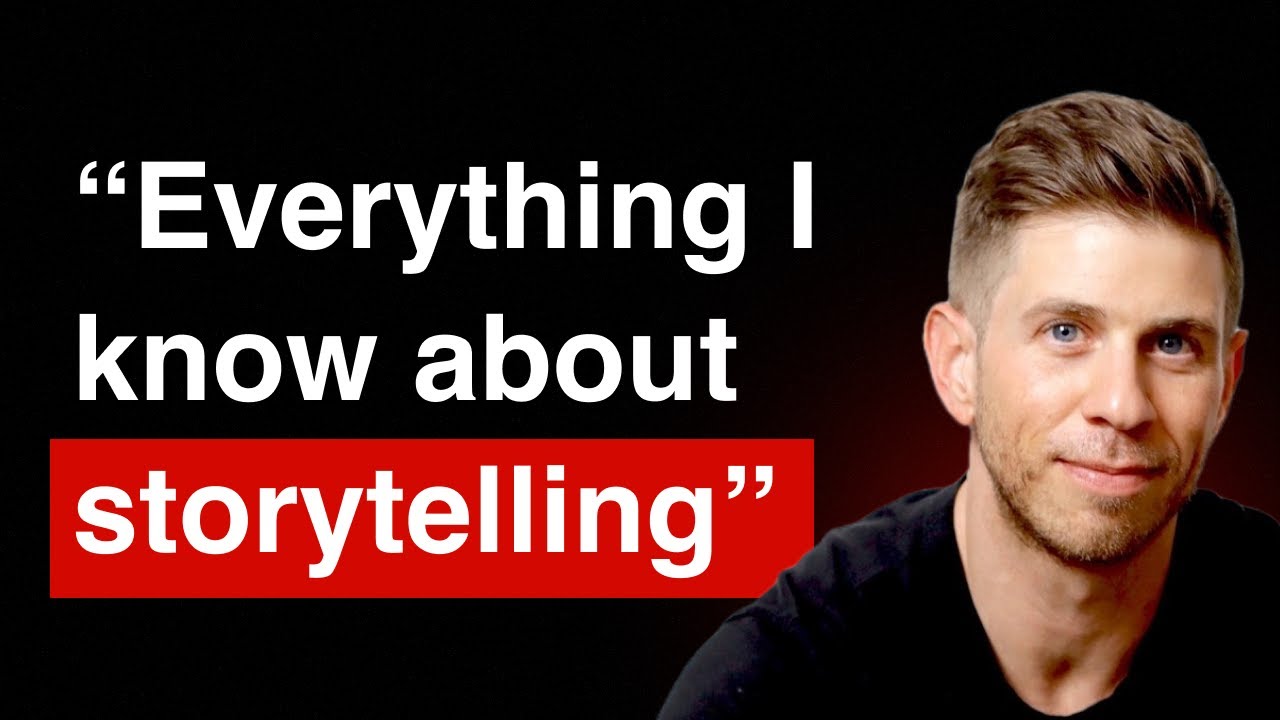
Unlock Your Storytelling Superpower | Robbie Crabtree (Coach)
36:32

Unlock Your Storytelling Superpower | Robbie Crabtree (Coach)

Peter Yang 16.06.2024 1 792 просмотров 54 лайков обн. 18.02.2026
Поделиться Telegram VK Бот
Транскрипт Скачать .md
Анализ с AI
Описание видео
My guest today is Robbie Crabtree, founder of Sorenborn. Robbie is a top storytelling coach who has helped hundreds of founders raise $750M+ through this skill. Before that, he perfected his storytelling craft as a trial lawyer who oversaw 100+ criminal cases. We talked about: - How to craft a great story - The two stories that every leader should have - How to deliver your story in a compelling way I’ve struggled with storytelling myself, and Robbie’s tips were incredibly helpful. If you enjoy our conversation, please like and subscribe to support the podcast. Timestamps: (00:00) The U-shaped approach to tell a great story (01:29) The essence of a great story in one line (02:46) Connecting personally with your audience (03:56) Why impromptu storytelling is a myth (05:26) The five-part storytelling framework (05:52) Defending a murder case example (10:44) Crafting a story in 10 words (22:17) The two essential stories every leader needs (28:09) Deliver a story people will never forget (32:12) Proven tactics to tell better stories Where to find Robbie: LinkedIn: https://www.linkedin.com/in/robbiecrab/ Website: https://sorenborn.com/ Get the takeaways: https://creatoreconomy.so/p/unlock-your-storytelling-superpower 📌 Subscribe to this channel – more interviews coming soon!
Оглавление (10 сегментов)

  1. 0:00 The U-shaped approach to tell a great story 273 сл.
  2. 1:29 The essence of a great story in one line 279 сл.
  3. 2:46 Connecting personally with your audience 219 сл.
  4. 3:56 Why impromptu storytelling is a myth 317 сл.
  5. 5:26 The five-part storytelling framework 86 сл.
  6. 5:52 Defending a murder case example 983 сл.
  7. 10:44 Crafting a story in 10 words 2324 сл.
  8. 22:17 The two essential stories every leader needs 1200 сл.
  9. 28:09 Deliver a story people will never forget 811 сл.
  10. 32:12 Proven tactics to tell better stories 857 сл.
0:00

The U-shaped approach to tell a great story

if I ask anyone to tell me a story off the top of their head it's going to be sloppy and what you'll do is you'll go down this u-shape because you take that story and you start to memorize it which always gets the feedback from people of Robbie I don't want to memorize it because then it's going to sound robotic rehearsed and they're right it absolutely does but you have to memorize it before you can get out of that u- shape so like as you come down the U it sounds rehearsed but it starts to sound more polished and then what happens is there's this moment where you go from memorized to all of a sudden it becomes internalized and when it becomes internalized you shoot up the U up to the top right where it now sounds both natural and Polished which is why the best speakers when we all see impromptu I put that in air quote speaking it's not impromptu they've told the story dozens hundreds thousands of times which is why it sounds so perfect my guest today is Robbie Crabtree founder of competitive storytelling Robbie has helped over 100 founders and product leaders raised $600 million through storytelling he's also an ex prosecutor who has overseeing 100 criminal cases we talked about how to systematically craft a great story how to build your story bank and how to deliver your story to capture your audience's attention I've struggled with storytelling myself and Robbie's tips were incredibly helpful if you enjoy our conversation please like And subscribe to support the podcast how would you
1:29

The essence of a great story in one line

summarize what a great story is I'll give you two because I think it's useful one is gonna be from one of my friends Jeremy Connell way and I think he nailed it when he said storytelling is about making people feel something so they will do something I think that really sums it up nicely when I talk about storytelling the way that I like to describe it is storytelling is World building and inviting the audience to collaborate with you interesting because that that's pretty different it's like um cuz most people think of story telling is just like telling your story right do not really count back and forth that's an interesting perspective yeah well when I say collaborate with you it's not that they're necessarily saying anything or doing anything it's that they transport themselves into that world that you're talking about right if I'm talking about the world of being a trial lawyer I'm inviting you to come in and sit in that jury box as I'm describing what I'm talking about in that story if I'm talking about the future of what I want to build or where I want to go I'm inviting you to say is this the world that you want to live in is this a be a part of and whatever means to you it could mean invest it could mean join the team it could mean support and share the message around like that's what I mean by collaborate is when you see that world you want to be a part of it and further that story in some meaningful wet and uh I feel like the
2:46

Connecting personally with your audience

best storytellers like you could be speaking to a jury or like a couple hundred people in your audience but they're able to kind of make that personal one-onone connection it feels like they're speaking to you right do you agree or this gets to the whole kind problem with the word storytelling actually in my opinion is it's the wrong term it really should be story sharing the way that you have that one-on-one connection is you open up and you share and it's an act of extreme vulnerability because when I share my story I'm inviting you to feel how I felt see the world how I see it and I'm trusting that you're not going to judge me harshly so I always say it sto story sharing is about opening up your brain to show the world how you think opening up your eyes so that they can see how you see the world and opening up your heart so they can see how you feel which is really what binds us together that's why I say it really is story sharing because if you're just storytelling and you're just reciting facts if you're not inviting that other person in which is where it really becomes story sharing and shines that makes sense so um you
3:56

Why impromptu storytelling is a myth

makes sense that makes sense so um you know we've all been at these dinner parties where someone can just like tell a really great story just like off the cuff but I think uh you know you have a bunch of writing about how this actually takes a lot of prep work so curious what what is your approach to building a kind of a great story from scratch all those great storytellers and speakers are not doing it on the Fly e even when they're doing something that is technically on the Fly they've put in so many bass reps that they know all the Beats to hit so this really goes back to this idea that I came up with when I was a trial lawyer and what I called it was my personal framework at the time now I call it the competitive storytelling framework because that's my company but it was just this five-part strategy of what's the goal what's the emotion the audience needs to feel then what's your hook what's your theme what's your Dismount and if we think about that the first two are strategy the last three are more tactics if you work through that framework you'll start to build out the the skeleton of your story you'll understand what you're trying to make someone feel and then you're going to build out these pieces that help guide you through that from there you can figure out what structure makes the most sense and then I think you actually have seen my u-shaped graph approach which is the worst name concept I have but it's still a very great concept I can go more into that but you essentially practice it refine it go through it enough times where you go on this u-shaped graph kind of Journey and get to a level of Mastery so just to
5:26

The five-part storytelling framework

kind of uh let's start with the fiveo framework first right so like just to cre AR is uh Define your goal identify the emotion create the hook and then uh I think it's like focus on a theme and end with a memorable conclusion right yep exactly do you have a do you have like a example of that just to kind of bring to life either from your lawyer Bay or yeah just like a example the last case I ever tried was a
5:52

Defending a murder case example

I actually was on the defense side in the murder case the it was a brother on brother and the brother did kill his other brother it was super tragic and really sad and an awful case but I believe that he acted in self-defense like I was absolutely sure he act in self-defense so took on the case and went through it now he admitted to killing his brother he said some Terrible Things In the Heat of the Moment Like there were lots of bad facts in that case my job was to go to a jury and convince them to not find this guy guilty even though he did kill his brother which is a not an easy thing to do so my Five Point framework was what's my goal was I needed to make the jury think that just because someone dies doesn't mean someone else should go to prison that was the goal like just to disrupt their traditional way of thinking that if someone dies someone goes to prison and I had to disrupt that so that was my only goal it wasn't to get them to say not guilty it was just to make them think that there can be instances where just because someone dies doesn't mean that they should go to prison now what did I need jury to feel in that moment I needed them to feel like this my client had no other choice and that his life was already ruined from what he had to do in that moment and he would live with that grief for the rest of his life and he was already suffering more than anybody else could ever make him that's the feeling so then I went into okay what's Hook theme Dismount and and all that so I actually went back to a source of inspiration that I have I think the best speaker storytellers we just have sweat files and inspiration files and all sorts of things that we go back and we pull from and one of mine is The West Wing I've used The West Wing in multiple trials at this point very successfully on both sides and in this case there's a an episode where it's called take the Sabbath and it's Toby zegler is wrestling with the death penalty in the first season of The West Wing and he's talking to his Rabbi about what he can do on this and how he feels and all the things and I remember the tells Toby he says vengeance is not Jewish is the theme of what he's talking about now I'm obviously not going to get up and stand in front of a jury in Texas and say vengeance is not Jewish but my theme ended up being vengeance is not justice so I did a little bit of a word play and all of a sudden everything in my closing argument pointed back to this idea vengeance is not Justice vengeance is not Justice then we have to think about so that's theme then we go to what's the beginning and what's the end so what's the hook and what's the Dismount my hook in this case was coming up and challenging why the prosecutor was doing what they were doing that this was just like that they actually had no empathy and were not doing Justice I wanted to relay it back into what I was saying inside of my my theme right and so I knew that I needed to attack the prosecutor and what was going to come next because they always had the final word so my hook was all about why the the jury needed to look at this prosecutor different from what they were about to come up and say because I knew that they were going to yell and scream Bing their fist on the table so I set it up that way that was my hook was essentially creating a fight between like a it's US versus them and then the Dismount was really heavy on the emotional piece which is you know and I don't remember the exact words that I said but the hook was around the idea of this brother and this family have already suffered so much nobody would have ever wanted to be in that situation and you can't judge what you would have done you can only judge what he did in that situation and you've seen his remorse you've seen how he's felt you've seen the way that he has tried to take care of his family the best way that he can my ask of you is to remember what is the purpose of your role here and that's how I ended with that big what is the purpose of your role here and I led throughout that entire closing argument of vengeance is not justice so I was trying to tie everything into allowing them to take ownership of this idea that their job was not Vengeance their job was Justice and if I could get them to grab on to that and not tell them that what they need to do but just pose that big question as the Dismount if I could make them feel that in question and plant a seed just enough I could win and ultimately the jury did come back uh after about a two-day deliberation I believe and came back with a not guilty verdict on murder and he was able to go home to his family um and continue living his life which was uh you know a pretty huge Victory given what would had gone on and the prosecutors in the case were just shock wow yeah I mean you definitely changed that man's life no doubt about it yeah um uh and like
10:44

Crafting a story in 10 words

going back to uh the vengeance is not just this like you know it kind of goes back to what you wrote about which is like a lot of people only remember couple things from a story um so you have this like 10 War storytelling concept like I'm curious if you actually set the words vengance is not justice during your closing argument or like you repeated it many times yeah sometimes the theme is implied sometimes it's spoken and it's explicit in this case it was explicit and also repeated given that from a rhetoric standpoint repetition is one of our most powerful tools so the more that I could latch on to that and there's a rhythm like a great Storyteller speaker thinks about building Rhythm into the way that they speak because to your point they might only remember one thing and if I can make that one thing that vengeance is not Justice I have a shot doesn't mean I'm GNA win but it means I have a chance and that's really what I think a lot of people get wrong when it comes to storytelling and speaking they want to convince they want to M have the other person say Robbie you're right it's more like the movie Inception where you're planting a seed and you're inviting them to take ownership over it and reach that decision themselves yeah so you want to like um have them arrive at the answer themselves as opposed to just give them the answer or tell them the answer right that's kind exactly yeah it's funny you mentioned like politicians like um maybe we can talk a little bit about like you know Barack Obama or Donald Trump it's interesting to think about their slogans and try to think about what kind of emotion they're trying to elicit you know like Obama is like you know yes we can and Trump is like make America great again or like build a wall they're like different emotions right like do you want to elaborate a little bit on that or yeah I mean politicians are great at this they have to be they have to speak in these like very short phrases and actually the this like 10-word storytelling came from Again The West Wing there's a we in the political debates and talking about like these 10-word answers and I just took that I was like oh that's like a brilliant way of thinking about storytelling too like the Steve Jobs thousand songs in your pocket incredible like 10 wor storytelling there it it's insane the politicians so going back to your point you know the interesting thing you have Trump's make America great again which is actually a reference to Ronald Reagan like that is a slogan that Reagan had when he was running most people don't realize again how much repetition and like pulling from other sources that we're doing so whereas it's always interesting to me to look at like people got very upset at that slogan you know and at Trump during that period of time but like that slogan is from the 80s and you know was from Ronald Reagan and but all accounts you know was pretty successful in many ways looking at kind of US history but what we can see is there's some slogans that are more kind of like Doomsday like there are more fear driven and then there are some that are more hope and inspirational driven so if we think about the difference right you know build the wall is a is not inspiring message like there is a threat that we are trying to prevent from getting to us so like that is playing into more like the fear now doesn't mean that that's bad because businesses and leaders all the time do it like both parties do it business is playing to fear of like what you're going to miss out or lose like it's very classic rhetoric but we also have the inspiring rhetoric right which is the you know yes we can change that we can believe in these are positive inspiring messages now you also have to look at the timing of when these slogans come out why like the country might be more receptive to specific messaging uh that all of this goes into figuring out what those slogans should be what that 10-word storytelling should be but I do think most people would benefit from practicing 10-word storytelling in their like in their business and what they do and how they see the world and trying to distill these ideas into very simple language that creates emotion at the same time yeah and and let's go back to the U process right like um uh you know uh when I think about creating a story from scratch either like I sit on my computer and try to write it out orbe like I'm talking to myself in the mirror both of which are kind of awkward but but I kind of like the UAP process because I think your advice is just like go outside and like you know use the app to transcribe what you're saying talk a little bit more about that yeah instead of getting in our way when we're trying to create a story from scratch right and this is what happen like we sit down and we write and we're reading it as we write and we hit this moment we're like I don't like that this sucks ah this feels unnatural and so we delete it or we stop or we edit and like you can't you can't start with a story or a speech or really anything when it comes communication if you're going to be starting stopping editing in the midst like it it's just not a good thing like you really do need to just go into flow and get the ideas out this is why I like transcribing things and just having someone walk and speak or you know sit down and just like on your couch and just like speak into to your phone and transcribe it what it really is doing is we're trying to brain dump or word vomit whichever term of art you like to use doesn't really matter to me you're doing that and then you're taking that trans transcription and you're looking at it to figure out okay where is the story here and the way that I like to go about this is I just start highlighting the points that I think are most relevant the most useful the most important and I just delete everything else so then now all I have are these highlighted portions which is generally the core pieces that I need for the story or the speech that I'm creating now I've got to clean it up I've got to add transitions I've got to go and you know maybe do some research to bring in numbers and data to back up some of the things that I was just speaking out loud but what happens in that process is you've now word vomited enough so you have all the wrong ingredients you've distilled it down into the core pieces that you need and then it's just a matter of structuring and rearranging and getting all the pieces together once you have that now we have a story that you can go out there and practice and this takes us to the u-shaped graph like once we have the content we move from this if I ask anyone to tell me a story off the top of their head it's going to sound natural because they're just speaking off the top of their head but it's going to be sloppy even the most polished speakers if they don't have any preparation going into the story it's still sloppy for them like if I hear people that I know are really articulate and I ask them to Just Wing something it's still going to be sloppy in comparison to what I know they're capable of doing and that's because they haven't had time to go through this u-shaped process so natural and sloppy is at the top I guess left if I'm looking at it and what you'll do is you'll go down this u-shape because you take that story and you start to memorize it which always gets the feedback from people of Robbie I don't want to memorize it because then it's going to sound robotic it's going to sound rehearsed and they're right it absolutely does it sounds rehearsed but you have to memorize it before you can get out of that u- shape so like as you come down the U it sounds rehearsed but it starts to sound more polished and then what happens is there's this moment where you go from memorized to all of a sudden it becomes internalized when it becomes internalized you shoot up the U up to the top right where it now sounds both natural and Polished which is why the best speakers when we all see impromptu I put that in air quote speaking it's not impromptu they've told the story dozens hundreds thousands of times which is why it sounds so perfect it's just like a comedian right a comedian goes out there and tests every little bit of their set I remember Kevin Hart once was talking about he goes about this and he will test it at a small venue and then he'll go to a bigger venue before he actually goes on national tour but what stood out to me most was he wasn't just listening for if people laughed he was listening to how they for a very specific type of laughter at different parts to tell him that he had it ready to go out and deliver it on the big stage and he would say like sometimes I've been you know working on a set for a year and then I don't get the feedback that I need and I start back at the beginning like just scraps a year of work because it's not polished enough it's not natural enough he doesn't have the Beats down Matthew MCC talks about this process too when he's reading a script and going through figuring out how he wants to embody the character so the interesting thing is if you look at this actors comedians Business Leaders whoever it is are all going like the ones who are at the top of their fields this is not for like the average people it's for the ones who want to be at the top are all going through the exact same process in different ways but all to get to the same end go so do you have uh when you going back up the curve like let's take the business leader or the founder or the tech professional right um sure let's say trying to make a speech or like pitch like so should I should we try to actually talk preview of someone else as opposed to just like talk to ourselves or what what's the best way to kind of go from memorize to internalized any person working because I a lot of your audience I know are people who work in Tech right work in Tech and then also creators which like the storytelling skill is critical if you want to if you're working inside a tech and you can tell a great story you have such a huge leg up on everybody else around you and you can move up into leadership positions and get tons more impact and buy in for all the things you're doing same for a Creator if you can tell really compelling stories like you can get other people bought in and really build a team that can help you and all sorts of different things so when I think about this you should always be testing like you cannot do this on your own that doesn't mean you have to go out and pay any body it doesn't mean that you have to do anything like that I I'll give a real example when I was a trial lawyer my poor poor family and friends uh they would hear me give opening statements and closing arguments so many times and as I went further in my career you know they got used to it and so they I wouldn't even at the beginning I'd be like hey can I tell you my opening statement and they'd be like yeah of course I did it so many times and they would just like run if I would ask them that so I would find ways to just like somehow like start saying it out of the blue if I did that they would listen and the reason it was valuable and I'll tie it back to everyone when they're practicing their story and trying to get up the U shape different audiences and different people are going to respond differently the more practice you do the better you're going to get I know that is the most basic advice ever but the road to Mastery of this stuff is paved by 10,000 reps and the more you do it the quicker that kind of improve mov Loop becomes where now I might need to only practice a story three four five times before it's really polished whereas when I started I was practicing you know opening statements closing arguments 30 40 50 times before I'd ever deliver them so you just get better because you have all these foundational pieces where it's really easy to figure out the Beats to hit got it um so along similar
22:17

The two essential stories every leader needs

lines um you mentioned how you know everyone who told story impromptu actually has a story Bank very good stories and uh I know you also kind of coach Founders and Executives in telling stories and I think you have uh something about like where Mo most tech people and Founders need to have like two or three types of stories in their bank right there like a sort of kind of past and sort kind of future maybe you can talk a little bit more about that so there's two core stories which you're hitting on in terms of kind of leadership and that's the origin story and then the vision story so origin story is how you got to where you are what makes you special why you care about what you're doing the origin story creates ethos of why you're the right person to be doing the thing that you're doing whatever that thing is the POS is the emotion that they feel behind it right this is you know why you're special why you care that's the emotional piece then when we think about the vision story is all talking about the future too many people get stuck in telling stories about the here and now which is fine but that doesn't inspire people to really act so the future vision is you know what is that big bold ambitious future that you see and this is why I call it World building because your job is to build that world in such a way that like you essentially went and put in a prompt into you know into mid journey and it pops out this image of this is what the world looks like up ahead do you want to be involved do you believe this is possible and what we're essentially doing is because we're Bridging the past to the Future we're leaving a lot of like this kind of unknown messy middle alone and inviting anyone who listens to it to kind of put those pieces together themselves uh so that's why I say they're the two core stories to hit for you know anyone in Tech any Creator any founder any business executive like if you don't have those things nailed you are not a Storyteller in in like today's era so for the original story well at Le want to interview CIS what I like to like they come with a resume for their accomplishments but what I like to ask them about is like you know where did you up and where did you learn from it right like so the orange story is kind of like you mentioned how it us to be like the hero's journey there needs to be like some sort of challenge part of it right well a lot of times actually when I when I'm going into um a full origin story I I'll hit on the challenge that is actually more meaningful inside of my origin story is when I was a child abuse prosecutor and I was looking at all the cases that I was trying and even when I would win a case the victim's life had still been ruined it had still been you know completely disrupted and then I would go to work the next day and there would be 10 15 brand new cases on my desk that were just as bad and the challenge that came up to me was am I solving a problem am I really doing any good and looking in the mirror having that realization of I get a lot of you know people say nice things to me I get lots of personal validation of wow your job is so incredible you're doing amazing work but internally I felt really broken because I wasn't having a big enough impact I wasn't creating less child abuse cases I was just saying the person who did this is now going to go to prison and pay for it so for me the call to the wild if you will from the hero's journey the challenge is actually overcoming that and figuring out a way to solve how do I have a bigger impact in the world how do I play bigger than what I am and then that normally leads into you know building an edtech compy and having no idea what I was doing and being completely lost and like you know maxing out credit cards and trying to do all this stuff and being like I'm going to fail and this is going to be miserable uh and then there's like you know some rise and fall throughout there of like the wins and losses and the wins and more losses and all that sort of stuff so there's this like up if you've ever seen the movie up from Pixar the opening you know a couple minutes is like this rise and fall rise and fall which my origin story has as well when I have more time to like kind of like flush it out and really go deep um because yeah it needs challenges it needs struggles it needs things that show you're a human being and you've overcome stuff in your life yeah those six minutes from uper is like a like with the relationship is like a master story I don't actually remember the rest of the movie but I remember those six minutes that started a movie yeah yep um and with the vision story you um it's interesting that you didn't talk about like uh or maybe this is not for your clients but like if I was a perspective founder coming to you like you know you just talk about kind of like the tactics of like hey you know I can help you get more funding or like like get more customers like you actually painted a broader Vision than that um or maybe like if you talk to a Founder you have a different approach like yeah nope that's the vision story because if somebody subscribes to that idea to saying I want that world to exist they can ask that followup question okay how do we pull that off that's a how question but the Vision story doesn't need to include the how the vision story is just showing the what and why it matters and if we do that right everything else the the people that you want to be pulled into that Vision story will find themselves and come to you and say I that world you talk about I want to be one of those leaders people who solves those problems I want to change the course of where this world is going like I think I'm one of the people you're talking about how does that actually work what is needed to happen to pull that off and then we can go into all those Dynamics but that's why I say level one storytelling is just about setting the big Vision got it that makes a lot of sense yeah uh let's kind of uh wrap up
28:09

Deliver a story people will never forget

by talking about story delivery like you know if I was going to give a big speech or like go present to some exacts or something like um how do I deliver my story in a very memorable way like is there any like tactics that I can use to do that memorability in storytelling comes from Dynamics and the way you deliver it right so everyone knows what monotone is but there's lots of mono things you can be mono paste mono volume all sorts of different things there are plenty of studies out there to show this the most memorable speeches are the ones that have the biggest changes between them so that rise and fall the shifts between tone the shifts between speed and pacing and all of this and I call that as core musicality when you're speaking when you're delivering you want it to be musical now this doesn't not mean that everybody should sound the same right just like there are very different types of music there's speaking Steve Jobs does not present the same way as MLK does Oprah that Sarah Blakeley does they are all wildly different in their ways but they are compelling because all of them understand the way to use their voice as an instrument which is one of the key things to remember so when we're speaking we want to also create Melody so that it's easier to remember this is you know take some practice and take some Dynamics but the easiest way to fix these types of things is record yourself and play it back and see am I changing my tone pacing am I changing my volume am I doing things with my body like if I'm sitting just very close and I start Peter it's great to meet you today I'm really excited to talk to you we're going to have a great discussion about storytelling and how important it is and this is what we're going to do because we have to really break down three different parts of Storytelling in order to like you first off you would be like Robie we got to end this it's not going to work and if you publish it you'll be like what is wrong with this person whereas then like when I come out of it here you can see me you know I'm changing tone and facial expressions and using my hands and body language and I can you know speed up if I want to talk really fast and for certain things you hit it really slow to show it matters and we can do all these things over time and you can practice them and see yourself come to life but uh that's when I say about creating a compelling story figure out where your Dynamics lack and then the other thing is watch speakers who you appreciate and who you admire and see why you admire and appreciate those speakers and how you can take things from them and replicate it when I was a trer one of the things I did is I just watched a ton of my colleagues try cases and I just picked up on the things that I liked I would try things and see if they work for me so of my like favorite triers I could do nothing like they did because they had a very different way that They Carried themselves but I still would try to learn from that in fact I would always think that the best trial warer was the one who yelled and screamed really loud that's how I thought when I started and I tried that early on in my career and it was very unsuccessful for me I'll never forget I watched one of the child abuse prosecutors in in my job deliver a closing argument and all she did was like whisper and she was super soft to them and I mean the jury just absolutely fell in love with her and I go wow that's a really interesting approach so I actually became much more soft when I was speaking to a jury because it worked better for me so what you do is you find these sources of inspiration then you see how can you replicate what they do in a way that's still authentic to you but elevates the way that you speak got it I I love that you have to be yeah I really uh love the point about being authentic to yourself and also what I found is that if you if you're talking about something you actually really believe in that you authentically care about then you can tell a story much better most of the time right because you actually really care about whatever you're saying so do
32:12

Proven tactics to tell better stories

you have uh just the last question do you have any kind of like um closing words of advice for aspiring storytellers people maybe who you know I actually have a I actually had a stutter uh early in my career or like you know when I was younger people just like have low confidence that they kind of have label themselves that they're not good at storytelling or speaking like uh do you have any uh you know motivational advice for them or any closing words away them storytelling is a skill to be built it's not something you're born with and if you tell yourself that you're not a great Storyteller I can guarantee that's going to be the reality that you live you can practice it you can learn it it's there are a lot of things that you can do to significantly improve your storytelling and your speaking ability very quickly it does not take years and years now Mastery yes Mastery is going to take you years and years like you have to obsess and love it like I do in order to get to those levels most people don't need to get to a Mastery level right most people need to get to good some Great and then there's a small handful of people who need to go beyond that because of what they're trying to achieve in the world getting to good is something that almost anybody can do if they're willing to do a little bit of work watching some people understanding some basic structures practicing doing a little bit of game tape review and within you know six months you can be significantly better even if you're doing this all on your own if you're doing it with someone like you can improve as a Storyteller in one to two months pretty significantly and I just encourage people to think back to especially because we're talking about tech and creators Steve Jobs was not great at storytelling when he first got you know when he got fired from Apple the first time like that was not what made him great he learned a ton when he went and you know built Pixar and spent time around all these people when he came back to Apple he really elevated the storytelling that he had now part of this is he worked with really talented people like Aaron sorin who you know wrote The West Wing and also wrote The Social Network and these different things to help him on speeches and to see things so he was willing to you know spend time to get the help but he improved the level that he's seen as one of the greatest storytellers that we have on the flip side I want like my favorite Storyteller is Anthony Bourne and why I love Anthony Bourdain is because his storytelling is just raw he was self-taught no one gave him anything he just figured it out because he was willing to practice and experiment and write and tell people and see what resonated so if you're out there and you think I'm not a great Storyteller the best way to become a great Storyteller is to start telling stories and then remember that it's not just about telling stories it's about sharing stories it's about opening up being vulnerable and authentic in the way that you deliver those to people so that they can see the world that you see that's where connection really starts to take off and you'll see those gains to the point that you want to just keep getting better and better because all of a sudden people are going to like you more they're going to trust promote you they're going to give you money they're going to want to support you be your friends like it opens up so many things for life and then it just becomes really fun and you're like I gotta get really great at this so once you start it's very hard to stop which is the good thing it's just about getting started got it yeah it's the same thing as any skill in life right you just have to get over yourself you got put the work and like maybe feel cringe for a little bit and you'll quickly improve yeah um and uh Robie like if people want to help uh where can they find you online find me you know my website is competitiv storytelling. my LinkedIn you can search my name Robbie Crabtree you can also follow me on Twitter Robbie crab those are probably the best places to find me and then I'm also working on getting my book out there which you know youve got to see the manuscript so uh that'll be out hopefully in sixish months is kind of the timeline that I'm working with my publisher right now to get that out so in the you know by the end of the year there will be a book also around all this stuff a awesome all right Robbie thanks so much

Ещё от Peter Yang

Ctrl+V

Экстракт Знаний в Telegram

Транскрипты, идеи, методички — всё самое полезное из лучших YouTube-каналов.

Подписаться