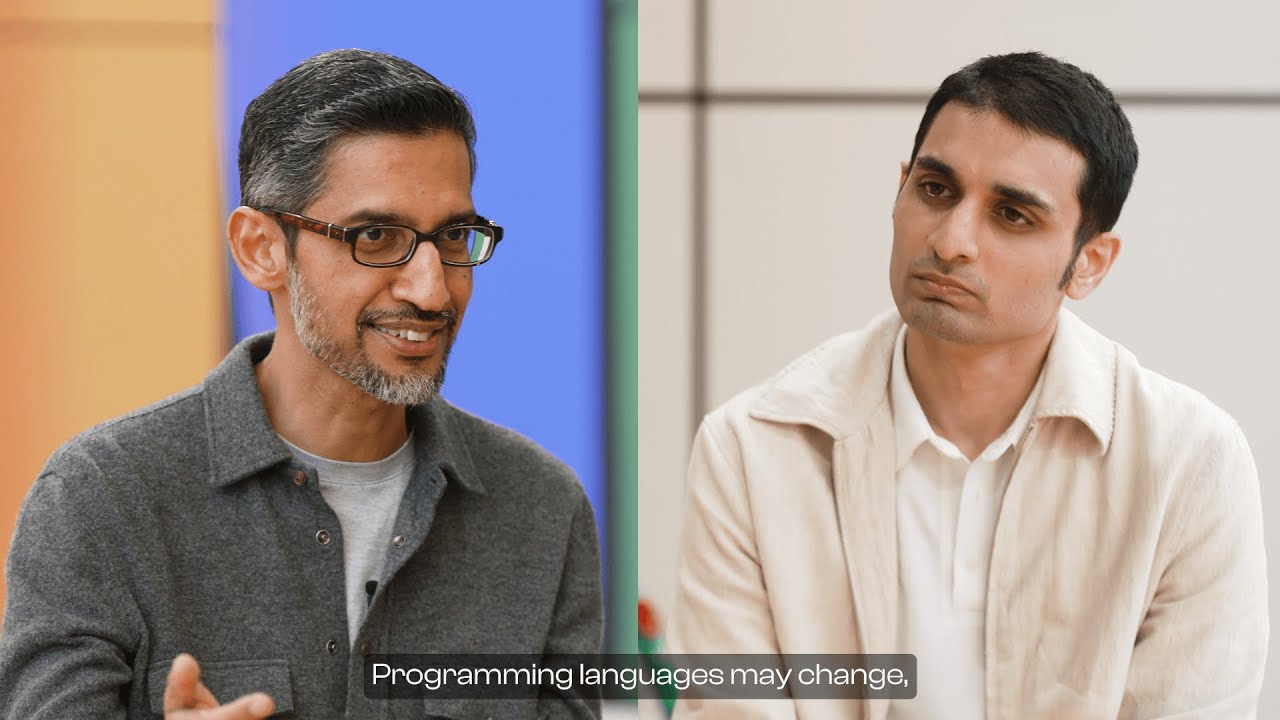
Peyush Bansal on UPI Payments in Glasses, IPO Criticism and More!
42:01

Peyush Bansal on UPI Payments in Glasses, IPO Criticism and More!

Varun Mayya 02.11.2025 39 758 просмотров 1 056 лайков

Machine-readable: Markdown · JSON API · Site index

Поделиться Telegram VK Бот
Транскрипт Скачать .md
Анализ с AI
Описание видео
In this episode, Peyush Bansal sits down to talk about Lenskart’s IPO, the debate around its valuation, and why he believes the company has been priced fairly despite market chatter. He explains how Lenskart’s profitability, strong unit economics, and sustained growth make it stand apart from most consumer tech listings that were still loss-making when they went public. We then get into how the company grew from a small tech-led eyewear startup into a global brand through vertical integration, manufacturing, and customer obsession. Peyush also discusses the next frontier, smart glasses, built in partnership with Qualcomm, and how India could lead this new form factor by developing full-stack hardware and software locally. The conversation then goes beyond business metrics to explore his Shark Tank experience, lessons in scaling culture, counterintuitive insights on Indian consumers, and how he stays grounded amid success, criticism, and the chaos of IPO day. 00:00 - Intro 00:52 - IPO Launch Day Experience 02:18 - The Valuation Debate 08:22 - Shark Tank Impact 09:48 - Lenskart Origin Story 13:49 - Evolution from Startup to Global Company 16:38 - Smart Glasses & Future of Computing 25:29 - The Road to Profitability 29:05 - Post-IPO Team Motivation 32:37 - Counter-Intuitive Consumer Insights 38:04 - Dealing with Success & Criticism
Оглавление (11 сегментов)

Intro

Some people market believe that your valuation is too high. Do you have anything to say to them? — So when investors were looking at this business, so they looked at okay what is the aida that this company is generating because in the short to medium term they found that to be a better metric. See for us the journey has just started. This IPO is not an exit for anybody. — I want to know more about the lensard story. Where did you guys start? How did you end up becoming so large? What are those inflection points? — There was a statement in the newspaper which said India is the blind capital of the world and 40% of visually impaired live in India. That was the trigger point. — Hey, do you think the Shark Tank stint that you had measurably impacted the IPO in some way? — I won't say that it has impacted the IPO. It definitely impacts the conversation and the excitement around Puge and Lens card. In the longer term, I would say that people at least understand who's behind Lens Card. — How have you dealt with success? And then the inverse? How have you dealt with all the criticism?

IPO Launch Day Experience

criticism? Okay, ladies and gentlemen, I am with the man of the moment. Um, P, I heard that your order book starts today. Why are you here? — Well, I'm here for the ET startup awards and uh — I feel honored. — Sorry about that, but I uh I had won the award last year and this time you know uh ET had requested that I should do a fireside chat before the award. There is one chat that happens every year and uh yeah so I'm here to pay my respect. — Lovely. How does it feel man to have an IPO going today? Like butterflies in your stomach like what's the what does it feel like? — Actually to be honest it hasn't sunk in yet to me because we met someone on the flight and they said oh congratulations on the IPO big day. Uh I got up in the morning, said bye to my son, went to the airport and then we were discussing about work and uh what we need to do next um you know next and then suddenly this IPO thing came and then I got into your office and then again people are talking about it. It hasn't yet — sunk into me. — It feels like the world is talking about it but for you it's like you're in the center of the — like I really it really feels like I should be somewhere else right now and not here or doing ET startup award because this IPO is open. — Yeah. No, you're I would say I would argue that you're in a in the right place.

The Valuation Debate

But hey, so I have infinite questions for you. Um but I want to start I want to get one question out of the way, right? Which is I think uh you know the question of the hour which is social media is full with it. And I feel like I wouldn't be able to proceed with the pod without first asking you that question which is I feel like some people in the market not everybody and you know I'm trying to be respectful to both sides but some people in the market believe that your valuation is too high right or that it's been priced out of their range or their comfort range right uh do you have anything to say to them? Yeah, I think uh firstly I want to just say that I uh have been doing this for 15 years uh and I've been on the other side also uh in terms of investing um and I deeply care about uh creating value for both customers as well as shareholders and for all our existing shareholders I have been creating a lot of value and we'll continue to do that even for public shareholders. We are bringing this IPO in the market to create value for our retail shareholders for our customers who will now become shareholders. As far as the question on valuation is concerned, I think if you look at Lenskart, it is you know when we decided to go public um you know we were very clear that we will go public when the company starts generating uh profitability both at EIA and PBT level and uh so we are unique in that sense because if you look at most of the consumer tech companies when they hit when they had hit the market they were still making losses and then if you look at Lensard where it is in its growth right now um it is a very high growth company you just saw quarter 1 results come out um EITA has grown 80% plus uh revenue has grown over 24 and a half% plus so we are still you know very early stage into a market which is very large we are growing very rapidly there we have a right to win we have a you know even if you look at smart glasses as a space where lens card is tied up with Qualcomm and we are going to launch products we have a unique vertically integrated model which has been built over last 10 years which allows us to scale across India and now internationally. So when investors were looking at this business um the way they looked at this business is of course everybody looks as market what are the comparables. So they looked at okay what is the uh EIA that this company is generating because in the short to medium term uh they found that to be a better metric and when you look at the valuation EV enterprise value to EITA we actually decided on our side to keep it is actually one of the lowest EV AITA for a consumer tech company all consumer tech companies that are listed so I think it is the way you do the math um and when one does that math you'll realize that companies compared comparables. Although lens card is unique in that sense of what we are doing from manufacturing to retail or in smart glasses or uh the international part but even then you would I would say that uh we have tried to prize it in a way the investors have tried to price it in a way that it is very attractive because see for us the journey has just started this IPO is not an exit for anybody you'll you've seen the anchor book today almost 10% of the anchor book is our existing investors And we have as a company done more secondaries than primary. So lens card in fact when we were deciding could do go public most of the people were not willing to let go of their shareholding. So investors are priced in a way where everybody can make a lot of money and I think it's just about how you look at it the growth ahead of lens cart the enterprise value to a bita multiple if you do just look at the anchor book right I mean you have pretty much uh everybody you know who you may want to be on the lens card cap table whether it is the Indian mutual funds or fiis to has come Wellington has come Indian all top funds have come in uh and they've done a lot of work in terms of what is the potential of lens cart and what are other consumer tech trading at. So I would say and you know we as a company have just started compounding a bit and in consumer tech when you start compounding a bit. So I would say this is a uh this is a great time for investors to come on board — you know and talking about that you know talking about the anchor book if you look at social media right now there is a cook who has now decided to you know participate in the conversation there is a sports person who's decided to participate in the conversation I feel for the first time you know I've been in startups for more than a decade right and you've been there even longer but now there's just so much interest in it that you know everybody wants to come online maybe they may buy into the IPO they might not buy but there is still debate and conversation going on about it. Do you feel in some way that you and you know a bunch of your peers in the startup ecosystem of that generation have ushered in like so many people in India now becoming aware of startup IPOs and getting involved. — Yeah, I think it is interesting and it is exciting also in many ways. Firstly, I think Lenskart is a mass consumer brand, right? It's widely popular. People see the brand physically. A lot of the people are consumers of Lenskart. Um and I think so when Lenskart would go public I think it is natural for people to have that interest and do their analysis and math and have that debate and I think uh I respect a lot of it and I think it is interesting for people and if you look at you know usually you would see something like that happening in only certain parts of India you know where if you go to Gujarat I mean it's a very active investment market. So I think in some ways because lens card is a popular and me being on Shark Tang you know adds to the uh you know equation as well. So I think it is healthy and exciting in many ways if you ask me and I think it is good for Indian market more people are investing equities markets will benefit a lot right and I think it is good in many ways it's a beginning uh it's a beginning to a new era

Shark Tank Impact

— nice hey do you think the shark tank stint that you had right do you think that has measurably impact measurably impacted the IPO in some way or just interest in lens card in some way — I am not doing Shark Tank this season uh and I did part of it only last season. So uh I won't say that it has impacted the IPO. It definitely uh impacts the conversation and the excitement around PU and Lenskart. I think uh but in terms of I think in the longer term I would say that people at least understand who's behind Lenskart. People understand why Lens card exists. So it's I won't say it's impacted the IPO but I would definitely say that people are a lot more familiar with what Lens card is than they would be if I wasn't on Shark Tank. — Interesting. So would you recommend other let's say entrepreneurs who are in yourstead who are not you know on a Shark Tank yet who might IPO 2 three years later. Do you think it's — I don't think it is an IPO thing. — Okay. — Right. I think one should be on Shark Tank if you like to learn from entrepreneurs. You feel excited about spending time with them. uh you like to be part of their journey. Uh I think that has to be the excitement otherwise it'll be very boring. I think I went to Shark Tank primarily because you know just it it really keeps you young and energetic and curious all the time and that was that has been my high with Shark Tank. It's not a marketing show. It shouldn't be a marketing show. — Interesting. Hey, I want to go all the

Lenskart Origin Story

way back now. Right. For people who are unfamiliar, I know bits and pieces of the like India runs very low context. We look at a person online and we judge immediately, right? Like okay, yeah, last these are the three sentences this person said. This is what I believe about the person. But I feel me sitting here now, I want to know more about the lens card story. Um, where did you guys start? How did you end up becoming so large? What are those inflection points? Was it specific fundraisers? Was it just, you know, disposable income? Like how did you really reach this scale? — Yeah. So Lenskart essentially started as a mission, right? It didn't start as a business. It started as a mission to solve one of the unsolved problems in the world using technology. Because my background is I used to be at Microsoft and I was very inspired with Bill, Bill Gates who had first put a PC in every home and then you know started the journey to eradicate malaria. And I met Bill um very early in Microsoft journey where he had kept a dinner uh at his house and that was very inspiring and from for me I had no plans to be an entrepreneur. It wasn't like okay that wasn't the intention but that just whole thing of what am I doing with my life? Can I do something transformative? That was the genesis of my entrepreneurial journey. And then uh Amit my co-founder came along and other people came along. But the idea was really it was a mission like can we do something when the world will not be the same. I remember two um maybe 10 11 we used to put slides of things like I remember in in some of the keynotes maybe 2014 I we used to put a slide of Google map and say what would the world be? um I think just around the time Google map came I don't remember the exact year if we didn't have maps and think about it what would the world be and we said we got to create something like that and that was the core motivation to do anything so that's how lensard started it started as a mission it didn't start with funding we had no idea clueless guys what funding is about and the first round of funding actually happened accidentally we had never approached a VC we would be totally closed door um we had started working on this problem where there was a statement in a newspaper which said India is the blind capital of the world and 40% of visually impaired live in India that was the trigger point for lensgard to start and we said okay this is a problem and can we really transform the way people see and we were doing this into one and a half year and then uh IDG ventures uh which is now called TCM came to our office we didn't even have you know we didn't even reach out to anybody nor did we go to an investor office. They dropped into our office saying we feel like what we like what you guys are doing and we didn't even know what we were doing uh in many ways in terms of size and would you take capital to do this and they asked us how much capital you need and we firstly we didn't know and then they said okay why don't you come to Bangalore we came to Bangalore then on the in a room next to IDG's conference room we put together some plan onepage plan which came to 2 crores and IDG said no I think you need $4 million to do this and uh we will take 40% of the company and from where we were sitting we like okay this could be a gamecher in terms of the mission you want to achieve so we did that deal in literally two days and that's how the journey started for us and I would say if I look back today uh I never thought that we would have the opportunity and we are very early in our journey still because the idea eradicating malaria PC in every home we serve what 30 million people 20 to 30 million people when in a billion people in India need eyeear vision correction but that's how it started and we are nowhere close to eradicating visual impairment in India so we are still very early but it's we still quite missiondriven I would say — nice um what have been certain things

Evolution from Startup to Global Company

that have changed with scale like let's say you now you've gotten large your team has gotten larger I'm sure your core team is also now pretty tight they're very excited about the IPO uh how is it different today versus in the early days when you were running that startup? — See early days uh it was just about tech right and not that it is not about tech today but it was just a very lean team. We were uh building software for supply chain because lens card operates a very centralized we pretty much like run like an Amazon type supply chain for eyeware just that it has manufacturing and then we were largely a bunch of people just coding and figuring out how to solve these problems — and today that app has 100 million downloads right — yes and so that was the genesis today as we think about it I think the organization has become larger so it's a lot of it is about building the organization you know the culture in the organization we are also global so we have almost we have 25 nationalities working at lens card 40% of revenue comes from outside India now so I think as we think about it I think we were very clear that I'll be very honest you know we kind of feel that why not why are we not able to create global consumer brands and companies which can scale to that level and when we when we deeply studied it we realized that a lot of it is about talent and culture and how you invest in that for the future and I worked in one I worked at Microsoft so I understand that so how you are bringing in the talent the way you take decisions the way you plan at lensard we write a three-year vision document you know and it's a practice that Amazon follows for years and then we write an operating plan for year 1 year two and then there are bets taken you know bets like okay like think about a bet like international and okay we will in co we put this manufacturing facility or a bet on smart glasses which we are saying that we will do full stack ourselves including firmware hardware software in India so I think we it's about creating that thought process the consumer obsession so a lot of I think the way the company has changed it has become now about talent and technology that is everything it is the intangibles that matter and that's what takes these companies that we see today which are creating the kind of impact and I really am admired by what some of the global tech companies do. That's what makes the difference. And I think that has changed at Lensard. Now a lot of time is spent on how you run a meeting. How are you planning? How a person sitting in Singapore will take decisions every day without having to come to head office. What are the investments in data? big bets that we are going to take for 3 years from now and 5 years from now? you know, two

Smart Glasses & Future of Computing

conversations I've had in the last 30 days that are very, you know, sort of relevant to this one is I spoke to Cristiano Ammon from Qualcomm and he has been very bullish about smart glasses, right? He believes smart glasses are the future mobile phones. The second conversation is funny. It was Mark Zuckerberg, right? He did the demo and then we got to a bunch of us got to speak to him behind the scenes and uh you know I asked him a question of firstly I love the fact that he did the live demo and it's so strange that he told me I'm very happy you got three out of five things right cuz they you know they budget they couple of things on stage they didn't get right in India people would have been like you know — just three — yeah stock would have dropped uh why only three out of five but you know the thing that he's very bullish about and betting willing to bet the company on is that this is the future form factor, right? Like having glasses, having an HUD or just having it speak back to you, you know, doing all the things that you uh say that potentially the glasses will do, which is we'll be able to pay via UPI via glasses. Um I do potentially think that has a very good shot of being the future of computing, which means that story that you said of, you know, a computer in every home that Bill Gates once gave uh once, you know, had the vision of it's actually very much possible for you. — Yeah. — Right. You could have a computer sitting on everybody's face in India at home. We're very close there. Do you have any thoughts on how that's going to play out? — Yeah. So, I think two things are very exciting. I think um Lenskard's strategy statement uh 10 years back was that we'll be the most techinvested eyeway company in the world, right? And uh with AI coming in the picture, it's almost like uh putting you know putting like boosters with us like we've suddenly got wings and so much is happening so fast now. Um and so it's very exciting. Second, I think um uh all of a sudden now eyewear has become a form factor and it is looking like more and more is becoming a form factor which will play a role more than just giving you uh visual correction and it's happening right now right and then we can see it we launched these glasses with Bluetooth phonic and they've been a bumper success uh for us and now we have just tied up with Qualcomm where um we are and I'm actually wearing a smart classes right now. Uh these are in partnership with Qualcomm. They have the AR1 chip, they have camera and I think we are quite excited because we take very light also. — Yeah, very light. They're about they're lighter than the other. Yeah, you look cool. — Wow. — Right. And uh and here I think the time is quite exciting and the way at least I believe is it's going to evolve. Uh the key will be and I totally agree that it'll be uh there is a lot of possibilities here. The key will be the speed of iteration, right? How quickly are you learning from the consumer? I don't think it is a model where you would say, okay, I've launched the perfect eyeear and now it's done — because this is very sensitive area of the body where this is sits on the weight and we have to realize smart glasses are glasses first and at Lenskart we have three capabilities. One is technology. Second is we manufacture eyewear so we understand glasses. Third, we have distribution. So which is why we've taken a bolder bet saying um let's set up a team which is in India where we will design the hardware the firmware and the software all three and instead of the content that is going to come go into some other ecosystem we will get the content. — So when you take a video on these glasses or you take a photograph and an example of that is UPI — right? So imagine if we were just importing this tech you know how much time will it take for you to integrate into UPI it will be the lowest order priority in the larger scheme of things whereas now the initiation has started we are saying okay we are launching going to launch this in 40 languages we are going to understand whether this can detect whether what are the calories in a poha and a uh and a palak chart which maybe you know it is important for the Indian consumer and then can we do UPI so we just launched UPI we worked with the UPI team you can look at something and say pay 5,000 rupees no pin needed you can pay uh so I think the way I'm looking at it is speed will be of a sense agility so if you can get consumer understanding which is what we have always done we've always been direct to consumer manufacturing to consumer and you keep running iterations both software updates and hardware updates faster you will be able to understand and the way I'm looking at this market is there's going to be a lot of use case in B2B. specific use cases for lifestyle running. There's going to be a use case where if you're visually impaired, you could actually, you know, uh use this to navigate. Um you will use this for your calorie tracking. so I think there will be different use cases. You'll and you have to be agile enough to take those glasses and affordability will also be key. — Will you eventually put a heads-up display on it? — Yes, you're already working on it. We have this version is going to be out soon and that one see because in all of this you also need to manage Indian ecosystem Indian cost structure right and that is going to be key for adoption so we you know to how many people can buy 40,000 rupees smart glasses and 56,000 rupees glasses so you know so I think it's important but we are putting heads-up display on there — but over time it'll get cheaper I assume for these parts right and that's the plan — in India now manufacturing is as evolved as it can get with iPhones coming in India so we have the we have we are getting there and we just need to leverage it — then I think it makes a lot of sense right because you're saying that potentially the phone opportunity that Microax and Lava had for a while you know a bunch of other small you know phone companies had for a while and then lost to the bigger giants out there uh as long as you can keep the glasses affordable versus the you know the large companies who will end up making glasses like the Ray-B bands and you know bunch of other companies that are working with software companies you potentially have a phone-sized opport opportunity in India right to come out and say hey you know instead of using a phone or paired with your phone you now have these glasses that you're able to do any number of things with which I think is pretty exciting and actually from my view expands the market a little bit right — yeah I think firstly I think we are considering the era we are in we are doing this a little differently firstly we are developing like in the Microsoft lava era a lot of this was imported and you know the hardware and the chip design and the software here right we doing full stack. Second, if you look at core in this is uh not just the hardware, it is the data. So when you take a video on this, where is that going to sync to? — Where is the content coming? So content is a very large play here. — So this will all go to the lens card app. — Yes. — And I assume the lens card app also has the store where you can buy new stuff. So everything is like in one — trying. And so the idea is all about context, right? How much do you understand your consumers? So which is why I'm saying the play is now in the era that we are in u possibilities are more than what we imagine. I mean if I understand your consumer behavior uh I understand like one of the things that we are doing in our smart glasses is we are integrating your blood reports — into this. So now if I know what your H1B is when you look at a food I can tell you whether this is good or not. — Right. So the platform is going to be a lot more integrated — and you don't need to build the AI models here because you will use — Yeah. So I see an integrated world. I actually see that when laptops came, phone became an extension. — Correct. — We still do certain stuff on the laptop. We do a lot more on the phone. As glasses develop, it is you know there are things that will move from the phone to glasses and the laptop, the phone, the glasses all have to be tied into a common ecosystem, including any health device that you see. But I do see a lot of health um monitoring know uh whether you're wearing a VOP right now or anything a lot of that would move here. So it depends on see at the end of the day it's a game of convenience. Why we integrated UPI into this is because you take a phone you open it you unlock it you scan the QR code then you press the pin versus saying scan and pay 500 rupees it's done. No pin required. So I think it is that element of reducing the number of clicks and convenience. If I you know I have used uh health nutritionists in the past they tell you track your food that you eat throughout the day and send me a picture. I have never done it. — Yeah. — But if now I have to do it will happen. Right. Same way in a e-commerce delivery somebody you know and um I see in urban companies somebody's coming and they take a photo of everything or on a delivery those activities are very tricky those all will move to the glasses I feel

The Road to Profitability

— you know why I'm a little more bullish than you know some of the other tech I mean companies have gone IPO in India because I feel that you guys have the free cash flow to do a lot of this yes — I think the profitability is necessary first to do this because if you look at Meta or any of the other companies that are attempting this they first profitable they had and you don't need too much. — You just need enough to not have to worry about the building falling on the core business, right? Um if you have that enough of that profitability, you can keep trying some of these experiments. Some will work, some won't work, but you have that freedom to do that. How has that how did profitability feel for you? When did you get when you get there first? Did you know you were going to get there and how did it feel? — So it was a long journey initially. I think one thing we were very clear from the beginning that lens card has to be very sustainable company and this is not a company for decade this is a company for many decades we are building an institution here uh I mean if you want to build an Amazon for eyeware that was very clear so from a very beginning unit economics was sacroite at lensard we have always been operating in a way where we create profitability for every unit sold and then it was and we also were very clear that there are few areas we will not cut our investments on largely that was techn technology, talent and data investments, right? So now it is a question of economies of scale, right? As you start hitting scale, uh if you have good unit economics, a large part of your unit sales start flows into EITA. So for us the journey of profitability while it was longer uh initially as we started crossing a certain scale we just kept getting more and more surprised uh in the sense because imagine if you're making good margins your fixed cost your technology cost your people cost they grow only at a certain rate but as your volume starts growing a large part of that started so for us when we first got it was definitely like okay finally right it's coming in — which year was this — I think it FY23 uh we started becoming profitable uh and we knew we would get there but it it did take long but the beauty is when it started getting there it we were every time we would say okay we will be profitable by this much we were beaten by our own estimates and then we started understanding uh you know because we are also doing it for the first time we started understanding what is happening we realized that a significant part of your unit economics starts flowing into EITA and then we started doing then math and understanding. So I think the compounding power is very large. So I would say that the core for us and now as we started generating profits we went into international and the point you made about that good part is when you create profits you can take boulder beds. So when we went into international we didn't go as a trial you know we knew that the problem is large you're getting glasses for few hundred $3 $400 myopia rate in Southeast Asia is 80% plus there is no opportunity. So if you are creating value of that level and the customer obsession is there you will win. So you know and then you can stay put because you don't have to shut things and suddenly because your core business is and it played out really that way and in smart glass is exactly the same thing we are doing. We are not you know this bet of doing firmware in India uh is an uncommon bet. Most of the industry even today it is imported. We don't design uh the firmware. We don't write the software. Maybe we write the software but we don't design the hardware chip. firm way. So it's a bolder bet. But you're right because you have free cash flow you can begin to take these. So in that ways we are privileged in that sense.

Post-IPO Team Motivation

— You know Deepender once said that you know post the IPO there were a lot of people in the team that ended up slacking a little bit right especially leaders who ended up making some money. Do you have do you foresee something like that happening to Lenskart and do you think you'll have to come in and do a cleanup? Like how do you incentivize leadership post the magic land of hey we IPOed — to be honest at lensard our stock has been while even private it has been a pretty liquid stock you know we as a company have done more secondaries than primary uh we total we have done over $1. 3 billion of secondary — $1. 3 billion — dollar of secondary and over and about $700 million of primary of which $200 million is still on the balance sheet we have always or employees have always been able to sell their stock at any point. So it's not like this IPO is an exit event for employees. If you had certain ESOs vested, you could have sold any of that last year and company was willing to buy back and you had an option to sell those stocks. So this is not in any sense uh an exit event for employees. So I don't think and which is why probably for us for everybody right now it is like okay this is just a stepping stone to create something larger. The second thing I would say at Lensard uh there are like I said we are a missiondriven business in many sense. Um people who work at Lensard usually work for two missions, right? One is they're very they're it's very personal to them this you know uh this creating vision for a billion people right this whole idea of saying can we really give vision to 50% of India because the problem is large we have almost going to have a billion people who need glasses and we have only 300 you know 30 35% of them having glasses and and when you get somebody a pair of glasses who doesn't have them before you should see their life right and we meet customers today say I cannot imagine my life without lens card so they are very this is personal to them you know it's not about money right now the second biggest reason people work at lensard the second category is they want to create a global brand out of India I mean there are all these people who are saying okay we love Nike we love Adidas we love Apple but why you know they want to create a global consumer story. So, so when I look at and talk to these people why they work at Lensard, the motivation is not about exit. Um, uh, I am quite sure and, uh, of course, you know, we are very performance-oriented company. Uh, so from that perspective, people, you know, they have to make sure that they're performing really well and as a company we evolve, different people take different roles depending on the need of the company. But I'm quite sure that as a company people work here for a goal and they see what we are building for the future you know. So I I see it playing out differently but you know I can be surprised but I know my people well — and you think they will they they're in here for the long run. — Yes because you know everybody our employees are even they had the opportunity to liquidate their stock they have not sold stock. our employees have you know want to buy stock right you know I've got more emails uh from c people saying including people in our stores uh you know that they want to buy stock and why is that is because they work on the ground

Counter-Intuitive Consumer Insights

— are there any counterintuitive things you've learned about consumers like everyone has this viewpoint about consumers right this is how they buy this is how customers buy this is what they do everyone on Twitter Reddit has this the idea what will people buy and what will people not buy but in my experience of you know when I started you know running companies I learned that consumers say one thing do something else right and what are some behaviors you've seen where they say something but they do something else — this is my favorite subject because I don't do anything at lens card but just this right rest everything I give the credit to my team with all the tech and operations and everything consumer and people are the two areas but yeah I think I have very you know uh great learnings on this one thing I can tell you is that what is good today is not going to be good tomorrow. You know a lot of people say you have found the mousetrap now this is the model that will work and you know you have a great product today and that is now everything is hunky dory and it's it is not like that everybody my biggest learning is that everybody wants to improve their quality of life that's the biggest fundamental truth everybody at all levels irrespective of your income level every moment that passes by you know look at shoes today to earlier we had one or two pairs of shoes now we want a running shoe Then you want a fast running shoe, you want a slow running shoe, right? It can't get earlier you had a smartwatch, now you have a band, then you want So people want to continue to improve their quality. So if you feel that you have arrived in life at any point in time, you are mistaken. If I believe that this smart glasses is the thing, it is not the thing. Or even a pair of regular glasses, you have to continuously innovate and the bar has to keep raising every day because good is not good enough. and what is good today becomes the bare expectation and consumers don't care about anything what you do whether you make it in a factory how tech enabled you know you're a tech enabled company or you're not they care about I walk out of lens cart with a pair of glasses in a spectacle case how long will that last what is the quality was I surprised okay I went to the store it felt good right uh I love how the packaging is done Okay, when I want my service, is my service available? Tech is a means to deliver that outcome. But they care about that. The second learning I would say is that aspiration is there in every consumer. So if you think that if just because I am paying 2,000 rupees and somebody's paying 20,000 rupees and you think for the 2,000 rupees customer I can give lesser or I don't need to care about so much or I need to you know they I can only give five choices and there I will give 50 choices or I can compromise on the quality even slightly. You are mistaken. It is actually inversely proportional. For the person spending 2,000 rupees, their 2,000 rupees matter to them more than the person spending 20. So you have to deliver your utmost quality. And if you and and that is you know often people under understand it the other way like VIP customer coffee you have to treat that customer you know that customer is treated as VIP always but this customer if you can treat like VIP they will they'll be your customers for life right the third thing I would say particularly about eyewear and maybe uh it's a hidden secret but you know people don't eyewear to get vision correction People wear eyewear to look good. — It's fashion. — Yeah. I mean, that is the ultimate goal. Ultimate. They don't They'll never say it. Maybe I won't say they're the ultimate goal, but they'll never say it, but subconsciously that is their deciding factor, right? And so, if you can give them opportunities to look great, they'll continue to buy Moyear. Um, you know, so we don't wear shoes to protect our feet from the ground. We wear shoes to look good. So that is the hidden secret in a lot of things we do at Lensard. — So it's all like subtle status signaling. — Consumers are very smart. Yeah, they are very smart. They notice the smallest things. They'll notice the attitude of the you know at Lens card stores we don't give incentive on the ticket size. You only get incentives for creating happy customers whether you sold them 20,000 or 2,000. And customers notice that. They say so customers are very sharp you know if you do things a certain way and they want surprise good customers is you know satisfied customers is a history there's no such thing as a satisfied you want enthusiastic customers if I cannot become part of a dinner conversation Today you are a story of short term. If you are doing something which you will become part of the dinner conversation that is what will create word of mouth bring business. So you know often we are chasing the short term you're not chasing the long term and short-term is always easy but long-term game is very different. You create enthusiastic customer they will bring you more customers.

Dealing with Success & Criticism

— I have one last question. Okay. And this is more about push the person. — I want to know how have you dealt with success? That's first part of my question. And then how have you dealt with the inverse? How have you dealt with all the criticism? Shark tank. You know, I'm sure everyone's talking about you on Twitter all the time or Instagram all the time. How are you dealing with all of this? Do you let it like enter your brain? — I never really feel that I've arrived in life, right? And I just feel that the biggest thing that is the most important thing is to stay curious. Even when we hire people at Lenskart, my biggest thing is you should be willing to learn. You should be able to unlearn everything and learn everything again. So when even when I go to Shark Tank, very few people know that I am not there to give GAN. I'm there to learn. I'm there to see what people are able to do. I'm going there for my interest or as much of course I can benefit. So for me um and then there is I totally believe in destiny there. I think uh a lot of these things are they are meant to be and they happen the way they are. I mean uh you know why I was born where I was born why am I doing you know so beyond that point I think there is uh there is an element of uh luck there's an element of chance destiny that plays into it. So for me uh you know while I'm doing everything I like not to take credit for it. Um at least that's how I like to psych myself about it. I remember uh one thing which I've always been inspired by and I've shared before uh there was a movie I was watching between Bill Gates and Steve Jobs and Steve was telling Bill it was the launch of iMac that Apple is better and Bill Gates said uh and by that Microsoft was on all IBM computers. It was like the PC in every home was already happening and the bill kept telling Steve on the stage it doesn't matter right so I would say it is I'm not you know not in the wrong sense that it doesn't matter but I would say the way you have to deal with it is you have to know what how will you be what your report card is not going to be uh Twitter report card is going to be what you generate in the end and how authentically you are doing it how passionately you're doing it, how empathetically you are doing it. And yeah, that's what matters in the end and that's what you should drive. If we are a missiondriven company, then our joy comes from giving one extra pair to somebody whose life changes with it. That the day that doesn't happen, then I think I'll be disturbed, right? And every time that doesn't happen or I meet an unhappy customer, then I'm disturbed and then that would bother me and then I would get on the job again. — Interesting. I think this has been a phenomenal conversation. I've I really like the way you think about the world. Like I think it's very different from a lot of people I've spoken to and I think generally sometimes what happens is especially entrepreneurs during IPO season it's they go from optimism to like it's just this weird stress that you can see on their faces right but you're optimistic you're smiling. Uh I really believe you have a phone-sized opportunity in India. I think we never managed to get phones to like we never India never managed to manufacture phones and win that market. We gave it all to everybody else. We have a new form factor arriving. I've tried you know some of those smart glasses abroad and especially the ones with the HUDs and I my opinion is they have a good shot of being the future and uh you are right at that opportunity square at that opportunity with enough capital to go do it. So I hope you do it. Thank you so much for coming. — Thank you. Thank you very — Yeah.

Другие видео автора — Varun Mayya

Ctrl+V

Экстракт Знаний в Telegram

Экстракты и дистилляты из лучших YouTube-каналов — сразу после публикации.

Подписаться

Дайджест Экстрактов

Лучшие методички за неделю — каждый понедельник